Selling a private jet is a multi-million-dollar decision that has more in common with selling a company than listing a vehicle. At its core, selling is persuading customers to purchase products or services-and in aviation, that means guiding sophisticated buyers through a transaction where every detail matters. Effective selling requires the ability to communicate value clearly, along with negotiation and product knowledge at every stage.
In 2026, the calculus of aircraft ownership is shifting. Only about 4% of the global business jet fleet is currently listed for sale, far below the balanced-market norm of 8–10%. Yet many owners are choosing to exit. Higher interest rates, crew salary inflation, rising MRO costs, and mounting sustainability pressure are driving fixed annual operating costs for super-midsize jets above $1 million per year. For owners flying fewer than 200–300 hours annually, the break-even economics increasingly favor flexible access models like Jet Cards over full ownership.
At BlackJet, we operate premium private jet card programs and regularly help owners transition from full ownership into prepaid, carbon-neutral private jet access. This article delivers a clear selling process, actionable sales strategies, and a framework to focus on the highest-impact decisions in the sale, including when a Jet Card makes more financial sense than holding an aircraft.
Key Takeaways
Selling a private jet in 2026 requires a strategic approach that balances timing, pricing, and buyer profiling to maximize success.
Understanding market trends, aircraft valuation, and buyer needs helps sellers position their jets effectively against alternatives like Jet Cards and charter.
Meticulous aircraft preparation and compelling marketing materials build buyer confidence and expedite the sales process.
High-value jet sales depend on advanced consultative selling skills, including active listening, objection management, and relationship building.
Transitioning from ownership to BlackJet’s Jet Card programs offers flexibility, sustainability, and cost-efficiency without the burdens of asset management.
Engaging expert brokers or strategic partners like BlackJet can streamline the sale, qualify serious buyers, and maintain confidentiality.
The average selling process involves multiple touchpoints and thorough due diligence to ensure a smooth closing and optimal outcome.
Step 1: Define Your Selling Strategy and Ideal Buyer Profile
Successful private jet sales start with clarity. Before listing, identify your strategic goals and the profile of your ideal buyer. Research your target customer to understand their needs and gather actionable insights-this single step can save time and increase sales dramatically.
Common seller profiles in 2026 include:
Single-aircraft UHNW owners in the U.S. or Europe exiting due to rising holding costs
Small corporate flight departments are rationalizing fleet size under cost pressure
Family offices are upgrading to newer OEM models (G700, Falcon 10X) and listing outgoing jets
Define your priorities before engaging the market: fastest possible sale vs. highest price, tax-optimized timing vs. minimizing downtime, or transitioning into Jet Card access.
Create a one-page profile of the best-fit buyer segments for your specific aircraft to sharpen focus. A 2012 Citation CJ3 attracts regional operators focused on low direct operating costs, while a 2018 Gulfstream G500 appeals to buyers who need transcontinental range, cabin prestige, and modern avionics. Understanding customer demographics helps target marketing efforts precisely.
Identifying customer pain points is crucial for effective selling. At this stage, decide whether to work with a specialist broker, your OEM's resale team, or a private aviation company like BlackJet as a strategic partner. Engaging an experienced aircraft broker can leverage networks and streamline the sale, especially for owners without dedicated business development resources.
Step 2: Understand the Economics of Selling a Private Jet
Private jets are depreciating business assets with volatile market values, not static luxury goods. After steep price inflation during 2021–2023 (some models surged 30–50%), most categories have corrected to levels roughly 10–20% above pre-COVID norms. You must establish market value based on make, model, age, condition, and maintenance history using data from AMSTAT, JETNET, or Aircraft Bluebook.
Consider a direct comparison between aircraft that were originally positioned as approximately $20 million private jets. A 2015 Bombardier Challenger 350 vs. a 2015 Gulfstream G280:
Factor | Challenger 350 | Gulfstream G280 |
|---|
Avg. asking price (2025) | $18–20M | $15–18M |
Range | ~3,200 nm | ~3,600 nm |
Cruise speed | ~470 kt | ~482 kt |
Annual ownership cost | ~$2.6M | ~$2.2M |
New list price | ~$26M | ~$25M |
Key value drivers include total airframe and engine time, maintenance program enrollment (JSSI, ESP), avionics upgrades, Wi-Fi, and interior condition, all viewed against global private jet fleet trends that influence demand in each category. Overpricing can significantly lengthen the time an aircraft remains unsold-pricing must reflect real transaction data, not aspirational benchmarks.
Holding costs while the jet sits on market are punishing: hangar, insurance, crew retainers, and minimum maintenance can run $100,000–$200,000 per month for a super-midsize jet. Every month of delay erodes your net proceeds and costs real money.
Regularly monitor market trends for optimal selling times and pricing. Consider tax timing carefully-selling before vs. after December 31, 2026 affects depreciation recapture and capital gains treatment. A simple ROI comparison: net sale proceeds invested conservatively vs. rolling value into a 25-hour or 50-hour BlackJet Jet Card to cover 2–3 years of equivalent flying without asset risk, especially once you understand the full 50-hour Jet Card cost structure relative to ownership.
Step 3: Prepare the Aircraft for Market and Build Your Sales Pitch
Selling a private jet requires meticulous preparation and expert guidance. The way the aircraft presents-on paper and in person-directly influences time on market and negotiation leverage. Strategic timing for listing and selling can justifiably increase asking prices after major inspections are completed.
Pre-sale preparation checklist:
Complete a full logbook audit and resolve open maintenance discrepancies
Ensure upcoming inspections (96-month, C-check) are either completed or transparently priced
Perform necessary aircraft maintenance, repairs, and cleaning before sale
Refresh interior leather, repair wood veneer, deep-clean carpets
Apply exterior paint touch-ups and ensure neutral, photography-ready staging
Compile a comprehensive dossier including maintenance records and inspection reports, ownership history, damage history statement, major upgrades list, cabin layout diagrams, and high-resolution photos. Complete documentation is essential to instill buyer confidence and expedite the sale.
Your sales pitch should translate technical specs into benefits and show how the aircraft can solve the buyer's mission needs. Instead of citing "3,600 nm range," say "nonstop New York–London year-round with eight passengers," or compare your listing to the best private jets in the world to frame its capabilities credibly. Lead with mission capability, then safety pedigree, then operating costs, then comfort and connectivity. Integrate sustainability into the pitch: highlight carbon-offset programs the aircraft has participated in, and how buyers can pair ownership with carbon-neutral flying through partners like BlackJet.
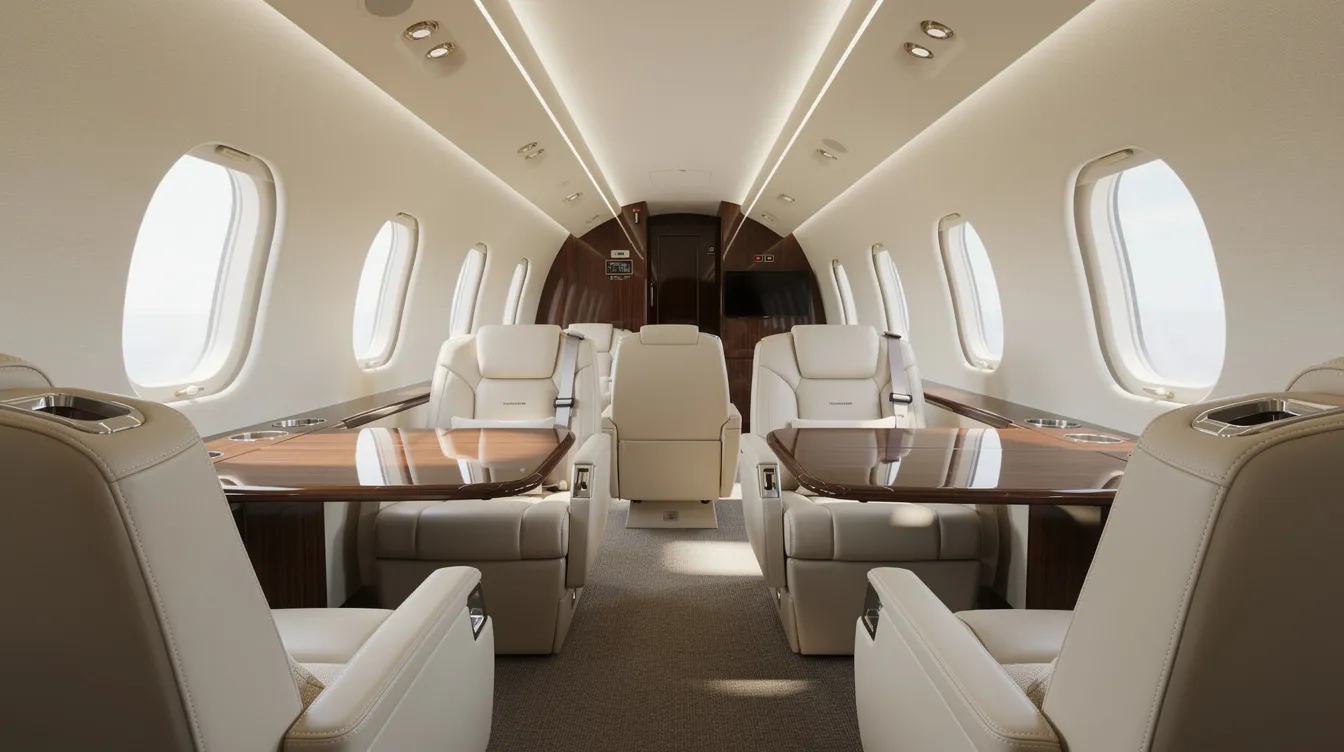
Step 4: Master the Private Jet Selling Process
The sales process involves planned buyer commitments and deliberate talk at each stage. Treat the selling process like a structured funnel rather than ad hoc conversations. It takes an average of eight touchpoints to close a sale-and high-value aviation deals are no exception, because those interactions are ultimately about closing deals.
Key stages of the selling process:
Mandate and representation agreement
Pricing strategy and market positioning
Marketing launch across channels
Lead qualification and inquiry management
Aircraft showings and demo flights
Letter of Intent (LOI)
Pre-purchase inspection
Final negotiation and closing
Qualify leads by matching them to your ideal customer profile. From early inquiries, collect proof of funds, intended use (personal vs. corporate), experience with aircraft operations, timeline, and whether they are ready and able to pay. Direct engagement with buyers can save time and reduce deal fatigue-but only with pre-qualified prospects.
Use a virtual data room to share technical documents securely with pre-qualified potential buyers, gating access behind NDAs. While selling, owners may place aircraft on short-term charter or in a managed access program to offset holding costs. Compare that to transitioning fully into Jet Card usage with BlackJet, where prepaid hours eliminate operational burden immediately and make it easier to benchmark jet card cost per hour against what you currently spend to own and operate the aircraft.
Step 5: Develop Advanced Sales Skills for High-Value Aviation Deals
High-end private jet sales require consultative, not transactional, sales skills, and the best salespeople act as knowledgeable advisors who guide complex purchases rather than simply pitch features. Building personal connections increases customer trust-and in seven- and eight-figure transactions, relationships are everything. Establishing rapport can differentiate you from competitors vying for the same serious buyer.
Most objections relate to price, value, or need. Listening to objections is crucial before responding-active listening reveals customer needs and preferences and shows customers you care about their needs. Prepare responses for common objections in advance: perceived operating cost vs. charter, noise and emissions concerns, older avionics vs. latest models, and upcoming airspace mandates. Customer feedback is essential for understanding their needs.
Sales tactics include building trust and using customer references. Research each prospect in depth-company background, existing fleet, routes flown, stated ESG policies-and tailor every conversation accordingly. Understanding customer needs helps tailor sales strategies effectively. Articulate the aircraft's value in terms of business impact: executive time saved, access to secondary airports, the ability to run multi-city roadshows in one to two days instead of four or five on commercial.
At BlackJet, our team is accustomed to educating affluent clients on Jet Card programs and can help structure conversations around the total cost of access rather than just acquisition pricing.
Step 6: Position Your Jet Against Alternatives: Charter and Jet Cards
Today's buyers are not choosing between "buy this jet" and "do nothing." They are comparing ownership, fractional shares, jet cards, and on-demand charter. Your ability to address this comparison proactively strengthens your position as a seller.
Example: 150 flight hours/year on a 2014 Embraer Phenom 300
Access Model | Est. Annual Cost | Capital at Risk | Flexibility |
|---|
Full ownership | $1.2–1.8M | $6–8M aircraft value | Low |
50-hr Jet Card (light) | ~$415,000–$500,000 | None | High |
On-demand charter | Variable (~$525,000+) | None | Moderate |
Use this comparison proactively when a potential customer hesitates on full ownership-suggest right-sizing by purchasing a smaller jet plus Jet Card access to larger cabins through BlackJet for occasional long-range missions, grounding your advice in a clear understanding of overall jet card membership pricing.
An aircraft functions as part asset, part product or service bundle (with crew, management, and operations). A Jet Card is purely a services product-no employees to manage, no hangar deals to negotiate. Modern Jet Card platforms like BlackJet provide mobile booking tools, 24/7 support, proprietary safety certification, and carbon-neutral flights as standard features, aligning closely with what seasoned travelers look for in the best jet cards for frequent flyers.
Some sellers choose to exit ownership entirely and replace their aircraft with a structured BlackJet membership-the right solution for owners who want to retain every benefit of private flight without the operational burden.
Step 7: Marketing Channels and Messaging for Selling a Private Jet
Buyers for business aircraft are globally distributed and expect discreet, professional marketing. Buyers often prefer confidential marketing to avoid public disclosure of financial transactions. Professional brokers can qualify serious buyers and handle confidential marketing effectively.
Primary sales channels for business aircraft typically include:
Specialist listing platform site options (Controller, AvBuyer, ASO)
OEM resale networks and broker relationships
Private banking and family office networks
Direct outreach to operators and fleet managers
Use social media tools to research customer needs and identify prospects
Investing in premium marketing materials can speed up the selling process. Creating a compelling marketing package increases visibility and appeal to potential buyers, especially for larger-cabin aircraft that compete with the largest private jets for sale. High-quality marketing materials should include professional photography and detailed specifications-bright, evenly lit interior shots, exterior angles, cockpit close-ups, and where appropriate, virtual cabin tours.
Prepare two tiers of promotional materials: a public summary spec sheet for initial interest and a detailed confidential package for vetted potential buyers only. Marketing strategies should include targeting ultra-high-net-worth individuals for private jet sales.
In the digital era, lead messaging with mission profile and safety pedigree, then cost efficiency, then sustainability features, because buyer research and first impressions often happen online before any direct conversation, including when prospects are simply exploring how to buy a seat on a private jet before considering full ownership. Align tone with the expectations of consumers in this world: precise, confident, zero hype-mirroring the luxury but substantive language BlackJet uses across its Jet Card communications.
Step 8: Negotiation, Due Diligence, and Closing the Transaction
This is the critical last mile where deals often slow or collapse. A Letter of Intent is needed from the buyer before creating a formal purchase agreement. Effective communication during this phase determines whether you close or lose months of work.
LOI essentials:
Agreed price range and deposit size (typically 5–10%)
Exclusivity period and inspection location
Allocation of costs if the deal fails
A thorough pre-purchase inspection verifies the aircraft's condition for buyers. Select an independent Part 145 facility; the typical timeline is two to four weeks. Common findings include corrosion, undocumented repairs, and avionics discrepancies. Information about maintenance records and compliance with regulations is crucial during inspections.
Respond to inspection findings with discipline: price adjustment, seller-funded repairs, or walk-away terms. Strong sales skills and calm communication protect deal value here. High-net-worth individuals expect total transparency and high-end presentation during the buying process.
Key closing documents include bill of sale, warranty of title, FAA or local CAA registration change, lien releases, and escrow arrangements. Utilize a specialized aviation escrow service to manage funds during the transaction, and be aware that some buyers may even structure private jet purchases with cryptocurrency, which adds another layer of legal and compliance considerations. Engage an experienced aviation attorney to verify export and import compliance before releasing keys and logbooks.
Once funds clear, owners can immediately redeploy capital into flexible BlackJet Jet Card hours to maintain uninterrupted private travel access.
Safety, Certification, and Sustainability as Selling Points
In 2026, many corporate and UHNW buyers have formal ESG, safety, and governance criteria. Building authority in these areas helps win customer trust and comfort-and positions your aircraft ahead of competitors that lack documentation.
Present specific safety credentials: maintenance under Part 135 standards even for Part 91 operations, third-party audits (Wyvern, ARGUS, IS-BAO), and modern avionics suites. Document pilot training standards-annual simulator training at FlightSafety or CAE-and present them to potential customers as part of the aircraft's operational pedigree.
Sustainability elements now function as core value drivers: history of flying with sustainable aviation fuel, carbon offset programs, and how a new owner can mirror BlackJet's carbon-neutral flight approach, even on ultra-long-range private jets that spend many hours per leg in the air. These are not add-ons. European corporates or funds with strong ESG reporting obligations, they can determine the final decision.

Case Study: Selling a Mid-Size Jet and Transitioning to a BlackJet Jet Card
A New York-based tech founder purchased a 2013 Citation XLS+ in 2018 for approximately $8.5 million. By early 2025, flying roughly 120 hours per year, annual operating costs exceeded $1.1 million-and a 96-month inspection loomed at an estimated $350,000. The plan was clear: sell before the inspection window and redeploy capital.
Timeline:
January 2025: Initial valuation at $6.2M; broker engaged
February: Aircraft preparation, interior refresh, professional photo shoot
March: Listed on AvBuyer and through the broker network
May: LOI received at $5.85M from a serious buyer; inspection negotiations resulted in a $120K adjustment
Late June: Closed at $5.73M after escrow and legal fees
By not carrying the aircraft another 12 months, the seller avoided approximately $1.3M in holding costs plus the inspection expense. The founder replaced ownership with a 50-hour BlackJet Jet Card and occasional top-up hours, a structure similar in logic to a 100-hour jet card solution for even heavier users, covering routes like Teterboro–Miami, Teterboro–Aspen, and Teterboro–San Francisco across multiple cabin classes, with no capital tied up in an aircraft, carbon-neutral flights, and 24/7 digital booking through BlackJet's software platform.
This example reinforces the insight: a thoughtful selling process combined with reinvestment into high-quality private jet access can improve both finances and the growth of personal freedom.
FAQ: Selling a Private Jet and Switching to Jet Card Access
How long does it typically take to sell a private jet in 2026? The entire process of selling a private jet typically takes 3 to 9 months, depending on aircraft category, condition, and pricing. Clean, late-model jets with fresh inspections often sell in 90–120 days; older or overpriced aircraft can sit 270 days or longer.
Should I sell before or after major inspections? Completing a 96-month inspection before listing can justify a higher asking price and attract more confident buyers. Alternatively, transparently pricing the inspection cost into your offer gives buyers clarity. Identifying ideal customers helps determine which approach works for your situation, including whether they plan to use the aircraft or focus on jet card tax-efficient usage after the transaction.
Can I sell my jet while it is on charter? Yes, but there are regulatory, contractual, and perception considerations. Some potential customers view charter-active aircraft as well-maintained; others worry about wear. Consult your management company and broker.
What if my buyer is comparing my jet to Jet Card programs instead? Reframe the conversation around the total cost of access. For buyers flying under 200 hours per year, propose a hybrid solution: a smaller purchase plus Jet Card access for larger cabin needs, and be ready to discuss how major providers such as NetJets price their jet cards so you can position your offer credibly.
Why consider a BlackJet Jet Card after selling? Benefits include access to multiple aircraft categories on demand, fixed hourly rates, carbon-neutral flights, and zero obligations around crew management, insurance, or hangar contracts. No asset risk, no depreciation exposure, and you can benchmark those benefits against offerings like the Flexjet jet card programs your buyers may also be considering. Researching customer needs-including your own-can increase sales effectiveness in your own life.
What sales skills do I need if I don't use a broker? You will need expertise in negotiation, aircraft valuation, regulatory compliance, and relationship management. Follow-up requires an average of eight touchpoints to close a sale, similar to the education cycle many prospects go through when first exploring how much it costs to rent a private jet. For most owners, it is smarter to rely on professional brokers or on BlackJet advisors who can promote your interests and engage qualified buyers on your behalf.
Conclusion: From Ownership to Intelligent Private Jet Access
Selling a private jet is both a financial transaction and a strategic reset. The most successful sellers in 2026 combine clarity of objectives, a disciplined selling process, a compelling sales pitch, and the knowledge to compare ownership against Jet Cards and charter with real data.
View the sale as an opportunity to upgrade your entire travel strategy-more flexibility, a stronger sustainability profile, and technology-enabled convenience that outperforms the past model of fixed-asset ownership, whether you ultimately access light jets for short hops or 16-seat private jets for board-level international missions.
Discover how BlackJet can help you design a tailored Jet Card solution that preserves every benefit of private flight-without the asset risk. Explore BlackJet Jet Cards →


 Sign up with google
 Sign up with Apple