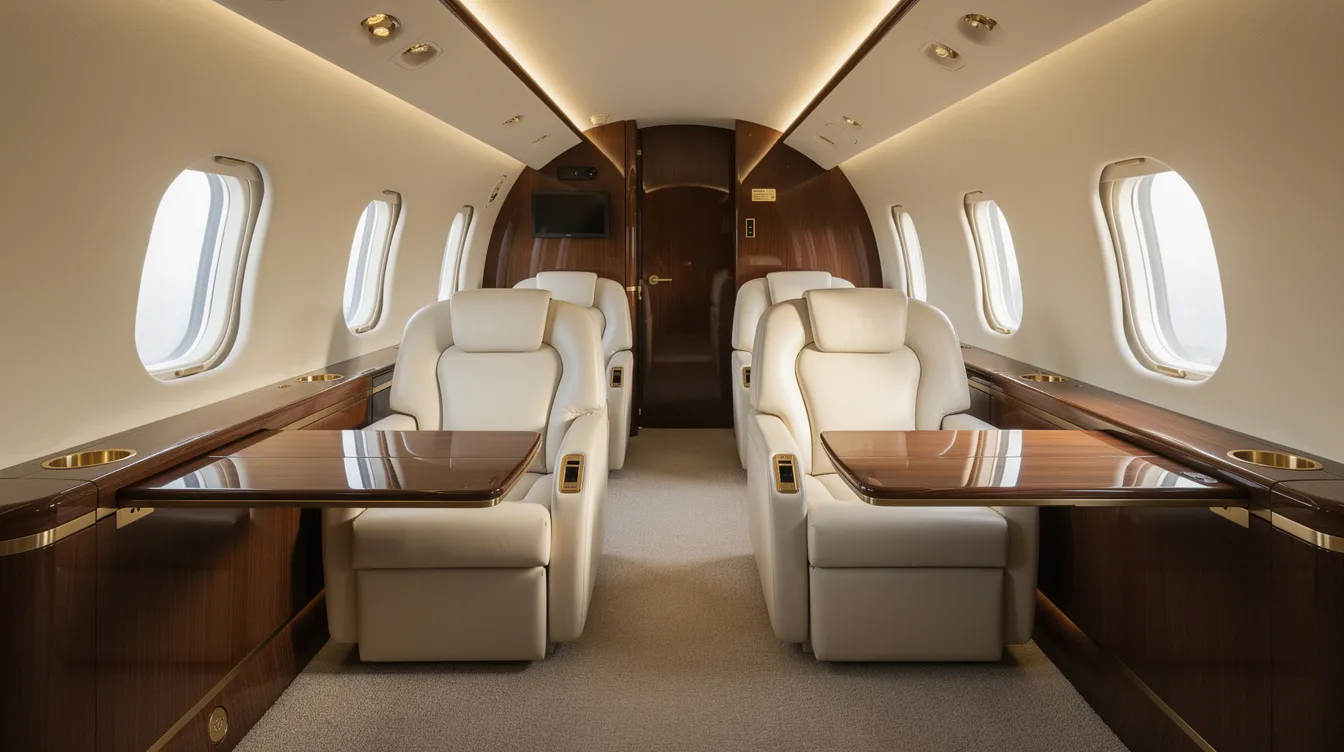
For BlackJet clients, seat maps represent far more than picking a window or aisle on a predetermined plane. They represent selecting the entire aircraft, cabin layout, and seating arrangement before a trip begins.
This article is designed for high-net-worth travelers and BlackJet clients who want to understand how seat maps influence comfort, privacy, and productivity—whether flying commercial or private. We compare traditional airline seat maps with the bespoke options available in private aviation, helping you make informed choices for your next flight. The scope includes a detailed comparison of commercial and private jet seat maps, with a focus on the unique needs and preferences of high-net-worth individuals.
Key Takeaways
Seat maps are more than just seat selection tools; for high-net-worth travelers, they represent strategic choices about aircraft type, cabin layout, and seating configuration tailored to each trip’s purpose.
Commercial aircraft seat maps offer limited flexibility, often requiring passengers to settle for available seats, whereas private aviation through BlackJet allows clients to select entire cabins designed for comfort, privacy, and productivity.
Understanding common seat map features—such as seat numbering, aisle and window seat locations, exit rows, and cabin configurations—helps travelers make informed decisions when flying commercially.
Private jet layouts prioritize mission-specific needs, offering varied configurations from light jets with club seating to large-cabin jets with multiple zones for work, dining, and relaxation.
BlackJet’s Jet Card programs empower members to treat aircraft and seat selection as a strategic advantage, ensuring every flight aligns with personal preferences, safety standards, and sustainability goals.
Leveraging advanced digital tools and certified operators, BlackJet delivers seamless, bespoke travel experiences that transform seat maps from a constraint into a competitive edge for discerning travelers.
Why Seat Maps Matter More When You Can Choose the Aircraft
In commercial flying, passengers scramble to find available seats on a rigid aircraft seat map, often searching by flight number and date on airline websites only to discover their preferred seat is already sold. In private aviation, the equation reverses: you choose cabin size, configuration, and seating arrangement in advance through a Jet Card or on-demand charter. Consider a February 2025 New York–London business trip. A commercial traveler might spend a moment refreshing a seat map online, hoping two seats together in business class open up. A BlackJet member, meanwhile, selects a large-cabin aircraft with a conference layout, ensuring every passenger can sit, work, and rest exactly as planned.
Understanding an airplane seat map helps in choosing comfortable seating on any flight—but BlackJet clients effectively get a bespoke seat map each time they book. While regular travelers search by airline and flight number, our members start with aircraft categories, cabin layouts, and preferred seat positions across a vetted fleet. This article explores how safety certification, carbon-neutral flights, and digital booking tools elevate the selection process far beyond what commercial aircraft seat maps display.
Understanding Commercial Aircraft Seat Maps (and Their Limits)
Seat Numbering and Layout Basics
Most airlines publish seat configurations for their aircraft, and most airlines publish seat configurations for larger aircraft in particular detail. A typical seat map shows a grid layout with rows and columns. Seat numbers indicate rows while letters indicate seat positions—though seat letters may skip confusing characters like I and O, and some airlines skip row number 13 due to superstition. Window seats are generally labeled A and F on most aircraft, while aisle seats are typically assigned to letters C or D.
Common Cabin Configurations
Here is how common configurations break down, and how different private jet sizes and cabin categories influence what those configurations look like:
Cabin | Narrow-Body | Wide-Body |
|---|
Economy | 2-2, 2-3, or 3-3 (six across) | 2-3-2 or 3-4-3 (up to ten across) |
Business class | 2-2 or four across | Staggered 1-2-1 layout |
First | 1-1 or 2-2 | 1-1 or 1-2-1 |
Seat Map Features and Comfort Considerations
Flight seat maps depict features like emergency exits and lavatories. Exit rows offer extra legroom for taller passengers. Bulkhead seats are located at the front of a cabin with no seat in front. High-traffic areas include seats near bathrooms and galleys, and specific row configurations affect seat comfort and choice. Window seat alignment may vary on different aircraft. Seat maps utilize colors to indicate availability and seat status, and checking seat maps helps avoid uncomfortable seats—particularly in the business class cabin, where a poorly selected seat near galleys ruins the premium you paid for.
Online Resources for Seat Maps
Specialised websites offer detailed seat maps for many airlines. Here are some key resources:
AeroLOPA: provides accurate and updated seat maps and recreates LOPAs for better seat selection.
ExpertFlyer: allows users to check seat availability before booking and can help identify the exact aircraft or seat configuration before you commit.
SeatGuru: often outdated and unreliable for seat maps; its accuracy has been questioned after its sale to Expedia.
SeatCompare.ai: helps pinpoint aircraft details and suggests optimal seats using data and machine learning.
Identifying premium seating options can enhance travel comfort, and seat maps should be checked for real-time availability during booking—but these resources only help when you must fly commercial. Seat maps can show which seats are occupied or available, yet for BlackJet-level travelers, the real question is which aircraft and cabin layout you want.
From Seat Maps to Cabins: How Private Jet Layouts Actually Work
In private aviation, you rarely see numbered rows. Instead, you choose by aircraft category and cabin layout:
Light Jet Layouts
Super-Midsize Jet Layouts
Large Cabin Jet Layouts
12–14 seats with defined zones—work area, dining group, and lounge—where a seat layout represents something closer to a living room than an airline map, and can overlap with large private jets for around 15 passengers depending on configuration.
Private Jet Layout Comparison Table
Jet Type | Typical Seats | Configuration Highlights |
|---|
Light Jet | 6–7 | Club seats, 1-1 layout, compact cabin and galley |
Super-Midsize Jet | 8–10 | Club seating, divan, stand-up cabin, enclosed lavatory |
Large Cabin Jet | 12–14 | Multiple zones (work, dining, lounge), living room feel, possible private stateroom, overlaps with 15 pax. |
Example: Family Trip Layout Selection
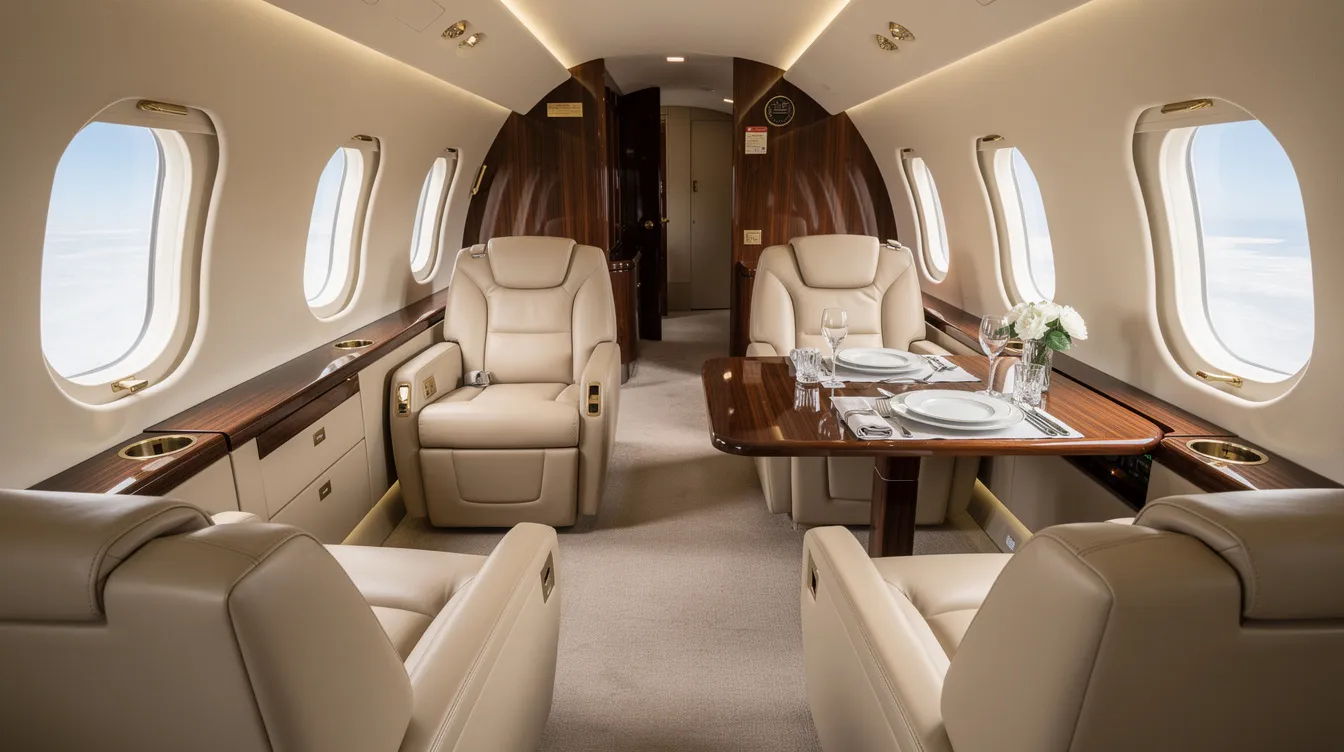
A seat map on a private plane looks like a floor plan: forward club four across from each other, aft conference table, divan along the side, and sometimes a private stateroom. For example, a March 2026 family trip from Los Angeles to Maui: a client selects a large-cabin jet with facing club seats so four passengers can dine together—adding food and restaurant-quality catering—instead of being scattered in economy on a 3-3-3 commercial layout, and may even explore costs and options for a 12-seater private jet if regular use is anticipated.
BlackJet presents these options digitally with clean, high-resolution schematics that display seat orientation, work tables, storage, and wings-over positioning, fully integrated into our premium private jet membership and charter services. Every private jet has the best seats depending on purpose: forward club seats for quick deplaning at the airport, rear lounge seats for privacy and sleep, or table seats for in-flight meetings.
Choosing the Best Seat (and Aircraft) for Different Trip Profiles
Instead of obsessing over 14A versus 14C, BlackJet clients match layouts to mission profiles, choosing between aircraft sizes and different types of private jets for each trip. Here are three scenarios to keep in mind:
Business Travel: CEO Board Meeting
CEO, New York–Chicago, June 2025: A same-day board meeting demands a small private jet with forward club seating, power outlets, and a quiet cabin for calls. The selection is based on productivity, not just comfort—skipping the usual search for a sign of legroom on a commercial map.
Family Travel: Ski Trip to Aspen
Family of five, Aspen, January 2026: The configuration calls for club seats plus a divan where children can rest after skiing. You customize the private jet to fit your group rather than booking five occupied seats scattered across an airline cabin, and may find that a structured jet card membership best aligns cabin access with your family’s annual travel.
Overnight Flights: Maximizing Rest
Overnight, Boston–London, October 2025: The priority is fully reclining seats aligned away from galley traffic. In commercial flying, you might find this optional upgrade sold out at the last moment; on a BlackJet flight, your advisor ensures the aft zone is reserved for recovery sleep.
In private aviation, "available seats" takes on a different sense—usually every seat is open. But the 24/7 flight support team reviews your passenger list and proposes aircraft where passengers can glance across at colleagues during a meeting or find solitude at the back of the cabin, much as you would when learning how to buy a seat on a private jet through shared or semi-private options.
Safety, Certification, and Why Layouts Are Designed the Way They Are
Every commercial seat map and every private jet cabin layout is constrained by strict safety rules. LOPA diagrams—approved by regulators—determine emergency exit placement, seat spacing, and galley positioning long before any map is presented to passengers. Seat placement in private jets is also tied to weight-and-balance envelopes; certain seats may be restricted during takeoff based on load distribution, especially on large-cabin aircraft configured for up to 20 passengers.
BlackJet only partners with operators meeting the highest standards: ARG/US Platinum, Wyvern Wingman, and IS-BAO certifications ensure strict cabin configuration oversight and maintenance protocols. The same rigor applies when chartering private jets for around 30 passengers, where turbulence, structural load limits, and 16g crashworthiness testing dictate why divans, lavatories, and galleys sit where they do.
Our booking team flags any unusual layout constraints well before your next flight—so you never board to discover a non-reclining seat or a jumpseat you did not anticipate.
Technology: From Airline Seat Maps to BlackJet's Digital Cabin Selection
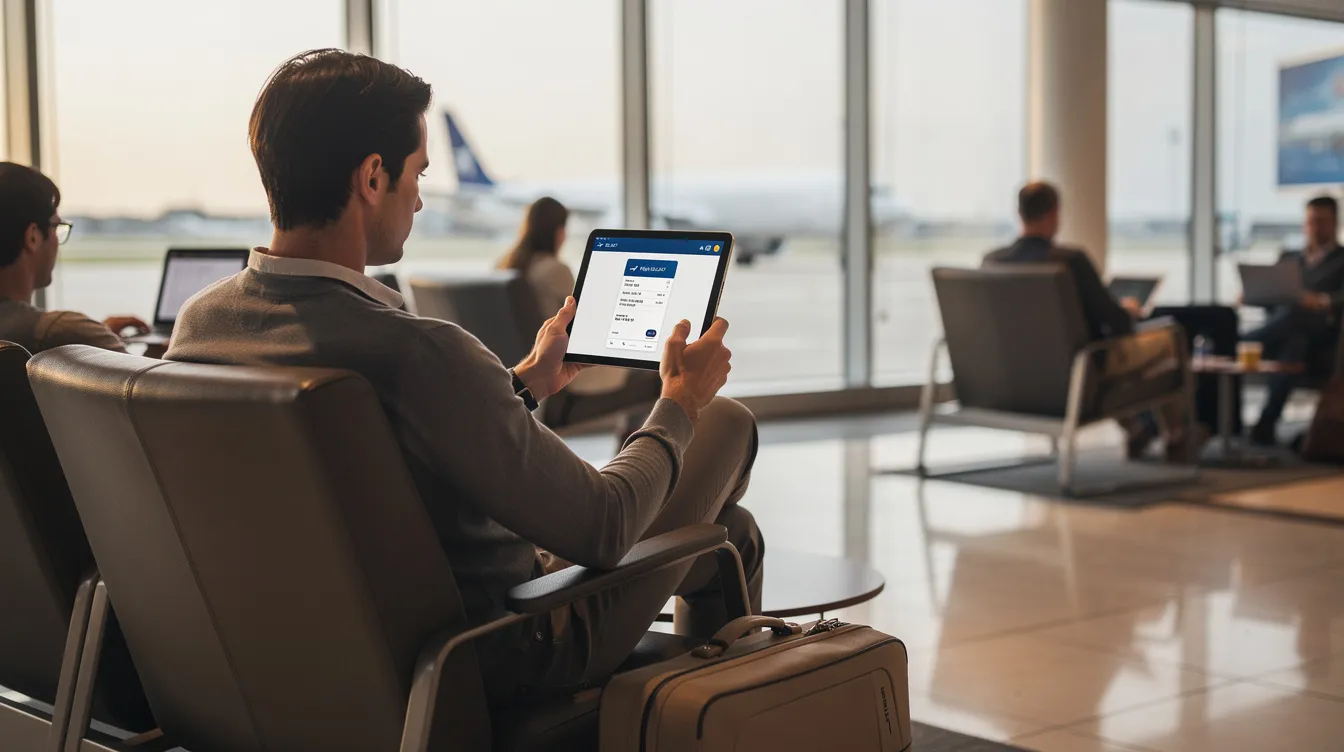
Legacy airline booking engines pull text-based seat maps from systems like Sabre, often with limited detail. BlackJet's mobile and web platforms present aircraft options differently: high-quality cabin diagrams with clickable zones showing seating, work tables, and storage, fully integrated with transparent jet card pricing structures.
Members filter by aircraft category, range, and cabin style—effectively choosing the seat map rather than fitting into one. A typical booking flow: a Jet Card member logs in, enters route and date, sees three to four aircraft options with cabin layouts, taps to check where each guest will sit, and confirms the selected configuration, often leveraging a BlackJet 25+ Hour Jet Card program chosen after comparing the best jet cards for frequent flyers.
If an aircraft substitution is needed, BlackJet's system updates instantly so clients see the new layout before departure—not at the gate. And every flight includes verified carbon offsets tracked through emissions data per tail number, ensuring sustainability is built into every cabin choice and aligned with a transparent private jet price and access framework.
Frequently Asked Questions About Seat Maps and Private Jet Travel
Q1: How do private jet seat maps differ from commercial airline seat maps?
Private jet seat maps are more flexible and tailored to specific trip needs, often resembling cabin floor plans with club seating, divans, and multiple zones for work and relaxation. Unlike commercial maps, which show fixed rows and columns, private jet layouts prioritize comfort, privacy, and mission-specific configurations.
Q2: Can I choose my exact seat on a BlackJet private jet?
Yes. BlackJet Jet Card members select aircraft and cabin layouts in advance, with the ability to specify preferred seating arrangements such as forward club seats for meetings or rear lounge seats for rest, turning seat selection into a strategic advantage.
Q3: Are private jet seat maps regulated for safety?
Absolutely. All seat maps and cabin layouts comply with strict safety certifications and regulations, including ARG/US Platinum and IS-BAO standards. Layouts are designed considering emergency exits, weight distribution, and crashworthiness to ensure passenger safety.
Q4: How can I access reliable commercial aircraft seat maps?
Specialised websites like AeroLOPA provide accurate and updated seat maps. Tools such as ExpertFlyer and SeatCompare.ai offer real-time seat availability and optimal seat recommendations, although some popular sites like SeatGuru may have outdated information.
Q5: How does BlackJet incorporate sustainability into its seat map and flight offerings?
BlackJet ensures every flight is carbon neutral by tracking emissions per tail number and purchasing verified carbon offsets. This commitment is integrated into the booking process, allowing clients to enjoy luxury travel while minimizing environmental impact.
How BlackJet Jet Cards Turn Seat Maps into Strategy
BlackJet Jet Cards—available in 25-hour and 50-hour programs—let clients treat aircraft selection as strategy, not afterthought. Members pre-define preferences beyond "window seat": ideal cabin size, conference-table setups, or quiet rear zones, while understanding how jet card cost per hour works and how 50 50-hourt card pricing delivers value across different aircraft categories.
A technology founder in San Francisco uses a 25-hour Jet Card in 2026 to ensure every outbound red-eye to New York has a lie-flat seat in a dark, aft cabin zone, and may later graduate to evaluating 10100-houret card costs and benefits as travel volume grows. A family with three children selects aircraft with a divan and club seating for regular Miami–Nassau weekends, creating a flying living room. BlackJet advisors review your annual calendar and recommend configurations you can rely on—eliminating the need to inspect a new map for each trip.
Stop fighting for preferred seats on crowded airline seat maps. Whether you are comparing Flexjet jet card pricing and options, evaluating NetJets jet card costs, or exploring large private jets for up to 50 passengers, BlackJet helps translate those benchmarks into a tailored membership strategy. Explore BlackJet membership to design each cabin around your life.


 Sign up with google
 Sign up with Apple