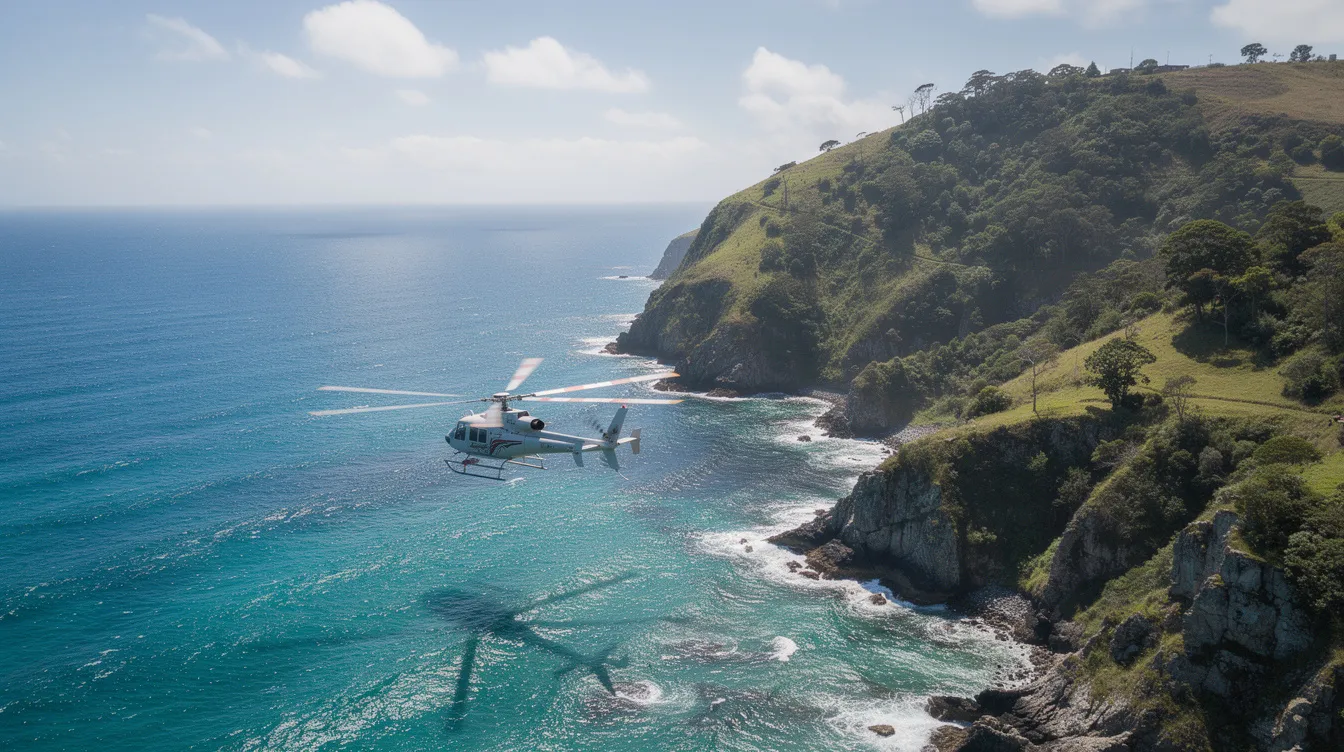
The Robinson R44 Raven II is a four-seat, piston-powered helicopter known for its cruise speed of 109 knots, maximum range of up to 348 nautical miles, and cost efficiency compared to turbine alternatives. The R44 Raven II seats four passengers and is widely used for regional travel, charter, flight training, and law enforcement. This guide is intended for private travelers, charter customers, and aviation enthusiasts considering the R44 Raven II for regional travel or charter use. Understanding the R44 Raven II's capabilities helps travelers and operators make informed decisions about helicopter charter and ownership. For those seeking fast, flexible access to city centers, coastal estates, or mountain resorts where runways do not exist, the R44 Raven II bridges the gap between ground transport and fixed-wing jets.
Executive Summary: Why the R44 Raven II Matters for Private Travelers
The R44 Raven II is one of the most widely used light helicopters in the world. Robinson Helicopter Company has delivered thousands of R44 Raven II helicopters globally, building a support and parts network that stretches across six continents. For high-net-worth travelers, this translates to reliable charter availability in most metropolitan areas and resort regions.
The R44 Raven II seats four passengers. The aircraft cruises at about 109 knots (roughly 125 mph), has a maximum gross weight of 2,500 pounds, and achieves a maximum range of up to 348 nautical miles depending on fuel load and conditions. It is a single-engine, piston-powered helicopter with skid landing gear, a two-bladed rotor system, and a useful load of approximately 995 lb.
Core use cases include:
Flight training at professional flight schools
Helicopter charter for city-to-airport or resort transfers
Sightseeing tours over urban skylines and natural landmarks
Utility work, aerial photography, and law enforcement operations
Within the BlackJet ecosystem of premium private jet cards, the R44 Raven II works as the rotary-wing complement to a jet card. A client might board a Raven II at a downtown helipad, fly 20 minutes to a regional airport, and step directly onto a light jet booked through a BlackJet jet card for a longer segment. The key decision points for any prospective charter customer: passenger capacity (up to three passengers plus pilot), fuel capacity and fuel tank safety standards, operating costs compared with turbine alternatives, and how the Raven II compares with the older Raven I.
Overview of the Robinson R44 and Raven II Variant
R44 Family Overview
Robinson introduced the R44 in 1993, building on the success of its two-seat R22. The four-seat cabin, relatively low purchase price, and simple airframe made it the world's best-selling light helicopter within a decade. The aircraft uses a two-bladed tail rotor, skid landing gear, and Lycoming six-cylinder engines across all variants.
The R44 family includes several distinct models:
The original R44 Raven featured hydraulically assisted controls and improved blades over the earliest production aircraft.
The Raven I retained the carbureted Lycoming O-540 engine with a maximum gross weight of about 2,400 lb.
The Raven II, introduced in 2002, carries a fuel-injected Lycoming IO-540, wider blades, and a maximum gross weight of 2,500 pounds.
The Clipper variants add fixed floats or pop-out floats for over-water operations.
The Cadet is a reduced-seating version tailored for training.
Raven II Variant Overview
The R44 Raven II sits at the top of this lineup: a more powerful engine, improved altitude performance, and greater useful load of approximately 995 lb. Typical empty weight runs around 1,505 lb, leaving room for fuel, two or three passengers, or a full cabin depending on fuel load and baggage. The configuration is flexible enough to handle just about any application from training to executive transfer.
With this overview in mind, let's examine the key specifications and performance figures that define the R44 Raven II's capabilities.
Key Specifications and Performance Figures
Performance Figures
Cruise speed: approximately 109 knots true airspeed at maximum gross weight
Maximum range: up to 348 nautical miles (practical range without reserves closer to 300 nautical miles)
Maximum gross weight: 2,500 pounds
Empty weight: approximately 1,505 lb (with standard avionics and oil)
Useful load: approximately 995 lb
Payload capability: roughly 716 pounds with standard fuel
Fuel capacity: 29.5 US gallons in the main tank, plus an auxiliary tank of approximately 17 US gallons (total just under 50 gallons)
Service ceiling / maximum operating altitude: 14,000 ft
Rate of climb: around 1,000 ft/min at sea level
Engine: fuel-injected Lycoming IO-540, six-cylinder, horizontally opposed
Fuel Capacity and Range
The standard fuel configuration includes a main tank holding approximately 29.5 US gallons and an auxiliary tank of about 17 US gallons, for a total usable fuel load just under 50 gallons. At a typical fuel burn of 14-16 gallons per hour in cruise, this provides roughly three hours of endurance and a practical range around 300 nautical miles without reserves. With careful weight management and favorable winds, maximum range extends to 348 nautical miles.
For private travelers, these figures translate to practical mission profiles. A 100 nm transfer from a city helipad to a resort takes roughly 55 minutes. A 200 nm regional hop with fuel reserves is feasible when the aircraft carries two passengers and light baggage. The Raven II's improved altitude performance also means it operates reliably in mountainous terrain where thinner air challenges carbureted engines.
With these performance figures in mind, let's compare the Raven II to its predecessor, the Raven I.
Raven II vs Raven I: What Has Actually Improved?
Feature | Raven I | Raven II |
|---|
Engine | Carbureted Lycoming O-540 (225 hp) | Fuel-injected Lycoming IO-540 (245 hp) |
Max Gross Weight | 2,400 lb | 2,500 lb |
Useful Load | Lower | Higher (approx. 995 lb) |
Hover/Climb Performance | Standard | Improved, especially hot/high |
Carburetor Icing Risk | Present | Eliminated |
Resale Value | Lower | Higher, especially with bladder tanks |
Both the Raven I and Raven II share the same basic Robinson R44 airframe, cabin layout, and rotor system. The differences center on the engine and what it enables. The Raven II's fuel-injected Lycoming IO-540 delivers approximately 245 hp at takeoff, a 9% increase over the Raven I. That extra power translates into better hover performance, higher useful load (roughly 100 lb more), and improved climb rates under hot or high-altitude conditions. The Raven II also eliminates carburetor icing risk entirely, a practical safety advantage during winter operations or rapid altitude changes.
Operators in temperate, low-altitude regions often select the Raven I for its lower acquisition and operating costs. Flight schools and commercial fleet operators in mountainous or tropical areas tend toward the Raven II because the performance margins prevent weight-and-balance compromises during busy flying days. Compared with the Raven I, the Raven II also commands stronger resale value, particularly when equipped with bladder-type fuel tanks and current avionics.
For charter customers connecting with BlackJet private jet travel, the Raven II generally offers the better experience: more payload margin when carrying three passengers with bags, and smoother power delivery from its fuel-injected engine, especially when you consider whether chartering a private jet is worth it for your overall itinerary.
With the differences between the Raven I and Raven II clarified, let's take a closer look at the engine, airframe, and rotor system that define the Raven II's performance and safety.
Engine, Airframe, and Rotor System
Raven II Engine Details
The R44 Raven II features a fuel-injected Lycoming IO-540 engine. This six-cylinder, horizontally opposed, fuel-injected piston engine has a time between overhauls (TBO) of 2,200 hours or 12 calendar years, whichever comes first. This interval also aligns with the airframe's major components overhaul schedule, simplifying maintenance planning for operators.
Airframe Construction
The airframe combines lightweight aluminum monocoque panels with steel tubular reinforcement at the landing gear, rotor mast, and tail boom attachments. This design keeps weight low while providing straightforward access to major components during inspections.
Rotor System Features
The helicopter features hydraulically boosted controls to reduce pilot fatigue, which also improves precision during confined-area approaches and passenger comfort on longer flights. The two-bladed rotor system is semi-rigid, with the Raven II's blades slightly wider than those on earlier R44 versions. These wider blades improve lift and fuel efficiency, particularly during hover and at higher density altitudes. The rotor rpm is governed within a narrow band to maintain consistent blade performance. However, the semi-rigid design requires disciplined flying to avoid low-G incidents; Robinson and aviation authorities emphasize strict adherence to operating envelopes and proper pilot training to prevent mast bumping.
With the engine, airframe, and rotor system covered, let's examine how fuel capacity, tank design, and range contribute to the R44 Raven II's operational flexibility and safety.
Fuel Capacity, Fuel Tanks, Range, and Safety Upgrades
Fuel capacity and fuel tank design are central to both the R44 Raven II's range and its post-crash survivability.
The standard fuel configuration includes a main tank holding approximately 29.5 US gallons and an auxiliary tank of about 17 US gallons, for a total usable fuel load just under 50 gallons. At a typical fuel burn of 14-16 gallons per hour in cruise, this provides roughly three hours of endurance and a practical range around 300 nautical miles without reserves. With careful weight management and favorable winds, maximum range extends to 348 nautical miles.
Filling both fuel tanks to capacity reduces allowable passenger and baggage weight. Operators routinely tailor fuel load to match mission length: a 30-minute city transfer needs only partial fuel, freeing payload for three passengers and bags.
The R44 has a crashworthy fuel system with bladder-type tanks, a design change driven by real-world accident data. About 12% of R44 accidents resulted in post-crash fire with earlier aluminum tanks. Robinson issued Service Bulletin SB-78 mandating the retrofit of bladder-type fuel tanks, and bladder-type fuel tanks were mandated by 2010 for safety across the R44 fleet. Modern R44 Raven and R44 Raven II helicopters in commercial service carry these bladder-type tanks as standard, reducing post-impact fuel leakage and fire risk.
With fuel safety and range addressed, let's move inside the cabin to explore layout, comfort, and the passenger experience.
Cabin Layout, Comfort, and Passenger Experience
Cabin Seating and Layout
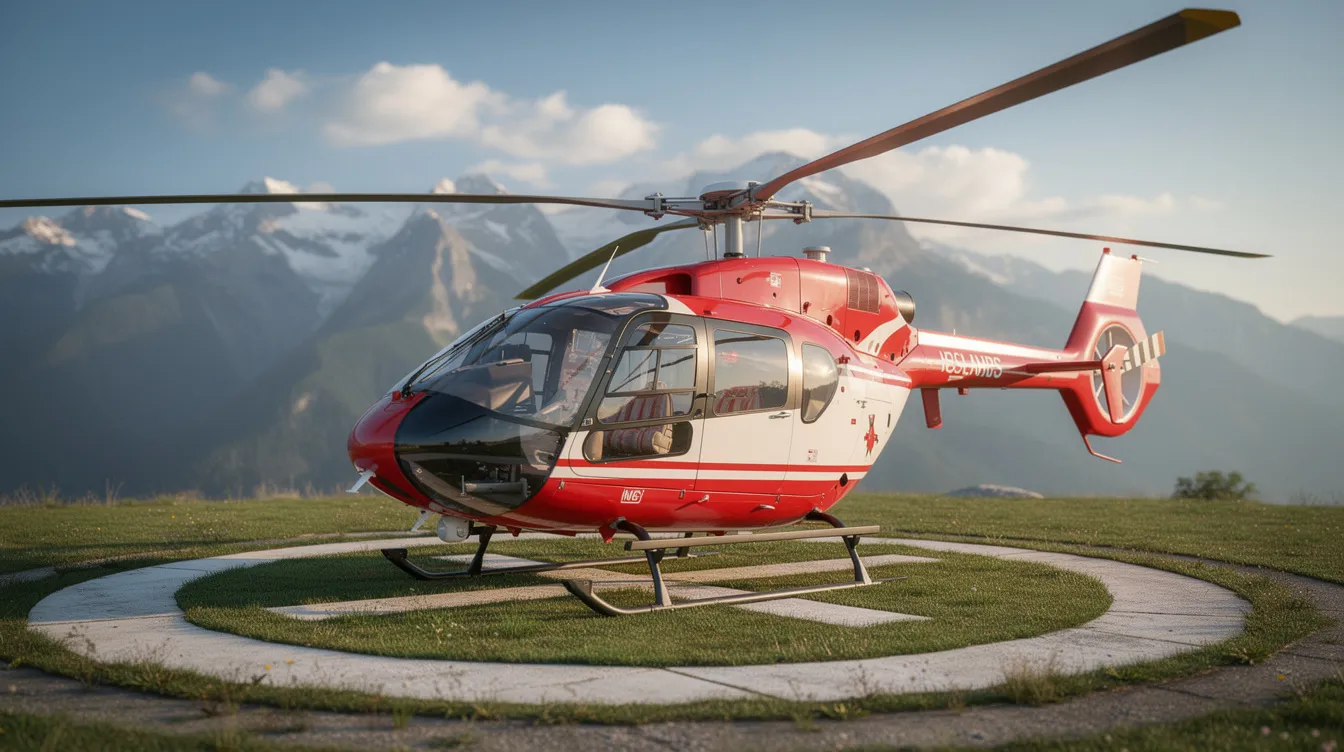
The R44 Raven II cabin arranges two front seats (pilot on the left, passenger on the right, with dual controls often installed) and a rear bench for two additional passengers. The cabin measures about 50.5 inches wide, comfortable for regional flights of one to two hours, though more compact than a light jet cabin.
Passenger Comfort and Visibility
The open cabin design provides exceptional visibility for passengers. Large bubble windows and wide glazed doors wrap the cockpit, making the R44 Raven II a preferred aircraft for sightseeing tours, aerial photography, and law enforcement observation. Adjustable pedals on the front passenger side accommodate varying leg lengths when dual controls are not in use.
Noise and vibration from the piston engine are noticeable but manageable. Quality aviation headsets, typically provided by charter operators, reduce cabin noise and allow easy conversation between passengers and the pilot. A vertical card compass and standard instrument panel keep the cockpit straightforward.
Luggage guidance is practical: small soft bags and backpacks fit behind the rear bench and under the front seats. Rigid suitcases are generally too bulky. All baggage weight counts against the useful load, so charter operators verify weight and balance before each flight. A fire extinguisher is mounted within reach per standard configuration.
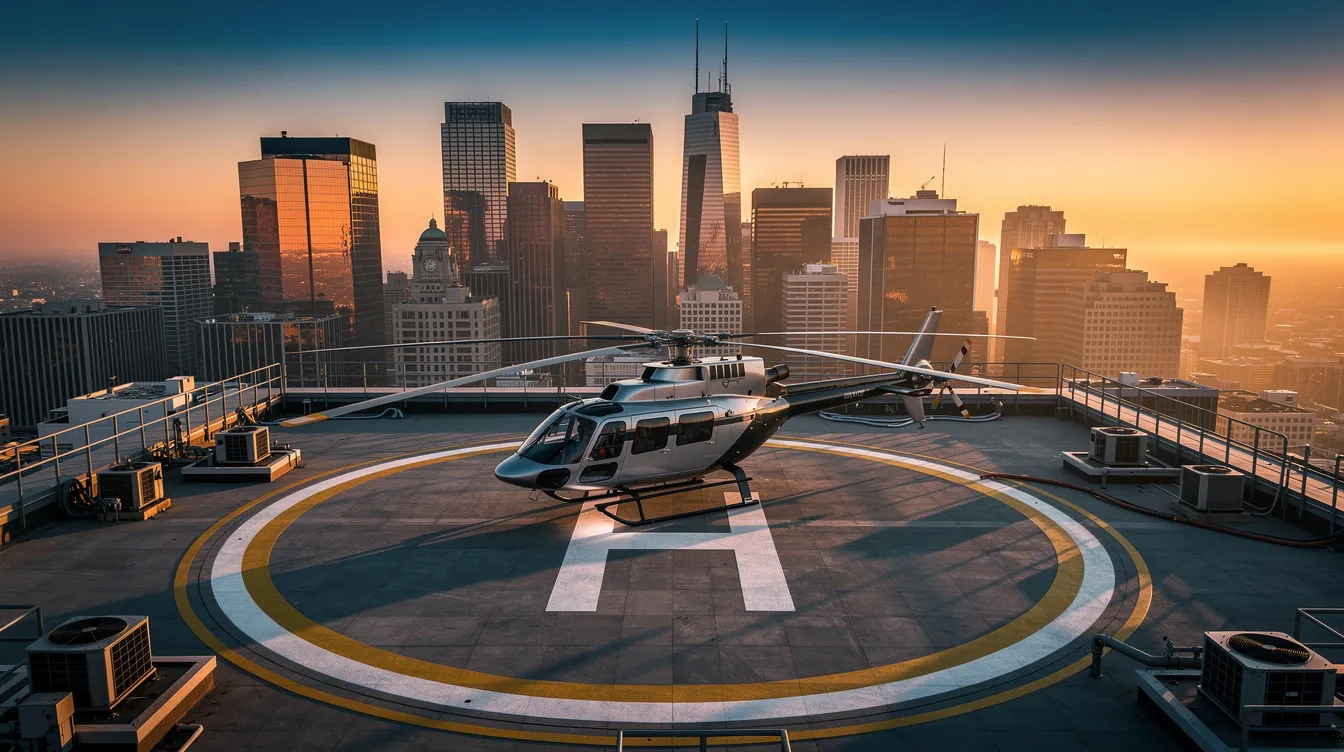
For BlackJet clients, a typical use case involves a 20-40 minute Raven II hop from a city helipad to a coastal estate or resort, or to meet a private jet at a nearby airport.
With the cabin experience detailed, let's look at the typical missions and use cases that make the R44 Raven II a versatile choice.
Typical Missions and Use Cases for the R44 Raven II
The R44 Raven II supports various applications well beyond leisure flying. It is commonly used for flight training and private transport, and it serves various missions including sightseeing tours and law enforcement, whereas larger groups might instead choose private jets for around 20 passengers when rotorcraft are impractical.
Common missions include:
Flight training at professional flight schools (primary, commercial, and instrument ratings)
Sightseeing tours over cities, coastlines, canyons, and volcanic landscapes
Aerial photography and filming for real estate, media, and events
Agricultural monitoring and environmental survey
Powerline and pipeline patrol
Law enforcement traffic observation, border surveillance, and search support
The R44 is a popular choice for budget-conscious tour operators running high-volume sightseeing operations. Operators like Brazos River Helicopters and hundreds of similar companies worldwide rely on the type for daily revenue flights, while larger parties may look to private jets for 15 passengers when fixed-wing lift better suits the mission.
The R44 Raven II is equipped for over-water operations with floats in Clipper II configuration. Fixed utility floats, or pop-out floats,s can be installed depending on mission requirements, with fixed floats providing permanent water-landing capability at the cost of reduced cruise speed due to aerodynamic drag. Pop-out floats inflate within 2-3 seconds for emergencies during over-water operations.
For affluent travelers, consider two scenarios: a helicopter hop from a downtown heliport directly to a ski lodge helipad, cutting a three-hour mountain drive to 40 minutes; or a transfer from a yacht's shore base to a regional airport where a BlackJet-booked light jet waits for a cross-country flight, with larger groups potentially connecting to private jets for up to 50 passengers when the itinerary demands it.
With mission versatility established, let's examine the economics, purchase price, and hourly costs of operating the R44 Raven II.
Operating Economics, Purchase Price, and Hourly Costs
Operating Costs
The R44 Raven II became the helicopter of choice for commercial and training fleets because of its low operating costs relative to turbine alternatives. The helicopter is known for its cost efficiency compared to turbine alternatives that can cost three to five times as much per flight hour, much like how budget-friendly private aircraft options can reduce costs in the fixed-wing world.
Operating costs average about $260 per hour when accounting for fuel, oil, routine maintenance, and overhaul reserves. Annual operating cost for a moderately utilized aircraft (roughly 600-800 hours/year) is approximately $220,875. Charter rates for the R44 range from $500 to $900 per hour depending on region, operator, and mission, with charter pricing typically running around $900 per flight hour in premium metro markets—well below typical NetJets jet card cost structures for larger, faster aircraft.
Purchase Price
A new Robinson R44 Raven II costs around $465,000 with standard equipment. Pre-owned aircraft trade between $150,000 and $300,000 depending on total airframe hours, engine time remaining to overhaul, avionics configuration, and whether bladder-type tanks have been installed. The 2,200-hour or 12-year overhaul interval for both engine and airframe major components defines a large reserve expense and shapes the resale market. For a deeper look at helicopter pricing factors, understanding overhaul status is essential, just as it is when evaluating long-range private jets for sale for intercontinental missions.
Turbine helicopters carry more passengers, fly faster, and operate in worse weather, but their purchase prices often exceed $2 million and hourly costs run well above $1,000, comparable to the upper range of affordable private jet options. The Raven II fills the gap for missions where a turbine's capability is unnecessary. BlackJet's model reflects this logic: use helicopters like the R44 Raven II on shorter legs combined with jet card access for longer segments, rather than owning multiple aircraft types; understanding jet card cost per hour helps travelers compare this strategy with outright ownership or on-demand charter.
With the economics and purchase considerations outlined, including how they compare to chartering small private planes, let's turn to the critical topic of safety, training, and regulatory oversight.
Safety, Training, and Regulatory Oversight
Safety in the R44 Raven II rests on three pillars: aircraft design, operator maintenance standards, and pilot training.
Design features include the crashworthy fuel system with bladder-type tanks, energy-attenuating seats that enhance occupant protection during impacts, and a robust cabin structure. Clipper II variants add pop-out floats that inflate within 2-3 seconds for emergencies during over-water operations. The helicopter's two-bladed rotor system requires disciplined flying to avoid low-G incidents; Robinson's safety course and regulators stress strict avoidance of negative-G attitudes and adherence to weight limits.
Energy-attenuating seats enhance occupant protection during impacts.
Commercial R44 Raven II operations in North America and Europe fall under FAA and EASA oversight, respectively. Operators must hold air operator certificates, maintain Part 135 compliance for charter, complete regular inspections (100-hour, annual, and periodic), and ensure pilot recurrent training. Pilots typically complete Robinson's factory safety course and maintain minimum hours in type.
BlackJet vets partner helicopter operators for maintenance records, pilot experience, and safety compliance beyond minimum regulatory requirements. This includes verifying that all applicable service bulletins (including SB-78 for fuel tanks) are current, that operational pilots hold adequate time in type, and that conservative weather decision-making protocols are in place—standards that mirror those expected when working with an airplane broker serving high-net-worth clients.
With safety and regulatory standards addressed, let's explore how the R44 Raven II is used in flight schools and commercial fleets.
Training and Fleet Use in Flight Schools and Commercial Operators
The R44 Raven II is widely used for flight training at both collegiate programs and independent flight schools. Its four seats allow an instructor to fly with multiple students or observers, and its performance envelope supports cross-country, mountain, and advanced maneuvers that prepare students for turbine transitions.
Flight schools choose the R44 Raven II for the balance of capability and operating cost. A school can operate a Raven II at roughly one-third the hourly cost of an entry-level turbine trainer while still exposing students to a powered, hydraulically equipped, four-seat aircraft with real-world operational complexity, complementing fixed-wing pathways such as Flexjet jet card programs for graduates who later transition to business aviation.
Beyond training, commercial fleet operators fly the type for sightseeing operations carrying thousands of passengers annually, utility inspection and survey work, and law enforcement daily patrols. This high fleet density and global parts support translate into good dispatch reliability for charter customers. When you book an R44 Raven II transfer in most major metro areas, a maintained, inspected, and crewed aircraft is typically available within hours.
With training and fleet use explained, let's see how the R44 Raven II complements BlackJet 25+ Hour Jet Card membership and broader BlackJet private jet travel.
How an R44 Raven II Can Complement BlackJet Private Jet Travel
While BlackJet specializes in jet cards and fixed-wing private jet charter, helicopters like the R44 Raven II often complete the first mile and last mile of a journey.
A concrete example: a client uses a BlackJet 25-hour jet card to book a light jet from New York Teterboro to Boston Logan, referencing a structure similar to a 100-hour jet card cost program, then transfers to an R44 Raven II for a 20-minute hop to a Cape Cod coastal estate. The helicopter bypasses 90 minutes of ground traffic and eliminates the need for a second airport closer to the destination.
BlackJet's real-time digital booking tools and flight support team coordinate timing between jet arrivals and helicopter departures, minimizing wait times and optimizing crew schedules. Safety and certification standards align: BlackJet partners only with helicopter operators whose maintenance, pilot training, and insurance meet the expectations of jet card clients who may also be evaluating the best jet cards for frequent flyers.
With the integration of helicopter and jet travel explained, let's consider the environmental and efficiency aspects of the R44 Raven II.
Environmental, Efficiency, and Sustainability Considerations
The R44 Raven II burns avgas (100LL) at 14-16 gallons per hour, contributing to carbon emissions on every flight. For short regional missions carrying three passengers, however, its per-person fuel efficiency can compare favorably to driving three separate vehicles or routing through a commercial hub with connecting flights.
Point-to-point helicopter routing replaces circuitous ground journeys and eliminates holding patterns common at congested airports. Modern avionics and GPS-based flight planning reduce unnecessary air time, improving fuel efficiency across the aircraft's operational life.
BlackJet approaches sustainability at the program level: carbon-neutral flights as standard, with verified offset projects covering both rotary and fixed-wing segments, alongside emerging models like private plane rideshare options that further spread emissions across more travelers. Clients can combine helicopter and jet legs thoughtfully, using the R44 Raven II for the shortest, most traffic-constrained transfers to minimize overall energy use while maximizing time saved.
With sustainability addressed, let's answer some frequently asked questions about the R44 Raven II for private travelers.
FAQs About the Robinson R44 Raven II for Private Travelers
Is the R44 Raven II suitable for 1-2 hour flights? Yes. The cabin accommodates up to three passengers plus the pilot for flights of one to two hours. Quality aviation headsets reduce noise and allow conversation. Beyond two hours, the compact cabin and piston-engine vibration become more noticeable compared with turbine or fixed-wing alternatives.
How much baggage can we bring? Weight-and-balance limits govern luggage. Soft bags and backpacks work best; rigid suitcases rarely fit. With full fuel and three passengers, baggage allowance is limited. Operators calculate available payload before each flight based on passenger weights and required fuel.
Can the R44 Raven II fly at night or in poor weather? Most R44 Raven II helicopters are equipped for day VFR (visual flight rules). Some carry additional avionics for night VFR or limited IFR training, but all night and instrument operations require specific operator approvals and regulatory authorization.
How safe is the R44 Raven II compared with other light helicopters? The Raven II incorporates a crashworthy fuel system with bladder-type tanks, energy-attenuating seats, and optional pop-out floats. Its safety record has improved with each design upgrade. Operator maintenance standards and pilot training quality remain the strongest determinants of safe outcomes.
Can BlackJet arrange R44 Raven II transfers as part of my jet itinerary? BlackJet's support team can coordinate helicopter transfers with vetted operators as part of a multi-leg itinerary. Contact the membership team or request through BlackJet's digital booking platform to add a Raven II leg to your next trip.
Conclusion: Is the Robinson R44 Raven II Right for Your Mission?
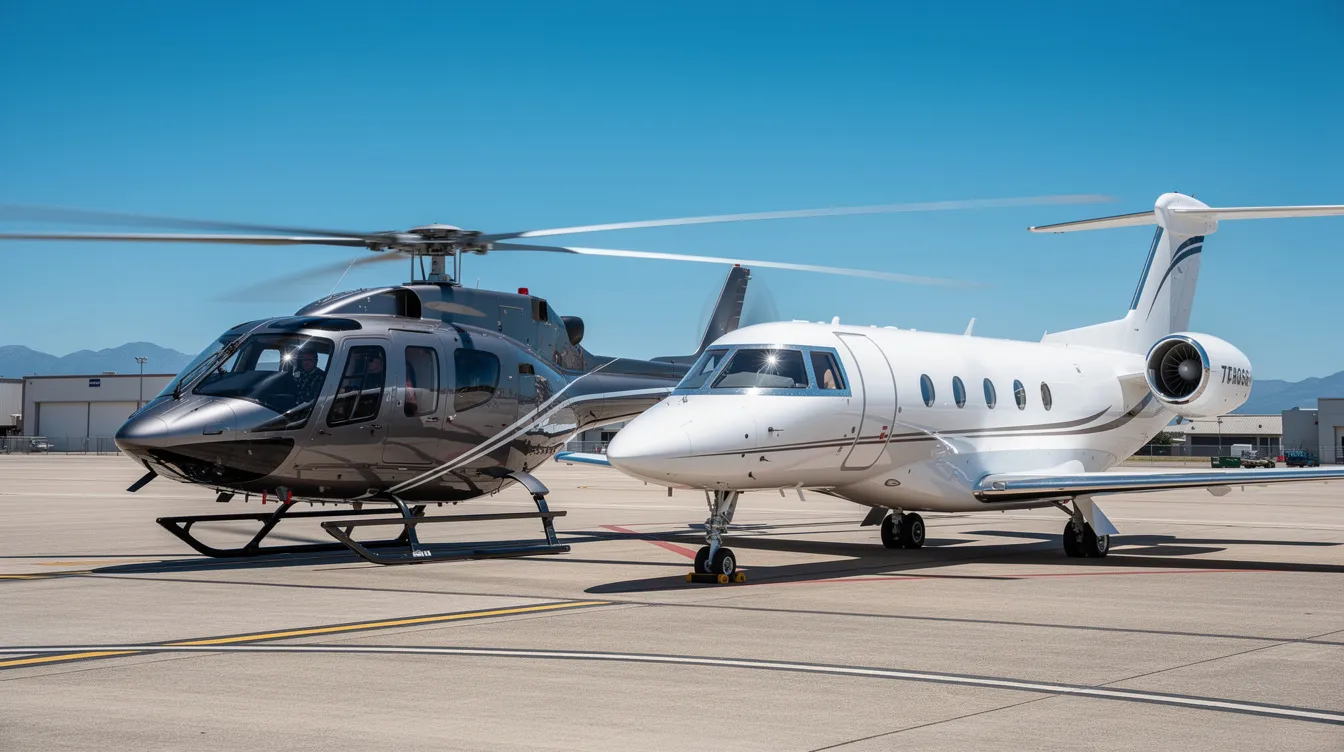
The Robinson R44 Raven II fits a specific mission profile: small groups of up to three passengers needing fast regional access, scenic flights, or connections between city centers and private jets. Its cruise speed of 109 knots, operating costs around $260 per hour, and global support network make it one of the most practical light helicopters available for charter and private use.
The trade-offs are real. The cabin is compact. Luggage space is limited. Weather sensitivity exceeds that of pressurized jets, and the maximum range of 348 nautical miles falls short of turbine helicopters. These are design boundaries, not flaws; they define where the Raven II excels and where a fixed-wing aircraft takes over.
Paired with a BlackJet jet card, the R44 Raven II becomes one component of a coordinated travel system: agile local hops by helicopter, medium- and long-haul comfort by private jet, or even longer-term solutions like leasing a private jet, all under a consistent umbrella of safety and carbon-neutral travel. Explore how BlackJet membership can reshape your itinerary by speaking with the team about combining Robinson R44 Raven II helicopter transfers with private jet access.


 Sign up with google
 Sign up with Apple