
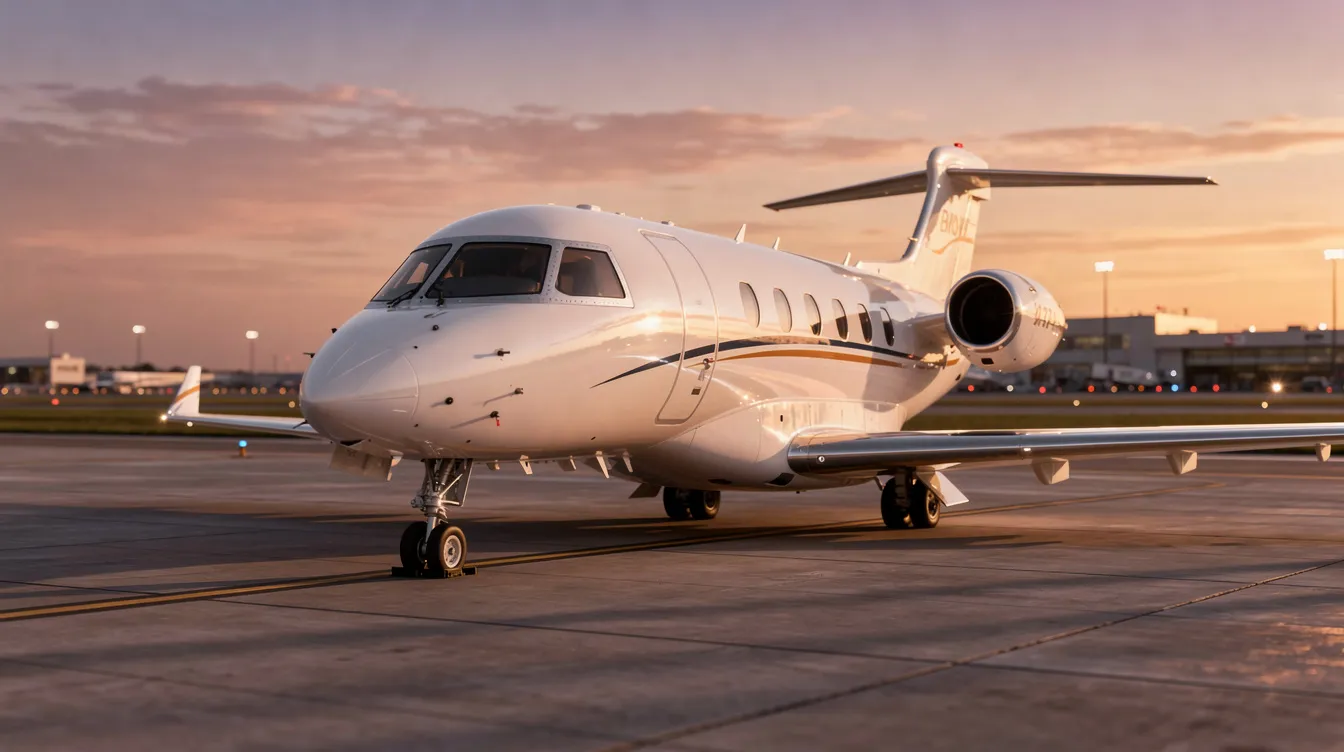
Knowing the real private jet rental cost in 2027 is what separates strategic travelers from those who overpay or choose the wrong aircraft. For executives and high-net-worth individuals, flying private is not a vanity line item; it is a time-recovery tool that turns five-hour commercial airline ordeals into 90-minute door-to-door transitions.
Renting a private jet typically costs between $2,000 and $20,000+ per flight hour, depending on aircraft size. Private jet charter prices start at $2,300 per hour for turboprops and climb past $12,000 per hour for ultra-long-range jets. Here are the 2027 ranges per aircraft category:
Aircraft category | Typical hourly price in 2027 | Typical use |
|---|---|---|
Turboprop | $1,200–$2,400 | Short regional trips |
Very light jet | $2,900–$4,600 | Short trips for 4–5 passengers |
Light jet | $3,500–$6,200 | Medium regional flights |
Midsize jet | $4,700–$8,500 | Domestic routes and 7–9 passengers |
Super-midsize jet | $6,200–$10,000 | Transcontinental travel |
Heavy jet | $8,500–$13,500 | Long-haul and international routes |
VIP airliner | $12,000–$23,000+ | Large groups and corporate delegations |
BlackJet offers Jet Card programs with fixed or capped charter prices, carbon-neutral private flights, and 24/7 tech-enabled support, giving clients the ability to control and predict costs across every trip. Travelers who want a deeper overview of premium private jet cards and membership options can explore how different cabin classes, sustainability features, and service levels compare. To put those hourly numbers in context, here are a few one-way trip ballparks for 2027:
Route and aircraft | Estimated one-way total |
|---|---|
New York (TEB) to Miami (OPF), light jet | $18,000–$30,000 |
Los Angeles (VNY) to Las Vegas, very light jet | $9,000–$12,000 |
London to Dubai, heavy jet | $100,000–$160,000+ |
Key Factors That Influence the Cost to Rent a Private Jet
Multiple factors influence charter prices, and understanding which ones carry the most weight helps you read a quote with clarity rather than confusion. Aircraft category is the biggest driver of cost for private jet rentals; the cabin class you select determines fuel burn, crew requirements, and maintenance overhead before any other variable enters the equation.
Aircraft size and flight time together typically drive 70–80% of the total cost of a charter flight. The remaining 20–30% comes from airport fees, handling, repositioning, and extras. Final costs for private jet rentals can be influenced by flight distance and number of passengers, since longer routes burn more fuel and heavier loads affect range planning. Here are the main cost drivers, ranked by impact:
Aircraft size and type (turboprop vs. midsize jet vs. heavy jet): larger jets cost more to operate than smaller aircraft because they burn more fuel, carry larger crews, and require costlier maintenance.
Flight time and distance: longer flights consume more fuel and may require crew rest stops or overflight permits.
Positioning (empty legs): if the aircraft must fly empty to reach your departure point, those repositioning fees apply and add hours to your bill.
Airport choice: major hubs charge higher landing fees and handling fees than regional airports.
Seasonal demand: high demand periods (holidays, major events, winter ski season) increase rates; off-peak days offer more competitive pricing.
Add-on services: catering, ground transport, Wi-Fi, pet accommodations.
Fixed costs like ownership, insurance, and crew salaries are built into hourly operating costs. Variable costs like fuel, handling fees, and deicing fluctuate trip to trip. BlackJet's quoting engine itemizes these components so clients see exactly what factors influence their final total before committing.
Typical Hourly Rates by Aircraft Size in 2027
Hourly rates are a starting point and often exclude taxes and operational fees. The numbers below reflect all-in base rates (including standard fuel and routine fees) for 2027, adjusted for modest inflation of 2–4% over 2026 levels. Each aircraft category serves a distinct mission profile.
Aircraft category | Typical rate | Capacity and mission |
|---|---|---|
Turboprops | $1,200–$2,400/hr | 4–8 passengers; regional hops under 1,500 nautical miles |
Very light jets | $2,900–$4,600/hr | 4–5 passengers; flights of 1–2.5 hours |
Light jets | $2,600–$3,800/hr base; $3,500–$6,200/hr all-in | 6–8 passengers; regional flights of 2–4.5 hours |
Midsize jets | $4,700–$8,500/hr | 7–9 passengers; domestic coast-to-coast routes |
Super-midsize jets | $5,500–$7,500/hr base; up to $10,000/hr all-in | 8–10 passengers; transcontinental legs |
Heavy jets | $8,000–$14,000/hr | Up to 12–14 passengers; intercontinental routes |
VIP airliners | $12,000–$23,000+/hr | 30–50+ passengers; large-group travel |
Turboprops: Turboprops are the most affordable entry point into private aviation. Best for regional hops under 1,500 nautical miles with 4–8 passengers. Aircraft like the King Air are workhorses for short flights between regional airports. Using turboprops can lower hourly rates for trips under two hours compared to jet alternatives.
Very light jets: Carry 4–5 passengers on flights of 1–2.5 hours. Good for city-pair connections where speed matters more than cabin space.
Light jets: Seat 6–8 passengers on medium regional flights of 2–4.5 hours. Light jets typically cost $2,600 to $3,800 per hour at base rates, with all-in pricing reaching higher depending on route and aircraft age.
Midsize jets: Midsize jets typically seat 7 to 9 passengers and handle domestic coast-to-coast routes non-stop. Ideal for corporate travel groups that need stand-up cabin height and decent baggage capacity.
Super midsize jets: Super-midsize jets have hourly rates from $5,500 to $7,500 at base level, climbing to $10,000/hr all-in. They carry 8–10 passengers on transcontinental legs with flat-floor cabins and full galleys.
Heavy jets: Heavy jets can cost $8,000 to $14,000 per hour. They serve intercontinental routes, carry up to 12–14 passengers, and offer full stand-up cabins, sleeping arrangements, and a dedicated flight attendant. When you need range and comfort for long-haul flights, this is the right aircraft category.
VIP airliners: VIP airliners can accommodate 30 to 50+ passengers. Used for group travel, executive delegations, or sports teams flying transatlantic routes. A Boeing Business Jet or Airbus ACJ falls into this bracket.
Hourly operating costs are calculated by combining fixed costs (airframe depreciation, crew member salaries, scheduled maintenance reserves, insurance) with variable costs (fuel burn, navigation fees, landing and handling). BlackJet Jet Card members lock in fixed or capped hourly rates across cabin classes, shielding them from fuel surcharges and seasonal demand spikes that affect on-demand charter prices, and resources explaining how to compare Jet Card cost per hour can help you benchmark those rates against the broader market.
How Flight Time, Distance, and Routing Shape Your Final Price
Charter prices are calculated as hourly rate multiplied by billable flight time. Billable time includes taxi, takeoff, cruise, descent, and taxi to parking. It also includes positioning legs when the private plane must fly empty to your departure point.
The gap between actual block time and billable time catches first-time buyers off guard. A 45-minute cruise from Los Angeles to Las Vegas, for example, may be billed as 1.5–2.0 hours minimum because operators enforce daily minimums and charge for taxi and positioning. Here are three 2027 route examples:
Los Angeles (VNY) to Las Vegas: ~1 hour actual cruise; billed at 1.5–2.0 hours minimum on a very light jet. Total trip cost: ~$9,000–$12,000.
New York (TEB) to Miami (OPF): ~2.5–3.0 hours cruise; with positioning and taxi, billable time often reaches 3.5 hours. On a light jet, total cost: ~$18,000–$30,000.
London (LTN) to Nice: ~1.5–2.0 hours cruise; billable may reach 2.5 hours after handling and approach routing. On a light and midsize jet, total: ~$15,000–$25,000.
Choosing alternate airports can reduce both flight time and fees. Flying into Teterboro instead of JFK eliminates commercial airline congestion and cuts taxi time. Using Fort Lauderdale (FLL) instead of Miami International drops landing fees and handling fees. These choices shave hundreds to thousands of dollars off a final invoice while delivering a faster ground experience.
Aircraft Type, Cabin Class, and Comfort vs. Cost
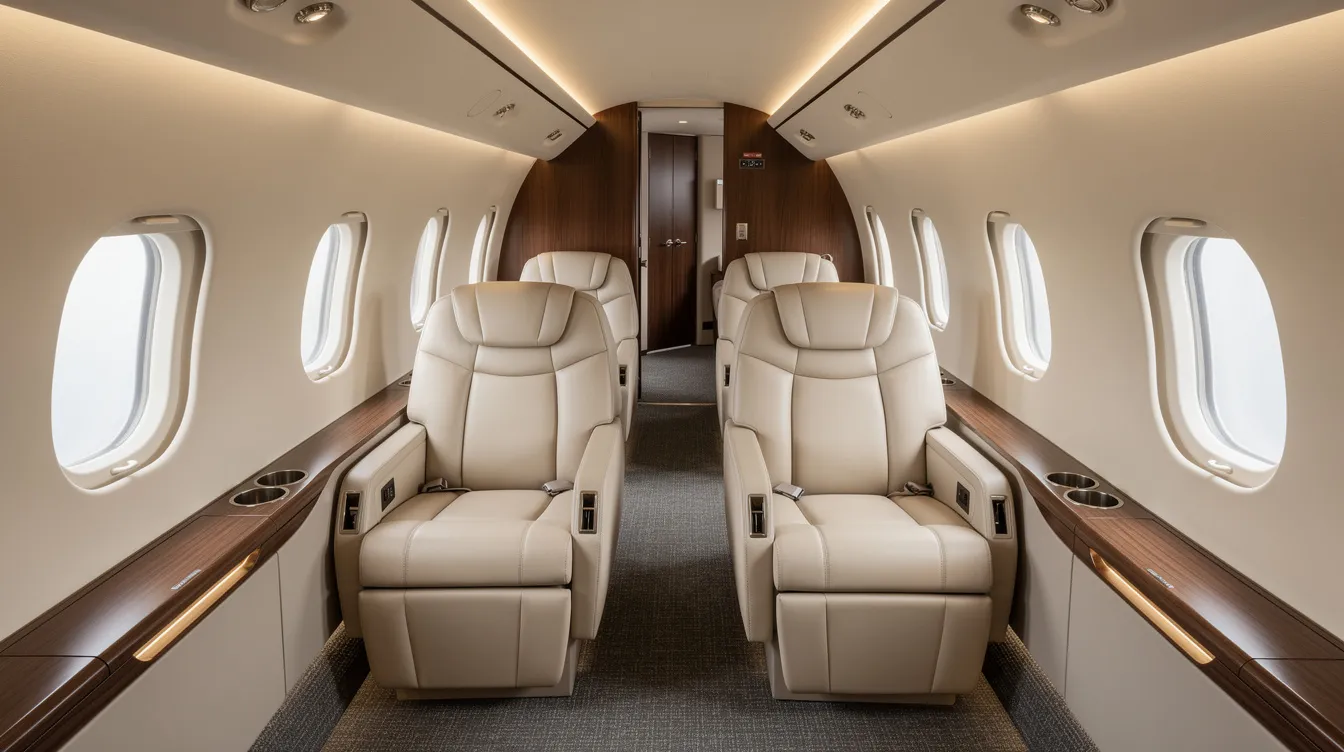
Selecting the right jet for your mission profile prevents overspending on idle cabin space or cramming passengers into an aircraft that cannot handle the distance. Aircraft type and cabin class affect range, cabin height, baggage capacity, and onboard amenities, all of which influence pricing.
Consider a 1,200-nautical-mile route like Chicago to Denver. A very light jet carries 3–5 passengers in a tighter cabin with limited baggage room, at roughly $3,200–$4,600/hr. A midsize jet provides stand-up height, more luggage, faster cruise speed, and room for 7–9 passengers, at $4,700–$8,500/hr. A heavy jet on this route is overkill for 3–5 passengers; you would pay $8,500+/hr for a cabin built for 12, burning more fuel for capacity you do not need.
Here are guidelines for matching aircraft to mission; if you are primarily focused on entry-level access, exploring the most budget-friendly private aircraft options can clarify when smaller jets or turboprops make the most financial sense:
Passenger count under 5, flights under 2 hours: very light jet or turboprop. Cost-effective and fast for short hops.
6–9 passengers, domestic coast-to-coast: midsize or super midsize. The right aircraft for round trips across the continental U.S.
10–14 passengers or transatlantic routes: heavy jet. The larger jet justifies its cost when the mission requires range, payload, or overnight sleeping.
Groups of 15+: VIP airliners or Boeing Business Jet configurations. Travelers organizing large-group itineraries can review detailed breakdowns of the best private jet options for 20 passengers as well as VIP airliners designed for up to 50 travelers to understand costs and cabin layouts before choosing an aircraft.
BlackJet advisors help clients select the right aircraft type per trip within their Jet Card or on-demand charter, matching comfort and cost to the actual passenger count and distance.
Example Trip Scenarios: What You'll Really Pay in 2027
Abstract hourly rates become meaningful only when applied to typical routes. Here are four 2027 scenarios showing what chartering a private jet actually costs.
Scenario 1: New York (TEB) to Miami (OPF), light jet, 6 passengers. Flight time: ~2.5–3 hours. Billable: ~3.5 hours including taxi. At $5,000/hr all-in, total trip cost lands around $17,500–$22,000 before taxes. Per person, that is $2,900–$3,700, which approaches commercial first class on the same route while saving 3–4 hours of airport time.
Scenario 2: Los Angeles (VNY) to Las Vegas, very light jet vs. turboprop. The very light jet runs ~$9,000–$12,000 total (1.5–2 hours billed at $4,500/hr). A turboprop drops to ~$7,000–$9,000 but adds 20–30 minutes of flight time. Both are surprisingly affordable when split among 4 passengers: $1,750–$3,000 per person. Compare that to a 4–5 hour drive or a commercial flight experience that eats half a business day.
Scenario 3: London (LTN) to Dubai (DWC), heavy jet, 10 passengers. Cruise: ~6–7 hours. Billable: ~7–8 hours after crew rest and handling. At $13,000/hr, total cost: ~$91,000–$104,000. Per seat: ~$9,100–$10,400. Commercial business class runs $5,000–$8,000 per seat on this route, but private travel eliminates 4+ hours of airport processing and offers complete schedule control.
Scenario 4: New York (TEB) to Los Angeles (VNY), round trip, 3 days, super midsize jet. Two legs plus overnight costs, daily minimums (2 hours/day while crew waits), and potential repositioning. At $8,000/hr, 10–12 billable hours, plus crew expenses, overnights, and fees, the total reaches $80,000–$105,000. Multi-day trips like this benefit from planning to minimize idle-day charges, and a broader understanding of private jet charter pricing fundamentals makes it easier to anticipate how those variables will shape the final bill.
Key lessons from these examples:
Splitting costs across 4–10 passengers makes private jet travel competitive with commercial business class on many routes
Shorter flights carry proportionally higher overhead due to minimum billing
Longer flights on larger aircraft benefit from the range efficiency of heavy or super midsize jets
Booking in advance can lead to more competitive pricing than last-minute requests

Beyond the Hourly Rate: Taxes, Airport, and Handling Fees
The hourly rate on a quote is not the number on your final invoice. Final invoices for private jet rentals can run 20% to 40% higher than the base hourly rate once taxes and operational fees are added. Additional fees can add 20–40% to the base charter cost.
Taxes and operational fees can increase the overall costs of renting a private jet by a substantial margin. Here is what to expect in the U.S.:
Federal Excise Tax (FET): Private jet charters typically incur a 7.5% Federal Excise Tax on total cost in the U.S. This applies to all domestic segments.
Per-segment passenger fee: ~$5.30 per passenger per segment.
State and local taxes: vary by jurisdiction; some states add their own sales or use taxes.
Landing and ramp fees vary across different airports, especially between major hubs and regional airfields. A heavy jet landing at a major international airport may pay $1,500+ in landing fees alone. The same aircraft at a smaller field might pay $200–$400. Handling fees from FBOs (Fixed Base Operators) range from $150 to $600+ per stop, depending on aircraft size and services rendered.
Smaller airports often have lower landing fees than major hubs, and they deliver a faster ground experience with less taxi time. BlackJet quotes include these charges clearly, allowing clients to compare airports and timing options before confirming a booking, and they pair well with an overall view of the private jet price list and access options that influence long-term travel budgeting.
Crew, Overnights, Winter Operations, and Other Variable Costs
Crew expenses, including overnight accommodations and meals,s can add to the total charter cost, particularly on multi-day trips. When a charter flight spans multiple days, the operator bills for pilot hotels ($150–$350/night per crew member), per diem meals, and sometimes ground transport for the crew.
Overnight costs are compounded by daily minimum flight hour requirements. Many operators enforce a 2-hour-per-day minimum when aircraft and crew are dedicated to a client's trip. If the aircraft sits idle at Palm Beach for two days while you attend meetings, you may owe 4 hours of billed time beyond the actual legs flown.
Winter operations add their own layer. Deicing a midsize jet costs $500–$3,000 per application depending on aircraft size and conditions. Hangar fees in cold-weather hubs can run $500–$1,500/night. Weather delays extend block time and push fuel consumption higher.
The main categories of variable costs to watch:
Crew per diem and hotel (each crew member, per night)
Daily minimum billing (typically 2 hours/day)
Deicing and winter hangar storage
Repositioning legs if the aircraft must return to base empty
Weather-related diversions or extended holds
Discussing itinerary and layovers with providers like BlackJet in advance allows structuring routings that reduce costs where possible, and travelers evaluating longer-term commitments can benefit from guides that explain how private jet leasing costs and structures work.
Onboard Extras: Catering, Wi-Fi, Pets, and Ground Transport
Catering and luxury services may incur additional costs beyond the standard fare. The range varies widely:
Snack packages and beverages: $200–$500 per flight (many light and midsize jets include basic beverages at no charge)
Full gourmet catering: $500–$3,000+ depending on menu complexity, dietary requirements, and passenger count
Wi-Fi: domestic flat-rate packages $200–$500/flight; international per-MB billing can climb past $1,000 on longer flights
Pet fees: cleaning surcharges of $200–$500 per flight segment
Ground transport: chauffeured SUV transfers $150–$500 per pickup/drop-off; bundling through BlackJet's concierge often streamlines both scheduling and pricing
Many jet card programs include additional services like catering as part of their membership benefits. Standard Wi-Fi and refreshments are increasingly included on newer aircraft at no extra charge, while heavy customization (vintage champagne, kosher meals, floral arrangements) is priced separately; understanding Jet Card pricing structures and add-on fees helps you see which extras are bundled and which are billed separately.
Empty Leg Flights: When Renting a Private Jet Can Be 75% Cheaper
An empty leg flight is a repositioning leg flown without revenue passengers. Over 30% of private jet flights operate as empty legs, creating opportunities for flexible travelers to access private aviation at steep discounts. Empty leg flights can save up to 75% on costs compared to standard charter prices.
Here are 2027 examples of empty leg savings:
Miami to Nassau: standard charter on a light jet ~$8,000–$12,000; empty leg price ~$2,500–$4,000
Los Angeles to Las Vegas: standard ~$9,000–$12,000; empty leg ~$3,000–$5,000
New York to Palm Beach: standard ~$14,000–$20,000; empty leg ~$5,000–$8,000
Benefits: 50–75% lower cost; access to larger aircraft than you might normally book.
Limitations: fixed route and timing set by the operator; limited baggage flexibility; higher cancellation risk if the primary leg changes.
Best for: leisure travelers with flexible schedules; spontaneous weekend trips; frequent travelers who can match their plans to available leg flights.
BlackJet's technology platform alerts Jet Card members to relevant empty leg opportunities, sometimes allowing them to apply card hours or access discounted cash rates on these repositioning flights; for many travelers, combining empty legs with the most affordable private jet options is the key to making private aviation fit their budget.
Jet Cards vs. On-Demand Charter: Which Controls Cost Better?
On-demand charter means pay-as-you-go. You request a quote for a specific aircraft type, route, and date. The price reflects current market conditions: fuel costs, aircraft availability, seasonal demand, and operator margins. For occasional flyers (under 15–20 hours per year), this can work well.
Jet card programs offer prepaid access to private jets. Users can purchase flight hours ranging from 10 to 100 annually, locking in a fixed hourly rate across chosen cabin categories. Jet cards provide fixed hourly rates for budgeting predictability, and jet card users benefit from priority access to aircraft availability, often with 24–72-hour notice guarantees. BlackJet's 25-hour and 50-hour Jet Card programs remove peak-day surcharges in most cases and simplify budgeting for frequent travelers, with the dedicated BlackJet 25+ Hour Jet Card offering fixed-rate access to mid, super-mid, and large cabin jets. For ultra-frequent flyers, a detailed breakdown of 100-hour Jet Card program costs can clarify when scaling up your hours delivers better value.
Consider a New York-based executive flying to London 30+ times per year. On-demand charter would expose each booking to market rate swings; during high-demand periods, a heavy jet quote might jump 15–25% above baseline. A Jet Card locks in a rate at purchase, so the 30th flight costs the same per hour as the first.
On-demand charter pros: no upfront commitment; pay only when you fly; flexible aircraft selection per trip.
On-demand charter cons: rates vary by trip; surge pricing during peak seasons; less availability guarantee.
Jet Card pros: fixed or capped hourly costs; guaranteed availability; priority booking; simplified invoicing.
Jet Card cons: upfront capital; hours may expire if not used within program terms; best value requires consistent flying. Travelers comparing membership models can draw on dedicated guides to Jet Card cost and membership pricing, see which providers offer the best Jet Cards for frequent flyers, and revisit how to interpret Jet Card cost per hour across cabin classes.
For a deeper comparison of programs, see BlackJet's Jet Card provider comparison guide.
Safety, Certification, and Why "Cheap" Shouldn't Mean Cutting Corners
Lower charter prices exist for a reason. Sometimes the reason is an efficient operator with high utilization; other times it is deferred maintenance, underinsured aircraft, or crews flying beyond duty limits.
Reputable providers work only with operators audited against standards like ARGUS Platinum, IS-BAO Stage 2 or 3, or Wyvern Wingman. These audits evaluate maintenance records, crew training frequency, insurance levels, and operational procedures. Operators that hold these certifications invest in compliance; that cost is reflected in their hourly rates, and it is money well spent, which is why any serious review of what it costs to rent a private jet should factor safety standards alongside price.
BlackJet vets every operator and aircraft in its network against proprietary safety criteria, including continuous monitoring of tail numbers, inspection histories, and crew qualifications.
Before accepting a quote that looks too good, ask these questions:
What safety audit does the operator hold (ARGUS, IS-BAO, Wyvern)?
How old is the aircraft, and when was its last major inspection?
What are the crew's total flight hours, and does the operator comply with Part 135 duty/rest rules?
What hull and liability insurance coverage does the operator carry?
If the broker cannot answer these, the savings are not worth the risk.
Sustainable, Carbon-Neutral Private Jet Travel and Its Cost Impact
Carbon-neutral private jet flights in 2027 combine two mechanisms: verified carbon offset programs that allow investment in emission-reducing projects, and increasing use of Sustainable Aviation Fuel. SAF reduces carbon emissions by up to 80% on a lifecycle basis compared to conventional jet fuel, though availability still varies by airport.
Newer aircraft models are more fuel-efficient and eco-friendly, burning 15–25% less fuel per nautical mile than predecessors built 15–20 years ago. Smarter routing, reduced holding time, and direct flight paths further cut both emissions and fuel-driven operational costs.
BlackJet builds carbon offsetting into every Jet Card flight at no additional charge. Where SAF is available for specific routes and aircraft types, BlackJet integrates it into the fuel mix. For travelers who want to understand the full environmental picture, BlackJet's green private jet initiatives outline the specifics.
The cost impact of carbon neutrality, when managed at scale by a provider, ranges from negligible to 1–3% of trip cost. Over the long term, fuel efficiency gains from newer aircraft offset much of this, aligning sustainability with financial sense, and even at the top of the market, analyses of billionaire private jet price trends now increasingly account for sustainability investments alongside pure luxury.
Technology and Real-Time Pricing: How BlackJet Keeps Costs Transparent
Modern booking platforms have eliminated much of the opacity that once defined private aviation pricing. BlackJet's mobile and web tools allow members to, when paired with independent resources on Jet Card cost and pricing models, make faster, more informed decisions about which program tier and aircraft category fit their patterns:
View real-time aircraft availability by cabin class and route
Confirm fixed Jet Card hourly rates before committing
Compare options side by side (e.g., light jet vs. midsize jet for the same route)
See itemized breakdowns of handling fees, landing fees, taxes, and operational fees.
Access last-minute empty leg opportunities with live pricing
Faster quoting reduces manual errors and hidden surprises. A charter cost calculator on BlackJet's platform lets prospective members estimate total trip cost for typical routes before purchasing a Jet Card.
BlackJet's 24/7 flight support team monitors weather, airspace restrictions, and airport congestion to keep itineraries on schedule and avoid costly last-minute diversions or delays, a level of operational backup that becomes especially clear when you compare major providers,s such as in-depth reviews of NetJets Jet Card costs and benefits.

How Renting Compares to Owning or Leasing a Private Jet
The gap between renting and owning a private plane is wider than most people assume. An entry-level light jet purchase starts at $3–$5 million, with annual fixed costs of $1.5–$3 million covering crew salaries, insurance, hangar, maintenance reserves, and management fees. That is before a single flight hour is logged.
Charter and Jet Card users pay only for actual flight time. A 25-hour Jet Card on a light jet runs roughly $175,000–$215,000 per year. An owner flying the same 25 hours still pays the full $1.5–$3 million in annual overhead, making each flight hour far more expensive.
Renting wins: when you fly fewer than 200–250 hours per year; when you need different aircraft sizes for different missions; when you prefer zero capital risk and zero management burden.
For buyers who are nevertheless considering ownership, dedicated guides to around $2 million private jet options and the cabin, performance, and cost profile of a $20 million private jet help frame how purchase budgets compare with ongoing charter and Jet Card spending.
Leasing might make sense: when you fly 200–400 hours per year on consistent routes with stable passenger count; when brand identity or aircraft branding matters.
Ownership is justified: when you consistently exceed 400+ hours per year; when schedule control and aircraft customization are non-negotiable; when the aircraft serves as a corporate asset with tax benefits.
BlackJet can serve as a strategic stepping stone: many clients rely on Jet Cards for years before deciding if leasing or ownership is warranted based on actual usage data.
How to Reduce Your Private Jet Rental Cost Without Sacrificing Quality
Private jet travel does not have to mean paying top dollar on every trip. By combining strategies like choosing smaller aircraft and taking advantage of repositioning flights—explored in depth in guides to the cheapest private jet models and access paths and other budget-friendly private aircraft options—you can meaningfully lower your spend. Here are actionable ways to reduce costs without compromising the experience:
Fly off-peak: departing on a Tuesday or Wednesday instead of Friday can drop charter prices by 10–20% on popular routes. Seasonal demand works the same way; avoid holiday weekends when high demand periods push rates up.
Choose smaller regional airports: a landing at Teterboro vs. JFK, or Van Nuys vs. LAX, often saves $500–$1,500 in airport fees and shortens ground time.
Match the right aircraft to the mission: do not book a larger aircraft for 3 passengers on a 90-minute flight. Light and midsize jets cover most domestic routes cost-effectively.
Share the cabin: sharing a charter flight can reduce per-person costs to levels competitive with commercial airlines' business class. A $20,000 light jet charter split among 6 passengers is ~$3,333 per person.
Use empty leg flights: when your schedule is flexible, empty legs on routes like Miami to Nassau or Los Angeles to Las Vegas offer savings of 50–75%.
Book in advance: advance booking of 7–14 days gives operators time to optimize positioning and reduces the likelihood of paying last-minute surge rates.
Consolidatemulti-dayy trips: plan legs so the aircraft repositions efficiently rather than sitting idle, reducing thousands of dollars in daily minimums and overnight costs.
Lock in rates with a Jet Card: for frequent travelers flying 25+ hours per year, a Jet Card eliminates rate volatility and often includes perks that offset add-on costs.
A Sunday departure instead of a Friday evening on a New York to Palm Beach route can save $2,000–$4,000 on a light jet charter, simply because weekend demand drops sharply after Saturday morning.
Frequently Asked Questions About Private Jet Rental Costs
How much does it cost to rent a private jet in 2027?
Renting a private jet in 2027 costs between $2,000 and $20,000+ per flight hour depending on aircraft size. Turboprops start around $1,200/hr; heavy jets run $8,000–$14,000/hr. Total trip cost depends on flight time, distance, and add-ons.
Is flying private ever cheaper than commercial first class?
On certain routes, yes. A light jet from New York to Miami at $20,000 split among 6 passengers works out to ~$3,333 per person. Commercial first class on the same route ranges from $1,500–$3,500 per person, but private travel saves 3–4 hours of airport time and offers complete flexibility.
What fixed costs are built into my hourly rate?
Hourly rates include aircraft depreciation, crew salaries, insurance, scheduled maintenance reserves, and hangar costs. These fixed costs are amortized across flight hours, which is why aircraft with higher annual utilization tend to offer lower per-hour pricing.
Can I see all fees before I commit?
With BlackJet, yes. Quotes itemize the hourly rate, fuel surcharges, landing fees, handling fees, taxes, and any optional services. The private jet charter cost estimator provides a preliminary breakdown before you speak with an advisor.
How much notice does BlackJet need to honor Jet Card rates?
BlackJet Jet Card members typically receive guaranteed availability with 24–72 hours' notice, depending on the program tier and aircraft category. Rates are locked at purchase and do not fluctuate with market conditions.
What about international charter costs like customs and overflight fees?
International charters add overflight permit fees (varying by country), customs and immigration handling ($200–$1,000+), and sometimes cabotage restrictions that limit routing. These operational costs are quoted in advance for transparency.
Are low-cost charter quotes safe?
Not always. Quotes far below market rates may come from operators with outdated aircraft, lapsed safety certifications, or insufficient insurance. Ask for ARGUS, IS-BAO, or Wyvern ratings, and verify the aircraft's maintenance history before booking.
How do empty leg flights work, and are they reliable?
Empty leg flights are repositioning legs priced 25–75% below standard rates. They are reliable as long as the primary booking holds. If the original client cancels or changes timing, your empty leg may be canceled too. They work best for flexible leisure travelers.
Choosing BlackJet: Predictable Costs, Carbon-Neutral Flights, and Premier Service
BlackJet's Jet Card model, vetted operator network, and real-time technology combine to deliver predictable charter prices and a safer, smoother experience than ad-hoc discount hunting through unvetted brokers. Travelers can compare Jet Card costs and membership pricing and explore how to find empty seats on private jets to understand additional ways to plan private travel strategically.
Every BlackJet flight is carbon-neutral as standard. Safety certification and sustainability are embedded in every trip, not billed as optional extras. Clients who value time, privacy, and control over cost chaos find that a Jet Card replaces uncertainty with clarity.
Here is what BlackJet delivers:
Fixed or capped hourly rates across all cabin classes
Carbon-neutral flights at no additional charge
Proprietary safety vetting of every operator and aircraft
24/7 digital booking with real-time availability and transparent fee breakdowns
Access to empty leg opportunities and concierge ground transport
Flexible programs from 10 to 100+ hours annually
Elevate your travel on your terms. Explore BlackJet's Jet Card programs or request a tailored 2027 pricing consultation for your typical routes. Private aviation, done right, starts with knowing exactly what you will pay and exactly what you will receive.