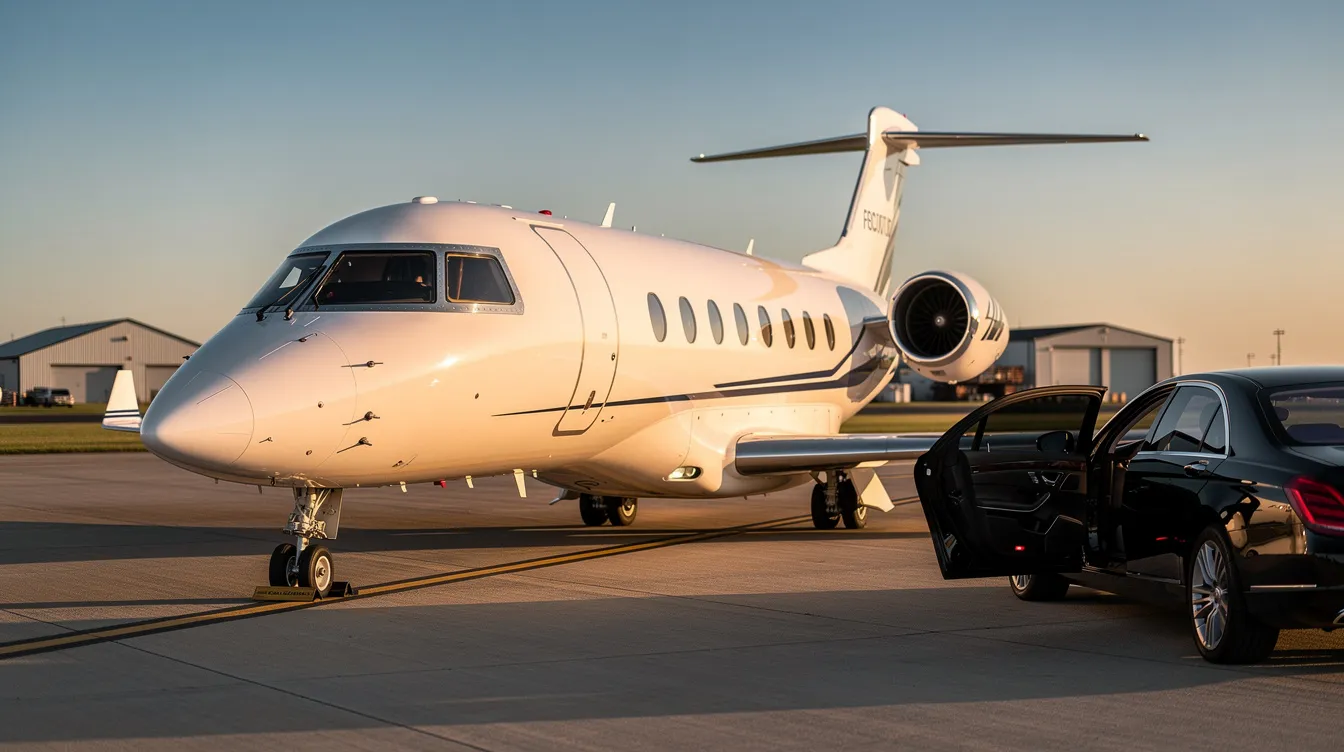
New York demands speed, precision, and control from anyone who operates at the highest levels of business and leisure. A private plane to New York delivers exactly that, bypassing the chaos of commercial terminals in favor of executive airports, fixed-wing flexibility, and door-to-door efficiency that commercial airlines simply cannot match. This guide covers everything you need to know about flying private into the Big Apple with BlackJet, from airport selection and popular routes to pricing, aircraft types, and the membership programs that make it all predictable.

Why a Private Plane to New York Is a Strategic Advantage
Flying private into New York is not a matter of prestige alone. It is a strategic decision rooted in time, control, and privacy-three currencies that discerning travelers and business travelers value above all else. In a metropolitan area where ground traffic, terminal congestion, and weather delays routinely add hours to any itinerary, private aviation services compress the entire travel experience into a fraction of the time spent on a commercial flight.
Consider a real-world scenario. A managing partner based in Boston needs to attend a board meeting in Midtown Manhattan and return the same evening. On commercial airlines, the door-to-door calculus looks roughly like this: an hour-plus drive to Logan, 90 minutes for security and boarding, a one-hour flight to Kennedy International Airport or LaGuardia, deplaning, baggage, and 45 minutes of ground transit into Manhattan. Total elapsed time approaches four to five hours each way. Private flying reduces travel time by avoiding commercial airport delays entirely. The same executive departs from a local general aviation field, arrives 15 minutes before wheels-up, flies direct into Teterboro, and is in a sedan headed to Midtown within minutes of landing. Total elapsed time: roughly 90 minutes to two hours. That is two to three hours saved in a single direction, which often means the difference between a day trip and an overnight stay.
Private jets offer personalized service tailored to individual needs, and flying private allows for flexible scheduling and last-minute changes-both of which matter in a market where meetings shift, closings accelerate, and weather windows narrow without warning. Renting a private plane typically involves on demand charter or jet cards, and it is the Jet Card model that gives frequent flyers to New York the greatest predictability.
BlackJet's membership programs are built for exactly this kind of traveler. The 25-hour Jet Card, the flexible BlackJet 25+ Hour Jet Card, and 50-hour Jet Card lock in fixed hourly rates across multiple aircraft categories, eliminate dynamic surge pricing, and include carbon-neutral positioning as standard-not as an add-on. For a full overview of how BlackJet structures its jet card tiers, benefits, and services, review our premium private Jet Card programs. For anyone who expects to fly into or out of New York more than a handful of times per year, the Jet Card is the single most efficient way to secure reliable, repeatable access to private aviation.
In the sections that follow, we will cover the best private airports serving New York, the most popular charter routes and average flight time benchmarks, how to choose between light jets and heavy jets, realistic pricing and empty leg opportunities, ground transportation coordination, and the safety and sustainability standards that set BlackJet apart from conventional private jet companies.
Private Airports for Charter Flights to New York
Experienced private jet charter clients rarely fly into JFK or LaGuardia by choice. Those commercial airports were designed for airline operations-long taxi queues, TSA checkpoints, and gate-based boarding that erases most of the time advantages of flying private. Instead, the private and business aviation community in the New York region relies on a network of executive airports and private terminals purpose-built for speed and discretion. Private flights can land at smaller airports closer to New York City, and private jets can access over 5,000 airports worldwide, many of which offer far more convenience than major airports for reaching your final destination in the tri-state area. Over 150 private aircraft are available within 30 miles of Manhattan on any given day, which speaks to the depth of the market.
Teterboro Airport (TEB) is the undisputed center of gravity for york private jet charter operations. Located in Bergen County, New Jersey, Teterboro Airport is only 12 miles from Manhattan, roughly 25 to 40 minutes by car depending on traffic and time of day. The field hosts multiple premium FBOs (Fixed Base Operators) with private terminals, dedicated customs clearance for international arrivals, and concierge-level handling that gets passengers from aircraft door to vehicle in minutes. TEB handles thousands of business aviation movements each month and is the preferred arrival point for corporate travel into Midtown, the Financial District, and northern New Jersey. For travelers headed across the Hudson River into Manhattan, TEB is hard to beat.
Westchester County Airport (HPN) in white plains serves a different but equally important corridor. Situated 33 miles from Midtown Manhattan, HPN is the airport of choice for travelers with meetings in northern suburbs like Greenwich, Stamford, or Westchester County itself, as well as those heading to the Upper East Side or northern Manhattan. The facility is modern, efficient, and significantly quieter than Teterboro, with shorter taxi times and a more relaxed atmosphere. For executives splitting time between Connecticut hedge fund offices and Manhattan, HPN frequently makes more sense than any alternative.
Republic Airport (FRG) in Farmingdale, Long Island, is a strong option for passengers bound for the Hamptons, the South Shore, or eastern Long Island. Farmingdale Republic Airport is 37.2 miles from Midtown Manhattan, making it less ideal for Manhattan-centric itineraries but a convenient alternative for summer weekend escapes and leisure trips that bypass New York City congestion entirely. Nearby, Islip MacArthur Airport (ISP)-52.6 miles from Midtown Manhattan-serves a similar geographic niche and can handle larger charter flights with ease.
Newark Liberty International Airport (EWR) and Morristown Municipal Airport (MMU) round out the New Jersey options. Newark Liberty International Airport is 16.7 miles from Midtown Manhattan and maintains a dedicated general aviation terminal that handles private jet charter services alongside its massive commercial operations. Morristown, farther west, serves the pharmaceutical corridor and suburban corporate campuses across Morris and Somerset counties. Both are solid picks for travelers whose meetings are in New Jersey rather than Manhattan.
Finally, for travelers who want to eliminate ground transit time almost entirely, New York's heliport network offers last-mile connections. The Downtown Manhattan Heliport near the East River, the East 34th Street Heliport, and the West 30th Street Heliport can all receive helicopter transfers from TEB or HPN, cutting door-to-door times to as little as 30 minutes from touchdown. BlackJet's concierge team can coordinate these connections seamlessly within a single itinerary, turning a private airport arrival into a true door-to-door experience.
Most Popular Private Plane Routes to and from New York
BlackJet members use New York as a hub for virtually every type of mission, coast-to-coast business runs, quick east coast shuttles, seasonal resort escapes, and international departures. The diversity of routes reflects the city's role as the gravitational center of American finance, media, law, and culture, and the volume of private charter flights on these corridors keeps aircraft availability strong year-round.
The New York to Los Angeles corridor is the marquee transcontinental route. The average flight time runs five to six hours depending on winds and aircraft class, and the route is served almost exclusively by super midsize and heavy jets that offer the cabin space and range needed for a productive cross-country session. Business travelers on this route often depart Teterboro in the early morning and land at Van Nuys or Santa Monica in time for a late-morning meeting on the West Coast. Booking a private jet requires contacting a charter service, and private jet charters can be booked for one-way trips, a structure that suits the many executives who fly westbound but return on a different schedule. Identification documents are required for all passengers, though the verification process at private terminals takes minutes, not the hours familiar to anyone who has endured TSA at Kennedy International Airport.
New York to Miami is the single busiest private jet route in the United States, generating approximately 12,000 annual movements between Teterboro and Opa-locka or Fort Lauderdale Executive (epicedits.co.uk). The average flight time is roughly two and a half to three hours, and the route draws both corporate travel and leisure demand-finance professionals commuting to South Florida offices, families heading to waterfront homes, and travelers connecting to Caribbean departures. New York's humid subtropical climate in summer and Miami's year-round warmth create a natural seasonal flow that keeps aircraft shuttling between the two cities constantly.
The New York to Chicago route clocks in at about one and a half to two hours of block time, making it a natural fit for midsize jets. Similarly, New York to Washington, D.C. is a sub-one-hour leg that light jets handle with ease-ideal for regulatory meetings, congressional testimony, or quick consulting engagements. New York to Boston, another corridor under an hour, is among the most efficient private charter flights available because the commercial alternative involves disproportionate ground time relative to air time.
On the leisure side, New York to Aspen is a favorite during ski season, roughly three and a half to four hours in a super midsize jet, while New York to Nassau in the Bahamas opens up warm-weather escapes in under three hours aboard a light jet. Short-haul weekend getaways to the Hamptons, Martha's Vineyard, or Nantucket are often handled by turboprops or very light jets, with flight times measured in 30 to 45 minutes rather than hours. The range of leisure trips and business trip missions that originate in New York is nearly limitless.
Passenger counts on these routes vary considerably. Executive missions typically involve two to four travelers; family or leisure itineraries run six to eight; and larger corporate travel groups can require seating for 12 to 14. This is where aircraft class selection becomes critical, and BlackJet advisors match each mission to the right airframe. Private jets typically allow for flexible scheduling of itineraries, and booking can be done as little as 4 hours in advance for members who need same-day access. For travelers comparing options, our guides to Jet Card cost and membership value, and the best Jet Cards for frequent flyers break down how different programs handle access, pricing, and peak dates. BlackJet's membership programs prioritize peak-time availability on high-demand city pairs like New York to South Florida and New York to LA, which contrasts sharply with the uncertainty of ad-hoc charter quotes during major events or holiday weekends.
Pricing, Empty Leg Flights, and How Jet Cards Change the Economics
Private jet charter pricing to New York depends on three primary variables: aircraft size, routing distance, and date of travel. Private flight costs depend on aircraft type and distance, and private jet pricing is often calculated on a per-flight-hour basis, a structure explored in detail in our guide to the private jet price list and cost options. Costs for private flights range from $2,000 to over $17,000 per flight hour, with the spread driven by whether you are booking a light jet for a short regional hop or a heavy jet for an intercontinental crossing. Hourly rates for private jets can range from $2,000 to $14,000 for most domestic missions, with ultra-long-range and VIP-configured aircraft pushing above that ceiling. Chartering a private jet to NYC can start at $2,000 per hour for a very light jet on a short leg, especially if you focus on budget-friendly private aircraft options and efficient access models.
Here are several concrete trip estimates to anchor expectations. A private jet from Miami to NYC costs about $12,500 for a light jet one-way, with midsize options running higher at $22,000 to $35,000 depending on configuration. Charter flights from NYC to Los Angeles can cost around $40,000 in a super midsize or heavy jet-a figure that reflects the five-plus-hour block time and fuel load. Private jet flights from NYC to London can cost around $70,000 or more in a long-range heavy jet, a route often tagged London NYC in industry shorthand. For a shorter cross-border hop like New York to Toronto, light jet rates apply with additional customs and cross-border fees layered on top. Each of these estimates is illustrative; actual quotes vary with season, lead time, and aircraft availability.
U.S. domestic flights incur a 7.5% Federal Excise Tax, which is applied to the charter cost. Beyond that, travelers should understand what is and isn't bundled. Standard charter quotes typically include the base aircraft and crew fee, fuel, and landing fees at most FBOs. De-icing in winter, premium catering, crew overnight expenses, and peak-date surcharges during major events like Art Basel or the U.S. Open are often separate line items. BlackJet's Jet Card structure rolls core costs, fuel, and carbon offsets into the guaranteed hourly rate, which removes much of this ambiguity. Travelers evaluating programs should pay close attention to Jet Card cost per hour and the broader Jet Card pricing structure and benefits to understand true all‑in value. For aircraft owners considering whether to charter out their own planes or maintain private access through a Jet Card, the comparison often favors the Jet Card for total cost predictability across a portfolio of flight hours.
Empty Leg Flights in the New York Market
Empty leg flights represent one of the most compelling pricing opportunities in private aviation-but they require flexibility. Empty leg flights occur when jets reposition without passengers, typically after completing a one-way charter. Travelers open to alternatives like buying a single seat on a private jet or leveraging the cheapest private jet and empty-leg options can often access these savings without committing to a full charter. Roughly 30% of private jets fly empty to reposition, which creates a steady supply of discounted inventory on high-traffic corridors. Empty leg flights can save up to 75% on charter costs compared with standard one-way pricing, though savings of 40 to 60 percent are more common in practice.
Popular routes increase chances of securing empty leg flights, and no route generates more repositioning inventory than New York to Miami and back. When a jet drops off passengers in South Florida and needs to return to its home base in the Northeast, that return leg flights segment is offered at steep discounts. The same dynamic plays out on New York to LA, New York to Chicago, and other high-volume city pairs. Availability of empty leg flights changes regularly, sometimes by the hour, so travelers who can adjust their departure window by a day or even a few hours stand the best chance of capitalizing. Private jet rental through an on-demand charter quote can fluctuate significantly, but Jet Card members benefit from locked-in rates that function as a hedge against that volatility.
For larger parties, private flight charters can be competitive with first-class tickets for larger groups. When six to eight travelers split the cost of a midsize jet, the per-person economics can approach or even beat premium commercial fares-especially when you factor in the time savings and competitive pricing that come with avoiding commercial airport overhead.

Choosing the Right Private Plane for New York Flights
Aircraft selection for New York missions depends on how many passengers are flying, the distance involved, luggage requirements, and whether the trip is a focused business trip or a more relaxed family getaway. Renting a private plane to New York often involves selecting an aircraft size based on party size, and the booking process includes selecting available aircraft options that align with your route and schedule.
Very Light and Light Jets - Aircraft like the Embraer Phenom 300 and Cessna Citation CJ series define this category. Light jets accommodate 3 to 6 passengers for short trips and are the workhorses of regional private jet travel in the Northeast, sitting at the center of many travelers' decisions about the best small private aircraft for each mission and the most efficient small private jet luxury travel options. They are ideal for New York to Boston, New York to Washington D.C., New York to Toronto, and New York to Nantucket, any leg under roughly two and a half hours, where a smaller cabin and lower operating cost make sense. Spacious cabins in this class seat four to six comfortably with a fully enclosed lavatory on most models, and modern amenities like Wi-Fi and charging ports keep executives connected throughout the flight. For a deeper look at these airframes, explore BlackJet's guide to types of private jets.
Midsize and Super Midsize Jets - When the mission calls for more cabin volume, longer range, or additional passengers, midsize jets and their super midsize counterparts step in. Midsize jets can carry up to 8 passengers comfortably, while super midsize jets typically seat 8 to 10 passengers. Aircraft in this tier-the Citation XLS, Hawker 800 series, and Embraer Praetor 500, among others-balance speed, range, and cabin comfort. They are the right fit for New York to Dallas, New York to Denver, and New York to Miami when you want a stand-up cabin, a full refreshment center, and enough room for a small team to work en route. Seating arrangements in super midsize cabins typically include club configurations and a divan, with attentive cabin crew provided on super midsize jets and larger. Private jets offer in-flight entertainment systems and Wi-Fi as standard in this class.
Large Cabin and Ultra-Long-Range Jets - For transcontinental and transatlantic routes, New York to Los Angeles, New York to London, New York to Dubai, the Gulfstream G500/G600, Bombardier Global series, and Dassault Falcon 7X/8X deliver the range, cabin space, and onboard amenities that long-haul missions demand. Large jets can accommodate up to 12 passengers for longer flights, and ultra-long-range jets can carry up to 16 passengers. Cabins on private jets in this class offer privacy and comfort for business or relaxation, with private jets that can include luxurious interiors and private lavatories, conference-style seating, full galleys, and the ability to dine, work, and sleep during the flight. Gourmet in-flight catering is available on larger jets, and private jets can accommodate specific requests for amenities, from specific wine selections to dietary accommodations. Heavy jets are ideal for international flights and can be more expensive, but the per-person cost spread across a full cabin often justifies the step up in aircraft types. For even larger groups, our guides to the best private jets for 20 passengers, top private jets for 30 passengers, and private jet options for 50 passengers outline how VIP airliners in this segment deliver an experience that no commercial cabin can replicate.
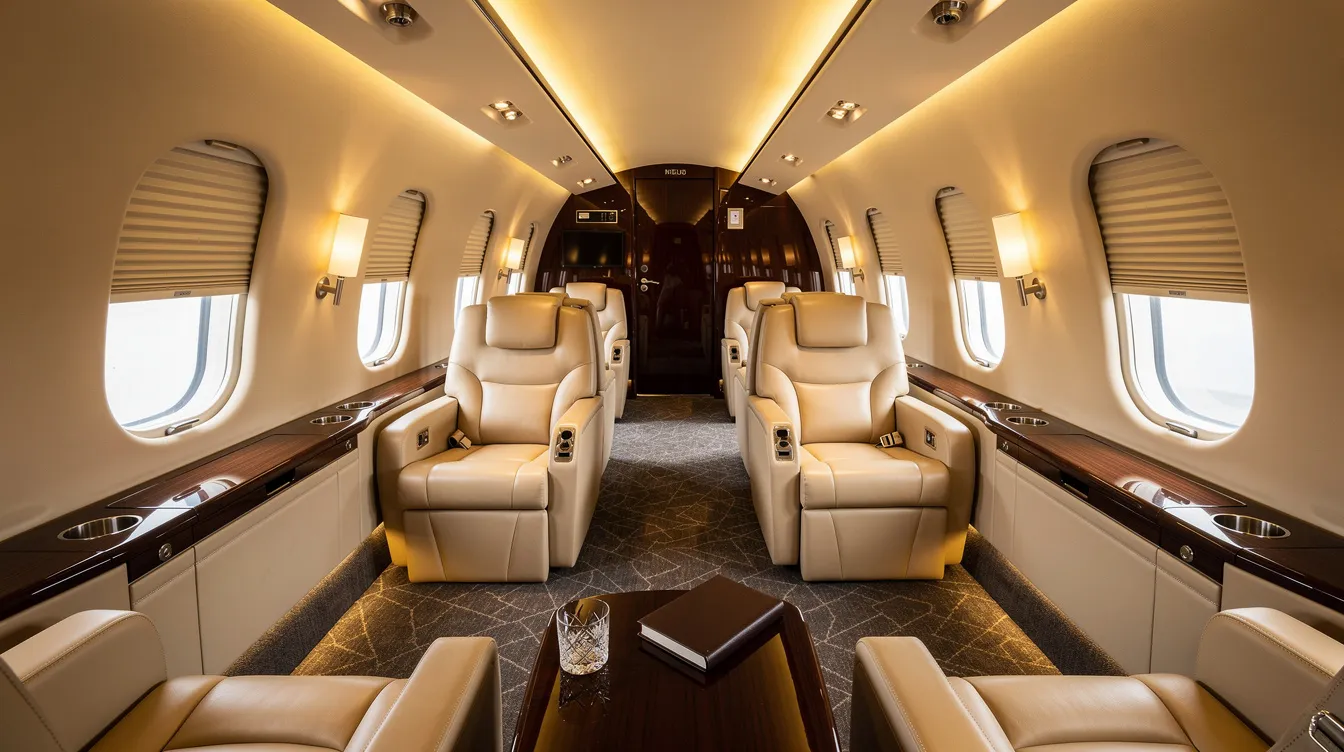
Cabin layout and connectivity directly impact productivity. For corporate travel, the difference between a four-seat club configuration and a full conference grouping with broadband connectivity can determine whether a team arrives prepared or still catching up. For families, a divan that converts to a flat bed and a separate lavatory make multi-hour flights far more comfortable than any first-class seat. BlackJet advisors assess each mission to match aircraft options with the right balance of cost, capacity, and range, avoiding both the waste of oversizing and the discomfort of cramming into a cabin that is too small. The goal is to select from a thoughtful set of aircraft options rather than default to the largest or cheapest airframe available.
From Runway to Door: Ground Transportation & Luxury Stays
A private plane to New York covers only part of the journey. What separates a genuinely seamless experience from a merely fast flight is the coordination that happens before wheels touch down and after the cabin door opens. BlackJet's approach treats every trip as a single, integrated itinerary-from departure lounge to final destination-with executive ground transportation services and hotel arrangements handled as part of the same conversation.
When a BlackJet member lands at Teterboro, Westchester, or Republic, a chauffeured vehicle is already positioned at the FBO. Ground transportation options range from executive sedans and luxury SUVs to Sprinter vans for group travel, all timed to the aircraft's actual arrival rather than a scheduled landing slot. From Teterboro, the drive to Midtown Manhattan takes 25 to 40 minutes, depending on traffic. From HPN, it is roughly 45 minutes to an hour to central Manhattan, with shorter drives to Greenwich, Stamford, or Westchester corporate campuses. For travelers headed to long island, Republic Airport provides a shorter drive to Hamptons destinations than any Manhattan-area field.
BlackJet's concierge can also coordinate ground transportation to regional destinations for same-day corporate travel, shuttling executives from the tarmac to offices in Princeton, the pharmaceutical corridor in northern New Jersey, or financial firms along Connecticut's Gold Coast. For travelers attending major events-gallery openings, galas, or board dinners-the concierge team handles timing down to the minute so that arrivals feel unhurried and departures are never rushed.
For overnight stays, BlackJet's advisory team can recommend and book from a curated set of luxury hotels that appeal to private jet travelers. The Peninsula New York, steps from Fifth Avenue and the Metropolitan Museum of Modern Art collections, offers a polished base for Midtown meetings and cultural itineraries. The Mark on the Upper East Side combines residential-style suites with proximity to Central Park and Museum Mile-ideal for travelers who want to see the city lights without battling crowds. Aman New York, occupying the Crown Building, delivers spa-level serenity in the middle of Midtown. The Four Seasons Hotel New York Downtown, near Wall Street and the East River waterfront, suits finance professionals who want to walk to meetings in the Financial District. The New York Palace-now the Lotte New York Palace, often still called the New York Palace by longtime guests-remains a landmark Midtown option with its iconic courtyard entrance and modern tower suites.
Here is a scenario that illustrates the full flow. A CFO based in Atlanta has a Thursday board meeting at a law firm on Park Avenue and a Friday breakfast with an investor in Greenwich. BlackJet arranges a Wednesday evening departure from Peachtree-DeKalb in a midsize jet, landing at Teterboro just after 9 p.m. A sedan meets the aircraft and delivers the CFO to a suite at The Peninsula. Thursday morning, a car is waiting at the hotel entrance at 8:15 a.m. for the short drive to Park Avenue. After the meeting, the same car repositions to drive north to Greenwich for an evening dinner. Friday morning, after the breakfast meeting, a car returns the CFO to Westchester County Airport for a mid-morning departure home. Every segment-air, ground, lodging-is coordinated through a single point of contact. Personalized services like these define what BlackJet's concierge capability actually means in practice.
Safety, Sustainability, and Technology: How BlackJet Elevates New York Private Travel
New York's airspace is among the most congested and complex in the world. Three major commercial airports, dozens of private airports, multiple military and restricted zones, and the constant flow of helicopter traffic over the Hudson River and East River corridors create an environment where safety margins must be absolute-not aspirational. For BlackJet, maintaining rigorous standards is not a differentiator to be marketed; it is the non-negotiable foundation of every charter flight that operates under the BlackJet name.
All charter flights arranged through BlackJet are operated under FAA Part 135 certification, the regulatory framework governing commercial air charter in the United States. Beyond that baseline, BlackJet requires operators to meet elevated third-party audit standards such as ARGUS Gold or Platinum and Wyvern Wingman ratings. Pilots must hold Airline Transport Pilot (ATP) certificates and meet minimum experience thresholds that exceed regulatory requirements. Aircraft maintenance programs are tracked continuously, with real-time monitoring of airworthiness directives, inspection intervals, and component life limits. This layered approach to aircraft maintenance and crew qualification means that every aircraft in the BlackJet network has been vetted to standards that fewer than 35 percent of U.S. Part 135 operators meet.
Sustainability in private aviation is a subject that demands honesty rather than slogans. BlackJet's carbon-neutral flight commitment means that every charter mission is offset at no additional cost to the member; emissions are calculated per flight segment and neutralized through verified offset programs. When Sustainable Aviation Fuel (SAF) is available at New York-area FBOs, BlackJet offers members the option to request SAF uplift, which reduces lifecycle CO₂ emissions by up to approximately 80 percent compared with conventional jet fuel (flyius.com). SAF availability remains limited and more expensive than standard Jet-A, but its presence at major Northeast FBOs is growing, and BlackJet tracks availability in real time so members can make informed choices.
Technology underpins the entire experience. BlackJet's digital platform enables 24/7 mobile booking and flight management-members can request, confirm, and adjust New York private charter flights from their phone. Real-time flight status tracking, digital manifests, pre-trip notifications, and in-app support mean that members are never waiting for a callback or refreshing an email inbox. When weather, ATC delays, or route changes arise, the platform and support team coordinate adjustments proactively, often before the member is even aware of the issue. For Jet Card members, this technology layer translates to priority access, faster confirmations, and backup aircraft options that traditional brokers simply cannot match.
The contrast with traditional charter brokers is worth stating plainly. A conventional broker's primary function is to find available aircraft at the lowest price. That model can work for infrequent, price-sensitive travelers, but it offers little consistency in operator quality, crew experience, or environmental accountability. BlackJet's integrated approach-where safety, sustainability, and technology operate as a single system rather than separate features-is designed for discerning travelers who expect the same standard every time they fly, not just when they happen to draw a top-tier operator from the broker's rolodex.
If you fly to or from New York regularly and want to standardize your experience around these higher benchmarks, explore BlackJet's Jet Card membership programs to see how predictable, elevated private jet travel actually works.
FAQ: Flying a Private Plane to New York with BlackJet
Below are concise answers to the questions prospective BlackJet members most frequently ask about private planes to New York.
How many passengers can a private plane to New York accommodate?
Capacity depends on aircraft class. Very light jets seat up to three passengers. Light jets accommodate 3 to 6 passengers for short trips. Midsize jets can carry up to 8 passengers comfortably, and super midsize jets typically seat 8 to 10 passengers. Large jets can accommodate up to 12 passengers for longer flights, and ultra-long-range jets can carry up to 16 passengers. Travelers evaluating options can use our guide to private jet sizes and capacities and, for heavy users, our breakdown of the 100-hour Jet Card cost and structure to align aircraft selection with expected flying hours. BlackJet advisors match aircraft to your party size and route so you are never paying for unused capacity-or cramped into a cabin that is too small.
What is the average flight time to New York from key cities?
Representative block times for private charter flights into New York:
Miami to New York: approximately 2.5 to 3 hours
Chicago to New York: approximately 1.5 to 2 hours
Los Angeles to New York: approximately 5 to 6 hours
London to New York: approximately 7 to 8 hours (westbound)
Jet Card members can rely on these consistent planning windows when building itineraries.
Can I book a one-way charter flight to New York?
Yes. Private jet charters can be booked for one-way trips, and BlackJet handles one-way pricing transparently within its Jet Card framework. One-way bookings also open opportunities for empty leg flights when aircraft need to reposition after your flight, savings that BlackJet surfaces proactively to eligible members. For more on how to book a private jet, see our booking guide.
How far in advance should I book a private plane to New York?
Booking can be done as little as 4 hours in advance for BlackJet Jet Card members, subject to aircraft availability. For peak dates-holiday weekends, major events, and high-demand corridors like New York to South Florida in winter-planning 24 to 72 hours ahead significantly improves aircraft selection and ensures access to preferred cabin classes. Flexible scheduling is one of the core advantages of Jet Card membership.
Can BlackJet arrange corporate travel and ground transportation for my team?
Absolutely. BlackJet coordinates group travel itineraries that synchronize multiple aircraft arrivals, align ground transportation to meeting schedules, and handle lodging logistics for teams of any size. Whether your group requires a single super midsize jet or multiple light jets arriving at different private terminals across the New York region, the concierge team manages the full itinerary as a unified operation.
Is flying private to New York worth the cost compared with first class?
For solo travelers on a budget, first class may be the simpler calculation. But for groups of four or more, private flight charters can be competitive with first-class tickets for larger groups, and the time savings, privacy, and flexibility often tip the equation decisively in favor of private. When you factor in the ability to depart from a convenient nearby airport, skip TSA, and arrive at an executive field 12 miles from Manhattan rather than a congested commercial terminal, the value proposition becomes clear.
If you expect to fly to or from New York more than a few times per year, speak with a BlackJet advisor about which Jet Card tier aligns with your travel pattern. Discover how BlackJet can reshape the way you move through the world's most demanding cities.
Conclusion: Elevate Your New York Travel Experience with BlackJet
Choosing to fly a private plane to New York is more than a luxury—it's a strategic investment in time, efficiency, and peace of mind. BlackJet’s comprehensive approach combines unmatched safety standards, sustainable practices, and cutting-edge technology to deliver a seamless private aviation experience tailored to your unique needs. Whether you’re traveling for business, leisure, or a combination of both, our Jet Card programs and concierge services ensure that every detail—from aircraft selection to ground transportation—is handled with precision and care.
By bypassing commercial airport hassles and gaining access to exclusive executive terminals like Teterboro and Westchester, you reclaim hours in your day and arrive refreshed and ready. With flexible booking options, transparent pricing, and a commitment to carbon-neutral flights, BlackJet empowers you to fly smarter, greener, and more comfortably.
Discover how private jet travel to New York can redefine your expectations. Explore BlackJet’s premium Jet Card memberships today and unlock effortless access to the city that never sleeps—on your terms.


 Sign up with google
 Sign up with Apple