The global marketplace for private jets has never been more dynamic-or more competitive. This guide is designed for prospective buyers, business travelers, and aviation enthusiasts evaluating private jets for sale or alternative access models. Whether you are evaluating aircraft for sale or reconsidering whether ownership is the right move at all, understanding today's inventory, pricing, and access alternatives is the difference between a strategic acquisition and an expensive misstep. Here is what discerning buyers and travelers need to know.
Immediate Snapshot: Today's Private Jets for Sale Market
In 2026, private aviation remains a strategic advantage that commercial air travel simply cannot replicate. Private jets access 10 times more airports than airlines, two-thirds of passengers report being more productive in flight, and business aircraft users see 23% higher revenue growth than non-users. Private jets also allow for flexible scheduling and multiple stops on a single itinerary-luxuries no airline can match.
There are currently 24,270 private jets in operation worldwide, with approximately 63% registered in the United States. Yet only about 6.4% of the active fleet is listed for sale at any moment-well below the 10-year historical average of roughly 8.2%, according to AMSTAT's Q4 2025 market report. Controller.com lists 1,187 jet aircraft for sale as of this writing, and transaction times have dropped to about 150 days.
Current examples on the market include a Dassault Falcon 2000EX EASy in New York, a Bombardier Global 6000 in North Carolina and Maryland, and a Gulfstream G450 in Kansas. Inventory is tight, prices are firming, and many buyers are now turning to BlackJet's premium Jet Card programs as a strategic alternative-gaining guaranteed access to private planes without the capital commitment, depreciation risk, or regulatory burden of whole ownership.
Types of Private Aircraft for Sale: Jets, Turboprops, and More
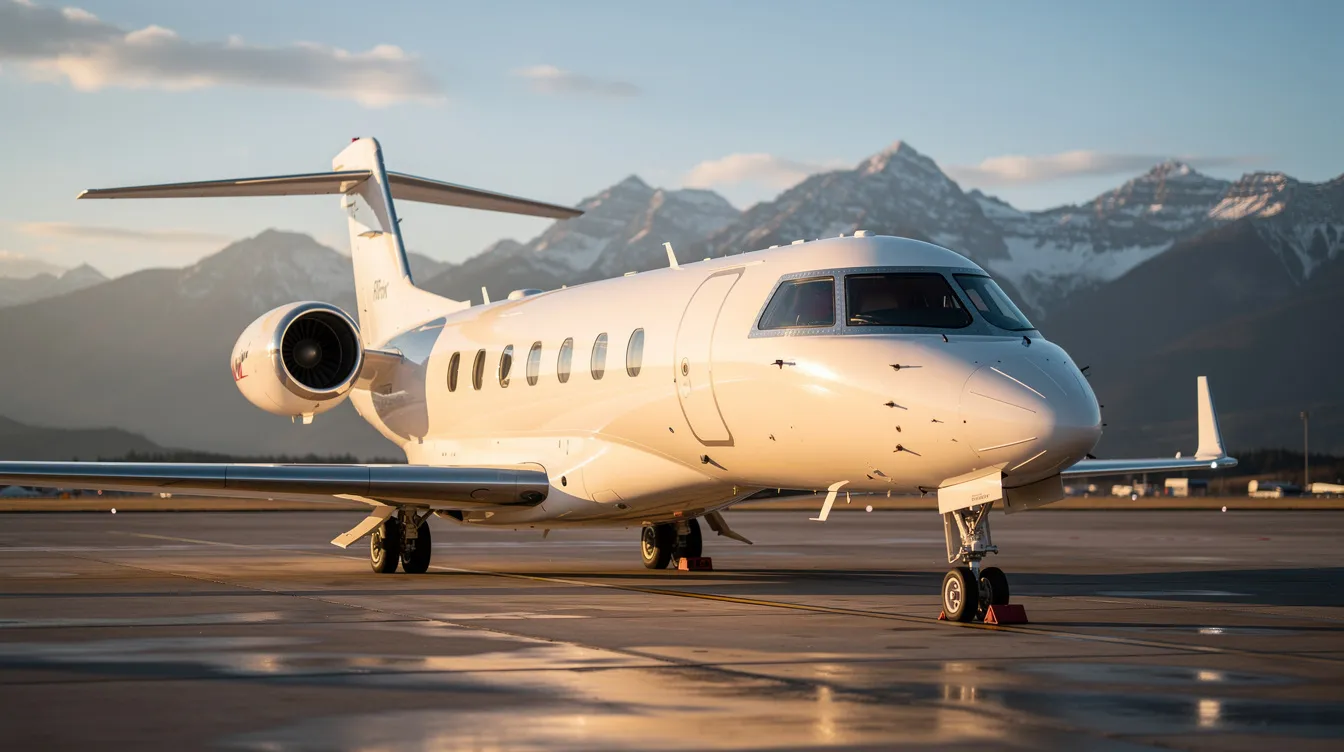
When searching for private jets for sale, buyers encounter several distinct categories. Business jets span from very light jets like the Cessna Citation Mustang to ultra-long-range models like the Bombardier Global 6000. Turboprop aircraft such as the Pilatus PC-12 and Beechcraft King Air C90/200/350 offer short runway performance and lower fuel burn, ideal for regional missions. Single-engine piston aircraft represent the entry point of private planes, while VIP airliners-sometimes called bizliners-like the Airbus ACJ319neo and BBJ variants serve intercontinental VVIP requirements. Choosing the right aircraft depends on flight frequency and mission profile, and many buyers start by comparing the best small private aircraft for their needs.
Platforms like AvBuyer, with over 25 years of trading in private jets, and AeroClassifieds, which connects buyers directly to sellers of private jets, make it easier to search across these categories. Keep in mind that the term jet aircraft covers pure jets, while the broader label private planes includes turboprops and piston aircraft-many buyers cast a wide net before narrowing down.
Very light jets / light jets: 4–8 passengers, ~1,200–1,800 nm range. Examples: Cessna Citation Mustang, Embraer Phenom 100E, Learjet 35A—often considered among the cheapest private aircraft options for stepping into jet ownership or access.
Midsize / super-mid jets: 8–10 seats, coast-to-coast capability. Examples: Challenger 300, Challenger 604/605.
Large / ultra-long-range jets: 10–16+ passengers, intercontinental range. Examples: Gulfstream G450, Dassault Falcon 7X/8X, Bombardier Global 5000/6000—core models among the largest private jets for luxury travel.
Turboprops: Slower, shorter runways, lower operating costs. Examples: Pilatus PC-12, King Air series.
Bizliners: Converted airliners with VVIP cabins, extreme cost. Examples: ACJ319neo, Boeing Business Jets.
Key Segments: Light, Mid, and Large-Cabin Business Jets
Business jets are grouped by cabin size and range, and this segmentation drives both price and suitability for different missions.
Very light and light jets: Models like the Cessna Citation Mustang High Sierra Edition (2011, NJ) and Embraer Phenom 100E seat 4–8 passengers with ranges up to ~1,800 nm. The Embraer Phenom 300 is popular for regional travel-think NYC to Miami or London to Geneva. These aircraft offer efficient cabin volume for shorter hops.
Mid and super-mid jets: The Bombardier Challenger 300 is suitable for nonstop coast-to-coast flights, seating 8–10 passengers with generous interior space. The Challenger 604 and 605 serve corporate flight departments and heavy private travelers who need range and reliability.
Large-cabin and ultra-long-range jets: The Gulfstream G450, G-IVSP, Gulfstream V, Dassault Falcon 900EX, Falcon 2000/2000EX EASy, Falcon 7X/8X, and Bombardier Global 5000/6000 seat 10–16+ passengers with intercontinental reach. These aircraft are equipped with Ka-band connectivity, HUD/EVS, and multiple seating zones.
Bizliners: The Airbus ACJ319neo entered service in March 2023 and remains under warranty through 2026. These and Boeing Business Jets represent the top end of acquisition cost and cabin luxury.
Representative Private Jets for Sale in 2026 (Model Examples)
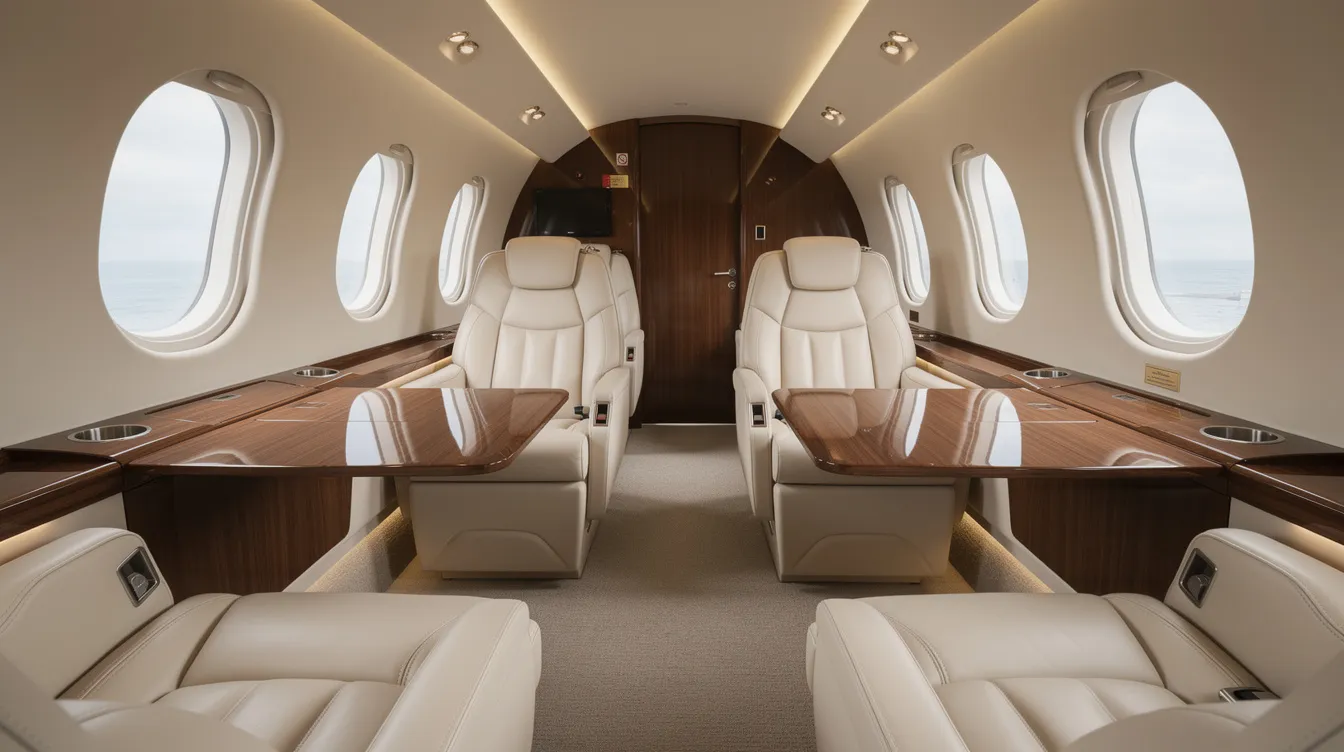
Real listings help buyers calibrate expectations around features, age, and pedigree before they speak with brokers or consider alternatives like BlackJet's Jet Card programs. These are examples from the current market-not BlackJet inventory:
Bombardier Global 6000 (NC/MD): Engines on Rolls-Royce CorporateCare, APU enrolled on Honeywell MSP, 16-passenger configuration, updated late July 2026. Strong corporate pedigree with full program coverage.
Gulfstream G450 (KS): The Gulfstream G450 has a total time of 13,069 hours, Rolls-Royce CorporateCare, Gogo AVANCE L5 Wi-Fi. A maintained airframe enrolled in comprehensive programs.
Gulfstream V (FL): Turnkey with new paint and interior updates scheduled, APU overhauled April 2026.
Dassault Falcon 2000 (IL): Pro Line 21, Collins CASP, MSP Gold coverage. No damage history reported.
Falcon 900EX: 2021 interior, GoGo Avance L5 4G WiFi, guardian jet-quality pedigree.
Falcon 2000EX EASy (NY): The Dassault Falcon 2000EX EASy has a preferred ten-passenger configuration, October 2022 inspections by Duncan Aviation, MSP mechanical APU enrolled on Honeywell programs. Tcca stc compliant for Canadian operations.
Falcon 7X (SN 235, NJ): One owner since new-a significant value point for buyers. Advanced engines and avionics.
Falcon 8X (NY): Easy IV avionics with JetWave KA connectivity, outstanding performance and efficiency.
Challenger 604 (FL): GE On-Point engine program, ProLine Fusion upgrade.
Challenger 605 (NC): Full inspection and refreshed interior scheduled 2026, ProLine 21 Advanced avionics.
Challenger 300 (GA): Single US Part 91 owner, Gogo AVANCE L5. Ideal for owners seeking a hangar-kept, lightly used airframe.
Learjet 35A (AZ): Fresh A/B/C inspections, dual GTN 750-light category value from Bombardier Tucson support heritage.
Cessna Citation Mustang (NJ): Garmin G1000 NXi, PowerAdvantage+ program, seats configured for comfortable regional missions.
These examples illustrate the variety of jets for sale today. Buyers must look beyond the brochure-at maintenance history, programs, and usage-when comparing options, and understand how each model fits into the broader private jet price list of costs and options.
What Drives Value When You Buy a Private Jet?
Sticker price is only one point. Total Cost of Ownership separates fixed costs from variable costs, and lifecycle cost, utilization, and mission fit are what truly matter. Buyers comparing entry-level models should pay particular attention to the cheapest private jet options and their true costs. A pre-purchase inspection is critical for a pre-owned aircraft; skipping it is a risk no serious buyer should take.
Maintenance programs: Aircraft enrolled on Honeywell MSP Gold, GE On-Point, Rolls-Royce CorporateCare, Collins CASP, or SmartParts ESP programs are more predictable to own and more liquid at resale. Steep depreciation affects the market value of private jets over time, but strong program enrollment slows that decline.
Avionics and connectivity: Pro Line 21 versus ProLine Fusion, Garmin G1000 NXi, FANS 1/A+ and CPDLC capability, Ka-band or Gogo Avance L5 Wi-Fi, and HUD/Enhanced Vision Systems on aircraft like the Bombardier Global 5000 are all major value drivers.
Inspection status and pedigree: Fresh inspections (e.g., the Falcon 2000EX EASy inspected October 2022), one owner history, low hours, always-hangared aircraft, and recent paint/interior refurbishments reduce perceived risk and command premiums.
Regulatory status: EU-Ops 1 capability, ADS-B Out compliance, RVSM, and MNPS clearance affect where the aircraft can fly and its resale liquidity in the global network-especially for aircraft based in Europe, such as a Gulfstream G200 in Monaco or an Embraer Phenom 100E in the UK.
Ownership vs. Access: Should You Buy a Jet or Use a Jet Card?
Private jet ownership involves significant financial and operational commitment. Acquisition costs for private jets range from $2 million to over $75 million, and annual operating costs for larger private jets can easily reach seven figures when you account for crew, hangar, insurance, maintenance, fuel, and FAA compliance. Understanding the full private jet price list and cost structure is essential before committing capital. Professional aircraft management is vital for operational oversight-it is not optional.
Consider this scenario: a business executive flying 150–200 hours per year between New York, Miami, Dallas, and London. Purchasing a midsize or large-cabin jet may be overkill. A 25-hour or 50-hour BlackJet Jet Card offers guaranteed availability across cabin classes without asset risk-and without the moment of regret when depreciation erodes your purchase; ultra-frequent travelers might even evaluate a 100-hour Jet Card cost guide to understand how pricing scales with usage.
Whole ownership: Whole aircraft ownership gives 100% control over a single tail number. Whole ownership gives 100% control over a single tail number-configuration, branding, schedule, and potential charter revenue. But owners shoulder crew management, maintenance oversight, regulatory compliance, and financing risk.
Fractional ownership: Fractional ownership grants guaranteed access to an aircraft with shared operating costs. Fractional ownership can be compelling for frequent travelers who do not need exclusive access. Fractional ownership grants guaranteed access to an aircraft with shared operating costs, though flexibility can be limited.
Jet cards: Jet cards provide pre-paid access to flight hours on a fleet network. Jet cards provide pre-paid access to flight hours on a fleet network. BlackJet's Jet Card programs offer prepaid blocks across light, midsize, super-mid, and large cabin classes, with 24/7 digital booking, real-time support, fixed or capped hourly pricing informed by comprehensive jet card pricing guides, and carbon-neutral flights included-no capital outlay, no residual value risk.
For travelers who value flexibility, safety, and predictable pricing but do not want the complexity of administering an aircraft purchase and ongoing operation, BlackJet's Jet Card is the strategic choice.
Safety, Certification, and Operational Standards in Private Aviation
Safety and regulatory compliance should be the top criteria whether you are buying a jet aircraft or choosing a provider like BlackJet. Private jets provide a higher level of security while flying, but only when standards are rigorously maintained.
For aircraft for sale: Verify maintenance tracking, compliance with airworthiness directives, enrollment in recognized maintenance programs, and whether the aircraft has been operated under stringent standards.
Third-party safety ratings: ARGUS, Wyvern, and IS-BAO certifications matter when using charter or Jet Card programs. BlackJet works only with vetted operators who meet or exceed these benchmarks-detailed on the BlackJet Safety page and consistent with industry research on how safe private jets are in practice.
Modern avionics: FANS 1A, CPDLC, ADS-B Out, and enhanced situational awareness systems contribute to safer, more predictable operations. ProLine Fusion upgrades on Challenger 604s and Easy IV on the Falcon 8X are strong examples.
Crew qualification: A well-trained crew with recurrent training and a strong safety culture is as important as the equipment list. BlackJet's operator vetting includes crew standards as a non-negotiable requirement.
Sustainability and Carbon-Neutral Private Jet Travel
Private aviation faces growing scrutiny over environmental impact. The private aviation industry is actively addressing environmental concerns by adopting more efficient aircraft designs, utilizing sustainable aviation fuels (SAF), and implementing verified carbon offset initiatives.
Newer models like the Dassault Falcon 8X, Global 6000, and ACJ319neo incorporate aerodynamic and engine efficiency improvements-blended winglets on the Falcon 900EX, advanced avionics that optimize routing-reducing fuel burn per passenger-mile. Buyers considering a purchase should factor fuel efficiency, typical stage lengths, and SAF compatibility into their selection criteria, especially when evaluating 10 million dollar private jet options where efficiency and mission fit strongly influence long-term costs.
Carbon offsetting calculates emissions per flight and purchases verified offsets-reforestation, renewable energy projects-rendering a journey effectively carbon neutral. BlackJet ensures every Jet Card flight is carbon neutral by default, at no extra cost to the member, partnering with reputable offset providers and encouraging SAF use where available.
Technology & Booking Experience: Modern Tools vs. Traditional Brokerage
The process of accessing private jets has evolved from phone-based broker calls and static aircraft listings to app-based platforms with real-time availability and transparent pricing.
Traditional purchase path: Browse marketplaces listing Gulfstreams, Falcons, Challengers, Learjets, Cessna Citation models, and turboprop aircraft for sale. Contact multiple brokers. Arrange pre-buy inspections. Negotiate contracts. The process can consume months.
BlackJet's platform: Members use a digital platform or mobile app to request flights 24/7, see confirmation and aircraft category, manage itineraries, and access real-time support-without worrying about ownership logistics. Explore the difference a flight subscription model makes.
Onboard connectivity: Ka-band, Gogo Avance L5, and Aircell GoGo ATG 5000 transform private jets into productive airborne offices. BlackJet ensures aircraft in its vetted network meet high standards for connectivity and comfort—features that become standard expectations on 20 million dollar private jets and above.
Real-world scenario: A client needing a last-minute New York–London trip cannot realistically acquire a jet in time-but could book via BlackJet Jet Card within hours, arrive at the destination on an aircraft similar in capability to the Global 5000 or Falcon 7X, and schedule the return before landing.
FAQs: Navigating the Private Jets for Sale Market vs. Jet Card Access
These are the most common questions from readers searching "private jets for sale," "jets for sale," or "business jets" who are weighing ownership, charter, and jet cards.
How many private jets are there worldwide, and what percentage are typically on the market? There are 24,270 private jets in operation globally. At any given moment, roughly 6–7% of the fleet is actively listed for sale-currently below the historical average of ~8%.
What is the price range for popular models? Private jets range from $1 million to $80 million. A 2024 Gulfstream G700 costs $80 million, while a 2023 Cirrus SF50 VisionJet costs $3.5 million. Older jets can depreciate to below $1 million. Most jets fall between $5 million and $30 million. For budget-conscious buyers, explore private jets for sale under $10 million and other budget-friendly private aircraft options.
What ongoing costs should I expect if I buy a private jet? Beyond acquisition, owners face crew salaries, hangar fees, insurance, maintenance, fuel, and inspection costs. Annual operating costs for larger private jets can easily reach seven figures. The manufacturer's recommended programs help manage some expenses, but the financial commitment is substantial—and business users should also understand how jet card tax deductions might compare to ownership-related tax strategies.
What is a Jet Card, and how does it compare to buying or chartering? Jet cards provide pre-paid access to flight hours on a fleet network. BlackJet's membership offers predictable hourly pricing across cabin classes, 24/7 digital booking, real-time support, and carbon-neutral operations-without the capital outlay, depreciation, or regulatory burden of ownership. Prospective members should also understand jet card cost per hour when comparing programs.
Can I choose aircraft categories with a Jet Card? Yes. BlackJet Jet Card members select by cabin class-light, midsize, super-mid, or large-rather than a specific tail number, giving you the ability to match the aircraft to each trip's destination and passenger count, a core feature highlighted in many best jet cards for frequent flyers guides.
How does BlackJet ensure safety and carbon-neutral operations? BlackJet partners exclusively with operators certified by ARGUS, Wyvern, or equivalent bodies, and every Jet Card flight is carbon neutral by default at no additional cost—an advantage that stands out when you look at how many private jets are in the world and how they operate globally.
Conclusion: Making the Strategic Choice in Private Jet Access
Discover how BlackJet’s Jet Card programs can elevate your travel with effortless access to a diverse fleet, uncompromising safety, and a commitment to sustainability. Explore premium jet access today and experience the future of private aviation.
Whether you ultimately acquire a jet or access one through a Jet Card, the right decision hinges on how you fly-not just what you fly. Some travelers will prioritize occasional access and may even start by learning how to buy just a seat on a private jet, while others compare specific providers such as NetJets jet card costs or evaluate options for private jets that can carry around 50 passengers. For frequent flyers who want fixed, transparent access without ownership, the BlackJet 25+ Hour Jet Card offers a more strategic path.
Discover how BlackJet's Jet Card programs can reshape your travel. Explore premium jet access today.


 Sign up with google
 Sign up with Apple