Introduction: Why "Powerful" Matters in the Sky – and for You
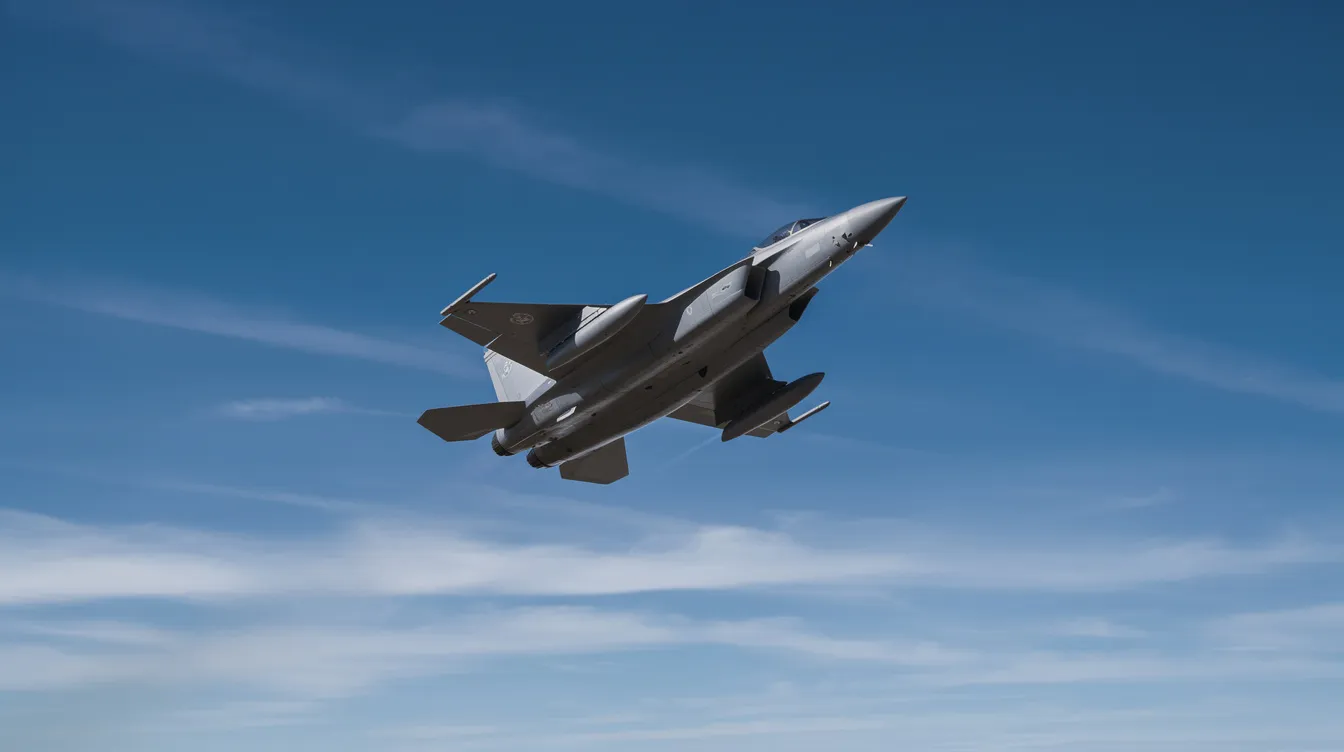
Ask a room of aviation enthusiasts to name the most powerful jet in the world, and you will get a different answer from nearly every person. The F-22 Raptor dominates in raw thrust and air combat performance. The F-35 Lightning II leads as the most capable overall combat system on Earth. The F-15 Eagle holds the best combat record ever recorded. The truth is that "powerful" is not a single number-it is a layered equation involving engines, stealth technology, sensors, weapons payload, networked warfare, and the human behind the controls.
For militaries, power determines who controls the sky and who survives. For the rest of us-particularly business travelers, executives, and high-net-worth individuals who value time, safety, and precision-the same underlying technologies that define the world's most powerful fighter jets eventually filter into the private aircraft we fly. Advanced turbofan engines, fly-by-wire controls, composite materials, and avionics originally developed for air superiority fighters now make business jets safer, more efficient, and more comfortable. Companies like BlackJet give their Jet Card members access to that downstream innovation every time they step aboard a private flight.
This article breaks down what makes a fighter jet truly powerful, ranks the contenders, and connects the dots between military aviation excellence and the premier private travel experience.
Criteria we use throughout this guide:
Total engine thrust and thrust-to-weight ratio
Top speed and climb rate
Stealth and radar cross section
Sensor fusion and situational awareness
Weapons payload and combat flexibility
Combat record in actual conflicts
Cost-effectiveness and operational availability
Defining "Powerful Jet": Thrust, Air Combat, and Beyond
The phrase "most powerful jet in the world" means different things depending on the yardstick. A pilot measuring raw kinematic performance will point to one aircraft. An analyst evaluating networked combat effectiveness will point to another. Below are the criteria that separate the contenders from the pretenders.
Total Engine Thrust - The combined output of all engines in both dry power and afterburner, measured in kilonewtons (kN) or pounds of force (lbf). Higher thrust enables faster acceleration, steeper climbs, and the ability to sustain supersonic speeds.
Thrust-to-Weight Ratio - Thrust divided by aircraft weight (including fuel and weapons). A ratio near or above 1:1 allows vertical climbs and sustained high-energy maneuvering in air-to-air combat.
Air Combat Performance - Maximum speed, sustained and instantaneous turn rates, climb rate, and high-angle-of-attack agility. These kinematics determine who wins a close-in engagement.
Stealth and Survivability - Radar cross section, infrared signature, electronic warfare suites, and countermeasures. In modern combat, being invisible is as valuable as being fast.
Sensor Suite and Networked Systems - AESA radar, infrared search and track, distributed aperture systems, and encrypted data links. The jet that sees first and shoots first almost always wins beyond visual range.
Weapons Load and Flexibility - Internal and external hardpoints, missile count, bomb capacity, and the ability to execute both air superiority and strike missions without reconfiguration.
Combat Record - How the aircraft has actually performed in real engagements, including kill ratios and losses.
The difference between the "most powerful fighter jet" and the "best fighter jet overall" often comes down to whether you prioritize thrust and kinematics (the F-22 Raptor) or multirole dominance and global deployment (the F-35 Lightning II).
The F‑22 Raptor: The Most Powerful Air Superiority Fighter
The Lockheed Martin F-22 Raptor is widely regarded as the most technologically advanced fighter jet ever built and the most powerful pure air superiority fighter in operational service. It entered the US Air Force inventory in 2005, and only a handful of production aircraft-187 in total-were ever manufactured before the line shut down in 2012.
Engine Power. Two Pratt & Whitney F119-PW-100 turbofan engines produce approximately 35,000 lbf of thrust each in afterburner, combining for roughly 70,000 lbf. These engines feature two-dimensional thrust vectoring, granting the Raptor exceptional agility at any speed. Critically, the F119's high dry thrust enables supercruise-sustained supersonic flight at around Mach 1.8 without engaging afterburner-a capability that only a handful of modern jets can match. The F-22 Raptor has a top speed of Mach 2.25 in full afterburner.
Stealth. The F-22 Raptor has a radar cross section comparable to a marble, making it virtually invisible to most threat radars. Internal weapons bays keep missiles hidden, preserving that advanced stealth profile even when heavily armed.
Air Combat Design. Everything about the Raptor is optimized to destroy enemy aircraft. Its APG-77 AESA radar can track multiple targets at extreme range, and its electronic warfare systems suppress opposing sensors. In air-to-air configuration, it carries six AIM-120 AMRAAMs and two AIM-9 Sidewinders internally.
Constraints. The F-22 Raptor costs over $150 million per unit. It is banned from export, making it exclusively an American fighter asset. Maintenance is intensive, and with fewer than 190 airframes available, it remains an elite but rare weapon. Its role is singular: achieve and maintain air superiority in the most contested environments on Earth.
The F‑35 Lightning II: The Most Powerful Combat System in the Air
If the F-22 is a surgeon's scalpel, the F-35 Lightning II is a Swiss Army knife-and arguably the most influential combat aircraft of the 21st century. The F-35 entered service with the USMC in July 2015 and has since grown into the backbone of Western air power. The F-35 Lightning II has over 1,200 deliveries by 2026, with nearly 1,387 production aircraft handed over to more than 20 nations as of late September 2026.
Engine. A single Pratt & Whitney F135 turbofan produces approximately 43,000 lbf in afterburner-less total thrust, less than twin-engine designs, but sufficient. The F-35's real power lies elsewhere.
Sensor Fusion and Information Dominance. The AN/APG-81 AESA radar, Distributed Aperture System, electro-optical targeting, and advanced data links (MADL and Link-16) fuse information from every direction into a single, unified picture. This sensor fusion gives the pilot first-look, first-shot advantage in beyond visual range engagements-the scenario that dominates modern air combat.
Stealth. The F-35 has a radar cross-section equivalent to a golf ball, an order of magnitude larger than the Raptor but still vanishingly small compared to any fourth-generation fighter aircraft. Combined with its electronic warfare capability, this makes the Lightning II extraordinarily difficult to detect and engage.
Multirole Flexibility. The F-35 is designed for multirole capabilities including air superiority, ground attack, intelligence gathering, and suppression of enemy air defenses. It operates from conventional runways (F-35A), short strips and amphibious ships (F-35B), and aircraft carriers (F-35C).
Challenges. A 2025 GAO audit found the fleet fully mission capable only about 25% of the time, citing hardware failures, software delays, and component shortages. The F-35 Lightning II has a unit cost of around $110 million, and the F-35 program costs approximately $1.196 trillion over its lifetime-making it the most expensive fighter jet program in history.
Feature | F-22 Raptor | F-35 Lightning II |
|---|
Role | Pure air superiority | Multirole / omnirole |
Engines | 2 × F119 (~70,000 lbf total) | 1 × F135 (~43,000 lbf) |
Top Speed | Mach 2.25 | Mach 1.6 |
RCS | Marble | Golf ball |
Internal Weapons | 6 AIM-120 + 2 AIM-9 | 4 AIM-120 (A variant) |
Stealth Generation | 5th | 5th |
Units Delivered | ~187 | 1,387+ |
Engine Power and Thrust: What Makes a Jet "Powerful" on Paper
When most people imagine the most powerful jet in the world, they picture raw engine thrust-the roar of afterburning turbofans pushing a military jet past supersonic speeds and into a near-vertical climb. Thrust is indeed the most visible metric of power, and it determines how fast an aircraft can accelerate, how quickly it can climb rate through altitude bands, and how much energy it retains during high-G maneuvering.
Modern fighter aircraft use afterburning turbofan engines that can dramatically increase thrust by injecting fuel into the exhaust stream. The trade-off is massive fuel consumption, limiting afterburner use to short bursts. Here are the standout powerplants:
F-22 Raptor - Two F119 engines producing ~70,000 lbf combined in afterburner. Thrust-to-weight ratio near or above 1:1, enabling vertical climbs and supercruise at Mach 1.8.
F-35 Lightning II - Single F135 engine at ~43,000 lbf. Adequate for its mission profile; optimized for fuel efficiency across long-range strike missions rather than pure speed.
Su-35 Flanker-E - Two AL-41F1S engines producing approximately 32,000 lbf each in afterburner (~64,000 lbf total). High power for a non-stealth fighter with emphasis on super-maneuverability.
MiG-25 Foxbat - Two Tumansky R-15 turbojets, each producing ~22,500 lbf in afterburner. Designed purely for extreme speed and altitude, not agility.
Thrust-to-weight ratio matters more than raw thrust alone. A fighter with a ratio above 1:1 can accelerate while climbing vertically. Below that threshold, the aircraft must trade altitude for speed or vice versa-a critical disadvantage in air-to-air combat where energy management wins fights.
However, the most powerful engine does not automatically produce the best fighter jet. Modern doctrine values stealth, advanced sensors, and networked warfare at least as much as brute thrust. A jet that can see without being seen often fires first, and in beyond visual range engagements, that single advantage is decisive.
Best Combat Record: F‑15 Eagle's Unmatched Air‑to‑Air Success
No discussion of the world's most powerful fighter jets is complete without the McDonnell Douglas/Boeing F-15 Eagle. In terms of combat record, it stands alone: approximately 104 confirmed air-to-air kills and zero losses in air combat across more than fifty years of operational service. That 104-0 record is unmatched by any other fighter aircraft in history.
The F-15 has served with the US Air Force, the Israeli Air Force, the Royal Saudi Air Force, and Japan's Air Self-Defense Force, among others. Its defining engagements came during the 1982 Lebanon War, the Gulf War of 1991, and numerous Israeli operations over Syria-conflicts where it faced Soviet-era fighters and achieved decisive dominance.
Why the F-15 wins:
Powerful twin engines pushing maximum speed past Mach 2.5
Large APG-63/70 radar giving long detection ranges
Heavy missile load (up to eight air-to-air missiles)
Strong integration with AWACS early warning support
The F-15 Eagle costs approximately $30 million per unit, making it economical relative to fifth-generation fighters
The F-15EX, its latest variant, can carry almost 30,000 lbs of weapons-the highest weapons payload of any American fighter
Trade-offs. The F-15's large airframe and significant radar cross section make it easier to detect than stealth aircraft. Against advanced fighters equipped with modern radar and long-range missiles, its lack of low observability is a liability. It leads the world in combat record but is not the most advanced fighter jet by today's stealth-centric standards.
Fastest Fighter Ever Built: MiG‑25 Foxbat and the Speed Trade‑Off
The fastest fighter jet ever to enter operational service is the Soviet MiG-25 Foxbat. On record flights in reconnaissance configuration, it exceeded Mach 3.0. Operationally, the MiG-25 Foxbat is the fastest fighter jet at Mach 2.83-a limit imposed to prevent irreversible engine damage to its Tumansky R-15 turbojets.
The Foxbat was designed in the 1960s as a high-altitude interceptor to counter American bombers and reconnaissance platforms like the XB-70 Valkyrie and SR-71 Blackbird. Its construction used nickel-steel alloys rather than lightweight titanium, making it rugged but heavy. The MiG-25 Foxbat costs about $60 million per unit in adjusted terms, and it served with air forces across the Soviet bloc, the Middle East, and North Africa.
Why speed alone no longer defines power:
Modern air combat relies on stealth technology and sensor fusion, not raw velocity
Sustained supersonic speeds burn fuel at catastrophic rates, limiting range and endurance
High-speed interceptors like the MiG-25 have limited agility-poor sustained turn performance and low G-tolerance at high speeds
Beyond visual range missiles have rendered the "run fast, shoot once" doctrine largely obsolete
The MiG-25 remains an impressive experimental aircraft turned production aircraft, but the doctrine it was built for has largely disappeared. Today's air forces value the ability to persist, detect, and engage across multiple threat environments over the ability to sprint in a straight line.
Knife‑Fight Kings: Eurofighter Typhoon and Dassault Rafale
When the engagement collapses to within visual range-what fighter pilots call a "knife fight"-two European jets consistently rank among the best fighter jets in the sky: the Eurofighter Typhoon and the Dassault Rafale.
The Eurofighter Typhoon can supercruise at Mach 1.5 fully loaded, a remarkable achievement for a twin-engine canard-delta design. Its high thrust-to-weight ratio and unstable aerodynamic configuration (managed by digital flight controls) produce exceptional agility at both high and low speeds. German Typhoon pilots have demonstrated aggressive close-in tactics at Red Flag–Alaska exercises, occasionally scoring simulated kills against F-22 Raptors once within visual range-a testament to the aircraft's maneuvering capability and pilot skill, even if the Raptor dominates in the beyond visual range arena.
The Dassault Rafale is France's "omnirole" fighter, praised by many pilots for its under-10,000-foot engagement performance. Its SPECTRA electronic warfare suite provides 360-degree threat detection and jamming, and its tight turning performance makes it lethal in close air combat. Rafale has seen extensive combat over Libya, Mali, Syria, and Iraq, establishing a credible operational record.
Typhoon vs Rafale at a glance:
Agility - Both excel; Typhoon slightly favored at high altitude, Rafale at lower altitudes and slower speeds
Electronic Warfare - Rafale's SPECTRA is widely considered among the best electronic warfare suites on any generation fighters platform
Strike Capability - Rafale carries the SCALP cruise missile and ASMP-A nuclear standoff weapon; Typhoon carries Storm Shadow and a growing ground attack portfolio
Stealth - Neither is a true stealth fighter; both rely on reduced signatures and electronic countermeasures rather than shaping
Upgrades - Both the Typhoon and Rafale are receiving continuous upgrades, including new AESA radars and weapons integration through the 2030s
These jets sit near the top among 4.5-generation fighters for air combat maneuvering, and they remain serious contenders against other aircraft in contested airspace.
Eastern Contenders: Su‑35, Su‑57, J‑20, and MiG‑29
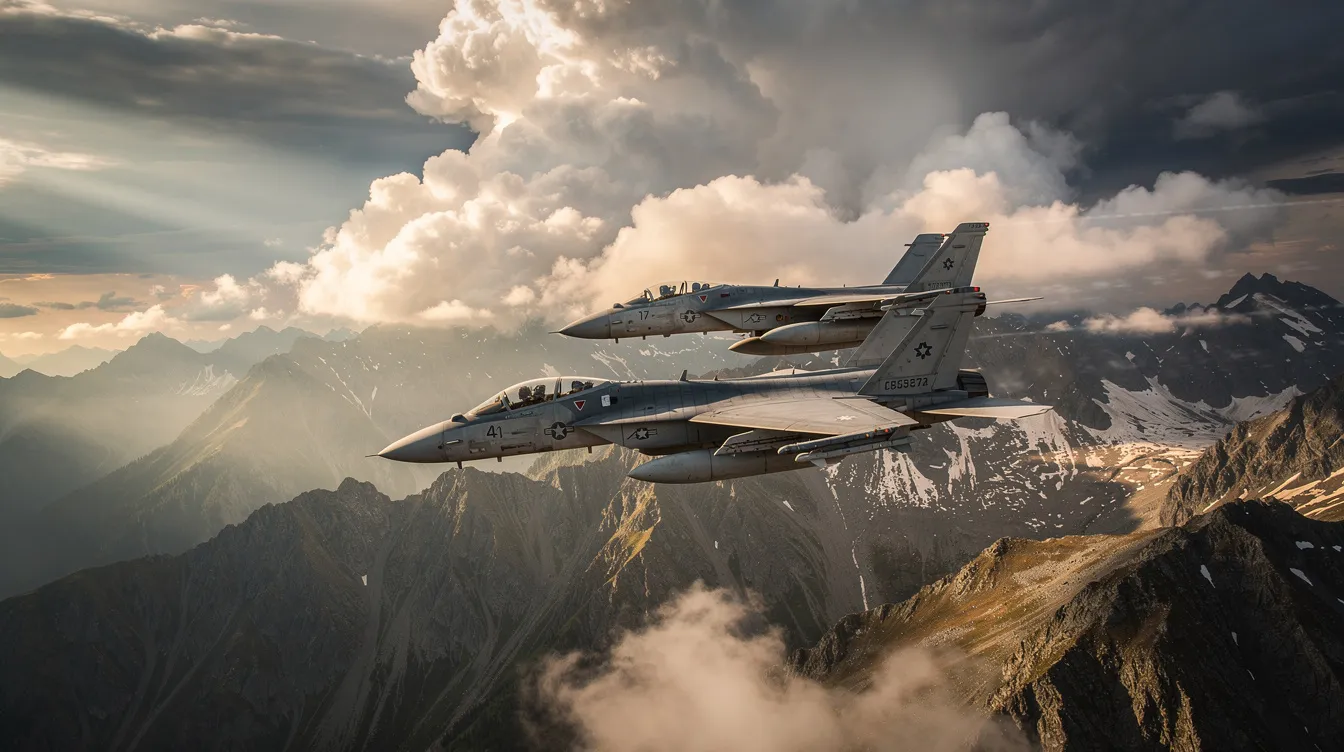
The Eastern hemisphere fields several formidable combat aircraft that merit serious attention when discussing the most powerful fighter jets in the world.
Su-35 Flanker-E. The Su-27/Su-35 family represents Russia's most capable non-stealth air superiority platform. The Su-35 carries advanced avionics, including the Irbis-E passive electronically scanned radar, and its AL-41F1S engines deliver approximately 32,000 lbf each in afterburner, granting it super-maneuverability with 3D thrust vectoring. It can haul over 17,000 lb of ordnance on twelve hardpoints. However, its large radar cross section and lack of stealth limit its survivability against advanced fighters with modern sensors.
Su-57 Felon. Russia's fifth-generation fighter features 3D thrust vectoring, internal weapons bays, and advanced sensors. The Sukhoi Su-57 has a thrust-to-weight ratio enabling supermaneuverability, and it can reach speeds above Mach 2. Production has been slow-approximately 49 built by mid-2026, with only a handful confirmed in frontline active service. Its stealth characteristics remain debated, and engine upgrades to the next-generation "Izdeliye 177" powerplant are still in development.
J-20 Mighty Dragon. China's Chengdu J-20 is a true stealth fighter designed for long-range interception and anti-access/area-denial missions. With larger wings than the F-22 and an emphasis on range and internal fuel capacity, the J-20 is optimized for the vast Pacific theater. The Chengdu J-20 has an internal weapons payload of 24,000 lbs, and it can reach Mach 2 and maintain supercruise with its latest WS-15 engines. An estimated 250+ airframes are in active service, making it the most numerous fifth-generation fighter outside the F-35 fleet. Its combat record, however, remains untested.
MiG-29 Fulcrum. The MiG-29 earned a reputation for exceptional agility within visual range, aided by helmet-mounted sights and agile R-73 missiles. It remains in service with air forces from South Korea to Eastern Europe, but its short range, older avionics, and limited sensor fusion leave it outclassed by modern jets. It is a capable but aging platform, more relevant as a stepping stone to understanding ex-military trainers and legacy fighter design than as a frontline contender in 2026.
Best Value Fighter Jet: Saab JAS 39 Gripen
Not every air force needs-or can afford-the most expensive fighter jet on the market. The Swedish Saab JAS 39 Gripen exists precisely for nations that want credible air combat capability without the staggering unit cost and logistics footprint of platforms like the F-35 or Rafale.
The Gripen's design philosophy prioritizes operational flexibility: it can operate from dispersed highway strips with minimal ground crew, refuel and rearm for an air superiority mission in roughly ten minutes, and integrate modern AESA radar and data links that keep it relevant against other fighters in contested airspace.
Operating cost - A fraction of what larger twin-engine fighters demand per flight hour, analogous to how understanding jet card cost per hour helps travelers manage their private flight budgets
Sortie rate - Among the highest of any new aircraft in its class, thanks to rapid turnaround and low maintenance burden
Weapons integration - Compatible with NATO-standard missiles and precision munitions, plus the Meteor beyond visual range missile
Export success - Operated by Sweden, Brazil, South Africa, Thailand, Hungary, Czech Republic, and others, much as leading providers like Flexjet structure Flexjet jet card costs to appeal to diverse markets
Limitation - Single engine, less thrust and payload than heavily armed designs like the F-15EX or Su-35; not a stealth aircraft
For many smaller air forces with limited defense budgets, the Gripen delivers the strongest balance of performance, availability, and cost, making it the best value advanced fighter jet in mass production today, much like how budget-friendly private aircraft options give travelers access to private aviation without flagship price tags.
Air Superiority Fighter vs Multirole: Different Kinds of "Power"
The distinction between an air superiority fighter and a multirole fighter jet is fundamental to understanding what "powerful" means in context.
An air superiority fighter like the F-22 Raptor is purpose-built to dominate air combat. Every design decision-from engine size to radar placement to stealth shaping-serves the goal of finding and destroying enemy aircraft in contested airspace. It excels at that single mission better than anything else flying.
A multirole or "omnirole" jet like the F-35 Lightning II or Dassault Rafale trades some peak air-to-air performance for the ability to execute strike missions, intelligence gathering, electronic warfare, and suppression of enemy air defenses-all within a single airframe. Modern air forces increasingly prefer multirole aircraft because maintaining separate fleets for separate missions is prohibitively expensive.
F-22 - Archetypal air superiority fighter; optimized for air combat in denied airspace
F-35 - Multirole; builds air superiority through stealth, sensors, and network power rather than kinematic dominance
Rafale - "Omnirole"; capable of both air superiority and nuclear strike with the same airframe
F-15EX - Air superiority heritage but evolved into a heavily armed multi-mission platform with the largest weapons payload of any American fighter aircraft
The trend is clear: pure air superiority designs are becoming rarer as budgets tighten and threats diversify. The future belongs to platforms that can do both the air-to-air and ground attack missions credibly.
Air Combat Today: Sensors, Networks, and First‑Shot Advantage
Modern air combat bears little resemblance to the swirling dogfights of previous generations. Today, the fighter that wins is almost always the one that detects first, identifies first, and launches first-often from dozens of miles away, long before either pilot can see the other.
This is where fifth-generation fighters like the F-35 dominate. Their advanced sensors-AESA radars, infrared search and track systems, distributed aperture cameras-feed into a fused picture that gives the pilot unmatched situational awareness. Data links connect every single jet to AWACS platforms, ground stations, tankers, satellites, and other aircraft, creating a networked "kill web" where every node shares information in real time.
The modern kill chain:
Detection - Radar, IRST, or off-board sensors identify a potential threat at long range
Identification - Sensor fusion cross-references data to confirm hostile intent
Engagement - Beyond visual range missile launched from stealth, before the adversary detects the shooter
Assessment - Distributed sensors confirm the result, cueing follow-up action if needed
Electronic warfare plays an equally critical role: jamming enemy radar, spoofing missile seekers, and denying adversaries the same situational awareness advantage. Fifth-generation fighters feature stealth and advanced avionics that make this chain nearly seamless.
In this environment, the "best fighter" is not necessarily the fastest or most agile-it is the one embedded in the most capable network.
Pilot Training and Skill: The Factor That Beats All Jets
No matter how powerful the jet, the pilot remains the decisive variable. History is filled with examples of well-trained crews in moderately capable aircraft defeating more advanced fighters flown by less experienced opponents.
Exercises like Red Flag, held at Nellis Air Force Base, routinely demonstrate that tactics, situational awareness, and decision-making under pressure outweigh marginal differences in aircraft specifications. Israeli Air Force pilots flying F-15s and F-16s have consistently dominated adversaries operating nominally comparable or even newer platforms, largely because of their intensive training regimen and combat experience.
Flight hours - Top Western air forces mandate 150–200+ annual flight hours per pilot; some adversary nations average below 100, and frequent business travelers using jet cards can even consider maximizing jet card tax deductions when structuring their flight hours
Simulator integration - Advanced full-motion simulators now replicate electronic warfare, sensor fusion, and multi-ship tactics, supplementing live flying
Adversary training - Dedicated aggressor squadrons fly dissimilar aircraft types to expose pilots to unfamiliar threats
Doctrine - How an air force plans, communicates, and adapts during combat often matters more than the jet's spec sheet
The aircraft is the tool. The pilot, supported by training and doctrine, is the weapon.
Ranking the World's Most Powerful Fighter Jets in 2026
There is no single best fighter jet overall-only category leaders. Here is a concise ranked overview by dimension of power:
Jet | "Best At" Category |
|---|
F-22 Raptor | Pure air superiority; thrust, stealth, and maneuverability |
F-35 Lightning II | Overall combat system; stealth + sensors + strike + global scale |
Su-57 Felon | Emerging 5th-gen contender; supermaneuverability + stealth potential |
J-20 Mighty Dragon | Long-range interception; anti-access / area denial |
F-15 Eagle / F-15EX | Best combat record (104-0); highest weapons payload among American fighters |
Eurofighter Typhoon | Close-in air combat agility; supercruise; European interoperability |
Dassault Rafale | Omnirole versatility; electronic warfare; proven combat record |
Saab JAS 39 Gripen | Best value; lowest operating cost among most advanced fighters |
Each of these military aircraft excels in a specific domain. The "most powerful" label shifts depending on whether you value raw thrust, stealth, combat-proven reliability, or affordability. For most air forces, the answer is a fleet mix of specialized and multirole jets working together.
Most Powerful vs Most Expensive Fighter Jet
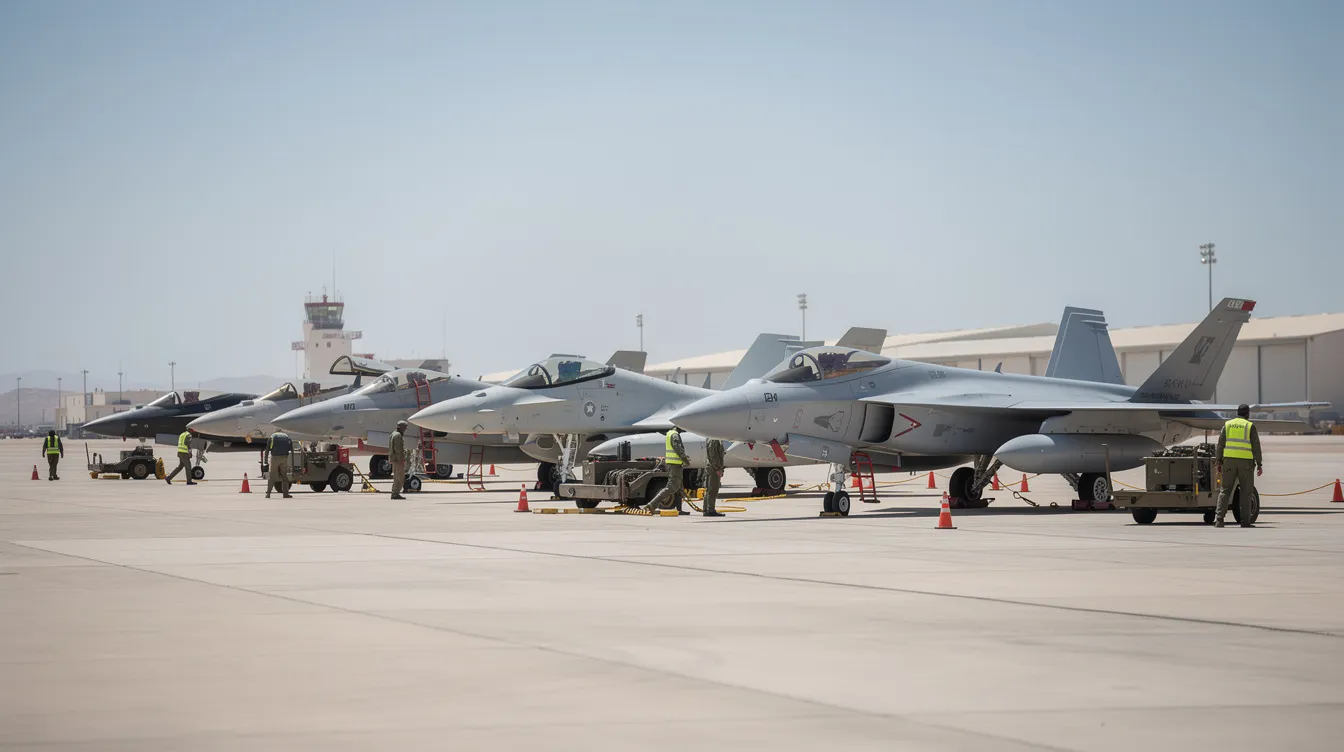
Power and price are related but not identical. The most expensive fighter jet is not automatically the most lethal, and the most lethal may not be the most cost-effective.
F-22 Raptor - Over $150 million per unit; extremely high lifecycle cost due to stealth coatings, specialized maintenance, and limited spare parts production
F-35 Lightning II - The most expensive fighter jet program in history at approximately $1.196 trillion projected through the 2070s; unit cost around $110 million, declining gradually with economies of scale across Lots 18–19, a reminder that understanding a full private jet price list and cost options is essential before committing to any aviation investment
Su-57 Felon - Lower unit cost in absolute terms (Russian labor and materials), but production delays, bottlenecks, and low numbers raise effective per-unit investment, just as hidden fees and availability constraints can change the real NetJets jet card cost for frequent flyers
Gripen - Significantly cheaper to purchase and operate; lacks stealth but delivers credible combat performance for a fraction of the price, much like travelers weighing the value of a 100-hour jet card cost against full aircraft ownership
Lifecycle cost-maintenance, continuous upgrades, training, fuel, and spare parts-often exceeds the purchase price several times over. An expensive fighter jet operated in small numbers without adequate logistics support may underperform a cheaper platform fielded in volume with robust sustainment. Power without availability is theoretical, just as the priciest aircraft can be less useful than the cheapest private jet options if they better match your real-world mission.
Future of Fighter Power: Sixth‑Generation Programs
The most powerful jets of the 2030s are already taking shape on drawing boards and in classified hangars. Sixth-generation fighters aim to redefine aerial dominance through capabilities that current platforms cannot match.
Key programs:
U.S. NGAD (Next Generation Air Dominance) - Expected to succeed the F-22 in the air superiority role, featuring adaptive-cycle engines, multi-spectral advanced stealth, AI-assisted cockpits, and manned-unmanned teaming with autonomous "loyal wingman" drones. A demonstrator has reportedly flown. Operational capability targeted for the mid-2030s.
GCAP / Tempest (UK-Japan-Italy) - A collaborative sixth-generation program aiming for an operational date around 2035, featuring advanced sensors, optional manning, and deep integration with unmanned systems.
FCAS (France-Germany-Spain) - Europe's answer to NGAD and GCAP, with a "system of systems" approach combining a crewed new aircraft with remote carriers and a combat cloud for data sharing.
Expected features across all programs include directed-energy weapons, hypersonic missile integration, deeper sensor fusion across space and cyber domains, and AI decision aids that process threats faster than human cognition alone.
Since these platforms remain in development or prototype stages-none have entered mass production-they cannot yet be ranked among today's most powerful. But they represent where fighter power is heading.
How Military "Power" Filters Down into Business and Private Jets
The technologies that make fighter jets lethal also make private jets safer, more efficient, and more comfortable. This is not abstract theory-it is engineering history.
Composite materials pioneered for stealth aircraft now reduce airframe weight in business jets like the Gulfstream G700 and Bombardier Global, extending range and fuel efficiency and contributing to many of the top private jets in the world favored by business and luxury travelers. Fly-by-wire flight control systems, first perfected on the F-16, are standard on modern business jets, providing smoother rides and enhanced safety margins. Advanced avionics-terrain awareness, synthetic vision, satellite-based navigation-descended directly from military cockpit development.
Engine efficiency - Military turbofan R&D drives commercial engine improvements, resulting in quieter, more fuel-efficient powerplants for long-range private aircraft
Safety systems - Redundancy philosophy from combat survivability engineering now governs everything from hydraulics to electrical systems in business jets
Materials - Carbon-fiber composites and titanium alloys, once exclusive to military aircraft, now reduce weight and increase durability in private airframes
Cockpit integration - Heads-up displays and digital glass cockpits, born in fighter jet programs, improve pilot situational awareness in civil aviation
Through BlackJet's Jet Card programs, structured with transparent jet card pricing, members access aircraft that directly benefit from these decades of military-driven innovation-without needing to understand the engineering behind it.
BlackJet Jet Cards: Strategic "Air Superiority" for Business Travelers
In military terms, air superiority means controlling the sky on your terms. For executives and high-net-worth travelers, BlackJet's Jet Card programs, structured with predictable jet card membership pricing, deliver a civilian equivalent: total control over your schedule, route, cabin environment, and travel experience.
A Jet Card is a prepaid block of flight hours-typically offered in 25-hour and 50-hour increments, such as BlackJet's dedicated 25+ Hour Jet Card-that guarantees access to private jets across multiple cabin categories without the capital commitment, depreciation risk, or management burden of owning an aircraft. Jet Card programs provide flexible and convenient jet travel without ownership, making them the preferred solution for frequent travelers who fly private multiple times per year and want to compare the best jet cards for frequent flyers before committing.
Advantages over alternatives:
| Jet Card (BlackJet) | Jet Ownership | Ad-Hoc Charter | Commercial First Class |
|---|
Upfront Capital | Prepaid hours | $5M–$75M+ | Pay per trip | Ticket price |
Schedule Control | Full | Full | Limited by availability | Airline schedule |
Aircraft Variety | Multiple cabin classes | Single aircraft | Varies | Fixed |
Predictable Pricing | Yes | Variable (maintenance, crew) | Market rates | Fare fluctuation |
24/7 Support | Yes | Crew-dependent | Broker-dependent | Airline support |
BlackJet members enjoy predictable pricing, priority access during peak travel periods, and 24/7 digital booking with real-time support-advantages that mirror the "information superiority" modern jets use to dominate contested airspace.
Aircraft Categories and Cabin Classes Available Through BlackJet
Business jets are categorized by cabin types to suit different passenger needs, route lengths, and mission profiles. Through BlackJet, members access multiple classes of aircraft, each engineered with advanced avionics and engine technology influenced by decades of military R&D.
Light Jets - Ideal for regional hops of 2–3 hours (e.g., New York to Miami, London to Geneva). Typically seat 4–7 passengers in a comfortable cabin with modern avionics and efficient turbofan engines. Examples include the Cessna Citation CJ4 and Embraer Phenom 300.
Midsize & Super-Midsize Jets - Cross-country range with stand-up cabins, enhanced luggage capacity, and Wi-Fi. Suitable for 6–9 passengers on routes like Los Angeles to New York or Paris to Istanbul. Examples include the Bombardier Challenger 350 and Citation Longitude.
Large-Cabin / Long-Range Jets - Intercontinental capability with full-size galleys, sleeping arrangements, and conference space. Routes like New York to London, Dubai to Singapore, or Los Angeles to Tokyo. Examples include the Gulfstream G650, Bombardier Global 7500, and Dassault Falcon 8X aircraft that seat 10–16 passengers and fly 6,000+ nautical miles nonstop.
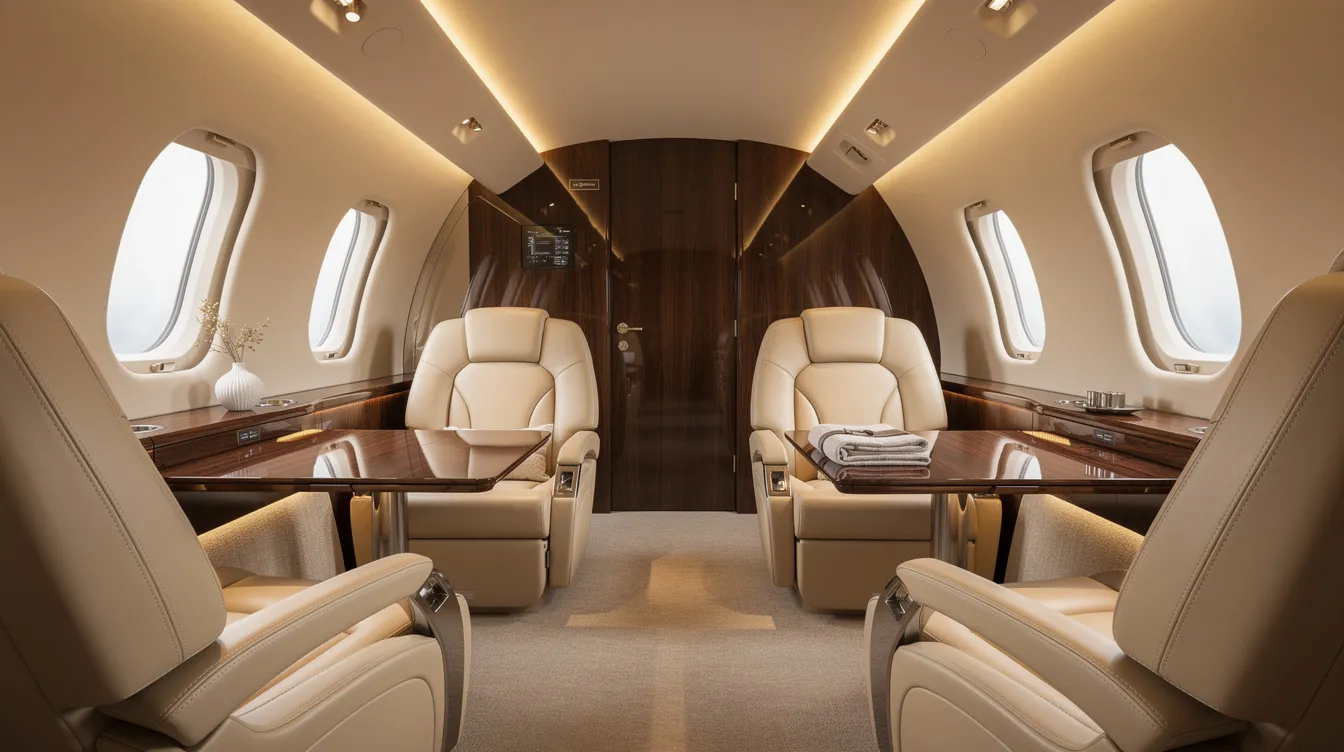
Each category uses fly-by-wire controls, composite structures, and safety systems that trace their lineage to military aircraft programs. The result: high performance and safety wrapped in quiet, comfortable cabins built for productivity and rest, with a range of private jet types for every traveler depending on mission profile and budget.
Safety and Certification: Private Aviation's Equivalent of Combat Survivability
Just as combat aircraft rely on redundancy, survivability engineering, and rigorous pilot training, private aviation emphasizes safety through certification and operational protocols that protect every passenger on every flight.
BlackJet's approach to safety mirrors the philosophy behind the world's best fighter jets: multiple layers of protection, verified through independent audits and continuous oversight.
Certified operators only - BlackJet partners exclusively with operators holding ARG/US Gold or Platinum ratings, Wyvern Wingman or higher, or equivalent international certifications
Pilot minimums - Strict flight-hour requirements for both captain and first officer, exceeding FAA Part 135 standards
Maintenance oversight - Continuous monitoring of maintenance records, airworthiness directives, and inspection compliance
Pre-flight safety checks - Every flight is vetted before departure, including weather analysis, crew rest verification, and aircraft status confirmation
Private aviation emphasizes safety through certification and operational protocols-this is "safety by design," comparable in philosophy to how the most advanced fighters are engineered to survive hostile environments. For BlackJet members, this means confidence that every journey meets the highest standards.
Sustainable Aviation: From Efficient Engines to Carbon‑Neutral Private Flights
Modern turbofan efficiency, pushed forward by both military and commercial R&D, now enables private jets to fly farther on less fuel than ever before. But efficiency alone is not enough. Sustainable aviation is increasingly prioritized in the private aviation industry, and responsible operators are taking concrete steps to minimize environmental impact.
BlackJet's commitment to sustainability includes carbon-neutral flights as a default feature, integrated at no extra effort to the member. Carbon-neutral flights in private aviation aim to reduce environmental impact through verified carbon offset programs and, where available, participation in sustainable aviation fuel (SAF) initiatives.
How offsets work - BlackJet calculates the carbon footprint of each flight and invests in verified environmental projects (reforestation, renewable energy, methane capture) that neutralize the equivalent emissions
SAF participation - Where sustainable aviation fuel is available, BlackJet incorporates it into the fuel supply, reducing lifecycle carbon intensity by up to 80% compared to conventional jet fuel
Route example - A large-cabin jet flying New York to London produces significant CO₂; BlackJet's integrated offset program neutralizes that impact automatically, giving members the ability to travel with a clear environmental conscience
This is not a token gesture. It is a deliberate alignment of prestige travel with environmental stewardship-a green private jet approach that meets the expectations of today's most discerning travelers.
Technology and Booking Experience: From Combat Data‑Links to Real‑Time Trip Control
Fighter jets rely on real-time data links to maintain situational awareness across the battlespace. BlackJet applies a similar principle to private travel: instant, accurate information at every stage of the journey.
Mobile booking platforms in private aviation enhance user convenience by replacing the traditional back-and-forth of phone calls, emails, and broker negotiations with a streamlined digital experience, similar to modern services that explain how to buy a seat on a private jet in just a few steps. BlackJet's platform allows members to, while also supporting travelers who want to fly private cheaply with smart strategies:
Book flights in minutes - Search available aircraft, receive instant quotes, and confirm departures from a single interface
Manage trip details - Adjust departure times, passenger manifests, catering preferences, and ground transportation in real time
Access live support 24/7 - Real-time flight support is an essential service in private aviation; BlackJet's team is available around the clock for schedule changes, weather disruptions, or special requests
Track flights - Live updates on aircraft status, estimated arrival, and ground coordination
This is situational awareness for the traveler-the same informational edge that makes the F-35's sensor fusion so decisive, applied to the civilian mission of getting you where you need to be, on time and without friction.
Use Cases: How High‑Net‑Worth Travelers Gain Their Own Form of "Air Superiority"
Frequent travelers prefer private aviation for flexibility, privacy, and luxury-but the real advantage is strategic, especially when evaluating 10-million-dollar private jet options and matching them to specific mission needs. Here are three scenarios that illustrate how BlackJet members gain control over their travel in ways that commercial aviation simply cannot match.
Scenario 1: The Multi-City Investor Tour
A London-based fund manager needs to meet portfolio companies in Frankfurt, Milan, and Zurich over three days. Using a 25-hour Jet Card, comparable in structure to other 50-hour jet card options, she books a light jet for each 60–90-minute hop, departing from private terminals minutes from the city center. No security lines, no layovers, no lost hours. She arrives refreshed, prepared, and on her own schedule.
Scenario 2: The Carbon-Neutral Family Holiday
A New York family books a large-cabin jet for a holiday to the Maldives via a refueling stop in Europe. BlackJet's carbon-neutral program automatically offsets the flight's emissions. The family enjoys a fully catered cabin with sleeping arrangements, Wi-Fi for the teenagers, and arrives at a private terminal with customs pre-cleared. Total disruption to daily life: minimal.
Scenario 3: The CEO's Emergency Board Meeting
A tech CEO in San Francisco receives notice of a critical board meeting in New York the next morning. Commercial options require a red-eye with connections and arrive at a crowded terminal at 6 AM. BlackJet's real-time support books a super-midsize jet departing at 10 PM, arriving at Teterboro by 5 AM Eastern. Ground transfer to Manhattan is arranged. The CEO sleeps on board and walks into the boardroom prepared.
In each case, the traveler controls the environment-just as an air superiority fighter controls the airspace. The mission is different, but the principle is identical: decisive advantage through preparation, technology, and access.
Frequently Asked Questions About Powerful Fighter Jets and Private Jet Access
What is the most powerful jet in the world right now?
The F-22 Raptor holds the title for raw air combat power-combining the highest thrust, supercruise capability, and the smallest radar cross section of any fighter in active service. For overall combat impact, the F-35 Lightning II leads due to its unmatched sensor fusion, stealth, and global deployment across more than 20 nations.
Which fighter jet has the best combat record?
The F-15 Eagle, with approximately 104 confirmed air-to-air kills and zero losses in air combat across more than fifty years of service. No other modern fighter aircraft comes close to this ratio.
Is the F-22 Raptor better than the F-35?
They serve different roles. The F-22 is a dedicated air superiority fighter optimized for dogfighting and controlling contested airspace. The F-35 is a multirole platform designed for both air superiority and strike missions, with superior sensor fusion and global interoperability. Neither is universally "better"-each excels in its intended mission.
Why is speed less important than stealth and sensors today?
Modern beyond visual range missiles can engage targets at ranges exceeding 100 miles. The fighter that detects first and launches first almost always wins, regardless of who is faster. Stealth and advanced sensors provide that detection advantage, which is why fifth-generation fighters prioritize low observability over raw top speed.
Can civilians fly in frontline air superiority fighters?
Generally no. Access to frontline military jet fighters like the F-22, F-35, or Su-57 is restricted to active military personnel. However, civilians can experience some ex military trainers (such as the L-39 Albatros) through specialized flight experience companies. For practical private travel at the highest standard, companies like BlackJet offer access to advanced business jets that incorporate many of the same underlying technologies developed for military aircraft.
How does private jet travel with BlackJet differ from flying in a fighter jet?
The mission is obviously different-comfort, productivity, and privacy versus air combat-but both the private jet and the fighter jet share a DNA of advanced engineering. Private aviation companies offer Jet Card programs for prepaid access to jets, giving members the schedule control and operational flexibility that parallels what air superiority provides on the battlefield.
Conclusion: Redefining "Power" – From Air Combat to Effortless Private Travel
The most powerful jet in the world depends entirely on what you measure. The F-22 Raptor reigns supreme in raw air-to-air power-thrust, stealth, and maneuverability engineered to dominate any adversary. The F-35 Lightning II is the best overall combat system ever fielded, combining stealth, sensors, and strike flexibility across a global fleet. The F-15 Eagle holds the best combat record in aviation history at 104-0. The MiG-25 Foxbat still holds the speed crown. And the Saab Gripen proves that power and value are not mutually exclusive.
In both military and private aviation, the real edge comes from combining technology, training, support infrastructure, and smart decision-making. A powerful jet without the right pilot, logistics, and doctrine is just an expensive machine. Similarly, a private travel experience without safety certification, operational reliability, and seamless support is just an expensive seat.
BlackJet's premium private jet card programs and charter solutions represent the civilian equivalent of having decisive air superiority over your schedule. Every flight is backed by rigorous safety standards, carbon-neutral performance, and advanced booking technology-the same principles of precision, preparation, and technological edge that define the world's most powerful fighter jets, applied to the mission that matters most to you: getting there.
Elevate your travel-effortlessly. Explore BlackJet's Jet Card programs and discover how powerful, carbon-neutral private travel can become your new standard.


 Sign up with google
 Sign up with Apple