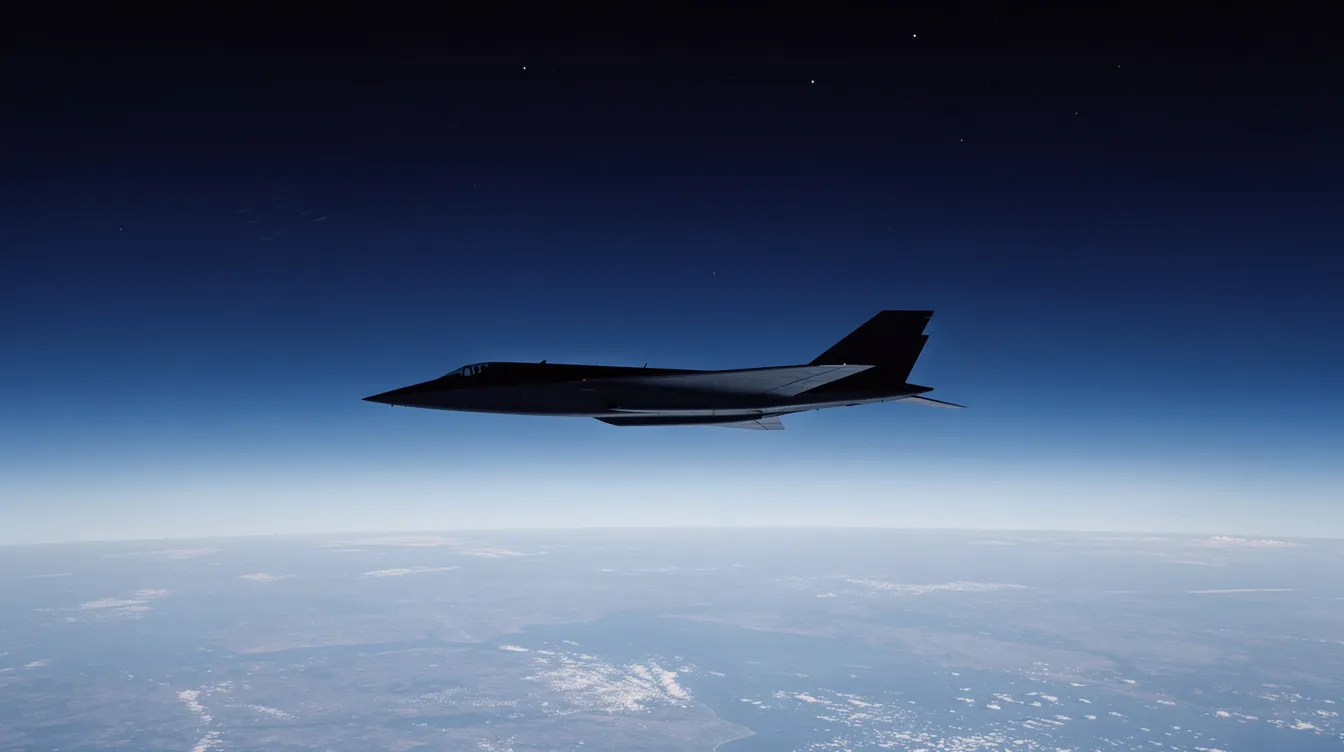
Speed has always been aviation's most primal metric. From the first aircraft to shatter the sound barrier to today's hypersonic test vehicles screaming past Mach 9, the chase for the world's fastest plane shapes military strategy, aerospace engineering, and — increasingly — how discerning travelers think about time itself. Here is the definitive guide to every category of record-breaking aircraft, why those records matter, and what they mean for private aviation in 2026.
Answer First: What Is the Fastest Plane in the World Right Now?
The fastest aircraft ever flown is NASA's X-43A, an unmanned experimental aircraft that achieved Mach 9.6 (7,366 mph) on November 16, 2004, during a scramjet-powered test over the Pacific Ocean. That speed record still stands more than two decades later, and nothing publicly known has come close.
But speed records depend entirely on which category you measure. Here is how the hierarchy breaks down:
Category | Aircraft | Top Speed | Date Set |
|---|
Fastest unmanned aircraft (air-breathing) | NASA X-43A | Mach 9.6 (7,366 mph) | Nov 16, 2004 |
Fastest manned aircraft (rocket) | North American X-15 | Mach 6.72 (4,520 mph) | Oct 3, 1967 |
Fastest manned air-breathing jet | Lockheed SR-71 Blackbird | Mach 3.3 (2,193 mph) | Jul 28, 1976 |
Fastest fighter jet (production) | MiG-25 Foxbat | Mach 3.2 (2,190 mph) | 1960s–1970s |
Fastest private jet (current) | Bombardier Global 8000 | Mach 0.95 | 2025 |
No crewed aircraft has overtaken the X-15 or SR-71 since the Cold War. The new fastest plane in the world is not a single machine — it is a moving frontier defined by unmanned hypersonic testbeds, stealthy fifth-generation fighters, and civil jets pushing toward Mach 1. Programs like DARPA's hypersonic weapons research, Chinese and Russian hypersonic glide vehicles, and commercial ventures such as Hermeus are where the frontier lives today.
For aviation enthusiasts tracking absolute records, the X-43A remains king. For military pilots, the relevant benchmark is the fastest fighter jet they can actually fly in combat missions. And for BlackJet clients, the meaningful question is not just which aircraft holds the speed record —it is which aircraft, combined with operational flexibility and private terminal access, delivers the fastest total journey.
Why Speed Still Matters in the Age of Private Jets and Stealth Fighters
Control over distance and time remains a strategic weapon—whether you command an air force or simply want to arrive in London before the markets close. The SR-71 Blackbird could cross the Atlantic in under 3.5 hours. A modern commercial flight takes seven to eight. Speed reduces travel time significantly for passengers—but the advantage compounds when you remove layovers, security queues, and hub connections.
Aviation speed falls into four practical categories:
Experimental and unmanned - the world's fastest aircraft like the X-43A, built purely for research and flight testing.
Military fighters and interceptors - the fastest fighter jets designed for air combat and air superiority.
Manned reconnaissance and rocket aircraft - machines like the SR-71 and X-15 that pushed human endurance to the limit.
Business and private jets - the fastest private jet platforms where comfort, fuel efficiency, and reliability are optimized.
In modern air combat, rawMachh speed is less decisive than detection range, stealth technology, and data fusion. Fighters that can track multiple targets beyond visual range outclass those that simply fly faster. In private aviation, the same principle translates: schedule control, direct routing to airports near your destination, and 24/7 booking flexibility create time savings that rival huge jumps in cruise speed.
BlackJet leverages these operational efficiencies - deploying the right aircraft for each mission while eliminating the delays that eat hours from commercial travel, and its premium private Jet Card programs package these advantages into a predictable, membership-style model.
From Breaking the Sound Barrier to Hypersonic Flight
On an October morning in 1947, Captain Chuck Yeager climbed into the Bell X-1 and became the first person to break the sound barrier, reaching Mach 1.06 over Edwards Air Force Base. That flight was a major milestone - not just for its mach speed, but because it proved that controlled flight beyond the speed of sound was survivable and repeatable.
Within a decade, experimental aircraft like the Bell X-2 pushed past Mach 3, confronting extreme heat and control instability at supersonic speeds. Then came the North American X-15, a rocket aircraft—which, between 1959 and 1968, rewrote the record books. The X-15 reached Mach 6.72 (4,520 mph) on October 3, 1967—still the fastest manned aircraft ever flown. Its flights blurred the line between airplane and spacecraft, reaching altitudes above 50 miles and requiring heat-resistant superalloys to survive temperatures exceeding 1,200°F.
The next leap was air-breathing hypersonic flight. In 2004, NASA's X-43A (Hyper-X) used a scramjet engine - a propulsion system with no moving parts that compresses incoming air using speed instead of spinning blades - to achieve Mach 9.6 (7,366 mph). Scramjet engines do not have moving parts and compress air using speed instead of spinning blades, making them uniquely suited for sustained hypersonic flight above Mach 5. Computational fluid dynamics was used extensively to simulate airflow and shockwaves before the X-43A; these tools remain central to aerospace engineering today.
Each of these record-breaking aircraft was an experimental aircraft, not an operational fighter or bomber. That distinction matters for everything that follows.
Cold War Speed Race: Air Forces, Espionage, and Air Superiority
The Cold War turned speed into a strategic weapon. Both the U.S. Air Force and the Soviet Union poured resources into aircraft that could outrun surface to air missiles, intercept enemy aircraft at higher altitudes, and deliver nuclear payloads faster than defenses could react.
On the surface-to-air, the USAF produced a lineage of iconic machines:
B-58 Hustler - the first supersonic bomber, introduced in 1960, capable of sustained Mach 2 at high altitude with a podded payload system.
XB-70 Valkyrie - a six-engine behemoth designed to sustain speeds of Mach 3.1 (2,056 mph), outrunning Soviet interceptors entirely. Its folding wingtips and advanced heat-resistant materials were engineering marvels, but the program was curtailed as surface to air missiles made pure speed less survivable.
SR-71 Blackbird - the ultimate reconnaissance aircraft, cruising above Mach 3 at 80,000+ feet, built to see everything and be caught by nothing.
The Soviet Union answered with its own fastest planes. The MiG-15 introduced swept-wing jet combat over Korea. The MiG-21 "Fishbed" brought Mach 2+ capability to dozens of air forces worldwide. And the MiG-25 Foxbat, designed to intercept American supersonic bombers, could reach speeds of Mach 3.2 (2,190 mph) - though its engines were limited operationally to roughly Mach 2.83 to prevent damage.
European contributions also shaped the era. The English Electric Lightning gave Britain a Mach 2 interceptor with an extraordinary climb rate, while France's Mirage III established a delta-wing supersonic tradition that influenced fighter design for decades. Speed shaped air superiority doctrine, reconnaissance strategies, and nuclear deterrence from the 1950s through the 1980s.
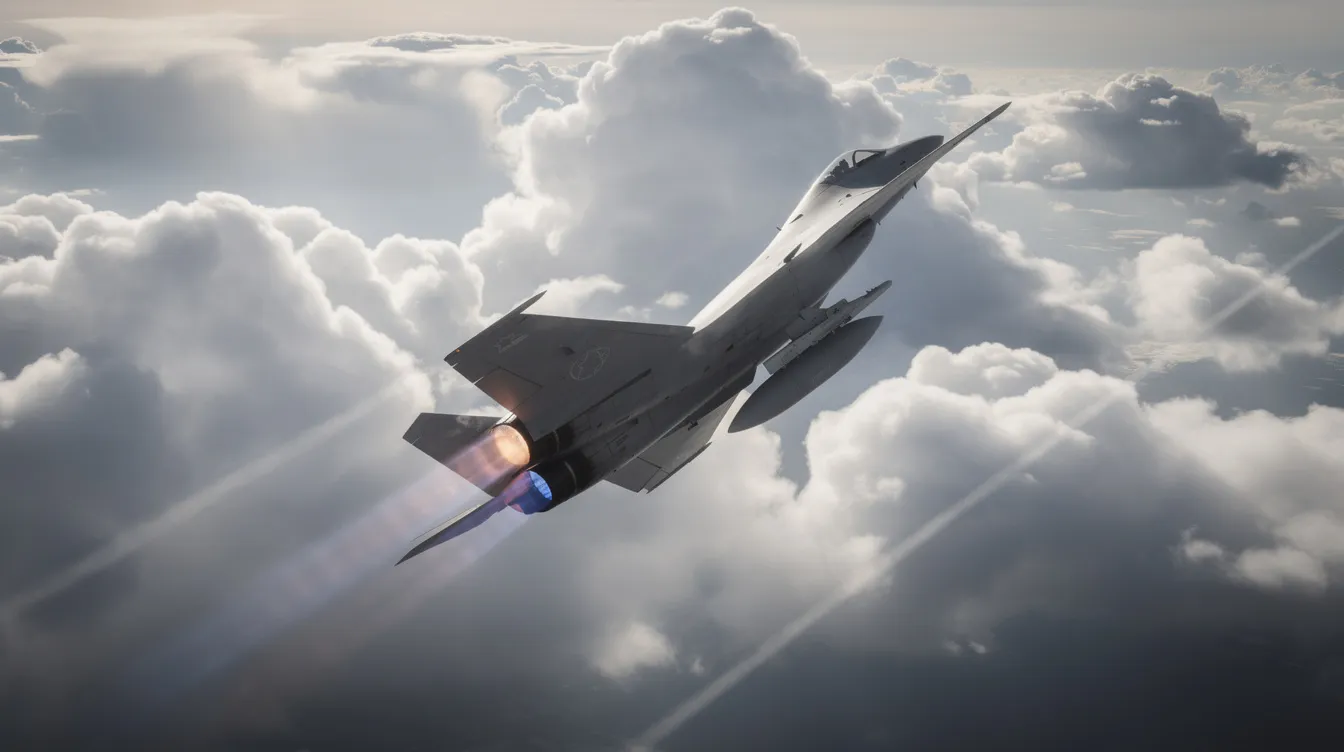
Where the Fastest Planes Were Built: USA, USSR, and Beyond
The geography of speed reveals where investment, infrastructure, and ambition converged.
United States: Nearly every absolute speed record belongs to American programs. The Bell X-1, X-2, X-15, SR-71, and X-43A were all designed and flown under U.S. Air Force or NASA auspices, leveraging the world's deepest aerospace research base. Flight testing centered on facilities like Edwards Air Force Base and Beale Air Force Base produced data that still informs hypersonic research.
Soviet Union / Russia: Soviet design bureaus prioritized operational speed in serial-production fighters and interceptors. The MiG-21, MiG-23, MiG-25, MiG-31, and Su-27 were all built around high speed flight and long-range interception - designed for real combat missions rather than one-off experimental records.
United Kingdom and France: The Anglo-French Concorde was neither the world's fastest plane overall nor a military machine, but it was the first supersonic passenger jet and demonstrated that sustained commercial supersonic flight was possible. Britain's Lightning and France's Mirage III proved that smaller nations could build world-class high-speed aircraft.
Today, the map has expanded. Boom Supersonic in the U.S., Chinese and Russian hypersonic weapons programs, and startups like Hermeus are pushing different aspects of speed - civil, military, and experimental - making the fastest aircraft competition more global than ever.
Redefining Limits: The Fastest Manned Aircraft Ever Flown
The fastest manned aircraft in history remains the North American X-15. Between 1959 and 1968, twelve military pilots and NASA test pilots flew this rocket-powered machine to speeds and altitudes that no crewed airplane has matched since. On October 3, 1967, pilot William "Pete" Knight pushed the X-15 to Mach 6.72 (4,520 mph) — a speed where air temperature on the airframe's leading edges exceeded 2,000°F, requiring exotic nickel-alloy skin and ablative coatings.
The X-15 flew beyond the edge of what most engineers consider "atmosphere." Air-breathing reached altitudes above 50 miles - high enough that pilots qualified for astronaut wings. Reaction control thrusters replaced conventional aerodynamic surfaces at the top of each flight envelope, making the X-15 as much spacecraft as airplane. Data gathered from these flights directly informed the Space Shuttle and hypersonic vehicle design for decades.
Below the X-15 sits the SR-71 Blackbird - the fastest manned aircraft using air breathing jets. Its 1976 FAI speed record of Mach 3.3 (2,193 mph) has never been broken by any publicly known air-breathing manned aircraft. The SR-71's sustained high-speed cruise at 80,000+ fSR-71powered by Pratt & Whitney J58 engines burning JP-7 fuel, remains an engineering feat without the SR-71R.
No new manned aircraft has surpassed these figures in any publicly acknowledged program. The Cold War ambitions that produced these machines have not been replicated - underscoring just how formidable those achievements remain.
The SR-71 Blackbird: The Fastest Manned Jet and Its Enduring Mystique
Few aircraft command the reverence of the SR 71 Blackbird. Developed by Lockheed's Skunk Works under legendary engineer Kelly Johnson, the SR 71 served the U.S. Air Force as a top—secret reconnaissance aircraft from the mid-1960s to the late 1990s. Its mission was simple in concept, staggering in execution: fly so fast and so high that nothing on Earth could touch it.
The SR-71 Blackbird set its official speed record of M—ch 3.3 (2,193 mph) on July 28, 1976, over a measured course in California and Nevhigh-speedirframe was bSR-71largely of titanium - sourced, ironically, through shell companies from the Soviet Union - and designed to expand several inches in flight as extreme heat from Mach 3+ cruise raised skin temperatures above 600°F. The aircraft's JP-7 fuel had to be ignited by injecting t—iethylborane because it was too stable to ignite conventionally - a safety feature that prevented fires during the structural flexing inherent to high speed flight.
The SR 71 Blackbird holds speeds over Mach 3.3 (2,193 mph), and it used that ground speed and service ceiling to evade every threat it faced. Over its operational career, more than 4,000 missiles were fired at SR-71s. Not one connected. Speed and altitude were its only defenses - no stealth coatings, no electronic warfare suites, no evasive maneuvers. Just pure velocity.
Unverified pilot accounts add to the legend. Brian Shul, an SR-71 pilot, described exceeding Mach 3.5 during an emergency escape over Libya. These stories remain outside the certified fligh— envelope, but they hint at capabilities that may never be officially confirmed. While faster experimental craft like the X-43A exist, the SR-71 remains the fastest operational manned aircraft - a benchmark that every subsequent design is measured against.
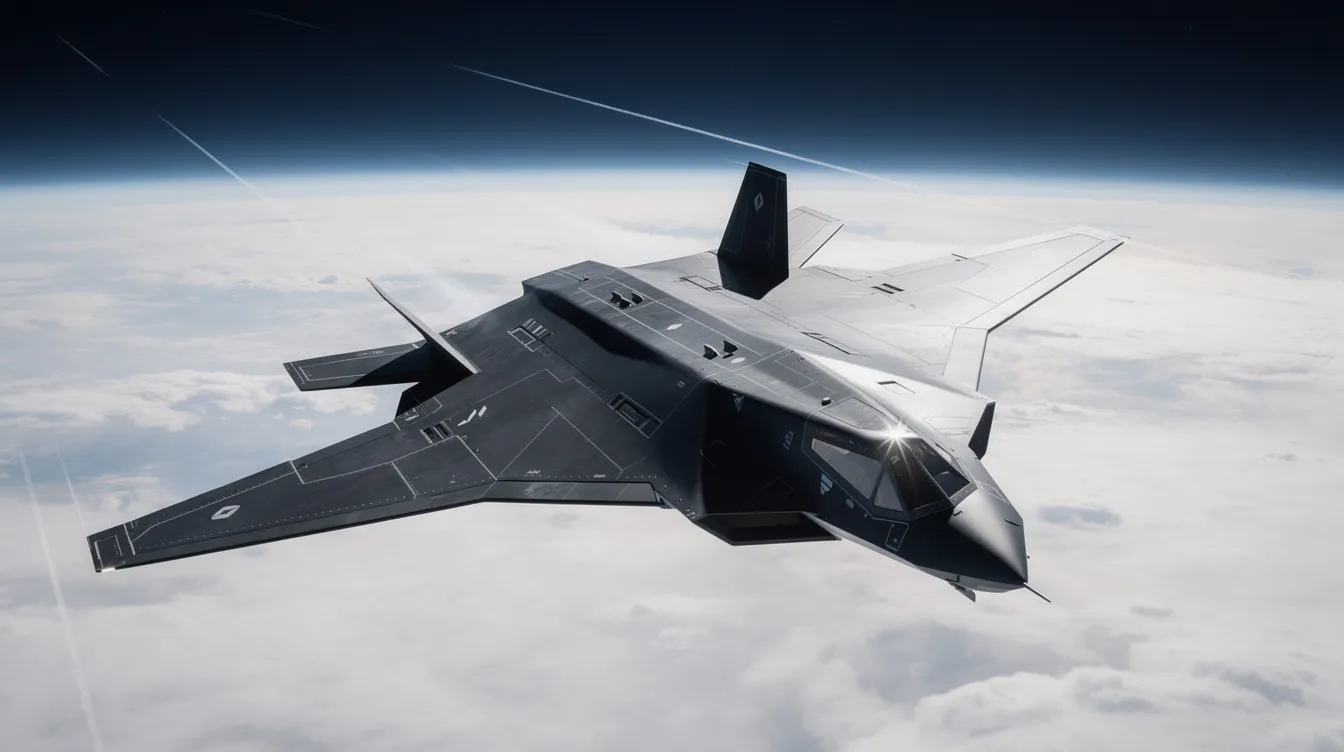
The Fastes— Fighter Jets: From English Electric Lightning to MiG-31
The title of fastest fighter jet belongs to aircraft built not for research, but for aerial combat and air superiority - machines designed to intercept, engage, and survive.
The MiG-25 FoIran-Iraq Wart the top. Designed in the mid-1960s to counter American supersonic bombers, the MiG-25 Foxbat can reach speeds of Mach 3.2 (2,190 mph) in brief sprints. Its stainless-steel construction - unusual for a fighter - allowed it to withstand the extreme heat of Mach 3 flight, though regular service was limited to roughly Mach 2.83 to avoid engine damage. It served both the Soviet Union and export customers in conflicts including the Iran Iraq war.
Its successor, the MiG-31 Foxhound, traded some top speed for vastly improved capability. The MiG-31 can reach speeds of Mach 2.83 (1,864 mph) but carries advanced radar, variable-sweep wings, and can track multiple targets and co-operate with other interceptors over hundreds of miles. It remains Russia's primary long-range interceptor.
Western fighters took a different approach. The F-15 Eagle achieves speeds of Mach 2.5 (1,650 mph) and pairs that with exceptional maneuverability, powerful radar, and an unmatched air-to-air combat record. The F-14 Tomcat can achieve speeds of Mach 2.34 (1,544 mph), and its variable sweep wing design allowed it to optimize for both high speed interception and carrier based operations. The English Electric Lightning - an elegant British interceptor - reached Mach 2 with a climb rate that rivaled rocket aircraft.
In practice, these jets rarely operate at their absolute top speed. Fuel burn at maximum afterburner is enormous, thermal stress shortens engine life, and the tactical conditions of air combat typically unfold at lower speeds where turn performance, missile kinematics, and advanced radar range are decisive. The real value of these machines lies in acceleration, climb, and the ability to reach supersonic speeds quickly when the mission demands it.
Icons of Early Jet Age Combat: MiG-15, MiG-21, and Mirage III
Before the era of Mach 3 interceptors, a generation of fighters introduced air forces around the world to true jet-age combat and supersonic performance.
The MiG-15 arrived like a thunderclap over Korea. With a top speed around 670 mph - roughly Mach 0.92 - and swept wings derived from captured World War II German research, it outclassed early American jets and forced the rapid deployment of the F-86 Sabre. Armed with powerful cannons, the MiG-15 was the first aircraft to demonstrate that Soviet aerospace engineering could match and occasionally exceed Western designs in aerial combat.
The MiG-21 "Fishbed" became one of history's most-produced supersonic fighters. Capable of Mach 2.05, lightweight, affordable, and simple to maintain, the MiG-21 served more than 60 nations. Its combat range was limited, but its agility and cost made it the workhorse of air forces from North Korea to Cuba to India. In Vietnam and the Middle East, it proved that a well-flown, inexpensive fighter could challenge far more expensive adversaries.
The Mirage III gave France aerospace independence. With a top speed of Mach 2.2 and a sleek delta-wing profile, it excelled in the interceptor and multirole roles. Israel's decisive use of the Mirage III in the Six-Day War cemented its reputation as a record-breaking aircraft of its era - fast, agile, and lethal in the right hands.
These fighters showed that speed alone was never enough. Pilot training, tactics, simplicity, and sheer numbers often mattered more than raw mach speed in determining outcomes.
Supersonic Bombers and Interceptors: B-58, XB-70, and Strategic Speed
In the nuclear shadow of the Cold War, bombers and interceptors wagered their survival on speed. If you could fly faster than the enemy's defenses could react, you could deliver a payload - or photograph a target - and escape.
The B-58 Hustler was the first supersonic bomber, introduced in 1960. Capable of sustained Mach 2 at high altitude, it carried nuclear weapons in an external pod and pushed the limits of avionics, navigation, and crew endurance for supersonic strike missions. Its operational life was short - complexity and cost limited its utility; surface-to-air missiles ended the concept.
The XB-70 Valkyrie was even more ambitious. Designed to cruise at Mach 3.1 (2,056 mph) at altitudes above 70,000 feet, this massive six-engine bomber could sustain speeds of Mach 3.1 for extended periods using compression lift from its folding wingtips. Advanced heat-resistant materials shielded the airframe, and the XB-70 represented one of the most audacious aerospace programs ever attempted. But advances in surface to air missiles - particularly Soviet SAMs capable of reaching extreme altitudes - eroded the survivability argument for sheer speed. The program was curtailed, and only two prototypes were built.
These supersonic bomber programs were not failures. The materials science, propulsion, and thermal engineering they pioneered fed directly into the SR-71, the B-1B's variable sweep wing design, and future spaceplane concepts. The XB-70 Valkyrie could sustain speeds that no subsequent bomber has matched, and its lessons remain embedded in aerospace design.
Supersonic Passenger Travel: From Concorde to Boom Supersonic
The Concorde achieved speeds of Mach 2.04 (1,354 mph), cutting London to New York travel to about 3.5 hours and operating at a cruising altitude of 60,000 feet—- high enough for passengers to see the curvature of the Earth. Powered by four Rolls-Royce/SNECMA Olympus engines, the Concorde was the first supersonic passenger jet and a symbol of what civilian aviation could achieve when governments, engineers, and ambition aligned.
But the economics and environment caught up. Fuel burn was enormous. The sonic boom restricted overland supersonic flight in most countries. Noise and emissions regulations tightened. The first supersonic passenger jet, Concorde, retired in 2003, leaving no commercial successor.
Now, Boom Supersonic's Overture aims to revive supersonic passenger travel with a more sustainable approach. Targeting Mach 1.7 with approximately 80 seats, Overture is designed to run on 100% sustainable aviation fuel, with entry into service planned around 2029. It will not be the fastest aircraft overall, but it could become the fastest practical option for commercial travelers willing to pay a premium for time.
For private travelers, the gap between Mach 0.90 (current top-tier business jets) and Mach 1.7 (Overture's target) represents real hours saved on transoceanic routes. But the regulatory, environmental, and economic hurdles remain substantial. Supersonic flight over land, certification, and operational economics are all unresolved questions, which is why tools like a private jet flight time calculator are so important for realistic planning today.
The Fastest Private Jets in the World – Where Business Aviation Tops Out
Private jets typically cruise around Mach 0.78 to 0.935 — far below hypersonic aircraft or even Concorde, but optimized for where speed, comfort, and reliability intersect. The fastest private jets operate in the high-subsonic range, and they represent the pinnacle of practical air travel.
The current benchmark is the Bombardier Global 8000, which entered service in 2025 with a top speed of Mach 0.95. Commercial aviation's fastest operational passenger jet is the Bombardier Global 8000, with a top speed of Mach 0.95. The Global 8000 has a range of 8,000 nautical miles and offers advanced cabin comfort with lower cabin altitude — approximately 2,691 feet at cruise — reducing fatigue on long flights. High-performance commercial jets are designed to optimize for both speed and operational reliability, and the Global 8000 exemplifies this philosophy.
Close behind are the Gulfstream G700 and G800. The Gulfstream G700 reaches speeds of Mach 0.925, while the G800 offers a similar profile with range exceeding 8,200 nautical miles at long-range cruise. The Cessna Citation X+ can achieve speeds up to Mach 0.935, and while it is no longer in production, it remains a valued benchmark for business jet performance.
Private jets prioritize comfort and efficiency over maximum speed. The real time advantage comes not from a few extra knots at cruise, but from schedule control, direct routing, and access to smaller airports closer to final destinations. Faster aircraft can reach remote runways closer to destinations — a mountain resort, a coastal estate, an industrial site - eliminating hours of ground transfer. BlackJet deploys these and similar aircraft types, including many of the newest private jet models, through its Jet Card programs, matching speed, range, and cabin class to each client's specific mission.
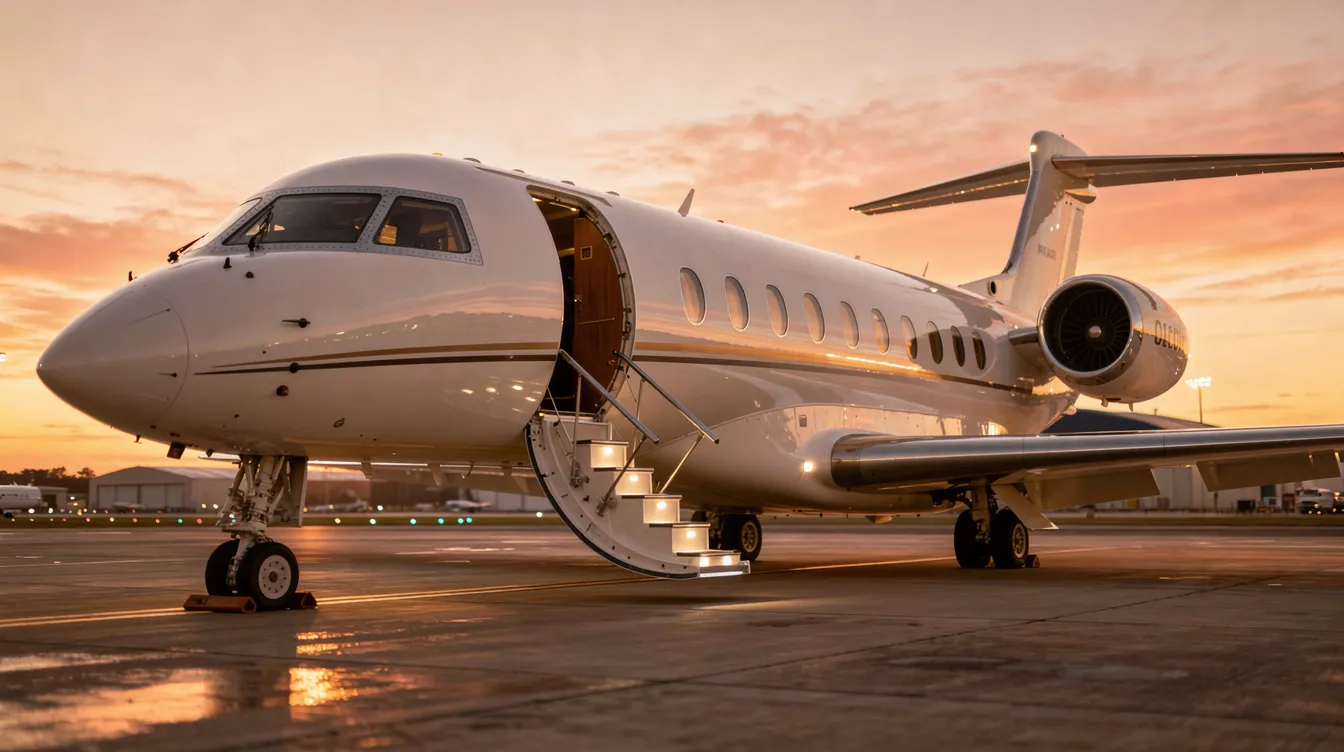
How Top Speed Is Actually Measured (And Why Pilots Rarely Use It)
Official speed records are set under conditions most travelers — and most military pilots - will never experience. Aircraft are flown at high altitude to reduce air density and drag. Fuel loads are minimized. External stores and payloads are removed. Air temperature and atmospheric conditions are carefully selected. The result is a "clean" measurement that represents the absolute ceiling of performance, not a normal operating condition.
The local speed of sound varies with air temperature and altitude. At sea level on a standard day, Mach 1 is roughly 761 mph. At 40,000 feet, where air temperature drops significantly, it falls to approximately 660 mph. This means Mach 1 is not a fixed number in miles per hour — it shifts depending on where you are in the atmosphere. That is why pilots and engineers use Mach number as the primary metric for high-speed flight rather than ground speed or indicated airspeed.
In routine operations — military or private - aircraft fly well below maximum capability. Fuel burn escalates dramatically above Mach 0.85 in business jets. Engine life shortens. Structural fatigue accumulates faster. For fighters, supersonic dashes are tactical necessities, not sustained modes. For long-range private jets, cruising at Mach 0.88 instead of 0.93 might add ten minutes to a five-hour flight but save thousands in fuel cost and significantly extend component life, especially when they can cruise higher than airlines, as explained in detail in our guide to how high private jets fly.
The gap between test-bench maximum speed and operational cruise speed is real in every category - from MiG-25s to Gulfstreams.
Why Modern Fighter Jets Aren't Getting Much Faster
Cold War fighters chased ever-higher Mach numbers. Modern stealth fighters do not. The reason is straightforward: the trade-offs outweigh the gains.
Heat load: At Mach 2.5+, aerodynamic heating requires exotic materials and drastically increases maintenance costs.
Fuel consumption: High speed burns fuel at exponentially higher rates, cutting combat range and loiter time over the battlefield.
Maintenance burden: Engines and airframes stressed by extreme speed require more frequent inspection and part replacement.
Diminishing tactical returns: Modern aerial combat depends on stealth, sensor fusion, missile range, and electronic warfare—- not raw top speed.
The F-22 Raptor cruises at Mach 2.25 in afterburner, but its real advantage is supercruise — sustained Mach ~1.5 without afterburner — combined with stealth and modern avionics. The Russian Su-57 exceeds Mach 2 but relies on radar-absorbent materials and thrust-vectoring for its edge. China's Chengdu J-20 is optimized for stealth and internal weapons bays rather than setting speed records.
Hypersonic development has largely shifted to missiles and unmanned vehicles, where the constraints of pilot survival, G-force tolerance, and cabin pressurization are removed entirely. Speed still matters, but it has migrated from the cockpit to the warhead.
Stealth and Speed: F-22, J-20, a—d Su-57 in Modern Air Combat
Fifth-generation fighters represent a fundamental rethinking of what makes a stealth aircraft dominant. Instead of chasing the title of fastest fighter jet, these platforms combine moderate Mach 2+ speed with low-observable profiles, networked warfare systems, and sensor fusion that makes them near-invisible to enemy aircraft and ground defenses.
The F-22 Raptor remains the benchmark. Its supercruise capability - sustained supersonic flight near Mach 1.5 without afterburner - allows it to cover ground quickly while conserving fuel and minimizing infrared signature. Thrust-vectoring nozzles give it exceptional maneuverability in close-range air combat, while its radar and data links dominate beyond visual range engagements. For U.S. air superiority doctrine, speed is a component, not the centerpiece.
China's J-20 "Mighty Dragon" uses a canard-delta layout optimized for stealth at longer ranges, with internal weapons bays that maintain its low-radar profile. Engine development — particularly the WS-15 — targets supercruise capability, but the J-20's strategic value lies in challenging U.S. dominance in the western Pacific through sensor reach and stealth, not through being the fastest plane.
Russia's Su-57 pairs stealth with agility. Exceeding Mach 2, it features radar-absorbent materials, thrust-vectoring engines, and an advanced radar designed to counter both stealth aircraft and cruise missiles at visual range and beyond. Like its peers, its air superiority comes from the combination of speed, stealth, and sensors - not from any single metric.
Mach, Miles per Hour, and What "Fast" Feels Like
Mach number - named after physicist Ernst Mach - is simply the ratio of an aircraft's speed to the local speed of sound. That ratio shifts with altitude and air temperature, which is why Mach is far more useful than miles per hour for describing high-speed flight.
At typical cruise altitudes:
Mach Number | Approximate Speed (mph) | Context |
|---|
Mach 0.85 | ~560 mph | Typical commercial jet cruise |
Mach 0.92 | ~607 mph | Fast private jet cruise |
Mach 1.0 | ~660 mph (at altitude) | Speed of sound |
Mach 2.04 | ~1,354 mph | Concorde cruise |
Mach 3.3 | ~2,193 mph | SR-71 cruise |
What does speed actually feel like? Concorde passengers could watch Earth's curvature from 60,000 feet while crossing the Atlantic at Mach 2. Inside a modern private jet at Mach 0.90, there is no perceptible sensation of extreme speed — the primary "feel" is a shorter travel day, earlier arrival, and less fatigue. Speed enhances operational flexibility in private aviation not through visceral force, but through reclaimed hours.
Pilots and dispatchers think in Mach for performance planning. Passengers experience it as doors closing sooner and opening earlier.
Official Records vs Unofficial Stories of Speed
The Fédération Aéronautique Internationale (FAI) certifies official airspeed records under strict protocols: measured courses, calibrated instruments, independent observers. These records carry the weight of verification, and they define what counts as the world's fastest aircraft in each category.
But aviation is also a world of legend and classified performance. SR-71 pilots have described exceeding published speed limits during operational emergencies — Brian Shul's famous account of pushing past Mach 3.5 over Libya is widely cited but remains outside any certified flight envelope. Many military aircraft could briefly exceed published speeds in dives or extreme circumstances, but these episodes are not normal operating speeds and may never appear in official records.
Lesser-known record categories also exist: piston-engine speed records (the modified Hawker Sea Fury), rocket interceptor marks (Germany's World War II-era Me 163 Komet), and specialized point-to-point runs. Setting speed records in clean, lightweight configurations under ideal conditions is fundamentally different from sustained operational capability.
The takeaway for aviation enthusiasts: "fastest plane" headlines almost always simplify a complex interplay of official data, test conditions, and classified realities. Nuance matters.
Training for Extreme Speed: Test Pilots, Military Crews, and Records
Pushing aircraft to record speeds demands elite training, not just powerful hardware. The pilots who flew the X-15, SR-71, and today's hypersonic test vehicles undergo some of the most demanding preparation in aviation, just as frequent private flyers carefully evaluate the best Jet Card programs to match their own operational needs and travel patterns.
Military and NASA test pilots train for high-Mach flight through centrifuge sessions that simulate sustained G-forces, high-altitude physiology courses that prepare them for rapid decompression and hypoxia, and simulator runs focused on emergency procedures at higher altitudes and speeds where reaction time shrinks to fractions of a second. Programs at Edwards Air Force Base and similar facilities produced the crew who achieved the fastest manned aircraft records that still stand.
Organizations like the FAI and national air forces plan and oversee record attempts under controlled risk, with chase aircraft, telemetry monitoring, and abort criteria established well before takeoff. While most record holders are military or test pilots, civilian aviators have also set notable speed records on long-distance routes with carefully prepared aircraft and conditions.
In private jet operations, the philosophy inverts. Safety margins and passenger comfort intentionally limit operations well below any theoretical speed edge. The goal is not to discover a flight envelope's outer boundary - it is to deliver passengers smoothly, safely, and on time, with a clear understanding of Jet Card pricing structures so that speed and convenience are aligned with predictable costs.
Why "Fastest Plane" Is Not the Same as "Best Combat Aircraft"
Combat effectiveness depends on far more than top speed — especially in modern multi-domain air combat where information, stealth, and precision determine outcomes.
Consider MiG-25 versus F-15. The MiG-25 Foxbat can reach Mach 3.2 (2,190 mph) - substantially faster than the F-15 Eagle at Mach 2.5 (1,650 mph). Yet the F-15 boasts an unmatched air-to-air combat record: over 100 aerial victories with zero losses in air combat. Why? Superior radar, better missiles, higher maneuverability, exceptional pilot training, and modern avionics. The fastest fighter jet on paper was not the best combat aircraft in practice.
Today, stealth, sensor fusion, electronic warfare, and networked data links determine who sees and shoots first. Air forces evaluate aircraft based on mission effectiveness—interception, ground attack, reconnaissance, survivability, and sustained operations over a combat range—not just who can sustain speeds at the highest Mach number, much as private fliers weigh the value of different products, such as a 100-hour Jet Card, in terms of real-world flexibility rather than abstract maximums.
Speed remains vital in specific roles. Interceptors need it to close on enemy aircraft and incoming threats. Reconnaissance aircraft need it to survive over hostile territory. Hypersonic strike weapons need it to defeat defenses. But speed alone has never decided wars — and in 2026, it is less decisive than ever, just as private travelers evaluate options like a 50-hour Jet Card by look—ng at total value, not just nominal aircraft per—ormance.
Private Aviation Speed: How Jet Cards Turn Mach into Minutes Saved
The fascination with the world's fastest plane is understandable. But for travelers, the practical question is simpler: how can I reliably arrive hours earlier, and is a 25-hour Jet Card or a larger commitment the right way to access that consistency?
A Jet Card provides prepaid access to a fleet across cabin classes - light, midsize, super-midsize, and large-cabin - with guaranteed availability and transparent hourly rates. Instead of owning an aircraft or negotiating individual charters, members lock in access and flexibility. High-speed jets allow for more efficient business travel, and the Jet Card model removes the friction that usually surrounds private aviation; understanding overall Jet Card pricing helps travelers see how that convenience translates into predictable costs.
BlackJet deploys aircraft that cruise near the upper end of business jet speeds — around Mach 0.80 to 0.90—but creates true time savings through schedule choice, direct routes, and smaller airports. Consider a BlackJet member flying from New York to London on a large-cabin jet. Door-to-door, the trip might take 8.5 hours: arrive 20 minutes before departure at a private terminal, fly 7 hours nonstop, clear customs in minutes upon arrival. The same route via commercial business class - with check-in, security, boarding, taxiing, possible delays, and customs lines at Heathrow - easily consumes 12 to 14 hours. That is a savings of four to five hours without touching the aircraft's cruise speed.
For shorter routes - say, Los Angeles to Aspen — the advantage is even starker. A BlackJet flight departs on the client's schedule, lands at a smaller airport minutes from the destination, and eliminates the connection through Denver that commercial travelers endure, while transparent Jet Card cost per hour models make those time savings easy to budget.
With 24/7 digital booking, real-time flight support— and the ability to depart on a client's schedule, BlackJet converts aircraft performance into competitive advantage. Products like the BlackJet 25+ Hour Jet Card turn that flexibility into a fixed-rate solution for frequent travelers. Speed is not just Mach number — it is total journey time.
Safety, Certification, and Why Private Jets Don't Chase Mach 3
Private aviation's primary performance metric is safe, predictable, comfortable travel - not experimental top speed. Business jets are certified under strict regulatory standards that balance engine thrust, structural integrity, and cabin pressurization for long-term reliability and thousands of flight cycles.
BlackJet partners exclusively with operators meeting high third-party safety ratings and robust maintenance protocols. These certifications inherently limit any temptation to push beyond tested envelopes. Every aircraft in the network operates within a proven flight envelope, with margins built in for weather, turbulence, and system redundancy, whether it's a light jet for a small group or a large-cabin jet for 20 passengers.
Smooth ride quality, reduced fatigue, and safe runway performance in all weather are more valuable to clients than squeezing out a few extra knots at cruise altitude. At higher altitudes—where business jets fly above most commercial traffic—cabin pressurization and low cabin altitude matter immensely for passenger well-being on flights exceeding four hours, and many travelers compare options such as NetJets Jet Card programs when deciding how they want to access that level of comfort.
For high-net-worth travelers and executives, risk reduction and operational continuity matter more than bragging rights about flying near the speed of sound. The best aircraft is the one that arrives safely, on time, every time, whether it's a flagship heavy jet or one of the cheapest private jet options leveraged via smart access models.
Sustainability and the Future of High-Speed Travel
The push for faster aircraft collides directly with the demand for sustainable aviation. Higher Mach speed means greater drag, more fuel burn, and higher emissions per passenger-mile. Any future fastest aircraft with a commercial or business role must solve this tension.
Sustainable aviation fuel (SAF), lighter composite materials, and more efficient engines are the building blocks. Boom Supersonic's Overture is designed around 100% SAF compatibility - a prerequisite for regulatory acceptance and market credibility. On the subsonic side, modern business jets already incorporate advanced composites and engine technologies that reduce fuel consumption compared to predecessors, and selecting the best small private aircraft for each mission can further balance speed, efficiency, and sustainability.
BlackJet ensures every journey is carbon neutral — at no extra cost to members - through verified carbon offsets and, where available, SAF usage. For clients who care about environmental impact as well as speed, this alignment is increasingly decisive.
The tension between going faster and burning more fuel is real. Active cooling systems are utilized in hypersonic vehicles to manage extreme heat loads, adding weight, complexity, and energy demand. Future private supersonic or near-supersonic options will only be viable if they meet both regulatory and sustainability expectations—a high bar that current technology is only beginning to approach, especially for travelers who today are still focused on cheapest private aircraft options and efficient access models.
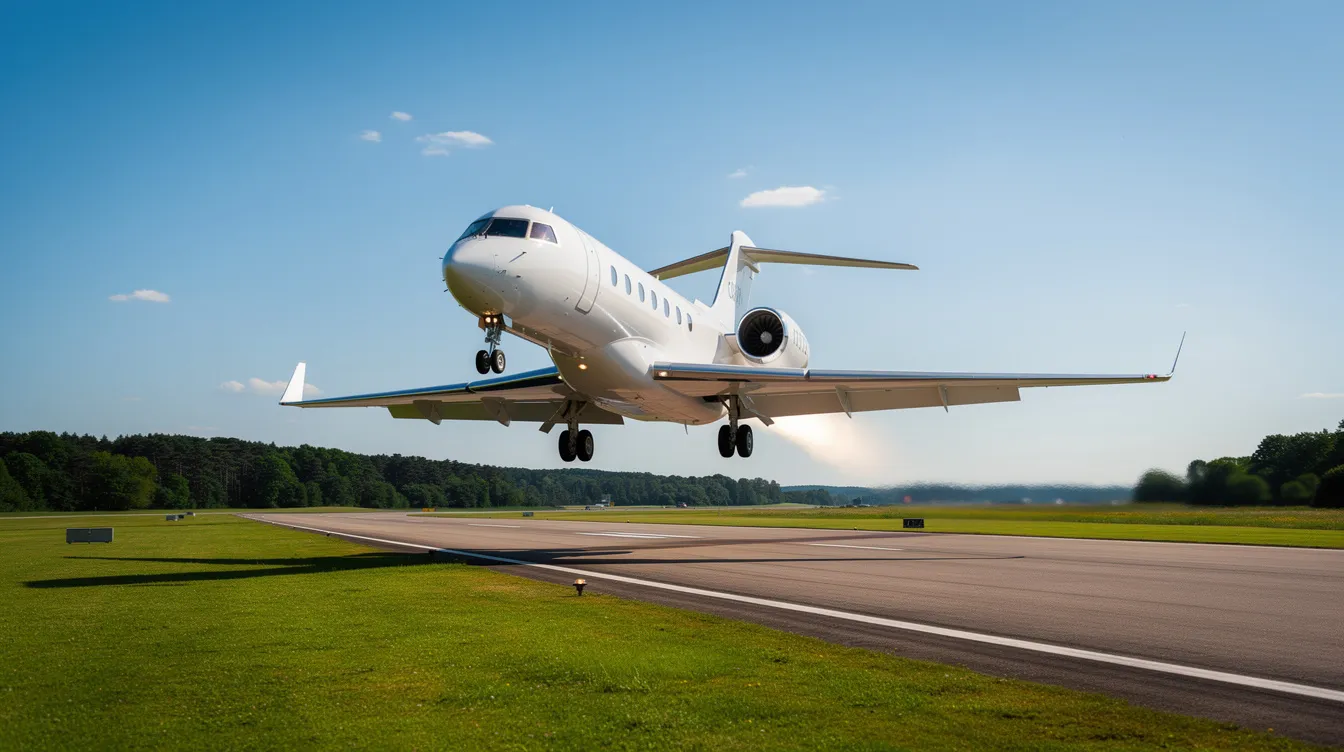
What Hypersonic Concepts Could Mean for Tomorrow's Travelers
Hypersonic aircraft like the X-43A utilize scramjet technology for sustained flight above Mach 5, and a growing ecosystem of experimental programs is pushing these technologies toward eventual practical use.
Hermeus recently unveiled Ramjet-X—an unmanned, expendable test vehicle designed to accelerate via ramjet to Mach 4+ at altitudes near 100,000 feet. Stratolaunch's Talon-A has now completed more than 10 successful hypersonic flights, demonstrating that reusable unmanned platforms can routinely achieve hypersonic speeds. These programs are building the foundation for a future where New York to Tokyo might take under two hours, or London to Sydney three to four hours, even as today's travelers still weigh practical factors like Jet Card cost per hour when choosing how fast they actually want to fly.
But crewed hypersonic business jets remain at least decades away. The challenges are formidable:
Heat shielding: Airframe surfaces at Mach 5+ reach temperatures where conventional metals fail. Heat-resistant superalloys are essential for maintaining structural integrity in hypersonic flight, and current solutions are heavy and expensive.
Cabin environment: Passengers cannot tolerate the heating, vibration, and G-loads that unmanned vehicles simply ignore.
Airspace management: Hypersonic vehicles create sonic boom patterns that current regulations do not accommodate, and dedicated terminals, specialized runways, and new safety regimes would be required.
For now, the practical frontier remains high-subsonic private jets operating at Mach 0.90 to 0.95. BlackJet monitors these advances closely while, in the near term, focusing on optimizing today's fleet for speed, safety, and environmental responsibility, including how higher cruising altitudes can shorten routes and improve comfort, as explored in our analysis of private jet cruising heights.
FAQ: Fastest Planes, Mach Numbers, and Private Jet Choices
What is currently the fastest aircraft ever flown? The NASA X-43A, which reached Mach 9.6 (7,366 mph) on November 16, 2004. It is the fastest unmanned aircraft and the overall speed record holder for air-breathing flight.
What is the fastest manned aircraft? The North American X-15, which reached Mach 6.72 (4,520 mph) on October 3, 1967 - a record that still stands for crewed flight.
What is the fastest fighter jet in active service today? The MiG-31 Foxhound, capable of Mach 2.83 (1,864 mph), serves as Russia's primary long-range interceptor. The MiG-25 Foxbat, still in limited service with some nations, has a theoretical top speed of Mach 3.2 (2,190 mph) but is operationally limited below that.
What is the fastest private jet available now? The Bombardier Global 8000, with a maximum operating speed of Mach 0.95 and a range of 8,000 nautical miles. The Gulfstream G700 reaches Mach 0.925, and the Cessna Citation X+ achieves Mach 0.935.
Why don't private jets fly at Mach 2 or higher? Supersonic civil flight generates a sonic boom that is restricted or banned over most populated areas. Additionally, the fuel burn, thermal stress, and engineering cost of supersonic airframes make them impractical for current business aviation economics.
What is Mach? Mach is the ratio of an object's speed to the local speed of sound. Because the speed of sound varies with air temperature and altitude, Mach 1 is not a fixed number in mph - it is roughly 761 mph at sea level and about 660 mph at typical cruise altitude.
How are speed records certified? By the Fédération Aéronautique Internationale (FAI), which requires measured courses, calibrated instruments, and independent observation. Many aircraft may exceed published speeds in emergencies or classified operations, but only FAI-certified runs count as official records.
Does higher cruise speed always mean shorter trip time? Not necessarily. Wind patterns, routing restrictions, and airport positioning all affect total trip time. A private jet cruising at Mach 0.88 from a convenient nearby airport often delivers a shorter door-to-door journey than a commercial flight at Mach 0.85 from a distant hub.
How can I fly "faster" with BlackJet without chasing extreme Mach numbers? BlackJet's Jet Card programs optimize total journey time through direct routing, access to thousands of airports, flexible scheduling, 24/7 booking, and carbon-neutral operations. The result is hours saved on every trip - without requiring supersonic hardware.
Conclusion: From Record-Breaking Aircraft to Effortless, High-Speed Private Travel
The timeline of speed stretches from the Bell X-1's first crack of the sound barrier in 1947, through the X-15 and SR-71's Cold War dominance, past the MiG-25's interceptor supremacy, to today's stealth fighters, high-subsonic private jets, and the emerging promise of Boom Supersonic and hypersonic research.
NASA's X-43A remains— the world's fastest plane on paper. But most real-world value now comes from the intelligent application of speed—combined with stealth, sensors, logistics, and operational design. For military planners, that means fifth-generation fighters and hypersonic weapons. For business and leisure travelers, it means something more immediate.
The most meaningful fastest aircraft is the one that turns a 12-hour travel day into a 6-hour experience - through private terminals, flexible departure times, direct routes, and cabin comfort that lets you arrive ready to perform. Speed reduces travel time significantly for passengers, but only when every link in the chain - booking, departure, flight, arrival - is optimized.
BlackJet exists to convert aviation performance into strategic advantage for its members. Through Jet Cards, safety-first operations, technology-driven booking, and carbon-neutral flights, BlackJet delivers not just speed, but time - the one asset no one can manufacture, whether you're flying transatlantic or arranging private jet charters in Karachi for regional business and leisure travel.
Explore BlackJet's Jet Card programs and discover how premium private jet access can redefine what "fastest" means for your next journey.


 Sign up with google
 Sign up with Apple