The phrase "million-dollar plane" conjures images of presidential aircraft, gold-trimmed cabins, and billionaire mega-jets cruising above the clouds. But it also describes a fast-growing category of aircraft that executives, founders, and high-net-worth travelers use every week to reclaim their most valuable asset: time.
This guide covers the full spectrum - from government aircraft like Air Force One to the light jets and midsize jet options you can fly today through Jet Card programs and curated charter, as well as traditional fractional ownership.
Why "Million Dollar Planes" Matter Today
The post-2020 aviation landscape shifted the calculus for serious travelers. Commercial airlines introduced route reductions, service cuts, and chronic delays driven by staffing shortages, air traffic control constraints, and lingering pandemic-era disruptions. For executives and high-net-worth individuals, the cost of unreliability became harder to ignore than the cost of private jets.
Private jet travel can save up to five hours per trip when you factor in eliminated security lines, boarding delays, and layovers. Private jets allow for direct flights to remote destinations that commercial carriers simply don't serve. And with access to over 5,000 U.S. airports - compared to roughly 500 served by airlines - private jets reduce travel time significantly on almost every route.
Here's why this matters right now:
Benefit | Description |
|---|
Reliability over luxury | The primary driver isn't champagne and leather - it's schedule certainty. Private jet passengers avoid long security lines and boarding delays entirely. |
Time arbitrage | A New York–to–Dallas roundtrip that costs an executive six hours on commercial can be done in under three hours via light jet. |
Hourly access economics | Average charter rates for light jets sit around $6,504 per flight hour, with midsize jet options near $6,980 - a premium justified by time saved. |
Access without ownership | BlackJet offers membership-based Jet Card programs that let you fly modern, million-dollar aircraft without the capital commitment of aircraft ownership. Safety-vetted operators, carbon-neutral flights, and real-time digital booking make it a strategic advantage, not a splurge. |
What Counts as a "Million Dollar Plane" in 2026?
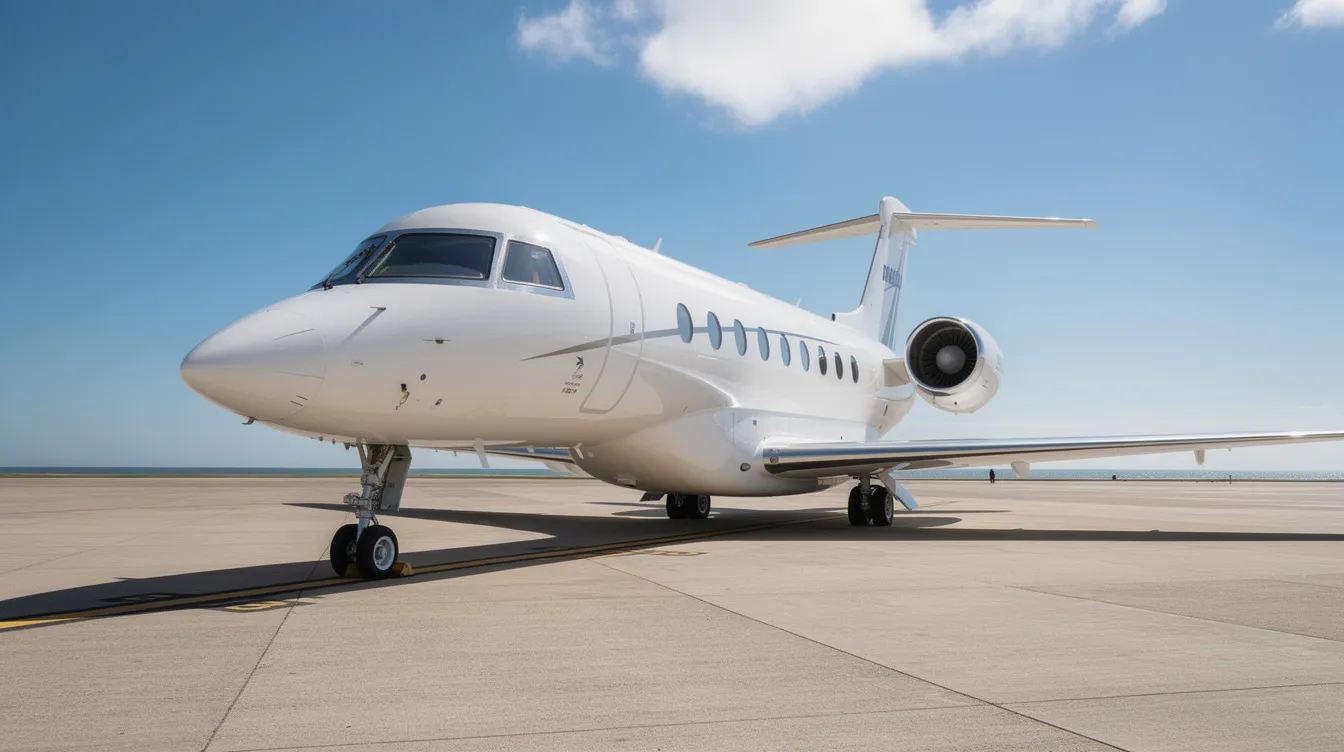
The term "million-dollar plane" covers an enormous range. At one end, you have entry-level personal jets. At the other end, custom-converted commercial airliners like VIP Dreamliners that rank among the most expensive private jets in the world - some costing upwards of $800 million.
Here's how the private jet market breaks down by price tier:
Entry business jets ($1–5M): Pre-owned very-light jets and single-engine models like the Cirrus Vision Jet, which trades around $1.8M on secondary markets. Often single-pilot certified with seating for 4–6 passengers.
Modern light jets ($5–9M): Aircraft like the Embraer Phenom 300E and Cessna Citation CJ3+. At the $10 million mark, jets include new light and pre-owned super-midsize aircraft.
Midsize and super-midsize jets ($9–20M+): The Gulfstream G280, Bombardier Challenger 350, and similar models offering transcontinental range and stand-up cabins.
Ultra-long-range flagships ($70M+): The most expensive private jets cost over $70 million - the Gulfstream G700 lists at approximately $91 million.
Government and head-of-state aircraft ($400M–$2B): Custom Boeing 747 or Airbus wide-body conversions with hardened military-grade systems. Air Force One is valued at $660 million.
BlackJet clients typically fly in modern light, midsize, and super-midsize jets rather than ultra-rare head-of-state aircraft - but every plane in the fleet represents a million-dollar-class asset engineered for performance.
Air Force One: The Most Famous "Million Dollar Plane"
No aircraft captures the public imagination quite like Air Force One - the flying white house. Technically part of the U.S. Air Force fleet and operated from Joint Base Andrews, it is not a private jet. But it shapes what many people picture when they hear "million-dollar plane."
The current presidential fleet consists of two VC-25A aircraft - modified Boeing 747-200B platforms introduced around 1990. Key specs:
Capacity: 71 passengers plus a crew complement of approximately 30
Range: ~7,800 statute miles without refueling, with in-flight refueling capability
Features: Hardened communications, self-contained baggage loading, front and aft stairs, medical suite, secure command center
Estimated program value: Air Force One is valued at $660 million when accounting for its military-grade systems and modifications
The new Air Force One replacement - the VC-25B program - is based on Boeing 747-8 airframes. The fixed-price contract awarded in 2018 totaled approximately $3.9 billion for two aircraft, roughly $1.95 billion per plane. Upgrades include dual APUs usable in flight, autonomous enplaning systems, self-defense systems, and mission-grade secure communications.
Political media moments - including when President Donald Trump unveils new Air Force One concepts and color schemes - keep the aircraft in the spotlight. The Qatari government also donated a Boeing 747-8 valued at approximately $400 million as a bridge aircraft; this Qatari jet is being reworked for presidential use until the VC-25B fleet is delivered.
The president leaves office, but the aircraft endures. What makes Air Force One distinct from civilian aviation is its military classification, defensive countermeasure suite, and the fact that it serves a country, not a single new owner.

Other Head-of-State and Billionaire Mega-Jets
Air Force One isn't alone in the stratosphere of government and billionaire mega-aircraft. Several other aircraft around the world rival or exceed its opulence, particularly among Saudi princes' private plane fleets and other royal operators:
Boeing 747-8 VIP: A Boeing 747-8 VIP can cost up to $367 million when fully outfitted with bespoke lounges, bedrooms, offices, and multiple galleys. The former Qatari 747-8 donated to the U.S. reportedly included multi-room layouts, bathrooms, and exclusive content areas for VIP transport.
Airbus A380 (Royal conversion): The Airbus A380 was remodeled for $200 million for a Saudi royal, featuring private jets that can feature showers and elevators for luxury, a Turkish bath, and a concert hall. High-end materials like gold and marble are often used in these interiors, and similar wide-body platforms can even be adapted for charter flights of 100 passengers in private configurations.
Airbus ACJ350 VIP: Valued at $325–$350 million depending on fit-out, with VIP master suites, conference zones, and global range. A model of customization that can add millions to the base price of jets.
Boeing 787-8 BBJ: Custom Boeing Business Jet versions of the Dreamliner often reach $320–$350 million. Wide-body comfort, long-haul range, and multiple cabin zones.
Qatar Amiri Flight Boeing 777-300ER: Used for royal and official transport by the Qatari government, with a list price around $366 million before VIP interior work.
These customizations can transform jets into flying palaces - but they're structurally different from other aircraft that BlackJet clients use. They're airline-sized airframes repurposed for VIP service, requiring large crews, government-level maintenance reserves, and dedicated hangar infrastructure. While fascinating, they are extremely rare. The practical million-dollar plane for most readers is a light or midsize jet - which brings us to the real market.
Private Jets at the $1–10 Million Level: The Real Market
Beyond the mega-jets, the heart of the private jet market sits between $2 million and $20 million, including the typical features of a $5 million private jet. These are the specific aircraft that serious travelers, business owners, and BlackJet members actually fly.
Light Jets serve as core small private jet luxury travel options for executives and founders who prioritize speed and access over sheer cabin size.
The 2025 Embraer Phenom 300E costs approximately $9.45 million and seats up to 9 passengers with a range of roughly 2,010 nautical miles.
The Cessna Citation CJ3+ offers a range of 2,040 nautical miles, making it ideal for regional missions.
The purchase price for new light jets typically falls between $5–12 million.
Midsize Jets bridge the gap between small-cabin aircraft and 16-seat private jet options for larger teams.
Super-Midsize Jets
Pre-owned Bombardier Challenger 350 jets trade between $9–11 million
The Gulfstream G280 lists at roughly $24.5 million new but can be found pre-owned between $13–22 million
These aircraft deliver intercontinental capability with cabin volumes exceeding 880 cubic feet
Private jets can access over 5,000 airports in the U.S., and many of these aircraft - including the Phenom 300E and Citation CJ3+ - represent the sweet spot that balances operating costs, passenger comfort, and range for regional and transcontinental missions.
Inside a Million Dollar Plane: Cabins, Tech, and Comfort
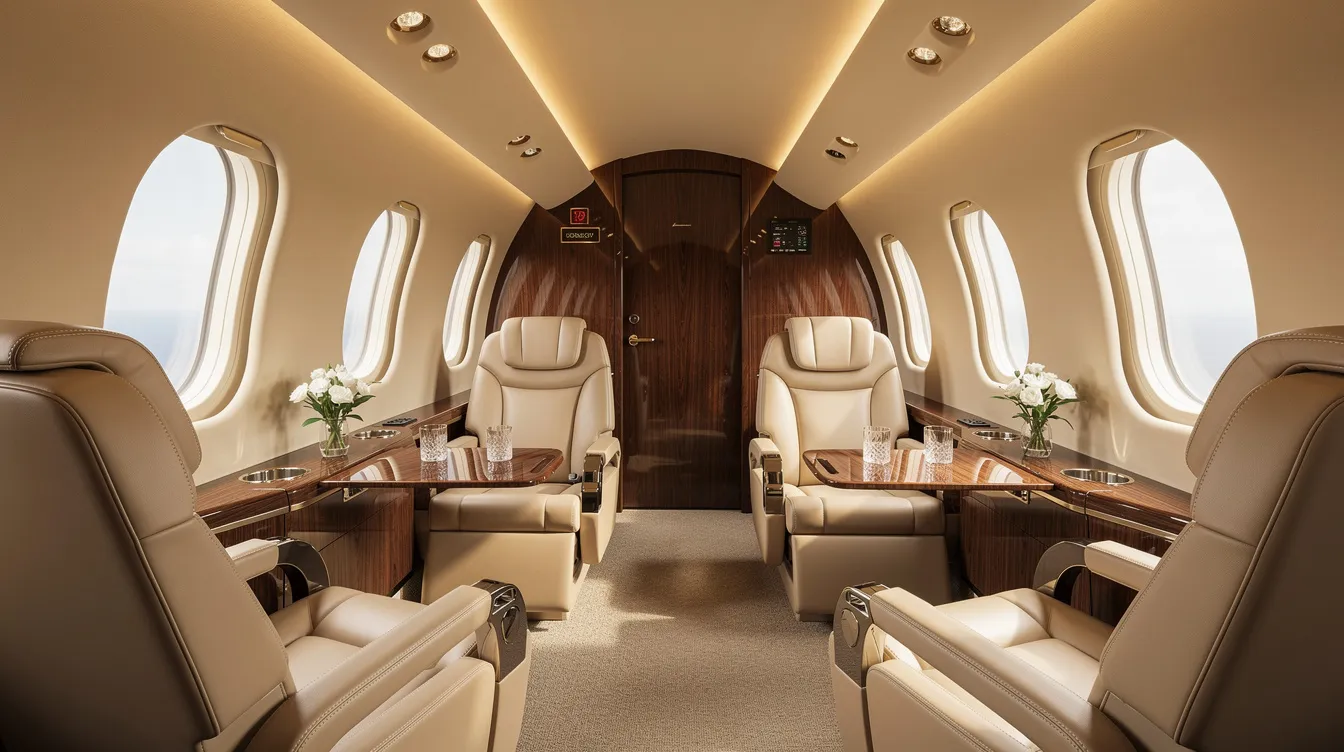
Step inside a modern light or midsize jet, and the cabin tells a clear story: luxury jets are designed for comfort and productivity in equal measure, echoing many of the hallmarks found in the most expensive private jets in the world.
Interior Layouts
Light jets typically offer club seating for 4–6, optional divans, compact lavatories, and refreshment centers. Baggage compartments hold 30–40 cubic feet.
Midsize and super-midsize cabins feature flat floors, stand-up headroom, full-size lavatories, and galleys capable of plated meal service. Multi-room floor plans are common in larger business jets.
The Gulfstream G280 offers a cabin height of roughly 6 feet, a width of 7 feet, and a length of 32 feet - accommodating 8–10 passengers in comfort.
The Phenom 300E seats up to 9 with flat-reclining seating and an optional belted lavatory.
Technology & Connectivity
Ka-band or Ku-band Wi-Fi enables video conferencing and broadband streaming in flight.
Modern avionics suites include the Garmin G3000, Collins Pro Line Fusion, and Gulfstream's Symmetry Flight Deck with synthetic vision and heads-up displays.
High-end aircraft frequently have advanced audio-visual entertainment systems, mood lighting with LED color zones, and cabin management systems controlled via touch panel or tablet.
Low cabin altitude in luxury jets reduces fatigue and jet lag - some aircraft pressurize to 4,500 feet even at FL450.
Privacy & Productivity Luxury jets often feature personalized interior customizations tailored to the owner or operator. Luxury jets can include ergonomic seats and meeting rooms for confidential board-level discussions. Private jets often serve as luxury residences during flights, especially on transcontinental routes where passengers sleep, dine, and work in a fully enclosed private plane interior - a contrast to commercial first class, where a dozen strangers share the cabin and the schedule is fixed.
Operating Costs: What It Takes to Run a Million-Dollar Jet
Buying the plane is only the beginning. Annual operating costs for luxury jets can reach several million dollars - and are typically 10–15% of aircraft value each year, which becomes a critical consideration if you're evaluating private jets for sale under $10 million.
Fixed vs. Variable Costs
Cost Category | Light Jets | Super-Midsize Jets |
|---|
Crew salaries, training, management | Included in fixed | Included in fixed |
Hangar, insurance, regulatory compliance | Included in fixed | Included in fixed |
Total fixed costs (annual) | $600,000–$900,000 | $800,000–$1,400,000+ |
Fuel, maintenance, landing fees | Variable per hour | Variable per hour |
Variable costs per flight hour | $2,500–$3,000 | $3,200–$4,200 |
All-in cost per flight hour | ~$2,000–$2,800 | ~$3,800–$5,000 |
Concrete Example: The Embraer Phenom 300E, with a purchase price around $9.45 million, carries estimated annual costs near $2.4 million at approximately 438 annual flight hours - covering depreciation, fixed costs, and variable costs combined.
Maintenance Programs: Many operators enroll engines and avionics in programs like MSP Gold or JSSI, converting unpredictable major maintenance into predictable costs through hourly maintenance reserves. These programs also support resale value - a G280 enrolled in MSP Gold commands a premium on secondary markets.
The Ownership vs. Access Calculation: For travelers flying fewer than 50–75 hours per year, jet cards and on-demand charter through BlackJet are typically more rational than full aircraft ownership, especially when you weigh the time savings and flexibility outlined in a detailed analysis of whether chartering a private jet is worth it. You avoid the capital risk, fixed costs, depreciation, and utilization patterns that eat into value when a jet sits idle in a hangar.
Access Without Ownership: Jet Cards, Fractional, and Charter
You don't need to buy a million-dollar plane to fly in it. Three access models exist, each suited to different utilization patterns and capital preferences, especially if you're comparing them to the best small private aircraft for different missions.
Access Model | Capital Outlay | Commitment | Best Use Case | Cost Structure |
|---|
Fractional Ownership | Buy a share (e.g., 1/8 or 1/16) of a specific aircraft; upfront investment required | Multi-year commitment | Frequent flyers (75+ hours/year) wanting guaranteed access to a dedicated aircraft | Upfront capital, monthly management fees, hourly occupied rates, exposure to depreciation risk |
Jet Cards | Prepaid blocks of hours (e.g., 25 or 50 hours); no aircraft purchase required | No long-term commitment | Regular flyers (25–75 hours/year) seeking predictable costs and guaranteed access | Prepaid hours at locked-in or capped rates, no capital outlay, no crew/hangar fees, predictable per-flight-hour cost |
On-Demand Charter | No upfront investment; pay per flight | No commitment; pay-as-you-go | Occasional flyers (<25 hours/year) or those with irregular travel needs | Pay per trip, subject to market pricing, fuel surcharges, and availability constraints |
Fractional Ownership is often contrasted with charter flights and their meaning for private travelers when clients evaluate flexibility versus commitment.
Buy a share (e.g., 1/8 or 1/16) of a specific aircraft through programs like NetJets or Flexjet.
Capital outlay required (a 1/16 share of a light jet can run ~$700,000 upfront) plus monthly management fees and hourly occupied rates
Multi-year commitments and exposure to depreciation risk
Best for those flying 75+ hours per year who want guaranteed availability of a dedicated aircraft
Jet Cards (BlackJet's Core Model) sit alongside other best jet cards for frequent flyers but are optimized for travelers who value transparent pricing, safety, and sustainability.
Prepaid blocks of hours - typically 25 or 50 hours - with locked-in or capped hourly rates, aligning with many of the structures described in comprehensive 50-hour jet card cost guides
Guaranteed availability across light, midsize, and super-midsize cabin classes
No capital outlay for aircraft, no crew salaries, no hangar fees - predictable costs per flight hour
BlackJet differentiates with proprietary safety vetting, carbon-neutral flights at no extra cost, and a tech-forward booking platform with 24/7 real-time support.
Tax treatment may also differ favorably compared to ownership or fractional models - consult your advisor.
On-Demand Charter
No upfront commitment; pay per flight
Best for occasional flyers under ~25 annual flight hours or irregular mission profile needs
Greater exposure to market pricing, fuel surcharges, and availability constraints
BlackJet curates operators and aircraft for charter trips, ensuring consistent safety and cabin standards.
The tipping point: if you fly more than 25 hours per year, a Jet Card membership typically delivers better economics and reliability than booking individual charters.
Safety and Certification: How Million Dollar Planes Are Regulated
Safety isn't a feature - it's the foundation. Whether you're aboard a government aircraft or a chartered light jet, certification and oversight determine the integrity of every flight.
FAA Part 91 governs owner-operated, non-commercial flights with relatively flexible oversight on crew duty times and maintenance
FAA Part 135 certification imposes stricter operational requirements for charter and on-demand operations - including mandatory crew rest periods, enhanced maintenance regimes, and formalized operational control. Understanding Part 135 is essential for any discerning traveler.
ARGUS Platinum certification represents the top 1% of operators - a benchmark BlackJet requires of its partner fleet
Wyvern Wingman certification emphasizes pilot training and currency standards.
IS-BAO establishes global best practices for flight departments and operator management systems
Modern jets include terrain awareness warning systems (TAWS), Traffic Collision Avoidance Systems (TCAS), weather radar, and engine health monitoring as standard. BlackJet's certification program layers additional vetting on top of these regulatory minimums, ensuring every operator, pilot, and aircraft meets or exceeds the highest industry standards.
The distinction between military aircraft like Air Force One - equipped with EMP hardening, encrypted communications, and self-defense systems - and civilian private jets is significant. But civilian travelers can and should demand airline-grade or better safety standards, even when they do not own the aircraft.
Sustainability and the Future of Million Dollar Aviation
Modern business jets incorporate aerodynamic efficiencies that previous generations lacked: winglets, composite airframe materials, and advanced engines like the Rolls-Royce Pearl 700 (powering the Gulfstream G700) collectively reduce fuel burn per nautical mile, even on the most affordable private jet options in today’s market.
Sustainable Aviation Fuel (SAF): Available in blends of 30–50% at an increasing number of FBOs in the U.S. and Europe. Best-case lifecycle CO₂ reductions reach up to approximately 80% depending on feedstock and production method, and even ultra-large aircraft like a private jet Airbus A380 conversion are beginning to incorporate these fuels.
Carbon offset programs: BlackJet ensures every flight is carbon-neutral by default through verified offset projects - at no extra cost to members.
Electric and hybrid-electric aircraft: Early prototypes including eVTOLs and hybrid-electric regional concepts hint at a new era for light aircraft and regional mobility, though widespread adoption remains years away.
Potential regulatory changes - including private jet levies and emissions taxes in multiple jurisdictions - could increase charter costs by 15–60% by 2035, making early adoption of sustainable practices both an ethical and financial decision.
How Military and Air Force Aircraft Influence Private Jet Design
Innovations from the Air Force and military programs have a way of reaching civilian aviation. The ability to operate with advanced composite structures, fly-by-wire flight controls, and radar-absorbent materials originated in defense - and now these technologies appear in high-end private jets from Dassault, Gulfstream, and Bombardier.
Composite materials and stealth-influenced shaping developed for military fighters now reduce weight and improve aerodynamic efficiency in many of the top private jets in the world.
Communications and cybersecurity lessons from secure state aircraft like Air Force One inform the encrypted SATCOM and anti-jamming requirements that corporations increasingly demand aboard their jets.
Navigation and sensor systems - infrared Enhanced Vision Systems, synthetic vision, and advanced terrain avoidance - trace their lineage to military capability programs.
While a B-2 Spirit stealth bomber costs $2 billion and carries no passengers in luxury, its technology legacy shapes the future of every new jet that rolls off a civilian production line.
Choosing the Right Million Dollar Plane (or Access Model) for Your Mission
Selecting the right aircraft - or the right way to access one - starts with your mission profile, not your aspirations.
Step 1: Define the mission
What are your primary routes? Range requirements eliminate or qualify entire aircraft categories.
What passenger count do you need? A founder traveling with 2–3 colleagues has different needs than a team of 8.
How much luggage, equipment, or cargo do you transport?
Step 2: Estimate your annual flight hours
Under 25 hours/year → on-demand charter, where understanding how much it costs to charter a small plane helps frame realistic budgets
25–75 hours/year → Jet Card programs offer the best balance of predictable costs and flexibility
Over 75 hours/year → fractional ownership or full ownership may become efficient, or you may begin evaluating 100-hour jet card cost structures as an alternative to taking title to an aircraft
Step 3: Pick the aircraft class
A founder flying 20–30 times per year between New York and Miami with light luggage might favor a light jet via Jet Card.
A global executive regularly flown between New York and London might lean toward super-midsize or heavy jet access.
Step 4: Choose the model
Purchasing a pre-owned aircraft typically requires 45–90 days for inspection, prep, and registration.
New aircraft from Gulfstream or Bombardier can carry lead times of 12–24 months.
Initial commissioning flights, crew training, and hangar setup add further time before a new owner is fully operational.
Treat this as a final exam of strategic planning, not an emotional purchase. BlackJet serves as a consultative partner that can model costs, compare aircraft classes, and recommend the access model that fits - whether that's a 25-hour Jet Card or a curated charter for your next international trip.
Elevate Your Travel Strategy with BlackJet
From Air Force One and Boeing 747-8 VIP conversions down to the Phenom 300E and Citation CJ3+, million-dollar planes are tools for reclaiming time, privacy, and control over how you move through the world, especially when accessed through flexible BlackJet 25+ Hour Jet Card solutions.
Safety: Every BlackJet partner operator meets ARGUS Platinum or equivalent standards
Sustainability: Every flight is carbon-neutral by default - no extra cost, no compromise
Technology: Real-time digital booking, 24/7 support, and a platform designed for how you actually travel
Flexibility: Jet Card programs that deliver guaranteed availability and predictable costs across light, midsize, and super-midsize jets
Compare your current commercial or first-class routine with what's possible: shaving hours off every roundtrip, boarding in minutes instead of waiting in terminals, and arriving at exclusive content-rich destinations on your schedule.
Explore BlackJet Jet Card membership and discover how the right access model can reshape your travel - not as an expense, but as a strategic advantage.


 Sign up with google
 Sign up with Apple