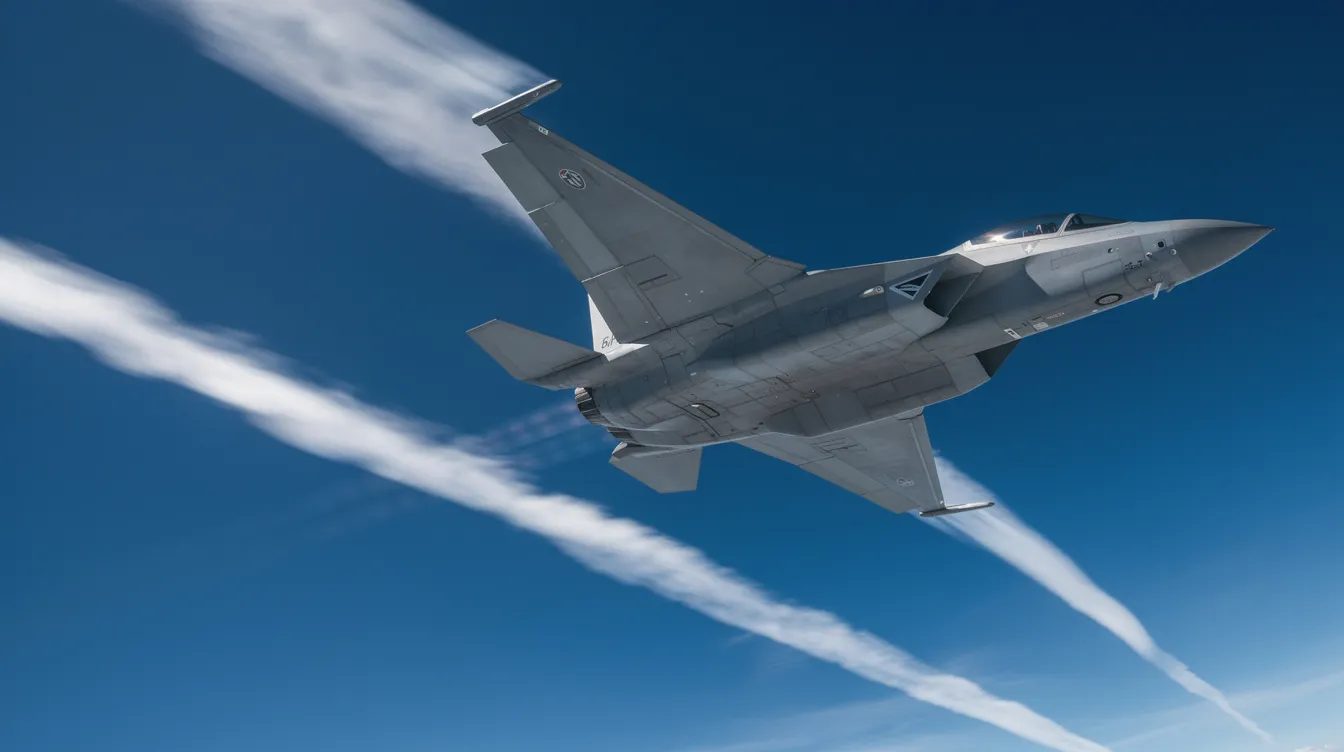
The history of the military airplane is the history of modern power itself. This article explores the evolution of military airplanes, their critical roles in shaping global power, and how their innovations influence today's private jet industry. It is designed for aviation enthusiasts, private jet travelers, and anyone interested in the intersection of military technology and modern travel. From observation balloons above 18th-century battlefields to stealth fighters patrolling contested airspace, military aircraft have driven the technologies that now define safe, efficient private aviation.
Why Military Aircraft Matter for Modern Power and Private Aviation
Since World War I, nations with capable air forces have held decisive strategic advantages. Air superiority enables rapid response, deterrence, and global power projection, and combat aircraft are designed for exactly that: speed, survivability, and mission success under extreme conditions. Fighter aircraft like the F-22 Raptor supercruise at Mach 1.5 without afterburner, while the F-35 Lightning II, produced by Lockheed Martin, prioritizes stealth and sensor fusion for multirole flexibility.
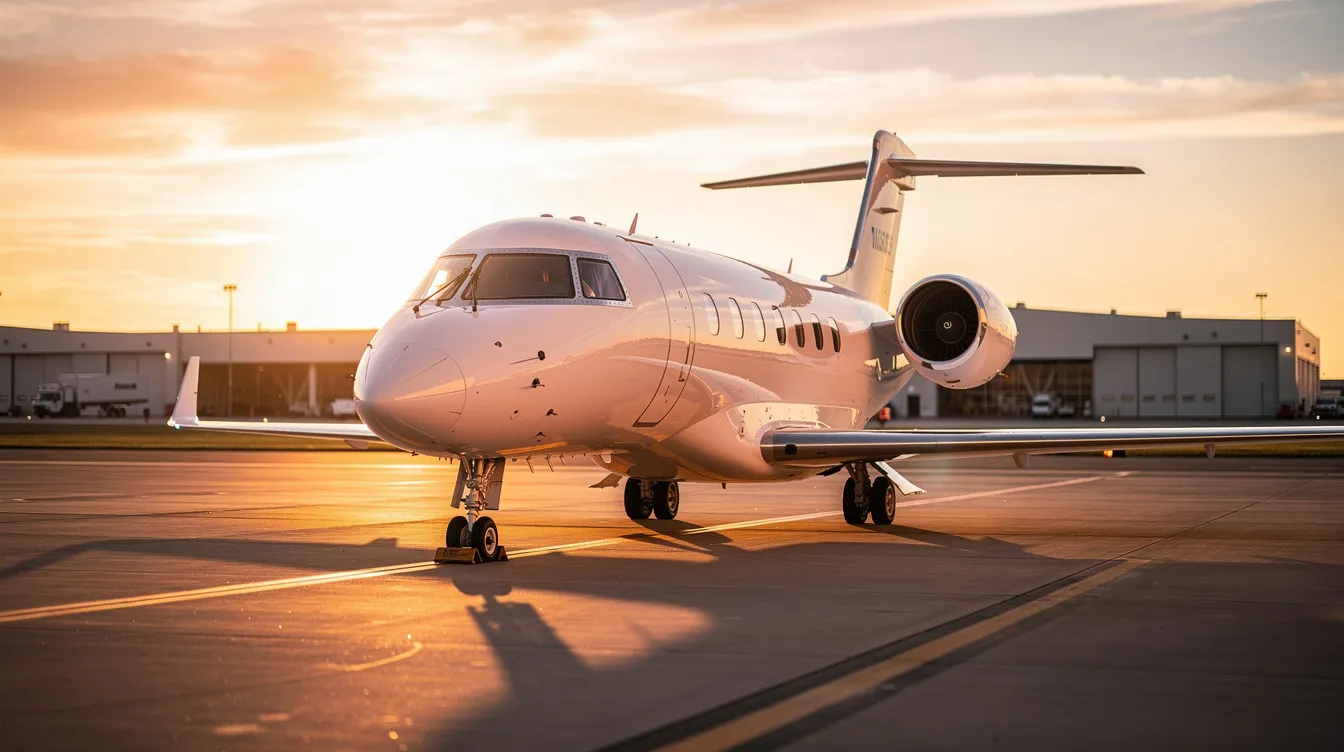
Private jets operate in a different world. A Gulfstream G650ER covers over 7,500 nautical miles nonstop, carrying executives from New York to London in roughly six hours. A typical fighter sortie lasts one to two hours; a private transatlantic flight runs six to ten. Yet the avionics, composite materials, GPS navigation, and fly-by-wire controls born in military research now underpin every safe, efficient BlackJet operation.
Early History of Military Airplanes
The first military reconnaissance balloon was used in 1794, when France's Compagnie d'Aérostiers deployed tethered hot air observation platforms at the Battle of Fleurus, mapping enemy troop positions. Armies quickly recognized the value of aerial intelligence. By the early 1900s, airships were the most formidable military aircraft before World War I, but unlike heavier-than-air airplanes, they relied on buoyancy, notably with German Zeppelins dropping bombs over Antwerp and London in 1914–1915.
The Wright brothers received a military contract in February 1908 from the U.S. Army Signal Corps, requiring a speed of at least 40 mph and a range of 125 miles. The first military airplane was demonstrated in 1909 at Fort Myer, an example of early heavier-than-air military aviation that established practical aircraft procurement standards still echoed today. The first military reconnaissance flight occurred in 1911 during the Italo-Turkish War, when Italian Caproni and Blériot airplanes flew over Libya. The first bombing raid occurred on October 31, 1911. Early experiments with machine guns and bomb racks followed, and British and French forces developed carrier-based seaplanes before 1914, setting the stage for larger naval operations.
Evolution of Fighter Aircraft: From World Wars to Fifth Generation Fighters
Combat aircraft roles expanded rapidly from reconnaissance to destroying enemy aircraft, ground attack, and strategic bombing. In World War I, planes like the British Sopwith Camel and Germany's Fokker Dr.I fought the first air superiority battles. Synchronized machine guns became new weapons that transformed aerial combat.
World War II produced iconic airplanes: the Supermarine Spitfire, Boeing B-17 Flying Fortress, and P-51 Mustang, which changed air force doctrine permanently. Cold War jets like the F-86 Sabre and MiG-15 introduced supersonic flight. Fourth-generation fighters-F-15 Eagle, F-16 Fighting Falcon, Su-27, Eurofighter Typhoon-brought multirole capability, agile maneuvering, and beyond-visual-range missiles. Multirole fighters can perform air-to-air and air-to-ground missions, a development that shaped every modern armed forces fleet.
Fifth-generation stealth platforms-F-22, F-35, China's J-20, Russia's Su-57-integrate low-observable form, sensor fusion, and networked warfare. Current programs include Türkiye's KAAN and South Korea's KF-21 Boramae, each critical for regional defence and national development.
Key Military Aircraft Roles: From Airborne Early Warning to Reconnaissance
Military airplanes are classified by specific mission profiles. Military aircraft specialize in combat and support roles far beyond fighters and bombers:
Air superiority and multirole fighters: Fighter aircraft engage in air-to-air combat to secure air superiority. Examples include the F-35, Rafale, and Su-35, deployed for both offensive and defensive military duties.
Bombers and strike aircraft: Bombers are designed to carry large payloads of explosives to ground targets. The B-52, B-2 Spirit, and Tu-160 operate with precision-guided munitions developed since the 1991 Gulf War.
Airborne Early Warning and Control (AEW&C): AEW&C systems detect enemy aircraft at long ranges, distinguish between friendly and hostile aircraft, and perform command and control functions in air engagements. The USAF uses AWACS for airborne early warning operations. AEW&C aircraft operate at high altitudes for better detection. NATO is replacing E-3A Sentry with Saab/Bombardier GlobalEye for the first time in decades.
Reconnaissance and surveillance: Reconnaissance aircraft gather intelligence using cameras and sensors. Surveillance aircraft use radar for battlefield and airspace monitoring. Historic platforms include the U-2 and SR-71 Blackbird. Military satellites increasingly perform reconnaissance roles traditionally held by aircraft.
Electronic warfare: Electronic warfare aircraft disrupt enemy radar and communications.
Attack aircraft: Attack aircraft provide close air support for ground troops.
Transport and tankers: Transport aircraft efficiently move troops and supplies over long distances. Aerial refueling tankers extend the range of combat aircraft in flight.
RPAs and UAVs: Unmanned aerial vehicles are used for surveillance missions. The MQ-9 Reaper can fly for over 24 hours, extending persistence for any air force.
Trainer aircraft: Trainer aircraft have dual controls for pilot training purposes, preparing the next generation of pilots for service.
Experimental and test aircraft: X-planes and platforms like the Bristol 188 serve as technology incubators for materials and propulsion later used in business aviation.
Modern Military Aircraft Programs and Global Air Forces
Military aircraft have specialized avionics and electronic warfare systems that push technological frontiers. In June 2026, the USAF awarded CCA production contracts to General Atomics and Anduril, integrating autonomous drone wingmen with crewed fighters. The GCAP sixth-generation program unites England, Japan, and Italy with £686 million in initial funding. Military aircraft are built for higher speeds and altitudes than commercial planes and can operate in rugged conditions, unlike commercial aircraft. These cutting-edge military and private aircraft of 2026 programs, along with India's $39 billion Rafale purchase and the Pentagon's ministry of defence-scale budgets, set technology trends in composite materials, satellite communications, and fly-by-wire control that filter into private jet innovation.
How Military Aviation Technology Influences Private Jets and BlackJet
Military planes are tailored for diverse mission types like reconnaissance and troop transport, and the technology produced for those roles now shapes private aviation. Fly-by-wire systems pioneered on the F-16 appear in the Dassault Falcon 7X. Boeing builds both the B-52 and business-adjacent platforms. Cabin pressurization, noise reduction, and vibration control were developed for long-duration military missions before enhancing passenger wellbeing on private flights, the same principles that underpin BlackJet's premium private jet card programs.
A BlackJet member using a 25-hour Jet Card to fly New York to London enjoys avionics, navigation redundancy, and safety systems evolved from decades of military research, on a carbon-neutral flight, at no extra cost.
Military vs. Private Aviation: Missions, Aircraft Categories, and Access Models
While navy ships carry F-35Cs and C-17 Globemasters move armies across continents, private aviation focuses on moving individuals efficiently. BlackJet offers multiple cabin classes, from light jets to ultra-long-range, each category designed for specific travel needs, echoing how military fleets match aircraft type to mission and mirroring the broader types of private jets for every traveler.
Access models differ sharply: state-owned military fleets versus the capital burden of aircraft ownership. A late-model Gulfstream costs tens of millions plus annual operating expenses. A BlackJet 50-hour Jet Card provides predictable, prepaid access without that burden, aligning with broader 50-hour jet card cost considerations, with a digital booking platform that mirrors military mission planning in its precision.
Comparison Table: Military Airplanes vs. Private Jets
Feature | Military Airplanes | Private Jets (e.g., BlackJet) |
|---|
Primary Use | Military use: combat, reconnaissance, transport | Business/leisure travel, strategic time savings |
Speed | High speeds, supersonic capabilities | High subsonic, optimized for comfort and efficiency |
Range | Varies by mission; some long-range bombers | Long-range non-stop flights (e.g., 7,500+ nautical miles) |
Avionics | Advanced military-grade avionics and electronic warfare | Advanced navigation, safety systems adapted from military tech |
Safety Certification | Rigorous military standards | FAA Part 135, BlackJet proprietary certification |
Sustainability | Limited focus; emerging sustainable tech | Carbon-neutral flights with verified offsets |
Access Model | Government-owned and operated | Jet Card prepaid access; no ownership hassles |
Crew | Highly trained military pilots | Professional civilian pilots with recurrent training |
Mission Flexibility | Specialized for specific military roles | Flexible scheduling, multiple cabin classes |
Safety, Sustainability, and Technology: Shared Priorities in Modern Aviation
Modern air forces cannot compromise on safety. Neither can BlackJet. Rigorous pilot training, recurrent checks, and maintenance regimes inspired by military standards ensure every flight meets uncompromising certification benchmarks, reflecting the broader reality that private jets are highly safe. BlackJet ensures every journey is carbon neutral at no extra cost to you, using verified offsets aligned with ICAO's CORSIA framework and, where available, sustainable aviation fuel.
Frequently Asked Questions: Military Aircraft and Private Jet Access
What is the difference between a fighter aircraft and a bomber?
A fighter like the F-16 is built for destroying enemy aircraft and securing air superiority. A bomber like the B-2 Spirit is designed for carrying bombs to strategic ground targets. Many modern platforms learn from both categories.
How do military aircraft influence private jet design?
Shared technology includes avionics, materials, and safety systems refined through decades of military testing cycles.
Is flying by private jet safe?
Private jets operating under Part 135 meet rigorous standards. BlackJet works only with top-rated, audited operators.
What is a Jet Card?
A prepaid program offering guaranteed access to private jets. BlackJet structures 25- and 50-hour programs with transparent pricing and scheduling flexibility, and travelers can compare 25-hour jet card features and costs, evaluate 100-hour jet card pricing, and understand overall jet card membership cost, including typical jet card cost per hour and broader jet card pricing structures.
Are BlackJet flights carbon neutral?
Yes. Verified offsets are built into every trip at no additional cost to members.
How to Leverage BlackJet Jet Cards for Strategic, Efficient Travel
Predictable, on-demand access to private aircraft is a strategic tool. BlackJet's Jet Card programs span multiple cabin classes with global coverage, 24/7 digital booking, and real-time support, offering many of the advantages described in the best jet cards for frequent flyers. Whether a board member makes same-day visits to two European capitals or a family connects from a commercial long-haul to a private leg, the success of every journey rests on the same principles that define modern aviation: precision, reliability, and technology.
Elevate Your Travel with BlackJet
From the first reconnaissance balloon in 1794 to sixth-generation fighter programs shaping the world today, military aviation has defined the trajectory of flight itself. BlackJet channels that heritage into every private journey, seamless access, built-in safety, carbon-neutral performance, and strategic time savings that no commercial alternative can match, while helping travelers navigate everything from the best small private aircraft for each mission to global private jet fleet trends, comprehensive private jet price lists, and provider-specific options such as NetJets jet card cost and Flexjet jet card pricing. For larger groups, options range from private jets for 15 passengers and 20 passengers up to 50-passenger private jet charters, all organized around smart choices about private jet sizes for your journey.
Discover how BlackJet can reshape the way you move between the world's financial and cultural capitals. Explore our Jet Card programs and let refined, meaningful travel become your new standard.


 Sign up with google
 Sign up with Apple