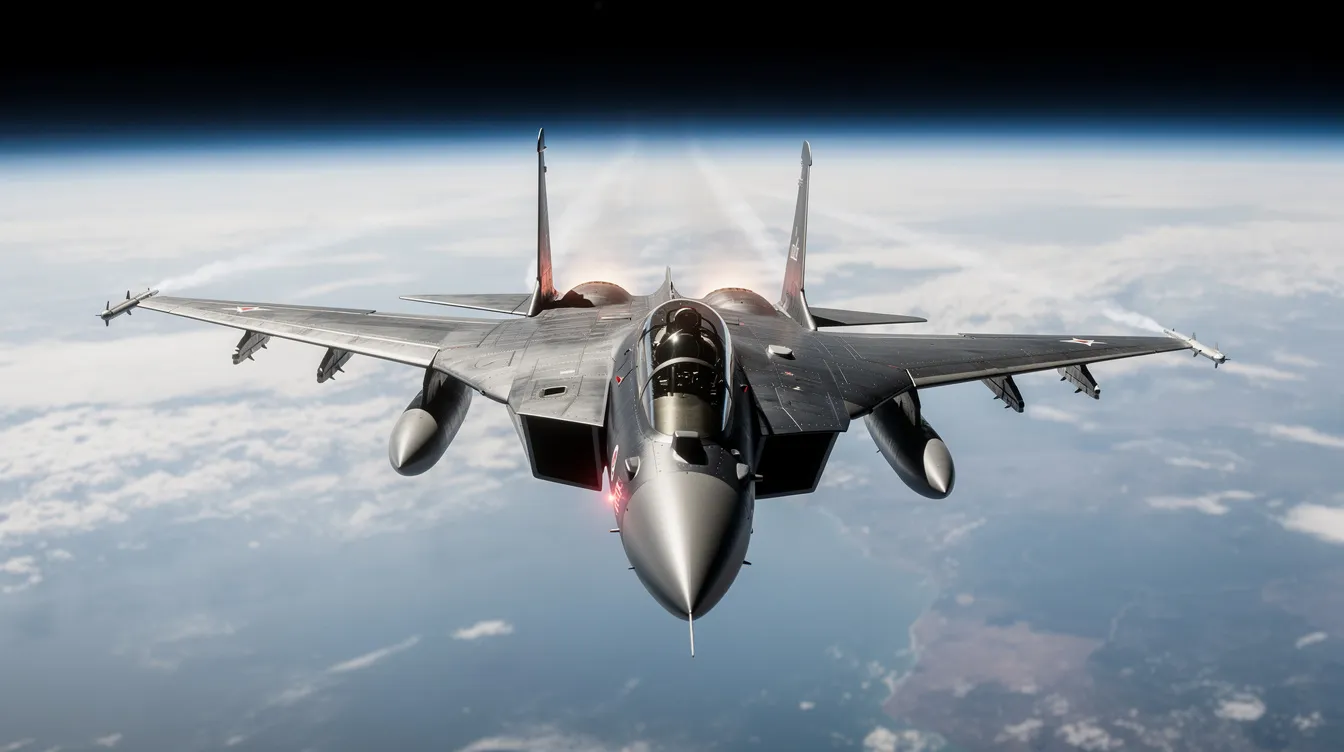
If you're searching for a comprehensive MiG aircraft list, you've landed on the right page. This guide is designed for military aviation enthusiasts, historians, and anyone interested in the evolution of fighter jets. Understanding the MiG aircraft lineage reveals how these jets shaped global air combat and influenced modern aviation technology. MiG aircraft are renowned for speed, agility, and rugged design in military aviation.
Few names in military aviation carry the weight of MiG. This MiG aircraft list gives you a clear, quick-reference guide to the major MiG fighter jets by era and role, then explains how each model shaped aerial combat through its combat record, production history, technical innovations, and current standing in 2026. From the frozen skies over Korea to the jungles of Vietnam, from Middle Eastern deserts to Arctic patrol routes, MiG aircraft represent some of the most influential military aviation platforms in history.
Renowned for speed, agility, and rugged design, these fighter aircraft forced Western powers to rethink tactics, aircraft design, and air defense strategy for decades. For military aviation enthusiasts, historians, and readers tracing how iconic combat aircraft influenced modern aviation, this guide also looks at global use and export patterns and connects the MiG legacy to the broader world of aviation, including private jet travel.
What you will find in this article:
A quick-reference list of every major MiG fighter jet by generation
Detailed breakdowns of each aircraft's role, combat history, and export reach
A categorized list sorting MiG aircraft by role: fighter, interceptor, attack, and trainer
How the legacy of MiG connects to the broader world of aviation, including private jet travel
Quick Reference: Core MiG Fighter Jets by Generation
Here is the at-a-glance MiG aircraft list, organized chronologically with primary roles and key conflicts.
MiG-9 - First flight 1946. Early straight-wing jet fighter. Limited service life.
MiG-15 - First flight 1947, service entry ~1949. Interceptor/fighter. Korean War.
MiG-17 - First flight 1950, service entry 1952. Fighter. Vietnam War, Middle East conflicts.
MiG-19 - First flight ~1953. First Soviet supersonic fighter. Exported widely (China's J-6).
MiG-21 - First flight 1955, service entry late 1950s. Lightweight delta-wing fighter. Used across Asia, Africa, Middle East. Still flying in limited numbers.
MiG-23 - First flight 1967. Variable-geometry multirole fighter. Syria, Libya, Angola, India.
MiG-27 - 1970s. Ground-attack/fighter-bomber derivative of MiG-23. Soviet Union, India.
MiG-25 - First flight 1964. High-speed interceptor/reconnaissance. Mach 2.8+ capable.
MiG-29 - First flight 1977, service early 1980s. Air superiority/multirole fighter. Widely exported.
MiG-31 - First flight 1975, service early 1980s. Long-range interceptor. Still in Russian service.
MiG-35 - Prototypes late 2000s, serial deliveries 2019. Multirole 4++ generation fighter.
Origins of MiG: From Design Bureau to Global Fighter Icon
The MiG designation comes from the Mikoyan and Gurevich design bureau, established in 1939. Their early WWII designs, the MiG-1 and MiG-3, were piston-engine fighters optimized for high-altitude operations. These aircraft laid the groundwork for what came next. The MiG aircraft lineup evolved from basic piston-engine designs into iconic jet-powered fighters.
After 1945, access to captured German jet engine technology accelerated the bureau's shift into the jet age. The MiG aircraft lineup evolved from basic piston-engine designs into iconic jet-powered fighters that would define Soviet air power for decades.
MiG became more than a brand name — it became shorthand for several generations of fighter jets operated by dozens of countries across the world.
MiG fighters formed the backbone of the Soviet Air Force and were widely exported to Warsaw Pact nations, China, India, the Middle East, Africa, and beyond, while Russia inherited and continued operating key MiG types after the Soviet Union's collapse.
First Jet Icons: MiG-9 and MiG-15
This section covers the first generation of MiG jet fighters, the aircraft that carried Soviet aviation from propellers into the jet age.
MiG-9:
First flight: 24 April 1946 - the USSR's first turbojet-powered fighter
Straight-wing design with limited speed and ceiling compared to later swept-wing jets
Roughly 610 units produced, with significant transfers to China's PLAAF
Short front-line life; quickly overtaken by superior designs
MiG-15:
First flight: 30 December 1947; service entry around 1949
MiG-15 was optimized for intercepting bombers and gained fame during the Korean War, where it stunned Western pilots flying straight-wing jets
Its swept-wing performance forced the US to accelerate development of aircraft like the F-86 Sabre
Over 13,000 built in the USSR, with an additional 4,000+ produced under license in China, Poland, and Czechoslovakia — totaling more than 17,000 units
Speed near Mach 0.9+, ceiling approximately 15,000 m (50,000 ft)
Operated by the Soviet Union, China, North Korea, and numerous Warsaw Pact states
Supersonic Leap: MiG-17, MiG-19, and the Birth of the MiG-21
Through the 1950s and 1960s, MiG pushed from subsonic to transonic and finally supersonic flight, producing three fighter jets that reshaped air combat worldwide.
MiG-17:
MiG-17 was an evolution of the MiG-15, incorporating improved swept wings and an afterburner for transonic performance
Used extensively in the Vietnam War, where North Vietnamese pilots flew them against US fighter aircraft like the F-4 Phantom II - proving that pilot skill and tactics could offset electronics and technology gaps
About 10,649 units produced, including license builds in China (Shenyang J-5) and Poland
MiG-19:
First Soviet production supersonic fighter, first flight around 1953
Twin-engine layout; widely produced in China as the Shenyang J-6 and exported across Asia and Africa
Bridged the gap between the Korean War generation and the true supersonic era
MiG-21:
Delta-wing, lightweight fighter aircraft category - fast, simple, and cheap to maintain
MiG-21 is one of the most produced supersonic jets in history: over 11,000 units built across Soviet, Indian, and Czechoslovak production lines
Flew in India-Pakistan wars, Middle East conflicts, and African bush wars
Upgraded variants continued flying into the 2020s; India operated hundreds over nearly six decades before beginning retirement
Variable Geometry and Strike Power: MiG-23 and MiG-27
By the 1970s, MiG shifted its focus from pure interceptors to swing-wing multirole and ground-attack platforms, bridging the gap between older second-generation and later fourth-generation fighter aircraft.
MiG-23 "Flogger":
The MiG-23 is a variable-geometry fighter aircraft, its swing-wing design allowing both supersonic dash and shorter runway operations
First flight: 10 June 1967; roughly 5,047 units built between 1967 and 1985
Introduced the first Soviet look-down/shoot-down radar with BVR capability
Mixed combat record: wide export to Syria, Libya, Angola, India, Iraq, and others, but export versions often had downgraded avionics compared to Soviet frontline versions
Engaged by Israel's F-15s during the 1982 Lebanon War with significant losses
MiG-27:
Ground-attack derivative of MiG-23, replacing the radar nose with optical and laser targeting systems
Optimized for strike missions: close air support, tactical bombing
Operated by the Soviet Union and India, where it served until retirement in the 2010s
High-Speed Interceptors: MiG-25 and MiG-31
The Cold War demanded interceptors capable of reaching extreme speed and altitude to counter high-flying bombers and reconnaissance aircraft. MiG delivered two of the most remarkable aircraft in aviation history.
MiG-25 "Foxbat":
The MiG-25 is one of the fastest military aircraft ever built — capable of speeds above Mach 3 in clean configuration, with an operational limit around Mach 2.83 when armed
First flight: 1964; approximately 1,186 units produced
MiG-25 was primarily built for high-speed interception and reconnaissance missions, designed to counter threats like the B-70 Valkyrie
Service ceiling of roughly 67,900 ft (20,700 m), with altitude records reaching 38 km
Viktor Belenko's 1976 defection to Japan exposed both the aircraft's capabilities and limitations — a news event that forced Western intelligence to completely reassess Soviet aviation technology
Built using stainless steel and high-temperature materials to handle thermal loads at extreme speed — correcting Western assumptions that it used advanced titanium construction
MiG-31 "Foxhound":
MiG-31 is a long-range interceptor aircraft, first flying in 1975 and entering service in the early 1980s
Two-seat design with the powerful Zaslon phased-array radar and R-33 long-range missiles
About 500 built; continues serving in Russia's Aerospace Forces with ongoing upgrades to radar, avionics, and electronic warfare systems
Patrols vast Arctic and Siberian airspace - a role no longer filled by agile dogfighting fighter jets, but by platforms built for endurance, range, and fuel efficiency at altitude
Fourth-Generation MiGs: MiG-29 and MiG-35
The MiG-29 was the Soviet answer to the F-16 — a highly maneuverable, twin-engine front-line fighter designed to win the air superiority battle over Central Europe. The MiG-35 represents its 21st-century evolution.
MiG-29 "Fulcrum":
First flight 1977, service entry early 1980s
The MiG-29 is known for its agility and advanced avionics, including infrared search-and-track (IRST) and radar systems that were state-of-the-art for their era
MiG-29 is classified as a multirole fighter aircraft, handling both air-to-air and tactical strike roles
Wide export footprint: India, former East Germany, Poland, Iraq, Syria, and many others
Twin engines provide redundancy, a point of advantage over single-engine Western competitors
MiG-35 "Fulcrum-F":
First serial deliveries to Russia's Aerospace Forces in mid-2019
Options for AESA radar (Phazotron Zhuk-A), advanced electro-optical targeting pods, and improved RD-33MK engines
Nine hardpoints carrying precision-guided munitions: RVV-AE air-to-air missiles, Kh-35UE anti-ship missiles, Kh-38MLE air-to-ground missiles, KAB-500 guided bombs
Designed for network-centric warfare and extended service life, though full AESA integration and thrust vectoring remain optional rather than standard
Competes in the export market against the Gripen, Rafale, and F-16 - though production numbers remain limited
Comprehensive MiG Fighter Aircraft List by Role
This section organizes the complete MiG aircraft list by role, helping you read the lineup at a glance. MIG aircraft are categorized into fighter and bomber types, with MIG bombers designed for strategic bombing missions.
Fighter / Multirole:
MiG-9 - Early jet fighter
MiG-15 - Interceptor/air superiority fighter
MiG-17 - Air superiority fighter
MiG-19 - Supersonic fighter
MiG-21 - Lightweight supersonic fighter
MiG-23 - Variable-geometry multirole fighter
MiG-29 - Air superiority/multirole fighter
MiG-35 - Advanced multirole fighter
Interceptor:
MiG-25 - High-speed, high-altitude interceptor
MiG-31 - Long-range interceptor with phased-array radar
Fighter-Bomber / Attack:
Trainers & Special Variants:
MiG-21U, MiG-29UB - Two-seat trainer versions
Reconnaissance and electronic warfare derivatives across multiple airframes
MiG aircraft have served various roles, including interceptor, multirole fighter, and ground-attack aircraft. MIG aircraft are categorized into fighter and bomber types, with MIG bombers designed for strategic bombing missions. Across all variants, MIG aircraft serve in various roles, including air superiority—- a legacy that continues today.
MiG Fighter Jets in Global Service and Legacy in Modern Aviation
MiG fighter aircraft spread across dozens of air forces from the 1950s onward. India alone operated 872 MiG aircraft of various models between 1966 and 1980, and upgraded MiG-21 and MiG-29 variants remained in limited service for years longer than originally planned. Countries like North Korea continue to operate older MiGs, while former Warsaw Pact nations have transitioned to NATO-standard aircraft over the past two decades.
Upgraded MiG-21 and MiG-29 platforms still fly today with modern avionics, weapons, and book-length lists of modifications — even as many air forces buy newer Western or Russian designs. MiGs also serve in aggressor training squadrons and private collections, where civilian-owned ex-military jets are used for experience flights and advanced flying training.
The time these aircraft have spent in service — in some cases over sixty years — is a testament to their engineering. But talking about MiG aircraft in the context of aviation naturally raises a question: how does the precision and performance ethos of military jets connect to private aviation?
Frequently Asked Questions About MiG Aircraft
Q: What roles have MiG aircraft served in military aviation?
A: MiG aircraft have served various roles including interceptor, multirole fighter, ground-attack, and strategic bombing missions. They have been versatile platforms adapted for air superiority, reconnaissance, and training.
Q: Which MiG aircraft is known as one of the fastest military jets ever built?
A: The MiG-25 "Foxbat" is recognized as one of the fastest military aircraft ever built, capable of speeds above Mach 3 in clean configuration.
Q: What is the significance of the MiG-21 in aviation history?
A: The MiG-21 is one of the most produced supersonic jets in history, known for its lightweight delta-wing design and widespread use across Asia, Africa, and the Middle East.
Q: How does the MiG-23 differ from earlier MiG models?
A: The MiG-23 introduced variable-geometry wings (swing-wing design), allowing for both supersonic speed and improved takeoff and landing performance. It also featured the first Soviet look-down/shoot-down radar.
Q: Are MiG aircraft still in service today?
A: Yes, upgraded versions of MiG-21, MiG-29, and MiG-31 continue to serve in various air forces worldwide, with ongoing modernization programs to extend their operational life.
Q: What was the origin of the MiG designation?
A: The MiG designation comes from the Mikoyan and Gurevich design bureau, established in 1939, which developed these iconic Soviet fighter aircraft.
Q: How does the legacy of MiG aircraft connect to private aviation?
A: While MiG aircraft focus on combat performance and rugged design, private aviation companies like BlackJet emphasize precision, safety, and efficiency for business and leisure travel, sharing a commitment to engineering excellence.
Q: What are some notable conflicts where MiG aircraft were used?
A: MiG aircraft saw action in the Korean War, Vietnam War, Middle East conflicts, and various regional wars across Asia and Africa.
Q: What is the role of the MiG-31 interceptor today?
A: The MiG-31 serves as a long-range interceptor, patrolling vast airspaces such as the Arctic and Siberia, equipped with advanced radar and missile systems for high-altitude defense.
Q: How have MiG aircraft influenced global air combat tactics?
A: MiG fighters, with their speed, agility, and ruggedness, forced Western air forces to adapt tactics, aircraft design, and air defense strategies, significantly shaping Cold War and modern aerial combat.
From Military MiGs to Private Jets: How BlackJet Fits into the Aviation Landscape
The same passion that draws people to study a MiG aircraft list — the appreciation for engineering precision, performance under pressure, and machines built to excel — runs through every corner of aviation. While MiG aircraft are built for combat, BlackJet's private jet services focus on comfort, efficiency, and safety for business and leisure travelers. The instructions are different, but the commitment to excellence is the same.
BlackJet's Jet Card model offers secure, carbon-neutral access to a curated fleet of private jets across cabin sizes, and readers comparing options can dive deeper into jet card costs and membership pricing — a world apart from the rigid, mission-driven operations of military fighter aviation, but one that shares the same demand for precision.
Whether you read about legendary fighter jets for the history or for the engineering, the world of private aviation offers its own form of performance. Travelers considering structured access can compare options like a 100-hour jet card cost guide, a 50-hour jet card pricing breakdown, or broader jet card pricing insights, alongside focused looks at Flexjet jet card cost and options and NetJets jet card cost structures. Others may weigh the overall private jet price list and access models, from the best private jets in the world and the largest private jets for sale to top private jets under 10 million dollars or even 5 million dollar jet features and ownership tradeoffs.
Private flyers exploring budget-conscious strategies can review the cheapest private aircraft options, compare the cheapest private jet choices, or browse UK private jets for sale. For large groups, guides to the best private jet for 50 passengers and top private jet companies for luxury travel help frame decisions about fleet quality, safety, and service. Explore BlackJet's Jet Card programs and discover a more strategic way to travel.


 Sign up with google
 Sign up with Apple