This page is designed for executives and high-net-worth travelers considering private jet ownership or access. It covers everything from new and pre-owned HondaJet prices to annual ownership budgets and smarter alternatives, helping you make an informed decision about luxury private aviation. For executives and high-net-worth travelers who refuse to compromise on time, comfort, or control, the HondaJet family—especially the flagship HondaJet Elite II (the latest and most advanced model in the HondaJet family, with a typical price in the mid- to high-$6 million range and seating for 5 to 6 passengers; see Fact 2, 4)—represents the pinnacle of the light jet segment. This guide provides up-to-date luxury HondaJet price ranges, including new and pre-owned models, and details on annual ownership costs. But understanding the full HondaJet price picture requires looking well beyond the sticker on the hangar door. Here is everything you need to know about HondaJet pricing, annual ownership budgets, and when Jet Card access (a prepaid program offering a set number of flight hours on private jets, often more cost-effective for under 200 hours/year; see Fact 5, 8) makes more financial sense than buying outright.
Executive Summary: Current Luxury HondaJet Prices & Fast Answers
The HondaJet Elite II (the latest and most advanced model in the HondaJet family, with a typical price in the mid- to high-$6 million range and seating for 5 to 6 passengers; see Fact 2, 4) is a very light business jet that consistently ranks among the most capable and refined aircraft in its class. With a maximum cruise speed of 422 knots and a max range of 1,547 nautical miles, it outperforms most competitors in the light jet category—and commands a price to match.
HondaJet prices range from $2.5 million to over $6 million depending on variant and condition. Here are the key numbers for 2025–2026:
Early pre-owned HA-420 / HondaJet Classic (the original model of the HondaJet family; see Fact 6): about $2.4M–$3.1M
Mid-generation Elite / APMG (Advanced Performance Modification Group upgrade; see Fact 7) variants: roughly $3.2M–$4.6M
Late Elite S (2020–2023): about $4.2M–$5.2M
New HondaJet Elite II: typically $6.3M–$7.0M+ depending on options
Average market price across all variants: approximately $3,723,333, with average pricing settling in the $3.7M–$4.0M range
Annual operating costs for a HondaJet range from $500,000 to $1,200,000, depending on hours flown and crew setup
For flyers under 150–200 hours per year, chartering a HondaJet is cost-effective, and Jet Card programs like those from BlackJet typically beat full HondaJet ownership on total cost, capital risk, and flexibility.
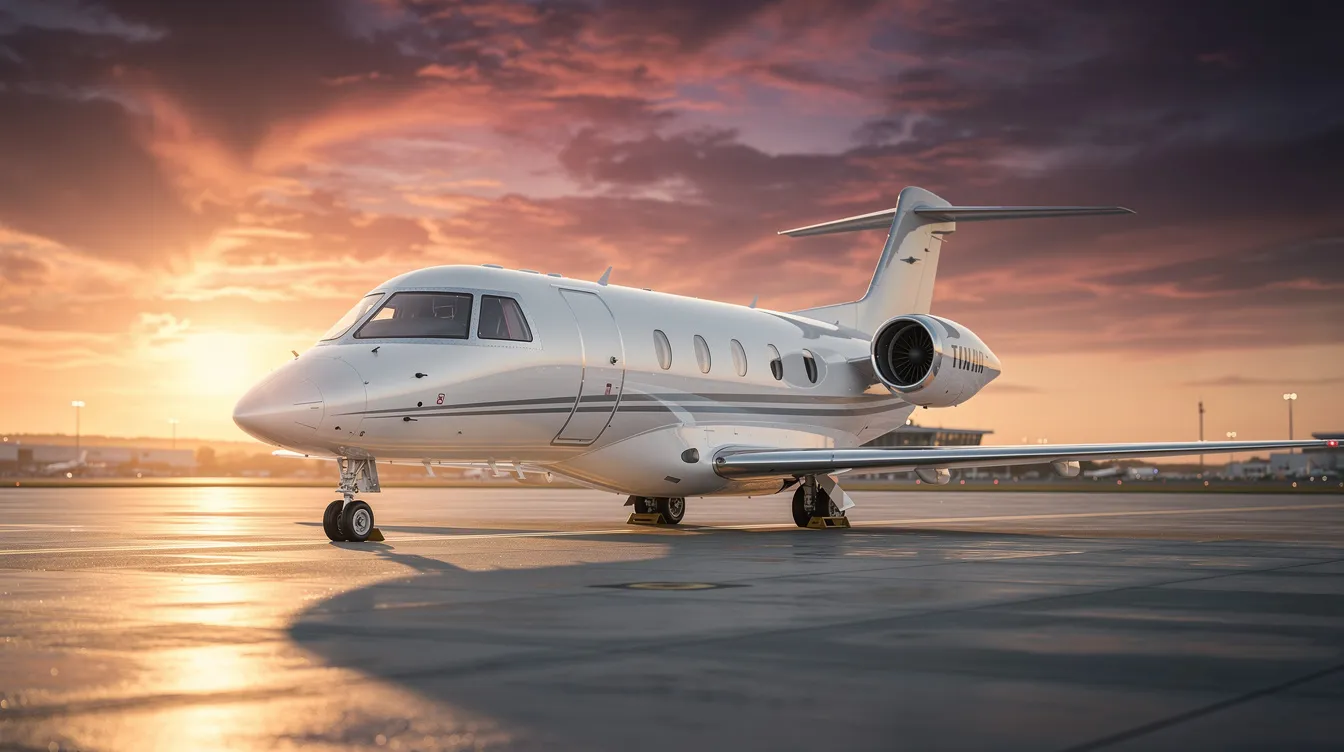
Honda Aircraft Company and the HondaJet (HA-420) Luxury Family
Honda Aircraft Company, headquartered in Greensboro, North Carolina, designs and manufactures the HA-420 HondaJet family. As an FAA-certified manufacturer, Honda Aircraft has carved out a distinctive position in private aviation by pairing automotive-grade engineering precision with aerospace innovation.
The HondaJet aircraft is a twin-turbofan light jet built around a composite fuselage and aluminum wing structure, powered by twin GE Honda HF120 turbofan engines. Its defining innovation is the over-the-wing engine mount design, with engines mounted above the wings rather than on the fuselage or tail. This configuration reduces aerodynamic interference drag by roughly 15–20%, frees up cabin space and baggage space inside the fuselage, and contributes to lower fuel burn compared to other very light jets.
The family has evolved through several variants:
HondaJet Classic - the original model in the HondaJet family, with first delivery in 2015
HondaJet APMG - the Advanced Performance Modification Group upgrade, adding performance and avionics upgrades for approximately $280,000
HondaJet Elite - introduced around 2018 with increased fuel capacity, improved avionics, and increased range; the aircraft received meaningful refinements over the Classic.
Elite S - from 2021, the HondaJet Elite S offers refined systems and improved performance, including higher MTOW. Honda announced the Elite S with a base price near $5.4.M
HondaJet Elite II - the current flagship. The new HondaJet Elite II features Emergency Autoland, extended range, and modern avionics upgrades. Factory list price: approximately $6.95 million
Honda's global service network, Pre-Owned Certified Program, and maintenance programs like FlightReady and EMC2 add meaningful resale value and reliability for high-net-worth buyers.
Luxury HondaJet Price: New vs. Pre-Owned Acquisition Cost
The acquisition cost of a HondaJet aircraft is only the starting point. Understanding the gap between purchase price and total ownership costs is critical before committing capital.
Current 2025–2026 HondaJet price ranges by variant:
Variant | Typical Purchase Price | Notes |
|---|
Pre-owned HondaJet Classic / HA-420 | $2.4M–$3.1M | Pre-owned HondaJet HA-420 models cost about $2.3 million to $3.2 million depending on hours and maintenance status |
HondaJet Elite / later HondaJet Elite aircraft | $3.2M–$5.2M | HondaJet Elite aircraft typically range from $3 million to $4.8 million; Elite S models push higher |
Nearly new Elite II (pre-owned) | $5.8M–$6.8M | Low supply of used Elite II keeps prices near new |
Factory-fresh Elite II | $6.3M–$7.0M+ | New HondaJet Elite II models are priced around $6.95 million before premium interiors |
Key acquisition cost drivers include:
Total time on airframe and engines, plus maintenance history
Remaining warranty and enrollment in engine and airframe maintenance programs
Avionics upgrades, interior condition, and APMG completion status
Market demand cycles—post-COVID light jet demand keeps inventory tight
Interior customization can significantly impact the purchase price of a HondaJet
For perspective, tying up $6.5M in an Elite II versus allocating $500K+ toward a BlackJet Jet Card represents fundamentally different capital strategies—one locks up millions in a depreciating asset, the other preserves liquidity and eliminates resale value risk.
HondaJet Specifications That Drive Luxury Value and Price
Performance specifications directly justify HondaJet pricing and separate it from lesser business jets in the light jet segment. Here are the headline numbers for the Elite II:
Max range: 1,547 nautical miles (NBAA IFR reserves, four passengers)—the HondaJet aircraft range leads its class
Maximum cruise speed: 422 KTAS (~486 mph)
Max operating altitude: 43,000 feet (FL430)
Typical fuel burn at cruise: roughly 96 gallons per hour
Takeoff distance and landing distance: competitive short-field performance for a light jet of this capability
The cabin typically accommodates 1 to 2 crew members and 5 to 6 passengers, with typical seating capacity of four to five passengers in a club configuration. HondaJet features relevant to luxury buyers include a fully enclosed lavatory, generous baggage space in both nose and tail compartments, and executive seats that swivel and track for conversation and laptop work—maximizing cabin space in a compact airframe.
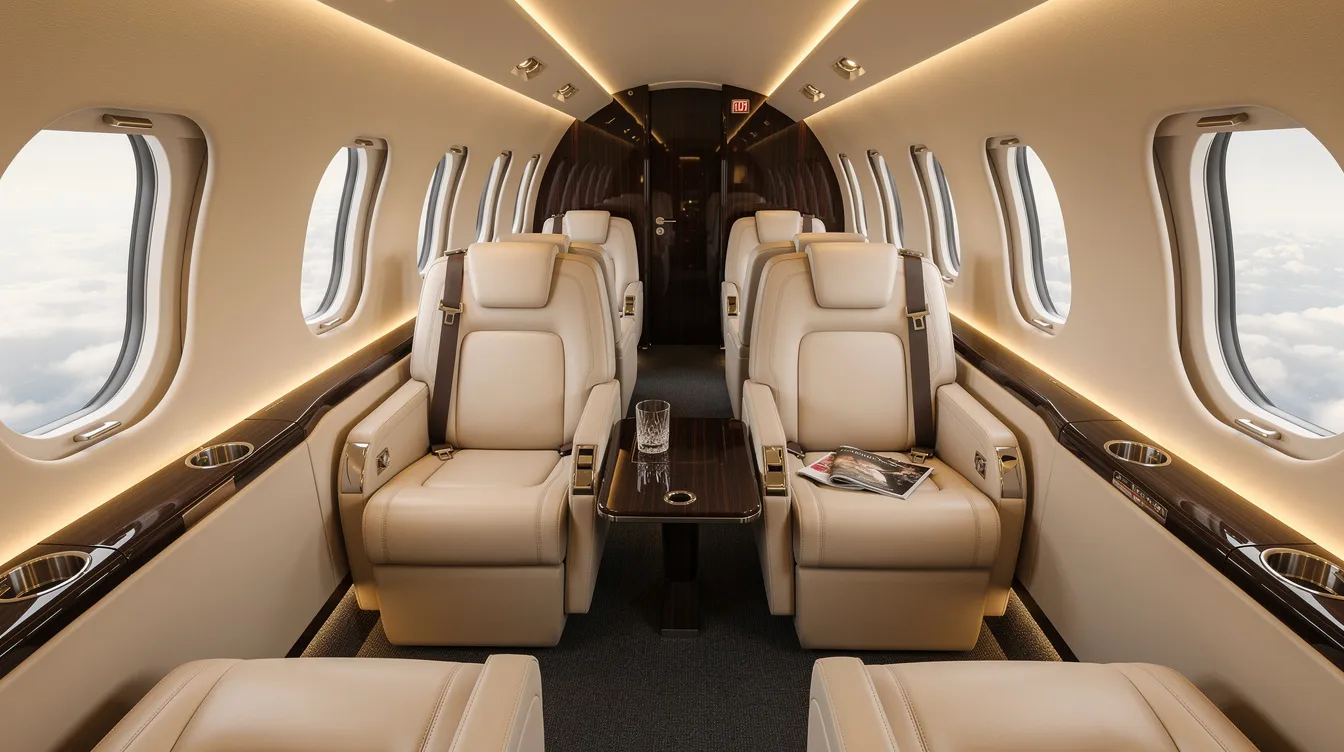
The OTWEM design and composite construction deliver lower noise and vibration levels versus similar aircraft, while the aerodynamic interference drag reduction contributes directly to fuel efficiency and range. Compared to the Embraer Phenom 100EV and Cessna Citation M2, the Elite II offers more fuel relative savings per nautical mile, more range, and comparable or better cruise speed—making it the benchmark in its category.
HondaJet Pricing & Operating Costs at a Glance
This section serves as a quick-reference summary. Actual ownership costs vary by fuel price, crew setup, maintenance programs, and airport base.
HondaJet Classic / Early HA-420:
APMG / Mid-generation:
Elite / Elite S:
Elite II:
For context, a BlackJet 25-hour or 50-hour Jet Card on light jets delivers broadly comparable flight-hour access with zero maintenance reserves, no hangar lease, and no resale risk, and the dedicated BlackJet 25+ Hour Jet Card extends these benefits to midsize and larger cabin aircraft.
Annual Budget: What It Really Costs to Own a Luxury HondaJet
The annual budget for HondaJet ownership is the total yearly cash outlay to keep the aircraft airworthy and flying—excluding financing or the purchase itself. This is where the true cost becomes apparent.
Realistic 2025–2026 examples:
200 flight hours/year: roughly $550K–$800K, depending on variant and crew—similar to what many high-frequency travelers evaluate when comparing ownership to a 100-hour Jet Card structure
300–400 hours/year: ownership costs can exceed $900,000 for 350–400 hours per year, climbing to $850K–$1.2M+ annually
Operating costs for a HondaJet can reach hundreds of thousands of dollars annually even before factoring in depreciation, which is why many buyers first review a broad private jet price list and assess models before deciding how to fly.
For an Elite II, the breakdown looks approximately like this:
Annual fixed costs: $220K–$450K+ (hangar, insurance, crew, subscriptions, program enrollments)
Variable operating costs: $1,200–$1,600 per flight hour
Depreciation: often $300K–$600K+ per year during the first years
Sample scenario: An owner flying 300 hours per year from Teterboro (TEB) with professional crew, hangar, full maintenance programs, and insurance could face a fixed annual budget approaching or exceeding $1.0M–$1.2M—before any loan payments. An equivalent 300-hour pattern using a BlackJet Jet Card across light jets and midsize jets avoids this capital lock-up entirely while delivering comparable cabin comfort.
Fixed vs. Variable Costs: Dissecting HondaJet Ownership Costs
Understanding the split between fixed costs and variable costs is essential for anyone evaluating HondaJet ownership.
Fixed costs are incurred whether or not you fly. Fixed costs for ownership can reach $200,000 to $900,000 annually:
Hangar or premium tie-down: ~$30K–$80K+ per year in major U.S. markets
Insurance (hull and liability): ~$30K–$90K per year, varying with limits and pilot experience
Crew salaries and recurrent training: ~$150K–$300K+ if using professional crew
Navigation data, charts, connectivity: ~$10K–$30K per year
Engine and airframe maintenance programs (EMC2, P3): ~$80K–$200K+ annually in maintenance reserves, though some owners lower upfront capital by exploring private jet leasing structures instead of buying outright
Total fixed costs alone can represent the majority of an owner's annual budget at low utilization.
Variable costs scale with hours flown:
Fuel: HondaJet consumes about 96 gallons of fuel per hour; at $7/gallon, that's ~$670+ per flight hour in fuel burn alone. Flights requiring more fuel on longer legs push this higher.
Scheduled and unscheduled maintenance: ~$300–$500 per flight hour in reserves.
Landing, handling, and parking fees: a few hundred to over $1,000 per leg at busy airports
Variable costs average $1,200 to $1,600 per flight hour overall
How utilization changes the math: savvy flyers also compare HondaJet ownership against more budget-friendly private aircraft options that may better match their true annual hours.
Annual Hours | Est. Fixed Cost/Hour | Est. Variable Cost/Hour | Effective All-In Cost/Hour |
|---|
150 hrs | ~$2,000+ | ~$1,400 | ~$3,400+ |
250 hrs | ~$1,200 | ~$1,400 | ~$2,600 |
400 hrs | ~$750 | ~$1,400 | ~$2,150 |
BlackJet members avoid these annual fixed costs entirely, paying per flight hour or through predictable Jet Card rates instead, and a clear grasp of Jet Card cost per hour helps benchmark those rates against full ownership.
HondaJet Operating Costs Per Hour and Fuel Efficiency
Direct operating cost per flight hour is the clearest benchmark for comparing the HondaJet against similar aircraft and charter alternatives.
For the HondaJet Elite and Elite II, expect:
Direct operating cost: typically $1,200–$1,600 per flight hour (fuel, maintenance, engine reserves, basic crew)
A representative Elite II flight hour breaks down as follows:
Fuel: 96 gallons × $7.00/gal = ~$670/hour
Maintenance and engine reserves: ~$350–$450/hour
Misc trip and crew costs: ~$150–$300/hour averaged across a year
The efficient engines and OTWEM design give the HondaJet notably better fuel efficiency than similar aircraft like the Phenom 100EV and Citation M2, which commonly burn 110–120 GPH. Versus high-end turboprops, the HondaJet burns slightly more fuel but delivers jet-level cruise speed and comfort. Fuel consumption is about 96 gallons per hour during cruise, making it one of the most economical jets in its class.
Route example: New York to Miami (~1,100 NM) in an Elite II takes approximately 2.5–3.0 hours, consuming roughly 250 gallons of Jet-A (~$1,750 in fuel), with total direct operating cost for the mission around $5,000–$7,000—numbers that align with many benchmarks for renting a private jet by the hour.
BlackJet wraps these hourly costs into an all-inclusive rate, simplifying budgeting for members who want HondaJet-level travel without spreadsheet management, much like the structured pricing you see when you charter a small private plane.
Ownership vs. Access: When Does Buying a Luxury HondaJet Make Sense?
The strategic question is not whether the HondaJet is an exceptional aircraft—it is—but whether your travel pattern justifies tying up millions in a single private jet versus leveraging access programs.
Usage-based guidelines: executives flying several times a month privately often compare HondaJet ownership with the flexibility of top-rated Jet Card programs.
Under 100–150 hours/year: Full ownership rarely makes economic sense. Chartering avoids long-term maintenance exposure, depreciation, and the burden of managing crew and compliance. Chartering is often more cost-effective under 200 flight hours per year.
150–250 hours/year: A gray zone. Ownership might pencil out if you prioritize scheduling control and potential tax advantages—but Jet Cards are often comparable on total annual outlay.
300+ hours/year: Ownership or fractional ownership becomes more viable, though you must tolerate capital risk, maintenance downtime, and active asset management, and compare it carefully to large providers’ models such as NetJets Jet Card programs.
Scenario: A CEO flying 120 hours per year across regional U.S. routes (New York–Washington, Los Angeles–San Francisco) faces $400K–$600K in annual fixed costs alone before logging a single flight hour. Compare that to a BlackJet Jet Card providing access to HondaJet-class and larger aircraft, with no hangar lease, no crew payroll, and no resale value anxiety. For most executives, the choice is clear.
Ownership is ultimately a business decision, not only a lifestyle one. Tax depreciation benefits exist but come with regulatory and accounting complexity that access programs—where costs are straightforward operating expenses—avoid. The departure from commercial aviation into private aviation should be evaluated with the same rigor as any capital allocation, including a comparison of top private jet companies and their models.
How BlackJet Delivers HondaJet-Class Luxury Without Ownership Costs
BlackJet offers premium Jet Card and on-demand charter access that delivers HondaJet-level travel without the seven-figure annual commitment, alongside options for travelers who only want to buy a single seat on a private jet rather than the whole aircraft.
Core offerings:
Flexibility ownership cannot match:
Access HondaJet-class aircraft (Phenom 100EV, Citation CJ/M2 series) depending on availability, or pivot to more affordable entry-level private jets when cost efficiency is the priority
Choose larger aircraft on a trip-by-trip basis when you need more cabin or baggage space—no need to compromise because you own a single light jet
Example: fly a light jet for a New York–Charlotte day trip, then book a midsize for a Caribbean leg with six passengers and extra luggage
Safety and sustainability:
BlackJet contracts only with vetted Part 135 operators meeting strict audit and pilot-hour standards
Every flight is carbon-neutral through high-quality offset programs, with preference for efficient aircraft across the network
Safety, Technology & Sustainability: Elite II Features vs. BlackJet Oversight
The HondaJet Elite II features modern avionics upgrades that set a high bar for safety in the light business jet category:
Garmin G3000 avionics suite with Autothrottle and FAA-certified Emergency Autoland
Automated anti-ice, pressurization, and lighting systems that reduce pilot workload
HondaJet Elite II can reach a maximum altitude of 43,000 feet, above most weather and commercial traffic
However, real-world safety depends on more than HondaJet features alone. Pilot training, operator culture, maintenance standards, and regulatory compliance matter equally. An individual owner must manage training recurrence, insurance audits, and oversight personally. A BlackJet member delegates all of that to professionally managed operators—and simply books and flies.
On sustainability, the HondaJet's efficient engines and OTWEM design deliver lower fuel burn per mile versus many older light jets and business jets. BlackJet amplifies this advantage by building carbon offsetting into every flight and favoring fuel-efficient aircraft across its network—even when arranging travel on some of the most expensive private jets in service.
FAQs: Luxury HondaJet Price, Ownership Costs & Jet Card Alternatives
We receive more comments and questions about HondaJet price than almost any other topic in private aviation, as well as broader questions like the cost to charter a plane for 100 passengers. Here are the fastest answers.
What is the price of a new HondaJet Elite II in 2025–2026?
New HondaJet Elite II models are priced around $6.95 million before options. Real-world transactions typically close in the mid- to high-$6M range, sometimes exceeding $7M with premium interiors.
How much does a pre-owned HondaJet HA-420 cost?
Pre-owned HondaJet HA-420 models cost about $2.3 million to $3.2 million for early aircraft. Later Elite and Elite S models run closer to $3.5M–$5M+.
What annual budget should I plan if I own a HondaJet and fly 200 hours per year?
Plan for approximately $550K–$800K in annual ownership costs including fixed and variable operating costs, excluding financing. Annual ownership costs range from $500,000 to $1,200,000 depending on hours and variant.
What is the typical cruise speed and fuel burn of the HondaJet Elite II?
The maximum cruise speed of HondaJet Elite II is 422 knots. HondaJet consumes about 96 gallons of fuel per hour, with a HondaJet aircraft range of 1,547 nautical miles. HondaJet Elite II uses twin GE Honda HF120 turbofan engines.
Is a Jet Card more cost-effective than owning a HondaJet if I fly under 150 hours/year?
Usually yes. You avoid the purchase price, depreciation, and total fixed costs while still enjoying predictable hourly rates and access to comparable or better aircraft.
What if I sometimes need more cabin or baggage space than a HondaJet offers?
With BlackJet, you can book a larger aircraft on a trip-by-trip basis—scaling from a light jet to a midsize without being locked into a single HondaJet aircraft type.
Conclusion: Choosing the Smart Path to HondaJet-Level Luxury
The HondaJet Elite II delivers a compelling blend of luxury, performance, and fuel efficiency that few aircraft in the light jet segment can match. But the true cost of ownership extends far beyond the acquisition cost—demanding a multi-million-dollar capital commitment, a substantial annual budget, and active involvement in safety, maintenance, and asset management.
For many executives and affluent travelers, BlackJet Jet Card and charter access provides a more strategic path:
HondaJet-class comfort and cruise speed without the purchase price
Flexible aircraft choice beyond a single light jet, including larger aircraft when the mission demands it
Carbon-neutral flights and professional safety oversight at every level
No exposure to resale markets, depreciation, or surprise maintenance bills
Speak with BlackJet about structuring a Jet Card or charter strategy tailored to your annual travel pattern and budget—and access the world of private aviation on your terms.


 Sign up with google
 Sign up with Apple