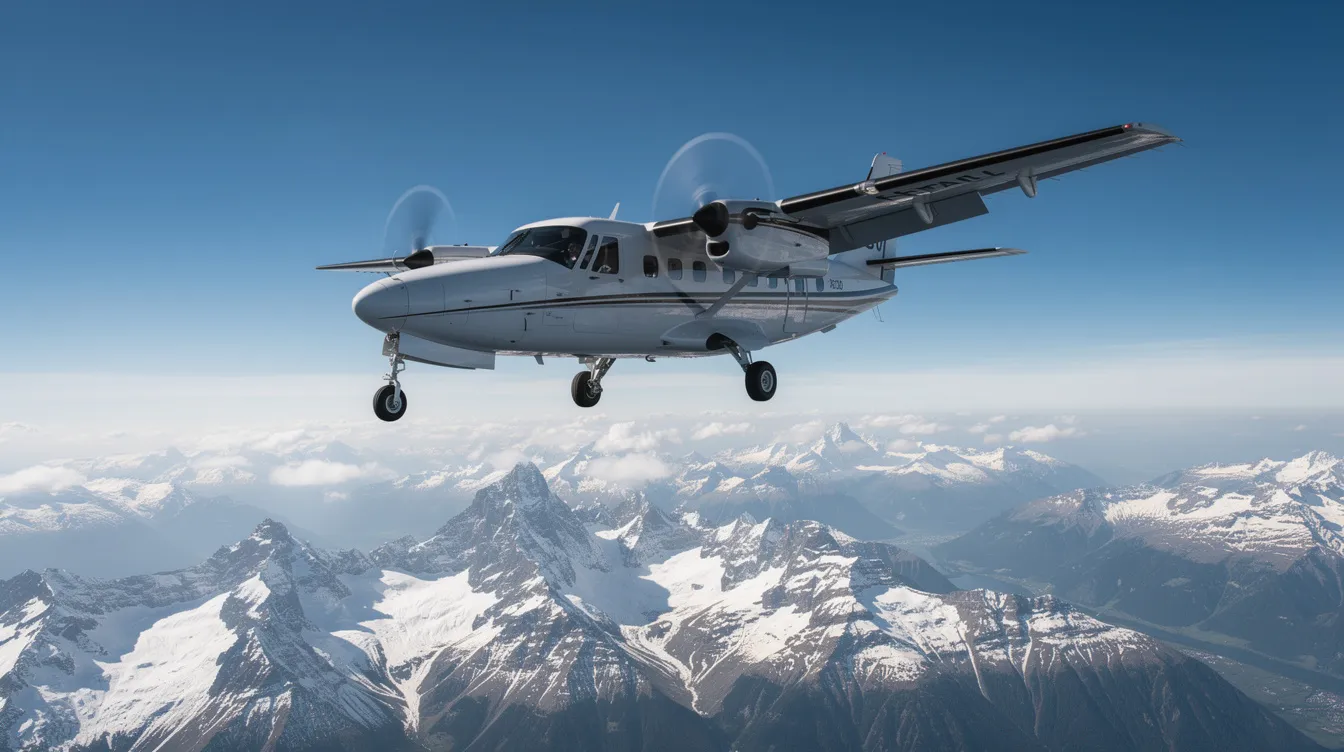
Private aviation is not just about speed - it is about precision. The right aircraft on the right mission saves hours, reduces costs, and opens access to airports that commercial flights and even many jet aircraft cannot reach. That is exactly where the jet prop earns its place.
This guide is designed for private aviation customers, Jet Card members, and anyone considering private travel options who may also be exploring premium private jet cards and membership programs. Understanding the advantages of jet prop (turboprop) aircraft helps travelers make informed decisions about cost, efficiency, and airport access.
Jet Prop Basics: Why Turboprops Matter for Strategic Private Travel
A jet prop - more formally, a turboprop - is an aircraft that uses a jet turbine engine to spin a propeller, combining jet and propeller propulsion into a single, highly efficient system. This fusion creates an airplane uniquely suited to regional private travel: faster and more capable than a piston engine aircraft, yet more economical and runway-flexible than a pure jet.
Turboprop aircraft sit in a performance band that matters deeply for practical travel. Turboprops cruise at 300–370 knots, while jets cruise at 430–470 knots, though that gap has narrowed as modern jet engines have become more efficient. That speed gap narrows significantly when you factor in ground transfer times, airport congestion, and runway requirements. Turboprop aircraft are ideal for routes under 1,500 kilometers - precisely the distance band where private travelers make the majority of their trips.
BlackJet operates as a premier Jet Card provider offering access to both turboprop and jet categories, matching each mission to the aircraft that delivers the best door-to-door result. Consider a BlackJet member flying from Westchester to Nantucket: a turboprop departs from a nearby regional field, lands on the island's shorter runway, and delivers the traveler to the destination while a jet would still be taxiing at a congested hub. That advantage is not marginal - it is strategic.

What Is Jet and Propeller Propulsion? (Jetprop, Turboprop, and Key Terms)
The terms "jet prop," "propjet," and "turboprop" all describe the same concept: a gas turbine engine that delivers shaft power through a reduction gearbox to spin a constant-speed aircraft propeller, rather than generating thrust primarily from high-speed exhaust like pure jet engines. A turboprop consists of a turbine core - compressor, combustion chamber, and turbine stages - coupled to a propeller via gears that reduce the turbine's high RPM to an optimal blade speed.
What makes propeller propulsion on a turboprop so efficient is its bypass ratio. Bypass ratio refers to the amount of air moved by the propeller compared to the amount passing through the engine core. Modern turboprop engines have bypass ratios ranging from 50 to 100. This yields outstanding propeller efficiency at low speeds and moderate altitudes - a physics advantage that turbofan jet engines, with bypass ratios of 5 to 12, simply cannot match below certain flight speeds.
The concept is not new. The world's first turboprop was patented in 1929. The first British turboprop engine, the Rolls-Royce RB.50 Trent, completed its first flight on 20 September 1945. Shortly after, the Vickers Viscount became the first successful turboprop-powered aircraft in commercial airline service. On the other side of the Atlantic, the first American turboprop engine programs followed, cementing turboprop power as a cornerstone of the turbine world.
Today, well-known turboprop aircraft include the Pilatus PC-12 NGX, Beechcraft King Air 260 and 350i, TBM 960, Cessna Caravan, and ATR 72 regional airliners. The variable-pitch, constant-speed propeller on these aircraft adjusts blade angle automatically - fine pitch for takeoff thrust, coarser pitch for cruise, and reverse thrust for shorter landing distances - delivering smooth power across every phase of flight. These are not small subsonic aircraft of a bygone era; they are refined, pressurized platforms trusted in business aviation worldwide.
How Turboprop Engines Work: Inside a Modern Jet Prop
Inside every turboprop engine, the cycle begins with air drawn into the intake. That air is then converted to compressed air by the compressor stages. In the combustion chamber, fuel is injected into this compressed air, creating a fuel-air mixture that ignites. The resulting hot combustion gases expand through the turbine stages, generating power that drives both the compressor and the output shaft. It is this shaft - spinning through a precision reduction gearbox - that turns the propeller.
Unlike pure jet engines, where thrust comes from high-velocity exhaust, the turboprop delivers most of its thrust through the propeller disc. This is why turboprop power excels on short runways and during climb: the prop moves a large mass of air at lower velocity, producing enormous thrust at sea level and low speeds. Turboprop engines operate efficiently at speeds below 725 km/h, and they are most efficient below 725 km/h (450 mph) - a range that covers virtually every regional private mission.
Modern engines in the turboprop class feature Full Authority Digital Engine Control (FADEC), which manages fuel flow, prop pitch scheduling, temperature limits, and altitude compensation automatically. This reduces pilot workload, protects the engine, and optimizes fuel efficiency across changing conditions. Turboprop propellers can feather to minimize drag during engine failure - a critical safety feature - and enter beta or reverse thrust range on landing to shorten ground roll dramatically.
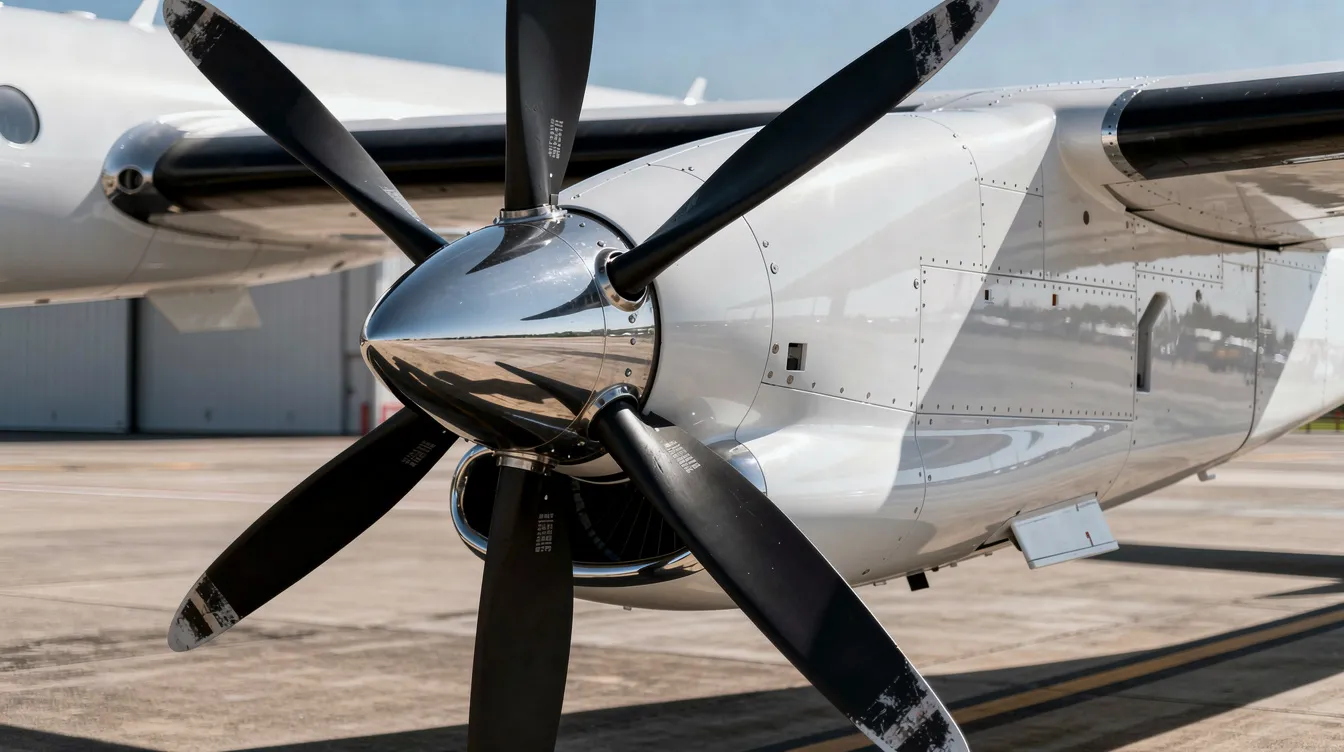
In terms of fuel burn, a single-engine executive turboprop typically consumes roughly 32–40 gallons per hour at cruise, compared to 150–200 gph for a comparable light jet on sub-500 NM sectors. Engine families like the Pratt Whitney PT6A series and the GE H-series have accumulated decades of service generating power reliably across business, regional airline, and special-mission roles. The PT6A alone has delivered over 36,000 units - a testament to mechanical reliability in the turbine engine world.
Turboprops vs Piston Engines vs Pure Jets: Performance and Mission Profiles
Understanding where each powerplant excels is essential for making intelligent travel decisions and for evaluating the best small private aircraft for specific missions. A piston engine aircraft - think Cessna 206 or Piper Saratoga - operates at lower altitudes (typically 8,000–12,000 ft), with cruise speeds often below 200 knots. Acquisition costs are lower, but vibration is higher, maintenance intervals are shorter, and the airplane lacks pressurization. Piston aircraft suit training and very short local hops, but they impose real limits on productivity and comfort.
Step up to a turboprop and the picture changes. Prop jets typically cruise around 250–330 knots at flight levels between FL240 and FL310, with pressurized cabins, smooth rides, and strong climb rate performance from short runways. Turboprops are particularly efficient for short- to medium-distance flights from shorter runways, and prop jets are reliable for short runways, rough terrain, and regional cargo or commuter operations. Jet turbine engines generally have high reliability over long operating cycles due to fewer moving parts, and that reliability carries directly into turboprop platforms.
Pure jet engines win a different set of missions. Jet engines excel in speed, altitude, and high-thrust performance, characteristics showcased by the top private jets in the world combining luxury and range. Jet engines thrive in thin, high-altitude air, maintaining power where piston engines struggle - cruising at FL400 or above at 420–470 knots. Jet engines produce significantly less vibration compared to reciprocating piston engines. Jet engines have a high power-to-weight ratio, allowing for larger aircraft payloads, and jet engines perform exceptionally well at high subsonic and supersonic speeds, unlike traditional propellers. Jet propulsion is preferred for high speed, altitude, and long-distance travel capabilities - transcontinental legs, ocean crossings, and time-critical schedules, especially for larger groups that require private jets configured for around 20 passengers.
Here is the practical implication: on a 400–500 NM business trip - say Boston to Toronto - a turboprop departs from a closer regional airport, burns less fuel, pays lower landing fees, and arrives within 15–20 minutes of a light jet that had to use a larger, more congested field. Jet engines consume more fuel at low speeds compared to propeller-driven aircraft, which means the jet's advantage only materializes on longer sectors. BlackJet leverages this spectrum - matching turboprop, light jet, and midsize jet to each member's route - so every Jet Card hour delivers maximum value.
Comparison Table: Piston Engines vs Turboprops vs Jet Engines
Feature | Piston Engines | Turboprops (Jet Prop) | Jet Engines |
|---|
Typical Cruise Speed | < 200 knots | 250–370 knots | 430–470 knots |
Typical Altitude | 8,000–12,000 ft | FL240–FL310 | FL400 and above |
Fuel Efficiency | Lower | 30–50% less fuel than jets on short routes | Higher fuel consumption on short hops |
Runway Requirements | Longer runways needed | Can use shorter, less-developed runways | Requires longer, paved runways |
Cabin Pressurization | Usually no | Yes | Yes |
Maintenance Interval | Shorter | Longer (up to 4,000 hrs TBO on PT6A) | Long intervals, high costs |
Noise and Vibration | Higher | Moderate (propeller noise) | Lower vibration |
Payload Capacity | Lower | Moderate | High |
Operational Range | Short | Regional (up to ~1,500 km) | Long-range |
Suitability | Training, local hops | Regional, rough terrain, short runways | Long-distance, high speed |
Case Study: Piper Malibu to Jetprop DLX – A Jet Prop Conversion Story
Few aircraft illustrate the transformative power of turboprop technology better than the JetProp DLX conversion. The JetProp DLX began as a Piper Malibu - a capable pressurized piston single - but with its original piston engine, the airframe faced real limitations: sluggish climb rate at higher altitudes, vulnerability to icing, a lower service ceiling, and maintenance cycles that demanded frequent attention.
Rocket engineering firms and specialists, including Casey Aviation and others in the conversion ecosystem, replaced the Malibu's piston powerplant with a Pratt Whitney PT6A-35 turbine engine, flat-rated to approximately 560 shaft horsepower, illustrating in practice how different types of jet engines and turboprops can transform performance. The result was a different airplane. Climb rate jumped to roughly 3,000 feet per minute at sea level. Maximum cruise speed reached 250–260 KTAS at flight levels near 27,000 feet - more speed and far more altitude than the piston original could sustain. The first turboprop aircraft conversions like this proved that jet engine technology could transform an existing airframe into something dramatically more capable.
Fuel consumption runs approximately 30–32 gallons per hour at max cruise, with long-range settings dropping to around 23 gph - higher hourly burn than the piston, but faster block speeds mean similar or lower trip fuel on 600–800 NM missions. The header tank and fuel system were modified for the turbine's requirements. With full fuel, useful load tightens, so operators plan shorter legs when carrying more passengers. A hot section inspection is required at intervals, but TBO on the PT6A reaches 4,000 hours - far beyond typical piston overhaul cycles.
For owners, the Jetprop DLX means flying nonstop to mountain destinations like Aspen, departing from short runways comfortably, and maintaining performance in icing conditions. While BlackJet does not specialize in aircraft conversions, understanding platforms like this helps BlackJet advisors guide Jet Card members toward the turboprop aircraft that best match their mission - a big deal when every hour and dollar counts.
Operating Costs, Fuel Consumption, and Value per Hour
Operating costs for turboprop aircraft break down into several drivers: fuel consumption, engine reserves, scheduled and unscheduled maintenance, insurance, crew, and landing and handling fees. Across all these categories, turboprops consistently come in lower than comparable jets on regional missions. Turboprop operating costs can be 20–40% lower than light jets on equivalent sectors, a gap that becomes clear when you study a broader private jet price list and cost overview.
Single-engine executive turboprops typically run in the $900–$1,500 per hour band for direct operating costs, often competing directly with the cheapest private jet and turboprop options for budget-conscious travelers. Light jets serving the same routes frequently exceed $2,000–$3,000 per hour, which is why many travelers explore the cheapest private aircraft and budget-friendly categories before committing to a fixed fleet type. Modern turboprop airliners burn two-thirds of the fuel per passenger compared to jets, and turboprops consume 30–50% less fuel than regional jets - a difference that compounds across dozens of annual trips. Understanding turboprop charter rates in context and how Jet Card cost per hour compares across aircraft types reveals how much value turboprop segments deliver.
Engine longevity amplifies the cost advantage. PT6A turbine engines carry TBO intervals of 3,600–4,000 hours, with oil changes measured in hundreds of hours rather than tens. Fewer hot-section events, longer intervals between major overhauls, and lower parts costs per cycle all contribute to lower fuel burn on the maintenance ledger as well.
Approximately 34% of airports operate exclusively with turboprop aircraft - meaning turboprops can operate from shorter and less-developed runways that jets simply cannot use. This opens access to remote areas and smaller regional fields, eliminating expensive ground transfers. On a concrete 350 NM business hop, a King Air-class turboprop versus a light jet shows roughly 25% lower direct operating costs while arriving within minutes of each other. For a Jet Card holder, choosing turboprop on qualifying legs preserves hours and budget for longer jet missions, especially when you understand overall Jet Card cost structures and pricing variables.
Safety, Reliability, and Certification in Turboprop Operations
Turboprop aircraft are certified under strict safety standards - FAA and EASA frameworks including 14 CFR Part 23 and Part 25 for airframes, Part 35 for propellers, and rigorous engine certification protocols. Every certified turboprop must demonstrate single-engine performance, icing capability, and structural integrity under extreme conditions before entering service.
The turbine engine's inherent reliability is a cornerstone. With fewer reciprocating parts than a piston engine, turbine powerplants deliver smoother operation and longer service intervals. Twin turboprops provide redundancy with two engines and systems - independent electrical, hydraulic, and fuel systems that keep the aircraft flyable even after a failure. Propeller safety features include feathering (to eliminate drag from a dead engine), beta and reverse thrust for reduced landing distances, and redundant pitch-control mechanisms.
Manufacturing jet engines involves high costs due to precision engineering and material requirements, but that investment yields proven durability. Jet engines are noted for significant noise and emissions during operation, especially at takeoff, which is one reason turboprops - with their lower exhaust velocities - often face fewer noise restrictions at smaller airports.
Crew training for turboprop operations includes recurrent simulator sessions, engine-out procedures, short-field technique, and instrument flight in adverse weather. BlackJet overlays additional vetting through its proprietary safety program - ARGUS, Wyvern, or equivalent third-party audits; strict pilot experience minimums; and standardized procedures across every turboprop and jet in the network. For missions involving mountain strips or island fields, properly operated turboprop aircraft offer a safety margin that performance-limited jets may not.
Sustainability: Fuel Efficiency and Environmental Impact of Jet Prop Aircraft
Turboprop aircraft typically consume 30–50% less fuel than jets on equivalent short routes, directly reducing CO₂ output per passenger-kilometer. Turboprops consume 30–50% less fuel than jets on short routes - a figure validated across multiple independent studies comparing regional turboprop and jet operations. The ATR 42 and ATR 72 set new benchmarks for turboprop efficiency in the 1980s, and modern engines have only widened the gap.
Flying at lower altitudes - typically in the mid-20,000-foot range - turboprops spend less time in the cold, ice-supersaturated atmosphere where contrails form and persist. While they encounter more weather at these flight levels, the climate benefit of fewer contrails is increasingly recognized as significant. Turboprops are ideal for regional travel under 1,500 kilometers, where the lower fuel burn compounds into meaningful emissions reductions across a fleet.
Modern engines like the Pratt & Whitney PW127XT series deliver improved specific fuel consumption and are certified for Sustainable Aviation Fuel blends. BlackJet provides carbon-neutral flights across both jet and turboprop options - verified offsets or insets complement the inherent fuel efficiency of turboprop segments, ensuring that every green private jet mission meets the highest environmental standard at no additional cost to the member, while modern planning tools such as a private jet flight time calculator for accurate trip planning further optimize efficiency.

Choosing Between Turboprop Power and Jet Engines for Your Mission
The right aircraft depends on your mission, not on assumptions about prestige. A practical framework considers distance, passenger count, runway length, terrain, weather, luggage, and schedule flexibility, as well as the different types of private jets available for each traveler profile.
Choose turboprop for sectors up to roughly 1,000–1,500 km, where higher speeds yield only marginal time savings but significantly more fuel cost. Prop jet access shines when the destination involves short runways, island airfields, or mountain strips - places where a jet's higher approach speeds and longer runway requirements become liabilities. Consider Dallas to Santa Fe: a turboprop accesses Santa Fe Municipal directly, while many jets require diverting to Albuquerque and adding a 60-minute drive. Nice to Ibiza is another example - a turboprop lands at smaller coastal fields that bring travelers minutes from the harbor rather than an hour's transfer from a major airport.
Pure jet engines win when distance, speed, and cabin size dominate. Transcontinental flights, high-frequency city-pair shuttles, and missions where passengers need to arrive at higher speeds across 2,000+ NM sectors are jet territory. At those distances, the jet's ability to fly at higher speeds and at higher altitudes fully justifies the added fuel and operating cost, particularly when matched to the right private jet size and cabin category for the journey.
BlackJet advisors and the digital booking platform guide members through this selection. When you book through BlackJet, aircraft category options - turboprop or jet - are presented transparently alongside cost, timing, and airport access, so every Jet Card hour is deployed where it delivers the greatest return, whether you are evaluating a 100-hour Jet Card and its total cost profile or a smaller program.
How Jet Prop Fits into BlackJet Jet Cards and Private Access
BlackJet's Jet Card programs - including 25-hour, 50-hour, and 100-hour structures - provide access to multiple aircraft classes without the complexity and capital commitment of ownership. Turboprop and jet categories are both available within the same card, allowing members to fly the right aircraft on every leg, supported by transparent Jet Card pricing across hours and deposit models.
This flexibility translates directly into value. Turboprop segments on regional hops preserve Jet Card hours and budget for the longer, more expensive jet flights where speed genuinely matters. An executive with a 50-hour Jet Card might use turboprops for a multi-stop roadshow across three cities within a 500 NM radius - shorter ground time, lower per-leg cost, direct access to smaller airfields - then deploy jet hours for quarterly intercontinental board meetings where more fuel and higher cruise speeds are justified.
The booking experience is seamless. BlackJet's digital platform provides real-time aircraft availability, transparent category selection, and 24/7 flight support. Members can indicate a preference for turboprop aircraft on qualifying routes, and every flight - whether turboprop or jet - is vetted to the same uncompromising safety standards and managed as carbon neutral.
Every aircraft in BlackJet's network, from turboprop to heavy jet, passes the same certification gauntlet. The result is a membership where the member focuses on the destination and schedule, while BlackJet handles the aircraft selection, safety assurance, and environmental responsibility behind the scenes, similar to how leading jet card programs for frequent flyers balance benefits and costs.
Explore premium jet and turboprop access through BlackJet's Jet Card programs - and let every mission fly on its own terms.
FAQs About Jet Prop and Turboprop Aircraft
What is a jet prop or turboprop aircraft?
A jet prop, also known as a turboprop, combines a jet turbine engine with a propeller to generate thrust. Unlike pure jets that rely primarily on high-speed exhaust, turboprops deliver most thrust through the propeller, making them highly efficient for regional flights and short runways.
How do turboprops compare to jets in terms of speed and fuel efficiency?
Turboprops typically cruise at 300–370 knots, slower than jets cruising at 430–470 knots. However, turboprops consume 30–50% less fuel on short routes under 1,500 kilometers, making them cost-effective and environmentally friendly for regional missions.
Are turboprop aircraft safe for private travel?
Yes. Turboprops undergo rigorous certification and maintenance standards. Twin-engine turboprops offer redundancy, and pilots receive specialized training for engine-out procedures and short-field operations. BlackJet ensures all operators meet strict safety protocols.
What is the JetProp DLX conversion?
The JetProp DLX conversion replaces the piston engine of a Piper Malibu with a Pratt & Whitney PT6A-35 turboprop engine, boosting performance with faster climb rates, higher cruise speeds, and improved reliability, ideal for challenging environments like mountainous terrain.
Can turboprops operate from smaller or less-developed airports?
Absolutely. Approximately 34% of airports worldwide serve turboprop aircraft exclusively. Their ability to take off and land on shorter runways opens access to remote locations and regional airports inaccessible to many jets.
How does BlackJet incorporate turboprops into its Jet Card programs?
BlackJet offers flexible Jet Card memberships that include turboprop and jet access. Members can select the aircraft best suited for each mission, optimizing cost, convenience, and sustainability without compromising safety or luxury.
Do turboprops support Sustainable Aviation Fuel (SAF)?
Yes, many modern turboprop engines are certified to operate with approved blends of Sustainable Aviation Fuel, contributing to lower carbon emissions on regional flights.
Conclusion: The Strategic Advantage of Jet Prop in Modern Private Aviation
The jet prop is not a compromise. It is a precision instrument - combining jet engine technology with propeller propulsion to deliver fuel efficiency, runway flexibility, and reliability that pure jets cannot match on regional missions. For the discerning traveler, understanding when to fly a turboprop and when to fly a jet is not a technical exercise; it is a strategic advantage.
By intelligently mixing turboprop and jet access through a single Jet Card, BlackJet members gain flexibility that no single aircraft type can provide. Lower operating costs on short legs, access to approximately 34% of airports that serve turboprop aircraft exclusively, carbon-neutral operations, and the confidence of rigorous safety certification - these are not marginal benefits. They reshape how private aviation works.
BlackJet exists to make this effortless. Speak with a BlackJet advisor or explore Jet Card options to discover how turboprop power can elevate your next regional itinerary - and how jet access stands ready for every mission beyond.


 Sign up with google
 Sign up with Apple