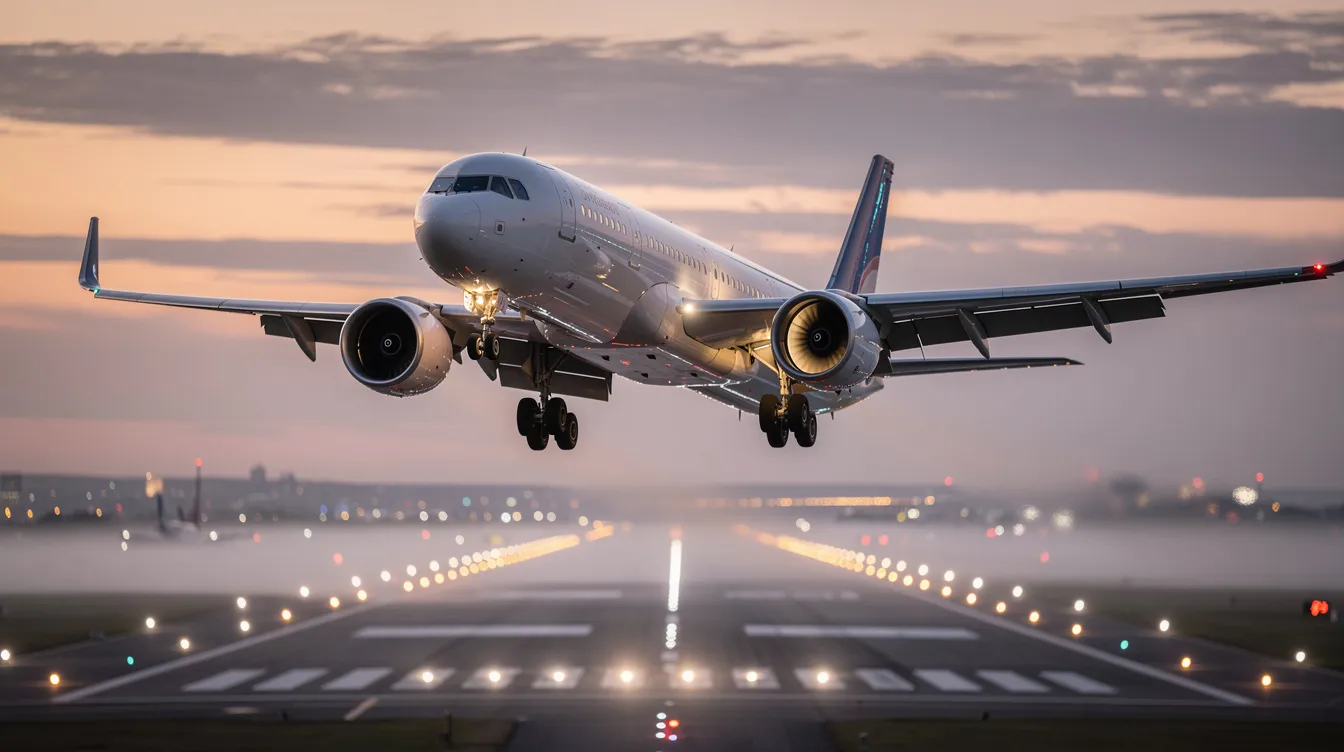
The U.S. records between 1,300 and 1,500 civil aviation accidents every year, but if you are asking how often planes crash in the U.S. as a traveler, the key fact is that almost all of those accidents involve general aviation, while commercial airline crashes are extremely rare. For major airlines, the fatal accident rate is about 0.01 per 100,000 flight hours, making a fatal commercial crash vanishingly unlikely for the typical passenger.
That distinction matters for frequent business travelers, high-net-worth leisure travelers, and executives weighing private aviation against airline travel, because the safety profile changes sharply by aircraft category, operator, and mission. Below, we break down U.S. accident statistics across commercial airlines, private jets, and other regulated segments, then compare the main causes and phases of accidents, explain how oversight affects risk, and show how BlackJet’s Jet Card program model fits into the broader private aviation safety picture so you can make a more informed travel decision.
Quick Answer: How Often Do Planes Actually Crash in the US?
In 2024, there were approximately 1,415 total aviation accidents in the U.S. across all categories. The vast majority of those occurred in general aviation, not on scheduled commercial flights. Here is how the segments compare:
Commercial airlines (Part 121) maintained a fatal accident rate of 0.01 per 100,000 flight hours. Many recent years recorded zero passenger fatalities.
General aviation aircraft are involved in 78% of all aviation crashes, with roughly 1,000 to 1,100 accidents annually and around 300 fatalities per year.
Professionally flown private jet and charter operations (Part 135) sit between these two extremes, with fatal crash rates closer to the commercial airline benchmark than to small private planes.
For a typical traveler on a commercial airline or a professionally operated private jet, the probability of being in a fatal airplane crash is vanishingly small. BlackJet operates within the Part 135 charter framework, using vetted crews and modern aircraft to keep its Jet Card members on the safer end of private aviation, with transparent jet card pricing structures that make it easier to evaluate value alongside safety.
Aviation Accident Statistics Overview
Category | Annual Accidents | Fatal Accident Rate (per 100,000 flight hours) | Approximate Annual Fatalities | Share of Total Crashes |
|---|
Commercial Airlines (Part 121) | Very low (~dozens) | 0.01 | Rare (often zero) | Very small |
Private Jets / Charter (Part 135) | Moderate (low hundreds) | 0.1 to 0.3 | Low (single digits to tens) | Moderate |
General Aviation (Part 91) | ~1,000 to 1,100 | 0.9 to 2.3 | ~300 | 78% |
This table highlights the stark differences in accident frequency and fatality risk among commercial airlines, private jets, and general aviation. It reflects how BlackJet’s Jet Card flights fit into the safer end of private aviation by operating under Part 135 with professional crews and modern aircraft.
Understanding Aviation Accident Statistics in the US
An aviation accident, as defined by the National Transportation Safety Board, is an occurrence between boarding and disembarkation in which someone suffers death or serious injuries, or the aircraft sustains substantial damage. This threshold matters: a bird strike that chips paint does not count; an engine failure that forces an emergency landing with structural damage does.
U.S. aviation accident statistics are broken into three regulatory buckets:
Part 121 covers scheduled passenger airlines and large cargo carriers using commercial aircraft with more than nine seats.
Part 135 covers on-demand charter operations, commuter airlines, and air taxi services, including most charter flights and charter jets.
Part 91 covers general aviation: private pilots, flight training, recreational flying, and corporate aircraft operation not subject to Part 135 rules.
Rates matter more than raw counts. Measuring accidents per 100,000 flight hours or per million departures normalizes for the fact that commercial airlines log billions of passenger-miles while a private plane might fly 200 hours a year. Most U.S. aviation accidents are in general aviation, not scheduled commercial flights, but pooling all categories together creates confusion about actual risk levels.
The total fatalities due to aviation accidents since 1970 are 83,772, a figure that spans decades of varying safety standards. The Federal Aviation Administration and NTSB jointly publish annual summaries used across the aviation industry so researchers and travelers can track how aircraft accidents have changed over time and monitor broader safety trends.
How Often Do Commercial Airlines Crash in the US?
Scheduled commercial aviation in the U.S. has achieved a safety record that would have been difficult to imagine 40 years ago. Between 2009 and 2018, no passenger died in a Part 121 airline accident until the Southwest Airlines Flight 1380 engine failure, which killed one passenger. That single fatality in nearly a decade of commercial flying illustrates how rare fatal crashes have become.
Commercial aviation had the lowest fatal accident rate of 0.01 per 100,000 flight hours over the most recent measurement periods. The odds of dying in a commercial flight in the U.S. are roughly 1 in 29 million. In 2023, commercial aviation recorded the lowest number of accidents ever, continuing a multi-decade downward trajectory.
Comparing the 1983-to-2000 period against 2001-to-2017, the Part 121 fatal accident rate dropped from approximately 0.030 to 0.006 per 100,000 flight hours, according to NTSB survivability data. The year 2017 had the lowest aviation fatalities at 399 since World War II, a figure that encompasses global commercial flying, not just the U.S. Worldwide, the commercial aviation accident rate averages about 1.1 to 2.2 accidents per million departures, and North America and Europe report some of the lowest aviation accident rates of any region.
Modern commercial aircraft carry multiple redundant systems, advanced avionics, and undergo strict maintenance cycles. Air traffic control infrastructure in the U.S. adds another layer. These are not abstract safety measures; they are the engineering and operational reasons that major airlines have largely eliminated fatal accidents from their safety records. Historically, major incidents also drove many of the safety improvements now taken for granted.
General Aviation in the US: Where Most Aircraft Accidents Occur
General aviation covers every civil flight that is not a scheduled airline service. That includes private aircraft, flight training operations, corporate jets operating under Part 91, hobby flying, agricultural aviation, and some air taxi work. The range of pilots, aircraft, and missions is enormous.
In 2023, U.S. general aviation recorded 1,097 total accidents. General aviation accounts for the majority of annual civil aviation fatalities in the U.S., with 307 deaths that year alone, according to Statista's GA fatality tracker. General aviation has a fatal accident rate of 0.9 to 1.1 per 100,000 flight hours, roughly 100 times the rate of scheduled airlines.
Why is the gap so wide? Several structural factors explain it:
Pilot experience range: Part 91 allows a single private pilot with a few hundred hours to fly solo in challenging conditions. Commercial airlines require crew members with thousands of hours and recurrent simulator training.
Less stringent operational rules: Part 91 does not mandate Safety Management Systems, duty-time limits, or the same level of regulatory oversight that Part 121 and Part 135 demand.
Older, simpler aircraft: Many general aviation aircraft are single-engine piston models from the 1960s through 1980s, lacking modern avionics and redundant systems.
Smaller airports: General aviation frequently operates from non-towered fields with shorter runways, limited lighting, and no air traffic controllers on site.
Small piston aircraft, not turboprops or business jets, account for the overwhelming share of general aviation accidents. For a deeper look at the factors behind these numbers, BlackJet's analysis of why small planes crash so often breaks down the specifics and shows how the cheapest private aircraft options often come with different safety profiles than professionally managed jets.

Private Jets vs. Other Private Planes: How Often Do They Crash?
The term "private plane" covers everything from a Cessna 172 flown by a weekend hobbyist to a Gulfstream G700 operated by a two-pilot professional crew, spanning multiple types of private jets with very different performance and safety profiles. Their safety profiles are not comparable. Private planes overall have a fatal accident rate of 2.3 per 100,000 flight hours, but that average is pulled upward by small piston aircraft that dominate the accident count.
Professionally flown business jets typically show fatal crash rates in the 0.1 to 0.3 per 100,000 flight hours range, a level comparable to leading private jet companies for luxury travel and safety that emphasize structured training and maintenance. In 2024, the Cirium Business Aviation Safety Review recorded 8 fatal accidents among business jets worldwide, producing 21 fatalities, with a fleet-normalized rate of about 0.04 fatal accidents per 100 aircraft. Compare that to hundreds of accidents among small general aviation aircraft in the same period.
The safety advantage comes from specific, identifiable differences: twin-pilot crews with recurrent training, turbine engines with higher reliability than piston engines, advanced avionics suites, and commercial-style maintenance regimes. These are the same characteristics that define BlackJet's Jet Card and charter model. When a BlackJet member books a flight, the involved aircraft is a modern jet operated by a professional crew under Part 135 standards, not a single-pilot piston airplane, which contrasts with ad hoc options like buying a single seat on shared or empty-leg services described in guides to how to buy a seat on a private jet. That distinction is the difference between a fatal accident rate of 0.1 and one of 2.3.
When Do Plane Crashes Most Often Happen? Phases of Flight
Aviation incidents are not distributed evenly across a flight. Landing and takeoff account for nearly half of all aviation crashes, despite representing only a small fraction of total flight time. The approach and initial climb phases add to that concentration.
The reasons are mechanical and environmental. During takeoff and landing, pilots manage rapid configuration changes (flaps, landing gear, thrust settings), aircraft are close to the ground with minimal margin for recovery, and exposure to runway conditions, crosswinds, and airport obstacles is highest. Cruise-phase catastrophic failures do occur, but they are statistically rare. An in-flight fire or structural failure at altitude draws intense media coverage precisely because such events are so uncommon.
In business aviation specifically, the NBAA's Q1 2026 accident analysis identified runway excursions, landing-gear events, and unstabilized approaches as the most frequent safety events. Professionally managed charter operations address these risks through structured procedures: stabilized-approach criteria, mandatory go-around callouts, and crew resource management training that keeps both pilots actively cross-checking during the critical minutes near the ground.
Why Planes Crash: Common Causes Behind Aviation Accidents
An airplane accident almost never results from a single failure. Aircraft accident investigation by the NTSB and similar bodies into air crashes consistently reveals chains of contributing factors. A maintenance lapse goes unnoticed, a pilot is fatigued, weather deteriorates, and the sequence culminates in a crash. Break any link in that chain, and the flight lands safely.
Up to 80% of aviation accidents involve human error. In general aviation specifically, human error contributes to 70% of accidents, with pilot error categories including loss of control in flight, VFR flight into instrument meteorological conditions (controlled flight into terrain, or CFIT), and poor aeronautical decision-making. These are human factors failures, not design defects.
Mechanical failure is involved in about 18% of general aviation accidents. Adverse weather conditions cause approximately 11% of private aviation accidents, often compounding pilot error rather than acting as the sole cause. Engine failure during a critical phase of flight, for instance, becomes fatal when coupled with a pilot who lacks the training or currency to execute an emergency landing.
Airlines are required to implement Safety Management Systems for risk management, a proactive framework that identifies hazards before they produce incidents. Top-tier charter operators follow the same model. BlackJet selects operators with structured SOPs, recurrent simulator training, and advanced safety technology, keeping its Jet Card members on aircraft where the accident chain is broken by design rather than by luck.
How Safe Is Flying Compared to Driving or Other Travel?
Approximately 40,000 people die in motor vehicle crashes annually in the U.S., a toll so constant it rarely makes national news. Car crashes kill more Americans in a single month than all forms of air travel combined kill in a year. General aviation fatalities in 2023 totaled 307; commercial airline passenger fatalities in many recent years were zero.
Air travel is 95 times safer than automobile travel per mile. That ratio applies to commercial flying, but professionally operated private jet travel also compares favorably to long-distance driving. A business executive weighing a six-hour drive from New York to Washington, D.C., and back against a one-hour private flight faces lower statistical risk in the aircraft, in addition to saving four or more hours of productive time, especially when using affordable private jet options that balance cost with professionally managed safety standards.
The gap between perceived risk and actual risk is driven almost entirely by media coverage. A single aviation disaster occupies headlines for weeks. The 110 daily road fatalities in the U.S. receive almost no national attention. Statistically, the risk of fatal commercial aviation incidents remains extremely low, and the same is true for the charter and private jet segment when professional crews, modern aircraft, and proper oversight are in place.
How Regulators Track and Improve Aviation Safety
Two agencies form the backbone of U.S. flight safety. The Federal Aviation Administration sets and enforces regulations for aircraft operation, pilot training, maintenance providers, and air traffic control. The National Transportation Safety Board, operating as an independent agency, investigates every civil aviation accident and issues safety recommendations. The National Transportation Safety Board's findings feed directly into regulatory changes.
After an aviation accident, the NTSB dispatches investigators to collect physical evidence, recover flight data and cockpit voice recorders, interview witnesses and crew members, and reconstruct the event. Investigations can take 12 to 24 months, culminating in a final report that identifies probable cause and, when applicable, contributing factors. These findings have driven changes ranging from cockpit procedure reforms to airspace redesigns, especially after major incidents that exposed systemic weaknesses. Some of the deadliest aviation disaster investigations also produced lasting changes in crew procedures and safety rules.
The U.S. meets or exceeds the highest global aviation safety standards. ICAO sets baseline standards that member states adopt; the FAA frequently exceeds those minimums. Voluntary Reporting Programs, such as the Aviation Safety Action Program (ASAP) and the Aviation Safety Reporting System (ASRS), help identify safety issues before they cause accidents. This proactive approach, combined with reactive investigation, creates a feedback loop that has reduced accident rates decade after decade. For context, North America and Europe maintain some of the lowest fatal accident rates globally, a result of sustained investment in regulatory oversight and infrastructure, which is also reflected in established providers whose models are analyzed in resources on NetJets jet card cost and structure.
Private Charter, Part 135, and Jet Cards: Where Do They Fit in Safety Statistics?
FAA Part 135 governs on-demand and commuter operations. Compared to Part 91 private flying, Part 135 imposes stricter requirements: pilot duty-time limitations, higher crew qualification thresholds, mandatory maintenance tracking, and operational control by the certificate holder rather than the aircraft owner. Compared to Part 121 airlines, Part 135 is less prescriptive but still demands structured oversight.
Fatal accident rates for Part 135 charter operations vary by aircraft category. Business jets under Part 135 show rates around 0.10 per 100,000 flight hours or lower; single-engine piston charters run closer to 0.5. The blended Part 135 average sits between commercial airlines and owner-flown general aviation, making charter operations a middle tier in the safety spectrum, and many travelers assess this risk alongside value by reviewing 50-hour jet card pricing and benefits. Determining liability after an accident in charter operations can involve multiple parties, including the operator, maintenance providers, and the certificate holder.
Jet Card programs like BlackJet route their members through vetted Part 135 operators, and travelers comparing options often start by evaluating 100-hour jet card cost and structure to match expected usage with the right level of commitment. When a BlackJet Jet Card member books a midsize jet from New York to Miami, that flight operates under Part 135 rules with a professional two-pilot crew, a maintained and inspected aircraft, and dispatch oversight, much like the structured access described in 25-hour jet card guides aimed at travelers who fly less frequently but still value consistency and safety. The member gets the flexibility and privacy of private flights without the safety compromises that can accompany purely owner-operated Part 91 flying. This is where the aviation industry's regulatory structure directly maps to traveler risk: the certificate under which your flight operates shapes the safety culture surrounding it, and understanding jet card membership pricing helps travelers compare safer, professionally managed options against ad hoc charter or owner-flown flights.
Technology, Avionics, and Modern Aircraft Safety Systems
Modern aircraft use advanced technology for collision avoidance and monitoring weather. Traffic Collision Avoidance Systems (TCAS) alert pilots to nearby aircraft and issue resolution advisories. Enhanced Ground Proximity Warning Systems (EGPWS) provide terrain and obstacle clearance warnings. GPS-based navigation has replaced less precise ground-based systems, reducing controlled flight into terrain.
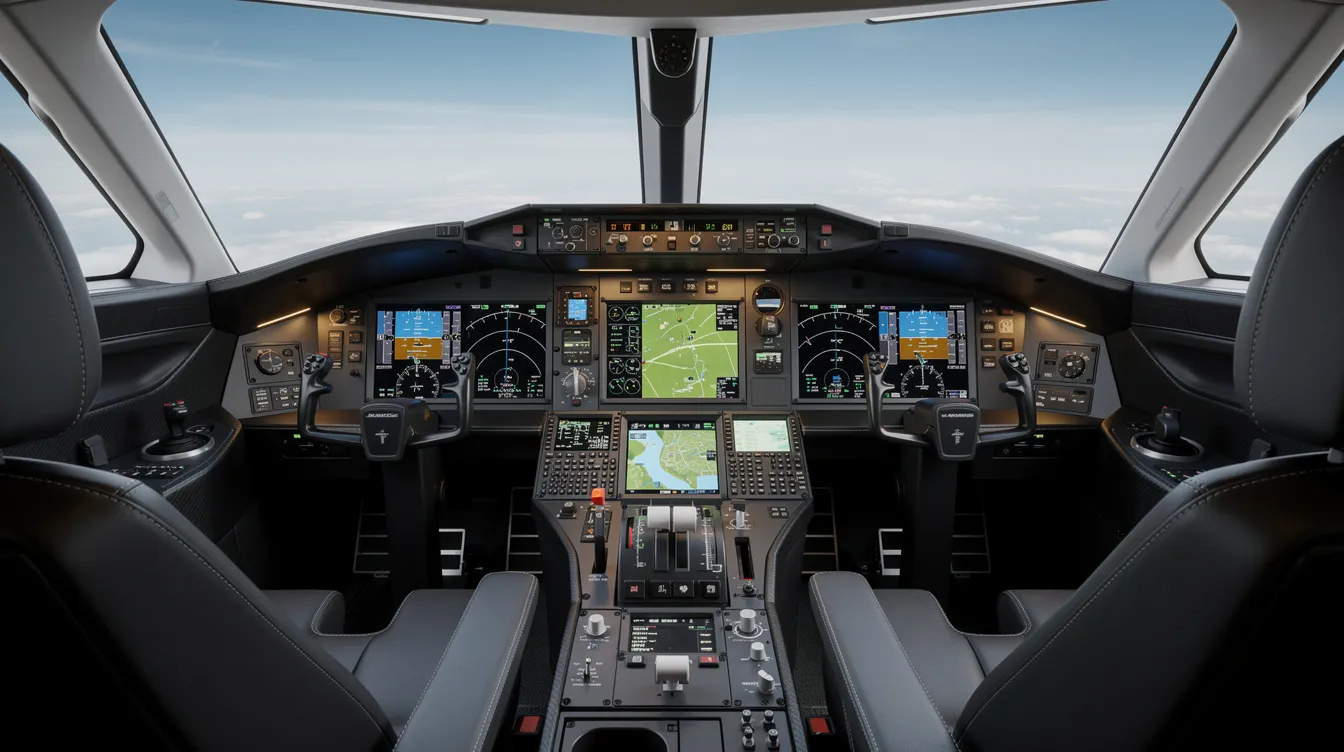
Most commercial aircraft and business jets now operate with "glass cockpit" displays that integrate flight data, engine monitoring, and weather information into a unified picture. Real-time health monitoring systems flag mechanical anomalies, such as unusual vibration patterns or oil pressure changes, before they escalate to engine failure. Satellite-based tracking, aligned with the Global Aeronautical Distress and Safety System framework, allows continuous position awareness even over oceans and remote terrain.
These systems have measurably reduced accident rates. General aviation has also benefited from glass cockpit upgrades, though the safety gain depends on whether private pilots receive proper training on the new interfaces. BlackJet's operator vetting process includes confirming that fleet aircraft carry current avionics suites and that crews are trained to use them. Technology does not eliminate risk on its own, but it closes the gaps where human factors and mechanical failure historically caused the most serious incidents.
Airport Environment and Route Choices: How They Affect Crash Risk
Where you fly matters almost as much as what you fly. Many general aviation accidents occur at small, non-towered airports with limited instrument approach procedures, short runways, and minimal lighting. These environments demand more of pilots and offer fewer safety nets.
Compare a rural mountain airstrip, 3,000 feet long with no published instrument approach, to a major facility like Dallas-Fort Worth International Airport, which has multiple runways exceeding 13,000 feet, full-time air traffic controllers, precision ILS approaches, and complete lighting systems. The infrastructure at an international airport is designed to support safe operations in low visibility, high traffic, and adverse weather conditions. The rural strip offers none of that.
Professional charter operators and services like BlackJet evaluate airports as part of flight planning, whether they are arranging private jet charters in Karachi or domestic U.S. routes, so that terrain, runway length, and procedures align with safety margins. Route choices account for runway length, available approaches, terrain, lighting, and weather patterns. If a destination airport does not meet minimum safety criteria, the operator identifies a suitable alternate. A Jet Card member flying to a mountain resort, for example, might land at a nearby regional airport with better infrastructure rather than a challenging strip that increases risk, just as clients booking private jet charters in Lahore may be routed to airports that offer stronger safety and operational support. This kind of operational decision-making is routine for experienced charter operations but uncommon for private pilots who may lack the resources or training to conduct the same analysis.
How BlackJet Approaches Aviation Safety and Risk Management
BlackJet treats safety as a structural requirement, not a marketing line. For high-net-worth and executive travelers who treat air travel as a strategic tool, the operator behind the flight matters as much as the aircraft itself.
BlackJet's operator vetting process begins with certification. Every operator in the network holds Part 135 or equivalent credentials, with active FAA oversight. Beyond the certificate, BlackJet audits maintenance programs, reviews pilot qualifications and recurrent training records, and checks alignment with third-party safety standards such as ARGUS, Wyvern, and IS-BAO. The Wyvern Wingman rating, for instance, requires operators to meet specific crew training, operational control, and safety management criteria.
The Jet Card model gives BlackJet control over aircraft and operator matching, which is especially important when sourcing private jets for around 20 passengers that require specific safety, performance, and cabin-class capabilities. Rather than simply dispatching the nearest available plane, the system matches each trip to an operator and aircraft category that meets strict safety, certification, and cabin-class standards. Digital booking tools connect to real-time flight tracking and weather data, enabling proactive route adjustments when conditions change, which becomes critical on missions using private jets for 30 passengers where group itineraries and airport constraints add complexity.
BlackJet also ensures every journey is carbon neutral at no extra cost to the member, a mindset that extends to clients exploring premium private jets for sale in the UK where long-term ownership decisions intersect with sustainability and safety standards. Sustainable aviation and safety are not competing priorities; both reflect the same operational discipline. An operator that cuts corners on environmental compliance is unlikely to maintain rigorous safety protocols either, particularly on larger platforms such as private jets for up to 50 passengers where fuel burn, noise, and operational standards are closely scrutinized. For travelers who want the benefits of private jet travel, including time savings, privacy, and direct routing to secondary airports, and access to large-cabin jets without compromise on aviation safety, BlackJet's approach is designed to deliver on that expectation.
Practical Tips for Choosing Safer Flights, Commercial or Private
Whether you fly commercial or private, the quality of the operator shapes your risk profile more than any other single factor. Here is what informed travelers verify before booking.
For commercial flying: Check the airline's safety records through aviation databases. Major airlines operating under Part 121 in the U.S. maintain the lowest fatal accident rate of any transport segment. Fleet age and route history offer additional signals; airlines that invest in newer aircraft and structured pilot training tend to lead safety metrics.
For private aviation and charter operations: Confirm the operator holds Part 135 certification. Ask about pilot experience minimums; reputable operators require captains with 3,000 or more total flight hours and type-specific ratings. Verify that the operator conducts recurrent simulator training, not just the FAA-mandated minimums. Ask whether the aircraft category assigned to your trip carries TCAS, EGPWS, and current navigation databases.
For any flight: Favor two-pilot cockpit operations on jets. Avoid scheduling flights in marginal weather unless the operator and crew are instrument-current and the destination airport supports precision approaches. Choose curated platforms like BlackJet that pre-screen operators against jet card safety standards rather than relying on marketplace-style booking where vetting is left to the traveler.
A sample question a BlackJet member might ask their flight advisor: "What are the captain's total hours and type time in this aircraft, and when was the crew's last recurrent training?" A credible operator answers immediately. One that hesitates is one to avoid.
FAQ: How Often Planes Crash in the US and What Travelers Should Know
How many plane crashes happen per year in the US?
The U.S. records approximately 1,300 to 1,500 total civil aviation accidents annually. In 2024, that figure was about 1,415. The flights involved are overwhelmingly general aviation operations using small private aircraft, not scheduled airlines.
Do private planes crash more often than commercial flights?
Yes. Private planes have a fatal accident rate of 2.3 per 100,000 flight hours, compared to 0.01 for commercial airlines. General aviation aircraft are involved in 78% of all crashes. The gap reflects differences in crew training, aircraft complexity, and regulatory oversight.
Are private jets safer than small piston-engine planes?
By a wide margin. Business jets operated by professional crews show fatal crash rates around 0.1 per 100,000 flight hours. Small piston aircraft, which account for most general aviation fatalities compared to other aircraft categories, operate at rates ten to twenty times higher.
Has the number of aviation accidents been going up or down?
Down. Both commercial and general aviation fatal accident rates have declined over multiple decades. In 2023, commercial aviation achieved the lowest number of accidents in aviation history. General aviation fatality counts have also trended lower, though the rate remains above 0.9 per 100,000 hours. Recent global comparisons have also cited a crash in South Korea when discussing annual safety totals. A Korean Air flight is another example of how high-profile accidents can shape public perception and later safety reforms.
What are my odds of being in a fatal crash on a commercial airline?
The odds of dying in a commercial flight in the U.S. are roughly 1 in 29 million. Several recent years have passed with zero passenger fatalities on Part 121 airlines.
How do Jet Cards and membership programs like BlackJet fit into safety statistics?
BlackJet's flights operate under Part 135 rules, placing them in the charter operations statistical category. This segment maintains fatal accident rates well below the general aviation average. BlackJet adds additional vetting of operators, crews, and aircraft, positioning its members' flights at the safest tier of private aviation. Learn more about how jet cards work.
Does flying privately affect my aviation insurance or liability risk?
Charter flights under Part 135 carry operator liability insurance. The certificate holder, not the passenger, bears operational responsibility. Accidents in this segment can involve multiple parties in determining liability, including the operator, maintenance providers, and potentially the aircraft owner.
Conclusion: Interpreting US Plane Crash Numbers in Context
The question "how often do planes crash in the US" has a precise answer: about 1,400 times a year across all categories. But that number, standing alone, obscures the reality. Scheduled commercial airlines have achieved near-zero fatal accident rates. Professionally operated business jets and charter flights sit close behind. The fatalities concentrate in small, owner-flown general aviation aircraft operating under less rigorous rules.
Accident rates, not raw counts, tell the real story, and those rates have declined for decades across both commercial aviation and higher-end private operations. Technology, regulatory oversight, and structured pilot training have each contributed measurably to that trend. For travelers choosing how to fly, the data points to operator quality, aircraft type, and airport environment as the variables that matter most.
BlackJet exists for travelers who want the strategic advantages of private aviation, including time savings, privacy, direct routing to secondary airports, and access to large-cabin jets or the right private jet size for each journey as the mission requires, without accepting unnecessary risk. Every flight operates under Part 135 standards with vetted professional crews, modern avionics, and carbon-neutral operations.
Explore BlackJet's Jet Card options and compare them with the best jet cards for frequent flyers to align your travel with the safest segment of modern aviation.


 Sign up with google
 Sign up with Apple