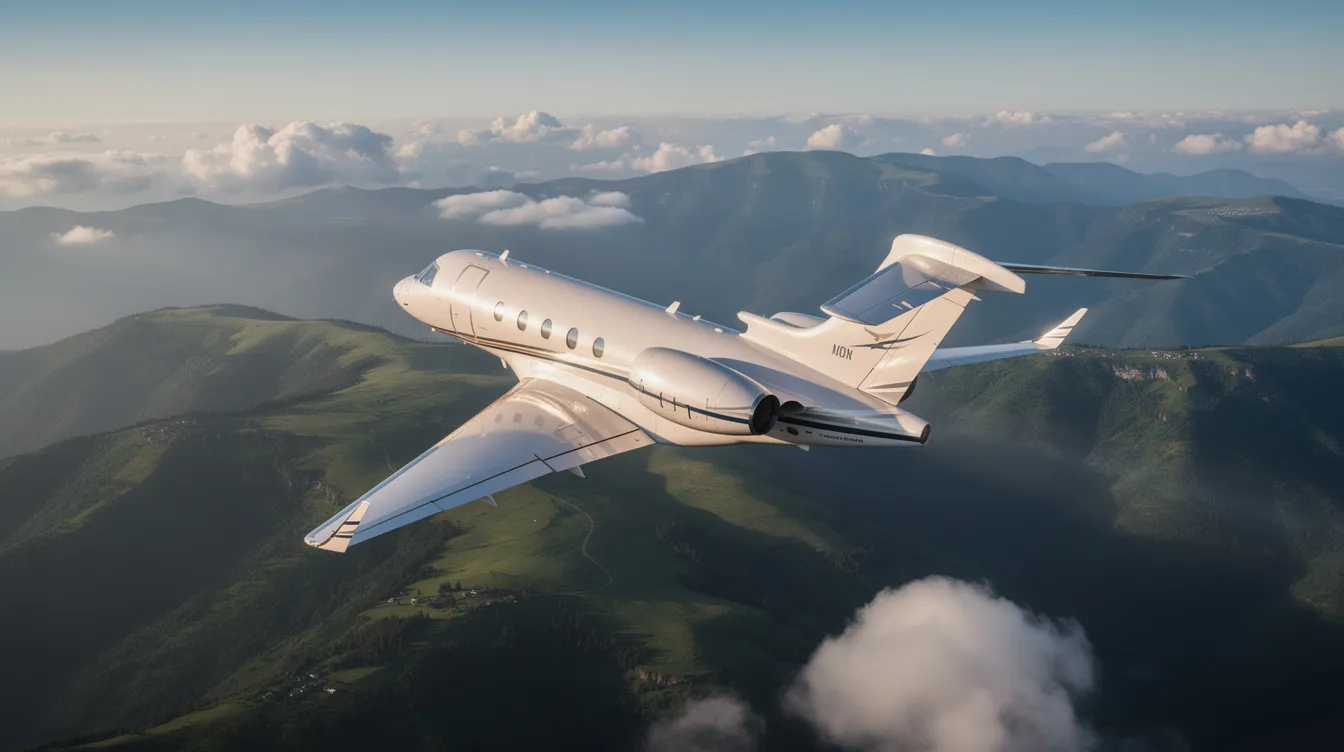
Fuel is the single largest variable expense in private aviation, and understanding how much fuel a private jet uses can reshape how you plan, budget, and choose aircraft. Whether you fly regionally on a light jet or cross oceans aboard an ultra-long-range cabin, this guide breaks down the real numbers behind private jet fuel consumption, cost calculations, and the factors that drive efficiency.
Immediate Answer: How Much Fuel Does a Private Jet Use Per Hour?
Private jets consume between 70 and over 550 gallons of fuel per hour, depending on aircraft size and mission profile. Private jet fuel consumption is typically measured in gallons per hour, and the range spans dramatically across categories. Very light and light jets burn approximately 80–220 gallons per hour. Midsize and super-midsize jets fall in the 220–350 GPH range. Heavy and ultra-long-range jets consume 340–500+ GPH, with the largest VIP airliners consuming approximately 603 to 758 gallons per hour.
To put specific aircraft to the numbers: an Embraer Phenom 300 averages around 180–185 GPH in cruise, a Hawker 800XP burns roughly 250–300 GPH, and a Bombardier Global 7500 commands approximately 505 GPH across a full mission profile including taxi and climb.
What does that mean in dollars? At current fuel prices for Jet A-averaging $8.60 per gallon at full-service FBOs in the U.S. as of late 2026-a light jet at 180 GPH costs roughly $1,550 per hour in fuel alone. An ultra-long-range jet at 500 GPH runs approximately $4,300 per hour. Compared to commercial flights, a private jet uses more fuel per passenger because fewer seats absorb the burn, but private aviation delivers hours of time saved door-to-door, direct routing to 5,000+ airports, and the privacy and flexibility that commercial carriers simply cannot match.
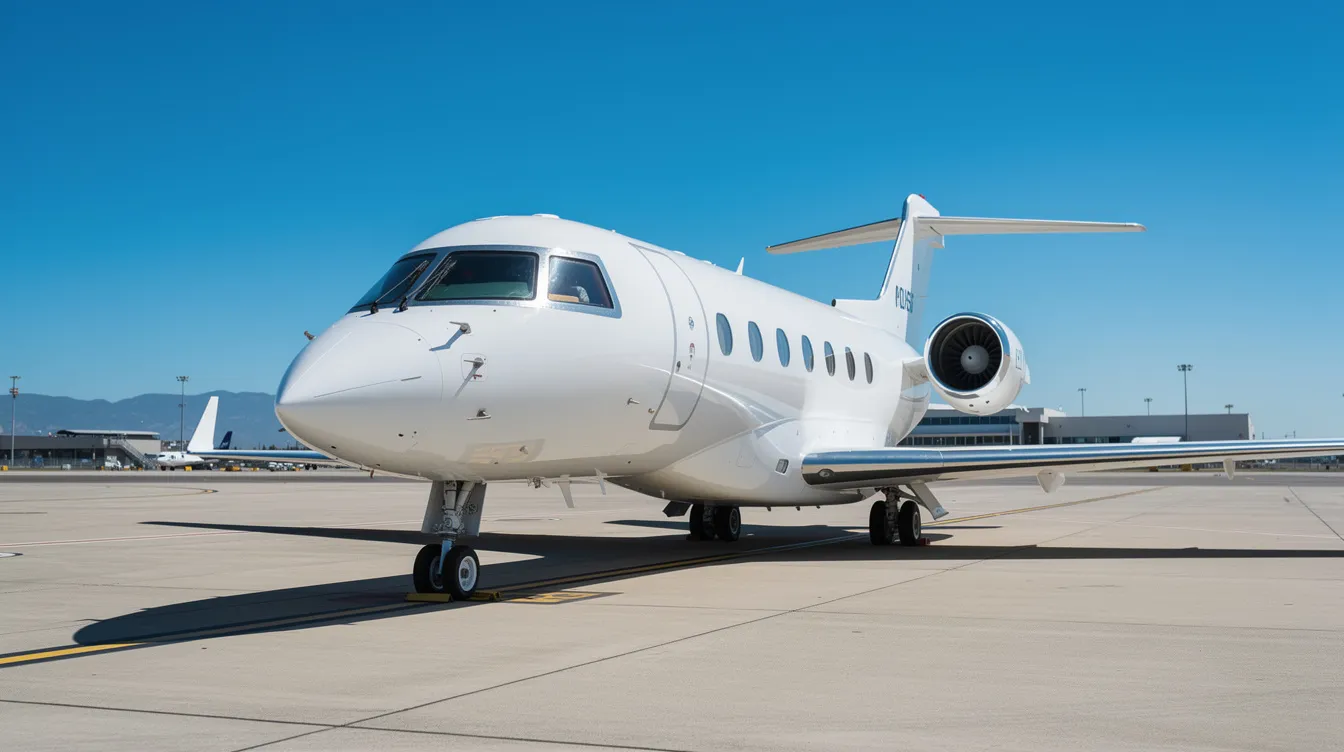
Why Fuel Usage Matters for Private Jet Travellers
Fuel represents 40–55% of the direct operating cost per hour on most business jets, making it the highest variable cost in any private flight. It is also the primary driver of the environmental impact associated with private aviation. Understanding fuel burn is not optional-it is a strategic factor that shapes trip pricing, aircraft selection, and sustainability outcomes.
On long sectors like New York–London or Los Angeles–Honolulu, fuel costs can climb into the tens of thousands of dollars for a single leg. Knowing average fuel burn rates by class helps you decide whether a light jet, midsize jet, or heavy jet is the right match for a given mission-balancing cost against comfort, range, and speed.
The difference between ownership and a Jet Card program is significant here. Owners carry fuel as a separate line item, fully exposed to price swings and supply logistics. Understanding jet card cost is key: BlackJet Jet Card members see a single, predictable all-in hourly rate-no surprise fuel surcharges, no separate invoices for gallons pumped. And because BlackJet's flights are carbon neutral, your private jet fuel emissions are offset automatically at no additional cost.
Private Jet Fuel Usage Fundamentals
A private jet's overall fuel usage depends on trip length and conditions, but several key factors govern burn at a fundamental level: aircraft type and category, aircraft weight, flight distance, cruise speed, and weather. These variables interact continuously throughout every phase of flight.
Most private jets operate on Jet A or Jet A-1 fuels-both kerosene-based. Jet A, the standard in the U.S., has a freezing point of −40°C. Jet A-1, common internationally, has a lower freezing point of −47°C, which matters on long over-water or polar routes. Jet B is used in extremely cold environments like Alaska, where conventional kerosene risks gelling at extreme temperatures.
When flight planners calculate how much fuel a mission requires, they work with several categories: trip fuel covers the planned route, reserve fuel accounts for unforeseen delays, alternate fuel provides for diversion to a backup airport, and contingency margins cover deviations. These categories together determine the total fuel load before departure.
Fuel consumption figures quoted as gallons per hour typically reflect an average across all flight phases-taxi, takeoff, climb, cruise, descent, and landing. Cruise burns about 79% to 85% of total trip fuel, with the remainder consumed during the more fuel-intensive ground and climb segments. BlackJet's planning tools handle this complexity behind the scenes, so members receive an optimized aircraft recommendation and an all-inclusive price without needing to calculate reserves or burn rates, all within its broader premium private jet card programs.
Private Jet Types and Typical Fuel Capacity
Fuel capacity is the starting point for understanding nonstop range, aircraft weight trade-offs, and potential private jet fuel cost per leg. Larger tanks mean greater range but also heavier takeoff weights, which directly affect climb performance and burn.
Typical fuel capacity ranges by class:
Very light/light jets: ~300–800 gallons (approximately 2,000–5,400 lbs)
Midsize / super-midsize jets: ~1,000–2,500 gallons
Heavy / ultra-long-range jets: ~3,000–6,000+ gallons
Jet fuel weighs approximately 6.7–6.8 pounds per gallon, so every 1,000 gallons adds nearly 6,800 lbs to gross weight-a critical consideration for takeoff, climb, and short-runway operations.
Concrete examples: a Cessna Citation CJ3+ carries roughly 440 gallons. A Bombardier Challenger 350 holds approximately 1,500–2,000 gallons. A Gulfstream G650ER or Global 7500 can carry upwards of 7,000 gallons, enabling 7,000+ nautical miles of nonstop range.
BlackJet factors fuel capacity, route length, and payload when proposing aircraft. A New York–Aspen trip (~1,500 NM) pairs well with a midsize cabin. London–Dubai (~3,400 NM) requires a heavy or ultra-long-range option. Paris–Maldives (~5,500 NM) demands both maximum fuel capacity and careful weight planning, with overall costs fitting into a broader private jet price list that reflects aircraft category and mission profile.
Average Fuel Consumption Rates by Jet Class
Fuel burn depends on aircraft size and category. Here are the representative ranges for modern aircraft (roughly 2010–2026 production), reflecting improved fuel-efficient engines and updated aerodynamic designs:
Very light jets: ~80–150 GPH
Light jets: ~120–220 GPH
Midsize jets: ~220–300 GPH
Super-midsize jets: ~260–340 GPH
Heavy / ultra-long-range jets: ~340–500+ GPH
What these numbers mean for your trip:
Light jets offer the best fuel economy for routes under three hours, where lower hourly fuel burn translates directly into lower fuel costs.
Heavy jets, while consuming more fuel per hour, become more fuel-efficient per seat when cabins are near full on long-haul flights carrying 10–16 passengers, which is often the case for travelers considering a 50-hour Jet Card cost to support frequent long-range missions.
On medium-haul flights of 3–5 hours, midsize jets balance burn rate, cabin comfort, and range.
These figures reflect modern aircraft with fuel-efficient engines and improved aerodynamic efficiency. BlackJet's 25+ Hour Jet Card members can switch between classes trip-by-trip, selecting a light jet for a 90-minute hop and stepping up to a heavy jet for an intercontinental leg-optimizing both cost and fuel efficiency without being locked into a single aircraft type.
Light and Very Light Jets: Fuel-Efficient Workhorses
Light jets and very light jets are the most fuel-efficient aircraft in private aviation, making them the practical choice for regional business hops and short leisure flights, especially for travelers focused on the cheapest private aircraft options. Their lower fuel burn per hour keeps operating costs manageable, even as fuel prices climb.
Very light jets consume approximately 77 to 134 gallons per hour, while light jets consume approximately 120–260 gallons per hour depending on model and load. Here are specific examples with approximate cruise burn:
HondaJet Elite: ~115–125 GPH
Embraer Phenom 100: ~80–90 GPH in steady cruise (second hour onward)
Cessna Citation CJ3+: ~130–140 GPH
Embraer Phenom 300: ~180–185 GPH
These aircraft shine on 2–3 hour flights carrying 4–7 passengers-routes like Los Angeles–Las Vegas, New York–Boston, or Geneva–London. They save fuel compared to larger categories while still delivering significant time advantages over commercial alternatives, and often feature prominently in discussions of the cheapest private jet options for cost-conscious travelers.
One caveat: on short flights, jets burn more fuel relative to distance traveled due to the fuel-intensive climb and takeoff phases, even when hourly consumption is low. A 45-minute hop may have poor per-mile fuel economy because the aircraft spends a large proportion of the flight below optimal cruise altitude. As flight distance increases and cruise dominates, per-mile efficiency improves.
BlackJet's recommendation engine suggests light jets for time-sensitive short routes where fuel economy and speed both matter, helping members avoid paying for heavy-jet capability they don't need.
Midsize and Super-Midsize Jets: Range, Speed, and Fuel Burn
Midsize and super-midsize jets occupy the sweet spot between light-jet fuel efficiency and heavy-jet comfort. They offer stand-up cabins, meaningful range, and fuel consumption that remains manageable on routes of 3–5 hours.
Midsize jets typically burn around 220–350 gallons per hour, while super-midsize jets consume approximately 256 to 386 gallons per hour, with slightly higher rates during takeoff and initial climb. Specific models:
Hawker 800XP: ~250–300 GPH
Gulfstream G150: ~230–260 GPH
Citation Latitude: ~190–210 GPH
Bombardier Challenger 350: ~290–300 GPH
These types of private jets suit missions like New York–Miami, Chicago–San Francisco, or Paris–Istanbul, typically carrying 7–10 passengers in a full-size cabin with ample baggage.
A concrete fuel cost calculation: a three-hour Challenger 350 leg at roughly 295 GPH burns approximately 885 gallons. At a contract fuel rate of $6.50 per gallon, the jet fuel cost comes to about $5,750. At FBO retail pricing closer to $8.50 per gallon, that figure rises to approximately $7,500. The difference underscores why fuel price management matters-and why BlackJet's predictable Jet Card pricing absorbs this volatility for members.
Consider a 25-hour Jet Card client who regularly flies New York–Dallas. They can step up to a super-midsize cabin when traveling with a larger team, then drop back to a light jet for a solo shuttle-without the burden of owning either aircraft.
Heavy and Ultra-Long-Range Jets: High Fuel Use, High Capability
Heavy and ultra-long-range jets are the intercontinental workhorses of private aviation, engineered for nonstop flights spanning 5,000–7,700 nautical miles with cabins that function as airborne offices and sleeping suites. Their fuel burn is substantial, but their capability is unmatched.
Large cabin jets consume approximately 284 to 540 gallons per hour. Ultra-long-range jets consume approximately 438 to 528 gallons per hour under typical mission conditions, and ultra-long-range jets burn approximately 330–540 gallons per hour across the full performance envelope. Heavy jets use roughly 340–500 gallons of fuel per hour during cruise. Specific examples:
Dassault Falcon 7X: ~300–350 GPH
Gulfstream G650ER: ~380–430 GPH
Bombardier Global 7500: ~505 GPH (full mission average)
Common routes include New York–London, London–Singapore, and Los Angeles–Tokyo, legs of 8–13+ hours that can consume 4,000–8,000+ gallons of jet fuel. On a London–Singapore sector (~6,700 NM), an ultra-long-range jet burning 500 GPH over approximately 13 hours would consume roughly 6,500 gallons, with fuel costs at international prices ($9–$12 per gallon) reaching $60,000–$80,000 for a single leg.
When cabins are near full capacity with 10–16 passengers, the fuel burned per seat can rival or even beat commercial business class on similar routes-because the fixed burn is distributed across more travelers, particularly on aircraft evaluated as the best private jets for 15 passengers. This is where fuel burnt per passenger per distance becomes a better measure than per hour alone.
BlackJet recommends heavy jets for global itineraries where nonstop range, onboard workspace, and rest justify the higher fuel cost-ensuring clients aren't overpaying by flying a large cabin half-empty on a route a midsize jet could handle.
Key Factors That Influence How Much Fuel a Private Jet Uses
Fuel burn is not a fixed number stamped on an aircraft spec sheet. It shifts with every flight based on several key factors:
Aircraft weight and payload
Flight distance and profile (proportion of climb vs. cruise)
Weather, winds, and temperature
Aerodynamic efficiency and maintenance condition
Operational choices made by pilots and dispatchers
Each of these variables can swing fuel consumption by 10–30% in either direction. BlackJet's dispatch team and technology continuously optimize these factors to balance schedule, fuel cost, and safety for every member flight.
Aircraft Weight, Payload, and Fuel Economy
Heavier aircraft require more fuel during takeoff and climb, and every extra 100 pounds of weight increases fuel burn by approximately 1–2%. This relationship makes weight management a practical lever for controlling fuel costs.
Weight components on any flight include empty aircraft weight, fuel load, passengers, baggage, catering, and optional equipment. On a light jet carrying five passengers with heavy golf bags and full catering, the additional weight may add 5–8% to fuel burn compared to a lighter load, and on long legs, it can reduce available range by requiring more fuel to carry more fuel-a compounding effect.
Carrying extra fuel "just in case" also adds weight and can paradoxically increase total fuel used on a trip, because the aircraft must burn more fuel to carry that additional fuel load throughout climb and cruise. Smart flight planning calculates reserves precisely rather than over-tanking.
For clients, practical weight management is straightforward: pack what you need, consolidate baggage where practical, and trust your operator to optimize catering and equipment. These aren't restrictive measures-they're the habits that experienced private travelers adopt to keep fuel economy sharp, whether they fly via bespoke membership programs or established providers with structured offerings like NetJets jet card cost programs.
Flight Distance, Profile, and Per-Mile Fuel Efficiency
Short flights often consume more fuel per mile than long flights because a disproportionate share of the trip is spent in the fuel-hungry climb phase. The climb phase of flight significantly increases fuel burn, and on a 45-minute hop, climb and descent may account for more than half the distance traveled. Fuel consumption does not scale linearly with distance for aircraft; doubling the route distance does not double the fuel required.
Longer flights allow aircraft to reach optimal cruise altitude and remain there, where per-mile fuel efficiency is at its best. Step climbs-ascending to higher altitudes as the aircraft's weight decreases through fuel consumption-further improve efficiency during extended cruise segments.
Consider two midsize jet flights: New York–Miami (~1,100 NM, approximately 2.5 hours) versus private jet charters from Karachi to regional hubs with similar stage lengths, or New York–Los Angeles (~2,400 NM, approximately 5 hours). The LA leg consumes more total fuel but achieves significantly better per-mile efficiency because the aircraft spends a greater proportion of time at optimal cruise altitude with diminishing weight.
BlackJet sometimes recommends a tech-stop routing on extreme-range missions when reducing fuel load and weight at departure improves overall comfort and cost compared to tanking to maximum capacity.
Weather, Winds, Temperature, and Their Fuel Impact
Strong headwinds can increase fuel consumption significantly by extending time en route, while tailwinds decrease fuel required on the same route. On transatlantic sectors, seasonal jet stream patterns can shift fuel burn by 15–25%, making westbound legs (against the jet stream) substantially more expensive than eastbound returns.
Colder air at cruise altitude generally improves engine efficiency, but operating anti-ice systems and deviating around storms or icing conditions adds to fuel burn. Route changes around convective weather or congested airspace add track miles and push consumption higher.
BlackJet's planning leverages real-time wind and weather data to select routes and altitudes that minimize unnecessary fuel use while preserving safety and schedule. On days with severe headwinds, dispatch may recommend a lower altitude or alternate routing to save fuel rather than fighting the wind at a standard flight level.
Aerodynamic Efficiency, Maintenance, and Fuel Economy
Aerodynamic efficiency is affected by aircraft design and maintenance-it determines how much thrust (and therefore fuel) is required to maintain a given cruise speed. Smooth airflow, low drag, and high lift-to-drag ratios are the engineering targets.
Design features that improve efficiency include:
Winglets and blended winglets, which reduce drag and improve lift at wingtips
Clean, composite wing surfaces that minimize parasitic drag
Lighter materials in fuselage and structural components
Aircraft design features like winglets reduce drag and improve lift, which is why modern business jets from roughly 2010–2025 are typically 20–30% more fuel-efficient than many legacy business jets from earlier decades. Well-maintained aircraft with clean exteriors, properly aligned gear doors, and healthy engines burn noticeably less fuel than poorly maintained ones.
BlackJet prioritizes newer, rigorously maintained, safety-certified aircraft in its network to ensure optimal private jet fuel efficiency and reliability on every mission.
Operational Choices: Cruise Speed, Altitude, Taxi, and Ground Time
Pilots and dispatchers have meaningful influence over fuel use through operational decisions. Flying at higher altitudes generally improves fuel efficiency due to reduced drag in thinner air-most business jets perform best between FL430 and FL510.
Cruise speed presents a direct trade-off: maximum speed (high Mach) can raise fuel consumption per mile by 15–25% versus long-range cruise settings. Cruising at optimal speeds can save up to 20% fuel consumption compared to pushing maximum Mach on every leg. For a client who values saving an hour on a five-hour flight, the premium may be worthwhile. For cost-conscious travelers, economy cruise settings save fuel and money.
Ground procedures also matter. Single-engine taxi, reduced auxiliary power unit (APU) usage, and minimizing idle time before departure each trim fuel burn marginally-but those margins compound across dozens of flights per year.
BlackJet works exclusively with operators whose crews are trained in fuel-efficient procedures that respect both schedule and passenger comfort.
Fuel Cost Calculations and Real-World Trip Examples
Total fuel usage can be calculated by multiplying fuel burn rate by flight time-a straightforward formula that, combined with current fuel prices, produces the fuel cost for any leg. Here are realistic fuel cost calculations using 2025–2026 Jet A pricing:
Aircraft Class | Burn Rate (GPH) | Fuel Price | Cost Per Hour |
|---|
Light jet | 150 | $6.50/gal | ~$975 |
Midsize jet | 260 | $6.50/gal | ~$1,690 |
Heavy jet | 450 | $7.00/gal | ~$3,150 |
City-pair examples with approximate fuel costs:
Los Angeles → San Francisco (light jet, ~1.5 hours): ~270 gallons, fuel cost ~$2,300 at $8.50/gal
New York → Miami (midsize jet, ~2.5 hours): ~650 gallons, fuel cost ~$5,500 at $8.50/gal
London → Dubai (heavy jet, ~6.5 hours): ~3,200 gallons, fuel cost ~$27,000–$38,000 at international rates of $9–$12/gal
BlackJet's Jet Card and charter quotes are all-inclusive-clients see a single, transparent trip price rather than a base rate plus separate fuel surcharges. For corporate travel departments, this predictable hourly pricing simplifies budgeting dramatically compared to the unpredictable fuel line items that come with jet ownership.
Private Jets vs Commercial Flights: Fuel Use and Environmental Impact
Private jets typically burn more fuel per passenger than commercial flights because fewer seats share the total fuel burn. An airliner might carry 150–300 passengers, while a private jet often carries 4–12 on similar routes. On a per-passenger basis, private jets are 5 to 14 times more carbon-intensive per passenger-kilometer than commercial flights, depending on load factors and aircraft type.
Each gallon of Jet A burned emits roughly 9–10 kg of CO₂. A midsize jet burning 840 gallons on a cross-country flight generates approximately 7,500–8,400 kg of CO₂. On long heavy-jet legs, emissions climb into the tens of tonnes. Flying at high altitudes magnifies the warming effect of jet emissions through contrail formation and other atmospheric interactions, adding to the greenhouse gas emissions profile of private aviation and its contribution to global warming.
High-load corporate shuttle missions and shared charters improve per-passenger fuel efficiency and reduce environmental impact. When a heavy jet flies 14 passengers nonstop on an intercontinental route, the per-seat carbon profile can approach commercial business class, similar to scenarios explored when choosing the best private jet for 20 passengers.
BlackJet's commitment to carbon-neutral flights means 100% of emissions from Jet A burned on member trips are offset through verified programs. This doesn't eliminate the obligation to reduce fuel usage-it ensures that the impact of unavoidable emissions is addressed systematically.

Technological Advances Improving Fuel Efficiency in Business Aviation
Modern business jets are engineered for improved fuel efficiency without sacrificing speed or comfort. Understanding the different types of jet fuel they use also helps contextualize performance and operating costs. Several technology pillars drive these gains:
Advanced aerodynamics: High-speed transonic wings, winglets, and blended tail designs reduce cruise drag. The Global 7500's wing, for example, is specifically designed to reduce drag at high Mach cruise.
Fuel-efficient engines: Modern turbofan engines burn less fuel per unit of thrust thanks to higher bypass ratios and improved compressor technology. Engines on the Praetor 600, Gulfstream G500/G600, and Dassault Falcon 8X represent the current state of the art.
Lighter materials: Carbon-fiber composites and advanced alloys reduce structural weight, directly lowering fuel burn.
Modern avionics: Digital flight management systems enable more direct routings and precise climb/descent profiles, trimming wasted fuel.
Sustainable aviation fuel represents the most significant pathway to lower fuel costs in carbon terms. SAF can reduce lifecycle CO₂ emissions by 50–80% while using similar volumes of private jet fuel-same gallons burned, dramatically lower net emissions. Supply remains limited, but adoption is accelerating across key airports in Europe, the U.S., and the Middle East, and is increasingly factored into modern jet card pricing structures.
BlackJet actively seeks operators and airports offering SAF and integrates these options for environmentally conscious members where available.
How BlackJet Optimizes Fuel Efficiency, Cost, and Sustainability
Private jet operators can reduce overall fuel usage by selecting appropriate private jet sizes for each mission-and this principle sits at the center of BlackJet's approach. Rather than defaulting to the largest or most prestigious aircraft, BlackJet uses aircraft selection algorithms paired with human expertise to match each trip with a jet category that balances fuel cost, range, and cabin requirements.
Jet Card members can flex between light jets, midsize, and heavy jets without owning any of them. A 50-hour cardholder might fly a light jet to Aspen on Friday, a super-midsize to Dallas on Tuesday, and a heavy jet to London next month-each time in the most fuel-efficient aircraft for the mission, rather than flying a large cabin half-empty on a two-hour route.
BlackJet's safety and maintenance standards ensure that every aircraft in the network is maintained to preserve aerodynamic efficiency, engine performance, and fuel economy. Poorly maintained surfaces, misaligned components, and degraded engines all burn more fuel-standards exist to prevent that.
All BlackJet flights are carbon neutral via verified offsets, with sustainable aviation fuel or optimal routing used where available to further reduce environmental impact. And with 24/7 digital booking tools and real-time support, members can make last-minute adjustments to route, aircraft, or schedule to manage both time and fuel efficiency without friction.
FAQs: Private Jet Fuel Usage, Costs, and Efficiency
How much fuel does a private jet use per hour on average?
Average fuel consumption varies by class. Very light jets burn about 60–95 gallons per hour. Light jets use approximately 120–260 GPH. Midsize jets typically burn 220–350 GPH. Heavy jets consume 340–500 GPH during cruise, and ultra-long-range jets average 438–528 GPH depending on load and mission profile.
How does cruise speed affect fuel economy on a private jet?
Flying at maximum Mach rather than long-range cruise can increase fuel consumption per mile by 15–25%. Pilots can optimize fuel usage by selecting economy cruise speeds on legs where schedule flexibility allows, potentially saving up to 20% on fuel burn.
Are light jets always the most fuel-efficient choice?
Light jets have the lowest hourly fuel burn, but they aren't always the most efficient per passenger-mile. On long-haul flights with a full cabin of 10+ passengers, a heavy jet may actually achieve better per-seat fuel efficiency because the fixed burn is shared across more travelers. The most fuel-efficient aircraft is the one correctly sized for the mission.
What is the current cost of private jet fuel per gallon?
As of late 2026, Jet A averages approximately $8.60 per gallon at full-service U.S. FBOs, with contract fuel programs sometimes offering rates of $5.50–$6.50. International prices vary widely, with some regions exceeding $10–$12 per gallon. For the latest, consult resources on understanding private jet fuel costs or industry pricing reports. Even small piston aircraft face rising fuel prices, though they burn far less fuel by volume-a key consideration for high-utilization flyers evaluating a 100-hour Jet Card cost versus ad-hoc charter.
How does private jet fuel use compare with commercial flights on a per-passenger basis?
Private jets are typically 5–14 times more carbon-intensive per passenger-kilometer than commercial flights, primarily because fewer passengers share the fuel burn. However, factors like local air quality near major airports and time efficiency complicate simple comparisons.
Can sustainable aviation fuel reduce how much fuel a private jet uses?
SAF does not reduce the volume of fuel consumed, but it can cut lifecycle CO₂ emissions by 50–80% compared to conventional Jet A. The same gallons are burned, but the upstream production process captures carbon, resulting in dramatically lower net emissions.
How does BlackJet handle fuel surcharges and fluctuating fuel prices?
BlackJet's Jet Card programs provide all-inclusive hourly pricing. Fuel cost volatility driven by global oil markets is absorbed into BlackJet's rate structure, so members see a predictable price per trip-no separate fuel surcharges, no surprises tied to swings in the global fuel market.
Conclusion: How Much Fuel Will Your Next Private Jet Trip Use with BlackJet?
The numbers are clear: light jets burn approximately 120–220 gallons per hour, midsize jets consume 220–350 GPH, and heavy or ultra-long-range jets use 340–500+ GPH. The exact fuel burn on any given flight depends on route, payload, weather, and operational choices. Choosing the right aircraft size and flight profile can dramatically lower fuel costs, reduce fuel consumption, and minimize environmental impact.
BlackJet's Jet Card and charter solutions are designed to deliver the core advantages of private jet use-time savings, privacy, and flexibility-while optimizing fuel economy and ensuring carbon-neutral operations on every flight.
Elevate your travel-effortlessly. Explore BlackJet's Jet Card programs to discover how the right aircraft, smarter routing, and sustainable practices translate into better value and more responsible private travel. Your next flight should be as efficient as it is exceptional.


 Sign up with google
 Sign up with Apple