Flight attendant compensation is one of the most misunderstood pay structures in any profession. Whether you're considering a career at 35,000 feet or you're a frequent traveler curious about the crew serving you, this guide breaks down exactly how much a flight attendant makes hourly, what shapes those numbers, and how private jet cabin crew pay compares.
Immediate Answer: How Much Does a Flight Attendant Make Per Hour?
As of mid-2026, the average hourly wage for flight attendants in the United States is approximately $29.52 per flight hour. Typical hourly wages range from about $29 to $45 per hour, with an average falling between $32 and $37 depending on airline type and seniority.
Entry-level flight attendants at regional carriers typically earn $18–$25 per flight hour. New hires at major US carriers start between $26 and $37 per hour, with airlines like United Airlines posting first-year rates in the mid-$30s under recently ratified contracts.
At the other end of the scale, a senior flight attendant at a large legacy or international carrier can earn $67–$100+ per flight hour, particularly on international routes or premium widebody assignments.
Here's the critical nuance: hourly pay in airline contracts refers exclusively to flight time-the period from door close at departure to door open at arrival. Pre-boarding preparation, ground delays, and layovers are typically excluded from this calculation. This means the published per-hour rate overstates what a flight attendant earns relative to their total time on duty, which often surprises new candidates entering initial training.
In private aviation, cabin crew compensation follows a different model entirely. Rather than being paid strictly for flight hours, private jet crew members are often compensated via day rates or annual salaries that cover the full scope of duty-from catering setup to post-flight wrap. For experienced crew on large-cabin jets, this can yield higher effective hourly pay than many commercial airline positions.
How Flight Attendant Hourly Pay Really Works (Flight Hours vs. Duty Hours)
Flight attendants are typically paid based on flight hours rather than total hours worked. This single fact defines nearly everything about flight attendant compensation and creates the gap between advertised pay rates and actual take-home earnings.
Flight hours (also called block time) measure the period from when the aircraft door closes for departure to when it opens at arrival. This is the paid flight time that appears on a paycheck. Duty hours, by contrast, encompass the full span from report time at the airport through release time at the end of a trip-including boarding, deplaning, ground delays, and layovers. Credit hours are the hours used to calculate monthly pay, incorporating flight hours plus various contractual minimums and guarantees.
Consider a concrete example: a flight attendant works a three-day trip with an early morning report time each day, two legs per day, and overnight layovers. Total duty time might reach 30 hours across those three days, but only about 18 of those hours are paid flight hours. The remaining 12 hours-spent boarding passengers, waiting through delays, and sitting in hotel rooms between flights-generate little or no direct flight pay.
Most flight attendants fly between 70 and 95 credit hours per month, far below the 160 hours in a standard office work month. At a rate of $35 per hour, 75 credit hours produces roughly $2,625 in monthly base pay-which is why the average estimated annual salary for a first-year flight attendant is about $28,000.
In private aviation, including operators within BlackJet's network under Part 135, compensation is often structured as a fixed day rate or annual salary that covers both flying and extensive pre-flight preparation, eliminating the duty-versus-flight-hour gap entirely.
Average Hourly Flight Attendant Pay by Experience Level
Flight attendant pay varies dramatically by career stage. Here's where the numbers land in 2025–2026, drawn from contract data and industry benchmarks.
Entry-level (0–2 years): Regional carriers pay approximately $18–$25 per flight hour. At major carriers, new hires earn $26–$37 per flight hour. For example, United Airlines' 2026 contract sets the new-hire starting rate at $37.10 per flight hour, while regional operators like Endeavor Air start at around $26.23 per credit hour.
Mid-career (3–6 years): Pay rates typically climb to $35–$50 per hour as crew members advance through contractual pay steps and gain access to more international flights and premium domestic routes.
Experienced (7–10 years): Most flight attendants in this band earn $50–$70 per hour at major carriers, often paired with better schedules and higher monthly credit hours that boost overall earnings.
Senior (11+ years): Senior flight attendants can earn $80 or more per hour, with top-of-scale crew at carriers like United exceeding $100 per flight hour on international widebody fleets. Combined with lead or purser premiums, these roles can push annual salaries well into six figures.
To translate hourly pay into a flight attendant salary, multiply credit hours by the hourly rate. An attendant flying 85 credit hours per month at $40 per hour earns approximately $3,400 in base monthly pay before per diem and bonuses. For a deeper look at how much airline attendants get paid, seniority is the single largest variable.
Union contracts at large airlines typically feature 15–20 pay steps, with fixed annual increases during early career years. Critically, switching airlines usually resets seniority-a 10-year veteran at a regional airline may start near entry-level pay when joining a major carrier.

Per Diem, Boarding Time Pay, and Other Extras that Boost Hourly Earnings
The headline hourly rate is only part of total flight attendant compensation. Several additional pay components meaningfully increase effective earnings.
Per diem pay compensates crew members for meals and incidental expenses while away from their base location. Per diem is paid at $2.25 per hour at many carriers, with the broader range across airlines falling between $2.00 and $3.00 per hour. The clock starts when the flight attendant reports at the airport and stops at release time, covering boarding time, flight time, and layovers alike. On a three-day trip with 80 hours away from base, per diem adds roughly $180 in tax-advantaged income.
Boarding pay addresses one of the longest-standing complaints in the profession. Historically, flight attendants usually did not receive pay for boarding time or ground delays between flights. Since 2022, airlines such as Delta, American, and United have implemented boarding pay, generally amounting to 50% of the hourly flight rate during scheduled boarding. Many regional carriers and low-cost airlines still do not pay separately for boarding time as of 2026.
Other extras include:
Holiday pay at 150% of the base rate for six designated holidays
Lead or purser premium pay, adding $2–$6 per flight hour
Language-of-destination premiums on certain international routes
Deadhead pay at 100% for repositioning travel to or from assignments
When you layer these components together, an advertised $35 per hour role can functionally approach $45–$50 per hour across all duty hours. A mid-career attendant earning $42 per flight hour, with $2.25 diem rates across 80 away-from-base hours, plus a $3 lead premium, sees effective compensation climb well beyond the published flight attendant hourly pay figure.
Reserve vs. Lineholder: How Schedule Type Changes Hourly Flight Attendant Pay
The difference between reserve status and lineholder status shapes both practical earnings and quality of life more than most new hires anticipate.
Reserve duty means a flight attendant is on-call, available for the airline to assign flights within set windows-often 12 to 24 hours. Reserve crew receive guaranteed flight hours, typically 70–76 credit hours per month, even if they fly less. The tradeoff: long reserve days spent on standby with little actual flying, which dilutes effective pay per duty hour considerably.
Lineholder status allows flight attendants to bid for specific trip sequences based on seniority. Lineholders enjoy more predictable schedules, can target high-credit-hour or premium trips, and generally log more paid flight time per month.
Two examples illustrate the gap:
A reserve flight attendant with guaranteed hours of 76 credit hours at $32 per hour earns approximately $2,430 in base monthly pay, plus roughly 60 hours of per diem.
A lineholder flying 90 credit hours at $45 per hour earns approximately $4,050 in base monthly pay, with higher per diem totals and potential lead premiums on top.
Reserve status is heavily concentrated in the first one to three years at most airlines, gradually giving way to lineholder bidding as seniority increases and new hires join behind you.
In private aviation and BlackJet's model, cabin crew schedules are not based on reserve or lineholder lines at all. Compensation is tied to trip demand, with day rates and guaranteed minimums per rotation-eliminating the unpredictability that defines early-career commercial flying.
Hourly Flight Attendant Pay by Airline Type and Region
Where a flight attendant works-both the type of airline and the geographic base-strongly influences hourly pay.
Regional carriers typically pay the lowest pay rates, ranging from $18 to $30 per flight hour in 2026. These airlines operate shorter domestic flights with more legs per day, which means more boarding and turnaround time relative to paid block time. The result: a lot of time at the airport without the clock running on flight pay.
Major carriers like American, Delta, and United offer pay scales ranging from the high $20s for first-year crew to $80+ for top-of-scale senior crew on international routes. A representative progression at a traditional legacy carrier might move from roughly $30 per hour in year one to approximately $60 per hour by year ten. Major airlines generally offer higher pay and better benefits than regional airlines, including stronger per diem, profit-sharing, and travel perks.
International and Gulf carriers offer competitive tax-advantaged packages that often include housing allowances and transportation, making total compensation attractive even when the headline hourly rate appears comparable to U.S. carriers. These roles may involve different employment structures and base locations in the Middle East or Asia.
Geographic variance within the U.S. also matters. In high-cost cities, flight attendants may earn higher base pay due to cost-of-living adjustments and access to longer-haul, higher-credit flying. The average salary for flight attendants in Florida is approximately $30.03 per hour, while bases in cities like San Francisco and New York tend to average closer to $37 per hour. Both figures reflect flight time only and don't capture the per diem and premium differences that come with flying from international gateway hubs versus domestic routes.
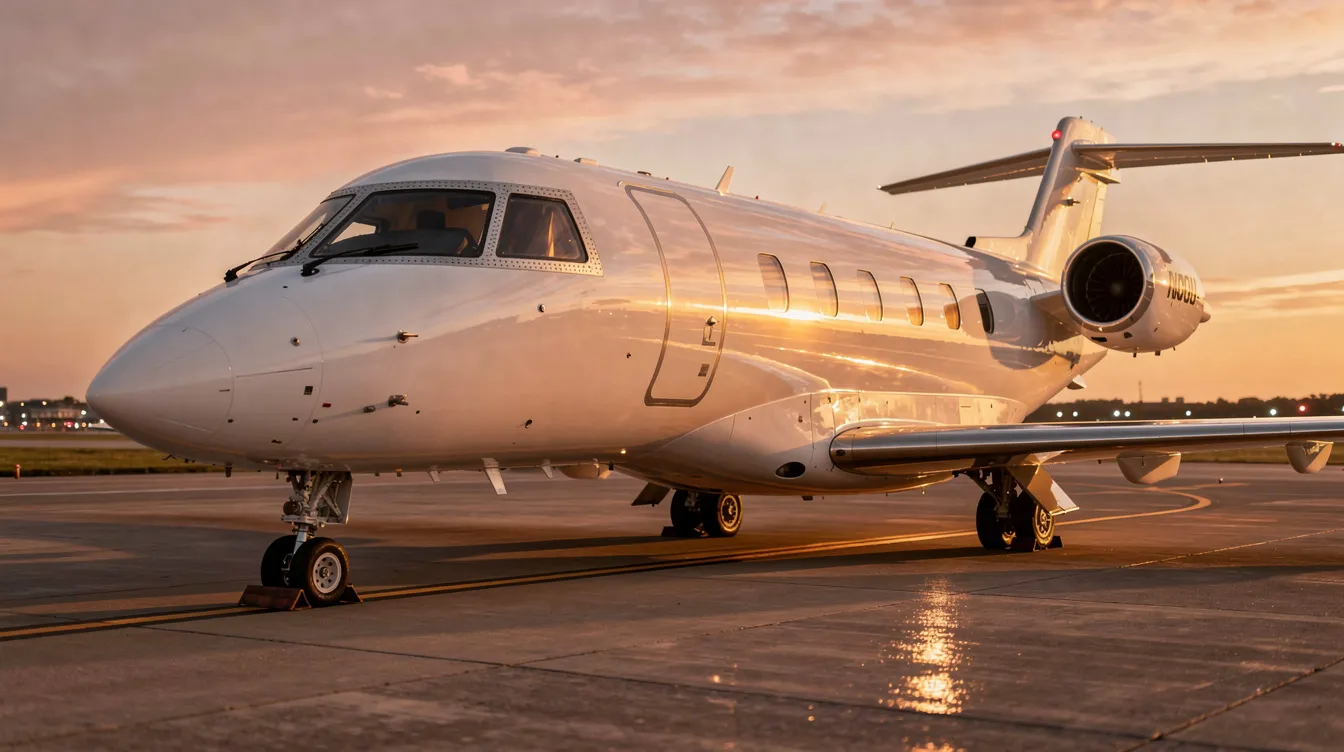
Commercial Airline Flight Attendant Pay vs. Private Jet Cabin Crew Pay
The compensation structures for commercial airline flight attendants and private jet cabin crew differ fundamentally-not just in amount, but in philosophy.
Commercial airline flight pay is heavily structured around union contracts, published hourly rates, and pay steps tied to years of service. Progression is predictable: you start at a certain amount per flight hour and advance annually. Aircraft type and route (domestic flights versus international flights) further influence pay bands. The system rewards patience and loyalty.
Private jet cabin crew pay follows a different model. Crew members are typically paid via day rates-ranging from $450 to $750 per day on light and midsize jets, and $700 to $1,200 per day on large-cabin or ultra-long-range aircraft, according to industry benchmarks from CrewBlast. Many private jet crews are compensated for the entire duty day, including pre-flight shopping, catering setup, cabin preparation, and post-flight service.
To convert: a $750 day rate covering 8 hours of flight time and 4 hours of prep equals approximately $62.50 per hour across all working time-often exceeding mid-career commercial pay.
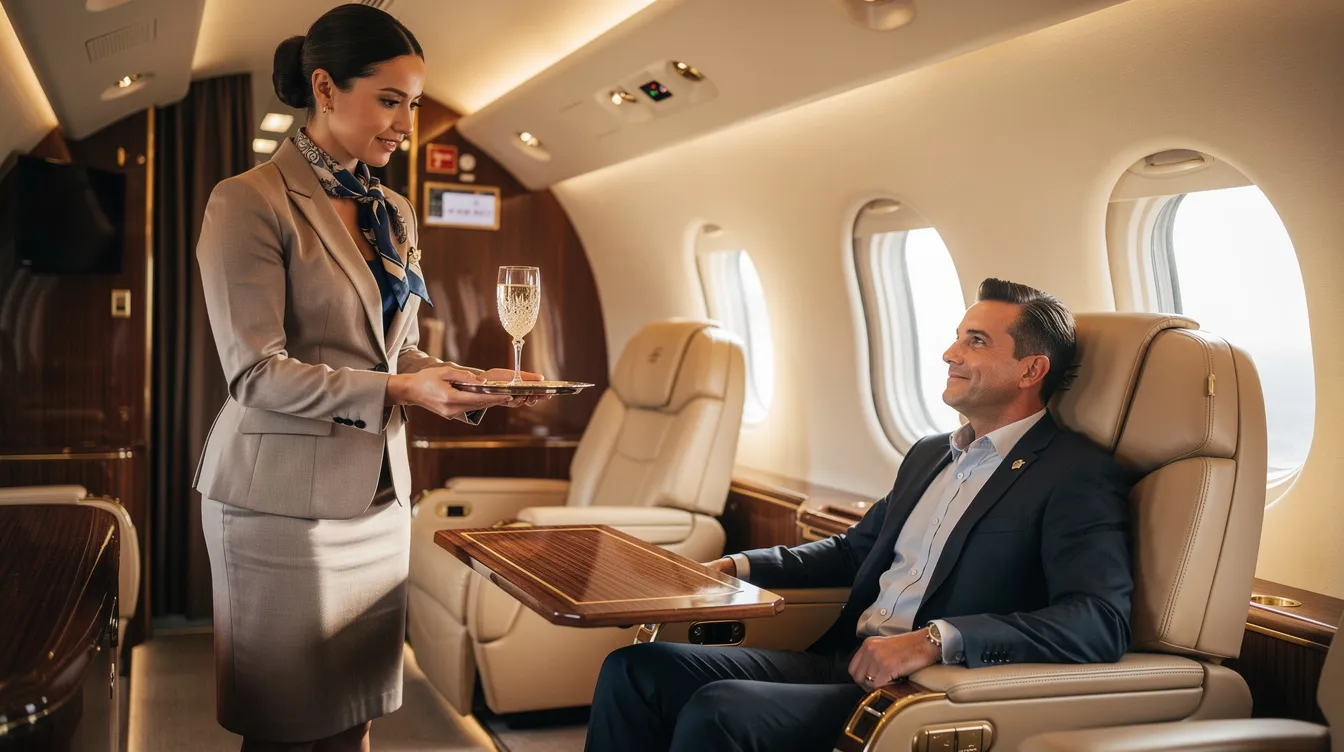
BlackJet's partner cabin crew operate in a premium environment, serving one to eight passengers on light, midsize, and large-cabin jets, alongside private jet pilots whose salaries reflect the specialized demands of high-end business aviation. These crew members deliver bespoke service, elevated safety protocols, and complete discretion for high-net-worth clients. Many come from major airline backgrounds, bringing years of commercial experience before transitioning to private plane stewardess jobs.
While commercial airline pay can reach impressive levels at top seniority, experienced private jet cabin crew on ultra-long-range aircraft can match or surpass those rates, particularly when factoring in tips, contract premiums, and the absence of unpaid boarding and delay time that plagues commercial crew.
What's Included Beyond Hourly Pay: Benefits, Hotel Accommodations, and Travel Perks
Published hourly rates don't capture the full picture. Benefits, hotel accommodations, and travel perks meaningfully impact total compensation and lifestyle for crew members.
Hotel accommodations during layovers and irregular operations are covered by the airline. Crews typically receive three- to four-star properties with airport transfers included, which eliminates a significant out-of-pocket travel cost. During delays and diversions, the company covers accommodations as well-a benefit that can add up to thousands of dollars annually in avoided hotel expenses.
Standard benefits at most airlines include health insurance, retirement contributions such as 401(k) plans with employer match, and paid time off. Profitable carriers also distribute profit-sharing or annual bonuses, which can add several thousand dollars per year for senior crew. Flight attendants earn a median annual salary of approximately $67,130 as of 2024, but total compensation including benefits often exceeds that figure.
Travel perks are among the most valued parts of the job. Standby travel benefits allow flight attendants and often family members to fly on their airline and partner carriers at deeply discounted rates or for free. For those who love to explore the world, this benefit alone can be worth thousands annually.
In private aviation, including BlackJet's ecosystem, crew accommodations during overnights are curated to match brand standards and client expectations. Compensation packages may include training allowances, recurrent safety certification coverage, and travel support between rotations-reflecting the elevated service expectations of the private jet environment.
Factors That Influence Flight Attendant Compensation and Hourly Pay
Two flight attendants hired in the same year can have dramatically different annual salaries. Here are the core variables that explain why.
Airline type: A crew member at a regional carrier earns less per hour and typically has access to fewer premium routes than someone at a legacy or international carrier. Major airlines pay more than regional carriers for flight attendants at every experience level.
Seniority and pay step: Seniority significantly influences flight attendants' earnings, with pay increasing over years of service. Each year on the pay scale brings a fixed hourly rate increase, and senior crew can bid for the most lucrative trips.
Base city: An attendant based in New York or San Francisco has access to more long-haul, high-credit international routes than one based in a smaller Midwestern city. Cost-of-living also plays a role in some contract structures.
Route mix: International flights, particularly on widebody aircraft, generate more credit hours per trip and often carry route premiums. Domestic routes tend to have shorter block times with more legs and more unpaid turnaround time.
Additional qualifications: Language skills, instructor certifications, and safety trainer positions can unlock premium pay add-ons worth $2–$10 per flight hour.
Consider this scenario: a second-year regional flight attendant in a Midwest base flying 70 hours per month at $25 per hour earns roughly $1,750 in base pay plus modest per diem. Meanwhile, a second-year major airline attendant in New York flying 90 hours per month at $35 per hour earns $3,150 in base pay with substantially higher per diem from longer trips. Same career stage, vastly different outcomes.
Union negotiations have also reshaped the landscape. Recent new contract wins at major carriers between 2023 and 2026 have pushed hourly rates higher-United's 31% base raise, American's 18–20.5% increases-and introduced boarding pay, improving career-long earning potential. Macro factors like travel demand and airline profitability further influence bonus structures and wage growth.
Sample Monthly Earnings: Turning Hourly Flight Pay into Real Paychecks
Seeing real-world scenarios makes the hourly numbers concrete. Here are four examples spanning different career stages, all calculated before taxes and benefits deductions.
Example 1 - First-year regional flight attendant: 75 credit hours × $24 per hour = $1,800 base pay. Add approximately $450 in per diem (roughly 200 hours away from base at $2.25 per hour) and one holiday worked at 150%, and total gross monthly pay reaches approximately $2,400. Annualized, this aligns with the roughly $28,000 first-year figure.
Example 2 - Fifth-year major airline flight attendant: 88 credit hours × $42 per hour = $3,696 base pay. Add $700 in per diem from longer trips and $200 in lead premiums, and gross monthly pay reaches approximately $4,600. Over a full year, this attendant earns in the mid-$50,000s before profit-sharing.
Example 3 - Senior widebody international flight attendant: 95 credit hours × $70 per hour = $6,650 base pay. Add $1,000 in per diem from extended international layovers and $400 in international and purser premiums, and gross monthly pay approaches $8,050. Annual earnings comfortably exceed $90,000 and can push past $100,000 with holiday pay and bonuses.
Example 4 - Experienced private jet cabin crew on contract: 10 flying days at $800 per day = $8,000 for the month. When measured against total flight hours (roughly 50–60 hours of block time), effective hourly pay exceeds $130 per hour. For more on what these roles look like, explore private jet stewardess salary benchmarks.
Seasonal variations matter too. Summer peaks and holiday schedules generate higher monthly totals through increased flying, while slower periods like early January can mean fewer trips-even at the same hourly rate.
FAQ: Common Questions About Flight Attendant Hourly Pay
How much does a flight attendant make per hour on average in 2026? The national average is approximately $29.52 per flight hour. However, this figure spans a wide range: entry-level regional crew earn as little as $18 per hour, while senior crew at major carriers earn $80 or more per hour. The average across most airlines with a few years of seniority falls between $32 and $37 per hour.
Why isn't all my time at the airport paid? Airline contracts historically defined paid time as door-close to door-open-the actual flight time. Boarding time, ground delays, and layovers were excluded. Recent contract changes have introduced boarding pay at many airlines, but it remains partial (typically 50% of the hourly rate) and is not yet universal.
How much does per diem add to my actual hourly pay? Per diem adds $2.00–$3.00 per hour for every hour away from base. On busy schedules with 250–400 hours away from base per month, this translates to $600–$900 in additional monthly income, all of which is largely tax-free.
Can flight attendants earn six figures? Yes. Senior international crew at major carriers routinely reach $100,000–$140,000+ annually through high credit hours, international premiums, purser pay, and profit-sharing. It typically requires 10+ years of seniority at a well-paying carrier.
Do private jet cabin crew get paid more per flight hour? Many experienced private jet crew on large-cabin aircraft earn higher effective day rates than equivalent senior airline crew, particularly when their compensation covers all duty time rather than just block hours. Contract rates on ultra-long-range jets can exceed $1,000 per day.
Are boarding time and training days paid? Boarding pay has become increasingly common at major carriers since 2022, though it's typically 50% of the regular flight rate. Training days during initial training and recurrent programs are paid, but at reduced rates-often a flat daily stipend rather than flight-hour pay.
How do hotel accommodations and travel benefits factor in? Hotels during layovers are fully covered by the airline, and standby travel benefits can save thousands annually in personal travel costs. These non-cash benefits meaningfully offset the lower take-home pay that newer crew experience and help manage the jet lag that comes with the lifestyle.
How BlackJet Fits into the Cabin Crew Pay Landscape
BlackJet operates as a premium private aviation platform whose model sits alongside-but distinct from-commercial airline cabin crew work. Understanding how much a flight attendant makes hourly in the commercial world provides useful context, but BlackJet's approach to crew compensation reflects an entirely different standard of service.
BlackJet offers a Jet Card membership model with 25-hour and 50-hour cards, giving clients flexible, prepaid access to private jets across multiple cabin types as part of its broader premium private jet card programs. Crew compensation is built into the fixed hourly jet card rate rather than billed separately-ensuring members never see line-item crew charges.
BlackJet's partner operators staff highly trained cabin crew, many of whom come from major airline backgrounds with years of commercial experience. They receive specialized service and safety training tailored to private missions, small guest counts, and bespoke itineraries-from a business leader flying New York to Miami to a family routing through Nassau on a single card.
While BlackJet does not publicly itemize cabin crew hourly pay, the membership pricing reflects competitive day rates and salaries for crew, industry-leading safety certification, recurrent training, and carbon-neutral operations covered at no extra charge to members, all structured within transparent jet card pricing models that bundle aircraft, crew, and operating costs.
For BlackJet clients, the key takeaway isn't what a flight attendant makes per hour-it's the assurance that compensation, safety, and service expectations are aligned to deliver a premier, seamless experience on every leg. Professional, well-compensated cabin crew are the foundation of that promise.
Conclusion: What Hourly Flight Attendant Pay Means for Travelers and Crew
Most flight attendants earn between $20 and $90+ per flight hour depending on airline type, seniority, and route. Annual salaries range from the high $20,000s for first-year regional crew to $120,000+ for senior international flight attendants at major carriers.
Hourly flight pay is only part of the picture. Per diem, boarding time pay, hotel accommodations, health insurance, travel benefits, and schedule type all shape true earnings and work–life balance. Private jet cabin crew compensation-including structures within BlackJet's network-focuses on day rates, comprehensive training, and high-touch service expectations, producing higher effective hourly rates on select missions.
For aspiring flight attendants, understanding these pay mechanics helps set realistic expectations about what the first years look like versus the earning power that comes with seniority. For travelers-especially those who value consistency, safety, and discretion-it underscores that professional, well-compensated crew members are central to a polished and reliable flight experience.
Explore how BlackJet's 25+ Hour Jet Card model delivers consistent, carbon-neutral private jet access with world-class cabin crews on every journey.


 Sign up with google
 Sign up with Apple