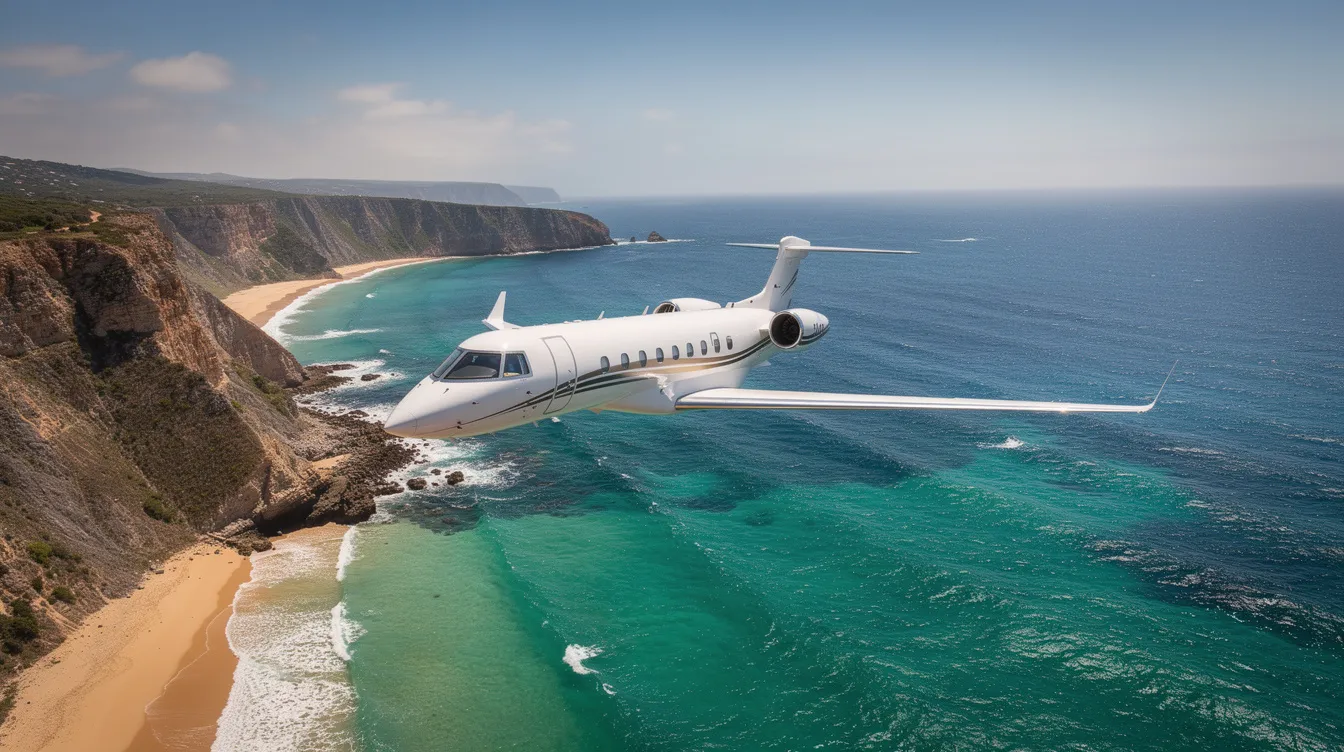
For executives and high-net-worth travelers weighing the economics of private aviation, the HondaJet Elite S sits at a fascinating intersection of performance, prestige, and price. Here's what it actually costs-and when a Jet Card makes more sense than writing a check for the aircraft itself.
Executive Snapshot: What Does a HondaJet Elite S Cost Today?
Access to a light jet like the HondaJet Elite S isn't merely a luxury-it's a strategic instrument. Compared with commercial aviation, even first-class tickets, a private jet eliminates layovers, unlocks smaller airports minutes from your final destination, and gives you scheduling control that no airline can match.
In 2025–2026, the HondaJet Elite S typically costs between $4M and $5M when new or nearly new with full options. Current market listings for pre-owned models generally sit between $3.45 million and $4.0 million, depending on hours, avionics, and maintenance enrollment. Pre-owned HondaJet Elite S models more broadly trade between $3.5 million and $4.5 million when factoring in a wider range of conditions and configurations.
But the purchase price is only the starting point. Consider the full picture:
Pathway | Capital Outlay | Annual Budget |
|---|
Own an Elite S (200 hrs/yr) | ~$3.5M–$5M+ | $500K–$1.0M+ |
BlackJet Jet Card (prepaid hours) | $0 aircraft purchase | Pay per flight hour flown |
This article breaks down current HondaJet Elite S price ranges, realistic ownership costs, how the Elite S compares to other models, and when access through BlackJet delivers a smarter return than disciplined ownership of a single airframe.
The HondaJet Elite S in the Honda Aircraft Company Family
Honda Aircraft Company, based in Greensboro, North Carolina, builds the HA-420 family-a production model twin-turbine light business jet certified by the FAA and EASA for single-pilot operation, meaning it requires a single pilot to fly. The lineage begins with the HondaJet Classic and its HondaJet APMG upgrades, progressing through:
HondaJet Elite (2018–2021): enhanced comfort and avionics over the Classic. Pre-owned HA-420 prices for earlier variants range from $2.3M to $3.2M.
HondaJet Elite S (launched 2021): higher MTOW (+200 lbs), FAA Data Comm, ACARS, and the advanced performance modification group package upgrade that represents meaningful gains in payload and runway capability.
HondaJet Elite II: the current flagship. A new HondaJet Elite II is priced above $6 million with options, offering increased range and the newest avionics suite.
The over-the-wing engine mount design reduces aerodynamic interference drag, freeing cabin volume and lowering noise. It also improves fuel efficiency and maximum cruise speed-about 422 knots-while the composite fuselage keeps weight down. The aircraft typically seats 4 to 5 passengers in an executive club layout, with a fully enclosed lavatory and dual baggage space (nose and aft compartments accommodating golf bags, rollers, or skis). These HondaJet features help explain why later HondaJet Elite aircraft retain strong resale value across the light jet segment relative to other light jets and very light jets.

HondaJet Elite S Price in 2025–2026: Market Snapshot
The average market price for HondaJet aircraft is approximately $3.7M, but the Elite S occupies the upper tier. Here's what recent listings show:
A 2022 Elite S with ~1,330 hours, enrolled in both EMC2 engine and P3 airframe maintenance programs, listed at $3,995,000.
A 2020 Elite S with over 3,000 flight hours and 2,100+ cycles is listed near $ 2,950,000, illustrating how higher flight hours lower the aircraft's value.
Well-equipped HondaJet Elite models (non-S) range from $3M to $4.8M depending on vintage and condition.
Key factors affecting the price of a pre-owned HondaJet Elite S include total airframe hours and maintenance enrollment. The presence of the latest aircraft upgrades raises resale value, while the condition of the interior and exterior affects buyer offers significantly. Being enrolled in maintenance programs like EMC2 and P3 significantly increases the resale value of a HondaJet Elite S. Asking prices for HondaJet models vary widely depending on age and condition, and the HondaJet Elite S varies in value based on market conditions and specific aircraft factors.
Only 1–3 Elite S units appear on the market at any time, which creates price compression in a narrow band. Negotiation margins between asking and transaction prices can reach low to mid–six figures depending on inspection findings and days on market. Sophisticated buyers look carefully at maintenance history, maintenance status, and long-term maintenance exposure before making offers.
Key Specifications That Influence HondaJet Elite S Value
Performance specs aren't marketing trivia-they directly drive acquisition cost, residual value, and operating costs. The HondaJet Elite S has a maximum range of 1,400 nautical miles (NBAA IFR), and its HondaJet aircraft range enables nonstops like Dallas–Miami or London–Athens.
Key Specifications:
Cruise speed: ~422 KTAS, competitive with or ahead of most aircraft in the light jet category
Max range: approximately 1,400 NM, with increased range when carrying fewer passengers and increased fuel capacity utilized
Service ceiling: FL430 (43,000 ft), providing directional assistance for smoother rides and better fuel relative to lower altitudes
Fuel burn: the HondaJet Elite S consumes about 96 gallons of fuel per hour-competitive among efficient engines in this class
Baggage space: 66 cubic feet combined (nose + aft), enough for several roller bags
Cabin: executive club configuration with enclosed lavatory, quiet enough for business work en route
Takeoff distance: ~3,639 ft at MTOW; landing distance around 2,867–3,000 ft
The package upgrade from Elite to Elite S includes improved AFCS, data connectivity, and better runway performance-making the Elite S more desirable than earlier hondajet elite aircraft to buyers evaluating pilot workload and directional assistance systems. Higher cruise speed and better fuel efficiency lower cost per mile, while short-field capability opens access to airports that larger aircraft cannot reach, cutting ground-transfer time.

Annual Budget & Operating Costs for a HondaJet Elite S
The true cost of HondaJet ownership extends well beyond the honda jet price on the listing page. Annual fixed costs for a HondaJet range from $200,000 to $900,000 depending on crew structure, hangar location, and insurance:
Fixed Costs
Hangar: $30,000–$80,000/year (regional vs. major metro)
Insurance: mid-five figures annually, scaled by hull value and pilot experience
Crew: even though the Elite S is single-pilot certified, two-pilot operations are common-salaries plus training run $120,000–$250,000+
Subscriptions: navigation databases, EFB apps, charts
Variable Costs
Fuel consumption: about 96 gallons per hour; at $6–$9/gallon, that's $575–$865 in fuel alone per hour
Operating costs: range from $1,200 to $1,600 per flight hour once you include maintenance reserves, engine reserves, landing fees, and handling charges
The average fuel burn makes it one of the more efficient platforms in the segment, but it still consumes more fuel on longer legs.
Budget Scenarios
Concrete annual budget scenarios for a fixed annual budget:
Utilization | Total Fixed Costs + Variable Expenses | Notes |
|---|
150–200 hrs/yr | $500K–$800K | Typical executive usage |
300–400 hrs/yr | $850K–$1.1M+ | High utilization with full crew |
Total annual costs for owning a HondaJet can reach $1.2 million at the highest utilization bands. Monthly lease rates for a HondaJet Elite S are commonly around $32,500 to $41,000, adding further to the annual commitment if financed. Understanding these variable costs and total fixed costs is essential for any realistic ownership budget.
Ownership vs. Access: When Does Buying a HondaJet Elite S Make Sense?
When Ownership Makes Sense
Hondajet pricing makes the Elite S attractive on paper-but utilization determines whether ownership is cost-effective, especially when you compare it with the best features of a 5 million jet.
Under ~150 hours/year: ownership is rarely economical. Fixed costs and depreciation dominate. Depreciation alone can lead to a 50% value loss in the first 5 years. A Jet Card or charter arrangement eliminates this risk entirely for travelers who understand the best jet cards for frequent flyers.
150–250 hours/year: the gray zone. Tax planning and corporate-image needs may justify it, but Jet Cards with prepaid hours or structured 100-hour jet card cost programs often remain competitive.
300+ hours/year: ownership becomes rational if mission profiles consistently fit the aircraft and a professional operation is in place, but detailed jet card pricing structures are still worth comparing against full ownership.
Ownership Scenarios
Jet Card Alternatives
Jet Card membership eliminates fixed costs, depreciation risk, and crew management, making it the more cost-effective choice for most travelers at 50–100 hours per year.
Flexible access to different aircraft types and sizes as needs change.
No capital tied up and no low hours anxiety about resale.
How BlackJet Delivers HondaJet-Class Travel Without the Ownership Burden
For sophisticated buyers who want HondaJet aircraft performance without the ownership costs, BlackJet's Jet Card programs and dedicated BlackJet 25+ Hour Jet Card offer a compelling path.
Flexible Access
Safety
Transparent Pricing
Sustainability
Carbon-neutral flights as standard, with sustainable aviation fuel prioritized on select routes.
No need to arrange offsets yourself, and many affordable private planes and VLJs now emphasize similar environmental performance.
Technology
BlackJet ensures every journey matches or exceeds the honda jet elite experience-with zero capital tied up and no low-hours anxiety about resale, while still aligning with the cheapest private aircraft and budget-friendly access models.
FAQs About HondaJet Elite S Price, Costs, and Alternatives
What is the typical purchase price of a HondaJet Elite S in 2025–2026? Current market listings sit between $3.45 million and $4.0 million for well-maintained, low-to-moderate-hour examples. The average price depends on avionics, interior condition, and program enrollment.
How do HondaJet Elite S operating costs compare to other light jets? Operating costs run $1,200–$1,600 per flight hour, comparable to peers in the light jet segment and many of the most affordable private jet options. The OTWEM design delivers better fuel efficiency and lower aerodynamic interference drag than conventional mounts.
What annual budget should I expect flying 200 hours per year? Plan for $550K–$800K annually covering hangar, insurance, crew, fuel, and maintenance reserves.
How does the Elite S compare to the Elite II? The Elite II commands a higher base price (above $6M new) and offers slightly longer maximum range and newer systems, putting both models among top private jets for sale under 10 million. The Elite S remains the stronger value on the pre-owned market.
Is it smarter to own or use a Jet Card at 50–100 hours per year? At that utilization, a Jet Card eliminates fixed costs, depreciation risk, and crew management-making it the more cost-effective choice for most travelers when you understand full jet card pricing and benefits.
Does cabin baggage space accommodate golf bags? Yes. Combined nose and aft compartments total 66 cubic feet-sufficient for golf bags, multiple roller cases, and ski equipment for travelers who might otherwise buy a seat on a private jet instead of chartering the whole aircraft.
Conclusion: Choosing the Smart Path to HondaJet Elite S–Level Travel
The HondaJet Elite S remains a highly capable, efficient Honda aircraft in the private aviation landscape. But the numbers tell a clear story:
Acquisition: mid-$3M to ~$4M+ depending on year, hours, and maintenance programs
Annual operating costs: $500K–$1.0M+ depending on utilization, crew, and airport choices
Ownership makes sense primarily at 250+ hours/year with consistent mission profiles
For travelers flying under that threshold, BlackJet offers an elegant alternative: no capital tied up, no maintenance oversight, and flexible access across multiple aircraft categories instead of a single jet. Jet Card membership turns private aviation from a multi-million-dollar asset commitment into a predictable, scalable line item.
Explore BlackJet Jet Card membership to enjoy hondajet elite–level travel without tying up several million dollars in a single aircraft. Speak with our team about your annual travel profile to determine whether prepaid hours deliver a better return on your travel investment than full ownership.


 Sign up with google
 Sign up with Apple