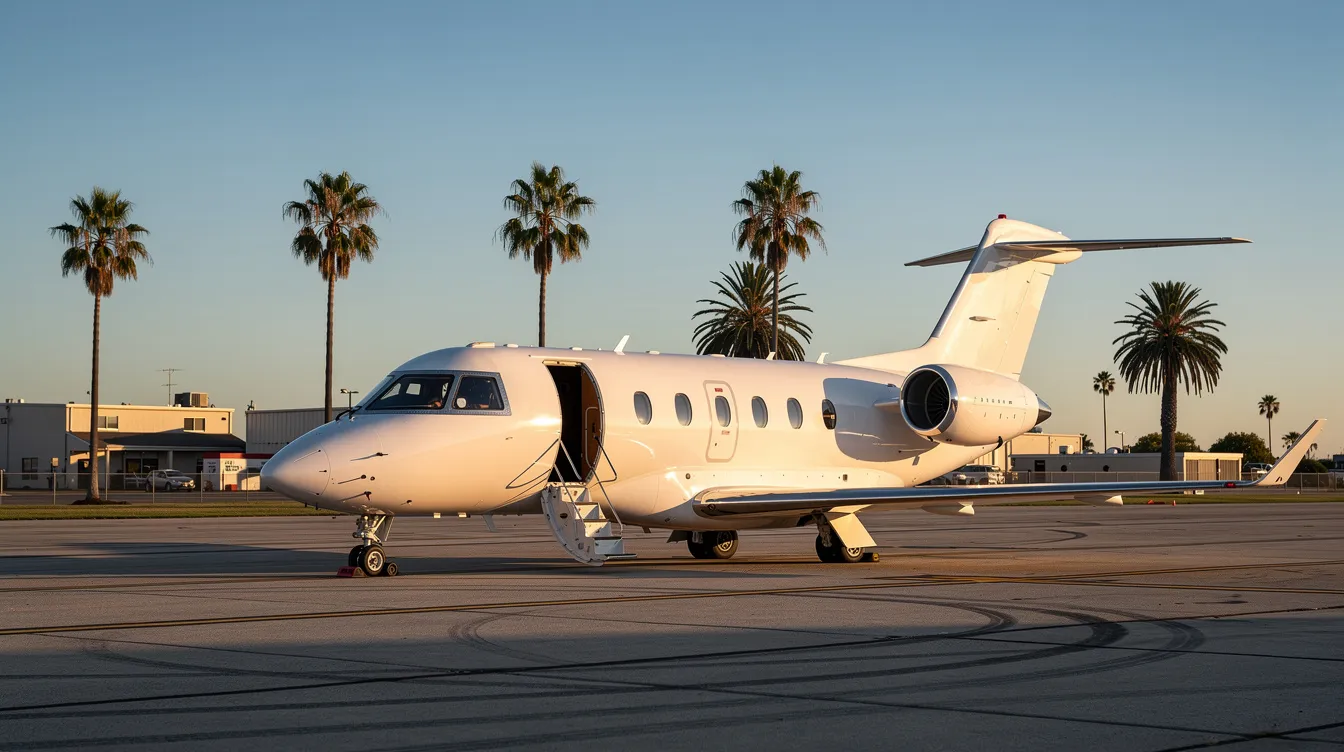
Introduction: HondaJet’s Engine Configuration, Lineup, and Impact on Private Aviation
If you’re searching for information about the “Honda single engine jet,” you’re not alone—many private jet buyers, charter clients, and aviation enthusiasts are drawn to the HondaJet’s sleek design and exceptional efficiency, leading to the common misconception that it is a single-engine jet. However, Honda does not produce single-engine jet models. Instead, every HondaJet is a twin-engine light business jet, powered by two GE Honda HF120 turbofan engines. This article will clarify the HondaJet’s engine configuration, explain why people often search for “Honda single engine jet,” and provide a comprehensive overview of the HondaJet lineup, performance, cabin experience, and its relevance for private travelers.
A “single engine jet” is typically defined as an aircraft powered by only one jet engine. In contrast, the HondaJet is a twin-engine jet, offering the safety and redundancy of two engines while delivering fuel efficiency and operating economics that rival some turboprops and even some single-engine aircraft. The confusion often arises because the HondaJet’s innovative over-the-wing engine mount (OTWEM) design creates a streamlined appearance and outstanding efficiency, making it seem like a single-engine jet at first glance.
This article is designed for private jet buyers, charter clients, and aviation enthusiasts who want to understand why the HondaJet stands out in the light jet market. We’ll cover the HondaJet’s unique engine configuration, the full lineup of HondaJet models, detailed performance and fuel efficiency data, cabin features, and why these factors matter for efficient, safe, and cost-effective private travel. Whether you’re considering a jet card, chartering, or simply want to learn more about Honda’s impact on the private aviation market, this guide will provide the clarity and insights you need.
Why Honda's Wing-Mounted Engines Matter for Private Jet Travelers
Honda Aircraft Company disrupted the light jet market when it introduced the HondaJet's over-the-wing engine mount design—a configuration so streamlined that casual observers sometimes search for it as a Honda single-engine jet. The sleek profile and exceptional fuel efficiency can give that impression, but the reality is more compelling: Honda does not produce single-engine jet models. Every HondaJet variant is a twin-engine light business jet, powered by two GE Honda HF120 turbofan engines that deliver twin-engine safety redundancy alongside operating economics that rival some turboprops.
Unlike conventional very light jets that mount engines on the fuselage or tail, the HondaJet's wing engine placement reduces aerodynamic drag by 15–20%, produces a quieter cabin, and frees interior volume for passengers and baggage space. For jet card and charter clients, this design translates directly into lower cost per hour, refined comfort, and the strategic ability to choose a smaller, more efficient aircraft without sacrificing safety.
The sections ahead cover the full HondaJet lineup—from the original HondaJet through the HondaJet Elite II and the upcoming HondaJet Echelon—along with fuel efficiency data, cabin details, advanced avionics, and how BlackJet integrates these jets into flexible private jet card programs.
The Honda Aircraft Company Vision and HondaJet Lineup
Honda Aircraft Company was incorporated in 2006 in Greensboro, North Carolina, with a mission to take Honda's engineering heritage to new heights in aviation. The company's history in aerospace development stretches back decades, but its first aircraft to reach customers—the HA-420—achieved FAA certification in December 2015, with first delivery following shortly after.
The HondaJet family has evolved steadily since:
HondaJet Classic (HA-420): The original HondaJet that proved the concept of over-the-wing engines in a production very light jet.
HondaJet APMG: An upgrade package introduced to bring earlier aircraft closer to elite specifications, improving takeoff thrust, useful load, and extended range.
HondaJet Elite (2018): Aerodynamic and avionics upgrades that refined the platform further.
Elite S (2021): Continued comfort and performance improvements.
HondaJet Elite II (late 2022): The current flagship, with increased range of 1,547 nautical miles (NBAA IFR), delivered starting May 2023.
HondaJet Echelon (announced 2023): A next-generation light jet in development, targeting up to eleven passengers and aiming to commercialize transcontinental capability by approximately 2028.
All variants are single-pilot certified, enabling operators to operate with flexible crew structures. Honda's automotive DNA—reliability, efficiency, and user-centric systems—carries over into every Honda aircraft and other affordable private planes, making them attractive to operators seeking consistent dispatch rates and low direct operating costs. Current HondaJet listings on the pre-owned market range from $2,295,000 to $3,995,000, with average pricing around $3,145,000.
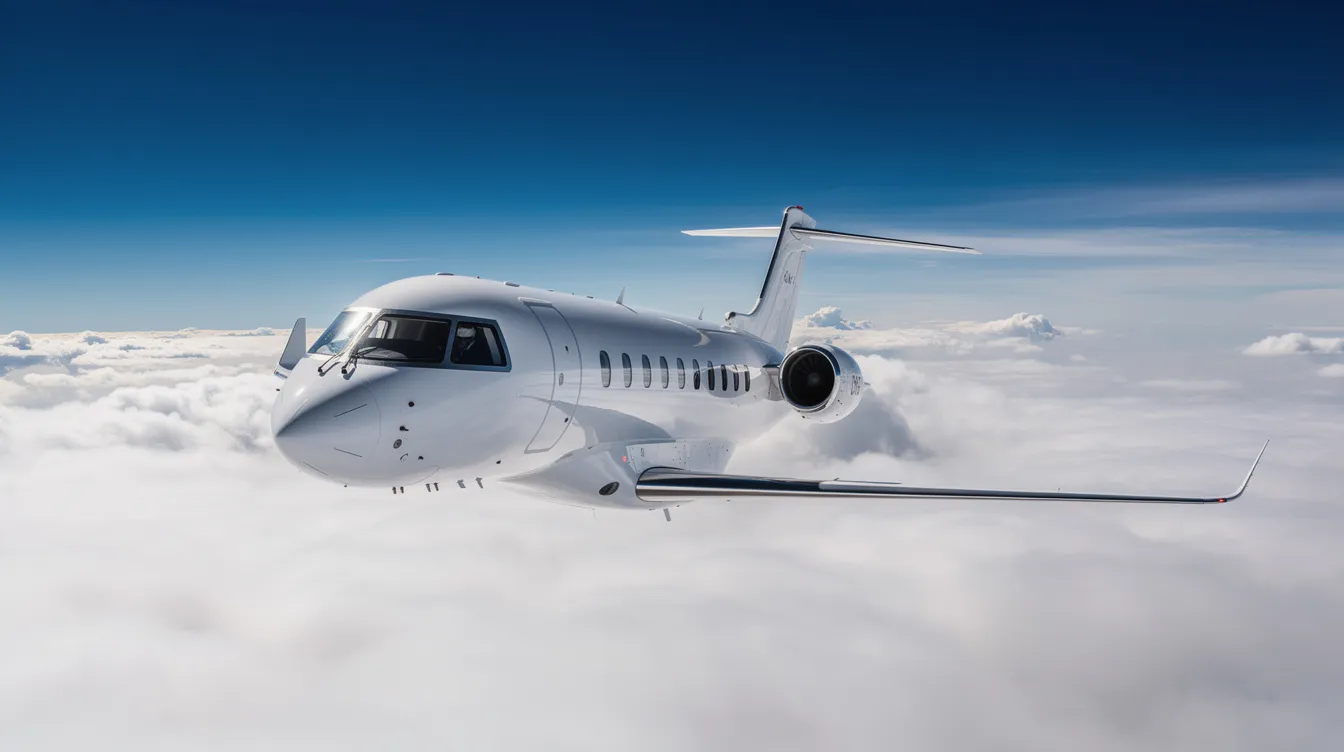
Wing-Engine Innovation: OTWEM and "Single-Engine" Efficiency
The over-the-wing engine mount concept places each engine on a pylon above the wing rather than at the rear fuselage. Honda Aircraft Company developed this configuration through decades of research, wind-tunnel test programs, and computational simulation—work led by engineer Michimasa Fujino. The result is a design that produces cleaner airflow around the tail surfaces, reduces wave drag at high subsonic speed, and allows a lighter fuselage structure.
Why do some travelers casually call the HondaJet a single-engine jet in terms of feel and efficiency? Because despite being powered by twin HF120 turbofans producing combined thrust sufficient for FL430 operations, the aircraft achieves fuel burn of approximately 96 gallons per hour in cruise—rivaling or beating several larger aircraft and even many entry-level private jets in cost per nautical mile.
The cabin and baggage benefits are equally significant. With engines physically separated from the fuselage by the wing, vibration transmission drops and the interior stays noticeably quieter. Additionally, eliminating rear-fuselage engine mounts frees space for an enclosed aft lavatory and generous baggage compartments in both nose and tail sections—a tangible upgrade for travelers who demand comfort on every leg.
Inside the Cabin: Comfort, Baggage Space, and Passenger Experience
Cabin Layout and Features
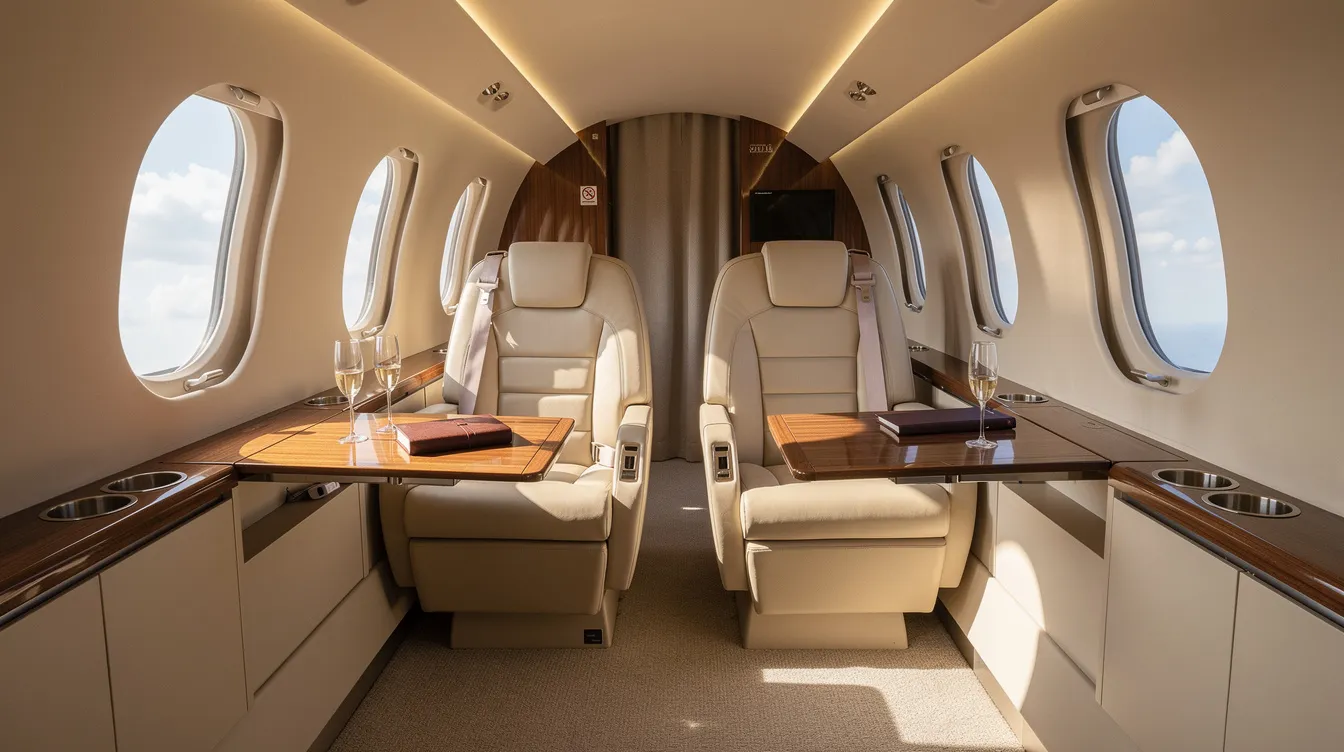
The HondaJet and HondaJet Elite II cabin is configured as a compact business lounge rather than a cramped tube. The standard layout features a four-passenger club seating arrangement with executive tables, an optional side-facing seat, and an enclosed aft lavatory with a solid door—a feature some competing very light jets still lack.
Key numbers worth noting:
Cabin volume: 324 cubic feet, spacious for its category and the largest in the very light jet class
Baggage space: approximately 62 cubic feet split between nose and aft holds
Seating capacity: accommodates up to six passengers in standard configuration, or up to seven passengers with the optional side-facing seat
Baggage Capacity
The HondaJet offers generous baggage compartments in both the nose and tail sections, allowing travelers to bring golf bags, carry-ons, and ski gear without compromise.
Passenger Experience
The Elite II cabin incorporates upgraded finishes, improved sound insulation for a quieter cabin experience, and Wi-Fi options like Gogo AVANCE L3—features that business travelers rely on for in-flight productivity. For example, a family of four flying from New York to Florida for a weekend can bring all their gear comfortably.
BlackJet curates HondaJet aircraft in its network to ensure consistent cabin standards: leather seating, solid lavatory doors, and catering options that match the premium positioning of jet card products.
Performance, Range, and Fuel Efficiency of HondaJet and Elite II
Performance Metrics
The HondaJet Elite II delivers a maximum cruise speed of 422 knots (approximately Mach 0.72), a range of 1,437 nautical miles at long-range cruise, and a maximum operating altitude of 43,000 feet—a service ceiling that places it above most commercial traffic and weather.
These figures translate into concrete missions: nonstop flights between New York and Miami, Los Angeles and Denver, or Chicago and Fort Lauderdale with reserves, covering the regional and mid-range legs most frequently booked through jet cards, especially when supported by accurate private jet flight time calculators for planning.
Operating Costs
Operating costs range from $1,200 to $1,600 per flight hour, with annual fixed costs between $550,000 and $900,000 for owners. The HondaJet's engines burn approximately 96 gallons of fuel per hour—meaningfully lower than competing jets like the Citation M2 (~120 gal/h) or Phenom 100 (~130 gal/h). This cost profile fits neatly within broader private jet price list ranges, and the fuel efficiency advantage compounds over hundreds of flight hours per year.
The HondaJet APMG upgrade package further improves takeoff performance and useful load for earlier HA-420 airframes, enabling even pre-elite HondaJets to continue serving demanding missions on shorter runways. For BlackJet, the HondaJet's lower fuel burn combined with carbon-neutral flight commitments through verified offsets allows members to minimize environmental impact without sacrificing speed or comfort. Eight HondaJet aircraft are currently listed on GlobalAir.com, with an average total time of 1,043 hours and average market time of 223 days.
Avionics, Safety, and Single-Pilot Operations
Every HondaJet variant is equipped with the Garmin G3000 avionics suite—dual touchscreen controllers, three 14-inch displays, synthetic vision, and advanced navigation systems tailored by Honda Aircraft to reduce pilot workload. HondaJet models are certified for single-pilot operations under FAA Part 23.
Key safety technology onboard the Elite II includes:
Autothrottle (certified October 2024)
Emergency Autoland, making it the first production twin-turbine very light jet with this feature.
Runway overrun awareness and stabilized approach systems.
Single-pilot certification means fewer required crew, more flexible scheduling, and lower fixed costs—advantages that operators leverage to keep hourly rates competitive, particularly when evaluating whether chartering a private jet is worth it versus other access models. However, many charter operations operating under Part 135 elect two pilots for redundancy, and BlackJet requires this on most member trips.
BlackJet only partners with operators meeting rigorous third-party safety standards and maintaining HondaJet-specific training programs, ensuring every flight upholds the safety and certification standards that discerning travelers expect.
HondaJet vs Other Light and Single-Pilot Jets for Jet Card Users
The HondaJet competes with the Cessna Citation M2, Embraer Phenom 100, Cirrus Vision Jet, and Eclipse 550 among the best single-pilot jets for budget-conscious buyers for efficient short- to mid-range private travel. Where it stands out: superior fuel efficiency per nautical mile, generous baggage capacity, and lower cabin noise from its wing-mounted engines.
The trade-offs are straightforward. The HondaJet's sweet spot is two to four passengers with luggage on legs up to roughly three hours. For larger groups or longer stages, including trips requiring the best private jet for 15 passengers, BlackJet typically recommends stepping up to midsize or larger jets.
Consider this scenario: a BlackJet member using a 25-hour jet card or evaluating a 50-hour jet card cost flies a HondaJet Elite II between Teterboro and West Palm Beach several times per winter. Each leg covers roughly 1,000 nautical miles, completed in about 2.5 hours at cruise speed, with the member benefiting from lower fuel burn, carbon-neutral operations, and consistent cabin standards at a predictable jet card cost per hour—an experience that commercial first class simply cannot replicate.
Frequently Asked Questions About the HondaJet and Single-Engine Jets
Q1: Is the HondaJet a single-engine jet?
No, the HondaJet is a twin-engine light business jet powered by two GE Honda HF120 turbofan engines. Its innovative over-the-wing engine mount design sometimes causes confusion, but Honda does not produce single-engine jet models.
Q2: What advantages does the HondaJet’s over-the-wing engine mount (OTWEM) provide?
The OTWEM design reduces aerodynamic drag by 15–20%, lowers cabin noise, and frees up interior space for passengers and baggage, enhancing comfort and efficiency compared to conventional rear-fuselage engine placements.
Q3: How many passengers can the HondaJet accommodate?
The HondaJet cabin comfortably seats up to six passengers in a standard configuration, with an optional side-facing seat increasing capacity to seven.
Q4: What is the typical range and cruise speed of the HondaJet Elite II?
The HondaJet Elite II offers a range of approximately 1,547 nautical miles and a maximum cruise speed of 422 knots, making it ideal for regional and mid-range private travel.
Q5: Does the HondaJet require a type rating for pilots?
Requirements vary by country. In some jurisdictions, a type rating may not be mandatory for the HondaJet, but comprehensive training and certification are essential for safe single-pilot operations.
Q6: How does the HondaJet compare to single-engine jets like the Cirrus Vision Jet?
While the Cirrus Vision Jet is a single-engine aircraft, the HondaJet’s twin-engine configuration provides additional safety redundancy, superior cabin space, and competitive fuel efficiency, appealing to travelers prioritizing comfort and performance.
Q7: Can I access the HondaJet through BlackJet’s jet card programs?
Yes, BlackJet includes the HondaJet and HondaJet Elite II in its flexible jet card offerings, providing prepaid access to these efficient light jets with carbon-neutral flight options.
How BlackJet Integrates HondaJet into Flexible Jet Card Access
BlackJet's model is built on prepaid jet card hours—25-hour or 50-hour blocks—that unlock on-demand access to vetted aircraft across North America and key international destinations, aligning with broader jet card cost guides in the market. The HondaJet and HondaJet Elite II sit within BlackJet's light jet tier, ideal for two to five passengers seeking fuel-efficient regional travel with transparent jet card pricing structures.
Members can use BlackJet's digital booking tools to view HondaJet availability, real-time pricing, and estimated flight times, choosing Honda aircraft specifically when smaller airport access or efficiency is the priority, and comparing these options with standard private jet rental costs. Every HondaJet flight booked through BlackJet is carbon neutral by default through high-quality offsets, complementing the aircraft's inherent efficiency.
For travelers in July, August, or September demand periods—or year-round—the HondaJet represents a strategic choice that balances price, performance, and sustainability, even when compared with premium unlimited private jet flight memberships. The country's growing network of smaller airports, many with runways under 4,000 feet, further expands the HondaJet's reach and makes higher-commitment options like a 1100-hourjet card more practical for frequent travelers on these routes.
Explore BlackJet jet card programs—including comparisons of the best jet cards for frequent flyers, analyses such as NetJets jet card cost, overviews of large-group private jets for 50 passengers, and even rankings of the top 10 best private jets in the world—or speak with a dedicated aviation advisor to discover how the HondaJet Elite II can reshape your private travel strategy.


 Sign up with google
 Sign up with Apple