For private and business flyers, pilots, and aviation enthusiasts seeking a streamlined, community-driven alternative to major commercial airports, Hicks Airport—also known as Hicks Airfield (FAA identifier: T67)—offers a unique blend of convenience, access, and aviation culture. This article provides a comprehensive overview of Hicks Airfield, covering its features, access, comparison to other airports in the Fort Worth area, and the vibrant community that calls it home.
Hicks Airport (T67) Quick Facts
<div style="border:1px solid #ccc; padding:16px; background:#f9f9f9; margin-bottom:24px;"> <strong>Location:</strong> 100 Aviator Drive, Fort Worth, TX 76179 (14 nautical miles NW of downtown Fort Worth)<br> <strong>Identifier:</strong> T67<br> <strong>Runway:</strong> 3,740 feet long x 60 feet wide (asphalt)<br> <strong>Elevation:</strong> 855 feet above mean sea level<br> <strong>Status:</strong> Privately-owned, public-use general aviation airport<br> <strong>Operations:</strong> Average 84 aircraft operations per day<br> <strong>Fuel:</strong> Self-service 100LL aviation fuel available 24/7<br> <strong>Access:</strong> Unattended, open 24 hours, controlled gate access </div>
What Is a General Aviation Airport?
A general aviation airport like Hicks serves private pilots, flight training, and non-commercial aviation activities. Unlike commercial airports focused on airline traffic, general aviation fields cater to a wide range of users—from business travelers and recreational pilots to flight schools and aviation hobbyists.
Why Hicks Airfield Matters for Private & Business Aviation
Time Savings and Privacy
Using T67 instead of a congested commercial hub eliminates security queues, long taxi times, and terminal crowds. For high-net-worth and business travelers, that translates into recovered hours—time better spent closing deals in Fort Worth or unwinding at Eagle Mountain Lake.
BlackJet members frequently weigh nearby airports like Hicks Airfield, Fort Worth Meacham (FTW), and Alliance (AFW) to optimize routing and aircraft choice. The blend of relaxed, community-style flying at T67 with seamless connections to BlackJet's wider network makes it a compelling option for regional missions.
Key Benefits of Using Hicks Airfield (T67):
Time savings: No commercial terminal overhead; gate-to-runway in minutes
Privacy: Almost exclusively general aviation traffic
Proximity: 15–20 minutes from Fort Worth's core business districts
Flexibility: Schedule around your day, not the airline's
With these advantages in mind, let's look at how to access Hicks Airfield and what makes its location so strategic.
Location & Access: Getting to Hicks Airfield (T67)
Hicks Airfield is located at 100 Aviator Drive, Fort Worth, TX 76179, in unincorporated Tarrant County, at coordinates 32° 55' 52.452" N, 97° 24' 42.069" W. The airfield is managed by the Hicks Airfield Pilots Association and sits conveniently near Eagle Mountain Lake and the Texas Motor Speedway.
T67 Hicks Airfield sits northwest of downtown Fort Worth, TX, accessible via I-35W and US-287—roughly 15–20 minutes by car
A great place for travelers with ties to the Stockyards, the Cultural District, or corporate campuses along the Alliance corridor
The airfield is unattended and open 24 hours a day, though it is a private site with controlled gate access; visitors coordinate access through their operator or flight provider
Based tenants hold access rights, while transient aircraft arrange parking and services in advance, much like owners using UK-based private jets for sale who regularly reposition between regional fields
With convenient access established, let's explore the airport's layout and operational environment.
Airport Layout, Runway 14/32 & Operating Environment
Hicks Airfield is a privately-owned public-use general aviation airport, serving as a hub for private pilots, flight training, and non-commercial aviation activities in the Fort Worth area. Spanning roughly 77 acres at an estimated elevation of 855 ft above mean sea level, the airport features a grass-and-pavement runway environment anchored by a single asphalt surface.
General Layout
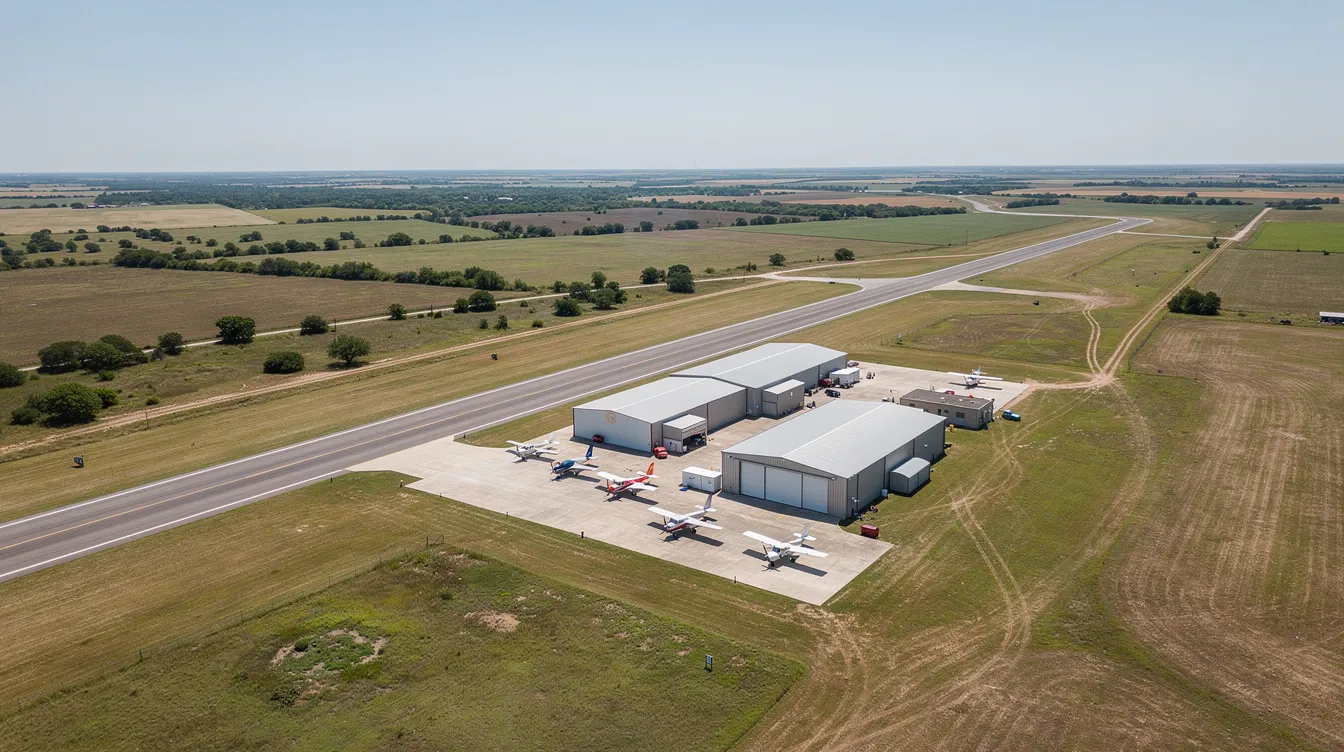
Single runway designated 14/32, measuring approximately 3,740 feet long by 60 feet wide—suitable for most pistons, turboprops, and select light jets under favorable conditions
Runway Details
Feature | Details |
|---|
Runway Designation | 14/32 |
Length | 3,740 feet |
Width | 60 feet |
Surface | Asphalt with grass-and-pavement areas |
Threshold Displacement | Runway 14: ~340 ft; Runway 32: ~191 ft |
Lighting | Medium-intensity edge lights |
Visual Glide Slope | PAPI non std (two-light, left side) |
Nearby Obstructions | Railroad adjacent to the southwest side |
Operating Environment
Weather information is classified as WI primary surface; pilots monitor conditions on the field's operating frequency of 125.9
Self-service 100LL aviation fuel is available around the clock, though Jet A is not currently offered on the field
Pattern traffic can be active on weekends and evenings; pilots should be especially vigilant in this non-towered environment
With the airport's physical and operational characteristics in mind, let's examine the traffic patterns, based on aircraft, and instrument procedures at T67.
Traffic, Based Aircraft & Instrument Procedures at T67
Activity at Hicks Airfield reflects a vibrant general aviation community. BlackJet flight planners factor these traffic patterns and instrument procedures into every airport selection.
Around 31,000 general-aviation operations over a typical 12-month period, with more than 80 takeoffs and landings per day (source)
Over 300 aircraft on the field: approximately 92% single-engine pistons, 6% multi-engine, and a small share of helicopters and ultralights
T67 operates primarily under visual flight rules (VFR); there are no published instrument procedures directly into the field
For IFR arrivals and departures, pilots and planners rely on nearby airports with full instrument capability—Alliance (AFW) or Meacham (FTW)—which can support the largest private jets for global travel—before repositioning via ground transport or short VFR legs
Flight training is offered by FAA-certified flight academies at Hicks Airfield, contributing to steady weekday traffic; the Federal Aviation Administration oversees certification standards for all training operations, supporting the overall safety of private jet operations
Understanding the airport's traffic and procedures helps inform your choice among Fort Worth-area airports, which we compare next.
Hicks Airfield vs Nearby Airports Around Fort Worth
Airport choice in private aviation hinges on runway length, ground handling, weather resilience, and distance to your final destination. Across the DFW Metroplex, several fields serve private flyers—each with distinct strengths.
Hicks (T67): 3,740 ft runway, VFR-only, ideal for owner-flown aircraft, turboprops, and light jets on regional hops; lower fees, minimal congestion, no customs capability—making it attractive for travelers using jet cards for frequent flyers
Meacham (FTW): Longer runways, full IFR infrastructure, accommodates mid-size jets and some long-range private jet types, better ground services and fuel options
Alliance (AFW): Very long runways, large-cabin jet capability, full-service FBOs, robust instrument approaches
DFW International (KDFW): Major hub; every aircraft type—including ultra-premium 20 million dollar private jets; international customs and clearance; highest congestion and security overhead
BlackJet advisors help members select between T67, FTW, AFW, and other nearby airports to balance convenience, slot availability, and weather resilience, often using a private jet flight time calculator to model different routings. For a first-time visitor to the Fort Worth area flying a small airplane, T67 offers unmatched simplicity.
Now that we've compared airport options, let's take a closer look at the unique community and lifestyle found at Hicks Airfield.
Life on the Field: Hangars, Community & Retro Hangar Living
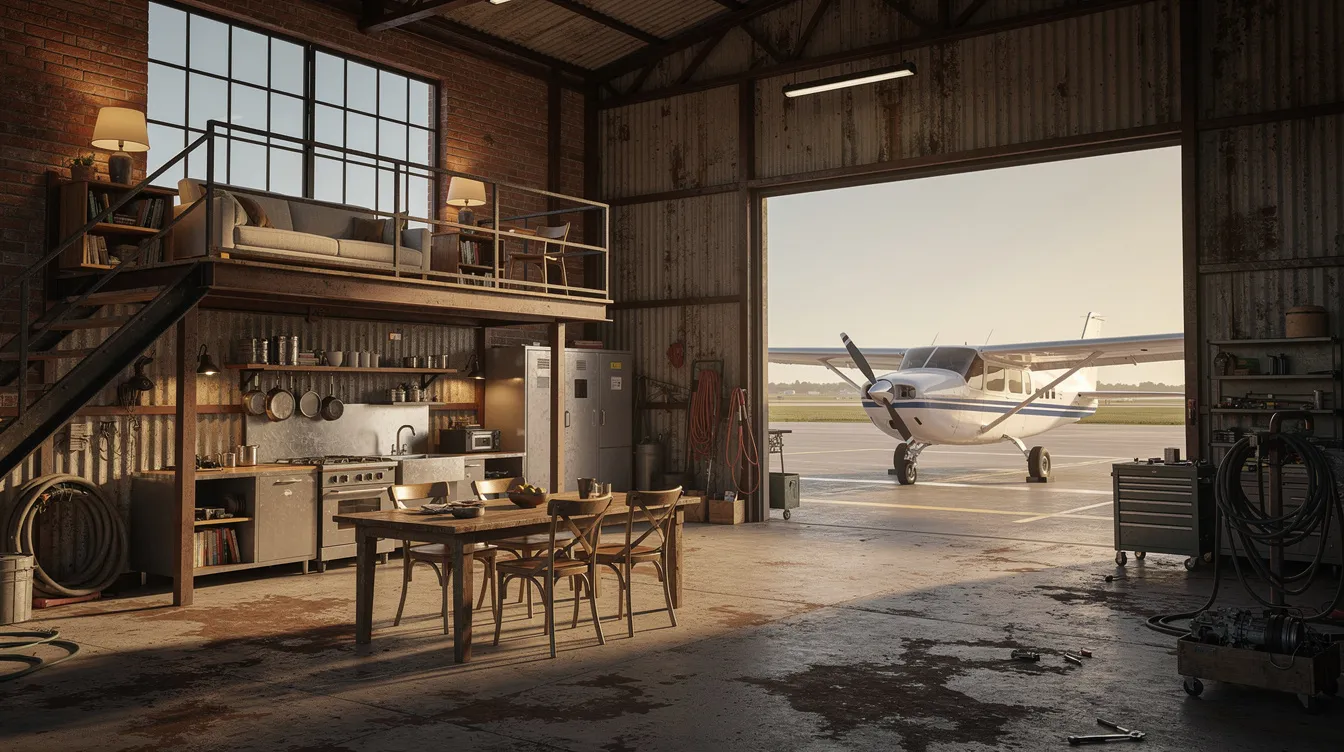
Hicks Airfield features a gated residential aviation community unlike anything found at sterile corporate terminals. Rows of privately owned hangars—some with lofts, offices, or full living quarters—create a close-knit airpark where the friendly atmosphere is palpable.
Community Features
Hicks Airfield pilots enjoy fly-in gatherings, community events, and on-site maintenance shops supporting engine work, airframe service, and pilot supplies, attracting owners of affordable private jets under 10 million who prefer a community airpark setting
Hangar-home properties—some exceeding 6,300 sq ft—are found on the field with direct runway access, making it a popular spot for pilots who want to live where they fly
The airfield is popular among local pilots for its friendly atmosphere and sense of camaraderie
Hangar Lodge Amenities
While BlackJet focuses on flight operations rather than real estate, members can still enjoy the charm of Hicks as a departure or arrival backdrop.
With a sense of community established, let's see how BlackJet members can utilize Hicks Airfield for private charter and jet card travel.
Using Hicks Airfield with BlackJet Jet Cards & Private Charter
BlackJet members can request departures or arrivals at T67 when the mission profile and aircraft type make it feasible. Shorter runway lengths and VFR-only operations make Hicks Airfield T67 most suitable for pistons, turboprops, and certain light jets rather than large-cabin aircraft, which are more common in higher tiers of the private jet price spectrum.
Example scenario:
A Fort Worth-based executive holding a 25-hour Jet Card departs T67 aboard a turboprop for a same-day round trip to Austin or Santa Fe, leveraging the features and costs of a 25-hour jet card for predictable budgeting. For a transcontinental leg later that week, the same member connects from Alliance or Meacham, where longer runways and IFR capability support larger aircraft.
BlackJet's operations team evaluates safety margins, runway performance, weight limits, and weather—often with advanced private jet flight time planning tools—before confirming any requested departure or arrival at Hicks
Members can specify a preferred airport when sharing their itinerary; the advisory team then recommends the optimal field based on distance, conditions, and aircraft rating
On-demand charter and jet card programs both support multi-airport routing across Fort Worth
With operational use covered, let's address safety and sustainability at smaller fields like Hicks.
Safety, Certification & Operational Standards at Smaller Fields
Safety standards do not soften because an airport is smaller. BlackJet applies the same rigorous criteria at T67 as at any major hub.
BlackJet partners only with operators meeting or exceeding leading safety benchmarks (ARGUS, IS-BAO, or comparable proprietary vetting), even at general-aviation fields, reinforcing the broader realities of private jet safety for discerning travelers
Performance planning at runway 14/32 includes analysis of takeoff and landing distance required versus available surface, density altitude at roughly 855 ft MSL, and seasonal North Texas heat
Standard mitigations at non-towered airports: traffic pattern discipline, clear radio calls, approach briefings, and contingency planning for diversions to Meacham or Alliance if conditions degrade
With safety assured, let's look at how BlackJet supports sustainability and carbon-neutral flights at Hicks Airfield.
Sustainability & Carbon-Neutral Flights to and from T67
BlackJet's commitment to carbon-neutral private flights extends to every leg—including those operating in and out of Hicks Airfield and other Fort Worth-area fields, and is factored into overall private jet pricing and access models.
Emissions are calculated per leg based on aircraft type and distance; verified offsets are purchased through accredited climate projects
Members who choose efficient aircraft categories—turboprops for short hops from T67, for instance—reduce fuel burn without sacrificing productivity
Reduced taxi and idle time at uncongested fields like Hicks further trims the carbon footprint versus departures from busier hubs
With sustainability in mind, let's explore what you can do near Hicks Airfield and in Fort Worth.
Things to Do Near Hicks Airfield & Fort Worth
Hicks serves as a launchpad for both business in Fort Worth and leisure across North Texas.

Culture: Kimbell Art Museum, Fort Worth Modern Art Museum, National Cowgirl Museum
Heritage: Fort Worth Stockyards, Sundance Square dining and theater
Texas classics: Legendary barbecue, live music venues, western shops, and big-sky sunset drives north of the city
Ground partners can arrange chauffeured transfers from the airfield to downtown or to the Texas Motor Speedway, with same-day return trips easily coordinated for travelers who may buy a seat on a private jet rather than charter the whole aircraft
With local attractions highlighted, let's answer some common questions about Hicks Airfield and BlackJet.
How to Plan Your Next Trip via Hicks Airfield with BlackJet
Planning a departure from T67 is straightforward. Start by sharing your itinerary with BlackJet's advisory team via phone or email.
Specify your preferred airport—T67 or alternatives—and receive tailored aircraft recommendations aligned with your chosen jet card pricing structure
Confirm carbon-neutral options at no extra cost, or explore how this fits alongside unlimited private jet membership models
Enjoy the benefits of a shorter drive, personalized service, and a community-style airport experience that larger terminals simply cannot replicate
For those exploring private aviation for the first time, contact BlackJet to discover how regional airfields like Hicks can reshape the way you travel
Explore premium jet access from Fort Worth and beyond through BlackJet's 25+ Hour Jet Card, with options ranging from a 100-hour jet card program to 50-hour jet card solutions, or extend your network globally with private jet charters in Karachi.
Frequently Asked Questions About Hicks Airfield (T67) & BlackJet
Can my BlackJet flight use T67 Hicks Airfield?
Yes, provided the aircraft type can safely operate on the 3,740-foot asphalt runway under current weight, temperature, and weather conditions. BlackJet's operations team runs a full performance application review before confirming any mission into T67.
How does T67 compare with Meacham (FTW) and Alliance (AFW) for private jet travel?
T67 wins on convenience and ground time savings for north Fort Worth travelers. FTW and AFW offer longer runways, full IFR capability, and accommodate larger jets, similar to those operated by leading private jet companies. For short regional flights, T67 delivers a significant edge; for long-range or marginal-weather missions, FTW or AFW is the safer choice.
Are there instrument procedures at Hicks Airfield?
No published instrument approaches exist for T67. All operations are conducted under VFR, which is typical for many smaller fields used in private charter flights. IFR-capable flights use Alliance or Meacham, then reposition as needed.
How do safety and carbon-neutral policies apply at smaller fields like Hicks?
BlackJet's operator vetting, safety rating standards, and carbon-offset program remain identical regardless of airport size. Conservative performance margins and contingency planning become even more critical at shorter fields.
With your questions answered, here's how to plan your next trip via Hicks Airfield with BlackJet.
Conclusion: Hicks Airfield is a Premier Choice for Discerning Private Flyers
Hicks Airfield (T67) represents more than just a convenient runway northwest of Fort Worth—it embodies a strategic advantage for private and business aviation travelers who prioritize time, privacy, and community. With its accessible location, efficient runway 14/32 featuring displaced thresholds, and a welcoming environment supported by a vibrant aviation community and residential hangar homes, Hicks offers a unique blend of operational ease and lifestyle appeal.
While the airfield operates primarily under VFR with no published instrument approaches, its proximity to fully equipped airports like Meacham (FTW) and Alliance (AFW) ensures seamless connectivity for a broad range of aircraft types and mission profiles. BlackJet’s rigorous safety standards, combined with a commitment to sustainability through carbon-neutral flight options, make Hicks Airfield a responsible and refined choice for jet card members and private charter clients alike.
Whether flying a turboprop for a regional hop or coordinating multi-airport itineraries, Hicks Airfield delivers an unmatched combination of convenience, flexibility, and community spirit. For travelers seeking to elevate their private aviation experience in the Fort Worth area, Hicks Airfield is a premier gateway that complements BlackJet’s dedication to effortless, safe, and sustainable private jet access.
Discover how Hicks Airfield can enhance your next journey—explore premium jet access and join BlackJet’s exclusive Jet Card program today.


 Sign up with google
 Sign up with Apple