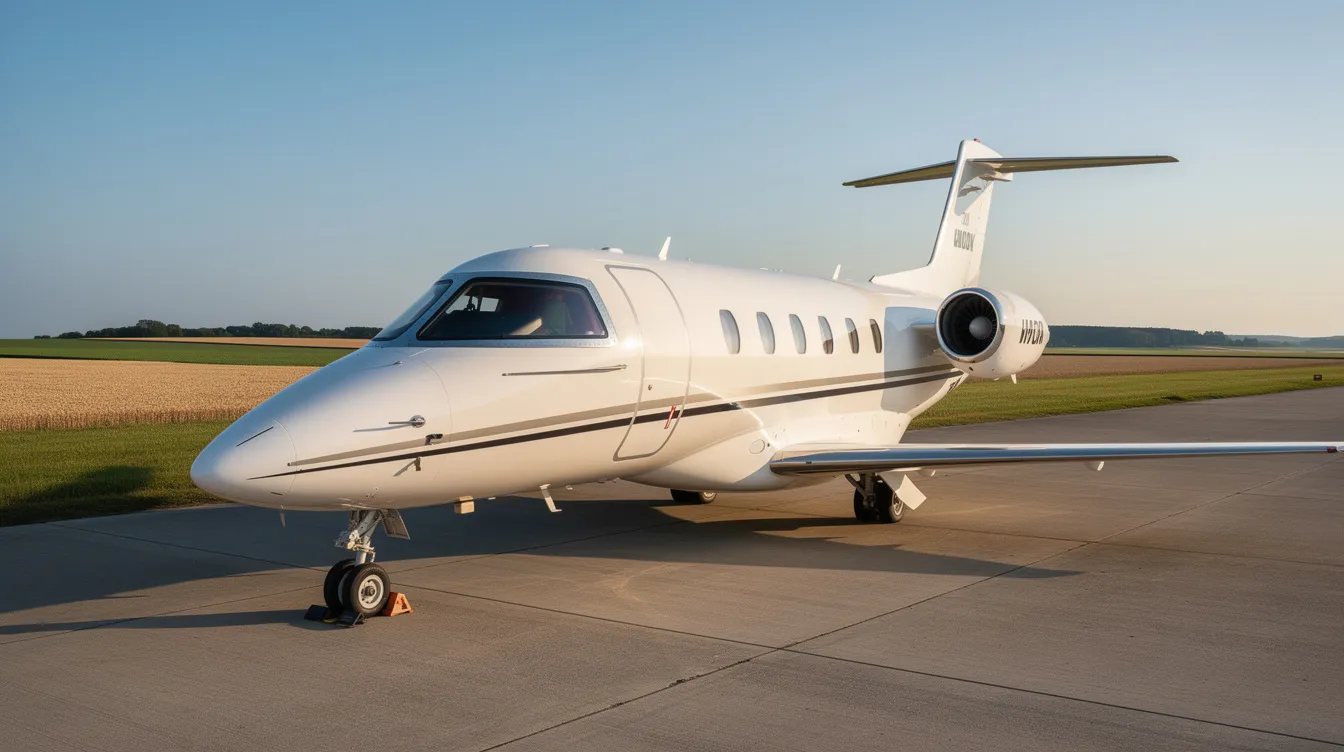
For the business-minded executive or high-net-worth traveler based in central Iowa, the difference between a productive day and a lost one often comes down to how you get to the airport. Grinnell Regional Airport - known locally as Billy Robinson Field - offers a compelling alternative to the long drive, the security line, and the crowded terminal. This guide is designed for business travelers, private flyers, and aviation professionals interested in using Grinnell Regional Airport for private aviation. Understanding the features and advantages of Grinnell Regional Airport can help travelers save time and streamline their private aviation experience in central Iowa. This guide covers everything you need to know about this regional airport, from runway specs and instrument procedures to how BlackJet Jet Card members can turn GGI into a personal gateway for private aviation across the Midwest and beyond.
Quick Facts & Why Grinnell Regional Matters for Private Flyers
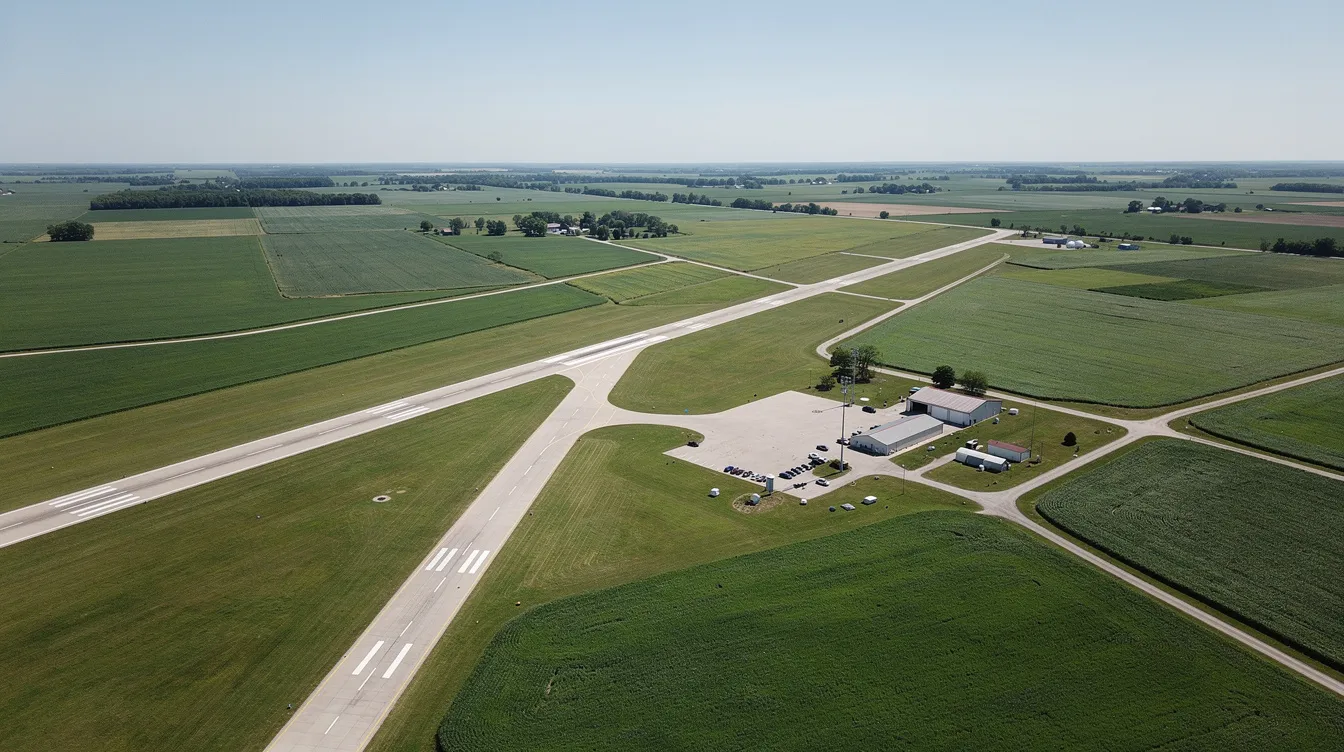
Grinnell Regional Airport is located in Grinnell, Iowa, and serves as an important asset for private and general aviation across central Iowa communities. For time-sensitive corporate travelers and discerning private flyers, it eliminates the need to drive an hour or more to a commercial hub - replacing that lost time with a streamlined, low-congestion departure from a field located approximately two miles south of downtown Grinnell.
The airport's physical address is 1607 West St. South, Grinnell, IA 50112. It sits about one mile south of Grinnell's central business district, with direct access to State Highway 146 and proximity to Interstate 80, making ground transfers fast and predictable from any direction.
Key data at a glance:
Detail | Specification |
|---|
FAA Identifier | GGI (KGGI) |
Runway | 13/31 - 5,200 ft × 75 ft, grooved concrete |
Field Elevation | ~1,008 ft MSL |
Airport Area | ~115 acres |
Ownership | City-owned, public-use |
NPIAS Classification | Local general aviation facility |
The airport is city-owned and listed in the National Plan of Integrated Airport Systems (NPIAS) as a local general aviation facility. Grinnell Regional Airport plays a role in supporting general aviation connectivity for residents and businesses throughout Poweshiek County and neighboring areas, and it has no scheduled commercial airline flights - which, for the private traveler, means zero competition for ramp space and zero gate delays.
For BlackJet Jet Card members, Grinnell Regional represents a convenient departure and arrival point for regional and national private jet flights. Rather than losing two to three hours on a round-trip drive to Des Moines International, members can stop at their local airfield, board directly, and be airborne within minutes.
About Grinnell Regional Airport & Billy Robinson Field
Grinnell Regional Airport, also known as Billy Robinson Field, is a city-owned public-use regional airport in Poweshiek County, Iowa. Operated under the authority of the city of Grinnell, the airfield has served the community for decades as a hub for general aviation, flight training, and business travel.
Billy Robinson Field supports corporate aviation activities, serving executives and business travelers in the region. Billy Robinson Field also supports recreational aviation activities for local pilots and flying enthusiasts.
Situated about one mile south of the city center, the airport supports local business travel, medical access flights, agricultural operations, and general aviation needs. Billy Robinson Field supports corporate aviation activities for executives commuting to regional meetings, and it equally supports recreational aviation activities for locally based pilots and flying enthusiasts. The airport supports both functions without the friction of commercial terminal operations.
Billy Robinson Field is two miles south of Grinnell, positioned to serve not just the city itself but a broader regional corridor. Its namesake, William C. "Billy" Robinson, was an early Iowa aviation pioneer who moved to Grinnell at age 12 and went on to build his own radial engine, design monoplanes, and set a non-stop distance record in 1914 - flying roughly 370 miles from Des Moines to Kentland, Indiana, in under five hours. The airport was officially dedicated as Billy Robinson Field on June 18, 1988, honoring his contribution to American aviation.
For a private jet traveler, the experience at GGI is refreshingly direct. There is no terminal maze to navigate, no sign-in queue, no lengthy security screening. You arrive, walk to the ramp, and board your aircraft. The entire ground process - from car door to cabin door - can take under ten minutes on a typical day.
Location, Access & Nearby Business Hubs
Location is one of the most consequential variables in private aviation. Every mile driven to a departure airport is time that could be spent in a meeting, with family, or simply at rest. Grinnell Regional's position makes it a practical home base for BlackJet clients who live, study, or do business in Grinnell and across central Iowa.
The airport is off State Highway 146, situated just south of the city's commercial center and near Grinnell's industrial area - making it a short drive from manufacturing facilities, corporate offices, and Grinnell College along 4th Ave, Grinnell, and surrounding streets. It is one-half mile north of Interstate 80, which means visitors arriving from the east or west can exit the highway and reach the ramp in under two minutes. For those heading to or from Grinnell City Hall or the downtown business district, the drive is approximately five minutes.
Currently, Grinnell College provides shuttle services to Des Moines International Airport during academic breaks - a sign of how underserved the region is by commercial aviation and why private jet access from a local field changes the equation entirely. From Billy Robinson Field, a light jet can reach Chicago in roughly 70 minutes, Minneapolis in under 90, Kansas City in about an hour, and Denver in approximately two hours. For even more flexibility on popular business routes, some travelers look to private plane rideshare and shared-flight options that leverage similar point-to-point efficiencies. Compare that to the alternative: a 60-to-90-minute drive to Des Moines, followed by check-in, security, and a connecting commercial flight. The distance between those two experiences - in both time and comfort - is substantial.
On the ground, practical access is equally straightforward. Parking is adjacent to the terminal area, with direct curbside access. Ground transportation options include fixed-base operators and local taxi services for those needing a ride to or from the Ave Grinnell area or beyond.
Sample itinerary: A Grinnell-based executive departs Billy Robinson Field at 7:30 AM via BlackJet light jet, lands at Chicago Midway by 8:45 AM, conducts a full day of meetings, and returns to GGI by 7:00 PM - door to door, without ever setting foot in a commercial terminal. That's the kind of day where private jets land to make it possible.
Facilities, Runway & Instrument Procedures
Grinnell Regional Airport is well-equipped for modern business aviation, with infrastructure that goes well beyond what many travelers expect from a regional Iowa airfield. The details matter here - they determine what aircraft can operate safely and what weather conditions the field can accommodate.
The airport features a 5,200-foot grooved concrete runway, designated 13/31, measuring 75 ft in width. The grooved surface enhances wet-weather braking performance and reduces hydroplaning risk, a meaningful safety feature during Iowa's spring and fall storm seasons. The calm wind configuration and runway orientation allow for flexible approaches depending on prevailing conditions. According to FAA and AirNav records, the field has been surveyed for multiple instrument procedures, including:
RNAV (GPS) approach for Runway 13
RNAV (GPS) approach for Runway 31
VOR/DME approach for Runway 31
These published instrument procedures - approved by the Federal Aviation Administration - enable operations under IFR conditions, meaning pilots can land in reduced visibility rather than diverting to a distant alternate. For Jet Card customers, this translates directly to fewer cancellations and greater schedule reliability.
For pilots and dispatchers reviewing technical data, the field's records include standard notations: dsplcd thr references for approach segments, slp gradient details, thr markings for runway threshold identification, and low intst runway lighting for night and dusk operations. Clearance delivery (CD) procedures route through CTC Chicago ARTCC for IFR departures, integrating GGI into the national airspace system seamlessly. Aircraft with double wheel main landing gear configurations operate routinely on the runway surface, and the FAA classifies the field as capable of supporting a range of light and midsize business jets.
At a high level, the airport logged approximately 5,950 aircraft operations in a recent 12-month reporting period, all general aviation. Based aircraft include about 14, predominantly single-engine, with a small number of multi-engine types. For some travelers, this kind of environment pairs well with budget-friendly private aircraft options and access models that keep costs in line while still delivering the benefits of private flying. This means the field sees steady but uncongested traffic, a stark contrast to commercial hubs where taxi delays alone can eat 20 to 30 minutes.
Services, Operations & Experience on the Ground
The on-field experience at Billy Robinson Field reflects the efficiency that private travelers expect from a well-run regional airport. There is no terminal crowd, no boarding group, no overhead bin scramble. You arrive, sign in at the FBO facility, and walk directly to your aircraft on the ramp.
Key services available at Grinnell Regional include:
Fuel: AvGas and Jet A, supporting piston, turboprop, and turbine-powered aircraft
Ground support: Basic handling, tie-down, and hangar rental options
Pilot amenities: Pilot lounge, restrooms, and local information resources
Communications: Contact the airport office by phone at (641) 236-0530 or by fax for operational coordination
It should be noted that services at GGI are more streamlined than what you'd find at a large FBO hub - advanced catering, large-cabin jet hangaring, and customs clearance are not available on-site. For travelers who need those capabilities, BlackJet's operations team arranges them through partner facilities.
Grinnell Regional Airport operates Monday through Friday from 8:00 AM to 5:00 PM and Saturday from 8:00 AM to 12:00 PM, per the city of Grinnell's published schedule. However, private aviation doesn't stop at noon on Saturday. BlackJet's 24/7 operations team coordinates after-hours access and ground handling for Jet Card flights, ensuring that your schedule - not the airport's staffing roster - determines when you fly.
For a BlackJet passenger, the arrival and departure flow at Billy Robinson Field looks like this: your car pulls up to the terminal, you walk through a single door, and you're on the ramp in under a minute. No TSA line, no ID check queue, no gate change. Pilots log your departure, fuel is already loaded, and you're taxiing within minutes. Travelers who only need a single seat rather than a whole aircraft can also explore ways to buy a seat on a private jet when that better fits a given trip. The relatively low traffic volume at Grinnell Regional often results in immediate runway access - a luxury that compounds over dozens of flights per year.
Private Jet Access with BlackJet at Grinnell Regional Airport
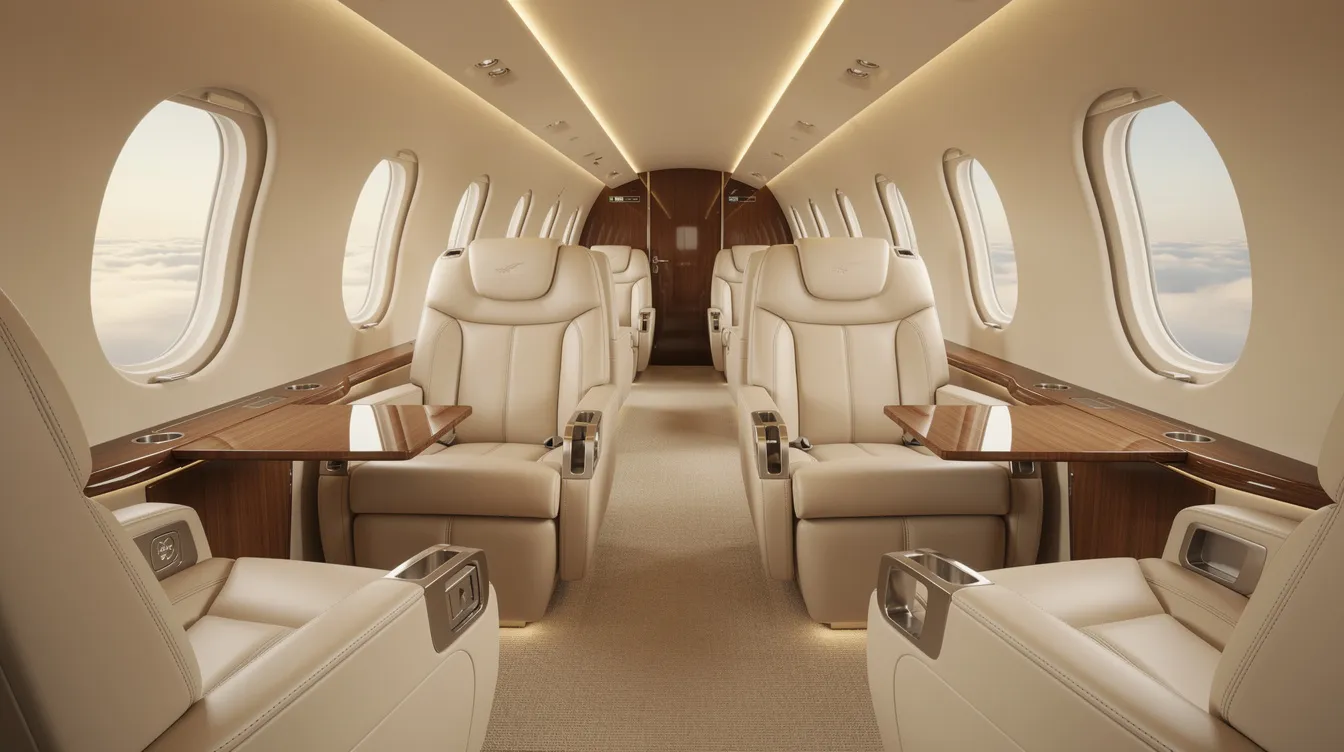
Grinnell Regional Airport connects directly to BlackJet's Jet Card model, giving frequent travelers who live or operate in central Iowa prepaid, guaranteed access to private jets without the complexity of aircraft ownership.
The aircraft categories that typically serve a regional airport like GGI include (and fit within the broader private jet price list of ownership and access options):
Light jets (Citation CJ series, Phenom 300, Learjet 75) - ideal for quick hops to Chicago, St. Louis, or Minneapolis with 2–4 hours of range and efficient runway performance, and often among the most affordable private jet choices for many travelers
Midsize jets (Citation XLS, Hawker 800) - suited for longer nonstop legs to Denver, Nashville, or the Southeast, though operators will evaluate weight, temperature, and payload against the 5,200 ft runway on a per-mission basis; groups approaching charter-scale events may instead opt for large private jets that can carry up to 50 passengers from larger airports nearby; for larger groups, operators may instead recommend private jets configured for around 20 passengers out of nearby fields with longer runways
BlackJet's booking technology makes this seamless. Members select Grinnell Regional (Billy Robinson Field / GGI) as their departure or arrival airport via the app or web platform, view available cabin classes, and confirm flights with real-time pricing that reflects access costs, including fuel and handling at smaller fields. For those evaluating options, a complete guide to jet card pricing structures and benefits shows how different programs handle hourly rates and fees. To understand how a Jet Card works in practice, it's worth noting that prepaid hourly rates eliminate the guesswork of ad-hoc charter pricing.
Compared to full aircraft ownership for someone based in Grinnell, the Jet Card model removes the burden of crew management, maintenance scheduling, hangar contracts, and depreciation. Compared to a one-off charter, it delivers predictable pricing and priority access. Prospective members who want to understand typical hourly rates and fee structures can review a broader guide to overall jet card cost and pricing. And compared to commercial first class out of Des Moines, it saves two to four hours per round trip - time that, for a business-minded executive making 20 or more trips per year, adds up to weeks of recovered productivity.
Illustrative itinerary: A family from Grinnell, Iowa, flies via BlackJet from Billy Robinson Field to Denver on a light jet, then connects to a super-midsize aircraft for a final leg to Aspen. The return trip reverses the routing. A small regional airport becomes the anchor for a nationwide private travel lifestyle - no hub transfer, no commercial connection, no lost luggage.
Safety, Certification & Reliability at a Regional Airport
Safety is paramount in business aviation, and the question naturally arises: can a smaller regional airport deliver the same level of operational safety as a major hub? At Grinnell Regional, the answer is grounded in infrastructure.
The grooved concrete runway reduces stopping distance in wet conditions. Published instrument approaches - RNAV/GPS and VOR/DME - allow qualified pilots to fly precision procedures in low ceilings and reduced visibility, rather than relying solely on visual references. Medium-intensity runway lighting supports safe night operations. Tree and obstacle clearance zones around the airport are locally regulated to protect approach and departure paths, and the field's inclusion in the NPIAS reflects ongoing federal oversight of its safety standards.
BlackJet's safety philosophy operates independently of airport size. Every operator in BlackJet's network undergoes rigorous auditing for maintenance standards, crew qualifications, and operational protocols. Before confirming any flight into Billy Robinson Field, BlackJet's team evaluates airport suitability - runway length, approach types, elevation, obstacles, and current weather - against the specific aircraft type requested. If conditions don't meet safety thresholds, an alternate airport is designated. For travelers comparing options, understanding the meaning of charter flights and how they operate provides helpful context. This is the behind-the-scenes work that separates a premium Jet Card program from an unstructured charter booking.
For high-net-worth travelers who are curious about the difference between certified private operations and less-regulated alternatives, it comes down to accountability. Structured Jet Card providers maintain a documented, auditable chain of safety compliance - from the aircraft's maintenance log to the pilot's recurrent training records - that ad-hoc arrangements rarely match. Many of these standards are exemplified by the top private jet companies serving luxury travelers, whose programs set benchmarks for safety and service.
Sustainability & Carbon-Neutral Flights from Grinnell, IA
Flying privately from a regional airport like Grinnell carries a responsibility that BlackJet takes seriously. Every flight - whether it originates from GGI or from a major metropolitan hub - generates emissions that demand accountability.
BlackJet offers carbon-neutral flights as a standard feature, not an add-on. Emissions are calculated per flight segment, including operations from smaller fields like Billy Robinson Field, and offset through verified environmental projects. These offsets fund initiatives such as reforestation, methane capture, and renewable energy development, each validated by independent third-party registries, and can be paired with cost-conscious aircraft choices and access models to keep both budgets and emissions in check.
There's an additional sustainability angle worth noting: using a closer regional airport like Grinnell reduces total ground travel emissions. An executive who would otherwise drive 120 miles round-trip to Des Moines International - burning fuel and time on unnecessary highway miles - instead drives five minutes to GGI. Over dozens of trips per year, the cumulative reduction in ground-side emissions is meaningful.
Consider a Grinnell-based executive who regularly flies to meetings in Kansas City, Chicago, and Minneapolis via BlackJet. Each trip departs from Billy Robinson Field, each is carbon neutral, and each avoids a long highway drive. The result: private aviation that is efficient, responsible, and aligned with the values of a modern corporate traveler.
Frequently Asked Questions about Grinnell Regional Airport
Q: Does Grinnell Regional Airport have commercial airline service?
A: No, Grinnell Regional Airport (Billy Robinson Field) does not offer scheduled commercial airline flights. It is dedicated to general and private aviation.
Q: What types of aircraft can operate at Grinnell Regional Airport?
A: The airport’s 5,200-foot grooved concrete runway supports a range of light and midsize business jets, as well as piston and turboprop aircraft.
Q: What are the airport’s operating hours?
A: Grinnell Regional Airport operates Monday through Friday from 8:00 AM to 5:00 PM and Saturday from 8:00 AM to 12:00 PM. BlackJet coordinates after-hours access for private flights.
Q: How close is Grinnell Regional Airport to downtown Grinnell?
A: The airport is located about two miles south of downtown Grinnell, with easy access via State Highway 146 and proximity to Interstate 80.
Q: Are there ground transportation options available at the airport?
A: Yes, ground transportation options include fixed-base operators and local taxi services to connect passengers to nearby destinations.
Q: How does BlackJet ensure safety for flights operating from Grinnell Regional?
A: BlackJet requires rigorous safety audits for all operators, evaluates airport suitability for each flight, and uses published instrument procedures to maintain operational safety.
Q: Can I fly carbon-neutral flights from Grinnell Regional Airport?
A: Yes, BlackJet offers carbon-neutral private flights from Grinnell Regional Airport by offsetting emissions through verified environmental projects.
Planning Your Next Trip via Grinnell Regional Airport
For those who live, work, or invest in the Grinnell, IA region, Billy Robinson Field can serve as your personal home base for private travel - a stop away from the noise and delay of commercial aviation.
Planning a BlackJet trip from Grinnell Regional is straightforward. Confirm your preferred dates and times, select an aircraft category based on passenger count and distance, and coordinate ground transportation to and from 1607 West St. South, Grinnell, IA 50112. BlackJet's concierge team handles the details from there: confirming airport hours and after-hours access, arranging any catering or special requests, collecting passenger information and identification details, and preparing contingency plans for weather-related delays - a practical consideration for Midwest flying, particularly during winter and spring months. For additional coordination, the airport office can be reached at (641) 236-0530 or via email through the city's municipal contacts.
Before committing to a commercial itinerary, compare the total door-to-door time. A Grinnell Regional–based private flight to Chicago takes roughly three hours from your front door to your meeting room. The commercial alternative - drive to Des Moines, park, clear security, fly, land at O'Hare, taxi to the city - routinely exceeds five to six hours. Click through that math on enough trips and the strategic advantage becomes self-evident.
Whether your next destination is a boardroom in Minneapolis, a conference in Denver, or a long weekend in Naples, Grinnell Regional Airport stands ready as your point of departure. For those who value time as a resource rather than a commodity, the decision to fly privately from a local field isn't a luxury - it's a logical one.
Explore BlackJet's Jet Card programs and discover how Grinnell Regional Airport - and hundreds of regional airports across the United States - can reshape the way you travel.


 Sign up with google
 Sign up with Apple