Why Semi-Private JSX Flights Are Reshaping Premium Travel
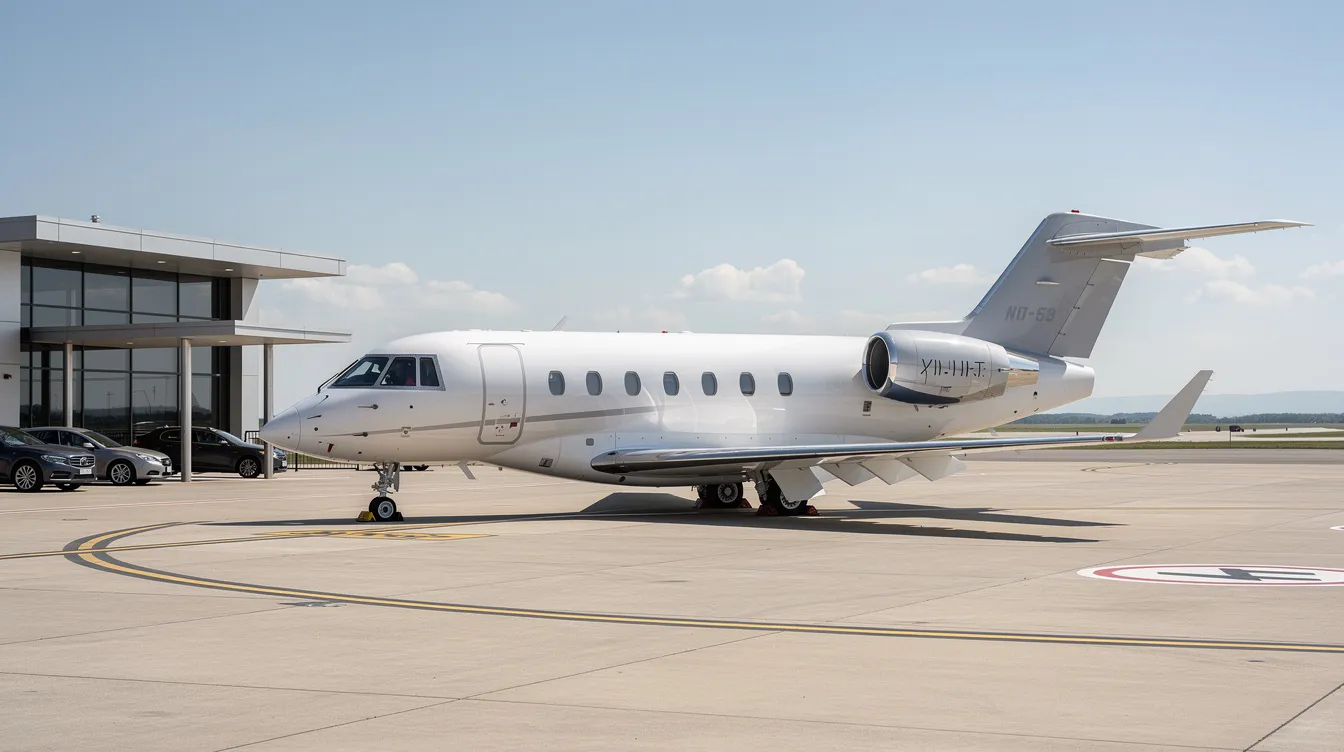
Flying JSX means using JSX, a semi-private airline that lets travelers fly regional routes on 30-seat, business-class-style flights from private terminals instead of crowded commercial concourses. Fares start at $249 each way, and on many routes JSX prices are comparable to traditional commercial airlines while offering shorter airport processing, no middle seats, and a more streamlined regional travel experience.
This guide is for frequent private travelers, executives, and anyone considering the benefits of semi-private air travel with JSX versus traditional private jet options.
Between 2021 and 2023, JSX expanded its fleet by 234% and increased flight volume by 142%. The growth reflects a clear market signal: executives, high-frequency regional travelers, and high-net-worth flyers want something between a Southwest Airlines economy seat and a dedicated private jet.
At BlackJet, we help frequent private travelers decide when flying JSX makes tactical sense for a first-time upgrade and when a Jet Card or full charter is the smarter move. This comparison looks at what JSX can offer, how its routes, terminals, onboard experience, safety standards, scheduling, sustainability, and costs compare with private jet charter, and why travelers choose it to fly these trips as part of a strategic private travel portfolio.
What Is JSX? The Semi-Private Airline Bridging Commercial and Private
JSX was rebranded from JetSuite X in 2019, three years after launching as JetSuiteX in April 2016. JSX operates public charter flights under 14 CFR Part 135 in the United States, with its subsidiary Delux Public Charter LLC chartering the aircraft and selling individual seats.
JSX offers a semi-private jet experience with 30 seats per flight.
Fleet: JSX operates ERJ-135/145 jets, reconfigured from their original 37-50 seat layouts down to just 30 business-class-style seats. In late 2025, JSX began adding ATR 42-600 turboprops for select routes, cutting CO₂ emissions by roughly 45% compared to similar regional jets.
Cabin: JSX has one business class cabin with 30 seats arranged in a 1-2 configuration. No middle seats.
Positioning: JSX offers a business class experience at reasonable prices. Fares can be almost equivalent to commercial flights on comparable routes, placing it between other airlines and true private aviation.
What it is not: JSX is not an on-demand private jet charter. Passengers share the cabin with up to 29 others on fixed schedules.
Route Map and Who JSX Is Best For
JSX flights connect roughly 28-31 destinations across the western and southwestern part of the country, with growth into Texas, Colorado, and seasonal service to destinations like Cabo. Core locations include Burbank, Oakland/Concord, Las Vegas, Phoenix, Denver, and Dallas-area airports.
Quick hops: Concord to Burbank runs about one hour. Las Vegas to Burbank and Phoenix to Oakland fill similar niches for short business or leisure trips.
Ideal JSX customer: A solo executive or couple who chooses JSX to fly a familiar regional route a few times per year, wanting less friction than commercial terminals and to leave the car at the terminal.
BlackJet's core audience differs: Executives and families flying 10+ trips per year who need coast-to-coast or worldwide coverage, guaranteed aircraft, and schedule control. A 25-hour Jet Card or 50-hour program serves that volume.
Where we might suggest JSX: For cardholders making a short regional hop in California where per-seat semi-private pricing beats chartering an entire light jet for one passenger, JSX is a nice tactical option.
On the Ground: Terminals, Check-In, and Security Experience
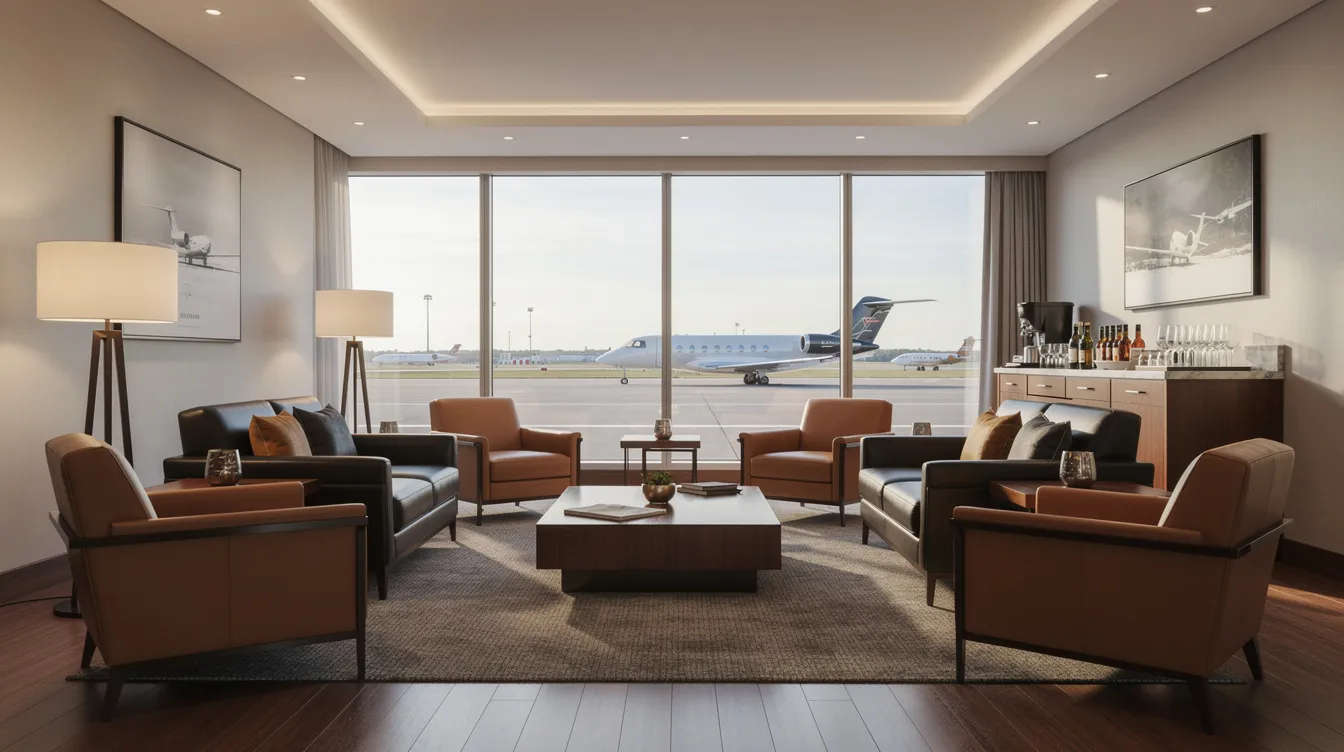
Picture pulling up to a private terminal at Harry Reid International in Las Vegas, where travelers fly JSX with a simpler pre-departure experience. You park near the entrance, walk into a quiet lounge, and check a bag at a desk staffed by two people. That is the JSX ground experience.
JSX flights operate from private terminals, not commercial airport terminals. JSX utilizes private terminals and shared FBO facilities rather than standard commercial terminals, so you might see true private jet operations alongside JSX boarding.
Passengers check in just 20-30 minutes before departure, compared to the 60-120 minutes recommended for major airlines.
Security screening involves carry-on X-ray scans and walk-through metal detectors. TSA Secure Flight vetting happens in advance; there are no standard TSA lines to wait in.
The BlackJet experience uses similar private jet terminals but adds dedicated aircraft, private boarding, and personalized ground coordination. Your trip begins when you arrive, not when a schedule dictates.
In the Air: Cabin, Service, and What to Expect on Your First Flight with JSX
Each seat on JSX offers 36 inches of legroom and a personal table surface, which is more than most domestic first-class products on other airlines. The 1-2 seating layout with wide windows creates a quieter, more spacious atmosphere than a 180-seat mainline aircraft.
JSX flights include free snacks and drinks for passengers, including wine, beer, and select spirits on many routes.
JSX does not provide in-flight entertainment options. Bring a tablet or work device. Starlink Wi-Fi is increasingly available on upgraded jets, though coverage varies by tail number.
Boarding happens directly from the lounge onto the tarmac, which is one reason travelers like to fly JSX. Door closure is quick, announcements are minimal, and takeoff feels more like leaving a private hangar than an airport gate.
On a BlackJet Jet Card flight, the cabin is yours. Custom catering, a flexible departure time, your choice of aircraft category from light to large cabin, and a staff-to-passenger ratio that JSX cannot match.
Practical Details: Baggage, Scheduling, and Reliability
Checked bags: Passengers can check two bags for free on JSX flights, each up to 50 pounds. The All In fare allows three free checked bags.
Carry-on: JSX allows one carry-on item per passenger. Carry-on dimensions must not exceed 13" W x 11" H x 17" L. Many aircraft lack overhead bins, so larger bags go into checked luggage at the door.
Booking: Passengers can book JSX flights through the JSX website or app, which are the main booking channels. Online check-in is not available for JSX flights; check-in happens at the terminal desk.
Schedule: JSX flights typically have limited daily flight options, sometimes only one or two departures per route per day. Missed flights are harder to recover from than on carriers like Southwest with frequent service.
Mileage: Passengers can currently earn United MileagePlus miles on some JSX segments. A prior JetBlue partnership ended in February 2026.
BlackJet contrast: Jet Card and charter clients set their own schedule. If a meeting runs late, the private jet waits. That ease of control is impossible on fixed JSX flight schedules.
JSX vs. Private Jet Charter and Jet Cards: Cost, Control, and Comfort
Factor | JSX | BlackJet Jet Card |
|---|
Cost structure | Per seat; $249-$500+ one way | Per aircraft hour; light jets ~$7,000-$8,000/hr |
Schedule | Fixed departures | You choose departure time |
Privacy | Shared cabin (up to 30 passengers) | Fully private cabin |
Route flexibility | ~28-31 destinations | Any airport worldwide |
Baggage | 2-3 checked bags included | Generous; based on aircraft type |
For two executives flying Burbank to Las Vegas occasionally, a JSX ticket at $249-$400 each is the easy call when they want to fly that route without chartering a whole aircraft. For a family of six flying New York to Aspen with ski gear, a midsize private jet on a BlackJet Jet Card splits to roughly $2,500-$3,000 per person, with the freedom to leave when you want and land closer to the mountain.
The point is not that one replaces the other. They serve different missions.
Safety, Security, and Sustainability in Semi-Private and Private Aviation
JSX flights meet Part 135 public charter standards with professional pilots and FAA-mandated maintenance. Security at private terminals includes TSA Secure Flight vetting and enhanced screening, thankfully without the standard concourse experience.
BlackJet evaluates every operator through its proprietary certification process. Fewer than 30% of U.S. charter operators pass. We require ARGUS Platinum or Wyvern ratings, strict pilot hour minimums, and ongoing fleet audits. For customers who subscribe to a higher standard, that distinction matters.
On sustainability, BlackJet includes carbon-neutral flight offsets (300% of emissions) in every Jet Card at no extra cost. JSX's newer ATR 42-600 turboprops produce roughly 45% less CO₂ than comparable regional jets, a step in the right direction for the country's semi-private fleet.
Looking further ahead, the FAA is developing regulatory frameworks for the operation of flying cars and eVTOL vehicles. Flying cars are technically referred to as roadable aircraft capable of transitioning between driving and flying. A flying car is designed as a dual-purpose vehicle for road and air travel, though flying cars are more complex than traditional vehicles and must meet both aviation and road safety regulations. Flying cars often utilize electric vertical takeoff and landing technology for urban mobility. Electric vertical takeoff and landing aircraft are expected to provide alternative urban air services in the future, potentially reshaping short-range travel in ways that continue to blur the line between ground and air.
FAQs About Flying JSX and Private Jet Access
Is flying JSX considered private jet travel?
Flying JSX offers a semi-private experience with business-class seating and private terminals, but it is not fully private jet travel since the cabin is shared with up to 29 other passengers.
How does JSX compare to a private jet charter in cost?
JSX fares start around $249 one way per seat, similar to commercial airlines, while private jet charters via BlackJet are priced per aircraft hour, typically ranging from $7,000 to $8,000 per hour depending on aircraft type.
Can I check bags for free on JSX flights?
Yes, JSX allows two free checked bags up to 50 pounds each, with three free bags included on the 'All In' fare. Carry-on bags must meet size restrictions and fit under the seat.
What is the check-in process for JSX flights?
Passengers check in at private terminals 20-30 minutes before departure. Online check-in is not available, and security screening is streamlined compared to commercial airports.
What routes does JSX serve?
JSX operates about 28-31 destinations primarily in the western and southwestern U.S., with expansions into Texas, Colorado, and seasonal destinations like Cabo.
How does BlackJet ensure safety compared to JSX?
BlackJet requires operators to meet stringent safety certifications, including ARGUS Platinum or Wyvern ratings, pilot hour minimums, and ongoing audits, exceeding standard Part 135 requirements that JSX follows.
Are JSX flights sustainable?
JSX has begun adding ATR 42-600 turboprops that reduce CO₂ emissions by roughly 45% compared to regional jets. BlackJet includes carbon-neutral flight offsets at 300% of emissions in every Jet Card at no extra cost.
Can JSX flights earn frequent flyer miles?
JSX previously partnered with JetBlue for TrueBlue miles until February 2026 and currently allows earning United MileagePlus miles on some segments.
What is the best way to try private aviation if new to it?
Flying JSX on a familiar regional route offers a great introduction to semi-private travel. For full private jet benefits, BlackJet advisors can guide you through Jet Card programs.
How do flying cars and eVTOL fit into the future of private aviation?
Flying cars and electric vertical takeoff and landing (eVTOL) aircraft are expected to provide new urban air mobility options, regulated by the FAA, potentially reshaping short-range travel beyond current jet services.
When to Choose JSX vs. BlackJet: Building a Smart Flight Portfolio
The decision comes down to five variables: route availability, number of travelers, schedule rigidity, need for privacy, and total trip cost including time saved on the ground.
Scenario A: A tech founder uses JSX to fly Oakland to Burbank twice a month for investor meetings, which makes that recurring route especially convenient. JSX handles this for under $600 round trip per seat. The first flight sells itself once you skip the SFO security line in June or November peak travel.
Scenario B: That same founder launches a product across four cities in a week. A BlackJet Jet Card with multi-stop routing, flexible timing, and a cabin to continue working between cities is the only practical option. No JSX route map or schedule can support that page of the itinerary.
Hybrid approach: Treat JSX as the entry-level, tactical tool for short hops. Rely on BlackJet for mission-critical trips, peak dates, international journeys, or any flight where paying for the whole aircraft means the deep-level privacy and control you need.
Quick answers for the private-curious:
Is JSX considered flying private? Not fully. It is a semi-private service on shared aircraft with per-seat fares.
Can JSX replace a jet card? For occasional regional travel, it can reduce your hours. For frequent, flexible, or long-range travel, no.
Best first-time experience if you are private-curious? Try flying JSX on a familiar route, enjoy the great experience at the terminal, then talk to a BlackJet advisor about what changes when the whole aircraft is yours.
Elevate your travel experience on your own terms. With BlackJet, private aviation is within reach through our Jet Card programs, featuring stringent safety protocols, carbon-neutral flights, and the freedom to choose your destinations and schedule. Discover our offerings and see how sophisticated travel can become your everyday standard.


 Sign up with google
 Sign up with Apple