The term "FL430" carries real weight in three very different worlds. In aviation, it designates a high-altitude flight level that only the most capable aircraft can reach. In California family law, FL-430 is a standardized court form for managing support payments. And in electrical hardware, it labels specific lighting and fixture products used in construction. If you arrived here searching for any one of these meanings, this guide breaks down all three with the precision each deserves.
FL430 in Aviation: High-Altitude Flight Level Essentials
FL430 corresponds to a pressure altitude of 43,000 feet above mean sea level. It is a cruise altitude used by long-range business jets—and a select few airliners—to achieve better fuel efficiency, smoother air, and more direct routing. For private travelers, access to this altitude is a tangible advantage that translates into faster trips, fewer delays, and a more comfortable experience.
Most commercial airlines cruise between FL350 and FL390 (35,000 to 39,000 feet). Many commercial airliners operate below FL430 due to weight and performance limits inherent to their designs. Business jets, by contrast, are engineered for exactly this environment. High-performance business jets often operate comfortably at FL430, giving BlackJet members on transcontinental and transatlantic routes a measurable edge over airline passengers flying lower and slower through congested airspace, particularly when it comes to turbulence management in private jets.
Reduced Vertical Separation Minima (RVSM)
To understand why FL430 matters, you need to understand how vertical separation works at altitude.
RVSM was implemented worldwide between 1997 and 2005 to allow aircraft to fly with only 1,000 feet of vertical separation between FL290 and FL410. Before RVSM, the standard separation was 2,000 feet everywhere above FL290, which wasted usable airspace and limited route efficiency.
Key facts about RVSM and what happens above it:
FL290–FL410 (RVSM airspace): 1,000-foot vertical separation between aircraft
FL410 is the top of RVSM airspace. It marks the upper boundary of this reduced-separation zone.
Above FL410: Aircraft must maintain 2,000 feet of separation, per FAA directives
Aircraft must have specific equipment to fly in RVSM, including dual independent altimetry systems, an autopilot capable of holding altitude within tight tolerances, and a functioning altitude alerting system
Aircraft operating above FL410 typically see less traffic density due to these wider vertical separation requirements. This is one reason FL430 appeals to operators seeking uncongested skies and more predictable routing.
Why FL420 Is Not Used
FL420 is not a standard cruising altitude. Above FL410, the global flight level assignment system switches from 1,000-foot increments to 2,000-foot increments, and only certain flight levels are valid depending on direction of travel.
Under the semicircular rule in U.S. airspace, FL430 is assigned to westbound IFR traffic. FL430 is typically the lowest possible cruising altitude for westbound traffic above the RVSM ceiling. Eastbound traffic at these altitudes would use FL450. FL420 falls in the gap and is simply not assigned under these conventions.
FL430 represents a significant boundary in air traffic control and flight operations—it is the first standard cruising level above the RVSM envelope for westbound flights.
Altimeter Accuracy and Air-Pressure Challenges
FL430 is a nominal pressure level and does not guarantee an aircraft's exact altitude above sea level. Altimeters measure static air pressure and convert it to altitude using standard atmosphere assumptions. At very high levels, air pressure changes more slowly with each foot of altitude gained, which reduces altimeter accuracy.
Temperature deviations from the International Standard Atmosphere (ISA) compound this issue. On an unusually cold day, an aircraft indicating FL430 may actually be lower than 43,000 feet true altitude. This is precisely why regulators require larger vertical separation above FL410—the 2,000-foot buffer compensates for the diminished precision of barometric instruments at these altitudes.
A BlackJet Customer Scenario
Consider an executive flying New York to London on a large-cabin or super-midsize jet. Shortly after crossing the U.S. East Coast, the aircraft climbs to FL430, settling into smooth, stable air above weather systems and commercial traffic. The crew has filed for and received ATC clearance for this level.
At FL430, the jet encounters:
Less turbulence - most convective weather tops out well below 40,000 feet
Better fuel burn - thinner air means reduced aerodynamic drag at cruise speed
Fewer routing conflicts - FL430 marks the transition away from standard high-altitude crowding
The result? The flight arrives 30 to 40 minutes ahead of a comparable commercial routing that operated at FL370 through heavier traffic and less direct waypoints—a time savings that often factors into whether travelers see chartering a private jet as worth the cost or explore affordable private planes and entry-level private aviation options. For a time-sensitive executive, that margin is not trivial.
Typical Aircraft at FL430
Not every aircraft can reach FL430. Only certain jets are certified for these altitudes:
Aircraft | Certified Ceiling | Typical Use |
|---|
Cessna Citation Longitude | 45,000 ft | Super-midsize, ~22-min climb to FL430 |
Gulfstream G650 / G650ER | 51,000 ft | Ultra-long-range, flagship performance |
Bombardier Global 6000/7500 | 51,000 ft | Large-cabin, intercontinental |
Hawker 4000 | 45,000 ft | Super-midsize, Mach 0.83 at FL430 |
Regulatory Requirements for FL430 Operations
Aircraft must comply with ATC clearances when climbing to FL430 or maintaining that level. Pilots cannot simply decide to ascend-each altitude change requires coordination with air traffic control. At FL430, aircraft must manage stall speed and critical Mach number closely, because the margin between "too slow" (aerodynamic stall) and "too fast" (compressibility effects) narrows significantly in thin air. Pilots refer to this as the "coffin corner."

Safety and Technology
BlackJet partners exclusively with operators whose fleets carry current RVSM and high-altitude approvals and meet third-party safety audits such as ARG/US and Wyvern. The aircraft operating at FL430 are equipped with:
TCAS (Traffic Collision Avoidance System) for real-time conflict detection
Advanced autopilots capable of holding altitude within ±65 feet
Dual independent altimetry systems for cross-checking accuracy
Certified pressurization and oxygen systems to maintain cabin altitude below 6,000 feet even at FL430+
These are not optional add-ons. They are regulatory requirements, and BlackJet's operator vetting process confirms compliance before any aircraft enters the fleet network—an approach consistent with industry-leading private jet safety standards.
Passenger Experience at FL430
For the traveler, the benefits of FL430 are felt rather than seen, especially when weighing those gains against the overall value of chartering a private jet and the capabilities of the best private jets in the world for long-range comfort. Less turbulence means fewer interruptions to work or rest. More predictable arrival times mean ground transportation and meetings stay on schedule. The combination of smoother air and lower cabin altitude pressures (thanks to modern pressurization systems) reduces fatigue—a genuine advantage for executives who need to arrive sharp.
For a deeper look at how altitude affects the private flying experience, including private jet safety and risk realities, see our guide on how high a private jet flies compared to commercial flights.
Sustainability at FL430
Fuel efficiency can improve at higher altitudes like FL430 due to reduced aerodynamic drag. At cruise, business jets burning less fuel per nautical mile at FL430 versus FL370 produce fewer emissions per distance traveled, which is a key consideration when evaluating any private jet price and cost structure or comparing long-range private jets for nonstop international missions. BlackJet makes all flights carbon neutral through verified offset programs, ensuring that even when cruising at FL430, the environmental footprint is addressed—at no extra cost to the traveler, while still offering affordable private jet options for different budgets.
FL-430 in California Family Law: Ex Parte Applications and Earnings Assignment Orders
While aviation's FL430 involves altitude and airspeed, California's FL-430 involves courtrooms and compliance. The two share nothing but a designation—yet both appear frequently in search results, making the distinction worth clarifying.
In California family law, FL-430 is a Judicial Council form used to manage support payments through an earnings assignment order. It has been in use since January 1, 2014, and applies in cases involving child support, spousal support, or family support obligations—often impacting how families budget for significant expenses like the cost to charter a small private plane.

What Is an Earnings Assignment Order?
An earnings assignment order is a court order directing an employer to withhold child or spousal support directly from a paycheck. The withheld amount is sent to the State Disbursement Unit or directly to the supported party, depending on the case.
The earnings assignment order directs paycheck withholding for support, keeping payments consistent and traceable. It removes the uncertainty of voluntary payments and gives the receiving party a reliable mechanism for enforcement.
The Role of Form FL-430
Form FL-430 is the standardized ex parte application to issue, modify, or terminate an earnings assignment order. It replaced earlier, less uniform processes and gave California courts a single document for handling all three actions:
Issue a new earnings assignment when support is not being paid voluntarily
Modify an existing assignment when the underlying order has changed in amount or duration. The FL-430 form is used to modify earnings assignments in precisely these situations.
Terminate an assignment when the obligation has been satisfied, expires, or when jurisdiction shifts
Ex Parte Application Basics
An ex parte application is a request for court action on shortened time, sometimes with minimal notice to the other party when urgency is demonstrated. An ex parte application can be filed for urgent changes—for example, when support is seriously overdue, and the receiving party faces financial hardship waiting for a regular hearing date.
The applicant must show good cause for the expedited relief. This typically means documenting arrears, missed payments, or risk of irreparable harm if the court does not act quickly.
A Concrete Example
Here is a practical example. In a 2025 Orange County case, a custodial parent fell $5,000 behind on child support over several months. The supported parent filed an ex parte application on FL-430 with the Orange County Superior Court and attached a Declaration of Payment History (FL-420) documenting each missed payment, the accruing interest, and the total arrears.
The judge reviewed the filing, found sufficient cause, and promptly issued an earnings assignment order directing the employer to withhold a specified monthly amount covering both current support and arrears repayment. The employer was served the same week.
How FL-430 Addresses Issue, Modify, and Terminate
Action | When Used | Key Requirements |
|---|
Issue | Support order exists, but payments are not being made voluntarily | Documentation of arrears, current order details |
Modify | Support amount or duration has changed (e.g., new order, cost-of-living adjustment) | Updated support order, revised withholding calculation |
Terminate | Support fully paid, child emancipated, or order expired | Proof of satisfaction, emancipation date, or end of obligation |
Employer Obligations
Under California Family Code §5250, employers must comply with earnings assignments within 10 days of being served with the order. There is no discretion here—the employer must begin withholding or face consequences.
Fines for non-compliance can reach up to $1,000. Additionally, employers who discriminate against an employee because of an earnings assignment order may face separate penalties. The law is designed to make compliance the path of least resistance.
Filing and Service Process
Step-by-Step Overview
Filing FL-430 involves several procedural steps:
Complete the form accurately, referencing the existing support order number, court case number, and the amounts due
Attach supporting documents such as FL-420 (Declaration of Payment History) and, if required, an Income and Expense Declaration
File with the court that issued the original support order (e.g., Orange County Superior Court) and follow local rules on ex parte timing, notice requirements, and calendar scheduling
Serve the order on the employer once the judge signs it, triggering the 10-day compliance window
A confirmation email to counsel or the self-represented party typically follows, outlining next steps and the employer service timeline.
Common Pitfalls and How Attorneys Help
Mistakes that delay or derail an earnings assignment order include:
Miscalculated arrears or failure to include statutory interest
Incomplete payment histories that leave gaps the court cannot reconcile
Failure to follow local ex parte rules (each county has its own calendar and notice procedures)
Misidentification of the employer or income source
Attorneys review figures against current guideline support, prepare complete payment histories, verify employer contact information, and coordinate service to ensure the order is enforceable from day one.
High-Net-Worth and Business-Owner Complexities
When the supporting party is a closely held business owner, receives irregular bonuses, or draws income from LLCs and partnerships, structuring the earnings assignment order correctly becomes critical.
In such a case, the order may need to specify base salary withholding separately from bonus or distribution withholding. Failing to do so creates a hole in enforcement—the payer may claim the order only applies to regular wages, not the six-figure bonus paid quarterly. Attorneys experienced in high-net-worth family law anticipate these issues and draft orders that capture all relevant income streams, which can be critical when planning for sizable travel expenses such as 12-seater private jet costs.
Clarifying "Parte Application"
You may encounter the truncated phrase "parte application" in search results or casual legal discussion. This is simply a shorthand or typographical fragment. The proper term in California practice is "ex parte application." There is no separate legal concept called a "parte application" — the full phrase should always be used in filings and court communications.
Relevance for BlackJet's Audience
Some high-net-worth individuals who use BlackJet's Jet Card programs may also be navigating support obligations in their personal legal affairs while evaluating how much it costs to rent a private jet or analyzing jet card cost per flight hour across providers for business or family travel. An unresolved earnings assignment issue can create complications that ripple into business operations and travel schedules. Proactive legal planning—working with counsel to get the order right the first time—avoids disruptions that no amount of flight flexibility can fix.
FL430 and FL-430 Hardware: Non-Metallic and Aluminum Technical Products
The designation "FL430" and "FL-430" also appears in product catalogs for lighting fixtures and electrical hardware. These products have no connection to flight levels or court forms, but they frequently surface in the same search results—so a clear explanation saves time.
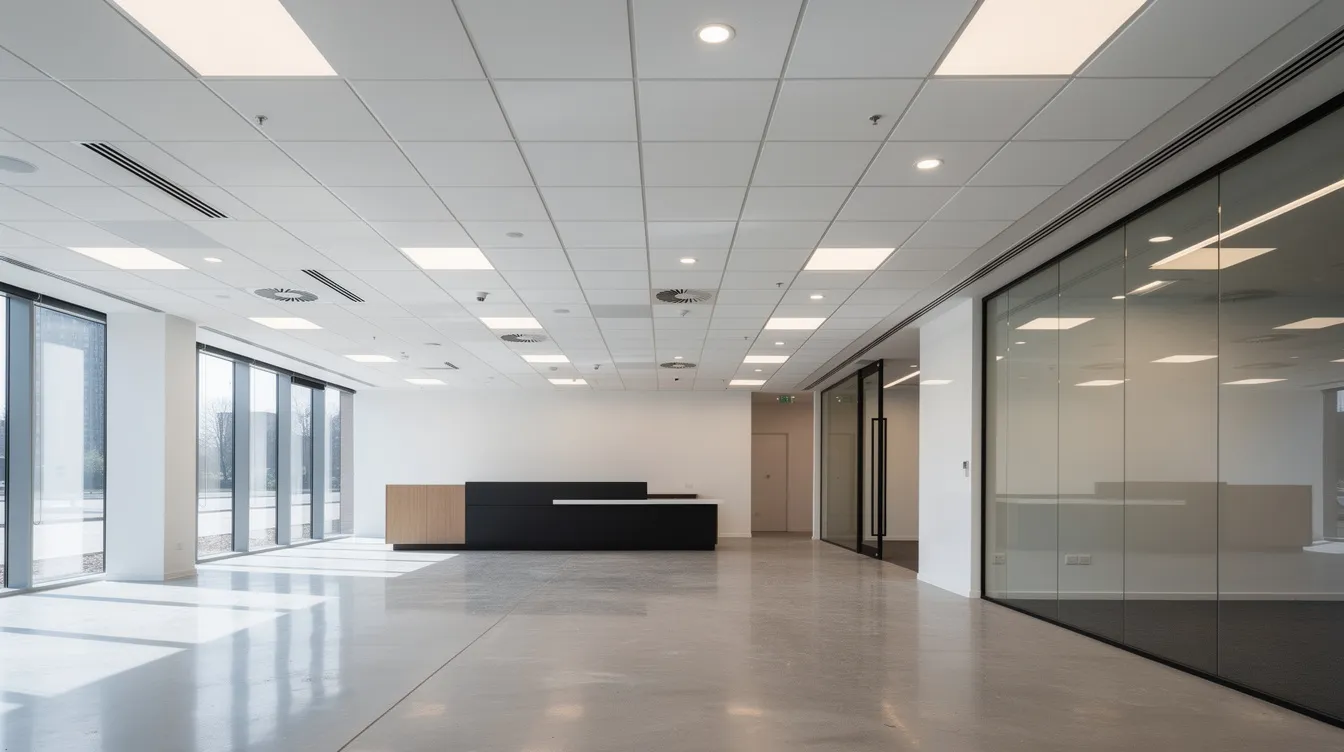
The FL-430 Machined Aluminum Lighting Fixture
In architectural lighting catalogs, "FL-430" sometimes refers to a fixture machined from high-grade solid aluminum. These fixtures are built for long-term durability and are typically treated with chromate or chromate coatings to resist corrosion in harsh outdoor environments—coastal properties, high-UV regions, and areas with extreme weather.
Key characteristics include:
Material: Solid aluminum, CNC-machined for precision fit
Finish: Chromate-treated for corrosion resistance
Rating: Rated for wet locations, suitable for exposed exterior settings
Applications: Landscape uplighting, architectural wall grazing, tree-mounted accent lights, and security perimeter lighting
For high-end residences and boutique hotels, these fixtures deliver reliable performance in rain, snow, and salt air without the maintenance burden of lesser materials—qualities that mirror the reliability expected of large-cabin jets for 20 passengers and the fleets operated by top private jet companies known for premium service in premium travel settings.
The Arlington FL430 Non-Metallic Round Cam-Light Box
The Arlington FL430 is a non-metallic round cam-light box designed for installing fixtures in suspended ceilings, drywall ceilings, and walls. Non-metallic means it is made of engineered polymers rather than steel, offering corrosion resistance, lighter weight, and inherent electrical insulation.
Specifications:
Specification | Detail |
|---|
Width | 7.38 inches |
Depth | ~1.331 inches |
Volume | 27.0 cubic inches |
Knockouts | ½-inch and ¾-inch for conduit or cable connectors |
Load (with drop wire) | 50 lbs in combination with supported ceiling |
Load (drywall, no drop wire) | 10 lbs |
Load (walls) | 7 lbs |
Listing | UL-listed for U.S. and Canada |
The box installs through a 4-inch hole cut with a standard hole saw, making it a practical choice for venues designed to host sizeable groups arriving on private jets for 30 passengers. It ships with cable connectors, a 12-foot drop-wire support, and a paintable white flange that blends with finished ceilings.
Key Features and Applications
The Arlington FL430 is used for:
Mounting cam lights, recessed fixtures, and compact luminaires in drywall and suspended ceilings
Emergency lights, exit signs, and strobe fixtures in commercial spaces
Smoke detector and camera mounting in hospitality environments
In upscale settings—including private aviation terminals, FBO lounges, and executive hangars where BlackJet clients might depart—these boxes support the clean, finished ceiling lines that luxury environments demand, just as 50-passenger private jet charters and buying a single seat on a private jet via shared-flight models support seamless large-group movements.
Non-Metallic vs. Metallic Boxes
Non-metallic boxes like the Arlington FL430 avoid galvanic corrosion in damp environments and eliminate the need for separate grounding of the box itself, much like choosing the right size category of private jet or evaluating the best small private aircraft for specific travel needs avoids overbuilding or under-specifying an aircraft for a typical mission profile. Metallic boxes remain preferable in some heavy-duty or industrial settings where mechanical impact resistance is the priority, just as certain mission profiles call for specific types of private jets optimized for range, runway length, or passenger count. But in modern construction—particularly in finished commercial and residential spaces—non-metallic options are increasingly the standard.
Design and Safety Considerations
Architects and electrical designers specifying an FL430 box for luxury homes or private jet terminals should verify—much like buyers researching private jets for sale under 10 million or surveying the cheapest private aircraft options for budget-conscious ownership do—that key performance and compliance criteria are met:
Load ratings match the intended fixture weight
Code compliance with NEC (U.S.) or CEC (Canada)
Installation by licensed electricians, especially where emergency and egress lighting is involved
The same attention to safety, code compliance, and reliability that governs choices like UL-listed cam-light boxes also underpins BlackJet's standards for aircraft safety certification and terminal infrastructure, and similarly informs its curated listings of UK private jets for sale. Discerning travelers who insist on structural excellence at their residences and offices can expect similarly meticulous standards when they fly under the BlackJet Jet Card model, compare jet card membership pricing and value across programs, or commit to a BlackJet 25+ Hour Jet Card or a broader 25-hour jet card program guide for predictable, long-term access.
Three Meanings, One Designation
To summarize the three distinct uses of "FL430 / FL-430":
Aviation: A high-altitude flight level at 43,000 feet, used by advanced business jets for superior performance, fuel efficiency, and passenger comfort above the RVSM ceiling
California Family Law: Form FL-430, the standardized ex parte application to issue, modify, or terminate an earnings assignment order for child or spousal support
Technical Products: A designation for machined aluminum lighting fixtures and non-metallic cam-light boxes used in construction and architectural design
If you arrived here searching for one of these contexts, confirm you are looking at the correct "FL430" for your needs. The details matter—whether you are planning a transatlantic flight through a premium private jet provider and Jet Card platform like BlackJet, managing a support obligation, or specifying a fixture for a ceiling renovation.
FAQs About FL430
What does FL430 mean in aviation?
FL430 refers to a flight level of 43,000 feet above mean sea level, used primarily by high-performance business jets and some airliners for efficient cruising above congested airspace.
Why is FL430 important for private jet travelers?
Flying at FL430 offers advantages like less turbulence, better fuel efficiency, and fewer routing conflicts, resulting in faster and more comfortable flights.
What is RVSM and how does it relate to FL430?
RVSM (Reduced Vertical Separation Minima) allows aircraft to fly with 1,000-foot vertical separation between FL290 and FL410. FL430 is above RVSM airspace, requiring 2,000-foot separation for safety.
Can all aircraft fly at FL430?
No, only aircraft certified for high-altitude flight with specific equipment can operate at FL430. Many commercial airliners cruise below this level due to design and weight limits.
What is form FL-430 in California family law?
FL-430 is a Judicial Council form used to issue, modify, or terminate earnings assignment orders for child or spousal support, ensuring payments are withheld from paychecks.
How quickly must employers comply with an FL-430 earnings assignment order?
Employers must comply within 10 days of receiving the order or face fines up to $1,000 under California law.
What is the Arlington FL430 product?
The Arlington FL430 is a non-metallic round cam-light box designed for mounting lighting fixtures in suspended ceilings and drywall, valued for its corrosion resistance and ease of installation.
How does FL430 in aviation differ from FL-430 in family law and hardware?
FL430 in aviation is a flight altitude; FL-430 in family law is a court form for support payments; and FL430 in hardware refers to lighting fixture products. They share a designation but serve distinct purposes.
Conclusion: Understanding FL430 Across Contexts
The designation FL430 carries distinct but equally important meanings in aviation, law, and technical design. In aviation, FL430 represents a strategic cruising altitude that offers private jet travelFL-430ignificant advantages in speed, comfort, and efficiency above congested airspace. In California family law, FL-430 is an essential legal form that ensures reliable enforcement of child and spousal support payments through earnings assignment orders. In the realm of construction and architectural lighting, FL430 identifies specialized, durable hardware that supports modern, safe, and elegant building designs.
Recognizing the differences among these uses is crucial for professionals and individuals navigating these fields. Whether planning a high-altitude private flight with BlackJet, comparing jet card pricing structures and benefits in detail, managing legal support obligations, or specifying lighting fixtures for a premium space, FL430 stands as a symbol of precision, reliability, and specialized function. For BlackJet clients and partners, understanding these nuances reflects the same commitment to excellence and detail that defines premier private aviation.
Explore how BlackJet can elevate your travel experience with exclusive access to high-altitude flight levels like FL430, backed100-hourindustry's highest50-hour and sustainability standards. Discover more about our best-in-class jet card options for frequent flyers, strategies to fly private more affordably without sacrificing comfort, and innovative unlimited private jet membership models. You can also dive into detailed breakdowns of 100 hour jet card costs, 50 hour jet card pricing and value, and competitive comparisons such as Flexjet jet card costs and features or NetJets jet card pricing, alongside a deeper look at private jet pilot and operational costs that shape the economics behind every flight.


 Sign up with google
 Sign up with Apple