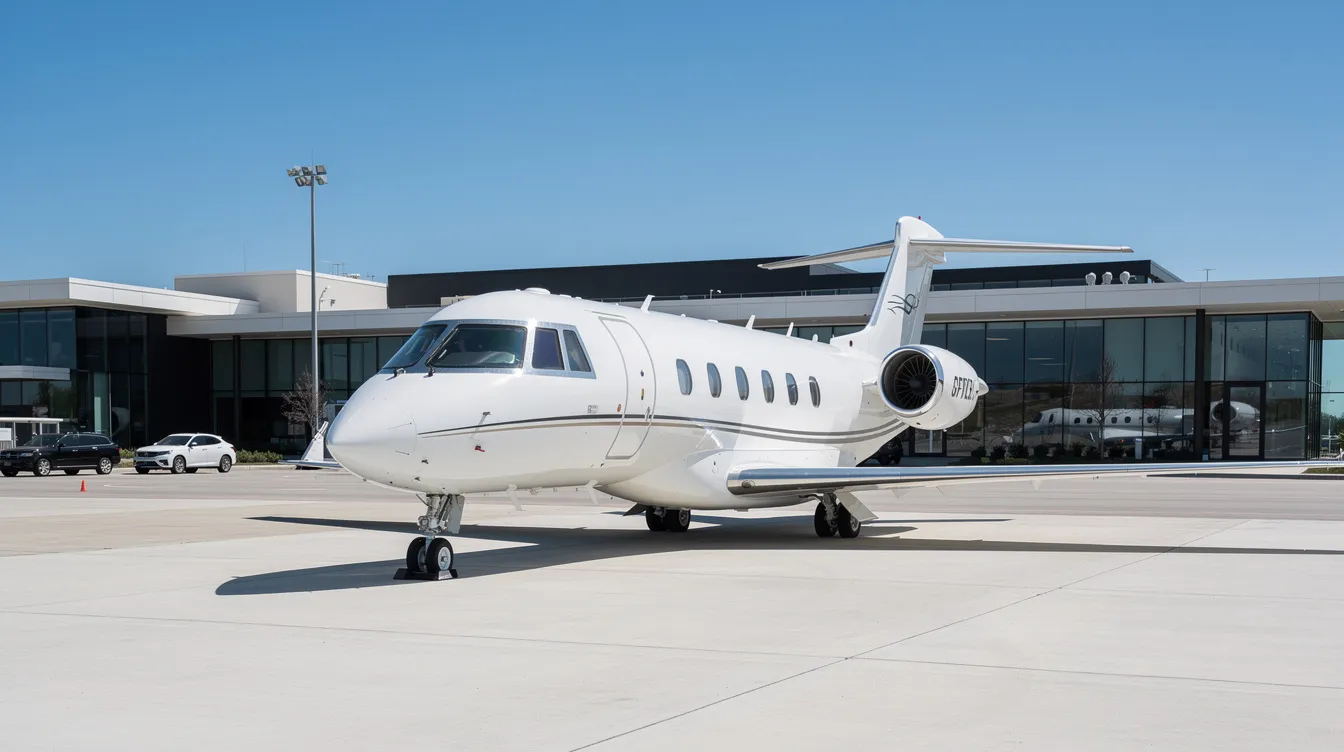
Choosing the right seat on a regional jet can mean the difference between arriving refreshed and arriving frustrated. This guide is for frequent Delta flyers, business travelers, and anyone comparing commercial and private jet options. Choosing the right seat can significantly impact your comfort and productivity on regional flights. This guide breaks down everything you need to know about the Delta Embraer 175 seat map, highlights the rows worth booking and the ones worth avoiding, and offers a candid comparison with private jet travel for those who fly these routes frequently.
Overview: Delta Embraer 175 vs. Private Jet Travel
The Delta Embraer 175 is a 76-seat regional jet used by Delta Air Lines and its Delta Connection partners for routes typically under three hours across the U.S. and Canada. With a range of about 1,800 miles and a cruising speed of approximately 545 mph, this aircraft handles the bulk of short-haul flying in Delta's network.
SeatGuru is a popular resource for airline seat maps and passenger seat reviews, helping travelers make informed choices about where to sit on various aircraft.
Here is what you need to know at a glance:
Class | Number of Seats | Seat Width | Pitch |
|---|
First Class | 12 | ~20 inches | ~36 inches |
Comfort+ | 20 | 18.3–20 inches | ~34 inches |
Economy | 44 | 18.3 inches | 30–31 inches |
Layout advantage: The entire aircraft uses a 2-2 seating configuration with no middle seats - a notable feature that sets it apart from older regional jets built by Boeing, Bombardier, and Embraer manufacturers with cramped 2-1 or 2-3 layouts.
Cabin quirks: Cold spots near exit rows, misaligned windows toward the rear, overhead bins sized for standard 22-inch rollaboards.
For travelers who review seat maps before every flight, these details matter. But for those flying 15–25 regional legs per year, the calculus shifts. A private jet service like BlackJet carrying 7–13 passengers replaces the entire seat map question with full cabin access, flexible scheduling, and direct routing to smaller airports closer to your destination. That is the difference between optimizing a seat and optimizing your time.
Delta Embraer 175 Seat Map & Cabin Layout (SeatGuru-Style Details)
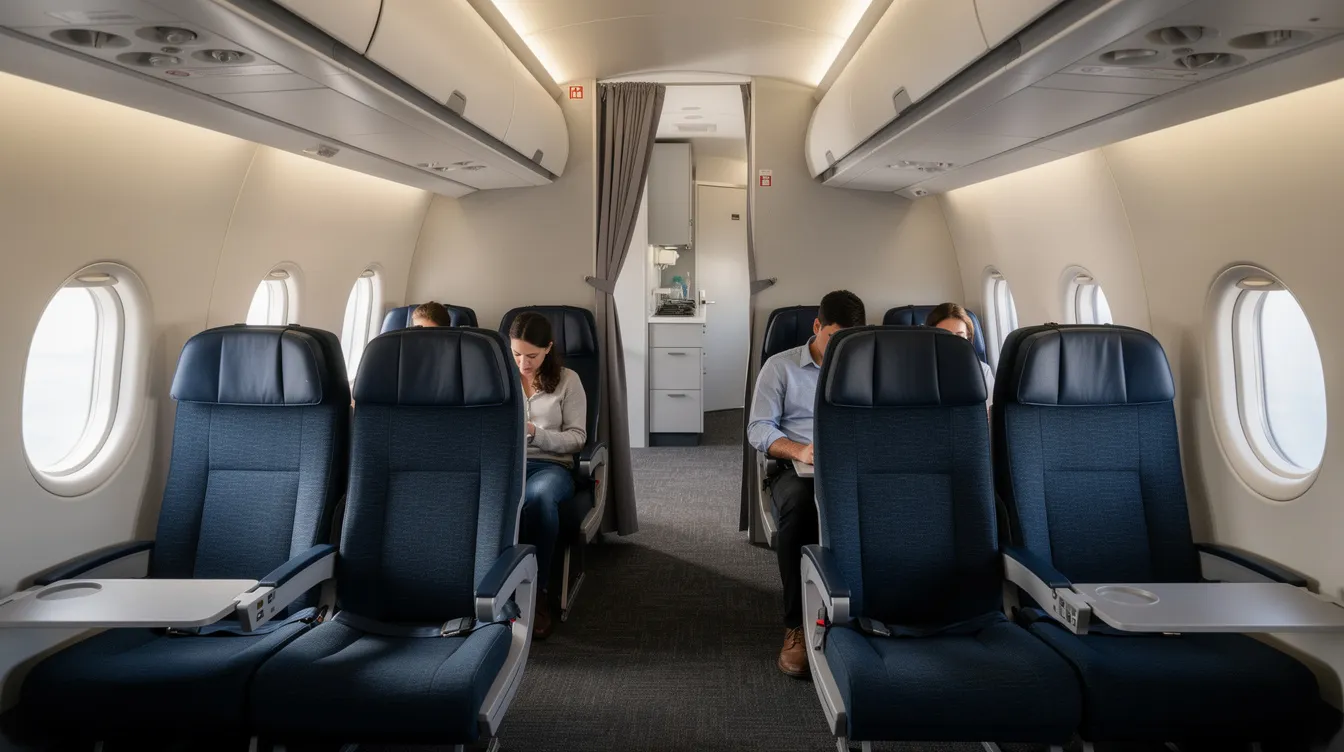
Delta's Embraer E175 fleet is operated primarily by Delta Connection carriers such as SkyWest Airlines, Republic Airways, and Endeavor Air. The most common configuration across these operators is 76 seats arranged in three distinct cabins. Here is your practical cheat sheet for each class cabin and the broader aircraft layout.
First Class (Rows 1–3)
The Delta Embraer 175 features a 1x2 layout in first class, with wider seats (approximately 20 inches) and a generous pitch of around 36 inches.
First class offers gourmet meals and curated entertainment on qualifying routes, along with priority boarding and dedicated overhead bin space.
Row 1 caveat: Outstanding legroom, but no under-seat storage during takeoff and landing.
Proximity to the forward galley and lavatory creates noise that can be a block to rest on early-morning departures.
Rows 2 and 3 are generally the most desirable first-class seat options.
Quieter, still close to the exit, with full storage access.
Comfort+ / Premium Economy (Rows 4–7)
The premium economy section has 20 seats with enhanced amenities, including priority boarding on many routes and dedicated overhead bin space.
The premium economy seat width is 20 inches, while the seat pitch itself runs approximately 34 inches - roughly 3–4 inches more legroom than the main cabin.
Bulkhead seats in this section (typically row 4) offer extra legroom but may have restricted legroom due to the cabin structure.
Tray tables built into armrests reduce effective seat width.
Premium economy features enhanced amenities and priority boarding, making it a solid middle ground for travelers who want more space without the full first-class price.
Main Cabin / Economy (Rows 8–22)
Economy class on the E175 features 44 seats with a modern design in a consistent 2x2 layout across the cabin.
The economy seats have a pitch of 30–31 inches - tight but manageable for flights under two to three hours.
Seat width in economy and Comfort+ on the Delta Embraer 175 is 18.3 inches.
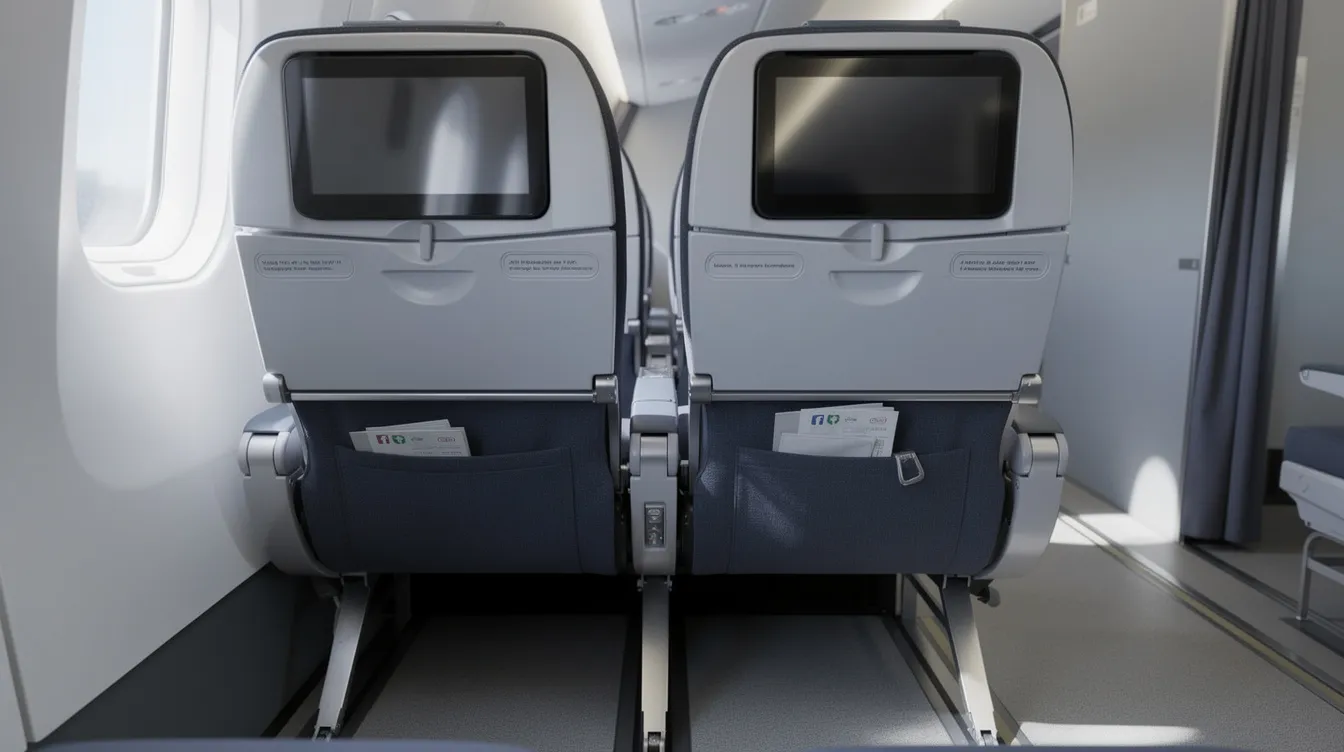
Economy class provides a range of in-flight entertainment options via streaming to your own device. The Delta Embraer 175 offers Wi-Fi-enabled entertainment streaming rather than seatback screens.
Individual USB and AC power ports are available on the Delta Embraer 175, though availability in the main cabin can vary by specific aircraft and operator.
Rows 9–11 in the main cabin typically have better window alignment, making them preferable for passengers who want an unobstructed view through the windows.
Aircraft Layout Overview
Feature | Detail |
|---|
Total seats | 76 |
Galleys | 2 (front and rear) |
Lavatories | 2 (forward for First/Comfort+, rear for Main) |
Emergency exits | 4 |
Seatback IFE | None - streaming to personal device |
Power outlets | USB and AC in First/Comfort+; variable in Main |
The lack of middle seats is a notable feature of the Delta Embraer 175 that passengers consistently appreciate compared to other airlines operating older regional jet types. The crew operates from both galley positions, which means service tends to reach mid-cabin rows efficiently on short flights.
Best & Worst Seats on the Delta Embraer 175 (and How They Compare to Private Jets)
SeatGuru-style guidance centers on identifying the rows that deliver the most comfort, the least noise, and the fastest deplaning - details that matter most on early-morning business flights and tight connections, and they provide a helpful baseline when you compare them against the practical value of chartering a private jet. Here is a practical review of what to book and what to skip.
Best Seats to Book
First class, rows 2–3 (window or aisle): Most comfortable seats, quieter than row 1, good legroom, and close to the forward door for a fast exit.
Full under-seat storage and minimal galley noise in these seats.
Comfort+ exit row (often row 12 or 13): Extra legroom for taller travelers.
Be aware of colder airflow from the door seal and tray tables embedded in the armrests, which narrow the seat slightly.
Forward main cabin rows (rows 9–12): Decent legroom, better window alignment, and reasonably quick deplaning.
Rows 9–11 in the main cabin typically have better window alignment, giving you an unobstructed view.
Good choices for budget-conscious travelers who still want a comfortable flight.
Seats to Avoid
Last row of main cabin (row 22): Limited recline, constant traffic to the rear lavatory, and galley noise.
Rear window seats with misaligned windows: The window frame may block the view entirely in the aft section.
Seats aft of the wing (rows 15–20): Increased engine noise and vibration.
Aisle seats in this zone catch both noise and galley traffic from the rear.
How Private Jets Compare
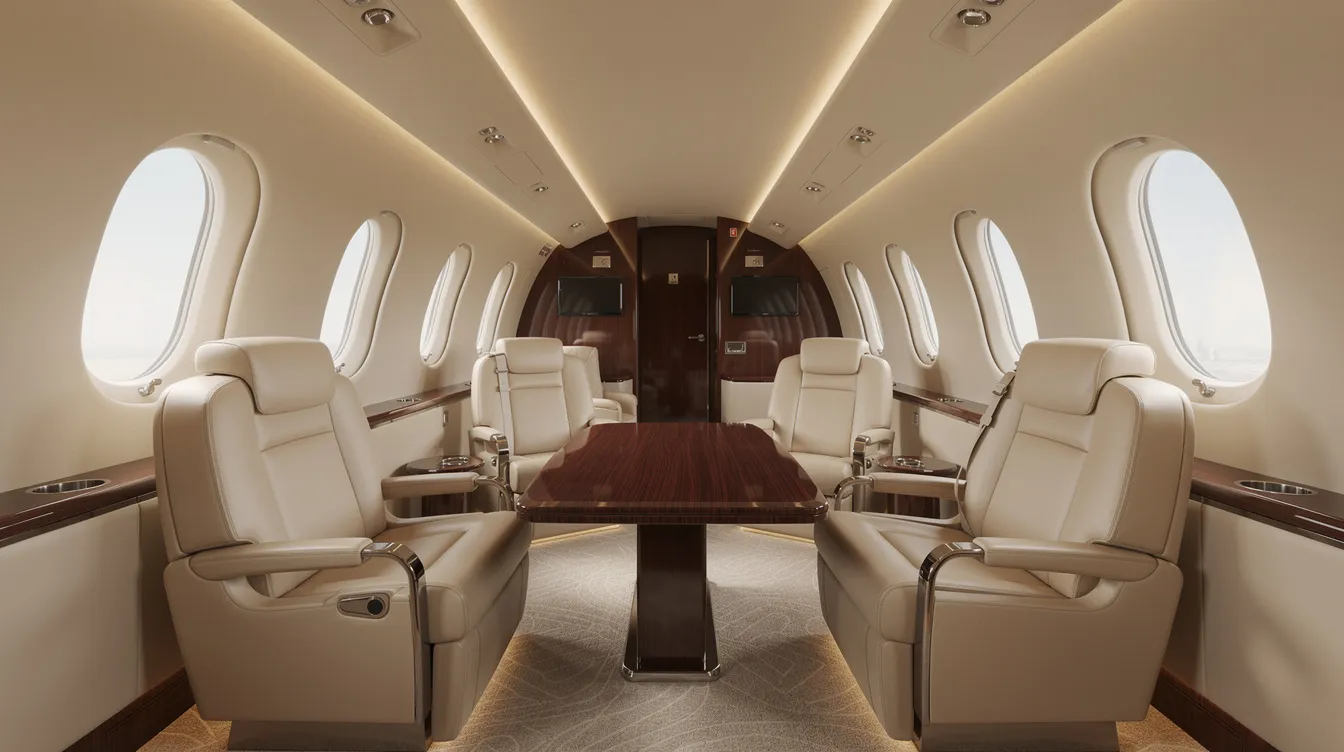
In a typical 810-passenger light or midsize jet accessed through a Jet Card program, every seat is effectively first class with full aisle access. There is no competition for best versus worst rows. Clients select aircraft layouts that suit their needs - club seating for productivity, four-place configurations for meetings, or divan layouts for family travel, which is why many frequent flyers look into the best jet cards for frequent travelers once their regional flight count starts to climb. The entire concept of "good" versus "bad" seats disappears when you are one of fewer than a dozen passengers in a cabin designed around you rather than around yield management.
Unlike manufacturers such as Airbus, Boeing, or Embraer building for airline-density configurations, private jet interiors prioritize space per passenger, noise isolation, and flexible seating across a wide range of private jet sizes tailored to different missions - amenities that no commercial regional jet can match.
When to Choose Delta's Embraer 175 - and When a BlackJet Jet Card Wins
When Delta's Embraer 175 Makes Sense
The Embraer 175 is one of the more comfortable regional jets in the Delta Air Lines network. For short hops like New York–Toronto, Atlanta–Nashville, or Seattle–Boise, choosing optimal seats via SeatGuru-style resources can make these flights efficient and perfectly tolerable for most travelers. If you fly these routes a few times per year, a well-chosen first class or Comfort+ seat delivers solid value, especially if you are still evaluating the broader private jet price landscape and access models.
When Private Jet Travel Wins
The equation changes for frequent business travelers who log 15–25+ flights annually, particularly once you start comparing your annual airline spend to jet card pricing structures and benefits:
Time lost on the ground: Even in first class on an E175, time evaporates in TSA lines, boarding queues, and hub connections.
A Delta Connection flight from Chicago to Dallas might route through Atlanta, adding hours.
Time saved in the air: On a BlackJet 25+ Hour Jet Card, that same executive drives directly to the FBO, clears security in minutes, and flies nonstop from Chicago Midway to Dallas Love Field on a light jet.
This saves several hours per round trip.
Frequently Asked Questions About the Delta Embraer 175 and Private Jet Travel
What is the seating configuration on the Delta Embraer 175?
The Delta Embraer 175 features a 1x2 layout in First Class, a 2x2 layout in Comfort+ (Premium Economy), and a 2x2 layout in the Main Cabin (Economy), with no middle seats across the entire aircraft.
How many seats does the Delta Embraer 175 have?
Most commonly, the aircraft has 76 seats in total: 12 in First Class, 20 in Comfort+, and 44 in Economy. The E175 V.2 configuration has 70 seats with 12 First Class, 20 Comfort+, and 38 Economy seats.
What are the best seats to choose from on the Delta Embraer 175?
Rows 2–3 in First Class offer the most comfort and quiet, while exit rows in Comfort+ provide extra legroom. Forward main cabin rows (9–11) have better window alignment and reasonable legroom.
How does the Delta Embraer 175 compare to private jet travel?
Unlike commercial regional jets like the Embraer 175, private jets accessed via Jet Card programs offer full cabin access, flexible scheduling, and personalized layouts without middle seats or crowded cabins, enhancing comfort and efficiency.
Are there any common issues reported by passengers on the Delta Embraer 175?
Some passengers have noted issues such as poor climate control, uncomfortable seat design in upright positions, and misaligned windows causing limited views, which are less likely to be concerns on private jets.
How does BlackJet ensure safety and sustainability compared to commercial regional jets?
BlackJet operates under proprietary certification standards exceeding FAA minimums, with vetted operators and rigorous audits. Additionally, all BlackJet flights are carbon-neutral by default, offsetting 100% of emissions at no extra cost.
Can I book a private jet flight as easily as choosing a seat on the Embraer 175?
Yes, BlackJet offers 24/7 digital booking and real-time flight support through prepaid Jet Card programs, providing seamless access to private jets without the hassle of seat selection or commercial airport logistics.
BlackJet's Key Advantages for Regional Travelers
For those who currently rely on regional jets like the Delta Embraer 175 for business or premium economy travel, the question is straightforward: does optimizing your seat selection justify the hours lost to commercial logistics? If not, explore how BlackJet's Jet Card can turn your most time-sensitive regional trips into bespoke, carbon-neutral private flights.


 Sign up with google
 Sign up with Apple