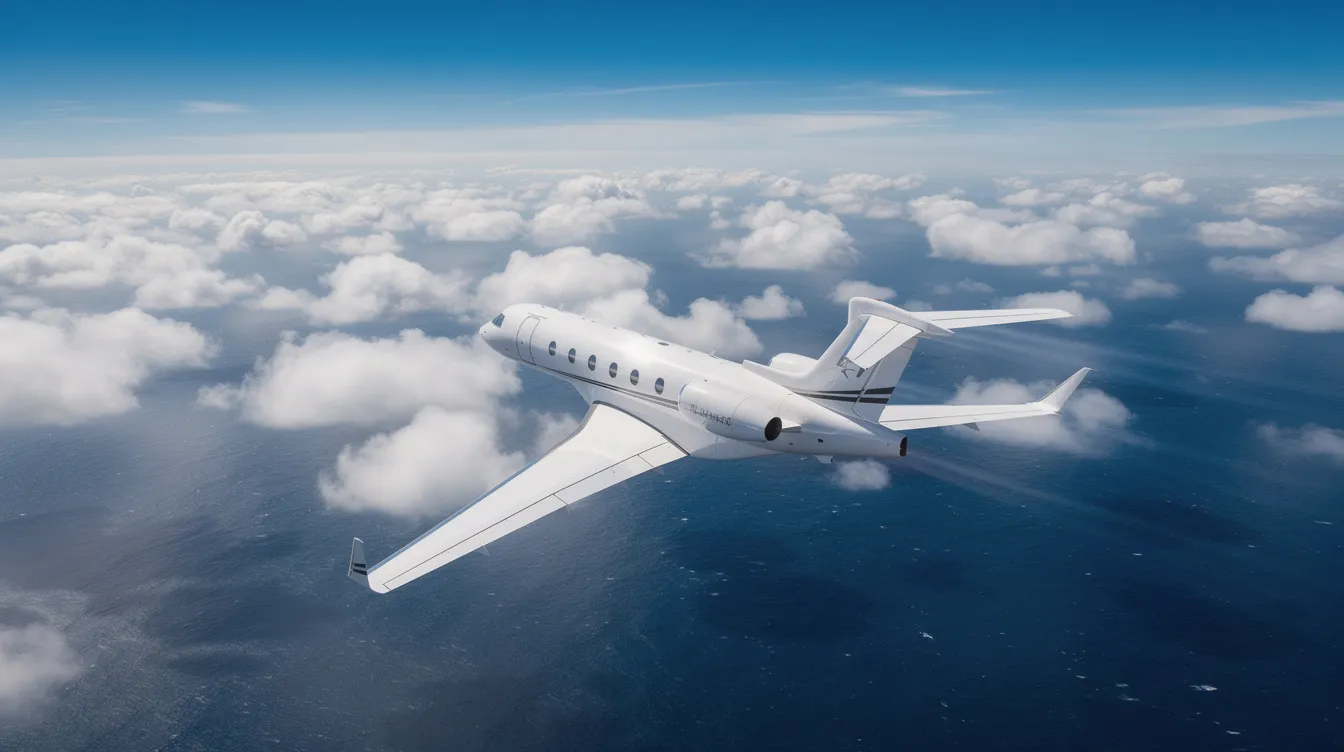
Flying privately across the Atlantic is no longer reserved for heads of state and billionaires. For executives, entrepreneurs, and families who value time as their most finite resource, a private jet flight to Europe has become a strategic tool - not just a luxury. But the cost to fly a private jet to Europe varies dramatically depending on aircraft type, routing, season, and how you structure the trip.
This guide breaks down real 2026 pricing, route-by-route examples, hidden fees, and the smartest ways to manage your transatlantic private jet travel budget.
At a Glance: What Does It Cost to Fly a Private Jet to Europe?
Private jet charter costs for U.S.–Europe routes range from roughly $70,000 to over $260,000 one way, depending on departure city, destination, and aircraft category. These are whole-aircraft prices - not per seat. Round-trip costs typically add 50–70% on top of two separate one-way legs when factoring in crew overnights, parking, and idle time.
Here is how popular routes break down for 2026:
Route | Aircraft Category | Est. Flight Time | Est. One-Way Cost (2026) |
|---|
New York (TEB) → London (FAB) | Heavy Jet (e.g., Gulfstream G450) | ~6.5–7 hrs | $90,000–$110,000 |
New York (TEB) → London (FAB) | Ultra Long Range (e.g., G650) | ~6.5–7 hrs | $120,000–$150,000 |
Miami (OPF) → Paris (LBG) | Ultra Long Range (e.g., Global 7500) | ~8.5 hrs | $130,000–$170,000 |
Los Angeles (VNY) → Geneva (GVA) | Ultra Long Range (e.g., G650) | ~11–12 hrs | $180,000–$260,000 |
London → Paris (intra-Europe leg) | Light Jet | ~1.5 hrs | ~$4,500–$7,000 |
Private jet rentals cost $2,000 to $14,000+ per hour, depending on aircraft size, and transatlantic missions sit at the top of that range.
How does this compare to a commercial? Four to ten passengers flying round trip in commercial first or business class between New York and London might spend $30,000–$80,000 total. Private jet travel becomes strategically compelling when you factor in time savings, schedule control, privacy, and the ability to use airports like Farnborough or Le Bourget - closer to final destinations and free of terminal congestion.
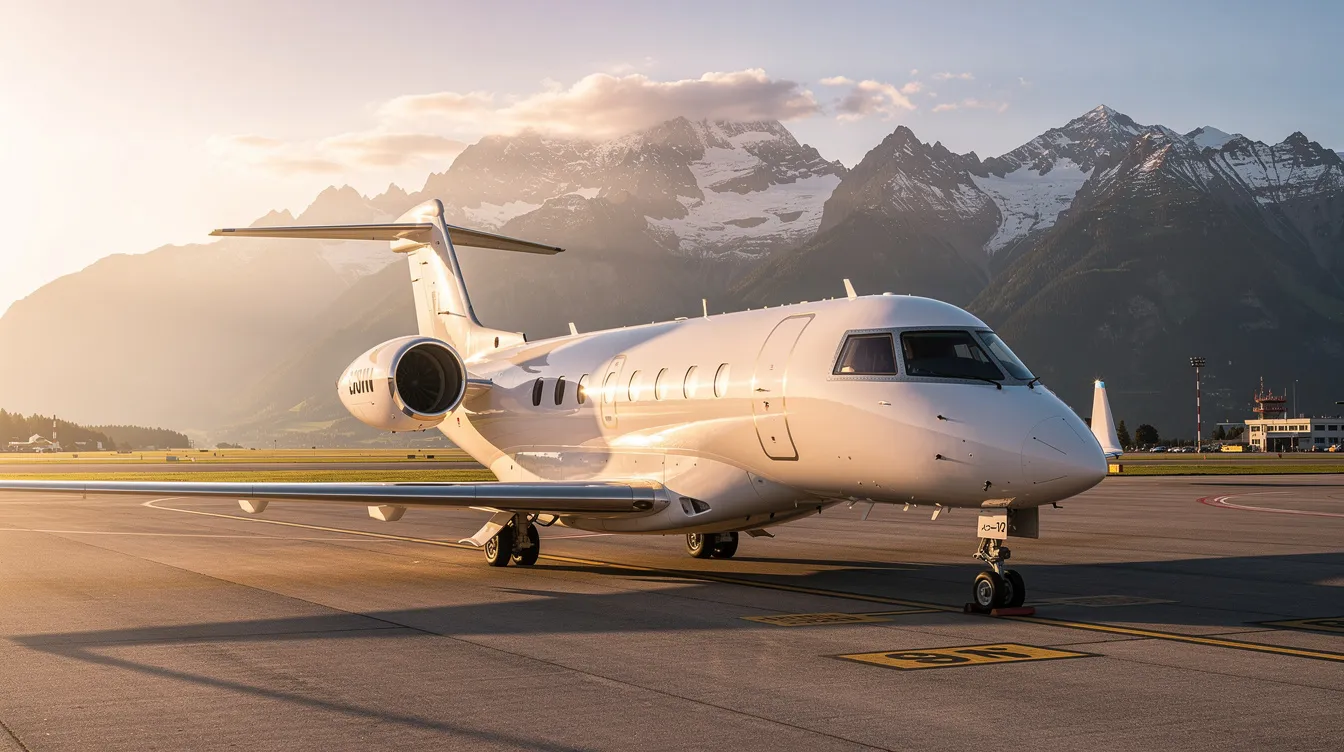
Why High-Net-Worth Travelers Choose Private Jets to Europe
Private jet travel to Europe is a strategic advantage measured in hours reclaimed, meetings made possible, and complexity eliminated. When you can depart from a private terminal 20 minutes before wheels-up, fly nonstop to a secondary airport steps from your hotel, and clear customs in a private lounge, the calculus changes.
Consider two scenarios:
CEO, New York to London for 36 hours of meetings. A commercial flight means arriving at JFK two-plus hours early, an overnight red-eye, and a transfer from Heathrow into central London. On a private plane to Europe, the same executive departs Teterboro at 8 p.m., works or sleeps in a lie-flat cabin, and lands at Farnborough by 7 a.m. local time - 30 minutes from Mayfair.
Family of six, Miami to Nice for peak August holidays. Commercial airlines offer limited direct options, and six first-class seats in August can exceed $60,000. A private aircraft accommodates pets, surfboards, and a departure time that suits the family - not the airline.
Private jet travel allows you to set your own itinerary and choose preferred airports for your private jet flight. The door-to-door time savings on a transatlantic route typically amount to four to six hours per direction compared to a commercial flight.
BlackJet's Jet Card model gives members prepaid access to guaranteed aircraft categories for Europe-bound trips, with 24/7 digital booking and dedicated flight support.
Key Factors That Drive the Cost to Fly Private to Europe
Private jet costs are primarily calculated using an hourly rate multiplied by flight time, but that formula is just the starting point. The total cost to charter a private jet to Europe depends on several interlocking variables:
Aircraft category. The single largest cost driver. Ultra-long-range jets cost significantly more per hour than heavy or super-midsize jets, but they are often the only option for nonstop West Coast–Europe routes.
Routing and flight distance. Longer routes mean more flight hours and higher fuel burn. North Atlantic track assignments can add or subtract time depending on winds.
Season and booking window. Peak demand periods compress availability and push rates upward.
Trip structure. One-way legs may incur repositioning charges. Multi-city itineraries introduce idle-time costs and daily minimums.
Extras and fees. In flight catering, ground transportation, Wi-Fi upgrades, landing fees, federal excise tax on applicable U.S. segments, and international handling all add to the invoice.
An expert provider like BlackJet optimizes each of these factors on behalf of members. Later sections break down every lever with concrete 2026 pricing.
Aircraft Types for Transatlantic Flights: From Light Jets to Ultra-Long Range
Aircraft category is usually the single biggest driver of private jet cost to Europe. Not every private plane can cross the Atlantic nonstop - and the one you choose determines your price floor.
Very light jets are ideal for short trips, accommodating 4–7 passengers, but their flight range tops out around 1,200 nautical miles. Most light jet models accommodate 4–8 passengers with a range of 1,000–2,000 miles - suitable for European connecting legs like London to Zurich, but not for crossing the ocean.
Transatlantic flights generally require large jets, typically heavy jets or ultra-long-range jets for these missions, similar to the aircraft profiled in our guide to the largest private jets for sale and charter. Here is how each category maps to U.S.–Europe missions:
Category | Example Aircraft | Passengers | Typical Range | 2026 Hourly Rate | Best For |
|---|
Super Light Jet | Phenom 300, Citation CJ4 | 6–8 | ~2,000 nm | $3,500–$6,500/hr | Intra-Europe hops only |
Midsize Jet | Citation Latitude, Hawker 800XP | 6–10 | 2,000–3,500 mi | $5,500–$9,500/hr | Intra-Europe or partial transatlantic with stops |
Super Midsize Jet | Challenger 350, Praetor 600 | 8–10 | ~3,500–4,000 nm | $7,500–$12,500/hr | East Coast–Europe with payload limits |
Heavy Jet | Gulfstream G450, Falcon 900 | 10–16 | 4,000–6,000 mi | $8,000–$15,000/hr | East Coast–Western Europe nonstop |
Ultra Long Range | G650/G700, Global 7500, Falcon 8X | 12–19 | 6,000+ mi | $12,500–$18,500+/hr | Any U.S. city to Europe nonstop |
Midsize jets typically seat 6–10 passengers and have a range of 2,000–3,500 miles - enough for short regional flights within Europe but not for transatlantic crossings without fuel stops. For a deeper look at private jets with the longest range, see our dedicated guide.
How Flight Distance and Routing Impact Your Europe Jet Price
The relationship between flight distance and cost is straightforward: more nautical miles mean more billable flight time, more fuel, and a higher total. But actual routing adds nuance.
Transatlantic flights follow North Atlantic Organized Track Systems, which shift daily based on jet stream patterns. Eastbound flights often gain tailwind advantage, shaving 30–60 minutes off flight time compared to westbound returns. That asymmetry affects your billable flight hour count.
Concrete route examples on a heavy jet ($11,000–$14,000/hr):
New York–London: ~6.5 hours eastbound = ~$71,500–$91,000 base
Miami–Paris: ~8.5 hours = ~$93,500–$119,000 base
Los Angeles–Geneva: ~11 hours, requiring ultra-long-range jets at $13,000–$17,000/hr = ~$143,000–$187,000 base
West Coast–Europe routes almost always require ultra-long-range jets for nonstop service due to the flight distance exceeding 5,000 nautical miles. East Coast departures can sometimes use heavy or even super midsize jets, depending on payload and headwind conditions.
Repositioning and empty legs: If you book a one-way charter, the aircraft may need to fly empty to reach your departure point or return to base afterward. That aircraft positioning cost gets passed to you. BlackJet's network often minimizes these charges for members by matching transatlantic private jet legs with existing fleet movements.
Seasonality, Peak Demand, and Short-Notice Bookings
Seasonal demand drives up private jet prices during peak travel periods. Here is what to expect:
Summer (June–September) is the highest-demand window for U.S.–Europe charter flights. Heavy and ultra-long-range jets become scarce, and hourly rates can climb 10–30% above shoulder-season levels.
Holiday surges around Christmas, New Year, and spring break further compress aircraft availability.
Major events - Art Basel, Monaco Grand Prix, Paris Fashion Week, Cannes Film Festival - create localized spikes. Booking a heavy jet to Nice during the Grand Prix weekend can cost 20–30% more than the same route two weeks earlier.
Short-notice bookings (within 24–48 hours) carry surcharge risk because operators must scramble for crew, permits, and slots. A fuel surcharge can rise with changing fuel prices and significantly impact overall costs on last-minute trips.
BlackJet Jet Card members benefit from fixed-rate or capped pricing windows, providing insulation against peak-season volatility. Members who book through last-minute private jet deals also gain priority access when availability tightens.
One-Way, Round Trip, and Multi-City European Itineraries
One-way private jet charters across the Atlantic often carry repositioning charges - sometimes making a single leg nearly as expensive as a round trip if the entire aircraft must return empty. Understanding trip structure is critical to managing cost.
Same-aircraft round trips (e.g., New York–London–New York over 3–4 days) keep the jet and crew in place. You pay for crew overnights and parking, but avoid two repositioning legs. This is typically the most cost-efficient structure for short business trips.
Extended multi-city itineraries (e.g., New York–London–Milan–Nice–New York over two weeks) introduce daily minimums and idle-time charges. Chartering a private jet for a week costs tens to hundreds of thousands, depending on how many legs are flown versus how many days the aircraft sits.
Sample structural comparisons:
2-day business round trip, TEB–FAB–TEB: ~$200,000–$280,000 all-in on an ultra-long-range jet, including crew, hotel, and parking at Farnborough.
10-day Europe tour, 4 legs (NY–London–Milan–Nice–NY): ~$350,000–$500,000+ depending on aircraft type, with each intra-Europe short leg adding $8,000–$25,000.
Open-jaw (NY–Paris outbound, Rome–NY return): Two separate one-way legs, each priced independently, with potential repositioning savings if the operator has demand on matching routes.
BlackJet's flight support team can re-optimize complex itineraries to avoid unnecessary short leg fees and idle-time costs - often saving members tens of thousands on multi-stop European journeys.
Typical Hourly Rates in 2026 for Europe-Capable Jets
Here are updated 2026 ballpark hourly rates for the aircraft categories most commonly used on international flights to Europe:
Jet Category | Example Aircraft | 2026 Hourly Rate (USD) | | Suitable European Routes |
|---|
Super Midsize Jet | Challenger 350, Praetor 600 | $7,500–$12,500 | East Coast–UK/Ireland with light payload | |
Heavy Jet | Gulfstream G450/G550, Falcon 900 | $11,000–$16,000 | East Coast–Western Europe nonstop | |
Ultra Long Range | G650/G700, Global 7500, Falcon 8X | $12,500–$18,500+ | Any U.S. city–Europe nonstop | |
Heavy jets typically range from $8,000 to $15,000 per hour. Ultra-long-range jets cost $10,000 to $15,000+ per hour, with newer models like the Global 7500 sometimes commanding rates above $18,000.
What is typically included: aircraft, crew, standard in-flight catering, fuel, and insurance. What is usually itemized separately: international handling fees, deicing, premium catering upgrades, high-speed Wi-Fi, and in-flight entertainment systems.
Jet Card programs like BlackJet's can lock in or cap these hourly rates for frequent transatlantic travelers, reducing the volatility that comes with ad-hoc charter pricing. For a deeper dive into jet card pricing structures and benefits, see our breakdown of jet card costs for details.
Sample Cost Scenarios: U.S. to Europe on Different Jet Classes
These scenarios illustrate the estimated all-in private jet cost for representative 2026 trips. Each includes base flight cost plus a lump-sum estimate for taxes, fees, and extras.
Scenario 1: New York (TEB) → London Farnborough (FAB), Heavy Jet, One-Way Flight time: ~6.5 hours eastbound. Hourly rate: ~$12,000/hr. Base flight cost: ~$78,000. Taxes, handling, international fees, crew: ~$15,000–$25,000. Estimated total: $93,000–$103,000 one way. For a 3-day round trip with the same aircraft, add crew overnights, parking, and the return leg (~7.5 hours westbound due to headwinds): estimated round trip total $210,000–$250,000.
Scenario 2: Miami (OPF) → Paris Le Bourget (LBG), Ultra Long Range Jet (Global 7500) Flight time: ~8.5 hours. Hourly rate: ~$15,000/hr. Base flight cost: ~$127,500. International permits, handling, FET on U.S. segment, crew: ~$18,000–$30,000. Estimated total: $145,000–$158,000 one way. For broader context on how much it costs to rent a private jet, see our private jet to Paris guide.
Scenario 3: Los Angeles (VNY) → Geneva (GVA), Ultra Long Range Jet (Gulfstream G650) Flight time: ~11.5 hours nonstop. Hourly rate: ~$16,000/hr. Base flight cost: ~$184,000. Fees and extras: ~$20,000–$35,000. Estimated total: $204,000–$219,000 one way. Alternative: breaking the journey with a refueling stop in Iceland or eastern Canada on a larger aircraft at a lower hourly rate can sometimes reduce cost by 10–15%, but adds 1–2 hours of total travel time.
Scenario 4: New York → London → Milan → Nice → New York, 10-Day Multi-City: Combining the transatlantic legs with two short intra-Europe hops on a midsize jet. Estimated total for the entire itinerary: $380,000–$480,000 depending on aircraft mix and idle days.
BlackJet can produce precise, route-specific quotes within minutes via its digital platform or dedicated advisors.
Taxes, Fees, and "Hidden" Costs on Transatlantic Private Jets
Private jet pricing includes various operational fees beyond just the hourly rate. Here are the key line items that appear on transatlantic invoices:
Landing fees range from $200 to $2,000 depending on the airport. Premium European airports like Geneva or Nice tend toward the higher end. Airport fees also include ramp and parking charges.
International handling and permits. Overflight permits, navigation charges, and customs/immigration handling for international flights often include additional international fees such as navigation and customs handling, typically adding $2,500–$8,000 per transatlantic crossing.
Federal excise tax. The FET is 7.5% on eligible domestic portions of chartered air transport. For transatlantic trips, this applies to the U.S. segment of the journey - not the entire route.
Crew overnights. Crew accommodations and per diems are required if the crew stays overnight in Europe. Overnight crew expenses can add $200 to $600 per crew member per night at premium locations.
Fuel surcharge can add $300 per hour during price surges, and it rises and falls with fuel prices at the time of your flight.
De-icing fees can range from $1,500 to $15,000 in winter, depending on aircraft surfaces to be treated, jet size, and severity of conditions.
Short leg fees apply for brief flights due to minimum fuel consumption and aircraft wear - relevant on intra-Europe hops under an hour.
Hangar fees at European airports during extended stays, particularly in winter or at congested FBOs.
BlackJet provides transparent, itemized cost breakdowns up front so members understand the total private jet cost before confirming. No surprise line items after the fact. For a comprehensive look at how pricing works, visit our private jet charter cost estimator.
The Role of Aircraft Age, Configuration, and Amenities
Not all heavy jets or ultra-long-range jets carry the same price tag. Aircraft age, cabin configuration, and onboard amenities create a pricing spectrum within each category.
Older but well-maintained jets - a 2012 Gulfstream G550 versus a 2024 G700 - can offer meaningfully lower hourly rates while still providing excellent range and comfort. Newer-generation aircraft command premium pricing due to fuel efficiency, advanced avionics, larger cabin volume, and longer range capability, especially in the segment of 20 million dollar private jets and their flagship features.
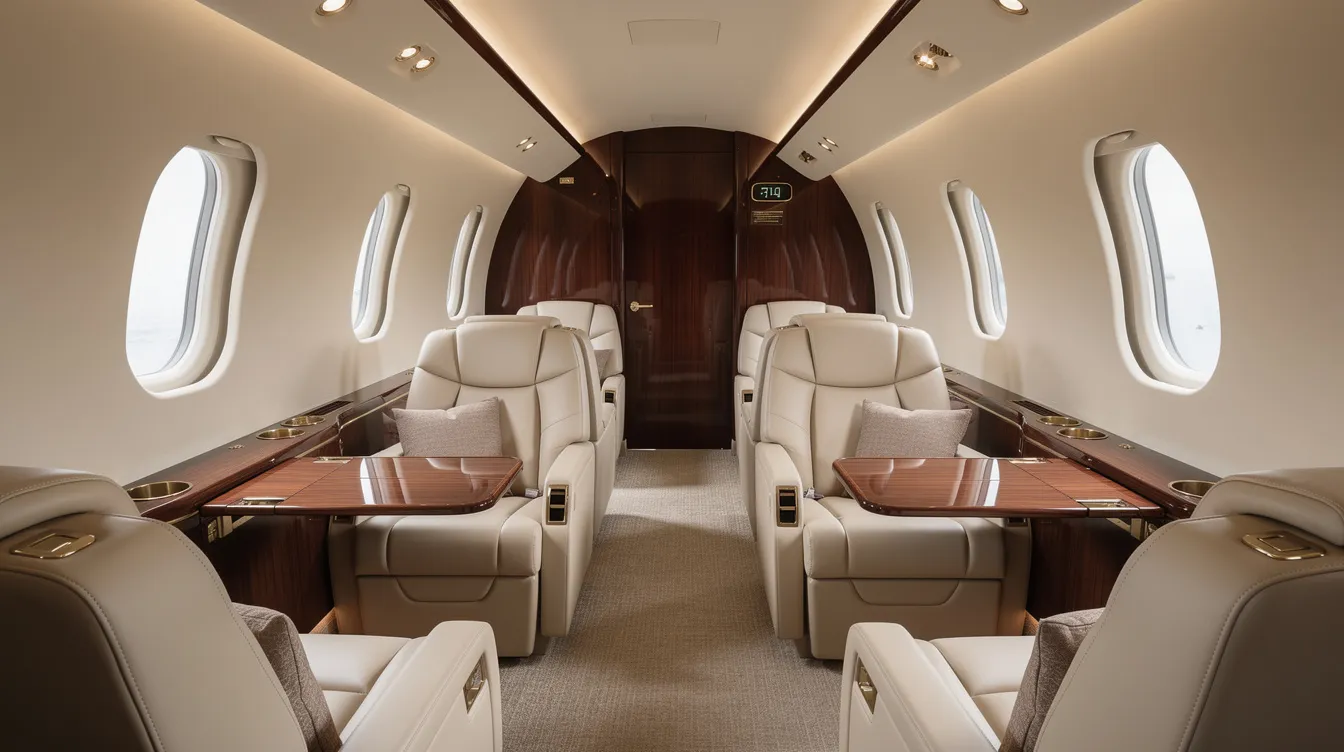
On long-haul flights, amenities matter more than on domestic flights. Premium catering and additional onboard services can increase the final cost of a private jet flight. Features that affect pricing or value on transatlantic legs include:
Lie-flat beds or dedicated bedrooms for overnight crossings
Chef-prepared multi-course catering versus standard provisions
High-speed Ka-band Wi-Fi for continuous connectivity over the ocean
In-flight entertainment systems and satellite communications
A flight attendant for cabin service on ultra-luxury VIP airliners
Certain cabin configurations - high-density seating for corporate groups versus ultra-luxury layouts for two or three travelers - influence per-person value. Private jet rentals offer unmatched comfort and customization options, and the cheapest private aircraft and budget-friendly jet options can still accommodate specific passenger needs and preferences, from medical equipment to pet travel.
BlackJet curates only safety-certified aircraft with high cabin standards, then matches members to the right configuration for each mission.
Private Jet Travel vs Commercial First and Business Class to Europe
Here is a direct cost comparison for a New York–London peak-season round trip:
4 passengers, commercial business class: ~$32,000–$48,000 total
4 passengers, private jet (heavy jet round trip): ~$210,000–$250,000 total
8 passengers, commercial first class: ~$80,000–$120,000 total
8 passengers, private jet (heavy jet round trip): ~$210,000–$250,000 (same aircraft cost, lower per-person)
12 passengers, commercial business class: ~$96,000–$144,000 total
12 passengers, private jet (ultra long range round trip): ~$280,000–$350,000
The per-person gap narrows significantly with larger aircraft and more passengers. But the non-monetary advantages are where flying private becomes a rational decision:
Time savings: Arrive 20–30 minutes before departure versus 2–3 hours for commercial airlines. Clear customs in a private terminal.
Airport flexibility: Use regional airports and private terminals like Teterboro, Farnborough, or Le Bourget - often closer to your final destination than major hubs.
Privacy and productivity: Conduct sensitive discussions, hold working meetings, or simply rest without interruption. No middle seats, no announcements.
Schedule control: Depart when you need to, not when the airline decides. Change departure by hours, not days.
Pets and equipment: Travel with pets in-cabin, oversized luggage, sports equipment, or specialized cargo.
No connection risk: A single nonstop private flight eliminates layover delays and missed connections.
When valued in terms of time, control, and productivity, flying privately becomes a strategic choice - especially for senior teams or family groups crossing the Atlantic multiple times per year, even if they are looking for ways to fly private more cheaply. For a comparison of all business class airline options, see our analysis.
Chartering a Private Jet vs Using a Jet Card for Europe Flights
On-demand private jet charter service means trip-by-trip pricing: you request a quote, negotiate, and pay for each flight independently. Private jet charter prices fluctuate with market conditions, and there is no rate protection during peak demand.
A Jet Card membership with prepaid hours and fixed or capped rates offers a fundamentally different model. Jet cards offer prepaid access to private jets, and members can secure fixed flight hour rates across their chosen aircraft categories, whether they are evaluating a 100-hour jet card cost and structure or smaller hourly blocks.
How BlackJet's Jet Card works for Europe-bound travelers:
Purchase minimum hour blocks (e.g., 25 or 50 hours) across super midsize, heavy, or ultra long range aircraft categories.
Rates are locked at enrollment, shielding members from seasonal surges.
Jet card memberships provide guaranteed aircraft access, even during peak weeks when ad-hoc charter flights face limited availability.
Jet card programs simplify travel planning for frequent flyers with consolidated billing and streamlined contracts.
Numerical example: An executive flying three New York–London round trips per year uses approximately 40–45 flight hours on a heavy jet. On an ad-hoc charter, total annual spend might range from $630,000–$750,000 depending on seasonal pricing. On a BlackJet Jet Card and other top jet cards for frequent flyers, the same hours at a locked rate could save 8–15% while guaranteeing availability and providing integrated carbon-neutral offsets.
Jet cards are often cost-effective for travelers flying over 25 hours annually. To understand jet card cost per hour and key pricing drivers, explore our guide on jet card memberships and key factors to consider.
Empty Legs and Other Ways to Reduce the Cost of Flying Private to Europe
Empty leg flights occur when a private jet needs to reposition - for example, flying from London back to New York without passengers after dropping off a client. These legs are offered at significant discounts, sometimes 30–75% below standard private jet charter prices.
Trade-offs with empty legs:
Routes and timing are fixed; you fly when and where the aircraft needs to go
Limited choice of aircraft type and cabin configuration
Less flexibility if your plans change - cancellations may not be refundable
Aircraft availability on transatlantic empty legs is sporadic
Other cost-optimization tactics: Travelers comparing options should understand the full cost to rent a private jet, including empty legs and dynamic pricing.
Choose secondary airports (e.g., Luton instead of London City, Chambéry instead of Geneva) where landing fees and handling costs are lower.
Travel just outside peak days - departing mid-week versus Friday can reduce rates by 10–20%.
Select the most efficient aircraft for your mission instead of defaulting to the largest cabin. A well-matched heavy jet can save $30,000+ over an ultra-long-range jet on routes where both work.
Bundle multiple European legs into a coherent itinerary to reduce repositioning and idle time.
BlackJet uses its technology platform and operations team to match members with advantageous empty legs or back-to-back pairings when available, turning what would otherwise be additional costs into savings, especially for members using the BlackJet 25+ Hour Jet Card.
Safety, Certification, and Regulatory Compliance on Transatlantic Flights
Long-haul private jet charter flights to Europe should always prioritize safety and operator quality - not just the direct cost per hour. Crossing the Atlantic introduces operational complexity that demands rigorous standards.
Key safety and operational standards:
FAA Part 135 certification is required for U.S.-based aircraft operators conducting charter operations.
EASA regulations govern European airspace and airport operations; operators must hold appropriate country-specific approvals.
Third-party audits from organizations like ARGUS, Wyvern, and IS-BAO provide independent verification of operator safety records and procedures.
Crew rest rules are especially critical on overnight transatlantic crossings; operators may need augmented crews for ultra-long-range flights exceeding certain duty-time thresholds.
Questions to ask any provider before booking a transatlantic private flight:
Is the operator ARGUS Gold- or Platinum-rated, or Wyvern Wingman-certified?
What are the crew duty and rest protocols for this specific route?
What is the aircraft's maintenance status, and when was its last major inspection?
Does the operator carry adequate hull and liability insurance for international operations?
Are all required oceanic equipment items (HF radio, emergency locator, oxygen systems) current?
BlackJet's proprietary safety certification ensures only top-tier, fully vetted aircraft and crews are deployed on every European mission.
Sustainability and Carbon-Neutral Private Jet Flights to Europe
Private jets emit 2–3 times more CO2 per passenger than commercial flights on equivalent routes. That environmental reality demands accountability, especially from frequent transatlantic travelers and even owners of the most expensive billionaire private jets.
The aviation industry aims for net-zero carbon emissions by 2050. In the meantime, concrete mitigation steps are available today:
Carbon offsetting can mitigate the environmental impact of private jet travel through verified programs that fund renewable energy, reforestation, and carbon capture projects.
Sustainable aviation fuels (SAF) can reduce greenhouse gas emissions by up to 80% compared to conventional jet fuel. SAF adoption is growing but remains a small fraction of the total fuel supply.
The cost impact of offsets or SAF programs on overall private jet rental costs is typically a low single-digit percentage of the flight price.
BlackJet ensures every flight is carbon neutral via verified carbon offsets or SAF partnerships - at no extra effort required from the member. This is integrated into the service philosophy, not offered as an optional add-on, even on more economical entry-level and affordable private jet options.
For corporate travelers with ESG commitments, this means every transatlantic crossing on a BlackJet-managed flight is already aligned with sustainability goals.
Technology, Booking Experience, and Real-Time Support with BlackJet
BlackJet's digital platform delivers instant or near-instant pricing for U.S.–Europe routes. Members can select aircraft category, compare multiple options side by side, and see clear, itemized cost summaries before confirming - eliminating uncertainty around private jet rental prices and aligning with our broader guidance on how much it costs to rent a private jet.
Platform capabilities:
Real-time flight monitoring and 24/7 support proactively manage variables that affect cost or schedule: weather-driven reroutes, ATC delays, crew duty constraints, and aircraft availability shifts.
Secure payment processing, document upload for international travel (passports, visas, customs forms), and itinerary sharing with assistants or family members.
In-app access to flight entertainment options, catering preferences, and ground transportation coordination at both departure and arrival airports.
You can tailor every aspect of your private jet travel experience through a single interface - from selecting the aircraft size to specifying dietary requirements for in-flight catering. The platform replaces the back-and-forth of traditional brokerage with a streamlined, member-centric experience.
Frequently Asked Questions About the Cost to Fly a Private Jet to Europe
What is the cheapest way to charter a private jet to Europe? Empty leg flights on transatlantic repositioning legs offer the deepest discounts, sometimes 30–75% off standard rates. Alternatively, booking during shoulder season (April–May, October–November) and departing from the East Coast on a heavy jet rather than ultra long range reduces cost significantly.
Can a light jet fly nonstop from the U.S. to Europe? No. Light jets accommodate 4–8 passengers with a range of 1,000–2,000 miles - far short of the 3,000+ nautical miles required for transatlantic flights. You need at minimum a super midsize jet from the closest East Coast departure points, and typically a heavy jet or ultra-long-range jet for reliable nonstop service.
How far in advance should I book a private jet to Europe for the best pricing? For peak summer travel, 4–8 weeks is advisable. Shoulder season trips can often be arranged 1–2 weeks out. Jet Card members with BlackJet receive priority access and rate protection regardless of booking window.
How does federal excise tax apply to transatlantic trips? The federal excise tax of 7.5% applies to the eligible domestic portion of chartered air transport originating in the U.S. International segments are generally exempt. Your provider should itemize this clearly.
Are pets, special catering, and onboard staff included in the base price? Standard catering is typically included. Pets fly at no additional charge on most private aircraft. Premium catering, a dedicated flight attendant, and additional services like sommelier-curated wine selections are available at additional costs, quoted in advance.
How many passengers make private jets competitive with business class? For 8–12 passengers on a heavy jet, the per-person cost of a transatlantic round trip begins to approach commercial first-class pricing - while delivering vastly superior flexibility, time savings, and privacy.
What is the typical deposit or payment schedule for Europe flights with BlackJet? Jet Card members draw from prepaid hour balances with no per-trip deposits. Ad-hoc charter bookings typically require a deposit at confirmation, with the balance due before departure.
Can I lock in rates for the whole year with a Jet Card? Yes. BlackJet Jet Card programs allow members to enjoy unlimited flight hours at locked hourly rates for the duration of their membership term, protecting against seasonal and market-driven fluctuations in private jet pricing.
What aircraft types are best for transatlantic flights? Large jets are generally the right class for transatlantic missions. Heavy jets can carry 10–16 passengers over 4,000–6,000 miles, making them suitable for East Coast–Europe. Ultra-long-range jets seat 12–19 passengers with a range over 6,000 miles, covering any U.S. city to Europe nonstop. For a complete overview and to explore the best long-range private jets for sale, see our private jet price list.
Do I need to arrange ground transportation separately? BlackJet coordinates ground transportation at both ends as part of the flight planning process, ensuring seamless door-to-door travel.
How to Plan Your Next Private Jet Trip to Europe with BlackJet
Planning a transatlantic private flight follows a clear sequence:
Inquire or enroll. Contact BlackJet for an initial consultation or enroll in a Jet Card program that matches your anticipated flying privately frequency and preferred aircraft category.
Define your route and dates. Specify departure city, European destination(s), travel dates, passenger count, and any special requirements (pets, equipment, flight duration preferences).
Select aircraft category. Choose from super midsize, heavy, or ultra long range based on your route, group size, and comfort priorities. Larger aircraft provide more cabin space but at higher rental costs.
Receive a transparent quote. Review an itemized breakdown of jet charter costs, including hourly rate, estimated flight time, taxes, fees, and any extras - all visible before you confirm.
Confirm and prepare. Submit passport details and any visa documentation through BlackJet's secure platform. Coordinate catering, ground logistics, and any additional services.
Travel. Arrive at the private terminal, board, and depart on your schedule.
For peak seasons and multi-stop itineraries, early planning ensures the widest aircraft selection and the most favorable private jet charter costs. But BlackJet's operations team can also arrange last-minute flights when schedules shift unexpectedly.

Understanding the cost to fly a private jet to Europe starts with knowing the variables - and working with a provider that makes every one of them transparent. For some travelers, that means comparing charter and jet cards to purchasing a premium UK-based private jet outright. BlackJet's Jet Card programs transform transatlantic private aviation from a complex, variable purchase into a seamless, predictable experience built on safety, certified operators, carbon-neutral flights, and technology that puts you in control.
Explore BlackJet Jet Card memberships, request a tailored quote for your next Europe route, or speak with a dedicated BlackJet advisor to discover how effortless transatlantic private jet service can be.


 Sign up with google
 Sign up with Apple