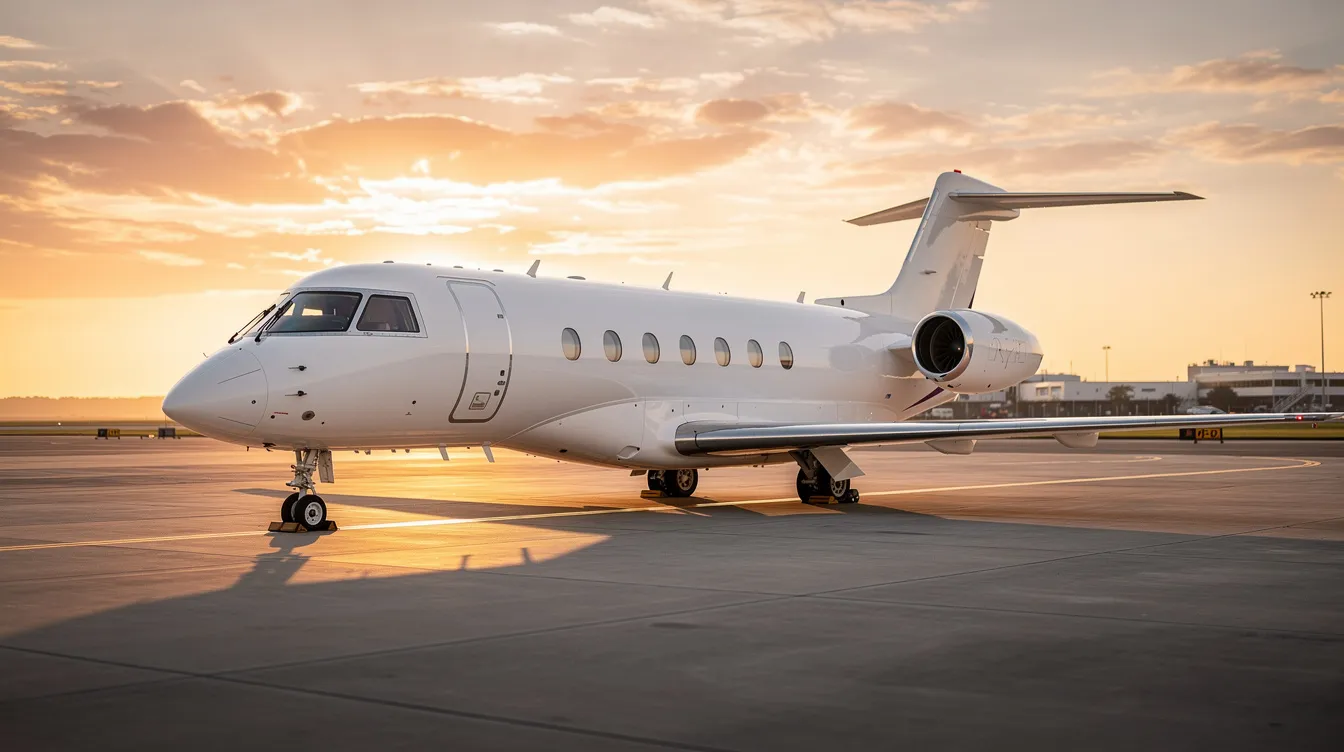
Private jet travel in 2026 is more accessible than ever, but that doesn't mean pricing is simple. Whether you're evaluating your first private jet charter or comparing access models for the year ahead, this guide breaks down what you'll actually pay—by aircraft class, route, and access model—so you can plan with precision instead of guesswork.
This guide is for business travelers, executives, and individuals considering private jet travel in 2026. Understanding the true cost of flying private helps you make informed decisions and avoid unexpected expenses.
Key Takeaways: Understanding the Cost of Flying Private in 2026
Hourly rates vary by aircraft category, from about $2,000 for very light jets and turboprops to over $20,000 for ultra-long-range jets.
Flight distance and route geometry impact total costs, with longer flights requiring larger jets and possibly fuel stops.
Additional fees like landing charges, taxes, catering, and crew overnight expenses can add 20–40% to base hourly rates.
Choosing the right aircraft size and departure airport can reduce repositioning fees and ground time.
Jet Cards offer predictable pricing and guaranteed availability, often saving money for frequent flyers.
Ownership has high fixed costs and depreciation, making it less economical for those flying under 150–200 hours annually.
Paying a premium for vetted operators and carbon-neutral flights ensures safety and environmental responsibility.
Private jet travel is a strategic investment in time, privacy, and productivity, often outweighing the pure dollar cost.
These insights empower you to plan private jet travel with confidence, balancing cost, convenience, and value for your unique needs.
Answering the Big Question Fast: How Much Does It Cost to Fly Private?
Let's get straight to numbers. In 2026, private jet charter costs typically range from about $2,000 to over $20,000 per flight hour, influenced by factors such as aircraft type, route, and seasonal demand. Private jet hourly rates range from $2,000 to $18,000 for the vast majority of cabin classes, with ultra-premium configurations pushing beyond that ceiling. Costs for private flights vary based on aircraft type, so selecting the right cabin class for your mission is the single biggest lever you control.
Here's how average hourly rates break down by category:
Very light jets: ~$2,000–$3,500/hour (e.g., Embraer Phenom 100 on New York–Boston)
Light jets: ~$3,500–$6,000/hour (e.g., Citation CJ3+ on Los Angeles–Aspen)
Midsize and super midsize jets: ~$6,000–$10,000/hour (e.g., Citation XLS+ on New York–Miami)
Heavy and ultra long range jets: ~$9,000–$20,000+/hour (e.g., Gulfstream G600 on New York–London)
How much does it cost to charter a private jet for a typical trip?
Route | Aircraft Class | Estimated One-Way Cost |
|---|
New York → Miami | Light jet | $18,000–$25,000 |
Los Angeles → New York | Super midsize | $40,000–$55,000 |
New York → London | Ultra long range | $85,000–$120,000+ |
For a weekend getaway from New York to Miami on a light jet, expect a round-trip private jet cost of roughly $30,000–$45,000 all-in. A coast-to-coast flight from Los Angeles to New York on a super midsize jet typically runs $40,000–$55,000 one-way. And a transatlantic private jet flight from New York to London on an ultra-long-range jet ranges from $85,000 to well over $120,000, depending on aircraft and season.
What about per-person economics? Consider a light jet carrying six passengers on the New York–Miami route at $22,000 one-way. That works out to roughly $3,700 per person—with last-minute first-class commercial flights on the same route often in a similar range, especially during peak travel periods. Factor in the 2–3 hours saved by avoiding TSA, connections, and baggage claim, plus shorter end-to-end travel even when flight duration is similar, and the calculus shifts further.
BlackJet uses fixed Jet Card hourly rates to make these costs predictable, with no surprise surcharges and carbon-neutral flights included across its premium private jet card programs.
Why Flying Private Is a Strategic Advantage, Not Just a Luxury
The core proposition of flying private isn't leather seats or champagne—it's time. On a typical trip, private jet travel saves 2–3 hours each way by eliminating security lines, boarding queues, and the commute to congested commercial terminals. Flying from smaller airports like Teterboro instead of JFK, or Van Nuys instead of LAX, puts you closer to your origin and destination.
Consider a New York–based executive who needs to visit clients in Chicago and Atlanta in a single day. On commercial flights, this is logistically impossible—connections, layovers, and schedule gaps consume the entire day. On a midsize private jet, the same executive departs Teterboro at 7 a.m., lands at Chicago Midway by 9:30, holds a morning meeting, reboots at noon for a 2-hour flight to Atlanta, wraps an afternoon session, and is home by 8 p.m. Three cities. One day. Zero wasted hours.
The value pillars that matter most to BlackJet clients:
Time efficiency: More meetings, fewer hotel nights, faster decision cycles.
Privacy: Sensitive board conversations, deal negotiations, and legal reviews happen securely in a private aircraft cabin—no seatmates, no eavesdroppers.
Tailored schedules: Depart when you're ready, not when the airline allows.
Cabin as workspace: Full connectivity, work tables, and cabin space configured for productivity on longer flights.
For high-net-worth individuals and leadership teams logging 25–100+ flight hours per year, the productivity and opportunity value often outweigh the direct private jet rental cost. And with BlackJet Jet Card programs, this strategic advantage becomes a planned annual travel line item rather than unpredictable on-demand charter spend.
Key Factors That Determine Private Jet Charter Cost
Almost every private jet charter quote is assembled from the same building blocks: aircraft type, flight time and distance, route geometry, timing, and extras. Hourly charter rates are a starting point for pricing private flights, but the final invoice depends on how these variables interact. Hourly charter rates refer to the base cost per hour of using the aircraft, which typically includes operating costs and trip-specific expenses such as fuel, crew, and airport fees. Charter pricing typically encompasses operating costs and trip-specific expenses.
Below, we'll break down each factor with real-world ranges and examples. Here are the main cost drivers:
Type of aircraft (very light jets through ultra-long range)
Flight time and flight distance
Route geometry and aircraft positioning
Time of year and peak demand
Passenger count, luggage, and cabin requirements
Additional services and in-flight options
BlackJet's pricing model via Jet Cards bakes many of these components into a single hourly rate, simplifying what is otherwise a complex private jet cost structure.
Aircraft Type: From Very Light Jets to Ultra Long Range
The private jet itself is the single biggest driver of price. Aircraft size and type affect operational costs and charter rates directly—a larger aircraft with longer range, more powerful engines, and a bigger cabin will always command a higher hourly rate than smaller private jets.
Here's what 2026 looks like across the spectrum:
Category | Seats | Typical Range | Hourly Rate (2026) |
|---|
Very light jets | 4–5 | 600–1,000 nm | $2,000–$3,500 |
Light jets | 6–8 | 1,000–1,800 nm | $3,500–$6,000 |
Midsize jets | 7–9 | 1,500–2,400 nm | $5,500–$8,000 |
Super midsize jets | 8–10 | 2,500–3,500 nm | $7,500–$10,000 |
Heavy jets | 10–14 | 3,000–4,500 nm | $9,000–$14,000 |
Ultra-long-range jets | 12–16+ | 5,000–7,500 nm | $12,000–$20,000+ |
Recognizable aircraft in each class:
Very light jets: Embraer Phenom 100, Cessna Citation Mustang
Light jets: Citation CJ3+, Embraer Phenom 300E
Super midsize: Embraer Praetor 600, Bombardier Challenger 3500
Ultra-long range: Gulfstream G600, Bombardier Global 6500
Smaller aircraft generally have lower hourly rates, making them ideal for short regional flights. But if your mission demands a stand-up cabin, nonstop transatlantic range, or capacity for 12 passengers, you'll move into heavy or ultra-long-range territory—and the pricing reflects that aircraft performance.
BlackJet's Jet Card program offers access to multiple cabin classes, allowing clients to right-size the aircraft per trip instead of overpaying for a larger aircraft they partially own or fractionally lease—while keeping Jet Card cost per hour transparent and predictable.
Flight Time, Distance, and Route
Most private charters are billed on an hourly basis, so block time (takeoff to landing) multiplied by the aircraft's hourly rate forms the core of the private jet cost. Flight distance significantly impacts private jet charter costs because it determines which jet class can fly nonstop. Very light jets and light jets may need fuel stops on longer routes, increasing both flight time and total price.
Two concrete examples that mirror the dynamics you'll see when chartering a small plane:
Los Angeles (VNY) to Aspen (ASE) on a light jet: approximately 1.7–2.0 flight hours each way. A round-trip is often quoted at around $20,000–$30,000 all-in.
New York (TEB) to London (LHR or STN) on an ultra-long-range jet: approximately 6.0–7.0 hours each way, often in the $80,000–$120,000+ round-trip range.
"Odd" routings—such as multiple short legs in a day—may increase billable time because aircraft operators apply daily minimum hours. A three-city day that involves 1-hour hops can trigger a 3- or 4-hour daily minimum even if actual block time is less.
With BlackJet's fixed hourly Jet Card model, clients know the per-hour rate for each cabin class in advance, then multiply by flight time for a predictable estimate.
Aircraft Positioning and Airport Choice
Aircraft positioning is the time and cost of moving a private jet from its base to your departure airport—and back again after your trip. These repositioning fees apply when an aircraft needs to fly empty to pick up passengers, and they can increase your total charter cost by 20–40%.
Choosing popular general aviation airports often reduces private jet cost. Teterboro (TEB) instead of JFK in New York, or Van Nuys (VNY) instead of LAX in Los Angeles, means less ground congestion and shorter taxi times. Choosing regional airports can lower overall travel expenses significantly. For example, departing from White Plains (HPN) instead of a smaller outlying field in New England can avoid an extra 30–60 minutes of repositioning flight time each way.
BlackJet's network and planning team actively look for nearby aircraft to limit or eliminate positioning charges for Jet Card clients—an advantage that on-demand private charters rarely offer.
Timing: Peak Demand, Seasonality, and Flexibility
Private jet pricing is dynamic. Holidays, major events, and peak seasons increase demand—and with it, hourly rates and minimum usage requirements. Booking during off-peak times can reduce charter costs materially.
Specific high-demand periods that affect prices:
Holiday travel: U.S. Thanksgiving, Christmas through New Year, and spring break weeks
Major events: Super Bowl, Art Basel Miami, World Economic Forum in Davos
Seasonal corridors: New York to South Florida in winter, Los Angeles to Aspen and Vail during ski season
For on-demand private jet charter flights, a Friday afternoon departure and Sunday return almost always cost more than midweek travel on the same route. Empty leg flights can save 30–75% on costs when your destinations and timing align with an aircraft that needs to reposition—though these require flexible travel plans.
BlackJet Jet Cards lock in hourly rates for the term of the agreement, insulating members from seasonal price spikes while still requiring advance notice during peak windows, similar to how the best Jet Cards for frequent flyers emphasize predictability over one-off discounts.
Passengers, Baggage, and Cabin Requirements
The number of travelers and luggage volume drive aircraft selection, which in turn impacts total private jet charter cost. Here are scenarios that illustrate this:
Family ski trip: A family of four with skis and winter luggage from Los Angeles to Jackson Hole likely needs a light jet with good baggage capacity—or a midsize jet if cabin space and payload demand it.
Corporate roadshow: Eight executives visiting Boston, Chicago, and Dallas over two days require a super midsize jet with a stand-up cabin, work tables, and enough room to carry passengers plus briefcases and presentation materials.
Long-haul flights: Special cabin requests—lie-flat seating, a private stateroom on ultra-long-range jets, or an onboard flight attendant on smaller aircraft—can nudge clients into a higher category, raising the hourly cost but dramatically improving comfort on longer flights.
BlackJet advisors guide members to the smallest suitable cabin class to protect comfort while avoiding unnecessary spending.
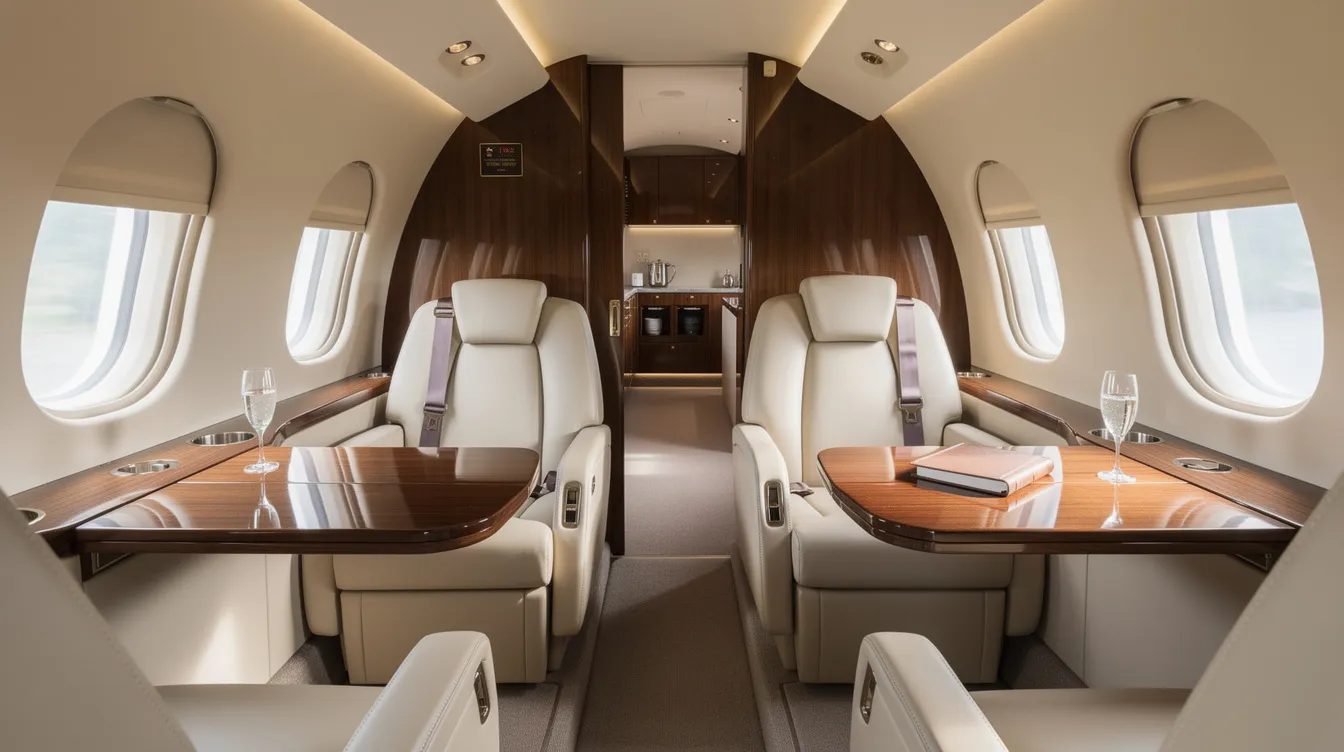
Typical Line-Item Costs: What's Included and What Isn't
Private jet quotes often appear as a single figure, but behind that number are familiar building blocks: aircraft time, fuel, crew, airport fees, and taxes. Total costs for private flights can include fuel, airport fees, and crew expenses—and private jet charter prices can be up to 40% higher than base hourly rates due to additional fees. Charter pricing typically encompasses operating costs and trip-specific expenses combined.
BlackJet's Jet Card pricing is "all-in" for core items (aircraft, crew, standard catering, carbon offsets), but certain government taxes and trip-specific charges can still apply and will be itemized clearly—consistent with broader private jet charter pricing practices across the industry.
Key cost elements include:
Hourly aircraft rate (aircraft, crew, standard fuel)
Airport and ground fees (landing, ramp, deicing, hangar)
Government taxes and surcharges (federal excise tax, segment fees, international permits)
Trip-specific extras (premium catering, Wi-Fi, ground transportation, overnight crew expenses)
Hourly Rate: The Core of Any Private Jet Rental
The hourly rate covers exclusive use of the aircraft, pilots, and cabin crew members where applicable, insurance, and standard fuel for the planned routing. Private jet service fees often include maintenance, insurance, and crew salaries built into that per-hour figure.
In the open charter market, hourly rates for private jets in 2026 run approximately:
Turboprops and very light jets: $2,000–$3,500/hour
Light jets: $3,500–$6,000/hour
Midsize and super midsize jets: $6,000–$10,000/hour
Heavy and ultra-long-range jets: $9,000–$20,000+/hour
A concrete calculation: a 3-hour each-way light jet charter from New York to Nashville at $4,500/hour yields a $27,000 base flight charge before fees and taxes, aligning with the ranges you’ll see when exploring how much to rent a private jet in today’s market. That's the starting point—not the final invoice.
BlackJet Jet Card members do not negotiate these rates each trip. Their hourly rates are contractually fixed by cabin category for the life of the card.
Airport Landing, Ramp, and Handling Fees
Airports and FBOs (fixed-base operators) charge private jets for landing, parking, and ground handling. Landing and handling fees depend on aircraft size and weight and vary by airport. Landing fees at airports can range from $100 to $1,500 per flight—with smaller regional airports at the low end and major hubs like Miami, JFK, or LAX near the top.
Realistic 2026 ranges:
Landing fees: $100–$1,500+ depending on airport and weight class
Ramp and handling: $150–$500 per stop, sometimes waived with a minimum fuel purchase
International gateways (London Heathrow, Paris Le Bourget): upper end of these ranges
BlackJet discloses these airport fees upfront wherever possible and often steers clients to premium yet cost-efficient FBOs that balance convenience and expense, helping clients interpret any broader private jet price list in real-world terms.
Seasonal Costs: Deicing and Hangar Fees
In winter climates, safe private jet operations require deicing when snow or ice is present. This is a necessary cost that varies substantially:
Deicing: approximately $1,500–$15,000 per application depending on jet size and severity of conditions
Temporary hangar storage to avoid repeated deicing: often $500–$1,500 per night in busy winter destinations like Aspen, Vail, or Jackson Hole
Hangar fees at popular ski destinations during peak season can be difficult to secure at any price. BlackJet Jet Card members receive proactive cost management—choosing FBOs with competitive deicing rates or hangar availability to minimize surprises.
Government Taxes: Federal Excise Tax and More
In the U.S., most domestic private jet flights are subject to a 7.5% federal excise tax applied to the base airfare portion of the bill. This applies to the combined aircraft, crew, and fuel charge. Federal Excise Tax is 7.5% on all domestic flights in the US—it’s one of the few non-negotiable line items.
Additional charges include:
U.S. segment fees: typically $4–$5 per passenger per leg
International flights: head taxes on departures/arrivals involving the U.S., plus country-specific overflight and landing permit fees in Europe, the Middle East, or Asia. International fees can add $500 to $5,000 to costs depending on routing and permits required.
A quick example: a $40,000 domestic charter with FET adds $3,000 on top of the base cost, plus minor segment fees—bringing the total to roughly $43,000–$43,500 before extras.
BlackJet itemizes all federal excise tax and government charges on client invoices for full transparency, a key consideration when deciding whether chartering a private jet is worth it beyond headline hourly rates.
Trip Extras: Catering, Wi‑Fi, Ground Transport, and Concierge
Standard snacks and beverages are typically included with your charter, but catering services for private flights can add high costs when you customize. Catering costs can range from $230 to $2,000 per leg depending on menu complexity—from artisanal charcuterie boards to chef-designed multi-course meals.
Other common extras:
Chauffeured ground transportation: $200–$1,000+ per transfer depending on city, vehicle class, and distance—far more tailored than a rental car service
In-flight Wi-Fi: sometimes included; otherwise billed by usage on certain aircraft, particularly on medium-haul flights and international routes
Cleaning fees: rare but possible ($250+ for deep cleaning in unusual situations)
BlackJet offers integrated trip planning—catering, ground transport, last-mile logistics—through its member services team, quoting all additional services and extras in advance so nothing appears as a surprise, even when members pursue fly private cheap strategies like off-peak scheduling or shared routing.
Cost by Aircraft Category: What You Can Expect to Pay
This section walks through typical one-way or round-trip price ranges for different jet sizes on specific U.S. and transatlantic routes. These are realistic working ranges as of mid-2026, intended to help you calibrate your private jet travel budget rather than serve as guaranteed quotes.
Each subsection focuses on a jet category with common use cases and at least one concrete route example. BlackJet Jet Card members choose cabin class (light, midsize, super midsize, ultra long range) rather than specific tail numbers, optimizing both value and availability.
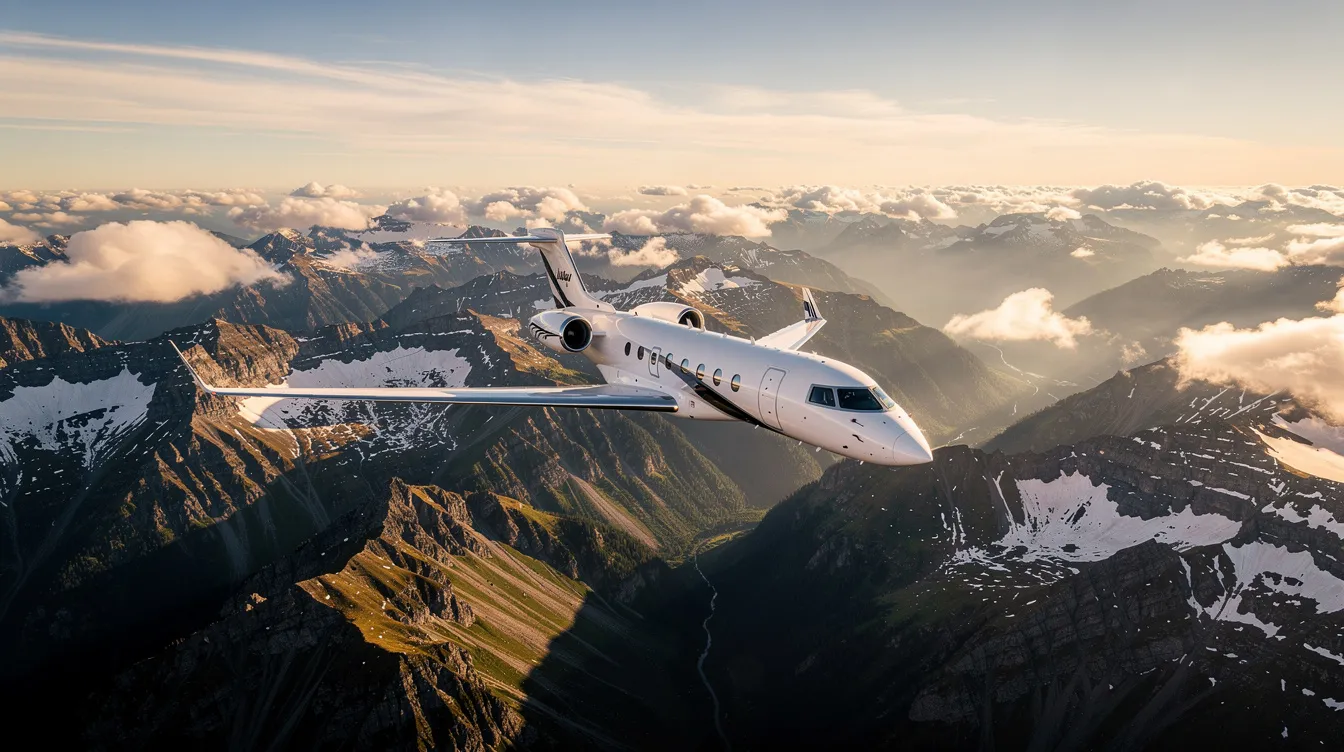
Very Light Jets and Turboprops: Short-Haul Efficiency
Very Light Jets (VLJs) are designed for shorter trips and smaller groups—ideal for 1–2-hour regional hops with 2–4 passengers where access to smaller airports is critical. Turboprop aircraft are economical for short regional flights, with a turboprop charter starting at around $2,000 an hour.
Example aircraft include the Pilatus PC-12 (turboprop), King Air B200 (turboprop), Embraer Phenom 100 (VLJ), and Citation Mustang (VLJ).
Concrete cost examples:
Boston (BED) to New York (TEB) same-day round trip on a VLJ: typically $8,000–$12,000
Dallas (DAL) to Houston (HOU) on a turboprop: roughly $5,000–$8,000 round trip
These aircraft offer the lowest private jet cost per hour and are often highlighted among the cheapest private aircraft options, but may be less cost-effective for very short "hop" legs due to minimum hourly charges. Short leg fees offset fuel burn during take-offs, which means a 20-minute hop can still trigger a 1-hour minimum billing.
BlackJet positions these classes for members focused on efficiency and short regional missions rather than maximum cabin size, often for travelers researching the cheapest private jet options as an entry point into private aviation.
Light Jets: The Entry Point for Many Private Jet Travelers
Light jets are the most popular starting point for private jet charter flights. Light jets typically accommodate 6 to 8 passengers and offer comfortable cabins for 2–3-hour flights with respectable baggage holds.
Example aircraft: Cessna Citation CJ3+, Embraer Phenom 300E, Learjet 45XR.
Route examples with cost ranges:
Route | Direction | Estimated Cost |
|---|
New York (TEB) → Miami (OPF) | One-way | $18,000–$25,000 |
Los Angeles (VNY) → Aspen (ASE) | Round trip | $20,000–$30,000 |
Chicago (MDW) → Nashville (BNA) | Same-day round trip | $12,000–$18,000 |
Per-seat costs on a fully occupied light jet can approach premium commercial fares on popular business travel routes, especially when booking last-minute. Six passengers splitting a $22,000 New York–Miami charter pay ~$3,700 each—comparable to a walk-up business class ticket with none of the hassle.
BlackJet's light jet Jet Card tier is often the most popular entry point for members flying 25–50 hours a year, closely aligned with what most travelers learn when evaluating a 50-hour Jet Card cost guide.
Midsize and Super Midsize Jets: Cross-Country Workhorses
Midsize jets can carry 7 to 9 passengers comfortably, and super midsize jets stretch to 8–10 with stand-up cabins, full galleys, and generous baggage space. These are the workhorses for coast-to-coast U.S. business jet routes where comfort and productivity matter on 4–5-hour flights.
Example aircraft: Cessna Citation XLS+, Hawker 800XP (midsize), Embraer Praetor 600, Bombardier Challenger 3500 (super midsize).
Route examples:
New York (TEB) to Los Angeles (VNY) one-way on a super midsize jet: typically $40,000–$55,000
Palm Beach (PBI) to New York (TEB) round trip on a midsize jet: around $25,000–$35,000
For 6–9 passengers traveling cross-country with luggage, midsize jets provide strong value versus multiple first-class tickets plus overnight hotel stays. And if you're flying San Francisco to New York with a full cabin, the per-person math becomes increasingly compelling.
Many BlackJet corporate members choose a midsize or super midsize Jet Card tier or enroll in a dedicated BlackJet 25+ Hour Jet Card for predictable pricing on regular cross-country travel.
Heavy and Ultra Long Range Jets: Global Reach
Heavy and ultra-long-range jets represent the top end of the private aviation industry, built for nonstop intercontinental missions with 10–16+ passengers. Heavy jets are ideal for long-distance travel with more passengers, and chartering a heavy jet costs around $10,000 per hour at the entry point of this class.
Example aircraft: Gulfstream G450, Gulfstream G600, Bombardier Global 6000 and 6500, Dassault Falcon 8X.
Route examples:
Route | Aircraft Class | Estimated Cost |
|---|
New York → London (round trip) | Heavy / Ultra long range | $80,000–$120,000+ |
Los Angeles → Honolulu (one-way) | Large cabin heavy | $60,000–$80,000 |
Los Angeles → Hong Kong (round trip) | Ultra long range | $180,000–$220,000+ |
Chartering a heavy jet can cost between $80,000 and $90,000 for trans-Atlantic flights at the lower end, with pricing climbing for larger aircraft and peak-season demand—cost levels comparable to some of the best features of a 20 million private jet when ownership is on the table. These jets often include private staterooms, full-service galleys, and multiple cabin zones. The per-hour private jet cost is highest, but justified for nonstop global itineraries where a fuel stop would add hours and complexity.
BlackJet's ultra-long-range Jet Card tier caters to clients who regularly fly routes like New York–Dubai, London–Los Angeles, or Geneva–São Paulo. For more on transatlantic private jet options, BlackJet's route guides offer detailed comparisons.
Jet Cards vs On-Demand Charter vs Ownership: Which Makes Financial Sense?
Beyond single-trip pricing, the smartest way to control the cost of flying private is to choose the right access model. Your annual flight hours determine which approach delivers the best value. Below, we compare the three primary models.
On-Demand Private Jet Charters
When you charter a private jet on demand, you're paying per trip: request a flight, receive quotes from a charter company or broker, and pay for that single mission.
Pros:
Ideal flexibility if flying fewer than ~25 flight hours a year
No long-term commitment or upfront capital
Ability to shop multiple quotes in the open market for cost-saving opportunities
Cons:
Full exposure to dynamic private jet pricing and peak-demand surcharges
Less predictability in the cost to charter from trip to trip
Potential variability in aircraft quality and safety standards depending on the charter services provider
BlackJet competes with on-demand jet charters by offering Jet Cards that lock in quality, safety, and pricing for frequent flyers—removing the guesswork that comes with one-off charter flights.
Jet Cards: Prepaid Access with Fixed Rates
Jet Cards like BlackJet's 25-hour and 50-hour programs allow clients to pre-purchase flight hours in specific cabin categories at fixed hourly rates.
Key benefits:
Predictable private jet cost: hourly rate locked for the card's term, with only known surcharges (such as federal excise tax) added
Guaranteed availability with defined notice windows, even on peak days
Single contract and billing relationship instead of dealing with multiple individual aircraft operators
A concrete example: a client buying a 25-hour super midsize Jet Card in early 2026 can budget their year's cross-country business travel by multiplying 25 hours by the contracted hourly rate, adding estimated taxes and a modest allowance for extras. That's your annual private jet rental cost, planned months in advance.
BlackJet adds further value with:
24/7 digital and concierge booking tools
Proprietary safety screening of every aircraft and crew
Carbon-neutral flights are included with each Jet Card flight
Fractional and Full Ownership
Fractional ownership (buying a share of a specific jet) and full ownership of your own private jet make financial sense only for ultra-frequent flyers. Private jet ownership incurs high fixed and variable costs:
Acquisition cost or capital commitment (tens of millions for new business jets)
Crew members salaries and training
Hangar fees, insurance, maintenance reserves, and depreciation
Private jets experience depreciation over time based on make and condition, eroding asset value annually
For many users flying under ~150–200 hours a year, chartering or using a Jet Card offers lower operating costs than ownership, especially when factoring in depreciation and underutilization; only at higher usage levels do options like a 100-hour Jet Card or ownership start to merit close comparison. The cost upwards of $500,000–$4 million per year in fixed ownership expenses applies whether you fly or not.
BlackJet offers clients who have considered ownership all the flexibility and cabin choice of a fleet without the capital burden, while those set on equity can explore structures like fractional jet ownership tax benefits to offset part of the expense.
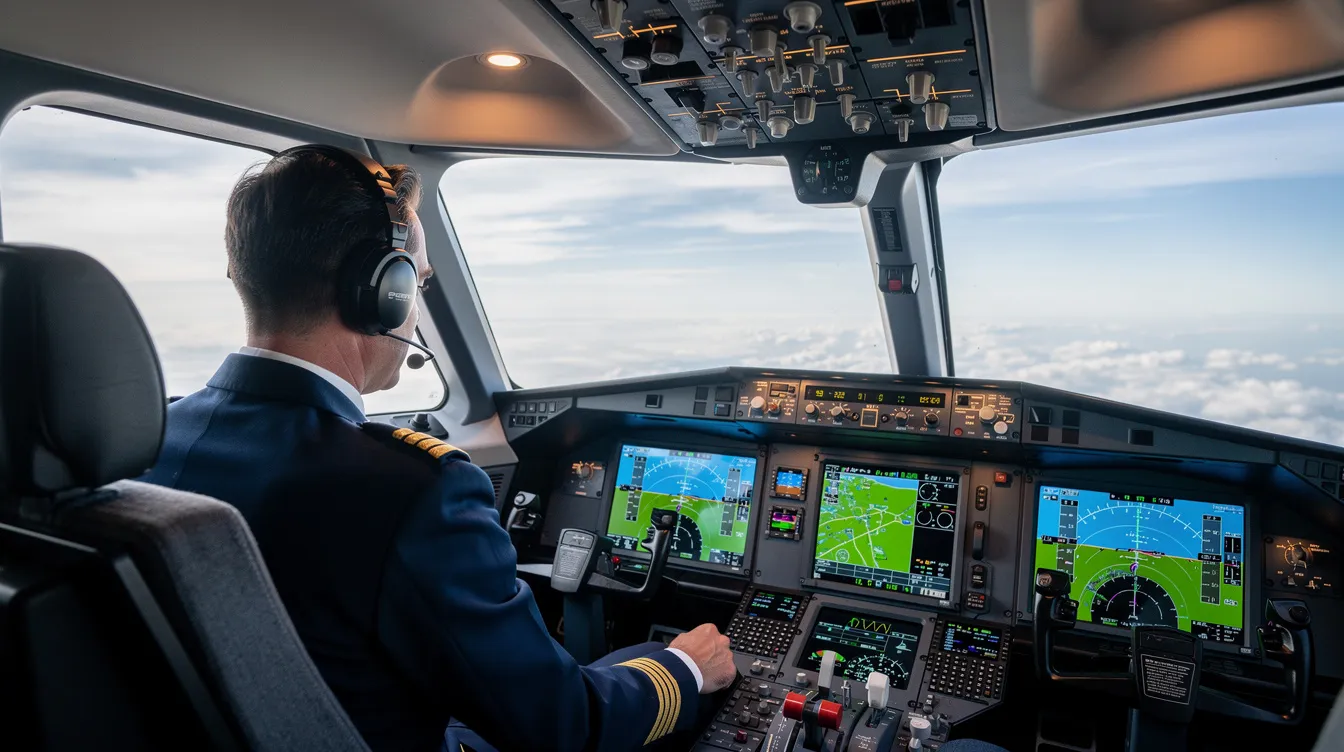
Safety, Certification, and Sustainability: Value Beyond the Price Tag
Private jet charter prices should never be evaluated in isolation. Safety standards, operational controls, and sustainability commitments are critical. While some charter quotes appear cheaper, they may reflect lower safety oversight, older aircraft, or less rigorous crew training. The premium for verified safety and environmental responsibility is modest relative to the risk it mitigates.
Why Safety Protocols Matter in Private Aviation
Reputable charter companies and Jet Card providers work exclusively with aircraft operators who hold Federal Aviation Administration Part 135 certification (in the U.S.) and recognized third-party safety ratings such as ARGUS, IS-BAO, or Wyvern.
BlackJet conducts its own proprietary vetting on top of these benchmarks, verifying:
Operator certificates and maintenance records
Pilot experience, type ratings, time in aircraft, and recent flight history
Operational and safety management systems
While high safety standards can marginally increase private jet cost versus the lowest quotes available in the market, they dramatically improve risk management for high-net-worth and corporate travelers. In private aviation, the cheapest quote is rarely the wisest choice.
Sustainable Aviation and Carbon-Neutral Flights
Sustainability is increasingly important to business travelers, family offices, and corporate ESG programs. BlackJet ensures every Jet Card flight is carbon neutral, incorporating verified carbon offset programs and access to aircraft using Sustainable Aviation Fuel (SAF) where available.
The incremental cost of offsets is baked into BlackJet's Jet Card model—not passed through as a surprise fee after booking. For perspective, a New York–London round trip on an ultra-long-range jet can produce approximately 40–60 tonnes of CO₂. BlackJet's carbon-neutral program neutralizes that footprint at no additional charge to the member.
As regulatory and public pressure on the private aviation industry grows, choosing a provider that proactively addresses sustainability protects both your reputation and your conscience—especially on larger-group missions where the best private jet for 20 passengers may be under consideration.
How BlackJet Helps You Control and Predict the Cost of Flying Private
The cost of flying private matters—but for frequent travelers, predictability and strategic value matter more. How much does it cost to fly private when you plan ahead versus scrambling for last-minute on-demand quotes? With BlackJet, the answer is straightforward.
Here's how BlackJet addresses the main cost pain points discussed throughout this guide:
Fixed Jet Card hourly rates across multiple cabin classes, from light jets to ultra-long-range
Transparent inclusion of key fees and government taxes, clearly itemized
Carbon-neutral flights as standard—not an add-on or afterthought
24/7 digital tools and live support to optimize routing, airport selection, and schedule to control cost
Use case: A 50-hour-per-year BlackJet member typically flies New York–Miami (8 hours), New York–Chicago (6 hours), domestic flights for regional business (20 hours), and one annual New York–London round trip (14 hours). With a Jet Card spanning two cabin classes, the member's entire annual private jet charter service budget can be projected in January and reviewed quarterly—no surprises, no volatility.
Explore BlackJet Jet Card options and speak with a membership advisor about your 2026 travel plans, or compare leading providers using resources like top private jet companies and detailed guides on how much it costs to charter a small plane. Discover how BlackJet can reshape the way you think about private jet travel costs.

FAQ: Cost of Flying Private with BlackJet
How much does it cost to charter a private jet for a 2-hour flight in 2026?
A two-hour private jet flight costs between $8,000 and $37,000 depending on aircraft type. On a very light jet, expect $4,000–$7,000 plus fees. On a light jet, $7,000–$12,000. On a midsize or larger private jet, costs scale accordingly. Use BlackJet's charter cost estimator to dial in your route.
What is included in BlackJet's Jet Card hourly rate?
The hourly rate covers exclusive aircraft use, crew, insurance, standard fuel, and carbon offsets. Government taxes (including federal excise tax), airport-specific landing fees, and optional extras like premium catering or ground transportation are itemized separately for full transparency.
How does Federal Excise Tax impact my final invoice?
Federal Excise Tax is 7.5% on all domestic flights in the US. It applies to the base airfare portion of your invoice—covering aircraft, crew, and fuel charges. On a $50,000 domestic charter, FET adds $3,750 to your total.
Is a Jet Card cheaper than booking on-demand if I fly 25+ hours per year?
Yes, typically. Jet Cards lock in hourly rates and guarantee availability, so when the on-demand market surges during peak periods, cardholders avoid premium pricing. The upfront purchase is higher, but the per-hour cost and predictability deliver a more cost-effective option over the course of a year.
Can I use my Jet Card hours on ultra-long-range jets for international flights?
Yes—if your Jet Card includes access to the heavy or ultra-long-range cabin class. International flights may require advance notice and incur additional fees for overflight permits, crew overnight expenses, and international taxes, all of which BlackJet quotes in advance.
How does a Jet Card compare to owning a private jet for 50–100 hours of annual use?
For 50–100 flight hours per year, a Jet Card is almost always more economical than ownership. An own private jet carries fixed annual costs of $500,000–$4 million (crew salaries, hangar fees, insurance, maintenance, depreciation) regardless of how often you fly. A Jet Card eliminates those fixed burdens while providing access to a fleet of business jets across multiple cabin classes—with the flexibility to scale up or down as your travel needs change. For a deeper dive, explore BlackJet's Jet Card pricing and perks guide.
Conclusion: The True Value of Flying Private with BlackJet
Flying private in 2026 is more than a luxury—it's a strategic investment in time, productivity, and peace of mind. While costs vary widely based on aircraft type, route, and timing, BlackJet’s transparent pricing, fixed Jet Card hourly rates, and commitment to safety and sustainability offer unmatched predictability and value. Whether you’re a frequent business traveler seeking seamless coast-to-coast connectivity or a discerning individual planning international journeys, private jet access through BlackJet transforms travel into a tailored experience that respects your schedule and priorities.
By choosing BlackJet, you gain access to a diverse fleet, expert support, and carbon-neutral flights—all designed to elevate your travel while controlling costs. The financial and operational flexibility of Jet Cards and on-demand charters means you pay only for what you need, without the burdens of ownership. Ultimately, the cost of flying private is best understood not just in dollars, but in the time saved, the opportunities gained, and the exceptional service that accompanies every flight.
Explore BlackJet’s offerings today and discover how premium private jet access can redefine your travel experience for 2026 and beyond.


 Sign up with google
 Sign up with Apple