Introduction: Why Flight Classes Matter (and When Private Jets Make More Sense)
Every commercial flight divides its cabin into tiers-economy class, premium economy, business class, first class-each representing a different balance of price, comfort, and convenience. Choosing a flight class is a tradeoff between these three factors, and for decades, upgrading within these tiers was the only way to improve your experience in the air.
But the equation has shifted. BlackJet members effectively fly in a bespoke cabin every time-no queues, no rigid fare rules, no shared armrests. Consider a New York–London trip: a first class passenger still arrives at a crowded international terminal 90–120 minutes before departure, while a BlackJet Jet Card member walks into a private terminal 15 minutes before wheels-up, saving two to four hours door-to-door.
This article breaks down the main cabin classes on flights, compares business class vs first class vs private jets, explains how jet cards and aircraft categories work, and helps you decide which option actually fits the way you travel.
Overview of Flight Classes: Economy, Premium Economy, Business, First
There are four main types of flight classes: Economy, Premium Economy, Business, and First Class.
Flight classes-sometimes called cabin classes-are the tiers of service that commercial airlines use to segment passengers by comfort, space, and price. Each flight class tier increases in price, space, and service quality, and most airlines vary in the amenities offered across different flight classes.
There are four main types of flight classes on most long-haul international flights operated by legacy carriers like Air Canada, Delta Air Lines, and Lufthansa:
Economy / Main Cabin. The standard, most affordable seat. Highest density, fewest perks.
Premium Economy. A middle tier with wider seats, better meals, and modest priority services.
Business Class. Lie-flat seats on long haul, lounge access, and elevated dining.
First Class. The pinnacle of commercial luxury-increasingly rare outside flagship international routes.
It's worth noting the difference between cabin class and fare class. A fare class is a booking code (such as Y for full-fare economy, J for business, or F for first) that determines ticket flexibility, upgrade eligibility, and mileage earning-more on that in a later section.
On domestic flights in the U.S., Canada, and Europe, many airlines simplify the split to just economy seats plus a "first" cabin that's closer to business-class-level seating, or economy only on smaller regional jets.
With a BlackJet Jet Card, you step outside this system entirely. The aircraft is your cabin-not a single seat within someone else's cabin.
Economy Class and Basic Economy: The Entry Level of Air Travel
Economy class is the core product on most commercial flights and the most affordable flight option available. Since around 2017, carriers have also introduced "basic economy"-an even more restrictive subset with more restrictions on changes, bags, and seat selection.
Standard economy class features:
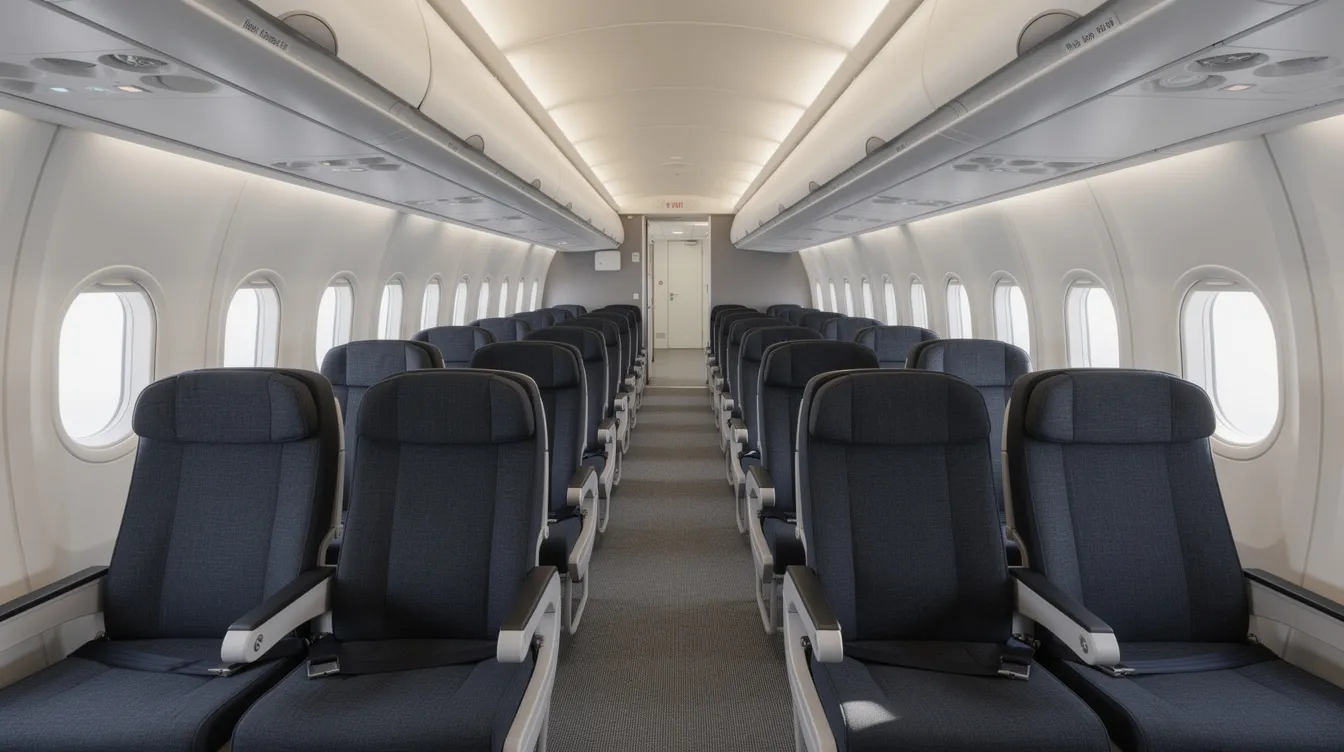
Economy seats are narrower with limited legroom-typically 30–32 inches of seat pitch on Airbus A320 and Boeing 737 domestic flights, with seat widths around 17–18 inches.
Additional costs for baggage and services can influence the choice between flight classes: checked luggage and seat selection are extra on many U.S. carriers.
Meal policies vary by route. Long-haul international flights to Europe or Asia usually include complimentary meals and drinks, while domestic U.S. flights are often buy-on-board. Economy class passengers typically receive one complimentary drink on shorter routes. In-flight food may cost extra on budget airlines and low-cost carriers.
Passengers in economy class are often the last to board, with limited overhead bin space by the time they reach their row.
Basic economy specifics:
The lowest fares come with severe restrictions: non-refundable tickets, no changes, automatic seat assignment at check-in, and sometimes no overhead-bin carry-on luggage in the U.S.
Upgrades and elite benefits are typically blocked, even for loyalty members.
The trade-off is clear: lowest price but longest queues, least flexibility, and the highest "time cost." Some BlackJet members previously flew mainly economy or premium cabins but switched when they calculated the true value of time, privacy, and flexibility across a year of travel.
Premium Economy: The Middle Ground Between Economy and Business Class
Premium economy class emerged around 2010 as a bridge cabin on long-haul international flights, now offered by carriers like Air Canada, British Airways, and American Airlines. It targets frequent leisure travelers and cost-conscious business travelers who want more than the main cabin without the leap to business class tickets.
Typical premium economy features:
Premium economy seats have more legroom and wider dimensions-typically 34–38 inches of pitch in a 2–3–2 or 2–4–2 layout on Boeing 777 and 787 aircraft.
Premium economy offers more space and amenities than economy class, including enhanced meals and complimentary alcoholic drinks on international flights. Premium economy often includes upgraded meal options compared to economy, with better food and more variety.
Priority boarding is a common feature in premium economy class, along with priority check-in on some airlines.
Passengers receive complimentary amenity kits in premium economy on most long-haul carriers.
Pricing and value:
Premium economy offers 65% lower fares than business class on average, commonly landing at 1.5–2.5 times the price of economy class.
The experience varies widely: a true separate cabin on an Air Canada 787 Dreamliner differs markedly from marginally improved economy seats on older aircraft, and these gaps often prompt travelers to compare premium cabin pricing with Jet Card cost per hour in private aviation.
For a small group of 4–6 traveling regionally, a light jet charter through BlackJet starts to become competitive on a per-person basis-with the added advantage of schedule flexibility and private terminal access, especially when you compare it to small private jets luxury travel options.
Business Class: The Workhorse of Premium Travel on International Flights
Modern business class has become the primary premium cabin for long-haul international flights, with many airlines investing heavily in their business class product rather than maintaining a separate first class. Business class typically includes expedited check-in at a dedicated check-in desk and premium dining services, making it the standard for executives and frequent travelers crossing oceans.
Key features on leading carriers:
Business class typically features lie-flat seats on long-haul flights, with direct aisle access on most new Boeing 787, 777, and Airbus A350 aircraft. Products like Delta One and Air Canada Signature Class exemplify this standard, with seat pitch ranging from 55 to 80+ inches.
Elevated dining includes multi-course meals, upgraded wine lists with premium wines, and proper tableware. The meal service is a marked step above economy or premium economy.
Business class offers priority boarding and lounge access, plus expedited security lanes, priority check-in, and faster baggage handling.
A practical example: Consider a London–New York overnight flight. Flying business class on Delta Air Lines in a lie-flat bed, a traveler arrives rested and productive. In economy class seats, the same traveler lands fatigued, needing recovery time before a morning meeting.
Business class on domestic flights:
Often branded "First" in the U.S. or "Business" within Europe, these cabins typically offer wider recliner seats but rarely lie flat beds unless on transcontinental or selected premium routes like Los Angeles–New York.
United Airlines and United Business cabins, for example, vary significantly between domestic narrow-body aircraft and international wide-body fleets.
The variability matters. Always check seat maps for specific aircraft types-older fleets may lack direct aisle access or the latest business class seats. Flying business class offers strong comfort, but still involves crowded terminals, fixed schedules, and limited personal space compared to private aviation.
First Class: Suites, Service, and the Diminishing Ultra-Luxury Cabin
First class represents the highest traditional cabin class on commercial airlines, though the availability of true first class has decreased on many routes. Today, international first class survives primarily on select long-haul flights operated by carriers like Emirates (A380 Suites), Air France La Première, Singapore Airlines, and certain Lufthansa and American Airlines flagship routes.
Hallmark first class features:
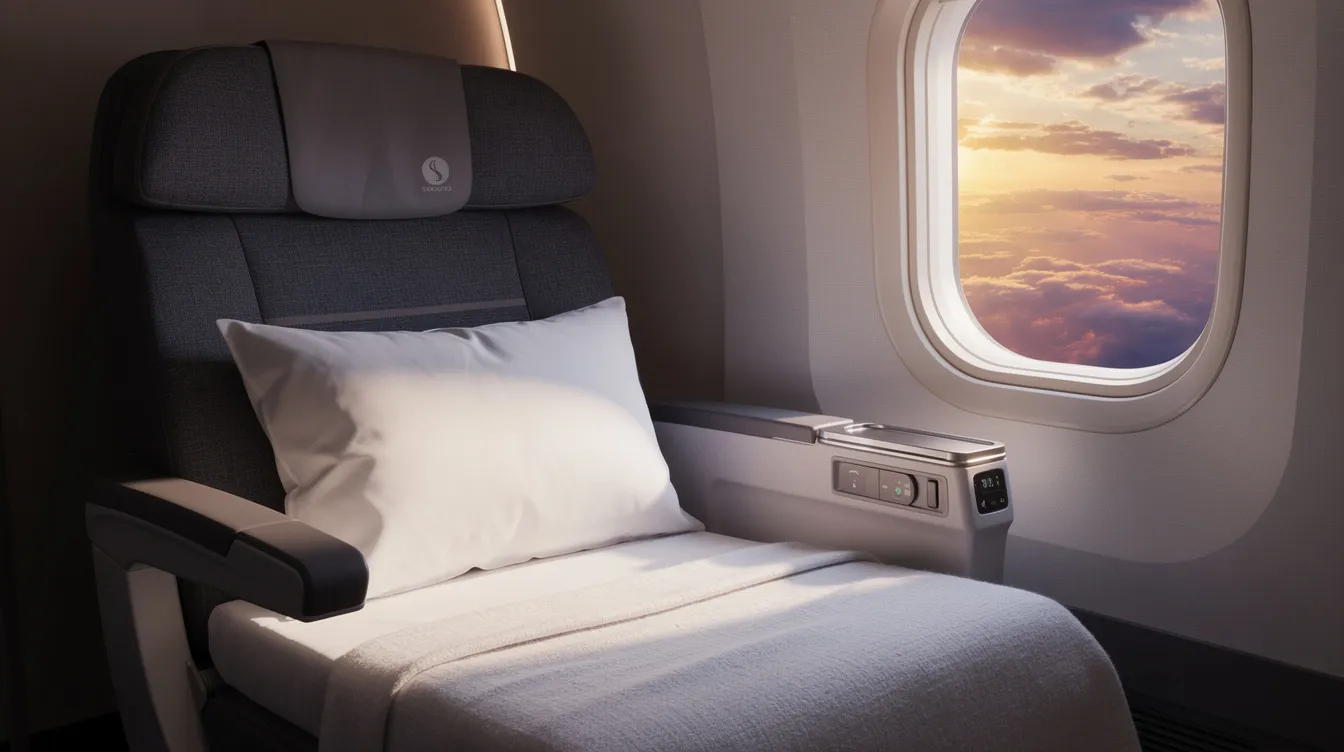
First class offers private suites with doors-fully enclosed spaces with wide beds, personal space that rivals a small hotel room, and direct aisle access. Some first-class cabins feature private suites with doors for privacy, with seat pitch ranging from 58 to 94+ inches.
First class offers the most luxurious experience with exclusive amenities. First-class dining includes multi-course meals and premium beverages, with à la carte menus, caviar service, and champagne from houses like Krug or Dom Pérignon. First-class meals include caviar and chef-prepared dishes as standard.
First-class passengers have access to exclusive lounges with premium services, including first-class lounges with spa treatments, private rooms, and curated menus. First-class passengers enjoy priority check-in and boarding throughout the journey, with attentive service from dedicated cabin crew.
First-class seats often recline further and offer more legroom than any other commercial cabin.
The shrinking footprint of first class:
Many airlines have removed international first class entirely, focusing on very high-end business class "minisuites." Qatar Airways Qsuites and Singapore Airlines business class cabins now rival older first class products in comfort and privacy.
Domestic first class vs. international first class:
Domestic first class may differ significantly from international business class in terms of comfort and services. U.S. domestic "first" is usually a wider recliner seat-not a suite or lie flat bed-with limited full meal service and modest in-flight entertainment upgrades.
First class can cost 1.5 to 5 times more than business class, depending on the airline, route, and availability, a spread that often prompts comparison with Jet Card cost per hour in private aviation.
For travelers seeking something beyond even top-tier first class cabins, private jets offer a fully private cabin, custom schedule, departure from smaller airports closer to home, and personalized service from ground to air, whether you charter the whole aircraft or simply buy a seat on a private jet on select routes.
Business Class vs First Class vs Private Jets: Experience, Space, and Privacy
Many BlackJet clients used to debate "business or first class?" before deciding that private aviation better matched their needs. For many, the decision turns on understanding Jet Card cost per hour versus premium cabin fares. Here's how the three options compare across the dimensions that matter most to frequent premium travelers.
Space and privacy:
Business class seats or suites sit within a larger shared cabin. You're comfortable but surrounded by other class passengers and cabin traffic.
First class offers a smaller, quieter section-often enclosed private suites-but you're still sharing the aircraft with hundreds of other passengers.
A private jet gives you the full cabin. No strangers, no overhead announcements, no compromises.
Time and convenience:
Even first or business class passengers arrive at major hub airports 90–120 minutes before departure for international flights. Pre-flight service and early boarding help, but terminal time is still substantial.
BlackJet members use Fixed Base Operators (FBOs) or private terminals. Door-to-seat is often 15–20 minutes.
Customization:
Commercial airlines offer standardized in-flight food, in-flight entertainment, and service-excellent in premium cabins, but uniform across all business class passengers.
Private aviation allows personalized catering, flexible departure times, ground transport coordination, and last-minute schedule changes.
A scenario: A CEO flying New York–London leaves home at 3:30 p.m. for a 7:00 p.m. first class ticket departure from JFK. With BlackJet, the same executive leaves at 5:30 p.m. for a 7:00 p.m. departure from a nearby executive airport, arriving at the FBO in minutes, not hours.
High-net-worth travelers might still choose business and first class for certain trips, but increasingly complement or replace those flights with private jet access through premium private Jet Card programs.

Domestic vs International Flights: How Cabin Classes Change by Route
The meaning of "first class" and "business class" shifts dramatically between domestic and international routes, and flight duration affects the choice of flight class for comfort and practicality.
U.S. and Canadian domestic flights (e.g., Los Angeles–Chicago, Toronto–Vancouver):
Typically only two cabins: economy and a "first" cabin that's really a business-style recliner with discounted fares available for upgrades.
Limited meal service-snacks and beverages on short-haul flights under three hours, rarely a full meal service.
The class experience gap between economy and domestic "first" is modest compared to international travel classes.
Long haul international flights (e.g., New York–Tokyo, Montreal–Paris):
Usually offer at least economy and business class; many include premium economy class, and some maintain first class on flagship international routes.
Business class provides lie-flat seats, more extensive menus, amenity kits, and enhanced in-flight entertainment on these routes.
Flight length makes the upgrade decision more consequential: an overnight long-haul flight where sleep is crucial vs. a short daytime domestic hop where upgrading may not justify the cost.
Airline-specific examples:
Delta Air Lines offers Delta One (lie flat) on long-haul international and select domestic transcon routes, but standard First Class recliners on most domestic flights.
Air Canada provides Signature Class on European and Asia-Pacific routes but business class recliners on some North American flights.
With private jets, the cabin concept stays consistent regardless of route length. Your class doesn't change because the distance does-the aircraft you select defines your experience every time, and choosing among the best small private aircraft for your mission can fine-tune both comfort and cost.
Booking Codes, Fare Classes, and Upgrades in Commercial Aviation
Beneath the visible cabin classes-economy, business, first-lies a hidden layer: fare classes and booking codes. These alphanumeric designations determine:
Ticket flexibility and change fees
Eligibility for complimentary upgrades
How many miles or points you earn toward loyalty status
How common codes work:
Y typically represents full-fare economy; J for business; F for first. Discounted subclasses (K, L, M, and others) carry more restrictions. Fare basis codes combine these letters with additional rule identifiers.
Loyalty status with an airline can provide benefits like upgrades and priority boarding, but only when booked in eligible fare classes.
Why this matters practically:
A deeply discounted economy class ticket on Delta Air Lines might block upgrade eligibility to Delta One, even with miles.
A flexible "Y" fare on Air Canada could allow same-day changes and easier upgrades to Signature Class.
Some discounted business class tickets earn reduced miles, limiting progress toward elite status.
How BlackJet simplifies this:
There are no letter-coded fare buckets with a Jet Card. Instead, you purchase prepaid flight hours with transparent rules on aircraft categories and availability, similar to the structures outlined in our guide to understanding Jet Card cost and membership pricing. No mileage charts, no upgrade waitlists, no fare class fine print. The simplicity is the point-you select your aircraft category, book through BlackJet's digital platform, and fly.
Environmental Impact of Cabin Classes and the Role of Sustainable Private Aviation
Flying in premium cabins on long-haul international flights increases per-passenger emissions because each traveler occupies more floor space. A study of over 27 million flights found concrete differences:
Business class can produce roughly 2–3 times the CO₂ emissions per passenger-kilometer compared to economy class on the same aircraft.
First class can be even higher-up to 4–5 times-due to extremely low seat density and lower load factors in first class cabins.
Premium economy falls between economy and business, depending on cabin configuration.
Why flight length matters:
Short-haul flights produce disproportionately high emissions per kilometer because takeoff and climb are the most fuel-intensive phases. Long haul flights are more efficient per kilometer but generate more total emissions per trip.
BlackJet's approach to sustainability:
BlackJet supports carbon-neutral flights by purchasing high-quality offsets and investing in verified climate projects for every Jet Card hour flown-at no extra cost to members. The company also tracks evolving technologies including sustainable aviation fuel (SAF) adoption and more efficient aircraft. Learn more about BlackJet's green private jet initiatives.
Honest positioning on private jets:
Per-seat emissions on private jets can exceed commercial economy class. However, group travel-such as six executives sharing a midsize jet-narrows the gap with business class significantly. Combined with BlackJet's carbon-neutral commitment and operational advantages like flying higher than commercial traffic for smoother, more efficient routes, the environmental picture is more nuanced than headlines suggest.
How Jet Cards and Private Jet Cabin Categories Compare to Commercial Flight Classes
A Jet Card is prepaid access to a set number of flight hours-typically 25 or 50 hours-across multiple aircraft categories. As outlined in our guide to Jet Card pricing, costs, and benefits, BlackJet's model includes a 24/7 digital booking platform, fixed hourly rates, and dedicated support, eliminating the complexity of navigating different flight classes, fare classes, and upgrade waitlists.
Private jet "cabin classes" by aircraft category:
Light jets: 4–6 passengers, ideal for regional or short-haul flights. Hourly rates typically range from $7,800–$9,000. Think of these as the most exclusive, compact cabin for quick trips.
Midsize and super-midsize jets: Greater range, enhanced comfort, and sometimes lie-flat configurations. Suitable for coast-to-coast U.S. or transcontinental routes at approximately $9,500–$11,500 per hour.
For larger parties, 16-seat private jet options in the large-cabin category provide even more space and comfort for long-haul missions.
Choosing an aircraft category replaces the commercial decision between economy, business, or first class. You select the entire cabin and performance profile-not a single seat.
Example scenario: A BlackJet member uses a 25-hour Jet Card for a series of New York–Miami and Boston–Toronto trips. On a light jet carrying four travelers, the per-person cost per trip approaches or undercuts business class when factoring in door-to-door time savings, eliminated hotel nights, and avoided connection delays—especially when you understand Jet Card cost per hour and what drives it.
Key advantages of the Jet Card model:
Predictable pricing locked in regardless of season or demand
No complexity around fare classes or mileage charts
A consistent luxurious experience regardless of route or season, similar to the benefits outlined in our guide to the best Jet Cards for frequent flyers
Safety, Service, and Technology: Beyond What Any Commercial Flight Class Can Offer
Class of service on commercial flights primarily dictates space and amenities. Private aviation must also lead in safety, certification, and operational oversight-dimensions that no cabin class upgrade can address.
BlackJet's safety approach:
Every operator, aircraft, and pilot is vetted through BlackJet's proprietary certification process. Less than 30% of charter operators in the U.S. meet these standards.
Operators must hold independent credentials such as ARGUS Gold or Platinum, Wyvern Wingman, and IS-BAO Stage 2 or 3.
Vetting is continuous-not just at onboarding. Maintenance reliability, crew rest hours, and duty time are verified on an ongoing basis, exceeding regulatory minimums.
Service differences vs. business and first class:
These teams routinely oversee missions on top-tier private jets that combine luxury and performance, matching aircraft capabilities to each client itinerary.
Departure times, catering, and ground transport can be adjusted up to shortly before takeoff, subject to operational constraints-a level of personalized service no commercial airline offers.
Technology:
A user-friendly mobile and web booking interface provides real-time availability, dynamic routing suggestions, and digital trip management.
Secure document handling and communication channels serve high-profile clients who need discretion.
Even first class passengers still rely on rigid airline schedules and shared infrastructure. Commercial service-while excellent in premium cabins-is standardized. Private aviation with BlackJet is individualized around each passenger or group, much like the tailored experiences offered by top private jet companies worldwide.

Choosing the Right Option: Economy, Business or First Class, or a Jet Card with BlackJet?
There is no single "best" option-only what aligns with a traveler's priorities across cost, time, comfort, privacy, and flexibility. Different airlines offer different class experiences, and private aviation adds an entirely separate dimension.
Guidance by traveler profile:
Cost-sensitive leisure traveler: Economy or premium economy, with occasional upgrades to business class for special long-haul trips.
Frequent regional business traveler: A mix of main cabin and business class, with private jet options through BlackJet for time-critical days when schedule control matters most, often leveraging strategies to fly private more affordably when budgets are in focus.
High-net-worth individual or executive team: A strong case for combining commercial premium seats with a Jet Card membership for trips where privacy, flexibility, or multi-city logistics justify private access.
A simple decision framework:
Short domestic flights under 2 hours: Upgrading from economy is rarely essential unless timing and productivity are critical. Premium seats offer modest improvement for the price.
Overnight long haul international: Business class minimum for rest. First class or private jet if rest and privacy are mission-critical.
Multi-city itineraries with tight schedules: Private jet via a BlackJet Jet Card avoids missed connections and overnight layovers-often paying for itself in saved hotel nights and recovered productivity.
If you regularly book business or first class and find yourself frustrated by rigid schedules, crowded terminals, or inconsistent service across different airlines, explore how a 25-hour or 50-hour Jet Card could reshape your travel in 2026 and beyond. Discover BlackJet's digital platform-or speak with an advisor to see what private access looks like for your specific routes and needs.
FAQ: Common Questions About Flight Classes and Private Jet Alternatives
Is business class worth it on a 5-hour flight?
For flights around five hours, business class offers meaningfully better rest, better food, and improved work productivity compared to economy or premium economy. Whether the cost is justified depends on your schedule: if you're heading into a meeting upon landing, the lie-flat seat and lounge access pay for themselves.
What's the real difference between first or business class on international flights?
International first class means enclosed suites, à la carte dining, and exclusive first class lounges. Business class increasingly offers lie-flat beds and direct aisle access-the gap has narrowed, but first class retains an edge in privacy and exclusivity on airlines that still offer business class and first class simultaneously.
How much more does first class cost than business class?
On long-haul routes, first class typically costs 1.5 to 5 times more than business class, with the widest gaps on carriers like Emirates and Air France where the first class experience includes chauffeur service and spa access.
Do all airlines offer the same business class on every aircraft?
No. Different airlines and even different aircraft within the same airline offer business class that varies widely. An older 767 recliner differs dramatically from a new A350 mini-suite. Always check the specific aircraft type before booking.
Can I earn miles and elite status if I start flying private?
Commercial frequent flyer programs do not recognize private flights. You won't earn airline miles or elite status. However, many travelers find that the time savings and flexibility of private access outweigh mileage accumulation-especially for those who already hold permanent elite status.
How does a BlackJet Jet Card compare to owning a jet or ad hoc chartering?
A Jet Card avoids ownership capital, maintenance costs, and management burden. Compared to ad hoc chartering, Jet Cards lock in predictable rates and guarantee availability by offering a clear view of Jet Card cost per hour across aircraft categories and broader Jet Card pricing structures, fees, and benefits. You also gain access to multiple aircraft types without committing to a single airframe.
Conclusion: Elevate Your Travel Experience Beyond Traditional Flight Classes
Choosing the right flight class depends on your travel priorities—whether that’s cost, comfort, privacy, or convenience. While economy, premium economy, business, and first class each offer distinct benefits, they still operate within the constraints of commercial aviation’s schedules, terminals, and shared cabins.
For discerning travelers and executives who value time, flexibility, and personalized service, private jet access through a BlackJet Jet Card transcends these limitations. It delivers an exclusive, seamless experience with dedicated cabins, bespoke amenities, and access to private terminals that redefine what “class” truly means in the sky.
By embracing private aviation, you gain not only superior comfort and privacy but also strategic advantages like reduced travel time, enhanced safety protocols, and carbon-neutral flights. Whether for critical business trips or luxury leisure travel, BlackJet offers an elevated alternative to traditional flight classes—one that aligns perfectly with the demands of modern premium travelers, even for those exploring the cheapest private jet options to enter the market.
Explore how a BlackJet Jet Card can transform your journeys and unlock effortless, premier travel tailored entirely to you.


 Sign up with google
 Sign up with Apple