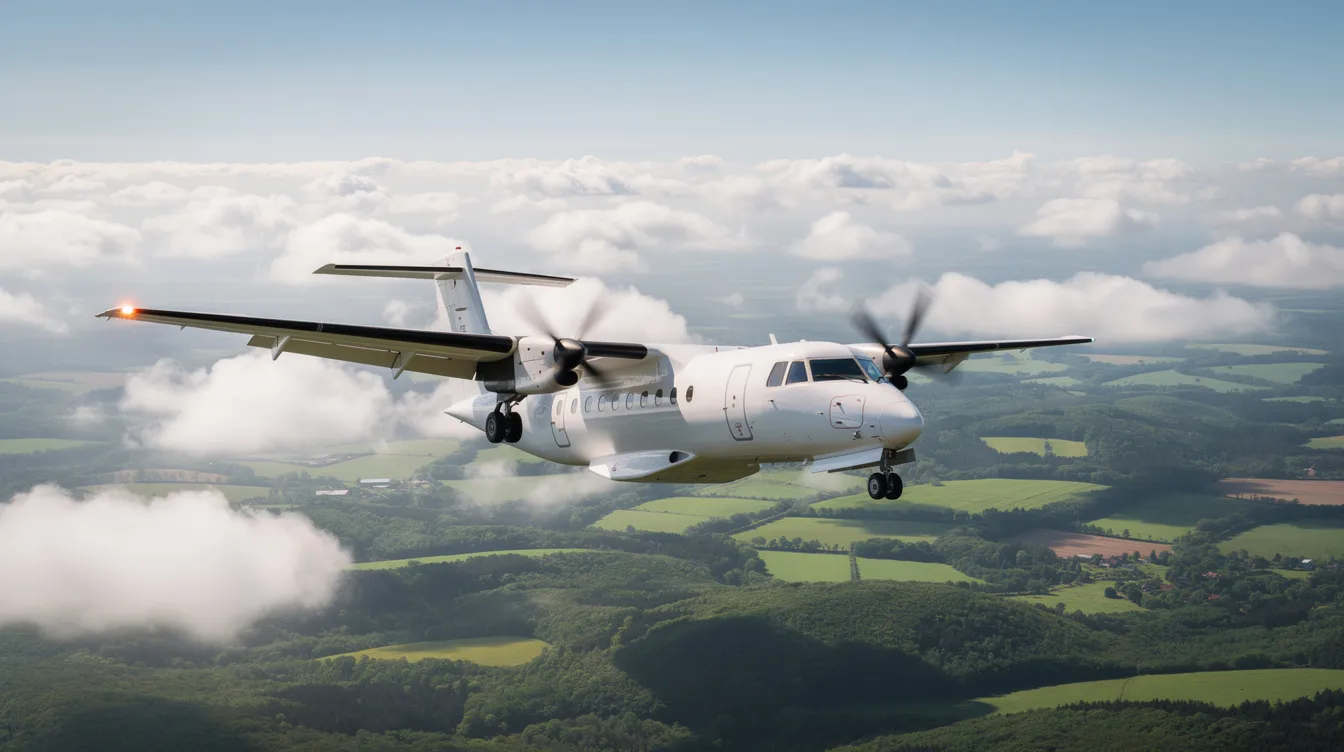
The Cessna 441 Conquest II remains one of the most compelling legacy aircraft in regional business aviation. The Cessna 441 Conquest II is a high-performance twin-turboprop aircraft. Here is everything a prospective buyer, charter client, or Jet Card member needs to know about its capabilities, economics, and how it stacks up against modern alternatives.
Quick overview: Why the Cessna 441 Conquest still matters today
In an era dominated by newer light jets and next-generation turboprops, the Cessna 441 Conquest II continues to earn its place on ramps across North America and beyond. This high-performance twin-turboprop aircraft bridges the gap between piston twins and business jets, delivering near-jet speed with turboprop economics. For the business jet traveler focused on regional missions of 1,000 to 1,800 nautical miles, few legacy platforms match its balance of cost and capability.
The Cessna 441 Conquest—later branded the Conquest II—is a twin-engine, pressurized turboprop aircraft powered by twin Garrett TPE331 turboprop engines. Its headline specs speak for themselves: a maximum cruise speed of over 310 knots, maximum range of approximately 2,000 nautical miles, a service ceiling of 35,000 feet, and seating for eight passengers or more in executive layouts. The airplane is certified for single-pilot operation, making it accessible to owner-operators without the overhead of a full crew.
Compared to modern turboprop aircraft like the King Air B200, the 441 Conquest generally offers improved performance in cruise speed and fuel efficiency, though with a narrower cabin and a smaller factory support network. Against light jets, the Conquest II delivers operational economy on regional routes that many jets simply cannot match.
At BlackJet, our Jet Card programs center on newer jet categories across the cabin spectrum. Yet understanding legacy workhorses like the Cessna 441 helps clients compare charter, Jet Card, and ownership paths with clear-eyed data rather than assumptions, especially when evaluating broader BlackJet Jet Card programs and private aviation services.
About the Cessna 441 Conquest II
The Cessna 441 was Cessna's first pressurized, twin-engine turboprop aircraft, developed in the mid-1970s to give corporate operators a step up from piston power without the cost of early business jets. The airframe evolved from the Cessna 404 Titan but gained a pressurized cabin, redesigned wings and tail, and Honeywell (Garrett) TPE331 turboprop engines intended to deliver near-jet cruise speeds with significantly lower fuel burn.
The "Conquest II" designation appeared in 1983 when the smaller 425 Conquest I joined the lineup. Before that, the aircraft was simply the Cessna Conquest. Today, a large share of the existing 441 Conquest fleet has been retrofitted with upgraded engines and props, modern avionics, and refreshed interiors—upgrades that keep the model competitive with aircraft developed decades later. The Conquest II is utilized for corporate and executive transport worldwide, and the aircraft can be used in air charter operations due to its low operating costs.
Development history and production timeline
During the early 1970s, corporate flight departments wanted a pressurized turbine airplane that could fly higher, faster, and farther than piston twins—without the acquisition and operating cost of emerging business jets. Cessna developed the 441 to fill that gap.
Key milestones in production:
1972: Cessna begins work on the Model 435 prototype, a pressurized turboprop derivative of the 404 Titan.
1975: The prototype evolves into the Model 441, incorporating aerodynamics and systems tailored to turbine power.
August 19, 1977: The FAA grants certification for the Cessna 441 Conquest.
1983: The aircraft is re-named "Cessna 441 Conquest II" when the smaller 425 Conquest I arrives.
1986: Production ends after over 350 units were built—most sources cite 362 airframes.
Production ceased largely due to market shifts, rising liability costs, and competition from more advanced jets entering the fleet. Many aircraft went on to serve corporate flight departments, charter operators, air ambulance providers, and military or special-mission roles around the world.
Performance and operating capabilities of the 441 Conquest
The Cessna 441 earns its "near-jet" reputation through a combination of altitude, speed, and efficiency that few turboprops of its generation can match—and that still closes the gap with modern light jets on regional missions.
Specification | Value |
|---|
Engines | Two Honeywell (Garrett) TPE331 (Dash-8 or Dash-10) |
Maximum cruise speed | Over 310 knots true airspeed |
Long-range cruise | Approximately 260–280 KTAS |
Maximum range | About 2,000–2,200 nautical miles |
Service ceiling | 35,000 ft (flight level 350) |
Climb rate | Over 2,000 feet per minute |
Fuel burn | 310 pounds per hour at FL350 |
Fuel capacity | 475 gallons |
Rated takeoff weight | Approximately 9,850 pounds |
The aircraft's efficient high-altitude operations mean it can cruise well above weather at flight levels 290 to 350, where reduced vertical separation minimum (RVSM) approvals allow upgraded Conquest IIs to share airspace with jets. The 441 can operate from shorter runways compared to some jets—takeoff distances around 1,785 feet in favorable conditions make regional airports with 3,500 to 4,000 feet of ground available entirely practical.
Compared to a King Air B200, the Conquest II is generally a bit faster with lower fuel burn per hour, though the King Air offers a wider cabin and broader parts network. For charter and fractional operators, these characteristics make the 441 an appealing, cost-efficient platform for single-pilot-capable missions where passengers value substance over flash.
Cabin layout, comfort, and baggage
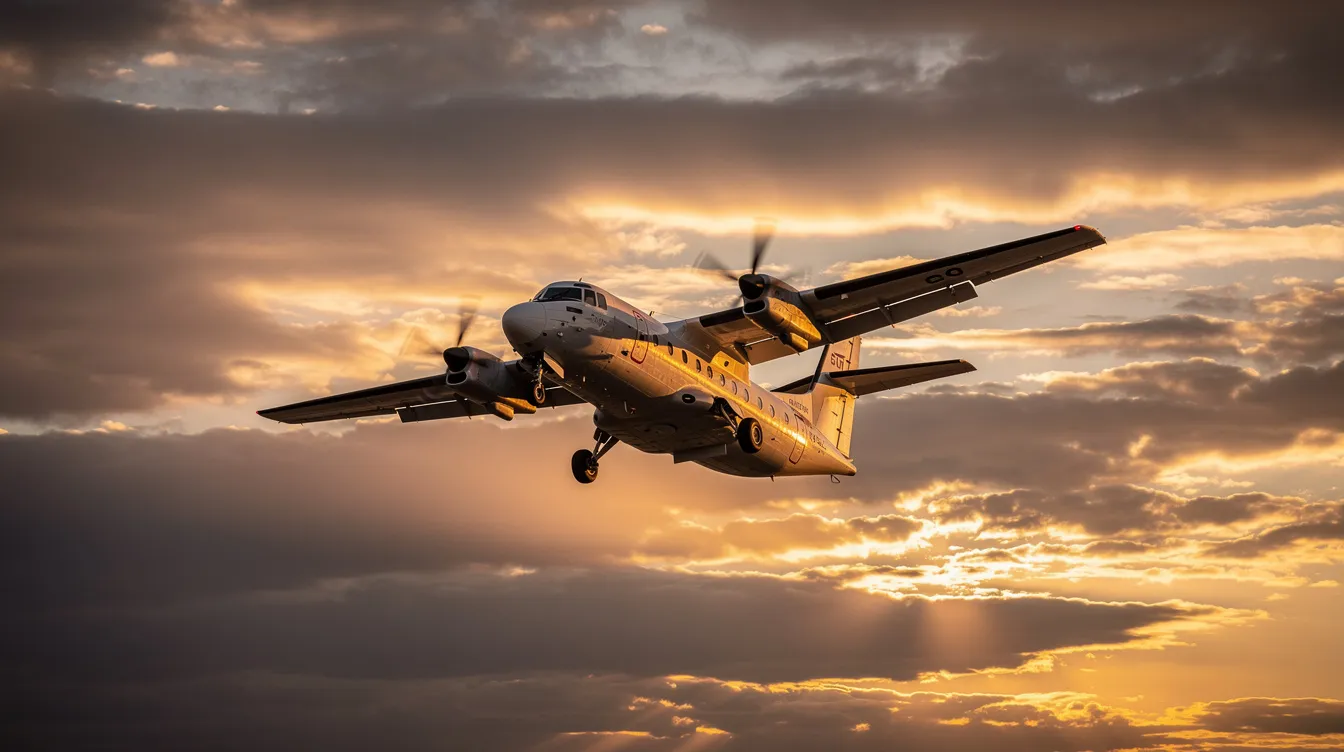
The Conquest II features a pressurized cabin with a low pressurization system limit of 6.3 psi, keeping passengers comfortable at altitude, even if it lacks some of the wellness-focused innovations found in the newest generation of private jets. The cabin measures 12.8 feet long, 4.6 feet wide, and 4.3 feet high, arranged in a typical club or semi-club configuration. The aircraft's high-aspect-ratio wing design contributes to efficient cruise without intruding on usable interior space.
Standard seating and layout details:
The cabin typically seats seven or eight passengers in executive configuration.
The aircraft can be configured for 6 to 9 seats depending on mission and regulatory requirements.
A belted lavatory seat is located at the rear of the cabin, doubling as an additional passenger seat where regulations allow.
Single pilot operation frees the right front cockpit seat for a passenger in private use, though not in commercial charter.
Baggage is handled through a nose baggage area that can hold up to 600 pounds, plus additional aft cabin storage depending on the seating layout. That capacity covers business gear, golf bags, and light cargo comfortably—though payload with full fuel is modest, so mission planning matters.
Compared to modern light jets, headroom and aisle width are tighter, but legroom is competitive, and the ride is quieter than most piston twins. Charter operators frequently refurbish 441 Conquest interiors with modern leathers, LED lighting, and soundproofing—so actual comfort depends heavily on the individual airplane and how it stacks up against top private jets worldwide for luxury and performance.
Avionics, technology, and common upgrades
Original Cessna 441 cockpit panels were analog "steam gauges" with factory Cessna or Sperry autopilots (e.g., SPZ-500), basic color weather radar, ADF, VOR/ILS, and conventional engine instruments. Most actively flown aircraft have been modernized well beyond this baseline.
Common modern retrofit packages include:
Dual Garmin G600 or G600 TXi glass primary flight displays
GTN 750Xi/650Xi GPS/NAV/COM units
ADS-B Out compliance upgrades
Traffic advisory systems (TCAS I or TAS), TAWS terrain awareness, and SiriusXM digital weather
RVSM approvals for efficient cruise between FL290 and FL350
On the engine and propeller side, Dash-10 engine conversions are the single most impactful upgrade, boosting climb, cruise speed, and fuel efficiency while extending time between overhauls. Replacing three-bladed propellers with four- or five-blade composite units reduces cabin noise by up to 10 dB and improves ground clearance. Winglets and aerodynamic cleanup kits round out the most common modifications.
These upgrades are major drivers of current market value, dispatch reliability, and maintenance cost profile for the 441 Conquest. A stock airframe with original avionics and engines is a fundamentally different airplane than a fully upgraded example.
Ownership economics, safety record, and market position
The Cessna 441 Conquest II continues to attract owner-operators and small flight departments because it delivers pressurized, near-jet performance at turboprop charter rates. But the economics require honest analysis.
Acquisition and operating costs:
A used Cessna 441 costs $850,000 to $1.5 million depending on year, engine time, and upgrade history.
Annual fixed costs for a Cessna 441 are approximately $75,500, covering insurance, hangar, training, and inspections.
Charter rates for the Cessna 441 vary by journey length, and wet lease rates depend on aircraft age and lease terms, mirroring many of the same variables discussed in broader analyses of whether chartering a private jet is worth it.
Airframes with fresh overhauls, SID compliance, and modern avionics hold value noticeably better at sale.
Safety profile:
The Cessna 441 Conquest II has a safety index score of 1.11. It recorded ten fatal accidents over approximately 900,000 flight hours—a generally solid record for its era. Accidents primarily involve loss-of-control events and engine failures, often linked to single pilot operations in challenging weather. Rigorous training, simulator-based recurrent programs, and operating with a two-pilot crew in night or IMC conditions materially reduce risk. BlackJet's network operators meet strict audit and safety standards that exceed what many single-aircraft owners maintain independently.
Buyers should scrutinize:
Compliance with Cessna's Supplemental Inspection Documents (SIDs), which limit the certified airframe to 22,500 flight hours
Engine times since overhaul and the reputation of the overhaul facility
STC list covering winglets, propellers, engine mods, and avionics
Corrosion history, especially for aircraft that have operated in coastal or humid climates
Competitors include the Beechcraft King Air 200/250, Mitsubishi MU-2, and Twin Commander turboprops. The 441 Conquest typically leads in speed and fuel economy but trails the King Air in cabin length and support network breadth, which is why some buyers cross-shop it against pre-owned $5 million light and midsize jets as their travel needs evolve.
Chartering a Cessna 441 vs. flying with a Jet Card
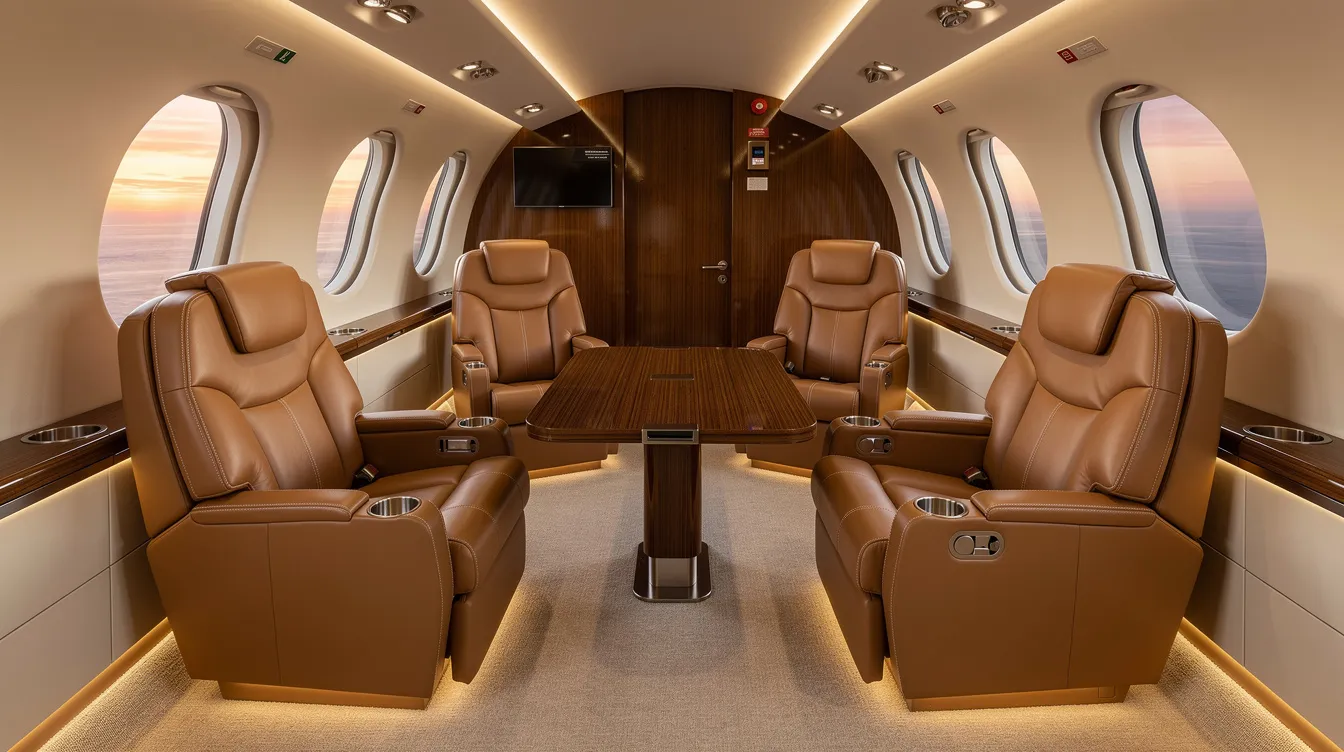
Consider a Dallas-to-Denvermission—roughly 600 nautical miles, no fuel stop required, four passengers with luggage. A well-equipped Conquest II handles this nonstop at altitude, arriving in about two hours at a competitive cost. But the same mission booked through a BlackJet Jet Card on a newer turboprop or light jet delivers a modern cabin, dual-pilot crew, and zero maintenance exposure, often at comparable or better total economics when you factor in the hidden costs of ownership.
Typical Cessna 441 charter use cases:
BlackJet's Jet Card model offers a different calculus: Clients considering fixed-rate access to larger aircraft categories can also review the dedicated BlackJet 25+ Hour Jet Card program for more detail.
Access to a curated fleet across categories—from turboprop to large jet—rather than being locked into a single model like the Conquest
Prepaid hourly access through 25-hour or 50-hour Jet Card programs with transparent pricing, replacing per-trip charter negotiations, supported by broader guidance on understanding Jet Card cost and membership pricing
No exposure to one engine overhaul surprise, avionics obsolescence, or airframe inspection costs
The ability to size up or down depending on each mission's passenger count, weight, and distance
Carbon-neutral flights as a standard feature, offsetting emissions at no extra cost
If you are considering buying or chartering a 441 Conquest, model the same missions using a Jet Card and compare total cost, time saved, and fleet flexibility side by side, using a structured framework like those found in comprehensive guides to Jet Card pricing, costs, and benefits.
FAQs: Cessna 441 Conquest II and private travel options
Below are the questions prospective buyers, charter clients, and Jet Card members most frequently ask about the Cessna 441 Conquest II.
What is the difference between the Cessna 441 Conquest and the Conquest II? They are the same aircraft. The "Conquest II" designation was added in 1983 when Cessna introduced the smaller 425 Conquest I to distinguish the two models in the lineup.
How many passengers can a Cessna 441 Conquest II carry in a typical charter configuration? The cabin typically seats seven or eight passengers in an executive layout, with configurations ranging from six to nine seats depending on the operator—considerably fewer than the top 16-seat private jet options for larger groups.
Is the Cessna 441 considered a safe turboprop for business travel? Yes. With a safety index of 1.11 and a fleet record spanning roughly 900,000 flight hours, the Conquest II's safety profile is solid—particularly when flown by well-trained, current pilots using modern avionics.
How does the Cessna 441's range compare with modern turboprop aircraft used in Jet Card fleets? The 441's maximum range of approximately 2,000 to 2,200 nautical miles is competitive with many current-production turboprops, though payload trade-offs with full fuel can require a fuel stop on longer legs with full passenger loads—factors that become especially important when evaluating larger commitments such as a 100-hour Jet Card cost structure.
What are the main inspection items prospective buyers should review? SID compliance, engine hours since overhaul, corrosion history, propeller condition, and the completeness of the STC and avionics upgrade record—alongside market comparisons drawn from curated listings of premium private jets for sale in the UK and Europe.
When would a Jet Card be more advantageous than owning a Cessna 441? When annual flight hours are below 150–200, when mission profiles vary in distance and passenger count, or when avoiding capital exposure and maintenance risk is a priority—criteria that align closely with how experts evaluate the best Jet Cards for frequent flyers.
Conclusion: The Enduring Value of the Cessna 441 Conquest II
The Cessna 441 Conquest II remains a distinguished turboprop choice for discerning travelers who prioritize performance, efficiency, and operational economy on regional missions. Its ability to deliver near-jet speeds, combined with a pressurized cabin and flexible seating, offers a compelling alternative to both piston twins and light jets. Certified by the FAA and backed by decades of proven service, the Conquest II balances legacy durability with modern upgrades in avionics and powerplants.
While ownership demands rigorous maintenance and adherence to inspection protocols, the aircraft’s safety record and cost profile make it a practical option for owner-operators and charter providers alike. However, for travelers seeking seamless access to a broad fleet with the latest technology, luxury, and carbon-neutral flights, BlackJet’s Jet Card programs present an exclusive, flexible alternative without the burdens of ownership.
Ultimately, whether flying a Cessna 441 Conquest II or leveraging BlackJet’s curated fleet, the focus remains on elevating private aviation beyond luxury to a strategic advantage—saving time, enhancing safety, and delivering unparalleled convenience on every journey. Explore how our private jet safety protocols and carbon-neutral flights ensure every trip is as responsible as it is refined.


 Sign up with google
 Sign up with Apple