If you own or plan to buy a Cessna 172, typical insurance costs in 2026 run about $1,200 to $2,500 per year for full hull and liability coverage, with the final premium changing based on pilot experience, aircraft value, and how the plane is used. This guide is for current and prospective Cessna 172 owners, student pilots, and flight instructors seeking clear answers on insurance costs and coverage. Understanding insurance costs is crucial for budgeting and risk management as an aircraft owner. For student pilots, private owners, flight instructors, and business users, insurance is one of the first ownership costs to pin down because it can vary more than many buyers expect.
Here’s a clear breakdown of what Cessna 172 owners actually pay, what drives the price, how liability and hull coverage work, and how usage, risk reduction, and comparisons with other aircraft and even car insurance can help you secure the right coverage without overpaying.
Quick Answer: Typical Cessna 172 Insurance Costs in 2026
Insuring a Cessna 172 typically costs between $1,200 and $2,500 per year for full hull and liability coverage on a mid-value airframe with a qualified pilot at the controls. But that figure shifts dramatically depending on your profile.
Basic liability insurance for a Cessna 172 runs about $150 to $300 annually for experienced pilots flying personal use in the U.S. Experienced pilots with 200+ hours often pay just $150 to $250 for liability coverage alone. Newer pilots, by contrast, face insurance costs between $850 and $1,400 before hull coverage is even added.
Full coverage on a 1970s–1990s Cessna 172 valued around $90,000–$130,000 usually lands between $900 and $2,000 per year for a private pilot with 200–500 hours. A new Garmin G1000-equipped Cessna 172S Skyhawk valued at $500,000–$600,000 commonly sees total insurance costs in the $4,000–$7,000 range, scaling higher for flight training operations.
A student pilot or low-time aviator will pay on the higher end or face steeper deductibles due to limited hours in type, while a seasoned instrument-rated owner can usually secure the best rates. Unlike car insurance, which is priced per driver and road exposure, Cessna 172 insurance is tightly linked to hours flown, pilot training, and hull value.
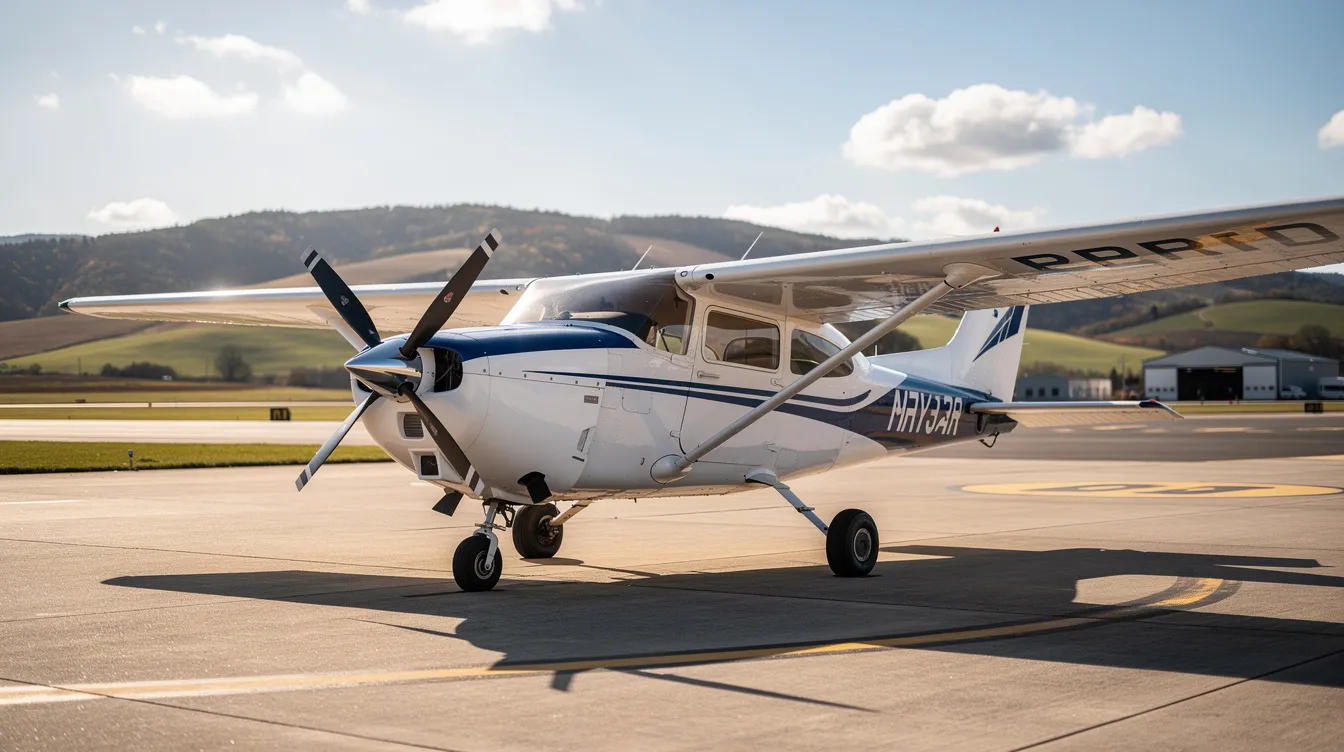
Understanding the Cessna 172 and Why Its Insurance Is Relatively Affordable
The Cessna 172 is the everyday workhorse of general aviation, and that reputation directly shapes its insurance cost. The Cessna 172 was first produced in 1955 and is still in production today, with over 44,000 units built-more than any other airplane in history. Its widespread use in flight training and personal flying means underwriters have decades of operational data to price risk accurately.
The Cessna 172 has a solid safety history and is considered safe compared to industry standards. Its docile handling, forgiving landing characteristics, fixed gear, and high-wing design translate into fewer severe losses from hard landings and other common incidents. The Cessna 172 has a relatively low claim history, which keeps premiums modest versus faster, more complex aircraft.
Hull values vary based on era and condition. Older Cessna 172s can be valued as low as $60,000 for 1960s models, while 1970s airframes typically range from $70,000–$110,000. Models from the 1990s and early 2000s sit around $150,000–$250,000, and new Skyhawks command $525,000–$600,000+ in 2026. Because insurers can rely on such extensive claims data, Cessna 172 insurance is often the entry point for new aircraft owners stepping beyond rental fleets.
Core Components of Cessna 172 Insurance Coverage
Before fixating on the insurance cost figure, understanding what your policy actually covers makes the difference between adequate protection and an expensive surprise. Aviation insurance is not structured like car insurance "comprehensive and collision." Instead, it splits into aircraft hull and liability, each with separate deductibles.
Liability coverage offers protection against bodily injury and property damage claims made by third parties or passengers. Liability coverage protects against damage to others' property. A standard policy might offer $1,000,000 per occurrence with a $100,000 per passenger sublimit. Liability coverage typically costs $150 to $250 annually for qualified pilots.
Hull coverage insures physical damage to the plane, both in-motion and not-in-motion. Hull coverage protects the aircraft's value if totaled. Hull coverage costs approximately 0.9% to 1.5% of the aircraft's insured value per year, with Cessna 172 insurance rates starting at 1% of hull value. For many aircraft owners, hull coverage alone ranges from $500 to $1,200 per year on older models.
Agreed value coverage pays a predetermined amount if the plane is totaled—for example, a 1978 Cessna 172N insured at an agreed hull value of $95,000 would pay exactly that in a total loss.
Stated value coverage depreciates based on the loss date, meaning the payout may be less than the insured value if the aircraft is totaled.
Additional options include:
Medical payments coverage for passengers on board regardless of fault
Physical damage coverage protecting against ground incidents
Non-owned aircraft liability if you also rent from flight schools
Typical deductible ranges run $500–$5,000. Raising your deductible meaningfully lowers your annual premium, but increases out-of-pocket risk. Match coverage levels to how you fly: solo recreational use demands different protection than frequent passenger flights or flight instruction operations.
Key Factors That Drive Cessna 172 Insurance Costs
Insurers price aviation insurance around three risk dimensions: the pilot, the aircraft, and how it's flown. Pilot experience significantly affects aircraft insurance pricing, and aircraft hull value influences insurance costs significantly.
Pilot-related factors center on how many hours you've logged:
Experience Tier | Total Hours | Hours in 172 | Typical Impact |
|---|
Higher risk (student pilot) | <75 | <25 | Surcharges or training requirements |
Standard risk | 100–250 | 25–50 | Mid-range pricing |
Preferred risk | 500+ | 100+ with instrument rating | Qualifies for best rates |
Insurers prefer pilots with 500 hours in a Cessna 172. Recent flight time in the past 12 months matters heavily-currency signals competence. A clean safety record and spotless claims history generally earn lower insurance rates from underwriters.
Aircraft-related factors include year, model, hull value, avionics (Garmin G1000 NXi, ADS-B In/Out), and maintenance history. Maintenance standards influence insurance decisions for the Cessna 172. Aircraft parked in a hangar may lower insurance costs; insurers prefer aircraft stored in hangars over tied down outside, since exposure to hail, wind, and corrosion increases risk.
Usage factors matter considerably. Personal use of a Cessna 172 is cheaper to insure than commercial use. Whether the plane is flown mostly day VFR versus frequent IFR, geographic region, and typical airport conditions all shift the price. Pilots over 70 may face more stringent medical checks, though 172s remain among the easiest aircraft to insure for older pilots.
Real-World Price Ranges: Sample Cessna 172 Insurance Scenarios
Here's where underwriting theory meets real money. These representative 2025–2026 figures from U.S. carriers help aircraft owners benchmark their own quotes.
Scenario 1: Mid-experience private owner. A 30-year-old private pilot, 150 total hours, 60 in Cessna 172, insuring a 1975 172M valued at $85,000 for personal use. Expected annual premium for $1M liability plus full hull: roughly $1,000–$1,600.
Scenario 2: Student pilot buying in. A student pilot purchasing a 1968 Cessna 172I valued at $70,000, planning 60–80 flight training hours in the first year. Limited experience and higher utilization push the annual 172 insurance cost toward $1,800–$2,400, often with higher deductibles required.
Scenario 3: Flight school operation. A new 2026 Cessna 172S with G1000 NXi, insured for $575,000, flown 200 hours per year by a mix of instructors and student pilots under Part 61. Premiums in this profile commonly fall between $8,000–$14,000 depending on loss history, named pilot requirements, and how many other pilots operate the airplane. Flight schools carry inherently higher risk due to volume and less-experienced operators.
Scenario 4: Business use owner. An instrument-rated owner flying a 2005 Cessna 172SP (hull value $230,000) for regional client visits, 150 hours per year. Possible premiums of $2,000–$3,500 with $1M smooth liability and no per-passenger sublimit.
Individual quotes vary based on broker relationships, past accidents, current market cycles, and the operating environment. Working with experienced aviation insurance brokers is the fastest way to find the figure that fits your profile.
How to Lower Your Cessna 172 Insurance Premium Without Sacrificing Safety
Cutting coverage to save money is a false economy. The smart approach reduces insurance cost and risk simultaneously.
Training and Experience
Training is the single biggest lever. Recurrent training can lead to reduced insurance premiums. Completing an instrument rating, regular IPCs, phase checks, and annual flight reviews with a CFI in the Cessna 172 itself often unlock measurable reductions. Insurers view 100+ hours in-type far more favorably than the same time spread across many aircraft. A good maintenance shop keeping the plane in top condition matters too—regular preventive maintenance can mitigate insurance risks.
Hangaring vs. Outdoor Storage
Hangaring vs. outdoor tiedown. While rent at a hangar costs perhaps $3,000–$6,000 per year at many U.S. airports, it eliminates hail, wind, and vandalism exposure. The monthly cost is meaningful, but the premium and aircraft preservation benefits often justify it, especially in storm-prone country.
Avionics and Safety Equipment
Avionics and safety equipment. ADS-B, traffic awareness, modern autopilots, and engine monitors don't always produce formal discounts, but they strengthen your risk profile during underwriting.
Financial Strategies
Financial levers to lower your premium:
Raise deductibles from $1,000 to $5,000 to trim premiums
Limit named pilots rather than carrying an open pilot warranty for other pilots
Set an agreed hull value matching true market value—neither inflated nor unrealistically low
Keep clean logbooks; clean logbooks can lower your insurance premium significantly
Older Cessna 172s cost less to insure due to lower value, so factor that into buying decisions
Older models with basic avionics carry a cheaper premium but may lack safety features like air conditioning or modern panel displays.

Cessna 172 Insurance vs. Other Aircraft and vs. Car Insurance
The Cessna 172 serves as the benchmark for affordable aviation insurance, much like a mainstream sedan in the car insurance world.
Compared to faster or more complex aircraft—a Beechcraft Bonanza, Cirrus SR22, or Piper Arrow—retractable gear, higher speeds, and elevated hull values typically push insurance costs 30–100% higher for similar pilot experience and ratings. Multi-engine aircraft and turboprops sit in an entirely different bracket, with premiums often five or ten times that of a typical 172.
Key Differences Between Aviation and Car Insurance
The difference between aviation insurance and car insurance is structural:
Aviation underwriters focus heavily on formal training, hours logged, and inspection records
Loss frequency is lower in aviation, but severity is far higher
There is no "state minimum" liability equivalent; most aircraft owners opt for $1M or more
Oil pressure gauges and fuel management are life-safety items, not convenience features
From BlackJet's safety-focused perspective, the risk discipline a Cessna 172 owner practices—logging hours, maintaining currency, choosing quality brokers—mirrors what fleet-level operators do through ARG/US or Wyvern audits at a much larger scale.
From Piston Trainers to Private Jets: How BlackJet Approaches Aviation Risk
Many BlackJet members either trained in or still fly Cessna 172s. The risk factors familiar from 172 insurance—pilot experience, recent flight time, maintenance, avionics, hangarage—scale up dramatically when moving into turbine aircraft and business jets.
BlackJet partners exclusively with operators meeting rigorous third-party safety standards, maintaining comprehensive insurance and using typed, recurrently trained crews. These mirror best practices any disciplined 172 owner should emulate. While a Cessna 172 has a modest fuel burn, BlackJet ensures every jet card flight is carbon-neutral via verified offset programs. BlackJet's 24/7 digital booking and real-time flight monitoring give travelers the same sense of control and visibility over risk that detailed policy documents and logbook discipline provide to aircraft owners.
If you currently fly a 172 for business trips and want to make sense of upgrading certain routes—say, New York to Chicago—to a light jet, explore whether a BlackJet Jet Card from the broader BlackJet private jet card programs could complement your flying.
Frequently Asked Questions About Cessna 172 Insurance
Q1: How much does liability insurance for a Cessna 172 typically cost?
Liability insurance for experienced pilots usually costs between $150 and $250 annually. This coverage protects against bodily injury and property damage to third parties.
Q2: What factors most influence Cessna 172 insurance premiums?
Pilot experience, aircraft hull value, usage type, and storage conditions (hangared vs. tied down) are the primary factors affecting insurance costs.
Q3: Can I lower my Cessna 172 insurance premium?
Yes, recurrent training, maintaining a clean logbook, hangaring your aircraft, raising deductibles, and updating avionics can all help reduce premiums.
Q4: Why do newer pilots pay more for Cessna 172 insurance?
Newer pilots with fewer hours and less experience are considered higher risk by insurers, leading to higher premiums often ranging from $850 to $1,400 annually.
Q5: How does hull coverage work for a Cessna 172?
Hull coverage protects the physical aircraft against damage or total loss. You can choose agreed value coverage, which pays a predetermined amount, or stated value coverage, which depreciates based on the loss date.
Planning Your Cessna 172 Insurance Like a Pro
Typical Cessna 172 insurance cost ranges from roughly $1,200 to $2,500 per year for full coverage, driven primarily by pilot experience, hull value, and how you actually fly the plane. Careful training, clean maintenance records, and realistic agreed hull values let you secure strong protection without overpaying on premiums.
Before seeking quotes, gather your pilot logbook totals, hours in type, aircraft logbooks, avionics list, and storage details. This data streamlines conversations with aviation insurance brokers and positions you for competitive pricing.
Thoughtful risk management in a Cessna 172 is part of a broader aviation journey—whether you continue as a piston owner, move into more complex aircraft, or leverage private jet charter solutions like BlackJet for higher-stakes business and international travel. Wherever your flying takes you, disciplined preparation pays dividends at every altitude.
Conclusion
Insuring a Cessna 172 in 2026 involves balancing pilot experience, aircraft value, and usage to find the right coverage at a fair price. Thanks to its proven safety record, extensive operational data, and enduring popularity, the Cessna 172 remains one of the most affordable and accessible aircraft to insure. By investing in recurrent training, maintaining a clean logbook, storing the aircraft in a hangar, and selecting appropriate liability and hull coverage, owners can reduce premiums without compromising safety. Whether you are a student pilot, private owner, or flight school operator, understanding these factors empowers you to manage risk intelligently and budget confidently.
For those considering upgrading to turbine aircraft or private jets, the discipline and risk management skills honed with a Cessna 172 insurance policy provide a solid foundation for navigating more complex aviation insurance landscapes. Ultimately, thoughtful preparation and working with specialized aviation brokers ensure your Cessna 172 remains protected, letting you enjoy the freedom and convenience of personal flight with peace of mind.


 Sign up with google
 Sign up with Apple


