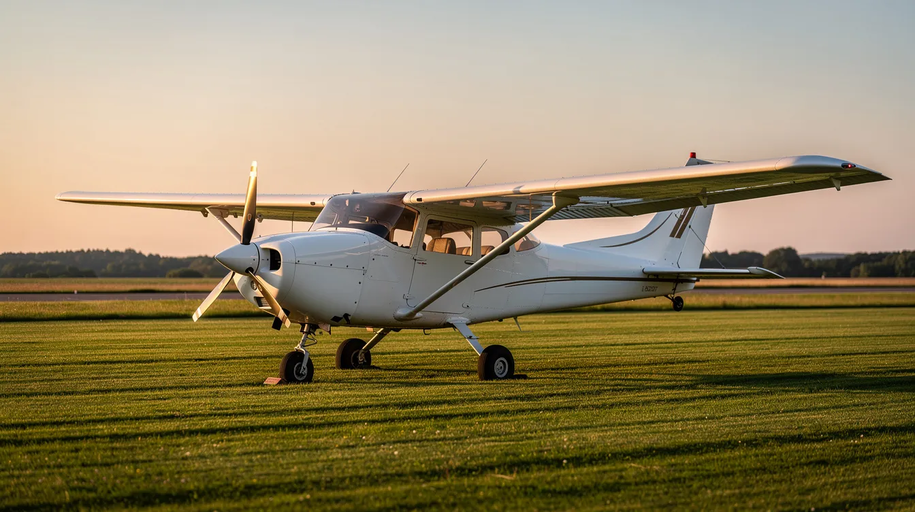
Every airline captain, charter operator, and private jet pilot began somewhere. More often than not, that somewhere was a compact, no-nonsense training airplane with a 100-horsepower engine, two seats, a high wing, and a forgiving disposition. The Cessna 150 is that airplane: a two-seat, all-metal trainer built by Cessna from 1958 to 1977 for primary flight training and personal flying, prized for simple systems, low operating costs, and predictable handling.
For student pilots, flying clubs, flight schools, current or prospective owners, and aviation readers curious about how basic training connects to business aviation, understanding the Cessna 150 explains why it became the starting point for hundreds of thousands of pilots. This guide looks at the 150’s history, design, training role, comparisons with aircraft such as the Cessna 152, ownership and modification considerations, and how the path from a simple piston trainer eventually leads to modern private jet travel—including flexible access models such as BlackJet’s Jet Card programs.
Immediate Overview of the Cessna 150
The Cessna 150 is a two-seat, high-wing, all-metal trainer with fixed tricycle gear, produced by the Cessna Aircraft Company from 1958 through 1977. Powered by a Continental O-200-A engine delivering 100 horsepower, it was purpose-built for primary flight training and personal use. The airplane is recognized for its simplicity and low operating costs—two qualities that helped it become one of the most produced aircraft in general aviation history.
Cessna produced nearly 23,839 Cessna 150 units by 1977, making it a fixture on virtually every training ramp worldwide. Its core mission has always been straightforward: teach people to fly safely, cheaply, and repeatably. The forgiving handling characteristics and robust airframe meant flight schools could run the airplane hard through thousands of touch-and-go cycles without excessive maintenance burden.
The Cessna 150 paved the way for the Cessna 152 successor (introduced in 1978 with a Lycoming engine and higher gross weight), and the two types together have trained hundreds of thousands of pilots. Many current airline and business-jet captains first soloed in a 150. That journey—from a basic model trainer to the left seat of a corporate jet or from a weekend flyer to a frequent traveler booking private aviation through programs like BlackJet—begins with the fundamentals this airplane teaches.
Development History and Production Timeline
Early 1960s
Basic trainer focus with a straight tail, manual flaps, and minimal standard equipment.
Main landing gear was repositioned aft in 1961 for improved stability.
Gross weight started around 1,500 lb.
Late 1960s
Cessna introduced aesthetic and aerodynamic refinements—the Omni Vision rear window (1964), a swept vertical tail (1966), and electric flaps on select models.
The 1966 model year alone saw Cessna produce 3,067 units, reflecting peak demand.
Parallel production in Europe by Reims Aviation (F150 series) began, with slight equipment and corrosion-protection differences for European climates.
1970s
More comfort and avionics options appeared in the Commuter packages.
Incremental improvements to landing gear, wingtips, and interior trim continued until production of the Cessna 150 ended in 1977.
The Cessna 150 was succeeded by the Cessna 152 in 1977, which entered service as a 1978 model year aircraft with a 110 hp Lycoming engine, higher maximum gross weight, and factory certification for 100LL fuel. This evolution from the Cessna 150 to the Cessna 152 mirrors the broader progression from basic trainers to today's sophisticated training fleets—fleets that ultimately feed pilots into business and private jet operations.
Design Features and Handling Characteristics
Flight Characteristics
The Cessna 150 earned its reputation as the world's premier trainer largely because of how it flies: predictably, gently, and with enough feedback to teach good habits without punishing mistakes.
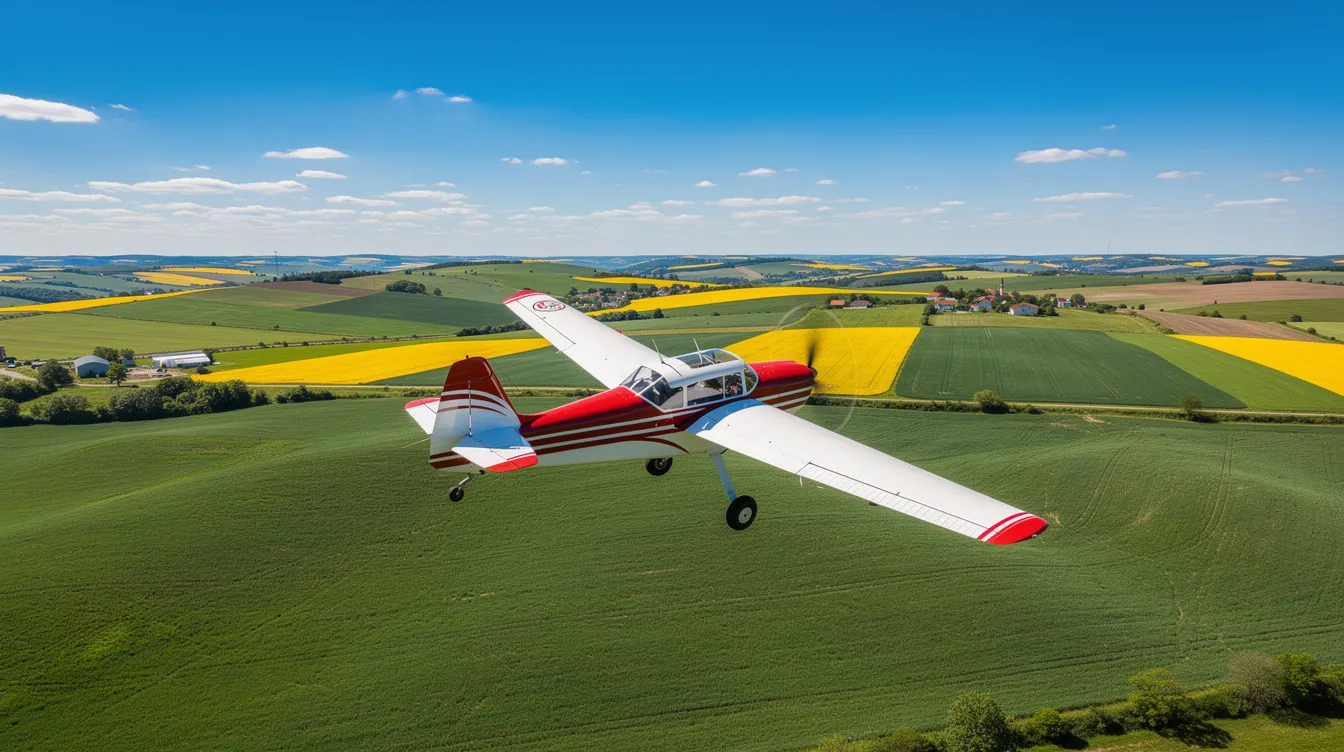
The high-wing, strut-braced layout with wing struts supporting and stabilizing the wing, plus a semi-monocoque fuselage, creates natural pendulum stability.
Combined with light wing loading, the airplane tends to self-correct in roll and yaw—especially at low speeds, which aids visibility and stability during flight.
Stall Behavior
It features forgiving handling characteristics ideal for student pilots.
Stall behavior is gentle: a mild buffet, gradual mush, and predictable nose drop give students time to recognize and recover.
No abrupt wing drops or violent departures.
Control Harmony
Control harmony is well balanced—light ailerons, an effective rudder with enough authority for crosswind work, and smooth elevator response.
Students learn coordinated flight, adverse yaw correction, and energy management naturally.
Visibility and Stability Enhancements
Training Value
Landing Gear and Ground Handling
Before the Cessna 150, most primary trainers used tailwheel configurations that demanded constant vigilance during taxi, takeoff, and landing. The 150's fixed tricycle landing gear changed the training equation by eliminating ground-loop risk and giving students forward visibility on the ground.
The layout consists of a steerable nose wheel linked to the rudder pedals and two main wheels on spring steel (later tubular steel) main gear struts. Differential braking handles tighter turns.
Early models used flat spring steel gear legs. In 1971, Cessna switched to tubular steel main gear legs with a wider track, improving lateral stability and shock absorption during the punishing cycles of training operations.
The gear geometry and nosewheel steering make taxiing intuitive for new pilots, while landing and taxi lights positioned on the cowl or gear leg (depending on the model year) aid visibility during ground operations. Taxi lights were standard on later variants.
Typical training operations—repeated touch-and-go landings, crosswind practice, and short-field technique—are exactly where the 150's robust ground handling excels.
Modern business-jet passengers using BlackJet seldom think about landing gear handling, but the pilots flying them often refined those foundational skills in trainers like the Cessna 150.
Cockpit, Cabin Experience, and Avionics
Cabin Layout
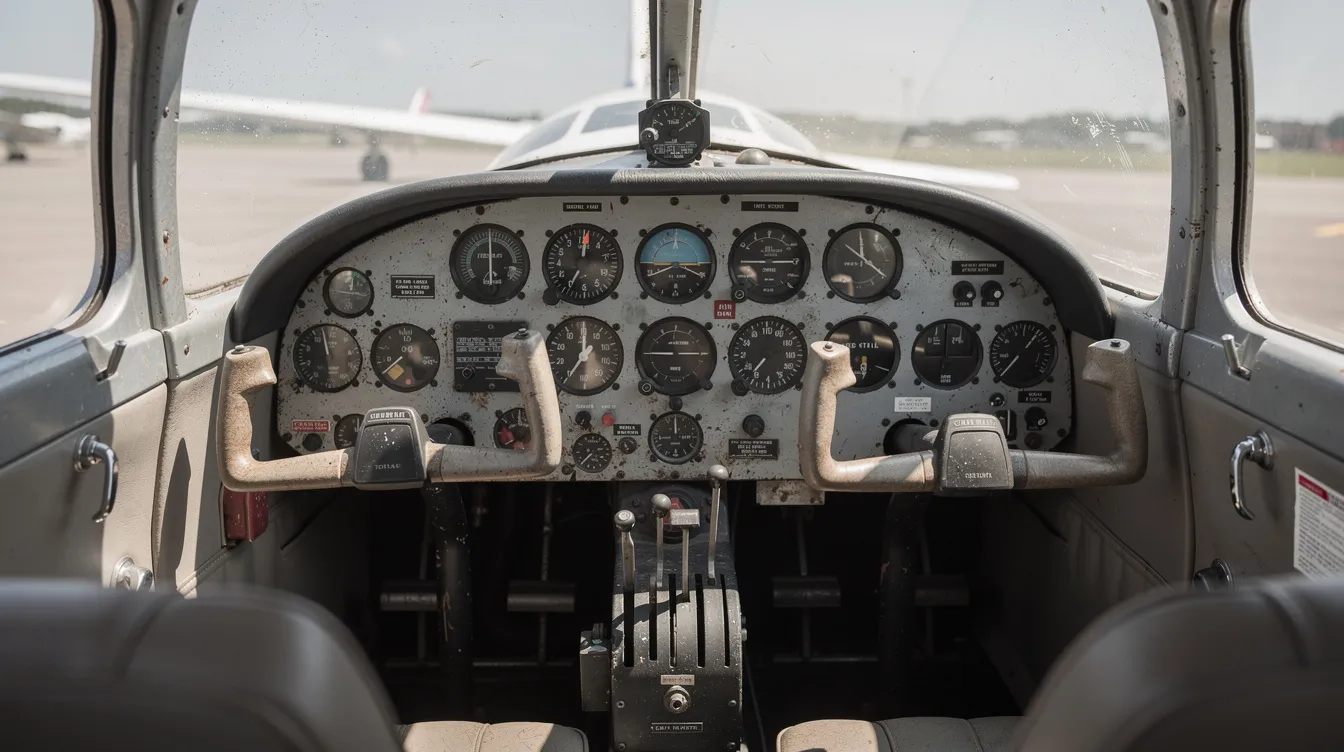
Sitting in a Cessna 150 cockpit for the first time is a study in purposeful minimalism. Everything you need is there; nothing you don't need is.
The Cessna 150 features side-by-side seating, facilitating better interaction during flight training.
Instructor and student share dual controls—matched yokes, rudder pedals, and throttle access.
A simple center console holds the throttle quadrant, mixture, carb heat, and fuel shutoff valve.
Instrument Panel
The instrument panel on early models carries the classic analog "six-pack" with basic engine gauges.
No glass cockpit, no autopilot, no distractions.
Cabin Comfort and Storage
Cabin dimensions are adequate for average-size pilots but tight for taller or broader occupants.
The baggage compartment behind the seats holds up to 120 lb, and the baggage area is accessed through a small door—functional, not spacious.
Avionics and Upgrades
Commuter and Commuter II packages added wheel fairings, improved upholstery, better lighting, and in some cases more capable nav/comm radios.
Many surviving Cessna 150s have been retrofitted with modern avionics—GPS, ADS-B Out, and even small glass panels—to meet current regulatory and training requirements, though the 14-volt electrical system on most models limits how much equipment can be added.
The contrast with modern private jets is stark. Where a 1960s Cessna 150 offers hand-flying purity, the advanced safety systems and avionics suites standard on jets available through BlackJet represent the full evolution from basic training to highly automated business travel.
Major Variants, Including Cessna 150M and Commuter II
All Cessna 150 variants share a common airframe, but Cessna 150 models have 31 different designations over 27 years, reflecting steady refinement in equipment, role, and capability.
Standard and Trainer versions: Stripped-down interiors, minimal instrumentation, and the basic model configuration optimized purely for flight training. Lower empty weights maximized useful load for student missions.
Commuter and Commuter II: Upgraded packages with wheel fairings, enhanced interiors, vacuum systems for gyro instruments, and improved avionics. The Commuter II designation typically indicates refined panels, long-range fuel tanks as an option, and comfort features aimed at personal use or light business commuting.
Aerobat (A150): The Cessna 150 Aerobat was introduced in 1970 for aerobatics. Structurally reinforced for load limits of +6g/−3g, it added four-point harnesses, quick-release doors, and often a checkerboard paint scheme. Aerobat models are still sought after for upset-recovery and spin training, though inverted flight is not possible due to the gravity-feed fuel system.
Cessna 150M: The 150M model was produced from 1975 to 1977 as the final major variant. Commuter II versions of the 150M featured refined instrument panels, slightly higher empty weights from additional equipment, and modest improvements in comfort. These were among the most complete trainers Cessna ever delivered under the 150 designation.
Cessna 150/152 family: Flight schools often treat both the 150 and Cessna 152 as part of the same training family. The 152 brought a 110 hp Lycoming engine, a 28-volt electrical system, and revised flap limits (30° max vs. the 150's 40° full flaps on some models), but transitions between types are seamless for most pilots.
Patroller variant: Added extended fuel tanks (38 gallons) and observation-friendly plexiglass door panels, as well as a floatplane version that expanded the type's operational envelope to water operations.
Performance, Specifications, and Useful Load (Example: 1976 Cessna 150M)
Using a late-production 1976 Cessna 150M as a representative example, here are the numbers that define this airplane's envelope.
Specification | Value |
|---|
Wingspan | ~33 ft 2 in |
Length | ~23 ft 11 in |
Height | ~8 ft 6 in |
Engine | Continental O-200-A, 100 hp, air-cooled, four-cylinder |
Propeller | Fixed-pitch, two-blade, 69 in |
Maximum certified gross weight | 1,600 lb |
Empty weight (Commuter) | ~1,104–1,130 lb |
Useful load | ~470–490 lb |
Standard fuel capacity | 26 US gallons (22.5 usable) |
Maximum speed | 109 knots |
Sea level cruise speed (75% power) | ~106 knots |
Stall speed (clean) | ~48 knots |
Stall speed (full flaps) | ~42 knots |
Rate of climb (sea level) | 670 ft/min |
Service ceiling | ~14,000 ft |
Range (standard fuel, 75% power) | ~340 nm |
Fuel burn | ~6–7 gallons per hour |
The maximum takeoff weight is 1,600 pounds, and the fuel capacity of 26 gallons standard means full fuel reduces remaining useful load for crew and baggage significantly. With two average-weight occupants and full fuel, there's minimal room for baggage.
Cruise speeds in the 95–105 knot range and a practical range of 300–350 nm with standard reserves make the 150 ideal for training and local flights—but not for multi-passenger business missions. Those are better served by turboprops and jets, such as those in BlackJet's network, where structured jet card pricing frameworks help keep costs predictable.
Cessna 150 in Flight Training: From First Solo to Cross-Country
Picture a student pilot on a clear Tuesday morning: pre-flight walk-around complete, engine started, taxi to runway 27. That first takeoff in a Cessna 150 is a moment etched into memory. It's no coincidence that Cessna 150s are commonly used for first solo flights and pattern work—the airplane practically invites confidence.
Common training tasks include takeoff and landing practice, slow flight, stalls, steep turns, basic instrument flying under the hood, and day/night VFR navigation exercises.
The airplane's forgiving stall behavior, predictable flare, and simple systems (no retractable gear, no constant-speed prop, no complex fuel management) make it a global standard in basic flight training.
Many Cessna 150s are equipped for basic IFR flight training with dual nav/comm radios and a standard six-pack instrument panel, though cabin size limits comfort for long hood sessions. One passenger plus instructor is a tight fit for extended work.
In 2026, the Cessna 150 and Cessna 152 remain active in flying clubs, flight schools, and university programs—particularly for cost-sensitive private pilot certificates and hour-building students. The Air Force Academy and similar institutions have historically recognized the value of basic stick-and-rudder training in simple aircraft before transitioning cadets to higher-performance types.
Students who master fundamentals in aircraft like the Cessna 150 later sit at the controls of corporate jets or manage travel via private jet services for time-critical trips. The serial number on a well-worn 150's data plate tells a story of thousands of hours building the skills the industry relies on.
Comparing the Cessna 150, Cessna 152, and Other Aircraft
For students and buyers evaluating trainers, the Cessna 150 vs. 152 question comes up constantly. Here's how the numbers stack up, along with context about other aircraft in the entry-level space.
Engines: The Cessna 150's 100 hp Continental vs. the Cessna 152's 110 hp Lycoming. The extra 10 hp gives the 152 noticeably better climb performance in hot/high conditions and slightly lower fuel burn on some profiles. Noise levels are comparable.
Weight and load: The 152's maximum gross weight is approximately 1,670 lb vs. the 150's 1,600 lb, granting slightly more payload flexibility for heavier occupants or additional equipment.
Handling: Broadly similar. Most pilots transition seamlessly between the two, noting subtle differences in elevator feel and approach behavior due to the 152's revised flap limits (30° max vs. 40° on many 150 models).
Compared to other aircraft: The Piper PA-28 Cherokee series offers four seats, more useful load, and higher cruise speeds but burns more fuel and costs more to acquire. The Diamond DA20 brings modern composite construction and better glide performance but at a significantly higher purchase price. Neither matches the 150s' rock-bottom acquisition and operating costs.
Where larger aircraft diverge: For travelers who value time and privacy on multi-city itineraries, the comparison shifts entirely. Even the fastest piston trainers cannot replicate what long-range private jets offer in speed, comfort, and productivity, especially among the top private jets in the world.
Ownership, Operating Costs, and Typical Missions
Acquisition Costs
Used Cessna 150s range from roughly $18,000–$30,000 for high-time basic trainers to $35,000–$55,000+ for well-maintained late-production Commuter II or Aerobat versions with modern avionics.
Engine time remaining, corrosion history, and avionics condition are the primary price drivers, just as with other cheapest private aircraft options at the entry level of ownership and access.
Operating Expenses
The aircraft burns approximately 6- 7 gallons of fuel per hour. At current avgas prices, that translates to $35–$50/hour in fuel alone.
Add routine maintenance, insurance ($800–$1,500/year for personal use), hangar or tie-down ($100–$400/month), annuals ($1,500–$3,000), and budget for engine overhaul reserves (~$15–$20/hour set aside).
Compare that with the predictable jet card cost per hour that many frequent travelers prefer.
Typical Missions
Weekend local flights, pattern practice, short cross-countries of 200–300 nm for lunch or sightseeing, and time-building for future commercial or airline careers, sitting at the most economical end of the spectrum compared with other budget-friendly private aircraft options.
Practical Limitations
Two seats, limited useful load, and relatively slow cruise speeds make multi-state trips time-consuming and impractical for business, which is why many travelers eventually explore the cheapest private jet options or shared access models when their mission profiles expand.
Consider the contrast: a pilot flying a 150 on a 250 nm weekend trip spends roughly 2.5 hours each way. A business traveler covering 1,000+ nm through a private jet charter completes the journey in under two hours with full cabin comfort, Wi-Fi, and the ability to work or rest en route, an efficiency gap explored in depth when you examine whether chartering a private jet is worth it.
Modifications, Upgrades, and the "Aviat 150" Concept
The Cessna 150 platform supports numerous modifications thanks to a robust aftermarket and a wide library of supplemental type certificates.
Performance mods: Higher-horsepower engine conversions (replacing the O-200 with a Lycoming O-320 for 150 hp), propeller changes for improved efficiency, and aerodynamic tweaks like gap seals, vortex generators, and streamlined cowl modifications.
Comfort and utility: Modern interiors, improved soundproofing, LED lighting for both cabin and exterior (replacing aging landing and taxi lights hardware), and enhanced heating/ventilation make training and personal flights more pleasant.
Avionics modernization: GPS-equipped instrument panels with ADS-B, traffic and weather displays, and digital engine monitors bring even early models into the digital age. Electrical load capacity remains the limiting factor on most 150s.
Full rebuilds: Programs sometimes informally called "Aviat 150" overhauls strip the airframe to bare metal, remediate corrosion, renew interiors, install modern avionics, and repaint—essentially remanufacturing a vintage trainer into near-new condition.
Cost-benefit reality: Owners should weigh deep upgrade costs against alternatives—renting newer trainers, or for travel-focused missions, shifting those hours to a private jet program like BlackJet's Jet Card, where predictable pricing and modern aircraft are standard and the overall jet card pricing structure is transparent.
Cessna 150 vs. Private Jet Travel: Where Each Aircraft Excels
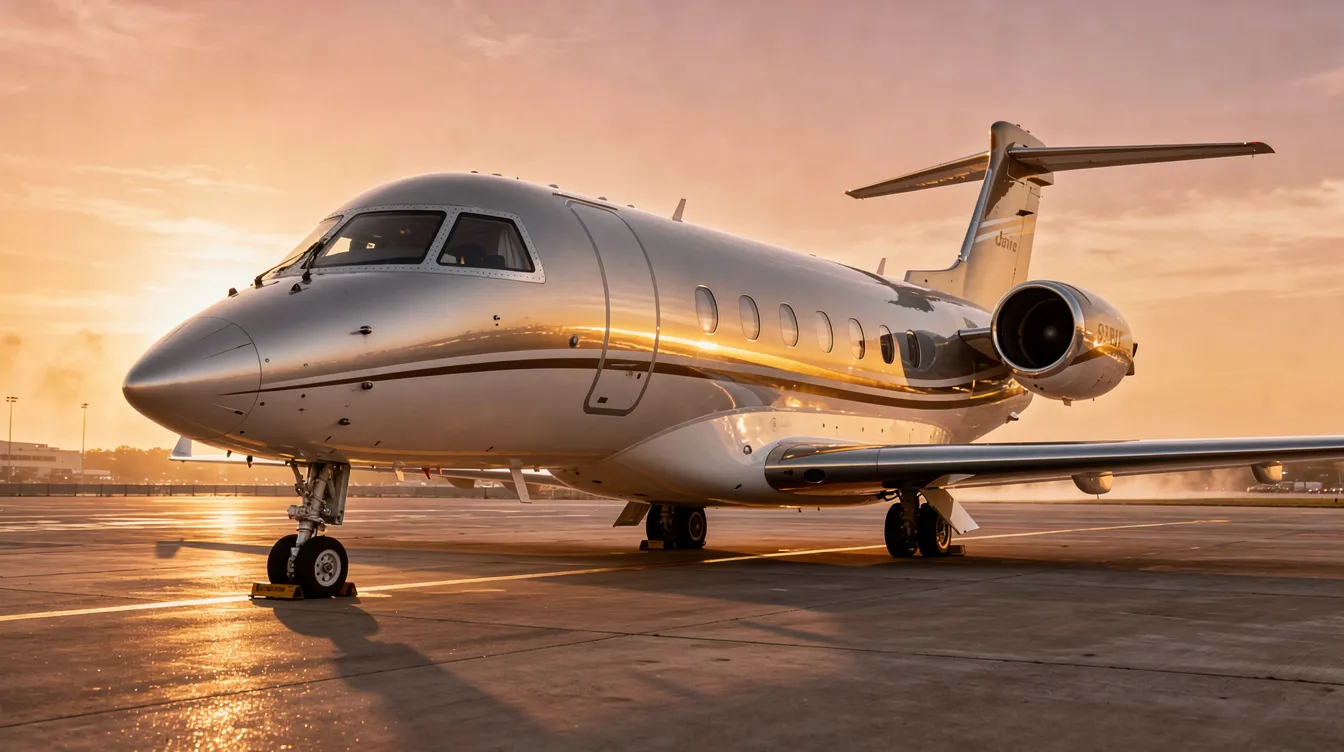
The Cessna 150 and a Gulfstream G280 exist in the same sky but serve entirely different purposes. Understanding where each excels clarifies why both matter.
Capacity: The 150 carries one passenger plus the pilot with limited baggage. Light, midsize, and large-cabin private jets seat 4–14 passengers with substantial luggage space.
Speed and range: Roughly 100-knot cruise speeds and 300–400 nm range for the 150 vs. 400–500+ knot cruise and 1,200–6,000+ nm range for jets.
Time savings: A multi-leg regional itinerary consuming an entire day in a Cessna 150 can be completed in a single morning by private jet, with passengers productive throughout.
Safety and certification: Part 91 training operations in small piston airplanes operate under different standards than the stringent third-party safety audits, crew training, and operational protocols applied to BlackJet's partner fleets and other leading private jet companies.
The big picture: The Cessna 150 is the classroom where flying skills are born. Private jets are the boardroom in the sky that high-net-worth individuals and executives leverage for strategic time and privacy advantages, especially when chosen from among the best small private aircraft for each mission profile.
BlackJet Jet Cards, Safety, and Sustainability in Context
If you understand the structured, skill-driven world of training in aircraft like the Cessna 150, you can appreciate the equally structured, safety-driven world of private jet travel. BlackJet brings that same rigor—elevated to the standards demanded by business and luxury travel—with solutions that rank among the best jet cards for frequent flyers.
What is a Jet Card? A Jet Card is prepaid hours on private aircraft. BlackJet's membership model offers predictable pricing and priority access across multiple cabin classes—from light jets for short hops to large-cabin aircraft for transcontinental flights, following the same cost and benefit principles outlined in this broader guide to understanding jet card cost.
Safety approach: BlackJet uses top-tier operators with independent safety ratings, experienced two-pilot crews, and maintenance standards that go well beyond what's typical in light training operations. Every partner operator meets BlackJet Certified criteria.
Technology layer: Mobile and web booking tools, real-time flight support, digital itineraries, and proactive disruption management mirror the efficiency that pilots seek when advancing from basic trainers to advanced avionics environments.
Carbon-neutral flights: BlackJet integrates carbon offsetting for every trip at no extra cost, contrasting with the relatively small but unoffset emissions of legacy piston trainers. For travelers who care about sustainable aviation, this matters, especially when selecting from the best small private aircraft that balance efficiency and environmental impact.
Example use case: A former student pilot who learned in a Cessna 150 now runs a technology company. She uses a 25-hour BlackJet Jet Card to connect quickly between New York, Chicago, and Dallas for board meetings—while keeping her personal Cessna 150 hangared in New Jersey for weekend leisure flying. Both aircraft serve her. Neither could replace the other.
Frequently Asked Questions About the Cessna 150 and Private Flying
These questions address common practical concerns from prospective students, current owners, and travelers evaluating their aviation options.
Is the Cessna 150 still a good choice for student pilots today?
Yes—provided the specific airframe is sound. Look for clean corrosion history, compliant avionics (ADS-B Out is mandatory in most controlled airspace), a mid-life or freshly overhauled engine, and an instructor experienced with the type. The airplane's docile handling and mechanical simplicity remain ideal for ab-initio training.
What does it cost to own a Cessna 150?
Acquisition runs $18,000–$55,000 depending on condition and equipment. Annual fixed costs (insurance, storage, annual inspection) typically total $4,000–$7,000. Variable costs (fuel at 6–7 gph, oil, unscheduled maintenance) add $40–$60 per flight hour. Ownership makes financial sense at roughly 100+ hours per year; below that, renting or club membership is often more efficient.
Can a Cessna 150 be used for instrument training and night flying?
Later models with vacuum-driven gyros, dual nav/comm radios, and proper lighting can support basic IFR flight training and night VFR. However, the compact cabin and basic heating system make extended hood sessions less comfortable than in larger aircraft.
Cessna 150 or Cessna 152 for training and hour-building?
Both work well. The 152 offers slightly better climb, a 28-volt electrical system that supports more avionics, and factory 100LL fuel compatibility. The 150 is often cheaper to acquire. Choose based on the individual airplane's condition, logbooks, and engine health rather than model designation alone.
When should I consider private jets instead of a piston trainer for business travel?
The moment your travel regularly exceeds 300 nm, involves multiple destinations in a single day, or requires you to arrive rested and productive. A Jet Card program eliminates the operational overhead of aircraft ownership and puts you in the right cabin class for each trip. If you currently fly or train in aircraft like the Cessna 150, explore how BlackJet can complement your aviation lifestyle for longer, time-sensitive missions.
Conclusion: From Cessna 150 Beginnings to Private Jet Mastery
The Cessna 150 endures because it does one thing exceptionally well: it teaches people to fly. More than 23,839 airframes delivered, hundreds of thousands of pilots trained, and a design philosophy rooted in simplicity and honesty have made it a cornerstone of general aviation for nearly seven decades. That legacy is not nostalgic—it is active, with 150s still logging hours on training ramps and in private hangars around the world in 2026.
Aviation is a continuum. The Cessna 150 and other aircraft in its class are foundational tools for learning, while private jets are strategic tools for leveraging time, privacy, and global reach. BlackJet sits at the forward edge of that continuum, combining safety, technology, and carbon-neutral operations to offer a seamless next step for those who value the freedom of flight—whether they first felt it in a humble Cessna 150 or are discovering private aviation for the first time, even if they begin by simply buying a seat on a private jet.
If you're ready to elevate your travel to match your ambitions, discover how BlackJet Jet Cards and curated private jet access can serve your next mission-critical journey.


 Sign up with google
 Sign up with Apple