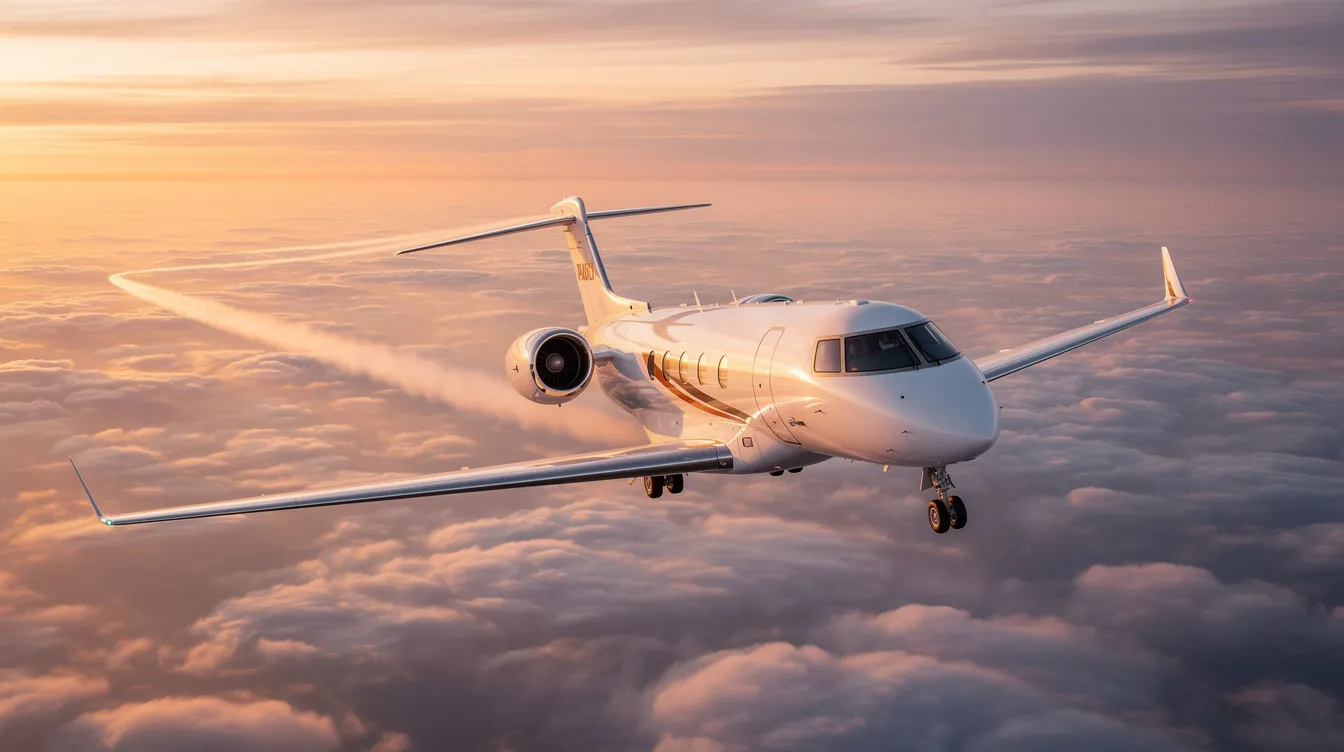
Business Class in Flight: How It Compares to Economy, First Class, and Private Jets with BlackJet
For the frequent traveler, business class in flight means a more comfortable, productive, and restful trip, with benefits like wider seats, priority boarding, upgraded meals, and lounge access. However, it still comes with the limits of commercial air travel, including fixed schedules and shared cabins. For business travelers and high-net-worth leisure flyers weighing whether premium commercial service is enough, the real comparison in 2026 goes well beyond seat selection on an airline.
This guide looks at how business class compares with economy, first class, and private jet travel, what you actually get in each cabin, how business class pricing and value stack up, where its limits affect privacy and efficiency, and when options like BlackJet Jet Cards make more sense for travelers who want greater control, safety, flexibility, and luxury.
Why "Business Class" No Longer Means What It Used To
Consider New York to London. In economy class, you spend roughly 2–3 hours navigating check-in lines, security, and boarding before a seven-hour flight in a cramped seat, then another hour at baggage claim and immigration. Flying business class, you shave some ground time with priority lanes and lounge access, and you rest better in a lie-flat bed—but the airport process still consumes hours. On a BlackJet private jet, pre-flight time at a private terminal drops to 45–60 minutes, and you step off the aircraft directly onto the tarmac.
Traditional business class was built for corporate road warriors on long-haul international flights. Today, many airlines target both leisure and business travelers seeking more space and better meal service than economy. The passenger mix has shifted: premium leisure travelers, hybrid workers, and families now fill business class seats alongside executives.
For frequent high-value travelers, the question has evolved. It's no longer simply business class versus economy class, but whether commercial premium cabins—across all travel classes—can match the privacy, schedule control, and efficiency of private jet solutions. Airlines offer an expanding range of flight classes from basic economy to international first class, yet every commercial option still means fixed schedules, crowded terminals, and shared cabins.
BlackJet offers premium private jet cards and Jet Card programs with prepaid hours across multiple aircraft categories, carbon-neutral flights at no extra cost, and 24/7 digital booking—positioning private aviation as a strategic upgrade beyond commercial business and first class.
Understanding Flight Classes: From Basic Economy to First Class
Flight classes on commercial airlines exist along a clear hierarchy, though not every carrier offers every tier on every route. On domestic routes, you may find only two classes; on long-haul flights, most widebody aircraft carry three or four distinct cabins.
Basic Economy
Standard Economy
Premium Economy
Five to seven extra inches of legroom over economy
Upgraded meals
More generous baggage policies
Noticeably spacious seating on long-haul routes
International Business Class
International First Class
Private suites
Personalized service
Extras like onboard showers (Emirates A380) or multi-course caviar menus (Singapore Airlines, Air France)
More luxurious amenities than business class
Availability is declining
Despite this hierarchy, all commercial class passengers share common constraints: fixed schedules, security lines, and crowded gate areas that private jet travelers largely bypass.
Inside Modern Business Class Cabins
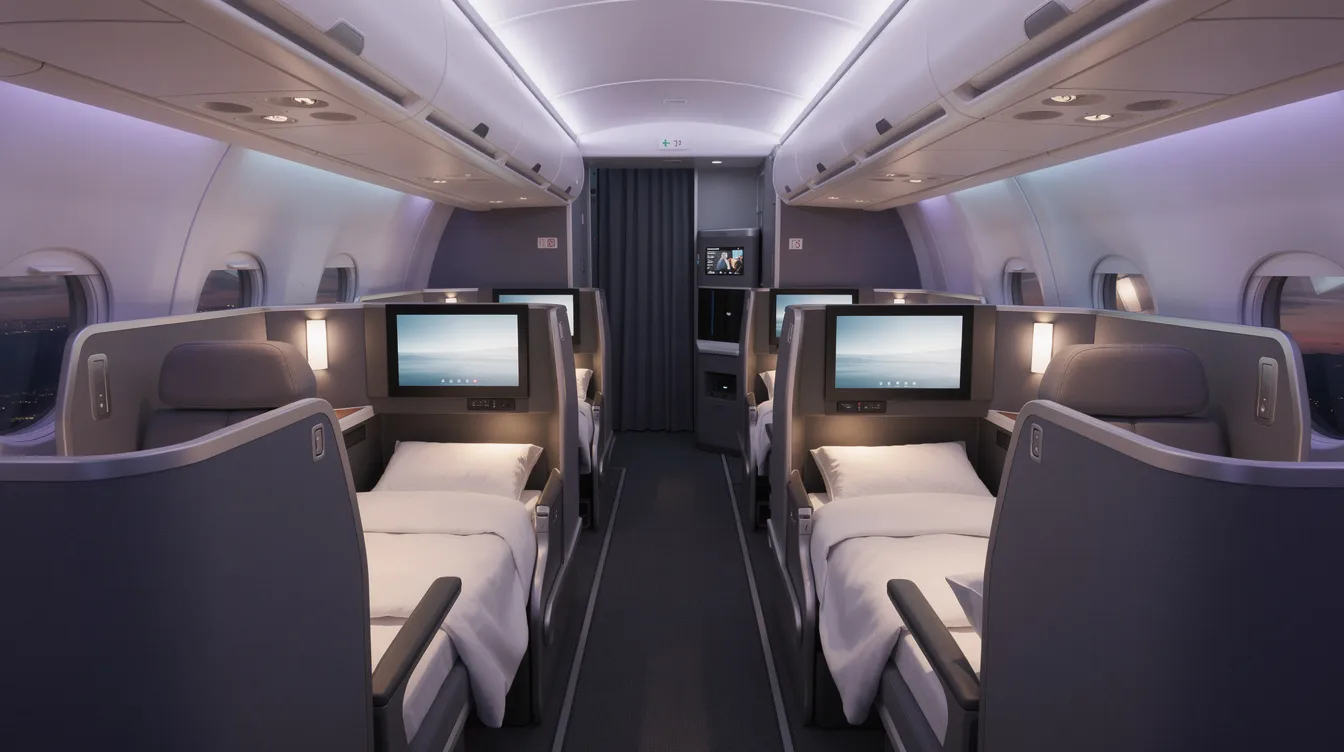
Modern business class cabins on aircraft like the Boeing 787, Airbus A350, and 777 have redefined the in-flight experience. Business class seating arrangements vary from 2-2-2 to 1-2-1 configurations, with the latter granting every passenger direct aisle access—a feature that was once exclusive to first class cabins.
Seating Arrangements
2-2-2 and 1-2-1 configurations
Direct aisle access in newer layouts
Angled lie-flat designs on older aircraft
Fully lie-flat seats and suite-style products with sliding doors on top airlines
Privacy Features
Suite-style seats with sliding doors (e.g., Qatar Qsuite, British Airways Club Suite)
Reverse herringbone seating for greater privacy
Partitions and wider seating
Still shared lavatories and galley space
In-Flight Entertainment and Amenities
Large high-definition entertainment screens
Enhanced in-flight entertainment options (streaming libraries, live TV)
Wi-Fi access, often complimentary
Amenity kits with skincare products, eye masks, and socks
Consider a business traveler on an overnight San Francisco–Tokyo flight. Even with doors closed on a suite product, cabin announcements, overhead lighting during meal service, and galley noise from the class cabin interrupt rest. It's vastly better than economy, but the experience remains communal.
Business Class vs Economy Class: What You Actually Get
The measurable gap between business class and economy is substantial. Business class tickets can cost 2x to 5x economy fares, and business class fares often run two to three times the price of economy on popular routes.
Fare Comparison Table
Route | Economy (Round Trip) | Business Class (Round Trip) |
|---|
New York – London | $400–$900 | $2,000–$5,000+ |
Los Angeles – Tokyo | $600–$1,200 | $3,000–$8,000+ |
Dubai – Singapore | $700–$1,400 | $3,500–$8,000+ |
Business Class Amenities
Lie-flat seats for better rest
Gourmet meals crafted by renowned chefs
Access to exclusive airport lounges before departure
Priority boarding
Higher staff-to-passenger ratio for more personalized service
Increased baggage allowances and priority luggage handling
Economy Class Limitations
In practice, a CEO taking an overnight haul flight who needs to present at 9 a.m. will arrive markedly more effective after flying business class. That's where the question of business class worth comes into focus—it's not about luxury alone, but about outcomes.
Business Class vs First Class: Where the Line Is Now
The gap between business and first class has narrowed dramatically. Many airlines have removed first class seats from transatlantic and transpacific routes entirely, making business class their top commercial product. Business class now offers amenities once reserved for first—lie-flat beds, suite doors, and gourmet dining options designed by renowned chefs.
First Class Distinctions
Ultra-spacious suites
Staff-to-passenger ratios of 1:1 or 1:2
Ground services like chauffeur transfers
Onboard showers (Emirates A380)
Exclusive terminal facilities and personalized escort services
Business Class Features
Priority boarding and lounge access
Gourmet meals and premium beverages
Lie-flat beds and suite doors
For most business class travelers, the incremental comfort of first or business class at the top tier doesn't justify the steep price jump—especially when business class fares are typically two to three times the price of economy, while first class can be five to ten times more.
This is precisely where private aviation enters the conversation. A BlackJet Jet Card competes directly with commercial first class on per-trip cost for small groups, while exceeding both in privacy and schedule control—the ultimate luxury of traveling entirely on your terms.
What a Business Class Ticket Really Costs—and When It's Worth It
A one-way business class ticket from New York to London costs $1,500 to $5,000. Prices for business class tickets vary by airline, route, and season—a shoulder-season fare on a Tuesday departure may be half the cost of peak summer Friday travel. On routes like Los Angeles–Tokyo or Dubai–Singapore, business class round trip fares swing from $3,000 in low season to $8,000 or more at peak.
Sample Fare Comparison Table
Route | Economy (One Way) | Business Class (One Way) |
|---|
New York – London | $200–$450 | $1,500–$5,000 |
Los Angeles – Tokyo | $300–$600 | $1,800–$4,000 |
Dubai – Singapore | $350–$700 | $2,000–$4,500 |
Cost Drivers
Booking in advance can help avoid last-minute price hikes for business class—fares purchased 60 or more days out are consistently lower than last-week bookings. Read the fine print on any fare before committing.
When Business Class Is Worth It
Overnight red-eyes
Flights over six to seven hours
Back-to-back meeting schedules where arriving rested materially changes outcomes
Many corporations authorize business class for international flights exceeding six hours or for executive tiers above a certain level
For a group of three to four business travelers flying a regional route like Chicago–Dallas, the combined cost of individual business class tickets begins to approach the cost of a light jet charter. Factor in time savings, direct airport access, and schedule flexibility, and the per-person economics start to converge—especially for teams making the trip regularly, particularly when you apply strategies to fly private more affordably.
How to Get Better Value from Business Class Tickets
If you fly business on commercial carriers, several tactics can help you save money without downgrading.
Booking Strategies
Book early on popular routes to lock in lower fares
Use flexible travel dates—shifting by a day or two can cut costs by 20–40%
Consider alternative departure airports (e.g., Newark instead of JFK, Brussels instead of Paris)
On short-haul flights, "business class lite" fares offer lower prices but with reduced flexibility
Upgrade Strategies
Use frequent flyer miles for upgrades or award tickets (57,500–70,000 miles for one-way international business class seats on transatlantic routes, plus taxes and surcharges)
Earn elite status with loyalty programs (United Airlines, Delta Air Lines, Japan Airlines) for complimentary upgrades
Volunteer for bumps on oversold flights to receive upgrades
Bid for upgrades with international carriers
Monitor airline apps for discounted upgrades during online check-in or as departure approaches
Jet Card Alternative
What appears an absolute bargain in a sale fare often comes with restrictions that erode its value.
The Hidden Costs and Limitations of Commercial Business Class
Even with priority lanes and lounge access, business class passengers on international travel typically arrive 1.5–3 hours before departure. Add immigration and baggage claim at the other end, and ground time routinely exceeds three hours each way—time that commercial carriers cannot eliminate regardless of which class cabin you occupy.
Operational Limitations
Delays, missed connections, and schedule changes are common on commercial haul flights
Routing through major hubs instead of flying directly to secondary airports adds hours
Productivity in a shared business class cabin has limits (sensitive conversations overheard, announcements interrupt work, fixed meal service timing)
Environmental Considerations
BlackJet mitigates these limitations directly:
Flights depart from private terminals with minimal pre-flight time
Private jets can bypass congested airspace for smoother, more direct routings (private jet cruising altitudes)
Every BlackJet flight is carbon neutral—covering not just CO₂ but water vapor, aerosols, and nitrous oxides at roughly 300 percent coverage beyond CO₂ alone, at no extra cost to members
Safety standards require FAA Part 135 certification plus third-party audits like Wyvern Wingman or ARGUS Platinum
Business Class Comfort vs Private Jet Cabins with BlackJet
Privacy and Space
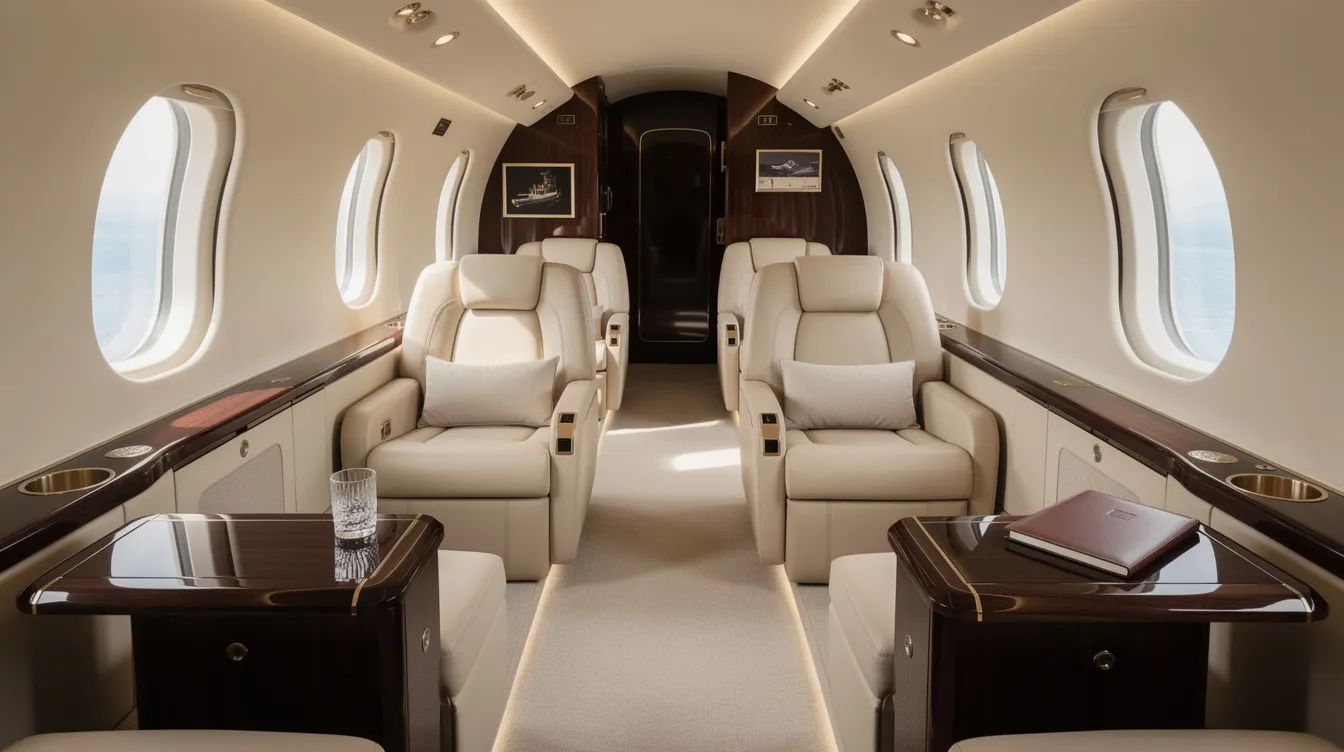
Commercial business class cabins hold dozens of passengers sharing lavatories and galleys. Even suite-style products with sliding doors exist within a communal environment. A BlackJet private jet cabin, by contrast, is yours alone.
Onboard Service
BlackJet's Jet Card programs span light jets (four to six seats, ideal for regional hops), midsize jets (six to eight seats with club seating), super-midsize aircraft like the Challenger 350 with stand-up cabins and sofas, and large-cabin jets like the Gulfstream series with full galleys and lay flat sleeping areas, fitting within broader Jet Card cost and membership pricing guides. Every category offers attentive service calibrated to your preferences—not a schedule dictated by galley workflow.
Catering Flexibility
Custom cabin temperature and lighting
Confidential meetings without neighboring passengers
Onboard catering curated to your schedule (e.g., early breakfast timed to a 9 a.m. London arrival)
No overhead bins opening, no service carts rolling past
BlackJet Jet Card members select aircraft category per trip, much like choosing between two classes on a commercial carrier—except the entire cabin is their private space.
Jet Cards vs Business Class Tickets: Strategy for Frequent Travelers
A Jet Card is a prepaid private aviation program—typically 25- or 50-hour blocks—providing access to a network of vetted jets at fixed hourly rates. Standard fees are included, and booking happens via app or 24/7 support, making it one of the best Jet Card options for frequent flyers seeking predictable pricing and guaranteed access. This contrasts sharply with buying individual business class tickets, where each itinerary is priced separately, subject to fare classes, yield management, and advance purchase rules.
Jet Card Benefits
Predictable pricing with fixed hourly rates
Guaranteed access to vetted jets
24/7 digital booking and support
Ability to fly into secondary airports closer to your destination
Same-day turnarounds and multi-city itineraries
Consider an executive team that flies New York–Chicago twice monthly and makes quarterly trips to Europe. Purchasing recurring business class seats means navigating fluctuating fares on every booking. A BlackJet 25-hour Jet Card locks in hourly rates across all those trips. For light jets, 25-hour cards run approximately $150,000–$250,000; midsize cards range higher, fitting within broader Jet Card pricing structures and fee models. The annual cost is significant—but measured against time saved, productivity recovered, and the ability to fly business at your own pace, the return often justifies the investment for travelers logging 20 or more flight hours annually.
Strategic benefits extend beyond pricing. Flying into Teterboro instead of JFK, Farnborough instead of Heathrow, or Van Nuys instead of LAX puts you closer to your final destination. Same-day turnarounds become routine. Multi-city itineraries that would require three separate commercial bookings collapse into a single efficient routing that no commercial carrier can match—even on the most popular routes, a dynamic that becomes even more pronounced at the 100-hour Jet Card commitment level.
BlackJet's safety certifications, carbon-neutral operations, and technology platform—mobile booking, real-time flight support, proprietary operator vetting—differentiate its Jet Cards from ad-hoc chartering and place it in a category that commercial business and first class simply cannot reach, particularly through dedicated options like the BlackJet 25+ Hour Jet Card.
When to Stay in Business Class—and When to Move Up to BlackJet
Commercial business class remains a sensible choice for solo leisure international flights, infrequent long-haul trips, or routes where private aviation infrastructure is limited. If you fly business a handful of times per year on major hub-to-hub routes, the economics of a business class ticket still hold.
Frequently Asked Questions about Business Class and Private Jet Travel
What are the main differences between business class and first class seats?
First class seats typically offer more space, privacy, and luxurious amenities such as private suites, full-size beds, and personalized service. Business class seats are spacious and often lie-flat but generally share a communal cabin environment. First class also includes exclusive ground services and more attentive staff-to-passenger ratios.
How does business class compare to premium economy class?
Business class provides significantly more comfort with wider, often lie-flat seats, gourmet meals, lounge access, and priority boarding. Premium economy offers extra legroom and upgraded meals compared to economy class but lacks the privacy and extensive amenities found in business class.
Are business class fares worth the higher cost?
Business class fares usually run two to five times the price of economy tickets. They are worth it for long-haul flights, red-eye trips, or when arriving well-rested and productive is critical. For shorter or domestic flights, the cost-benefit may be less compelling.
What additional amenities do business class passengers receive?
Business class passengers enjoy priority boarding, enhanced baggage handling, access to exclusive airport lounges, upgraded in-flight food and beverages, amenity kits, and more attentive service from cabin crew.
How do private jet options like BlackJet compare to business class flights?
Private jets offer unmatched privacy, flexibility, and direct access to secondary airports, reducing total travel time. BlackJet Jet Cards provide prepaid access to various aircraft categories with certified safety, carbon-neutral flights, and bespoke onboard service, exceeding commercial business class in luxury and convenience.
Can I get upgrades to business class or first class?
Yes, upgrades can be obtained through frequent flyer elite status, bidding programs, discounted offers during online check-in, or volunteering for seat bumps on oversold flights. Availability varies by airline and route.
How does baggage handling differ in business class?
Business class passengers typically receive increased baggage allowances, priority luggage handling, and sometimes dedicated check-in counters, reducing wait times and improving convenience.
Is business class available on all domestic flights?
Not all domestic flights offer business class. Many short-haul or low-cost carriers provide only economy or premium economy options. Business class is more common on longer domestic routes and international flights.
How does in flight food differ between economy and business class?
Business class offers gourmet meals crafted by renowned chefs, with multiple courses and premium beverages. Economy class meals are usually simpler, with fewer options and sometimes only snacks on shorter flights.
What is the benefit of flying business class for frequent travelers?
Frequent travelers enjoy comfort, productivity, reduced travel fatigue, priority services, and lounge access, which collectively improve the overall travel experience and business outcomes. For very frequent flyers, private jet options may provide superior value and flexibility.
When to Consider BlackJet
Flying six to twelve or more times annually
Traveling with small teams
Needing access to secondary airports
Facing frequent last-minute schedule changes that make commercial booking unpredictable
For some, this evolves into exploring unlimited private jet flight memberships with fixed annual or monthly fees. A Europe-based executive commuting London–New York gains hours per trip. A U.S. founder visiting four investor cities in one week avoids the inefficiency of commercial connections. A family blending work and leisure across the Caribbean moves on their schedule, not an airline's.
Safety, privacy, and sustainability are non-negotiable for many high-net-worth and corporate travelers. BlackJet addresses each directly: third-party safety audits on every operator, exclusive cabin use for every flight, and verified carbon-neutral operations on every journey, positioning it alongside other top private jet companies for luxury travel and service.
For those who measure international business travel in outcomes—meetings won, deals closed, time reclaimed—the question isn't whether you can fly business. It's whether business class is still enough.
Explore BlackJet Jet Card membership and discover what travel looks like when every detail is yours to define.


 Sign up with google
 Sign up with Apple