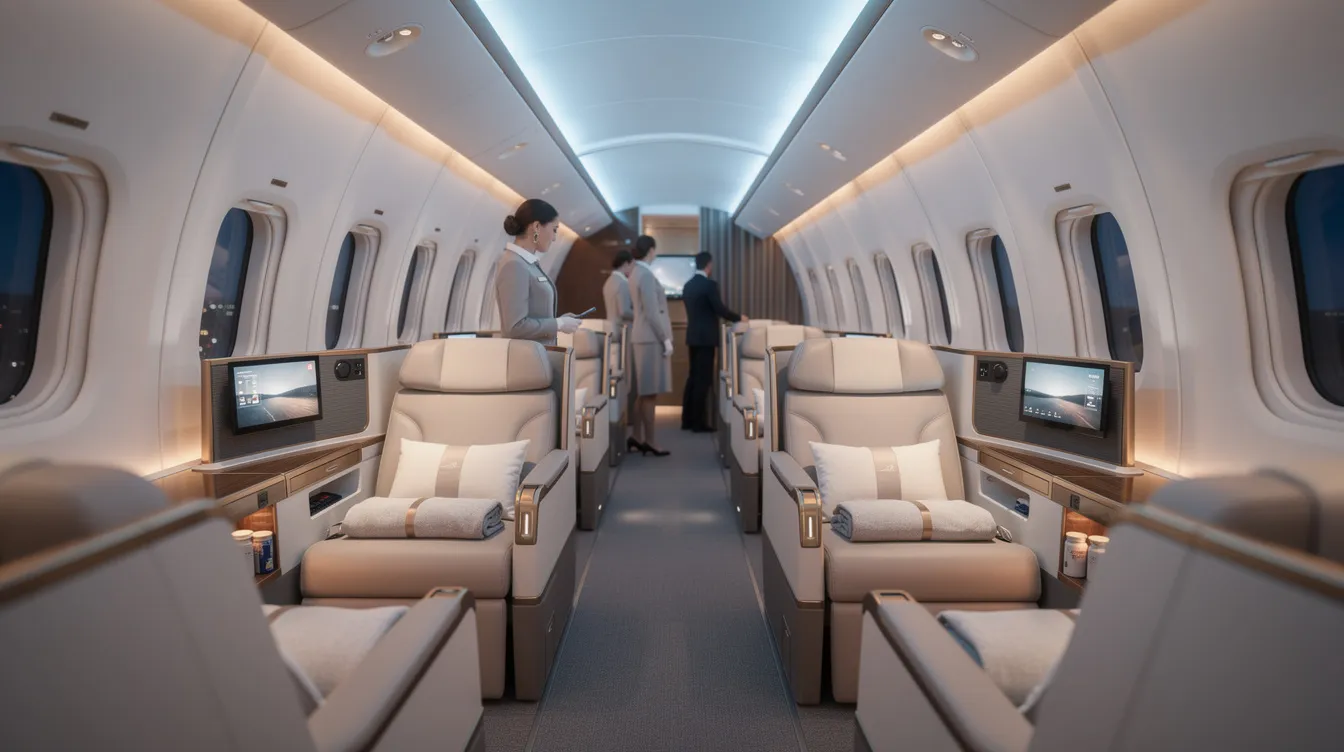
For decades, booking a business class ticket on a major airline represented the pinnacle of corporate air travel. This article explores the evolution of business class and how it compares to private jet access for today's business travelers. Wider seats, better meals, and lounge access set the standard for executives who needed to arrive rested and ready. But in 2026, the landscape has shifted. The question is no longer whether to fly business class—it’s whether commercial aviation, even at its finest, can keep up with what serious travelers actually need.
This guide is designed for frequent business travelers, executives, and anyone considering premium air travel options. We'll examine what business class offers today, how it compares to private jet access, and help you decide which option best fits your needs in 2026 and beyond.
Why "Business Class" Is No Longer Enough for Serious Travelers
The Evolution of Business Class
Traditional business class seats emerged in the late 1970s as airlines carved out a tier between economy class and first class for corporate road warriors. The concept was revolutionary at the time: more legroom, priority boarding, and a quieter cabin. Over the following decades, many airlines refined these offerings into the lie-flat seats, premium dining, and dedicated business class lounge experiences we recognize today.
Limitations of Commercial Business Class
Yet for all that evolution, business class passengers remain locked into airline schedules, hub-and-spoke routing, and the friction of crowded commercial airports.
Consider a concrete example. A business class ticket from New York to London on a major carrier in late 2025 costs between US$3,500 and US$6,000 one-way. The total door-to-door time looked roughly like this:
One hour of ground transport to JFK
Two to three hours for check-in, security, and boarding
Approximately seven hours in the air
Another hour-plus for immigration and transit to a central London meeting
That's 11 to 12 hours, minimum, with a half-dozen touchpoints where delays could cascade.
Private Jet Comparison
Now compare that with a BlackJet 25-hour Jet Card itinerary on the same route using a long-range private jet:
Depart from a nearby executive airport 20 to 30 minutes before wheels-up
Fly nonstop in roughly six to seven hours with a closed cabin
Clear customs at a private terminal
The difference isn't incremental—it's structural.
This is why high-net-worth individuals and executives increasingly look beyond first and business class cabins. They aren't chasing bigger screens or better champagne. They want control over their schedule, privacy for sensitive work, and the productivity that comes from eliminating hours of airport process. This article will compare commercial travel classes—economy class, premium economy, business class, and first class—with BlackJet's premium private jet access model, and answer a critical question: when is business class worth it, and when does private air travel deliver unambiguously better value?
What "Business Class" Means in Commercial Aviation Today
Key Features of Business Class
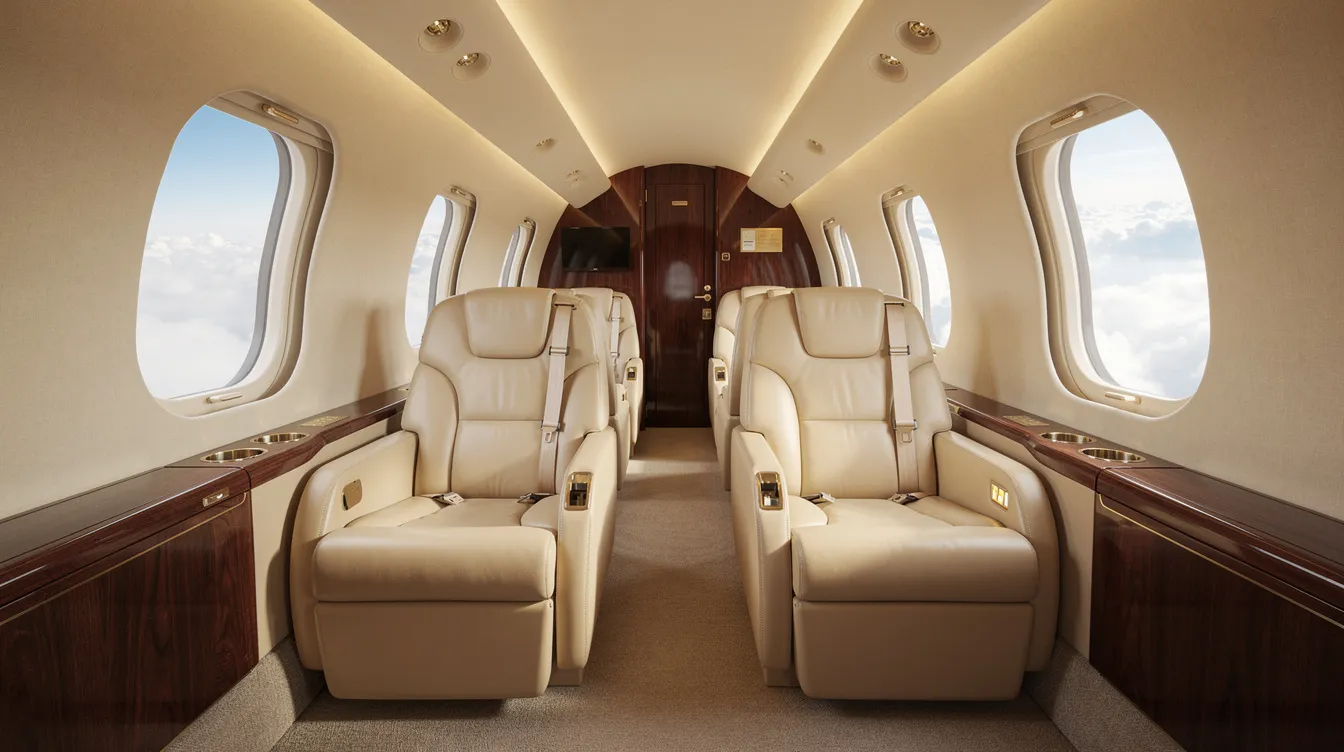
Business class is a premium cabin in commercial aviation that offers:
Lie-flat seats for long-haul flights allow passengers to sleep comfortably during extended journeys.
Gourmet meals and enhanced in-flight dining experiences.
Access to exclusive airport lounges provides a quiet and comfortable space before boarding.
Priority airport services, including expedited check-in, security, boarding, and baggage handling.
Fares that typically cost 2-3 times more than economy class.
On many long-haul flights, business class is the highest cabin available, as some airlines have eliminated first class.
Seat configurations vary, with common layouts including 2-2-2 or 1-2-1 arrangements; some business class cabins offer private suites for enhanced privacy.
In Europe, business class often provides enhanced economy seating with better service, such as a blocked middle seat and improved catering.
Class Hierarchy
Modern commercial aviation structures travel classes in a familiar hierarchy: economy class seats at the base, premium economy above that, business class as the primary premium cabin, and first class as the highest class on select routes. Many airlines have blurred these tiers; some carriers have dropped first class cabins entirely on certain international routes, making business class their flagship product.
Long-Haul vs Short-Haul
The typical business class experience on long-haul flights in 2024 through 2026 includes:
Priority check-in
Airport lounge access at a dedicated business class lounge
Lie-flat seats with direct aisle access on most international flights
Multi-course meals designed by notable chefs
Fast-track security, priority boarding, and enhanced baggage handling
On shorter flights and domestic routes, the product is considerably more modest: recliner-style or cradle seats, a complimentary buffet-style food service, and lounge access that may or may not be included.
Examples by Airline
Specific examples help illustrate the range:
Delta Air Lines offers its "Delta One" product on long-haul international routes featuring fully enclosed suites with sliding doors, premium bedding, and fine dining menus.
British Airways' Club World provides lie-flat bed capability with direct aisle access in a reverse herringbone layout.
Air France business cabins deliver a similar standard on transatlantic and Asia-Pacific routes, with generous seat width and a polished ground experience.
But on short-haul flights within Europe or the U.S., even these same airlines often top out at a recliner seat with a blocked middle and a modest meal, hardly the premium cabin travelers envision when they fly business class.
The takeaway is important: international business class cabins on long-haul widebody aircraft can be genuinely excellent, but the same label on a domestic flight or shorter international flight may deliver far less.
Business Class vs First Class: Seats, Service, and Ground Experience
Seat Differences
Business and first class represent the two premium options above economy in commercial aviation, but the gap between them has narrowed considerably. Understanding what separates them helps contextualize why neither fully satisfies the most demanding business travelers.
Business class seats on international flights typically feature lie-flat bed configurations in 1-2-1 layouts offering direct aisle access. Seat pitch exceeds 60 inches, and many newer products include sliding privacy doors. First class seats, by contrast, offer private suites—fully enclosed spaces with separate seating and sleeping areas, sometimes with shower access (as on Emirates) or a personal wardrobe. Seat width, pitch, and cabin crew ratios are all superior in first-class cabins.
Service and Ground Experience
First class passengers also benefit from ultra-premium ground services:
Airlines that still offer both cabins include Emirates, Singapore Airlines, and Air France on select routes. U.S. carriers like Delta Air Lines and United Airlines generally position their flagship business product, Delta One and United Polaris, respectively, as the top cabin on long-haul routes, without a separate first class. This means the business class cabin is effectively the highest class available on many popular routes from the United States.
Pricing Comparison
Price matters in the business class vs first class equation. On routes like Los Angeles to Tokyo or New York to Dubai, a first-class ticket can cost 50 to 200 percent more than a business-class ticket. For many class passengers, that price difference rarely justifies the incremental improvement in seat or service when the business product already includes lie-flat seats, lounge access, and personalized service.
Is Business Class Worth It Compared to Economy Class?
Price Comparison
Is business class worth it? The answer depends almost entirely on trip length, purpose, and the traveler's relationship with time.
On a route like New York to London in December 2025, an economy ticket ran approximately US$600 to US$1,200 one-way. Business class pricing on the same route came in at US$3,500 to US$6,000-plus—roughly three to five times the economy fare.
Comfort and Amenities
In economy class seats, passengers can generally expect a seat pitch of 31 to 32 inches, modest recline, and limited meal service. Business class travelers on the same flight enjoy 60-plus inches of seat pitch in a lie-flat bed, direct aisle access, gourmet meals, an amenity kit, and airport lounge access before departure.
When Business Class Makes Sense
The scenarios where the investment pays for itself are clear:
Overnight red-eye flights where arriving rested for a same-day meeting is non-negotiable
Long-haul flights exceeding six hours, where sleep quality directly affects performance
Multi-city itineraries where connection stress accumulates, and lounge access provides a productive buffer
Frequent flyer miles accumulate when elite status unlocks upgrades, priority boarding, and compounding benefits across future trips.
On the other hand, business class is harder to justify on short daytime flights under four hours, where premium economy delivers nearly equivalent comfort at a fraction of the cost, or when discounted fares in economy make the price difference too stark to rationalize.
But here's the critical insight that many business class worth analyses miss: even the best business class experience still operates within the constraints of commercial aviation. You're still bound to airline schedules, still navigating crowded airports, and still sharing a cabin with dozens of other business-class passengers. For those who need true schedule control, privacy, and direct routing, the calculus shifts toward private aviation.
Types of Business Class Cabins and Airline Examples
Common Configurations
Not all business class seats are created equal. The label "business class" spans a remarkable range of products, and understanding seat configurations matters more than trusting cabin names alone.
Common international business class cabin configurations include:
2-2-2 layouts: older generation, no direct aisle access for window passengers
2-3-2 layouts: increasingly rare on premium carriers
1-2-1 reverse herringbone: industry standard for direct aisle access and privacy
Staggered configurations: alternating window and aisle orientation for added space
Fully enclosed suites: top-tier products like Delta One Suites on select A350 routes, Qatar Airways Qsuite, or Japan Airlines "Sakura" on 777s
Regional Variations
Regional snapshots reveal further variation:
U.S. transcontinental flights on carriers like JetBlue Mint offer private suites with closing doors, rivaling some international products.
Short-haul European business is often just economy seats with a blocked middle seat and enhanced catering.
Asia-Pacific carriers like Qantas, Cathay Pacific, and Air New Zealand deliver strongly flat business products on long-haul routes but revert to recliners on shorter international flights within the region.
Brand Names and Features
Many airlines offer business class under different brand names—Delta One, United Polaris, JetBlue Mint—but core features across flagship products remain comparable: lie-flat seats, larger entertainment screens, premium dining, and lounge access. The practical takeaway for business travelers: always research specific aircraft and seat maps rather than relying solely on the label of a business class ticket. A "business class" seat on one route may be a private suite; on another, it could be a recliner barely distinguishable from premium economy.
The Hidden Costs and Environmental Impact of Business Class Travel
Financial Costs
Business class travel is more resource-intensive than economy, both financially and environmentally. The sticker price is only part of the story.
Financial costs beyond the fare include:
Business class fares typically run 2 to 3 times the cost of economy class on long-haul routes
First class can reach 3 to 5 times economy pricing on routes like New York to Paris or Sydney to Singapore
Hidden time costs: hours spent in check-in lines, security queues, and transit to/from distant hub airports
Opportunity costs of rigid schedules, missed connections, and the fatigue of multi-stop routing
Environmental Impact
Environmental impact deserves honest examination. Aviation produces approximately 2 to 3 percent of global greenhouse gas emissions. Business class seats emit roughly three times the CO₂ per passenger-kilometer compared to economy class seats because they consume significantly more cabin space and weight per traveler. First class seats push that multiple to approximately four times that of economy. Multiple connections via hubs further inflate total emissions versus nonstop routing.
Alternative Options
For some city pairs, lower-carbon alternatives exist—high-speed rail with business class cabins in Europe or Japan can replace shorter flights entirely. But for transatlantic, transpacific, or routes to South America and beyond, air travel remains essential.
This environmental reality is precisely where BlackJet's approach introduces a meaningful differentiator, as we'll explore next.
How BlackJet Reimagines "Business Class" with Private Jet Access
Jet Card Structure
BlackJet offers an alternative that sits outside the commercial hierarchy entirely, built around transparent Jet Card pricing structures rather than opaque airline fare buckets. Rather than selling class seats on shared aircraft, BlackJet provides Jet Card programs that give members prepaid flight time across multiple aircraft categories, with predictable hourly rates and guaranteed availability.
The structure is straightforward:
Departure Experience
The departure experience eliminates the touchpoints that define and often frustrate commercial air travel:
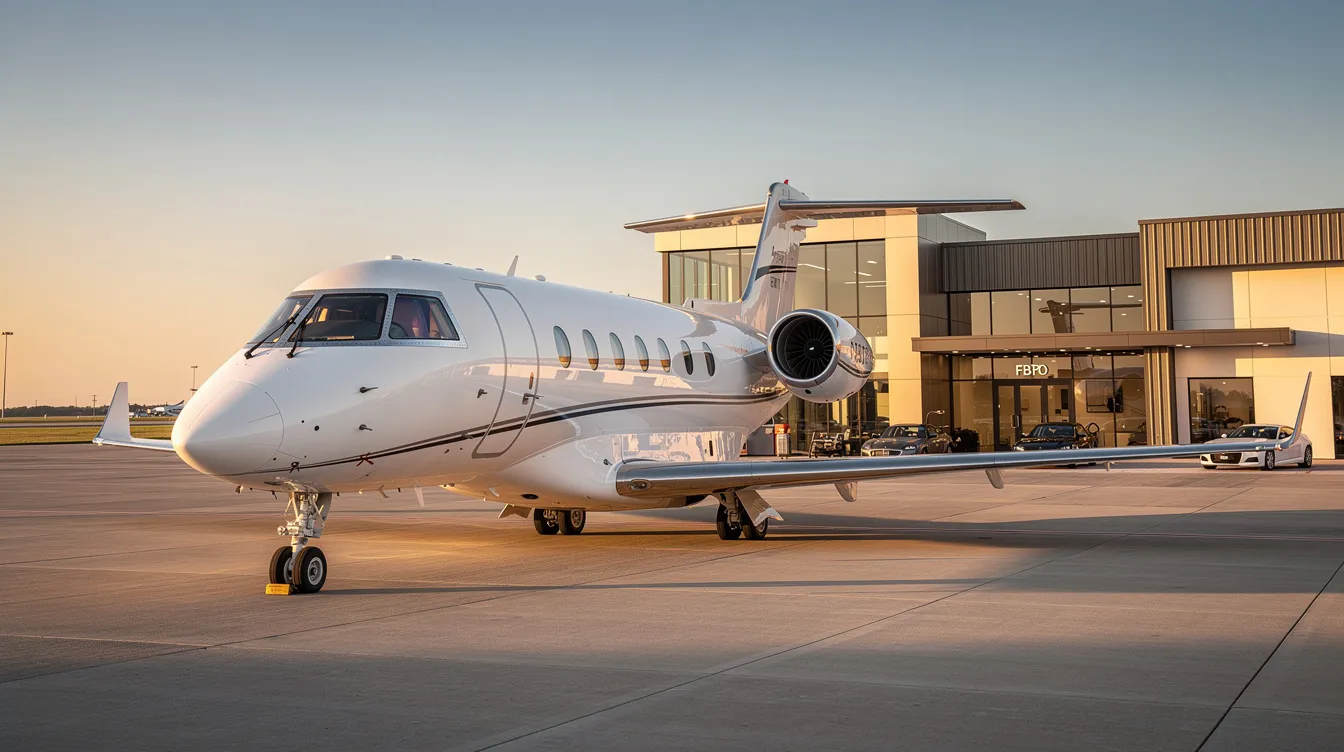
Members arrive at private terminals (FBOs) approximately 20 to 30 minutes before departure.
There is no check-in counter, no security line, no boarding queue.
You step from your vehicle to the aircraft in minutes.
Safety Standards
Safety is a non-negotiable pillar. BlackJet maintains rigorous operator vetting through proprietary certification standards aligned with ARG/US, Wyvern, and IS-BAO benchmarks, ensuring consistent crew quality, maintenance oversight, and operational standards across every flight.
Sustainability Commitment
And then there's sustainability. BlackJet ensures every journey is carbon neutral at no extra cost to members, with per-flight emissions calculated and offset through verified carbon programs. This doesn't erase the physics of aviation fuel, but it represents a meaningful, transparent commitment that few commercial carriers match across their premium cabins.
BlackJet vs Commercial Business & First Class: Time, Privacy, and Productivity
Time Savings
Private jet access via BlackJet is not simply "better seats." It is a fundamentally different category of air travel.
Consider a specific scenario. A CEO needs to travel from Los Angeles to Austin for a same-day board meeting. Flying commercial business class means:
Driving to LAX
Arriving two hours early
Navigating security and the terminal
Boarding a scheduled flight with a fixed departure time
Landing at Austin-Bergstrom International
Traveling to the meeting location
Door-to-door: five to six hours in the best conditions, with no schedule flexibility if the meeting time shifts.
With a BlackJet Light Jet departing from a nearby executive airport like Van Nuys, the same CEO:
Arrives 20 minutes before departure
Flies directly in approximately two and a half hours
Lands at an FBO minutes from the meeting venue
Total door-to-door: under four hours, with the option to shift departure by 90 minutes if needed.
Privacy Advantages
Privacy advantages compound the value:
A closed cabin allows confidential board preparation, sensitive phone calls, and strategic discussions that would be exposed in any commercial business class cabin
No seatmates, no overhead announcements, no interruptions
Productivity Gains
Productivity gains are equally tangible:
BlackJet's real-time flight support and digital booking tools create a seamless experience versus managing multiple class tickets, frequent flyer programs, and airline-specific apps. For travelers who find cheap flights irrelevant because their time costs more than any fare differential, this is the calculus that matters.
Cabin Classes vs Private Aircraft Categories
Private Jet Categories
In private aviation, "travel classes" are redefined as aircraft categories rather than seat rows. BlackJet matches mission profile to aircraft type, ensuring the right tool for every trip.
Core categories include, especially when you factor in the capabilities of the best small private aircraft for shorter missions:
Very Light Jets: ideal for regional hops up to approximately 1,000 miles, seating 4 to 5 passengers—think New York to Washington or Los Angeles to Las Vegas—and often overlapping with the most affordable private jet options for new flyers
Light Jets (e.g., Citation CJ series): extended range, 5 to 7 passengers, comfortable for trips up to 2,000 miles
Midsize Jets: 6 to 9 passengers, greater range, stand-up cabin height, suitable for cross-country routes
Super Midsize / Long-Range Jets: transcontinental and select transatlantic capability, spacious cabins rivaling international first class, and strong overlap with the kinds of premium UK-based private jets available for purchase, sharing many traits with the top private jets in the world, and overlapping with many long-range private jets designed for global missions
Large Cabin / Ultra Long-Range Jets: full transatlantic reach (New York to London nonstop), separate zones for meetings and rest, standing height throughout, and in VIP airliner formats, even private jet layouts for up to 50 passengers, and scalability into private jet configurations suitable for about 20 passengers, and ample capacity for private jet flights carrying around 15 passengers, and configurations that mirror the most capable 16 seat private jet options for group travel
Comparison to Commercial Cabins
Each category parallels or exceeds commercial cabin equivalents. Light and midsize jets routinely surpass commercial business class comfort, while large-cabin jets rival or outperform international first class suites. Critically, there is no distinction between first-class seats and business-class seats onboard a private aircraft—every seat is effectively premium, with club seating, divans, and full-cabin environmental control.
Choosing the Right Aircraft
For a deeper comparison of types of private jets and which fit your typical routes, BlackJet advisors match aircraft category to your travel patterns during onboarding, using the same framework outlined in this guide to understanding private jet sizes.
Technology, Safety, and Sustainability in BlackJet's Premium Experience
Digital Platform
What travelers historically sought in first and business class on top-tier airlines—consistency, reliability, and peace of mind—BlackJet delivers through three integrated pillars: technology, safety, and sustainability.
Digital platform: BlackJet's mobile booking system provides 24/7 access, instant price estimates by route and aircraft category, and secure document handling for frequent travelers. There is no need to navigate airline websites, compare frequent flyer miles redemption charts, or juggle multiple apps. One platform, one point of contact.
Safety Framework
Safety framework: Every operator in BlackJet's network undergoes rigorous vetting against leading third-party safety certifications, including pilot-hour minimums, recurring training requirements, and maintenance audits. This contrasts with commercial aviation, where business class passengers have essentially zero visibility into the specific crew assigned to their flight.
Carbon-Neutral Operations
Carbon-neutral operations: BlackJet calculates per-flight emissions, procures verified carbon offsets or sustainable aviation fuel credits, and publishes annual reporting benchmarks. While private jet emissions per passenger-kilometer can exceed commercial equivalents, particularly when aircraft carry fewer passengers, BlackJet's automatic offset program and optimized direct routing (eliminating hub connections) reduce the net environmental footprint compared to repeated commercial business class travel via indirect routes.
These pillars collectively remove the variability that even premium commercial cabins can't eliminate—crew inconsistency, lounge crowding, delay cascades, and opaque environmental impact.
When to Choose Commercial Business Class vs BlackJet
When Business Class Makes Sense
Commercial business class, first class, and private jets all have a place. The right choice depends on route, frequency, budget, and priorities.
When a traditional business class ticket still makes sense:
Infrequent long-haul leisure trips where schedule flexibility isn't critical
Routes served by exceptional premium products (e.g., Singapore Airlines suites class on Singapore to Tokyo)
Travelers are building toward elite status on a preferred airline for compounding loyalty benefits
Find cheap flights scenarios where discounted fares or upgrade availability make commercial travel irresistible
When BlackJet Delivers Value
When BlackJet delivers superior value:
Multi-city roadshows covering three or four cities in 48 hours, especially secondary cities not well served by major carriers
Last-minute C-level travel where schedule certainty is paramount
High-value client visits where arriving at a smaller airport closer to the final destination saves hours
Family or group trips where privacy and flexible scheduling justify the cost across multiple passengers
Domestic flight patterns where commercial options involve connections or suboptimal timing
Many BlackJet members continue to fly business class on certain long-haul international routes where commercial products are strong, then use their Jet Card as a strategic tool for the trips where time, privacy, and routing matter most—much like the frequent flyers profiled in this overview of the best Jet Cards for regular travelers.
When evaluating business class worth holistically, factoring in the time cost of airport processes, the risk of delays, privacy requirements, and carbon impact, private jet access frequently wins for travelers flying 25 or more hours per year.
How BlackJet Jet Cards Work: From Membership to Takeoff
Membership Tiers
BlackJet 25+ Hour Jet Card programs are designed for frequent business and luxury leisure travelers flying 10 or more times per year. Two primary tiers—25-hour and 50-hour cards—provide prepaid access across all aircraft categories.
Booking Process
Getting started is straightforward:
Consultation: a BlackJet advisor reviews your travel patterns, typical routes, and priorities
Card selection: choose the hour level and aircraft category mix that fits your profile
Funding and onboarding: fund your card and gain access to the digital platform within a few business days
Booking: request a flight via app or concierge, receive available aircraft options, confirm itinerary, and catering preferences
Departure: arrive at the private terminal shortly before your flight
Support and Flexibility
Hours are debited by aircraft category and region, and members lock in transparent hourly rates rather than navigating volatile airline fare structures—a model that scales from 25-hour options up to 100-hour Jet Card cost structures for ultra-frequent flyers. Support operates around the clock—a 24/7 flight operations team handles proactive weather management, slot coordination, and on-trip adjustments. If a meeting runs 90 minutes late, your departure shifts with it. Try that with a fixed airline schedule.
Frequently Asked Questions About Business Class and Private Jet Travel
How much is a business class ticket compared to a BlackJet hourly rate?
A one-way business class ticket on a transatlantic route like New York to London ranges from US$3,500 to US$6,000 per person. A BlackJet flight on the same route using a long-range jet costs significantly more in total but serves an entire cabin of passengers, offers complete schedule control, and eliminates hours of airport time. For multi-passenger trips, the per-person economics shift considerably.
Can I still earn frequent flyer miles while flying private?
Private jet flights do not earn airline loyalty miles. However, many BlackJet members find that the time savings and productivity gains far exceed the incremental value of miles or elite status accrual.
When is business class worth it, and when should I upgrade to private?
If you fly fewer than 10 to 15 times per year on routes well served by premium commercial products, business class or international first class remains a strong option. Once your travel frequency exceeds 25 hours per year, involves multi-city routing, or demands schedule flexibility and privacy, a Jet Card membership typically delivers better overall value, especially when compared against legacy providers like those outlined in this guide to NetJets Jet Card costs.
Is flying private worse for the environment than business class?
Per passenger-kilometer, private jets can produce higher emissions than commercial flights. BlackJet addresses this directly: every flight is carbon neutral through verified offset programs and sustainable aviation fuel credits. Combined with direct routing that eliminates hub connections, the net environmental profile is more favorable than raw per-seat comparisons suggest.
How do I get started if I currently fly mostly business class?
Evaluate your past 12 months of travel. Identify the routes where time loss, connection risk, or privacy gaps cost you the most. Then, schedule a consultation with a BlackJet advisor to model the time and cost comparison for those specific itineraries.

Conclusion: Elevating Beyond Business Class with BlackJet
Business class and first-class products on leading airlines have genuinely improved. The best international business class cabins now offer lie-flat seats, direct aisle access, multi-course meals, and dedicated lounges that would have been unimaginable a generation ago. Airlines offer increasingly refined experiences for class passengers willing to pay. But even the finest commercial premium cabin operates within constraints that no amount of seat innovation can eliminate: fixed schedules, crowded hubs, shared cabins, and hours consumed by airport processes.
BlackJet reframes what a premium travel class can be. Schedule control. End-to-end time savings. Privacy from wheels-up to touchdown. Consistent, certified service on every flight. And carbon-neutral operations are built into every journey, not offered as an afterthought.
For frequent premium travelers ready to plan their next trip and their next flight on their own terms, the question is no longer which class seats to book. It's whether commercial aviation, at any tier, can still deliver what your time and priorities demand.
Explore BlackJet Jet Card membership, request a tailored travel analysis, or speak with a BlackJet advisor about transitioning your most critical routes from business class to private jet access. Your next flight could be the one that changes how you think about air travel entirely.


 Sign up with google
 Sign up with Apple