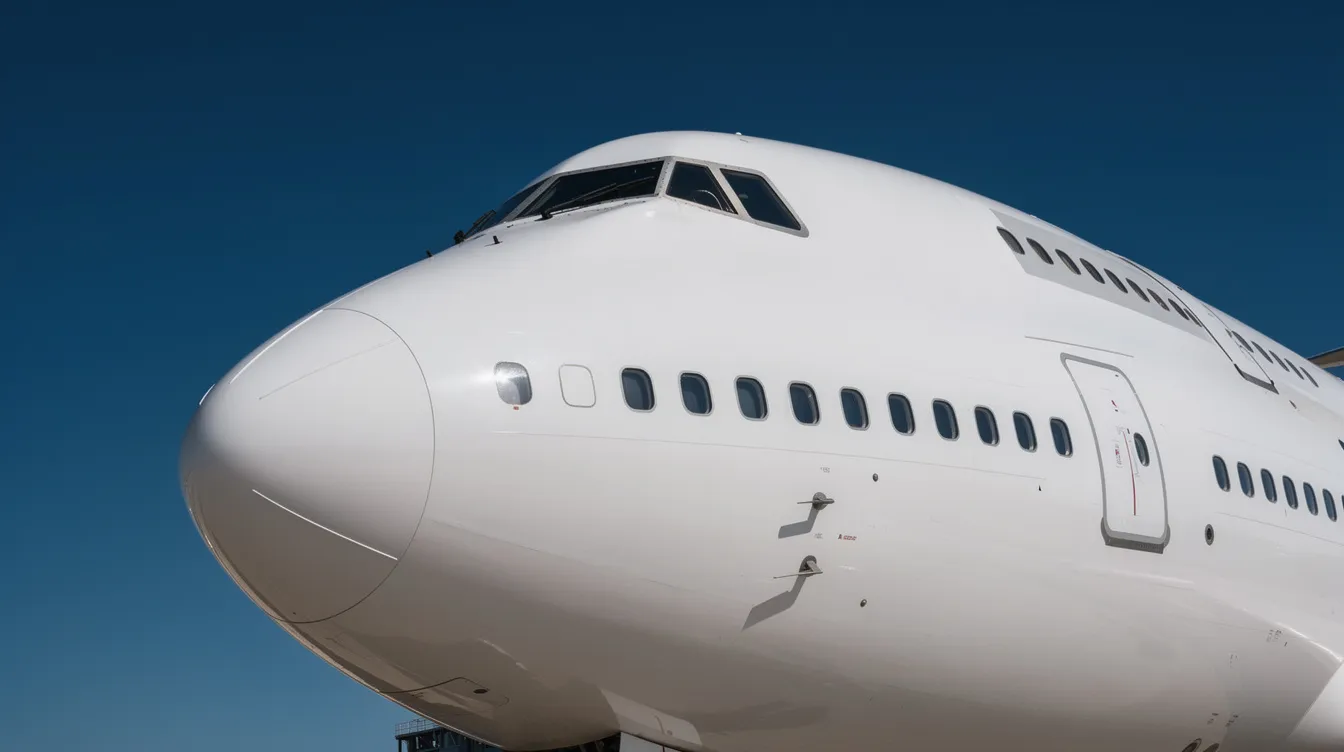
Few aircraft have shaped the trajectory of global mobility more decisively than the Boeing 747—the Boeing double-decker most travelers mean, with its wide main deck and distinctive upper-deck hump rather than a full twin-deck cabin. When Pan Am, its launch customer, placed the first order in the mid-1960s, the world had never seen a wide-body airplane with two passenger decks. The result was a machine that made long-haul travel accessible, transformed international commerce, and set the standard for prestige at 40,000 feet.
The Boeing 747 first entered service on January 22, 1970, and within a decade it had become the backbone of virtually every major airline's intercontinental network. For executives, frequent business flyers, and high-net-worth leisure travelers comparing premium travel options today, that legacy still matters: the 747 reshaped expectations for capacity, comfort, safety, and global reach, while helping explain why many travelers now prioritize more flexible, private alternatives informed by a clear understanding of the private jet price landscape. This guide examines the 747's design and history, how its variants compare with full double-deck aircraft such as the Airbus A380, and how its influence extends to modern business aviation, certification and sustainability, and services like BlackJet that serve travelers who want privacy, convenience, and control.
Why Double-Deck Aircraft Still Matter for Elite and Business Travelers
The 747 was primarily used on international routes, connecting mega-hubs like New York, London, Tokyo, and Frankfurt. For premium passengers, the upper deck offered a taste of exclusivity that economy travelers below could only imagine. Yet even at its finest, commercial aviation on a double-decker meant fixed schedules, crowded terminals, connecting flights, and boarding alongside hundreds of strangers.
Contrast that with a private jet departure from Teterboro to London Luton. Door-to-door travel time can shrink by 40 to 50 percent compared with a commercial connection through JFK, factoring in check-in queues, security lines, and layover gaps—a time advantage that also applies to regional markets such as private jet charters in Karachi, where direct access to local airports transforms the entire journey. For a CEO on a 48-hour deal cycle, that delta translates into an entire recovered business day.
At BlackJet, we operate in the same global airspace as these giants. But rather than moving hundreds of passengers on a rigid timetable, we deliver a fundamentally different form of access: prepaid Jet Card programs, multiple cabin categories, 24/7 booking support, safety certification, and carbon-neutral flights, all calibrated for high-net-worth and executive travelers who treat time as a non-renewable asset, as outlined in our premium private jet card and membership options.
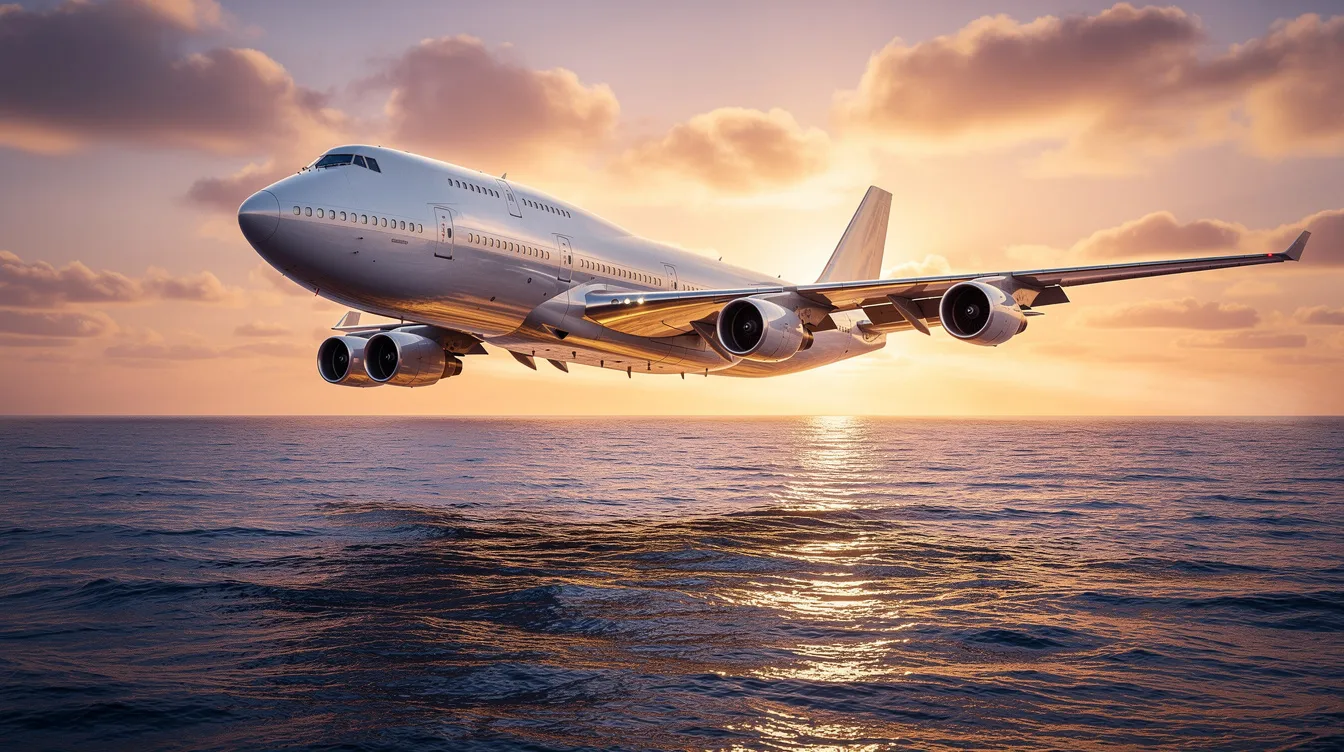
What Is a Boeing Double Decker Aircraft?
A double-decker in commercial aviation describes an airplane with two levels of passenger decks. The distinction matters:
A full-length double-deck aircraft, like the Airbus A380, runs two complete decks from nose to tail, seating 500 or more in typical layouts.
A partial double-deck aircraft, like the Boeing 747, features a wide main deck and a shorter upper-deck hump, often called a "bubble top," positioned ahead of the wing.
Boeing has never built a full-length double-decker passenger aircraft. What it did build was a partial upper deck that became one of the most recognizable silhouettes in aviation history. The Boeing 377 Stratocruiser, dating back to the late 1940s, featured a true double-deck layout with a cocktail lounge on its lower level, but the 747 scaled the concept into the jet age with far greater ambition.
On the early 747-100, the upper deck was relatively short, accommodating a lounge or a handful of first-class seats. By the time Boeing introduced the stretched upper deck on the 747-300, that space had grown by roughly 23 feet, adding windows, exits, and room for dedicated premium cabins. The 747's family of variants would continue refining this architecture across five decades of production.
Origins: From CX-HLS to the First Boeing 747 "Jumbo Jet"
The beginning of the 747 story lies not in commercial aviation but in a military program. In 1963, the Air Force launched the CX-HLS competition seeking a massive cargo transport. Boeing's submission explored full double-deck fuselage concepts and raised cockpit designs. Although Lockheed ultimately won the contract (producing the C-5 Galaxy), the technologies Boeing developed during the competition, including structural components, large airframe construction, high wing loading, and multi-bogie landing gear, fed directly into the 747's development.
The commercial catalyst was Pan Am president Juan Trippe, who in the mid-1960s demanded an airliner roughly 2.5 times the size of the Boeing 707 to cut seat-mile costs and relieve growing air travel congestion on transatlantic routes. His 1966 order of 25 aircraft launched the formal 747 program.
Chief engineer Joe Sutter and his team evaluated multiple cabin configurations, including fully stacked two passenger decks running the entire fuselage length. They ultimately chose the wide body plus upper hump layout for a decisive reason: the airplane needed to convert easily into a freighter. Raising the cockpit cleared the way for a nose cargo door capable of loading outsized freight, an architectural choice that created the partial second deck and gave the 747 its iconic profile.
Key Design Features of the Boeing 747 Double-Deck Layout
The core design idea was elegant in its duality. A wide main deck offered high passenger capacity, typically seating ten abreast in economy. A smaller upper deck, set ahead of the wing, served initially as a lounge and later as premium seating space. The cabin hierarchy this created, economy below, first class and bars above, mirrored the commercial versus private distinction that defines air travel today, especially as the newest generation of innovative private jets delivers long-range comfort once reserved for jumbo-jet flagships.
Several technical choices made the double-decker viable:
Feature | Detail |
|---|
Wing sweep | 37.5 degrees, enabling high subsonic cruise speed |
Engines | Pratt & Whitney JT9D high-bypass turbofans, powering the first generation |
Landing gear | Multi-bogie configuration (five bogies) to spread weight across runways |
Cockpit | Raised above the main deck, the 747 features a raised cockpit for front cargo loading |
Flaps | Sophisticated triple-slotted flaps increased wing area and lift for safe low-speed operations at heavy weights |
Navigation | The 747 was the first commercial aircraft to utilize an inertial navigation system |
Max takeoff weight | 970,000 pounds for the 747-8 variant |
The upper deck evolved across generations. The early short hump on the 747-100 and 747-200 gave way to the stretched upper deck on the 747-300 in 1983 and became standard on the 747-400 from 1989. Airlines transformed that space into showcase cabins: British Airways installed first class suites, Lufthansa configured business class seats with direct-aisle access, and several carriers added bars and social areas that turned the upper deck into a destination within the airplane.
Flight Test Program: Proving the World's First Wide-Body Double Decker
The 747's rollout in September 1968 at Boeing's Everett factory was a media spectacle. The first flight followed on February 9, 1969, from Paine Field, with test pilot Jack Waddell at the controls. Waddell's Wagon, as the aircraft was nicknamed, flew into a flight test program that would push both airplane and pilots to extremes.
Five test airplanes accumulated over 1,400 flight hours before the FAA granted type certification on December 30, 1969. The challenges were significant:
Wing flutter required redesign and the addition of depleted-uranium counterweights in engine nacelles to suppress oscillation.
Engine reliability issues with the JT9D caused stalls during rapid throttle changes and structural distortions in turbine casings.
Evacuation drills initially failed the 90-second requirement. Exit locations, staircase designs (changed from spiral to straight), and slide deployment protocols had to be reworked for the upper deck escape routes.
Wake turbulence studies led the FAA to impose stricter separation rules for aircraft following heavy jets like the 747, regulations that remain in effect today.
The test flight campaign proved that such a large, partially double-deck aircraft could be handled safely by line pilots and integrated into normal airline operations, a complete validation that opened the door to commercial service.
Entering Commercial Service: Double Decker Prestige in the Jet Age
Pan Am Flight 001 inaugurated the 747's commercial service on the New York to London route on January 22, 1970. The ceremonial flight carried approximately 332 passengers and 20 crew, though a last-minute engine overheating on the original aircraft forced a substitute airplane into duty. The flight time was roughly six hours and ten minutes.
Airlines quickly realized the 747's upper deck was a marketing asset. Japan Airlines, Lufthansa, and British Airways used that space for lounges, piano bars, and exclusive first-class cabins throughout the 1970s and 1980s. By 1982, 542 Boeing 747s were in active service worldwide, and the airplane had earned its enduring nickname: the Queen of the Skies. The 747's upper deck usage evolved from lounges to premium seating areas as fuel costs rose and airlines sought to maximize revenue from every square foot.
Flying upper-deck first class on a 747 was, for decades, the pinnacle of commercial air travel. But even the finest suite came with constraints: fixed departure times, shared terminals, limited route flexibility. Today, programs like BlackJet's Jet Card deliver the prestige those cabins once represented, paired with the privacy and schedule control that no commercial service can match.
Variants and Capacity: How Boeing Evolved Its Double-Deck Concept
Boeing produced 1,574 units of the 747 across six main variants, each refining the double-decker architecture:
Variant | Introduced | Upper Deck | Key Advancement |
|---|
747-100 | 1970 | Short hump | Original design; 3-class ~366 seats |
747-200 | 1971 | Short hump | More powerful engines, greater range |
747SP | 1976 | Short hump (shorter fuselage) | Special performance variant; could fly farther on ultra-long routes |
747-300 | 1983 | Stretched upper deck (+23 ft) | First SUD; ~400 seats in 3-class |
747-400 | 1989 | SUD standard | Glass cockpit, winglets, ~416–480 seats |
747-8I | 2012 | Refined SUD | New GE engines; intercontinental range of roughly 13,100 km |
The 747's range increased from 5,300 to 8,000 nautical miles across its production life, enabling airlines to serve ever longer non-stop city pairs. In high-density configurations, the Boeing 747 can accommodate up to around 600 passengers, a testament to the sheer space inside that wide-body fuselage—a scale that today translates into bespoke charter solutions for 100 passengers and other large-group missions in private aviation. Lufthansa introduced the first 747 freighter service in 1972, capitalizing on the nose-door loading capability that the raised cockpit made possible.
The 747SP variant was developed for longer range and entered service in 1976, trading passenger capacity for the ability to connect city pairs like New York to Tokyo non-stop. The 747-200 model was introduced in 1971 with more powerful engines and improved construction. The 747-400 entered service in 1989 with a new glass cockpit and became a commercial success that dominated long-haul travel for two decades.
Boeing's incremental approach to stretching and refining the partial upper deck stood in sharp contrast to Airbus's later leap to a full-length double deck on the A380.
Boeing vs. Airbus: Double-Deck Aircraft Philosophies Compared
The philosophical split between Boeing and Airbus on double-deck aircraft defined commercial aviation strategy for a generation:
Boeing's approach: partial double-decker optimized for cargo flexibility, existing airport compatibility, and route versatility.
Airbus's approach: full-length double-deck (A380) maximizing passenger capacity at mega-hubs. The A380 could seat 800 or more in high-density layouts versus the 747-8I's typical sub-500 configuration.
Double-deck aircraft can move large volumes of people efficiently to mega-hubs, but the trade-offs are real. Loading and unloading across two separate levels takes significantly longer. Double-decker aircraft often require specialized airports with reinforced taxiways, double jet bridges, and wider gate spacing. Double-deckers typically consume more fuel and require high passenger load factors to remain profitable.
Boeing pivoted toward efficient twin-engine widebodies, the 777 and 787, rather than launching a new full double-decker. The reasoning was straightforward: fuel cost sensitivity, environmental pressure, and the airline industry's shift toward point-to-point routes over hub-and-spoke models made smaller, more efficient airframes the smarter bet.
This trajectory aligns with BlackJet's thesis. The future of premium travel is not about cramming more passengers into ever-larger airplanes. It is about delivering flexible, personalized, point-to-point solutions, exactly what private aviation and jet cards provide for frequent flyers evaluating the best jet card programs for their travel patterns.
Beyond Airlines: Government, Military, and Special-Mission 747 Double Deckers
The 747's cavernous fuselage found a second life in government and military roles. The VC-25A, better known as Air Force One, uses a modified 747-200B airframe with its upper deck reconfigured into a presidential suite, conference room, and communications center. The E-4B National Airborne Operations Center serves as an airborne command post capable of directing military operations during a national emergency.
NASA adapted two 747 airframes as Shuttle Carrier Aircraft, ferrying Space Shuttle orbiters piggyback across the country. The SOFIA airborne observatory mounted a 2.7-meter telescope inside a modified 747SP, conducting infrared astronomy at altitudes above most atmospheric water vapor.
Perhaps the most extraordinary mission was Operation Solomon in 1991, when an El Al 747-200C carried 1,087 Ethiopian Jews to Israel in a single flight, a record that underscored just how much space a double-decker airframe delivered when every seat and aisle was utilized—a scale echoed today in private jet solutions for up to 50 passengers using VIP-configured airliners.
These special missions illustrate how large airframes serve as flexible platforms for specialized roles. At BlackJet, we apply a similar principle on a different scale: matching aircraft type to mission profile so that every flight serves its passengers rather than the other way around, whether that calls for a large-cabin jet for 15 passengers or a heavier VIP configuration for 20 travelers.
Passenger Experience on a Double Decker vs. a Private Jet
Picture an executive flying upper-deck business class on a 747 from London to Hong Kong. The cabin is quiet; double-decker planes feature massive internal volume that often translates to a quieter ride. Passengers on the upper deck enjoy a more intimate atmosphere and fewer seats. The lie-flat seat is comfortable, the service polished, the wine list curated.
Now picture the same executive on a large-cabin private jet via BlackJet, departing from London Stansted at a time of their choosing. The differences compound:
Factor | 747 Upper Deck | Private Jet (BlackJet) |
|---|
Boarding | Terminal, security, gate queue | Drive to aircraft, board in minutes |
Privacy | Shared cabin (20–40 passengers) | Sole occupancy or select group |
Schedule | Fixed departure | Depart when ready |
Cabin layout | Airline-configured | Configurable per mission |
Itinerary flexibility | Hub-bound, transfer-dependent | Point-to-point, multi-city capable |
Noise | Low (for commercial) | Very low |
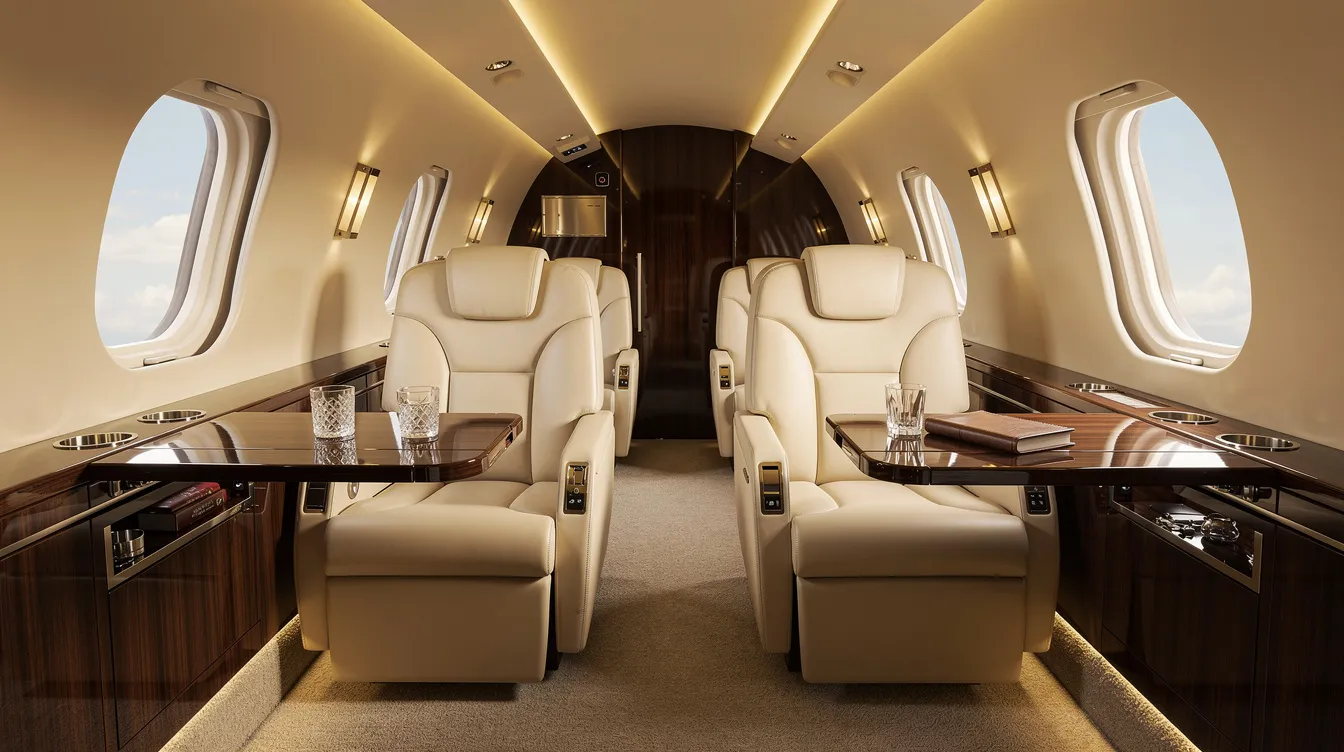
A 747 can carry hundreds. A private jet intentionally carries a select few, aligning with the strategic, time-sensitive needs of high-net-worth and corporate clients who need to work, rest, or meet in complete privacy—even when the mission calls for a private jet configured for 15 passengers on intercontinental routes.
Safety, Certification, and Operational Standards in Large vs. Private Aircraft
Double-deck aircraft like the 747 had to meet some of the most stringent certification standards in aviation history. The FAA's 14 CFR Part 25 requirements cover everything from structural integrity and systems redundancy to the 90-second full-aircraft evacuation mandate. Boeing's certification requirements for the 747-8's upper deck are unique due to its design, requiring specific exit configurations, stair dimensions, and slide deployment protocols tailored to two-level escape scenarios.
History reinforced the importance of these standards. The Tenerife disaster of 1977, involving two 747s on a fog-covered runway, remains the deadliest accident in aviation history and drove sweeping improvements in cockpit communication, ground radar, and standardized phraseology. Wake turbulence regulations stemming from the 747's flight test program still govern how closely smaller aircraft can follow heavy jets during takeoff and landing.
In private aviation, the platform differs, but the commitment to safety does not. BlackJet maintains a proprietary operator vetting process, incorporating third-party audits such as ARG/US and Wyvern ratings, pilot experience requirements, and continuous monitoring—standards comparable to those upheld by the top private jet companies in the market. Whether the airframe is a wide-body carrying 400 or a midsize jet carrying eight, uncompromising safety and robust certification remain non-negotiable pillars.
Sustainability: High-Capacity Double Deckers and Carbon-Neutral Private Flights
Large double-deck aircraft were initially justified by lower fuel burn per passenger-kilometer when load factors ran high. A 747 at 90 percent capacity in the 1980s was remarkably efficient on a per-seat basis compared with smaller, less efficient jets of that era. But as the industry evolved, absolute emissions and operating costs became the dominant metrics. Airlines chasing lower carbon footprints retired four-engine jumbos in favor of twin-engine wide bodies that burn less fuel per flight regardless of load factor.
Private jets carry fewer passengers, which means higher per-person emissions on a raw basis. But the calculus shifts when you factor in strategic value: fewer trips required (avoiding overnight layovers, eliminating positioning flights to hubs), optimized direct routing, and recovered productive hours.
BlackJet ensures every journey is carbon-neutral at no extra cost to clients. Verified offset programs, transparent methodologies through standards like Verra and Gold Standard, and emerging Sustainable Aviation Fuel integration form the foundation of a sustainability stance built for accountability rather than marketing, even for clients exploring the cheapest private jet options as an entry point into private aviation.
Technology and Digital Experience: From Analog Jumbo Jets to Smart Private Aviation
The 747's technological evolution tracks the arc of modern aviation itself. Early 747-100 and 747-200 cockpits required three crew members: pilot, co-pilot, and flight engineer, surrounded by analog gauges. The 747-400 cockpit reduced instruments from 690 to 300 indicators through a two-crew glass cockpit powered by Electronic Flight Instrument Systems. New technologies in avionics, autothrottle, and flight management made it possible for pilots to manage a 400-ton aircraft with unprecedented precision.
Cabin technology followed a parallel trajectory. The 747 was among the first aircraft to showcase satellite communications, advanced in-flight entertainment, and premium galley systems. Its upper deck served as a test bed for innovations that airlines would later roll out fleet-wide.
Today, BlackJet leverages technology for a different purpose: putting control directly in the traveler's hands. Mobile booking platforms, real-time flight support, dynamic aircraft sourcing across light, midsize, super-midsize, and large-cabin categories, and instant trip confirmations replace the rigid booking window of commercial aviation, making it as straightforward to buy a seat on a private jet as it once was to book a jumbo-jet ticket. The video play of a digital concierge confirming your departure in seconds represents a close modal dialog end to the era of call centers and wait times. Think of BlackJet's digital layer as the modern analogue to the technological prestige the 747 once embodied, except now focused on individual travelers instead of hundreds.
The End of Boeing 747 Production and the Future of Double-Deck Aircraft
Boeing officially ended production of the 747 program in December 2022, with the final 747-8F freighter delivered to Atlas Air in early 2023. That last newly built 747 wore Atlas Air livery at handover. The wind-down had been years in the making: Boeing announced declining demand for new passenger 747s as early as 2016, and the last passenger variant orders had dried up well before that.
Passenger airlines accelerated retirements through the late 2010s. British Airways retired its 747 fleet in 2020. Qantas, Lufthansa, and other major passenger operators retired the 747 from service as the COVID-19 pandemic collapsed traffic volumes and made the economics of four-engine giants untenable. The 747-8 has a maximum takeoff weight of 970,000 pounds and carries impressive capability, but capability alone could not cancel the operating cost advantages of modern twin-engine widebodies.
Are new double-decker designs on the horizon? Concepts like Nautilus's blended-wing Horizon Evo suggest partial dual-deck layouts may return in cargo or hybrid form, but Boeing's own market outlook through 2045 emphasizes twin-engine efficiency, sustainable propulsion, and route flexibility rather than ultra-high-capacity airframes.
The 747 double decker is a completed chapter. The future of premium mobility points elsewhere.
How BlackJet Fits into a Post-Jumbo-Jet World
The Boeing double-decker story taught the world three lessons about air travel: scale lowers unit costs, prestige creates loyalty, and connectivity drives commerce. BlackJet translates every one of those lessons into private aviation terms, including clear guidance on 100-hour jet card costs, hourly jet card pricing structures, Flexjet jet card pricing, NetJets jet card cost comparisons, and broader jet card pricing models and benefits.
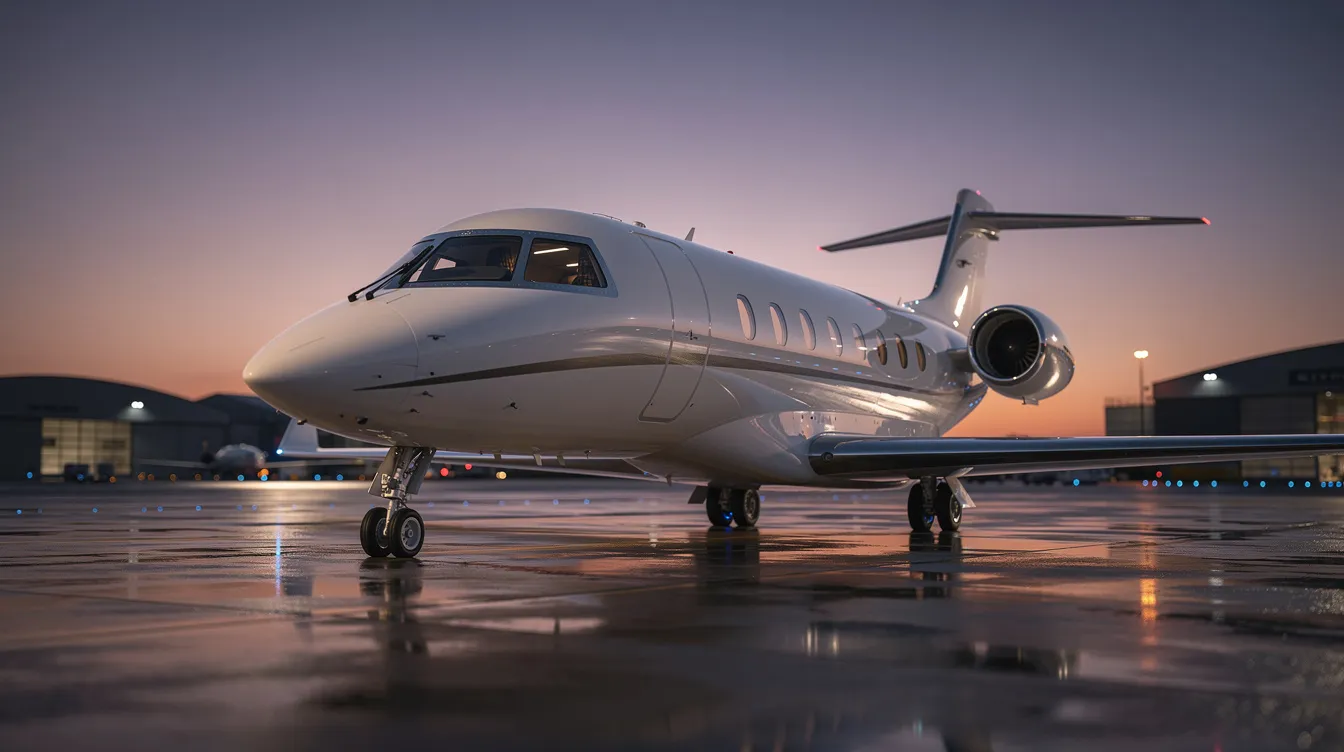
Scale becomes precision. Rather than filling 600 seats, BlackJet matches the right aircraft to each mission, whether that means a light jet for a 90-minute hop or a large cabin for an overnight transatlantic crossing.
Prestige becomes privacy. The exclusivity that once required an upper-deck first-class ticket on a 747 now comes standard with a 25-hour or 50-hour Jet Card, offering guaranteed access across aircraft categories with 24/7 support for complex itineraries, and backed by transparent jet card cost comparisons and detailed insight into 50-hour jet card pricing and value.
Connectivity becomes flexibility. Consider two scenarios:
A CEO completing a New York to London to Zurich loop in 48 hours, departing each city on their own schedule, conducting meetings at each stop, sleeping aboard between legs.
A family flying Aspen to Los Angeles to Honolulu over a long weekend, avoiding three separate commercial connections and reclaiming an entire day of vacation.
These are trips that once relied on jumbo jets and hub connections. Today, they are delivered with surgical efficiency through private aviation, using carefully chosen types of private jets matched to each traveler’s route, passenger count, and cabin expectations.
The travelers who grew up in the upper decks of 747s understand what premium air travel should feel like. BlackJet exists for those who now demand complete control over their time, their privacy, and their itinerary. Explore what a BlackJet Jet Card can do for the way you move through the world.


 Sign up with google
 Sign up with Apple