The Boeing 787 Dreamliner changed what a long-haul wide-body aircraft could deliver when it entered service in 2011. For people who fly privately across continents, the 787's specs define the upper boundary of what VIP air travel looks like.
Overview of the Boeing 787 Family
The Boeing 787 is the first major commercial airliner constructed primarily of composite materials. Its carbon-fiber fuselage allows lower cabin altitude (around 6,000 ft versus 8,000 ft on older planes), higher humidity, and reduced structural fatigue over time. For VIP and private travel, this translates into a plane that can carry large groups nonstop between global hubs while offering living-room-scale cabin space that no business jet can match.
The Boeing 787 Dreamliner family consists of three primary variants. Each variant shares a common wingspan of 60.1 m (197 ft 4 in), and the 787-8 has been in production since 2018 under the current configuration block. Here is how the three models compare:
787-8: Typical airline capacity of 200 to 275 passengers in two-class layout. Maximum range of up to 8,000 nautical miles (14,816 km) in airline configuration; BBJ VIP versions with auxiliary fuel tanks push that to 18,445 km. First delivered 2011.
787-9: Seats 250 to 325 passengers for airlines. Maximum range of up to 8,300 nautical miles (15,372 km) in standard form; BBJ 787-9 VIP configuration has a maximum range of 17,485 km. The Boeing BBJ 787-9 can seat up to 40 passengers. First delivered 2014.
787-10: The longest fuselage, carrying 300 to 375 passengers. The 787-10 variant has a maximum range of up to 7,500 nautical miles (13,890 km), trading some range for added cabin length. First delivered 2018.
Private and VIP versions (BBJ 787-8, -9, -10) reconfigure the interior for 25 to 100 passengers with adjusted cabin zoning and auxiliary fuel provisions that extend range well beyond airline specs.
How does the 787 compare to large-cabin private jets like the Gulfstream G700 or Bombardier Global 7500? Those aircraft carry up to 19 people with ranges near 7,500 to 7,700 nm. The 787's cabin volume is several multiples larger, and its mission profile serves groups that business jets cannot accommodate; the tradeoff is airport flexibility and per-hour cost.
Boeing 787-8: Core Specs & Performance
The 787 8 is the baseline Dreamliner variant and the most common platform for BBJ conversions. When travelers search for Boeing 787 specs, these are the numbers that define the aircraft's capability envelope.
Seating: Approximately 242 passengers in a two-class airline layout. VIP configurations drop to 25 to 50 seats depending on interior design.
Range: About 14,816 km (8,000 nm) in airline configuration. BBJ 787-8 VIP versions with extra tanks can reach 18,445 km (9,945 nm).
Cruise speed: The Boeing 787-8 can cruise at 940 km/h, which corresponds to Mach 0.85 at typical cruise altitude. Maximum operating Mach is approximately 0.90.
Maximum operating altitude: 43,000 ft (13,106 m).
Endurance: Approximately 17 to 19 flight hours in VIP configuration depending on payload and winds.
MTOW: The maximum take-off weight of the 787-8 is 227,930 kg (approximately 502,500 lb).
Maximum landing weight: Around 172,000 kg (379,000 lb).
Payload: Commercial maximum payload approximately 41,100 kg; VIP layouts shift mass toward furnishings rather than seat density.
Takeoff field length: Approximately 2,800 to 3,000 m at MTOW under standard sea-level conditions.
Landing distance: In the 1,600 to 1,800 m range depending on airport elevation and runway condition.
Figures can vary by engine choice (GE GEnx-1B versus Rolls-Royce Trent 1000) and Boeing configuration block.
Cabin Dimensions & VIP Layout Potential
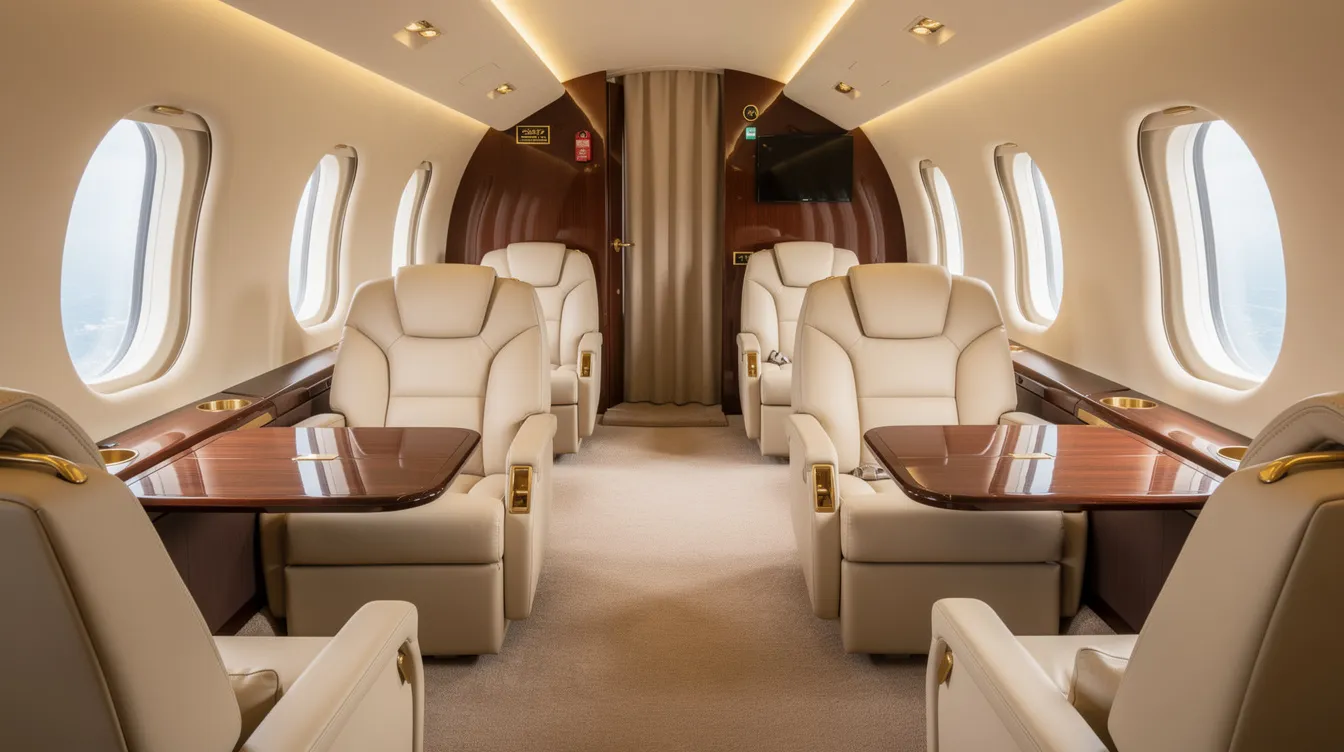
When configured as a BBJ, the 787-8 becomes a flying estate with zoned living areas for families, corporate boards, or heads of state. The Boeing 787-9 offers more cabin length than the 787-8, but even the -8 provides generous space for groups of 50 passengers or fewer.
Cabin length: Around 42 to 43 m of usable space in VIP layouts.
Cabin width: About 5.49 m (18 ft).
Cabin height: About 2.4 to 2.5 m (7.9 to 8.2 ft).
Cabin volume: Approximately 535 m³ with about 195 m² of floor area in BBJ 787-8 configuration.
Underfloor cargo: Around 124 m³, enough for multiple checked bags per passenger plus sports gear, technical equipment, and specialty cargo.
Typical VIP zoning: Forward executive suite with bedroom and shower; mid-cabin conference and dining area for 8 to 12 people; lounge or cinema zone; aft guest cabins; crew rest areas for each flight attendant and pilot on long sectors.
The passenger experience in the 787 includes larger electronically dimmable windows and improved cabin humidity, delivering comfort that surpasses even the most comfortable commercial planes. BlackJet members who have experienced BBJ cabins report that enclosed bedrooms, showers, and dedicated work zones on 10 to 16 hour sectors provide rest and productivity that no commercial first-class suite can replicate.
Airframe, Engines & Avionics Technology
The 787's structure and systems reduce fatigue, noise, and fuel burn. For travelers who value both time and sustainability, these specs matter beyond the marketing language.
Airframe: The majority of the primary structure is made from carbon-fiber-reinforced polymer, with over 50% composite by weight. This allows the 787 to reduce weight and improve fuel efficiency compared to conventional aluminum aircraft. Benefits include smoother pressurization cycles, lower maintenance costs from reduced corrosion, and larger windows.
Aerodynamics: The 787 employs advanced aerodynamics with a swept wing design and raked wingtips, contributing to lower drag across long routes around the world.
Engines: GE GEnx-1B and Rolls-Royce Trent 1000 families, producing 64,000 to 78,000 lbf depending on sub-variant. The Boeing 787 Dreamliner achieves up to 20% better fuel efficiency than older aircraft like the 767 or A330ceo in airline configuration.
Systems: The 787 features a more-electric architecture which improves efficiency by replacing traditional pneumatic bleed-air systems with electric power for cabin pressurization and wing ice protection. It also incorporates advanced hydraulic systems operating at higher pressures for efficiency. All flight controls operate through fly-by-wire architecture with envelope protection, keeping the aircraft within safe parameters automatically.
Avionics: Collins Aerospace suite with large LCD displays, dual head-up displays, and flight management systems supporting Required Navigation Performance procedures.
Noise and environment: Meets ICAO Chapter 4/14 noise standards, enabling night operations at noise-sensitive hubs. The safest passenger planes in production today share these certification standards.
Operating Economics, Ownership & Charter Context
A BBJ 787-8 or -9 sits at the apex of private aviation. These aircraft serve governments, ultra-high-net-worth individuals, and corporate flight departments; they are not entry-level private jet choices, and they sit at the far end of the spectrum when you compare the value of chartering a private jet versus other access models. Here is what the economics look like in USD.
Purchase price: A Boeing 787-8 new price is $370 million. The 787-8 pre-owned price starts around $90 million, depending on age, engine hours, and interior condition.
Annual costs: The 787-8 running costs are about $7.09 million per year for an owner flying 300 to 500 hours, covering fuel, crew, maintenance, insurance, and hangar. The 787-8 costs about $17,723 per flight hour in direct operating expenses. The Boeing 787-9 operating cost is approximately $23,000 per flight hour.
Charter rates: The Boeing 787-8 charter costs $28,000 per flight hour, plus repositioning, ground handling, and minimum-day charges. For groups approaching 100 travelers, understanding the cost of chartering aircraft for 100 passengers helps put these wide-body rates into perspective. These aircraft rarely appear on open charter markets; arrangements are bespoke.
Comparison: Chartering an ultra-long-range business jet for a New York to Hong Kong route costs a fraction of a VIP 787 charter and works for groups of 4 to 12. The 787 justifies its cost only when you need to move 20 to 40+ people nonstop with full amenities and cargo.
For most private travelers, a Jet Card providing access to super-midsize or large-cabin jets is the more strategic, flexible, and cost-efficient option. Only for very large delegations does chartering a Boeing 787 make economic sense.
Typical Intercontinental Missions & Use Cases
Picture a 30-person corporate roadshow that needs to fly nonstop from London to Perth, continue to Singapore, and finish in New York. A BBJ 787-8 handles this itinerary with dedicated sleeping zones, conference space, and cargo room for production equipment, sitting at the upper end of options alongside the best private jets for 20 passengers and larger groups.
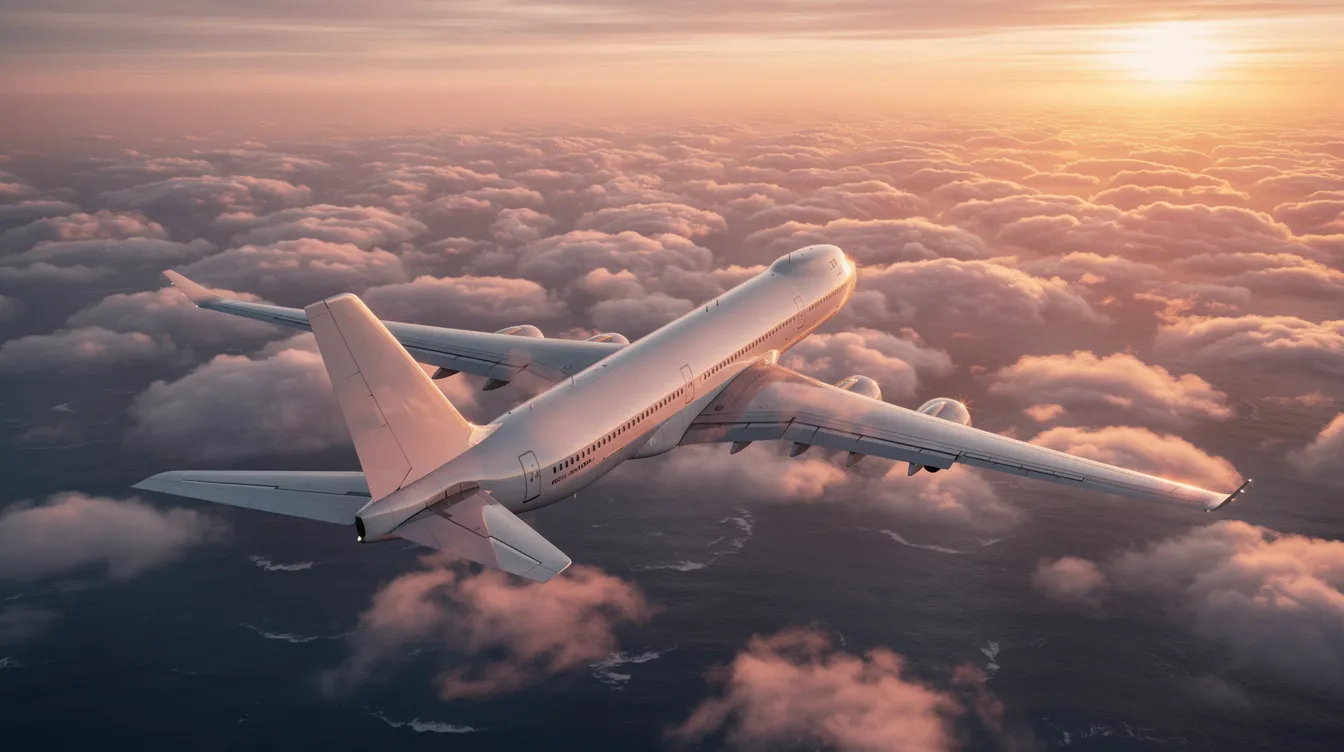
Sample nonstop routes: London to Perth (approximately 17 hours); New York to Tokyo (approximately 13 to 14 hours); Los Angeles to Singapore (approximately 16 to 17 hours).
Mission flexibility: Passengers, staff, and cargo (media equipment, specialized gear) travel together on a single aircraft with no connecting flights.
BlackJet comparison: A BlackJet member flying New York to London, London to Dubai, or Los Angeles to Honolulu with 4 to 12 people uses ultra-long-range private jets that access private terminals, require shorter show-time, and handle multi-leg itineraries in a single day; issues that a large 787 cannot solve at secondary airports, and which highlight the importance of matching different types of private jets to each mission.
Comfort over distance: Cabin altitude around 6,000 ft equivalent combined with 15 to 25% humidity and reduced noise levels allows passengers to arrive with less fatigue on 12 to 16 hour sectors than on conventional airlines.
How BlackJet Fits In: Choosing the Right Aircraft vs a Boeing 787
While Boeing 787 specs are impressive, most private travelers find more day-to-day value from versatile business jets accessed through a Jet Card model. Understanding overall jet card pricing and cost structure helps frame when a wide-body like the 787 is overkill versus a better-fit smaller jet. The right aircraft depends on the mission, not the biggest airframe.
Decision factors: Group size (small executive team versus 40+ delegation); route profile (regional hops versus ultra-long nonstop); airport choices (major hubs versus secondary fields closer to the final destination); budget and cost per seat.
BlackJet's offering: Prepaid Jet Card hours across cabin classes from light to ultra-long-range, with 24/7 digital booking and real-time support adjusted to complex schedules through the BlackJet 25+ Hour Jet Card program.
Safety and certification: BlackJet vets every operator through third-party safety audits (ARGUS/IS-BAO-type standards), matching or exceeding the oversight applied to commercial airline operations, in line with what discerning travelers expect from the best jet card providers for frequent flyers.
Sustainability: BlackJet provides carbon-neutral flights through verified offsets, connecting the fuel efficiency gains of modern aircraft like the Boeing 787 to the private travel world and factoring sustainability into jet card cost-per-hour comparisons.
Next step: Speak with a BlackJet aviation advisor to match your typical missions, how many passengers you travel with, and your preferred airports to the right aircraft category, whether that is a super-midsize jet or, for rare occasions, a chartered wide-body like a Boeing 787.
Frequently Asked Questions About Boeing 787 Specs
Common questions from high-net-worth travelers considering wide-body VIP aircraft often overlap with broader topics like the cost of a 100-hour private jet card.
What are the main Boeing 787 variants and how do their specs differ? The 787-8, 787-9, and 787-10. The 787-8 seats 200 to 275 in airline layout with a range of up to 14,816 km; the 787-9 seats 250 to 325 with range up to 15,372 km; the 787-10 seats 300 to 375 with range up to 13,890 km. As with the newest generation of private jets, each variant balances range, capacity, and efficiency differently, and the 787-8 is the most common platform for VIP conversions.
How far can a Boeing 787-8 fly nonstop in VIP configuration? Up to 18,445 km with auxiliary fuel tanks and light passenger load. Real-world range depends on payload, winds, fuel reserves, and routing, much like the planning that goes into selecting an appropriate 50-hour jet card for your flying pattern.
Is a Boeing 787 available through a Jet Card like BlackJet? Wide-bodies are arranged via bespoke charter, not standard Jet Card programs. For individuals buying a single seat or sharing capacity, understanding how to buy a seat on a private jet is more relevant, while BlackJet proposes ultra-long-range business jets for most clients who need intercontinental reach.
How does the Boeing 787 compare in comfort to smaller private jets? The 787 offers lower cabin altitude, higher humidity, and more space per passenger, while many of the top private jets in the world now incorporate similar wellness-focused features. Smaller private jets provide faster airport access, shorter ground time, and the ability to use fields that a 787 cannot reach.
What is the difference between a commercial Boeing 787 and a BBJ 787? The airframe, engines, and core specs remain identical. The BBJ version reconfigures the interior for far fewer passengers, adds auxiliary fuel for extended range, and customizes systems for VIP operations rather than airline economics, similar to how charter flights differ from scheduled commercial services in terms of configuration and flexibility.
Conclusion: The Boeing 787's Place in Private Aviation Excellence
The Boeing 787 Dreamliner stands as a pinnacle of aviation technology, combining cutting-edge materials, advanced aerodynamics, and innovative systems to deliver unmatched range, efficiency, and passenger comfort. For high-net-worth individuals and corporate groups needing to move large teams nonstop across continents, the 787 offers a flying estate experience that no traditional business jet can match. Its expansive cabin, extended range capabilities, and VIP customization options make it ideal for ultra-long-haul missions where luxury, productivity, and privacy are paramount.
However, the Boeing 787's size and operating costs position it as a specialized solution rather than a daily-use private jet. For most travelers, BlackJet’s Jet Card programs unlock superior flexibility, safety, and cost efficiency through a curated fleet of midsize to ultra-long-range jets that better fit typical mission profiles, whether they’re evaluating the cost of chartering smaller private planes or committing to a membership model. BlackJet’s commitment to stringent safety certifications, sustainable carbon-neutral flights, and seamless digital booking ensures that clients enjoy premier private aviation experiences tailored to their unique travel needs.
Choosing between a Boeing 787 charter and a Jet Card access to smaller jets comes down to mission requirements: group size, route length, airport accessibility, and budget. When the scale and scope of travel demand the ultimate in space and nonstop range, the 787 shines. For travelers considering a longer-term commitment, options like purchasing a private jet in key markets such as the UK may also enter the conversation. For everyday private travel, BlackJet’s versatile offerings provide elevated convenience and luxury with a sustainable edge.
Explore how BlackJet can elevate your private travel—whether through exclusive Jet Card access or bespoke wide-body charters—and discover a new standard in effortless, premier aviation, from more affordable entry-level private jet options to choosing among the top private jet companies in the market or arranging bespoke charters in key hubs like Karachi.


 Sign up with google
 Sign up with Apple