For travelers who fly multiple times a month, the Boeing 737 800 interior is far more than background scenery. Cabin layout, seating capacity, and onboard amenities directly shape your ability to work, rest, and arrive ready to perform-whether the flight is ninety minutes or five hours. When you spend hundreds of hours per year inside a passenger cabin, every inch of seat pitch, every decibel of engine noise, and every minute spent in a boarding queue compounds into a meaningful difference.
Introduction: Why the Boeing 737-800 Interior Matters for Premium Travelers
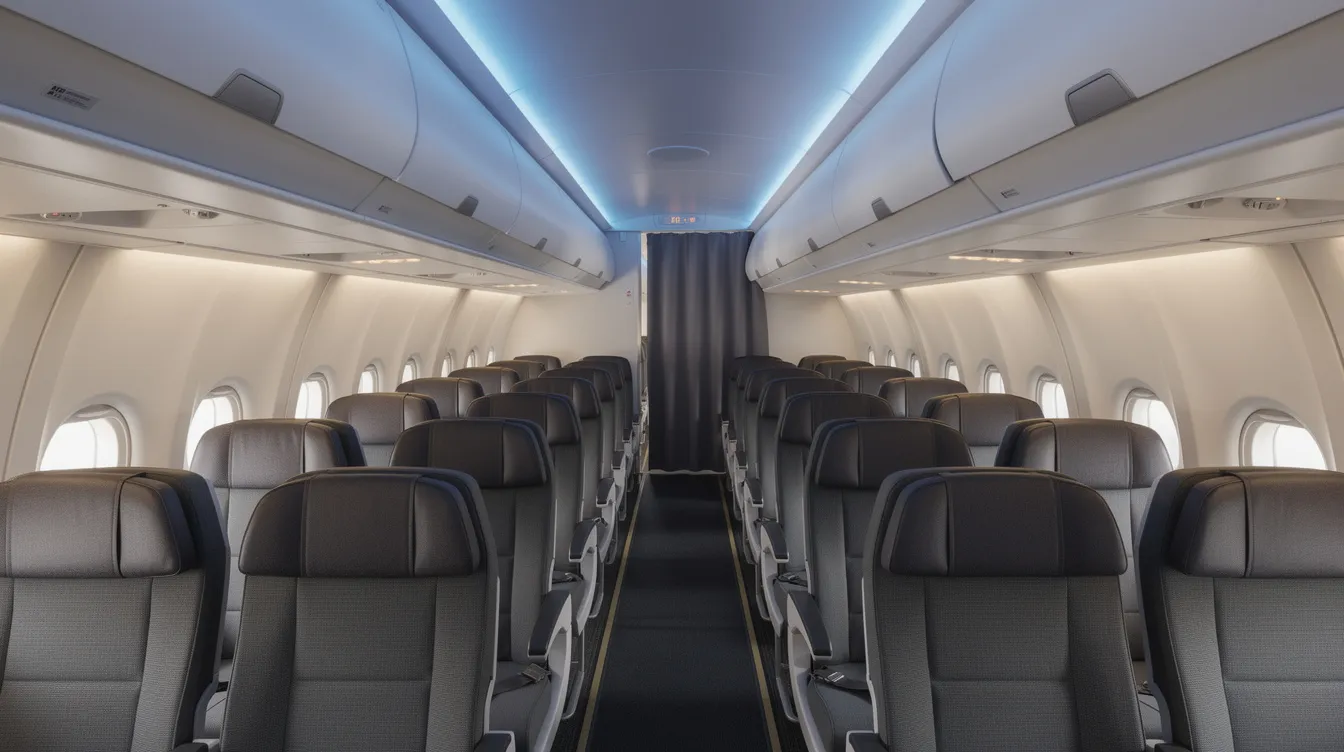
So what does the Boeing 737 800 interior actually include? In its most common commercial configuration, you will find a 3-3 economy layout (three seats on each side of a single aisle), a 2-2 domestic first or business cabin up front, the Boeing Sky Interior with sculpted sidewalls and LED mood lighting, larger overhead storage bins, and a seat map that varies noticeably from one airline to the next. The Boeing 737-800 typically accommodates 162 to 189 passengers, depending on how the carrier configures its cabin.
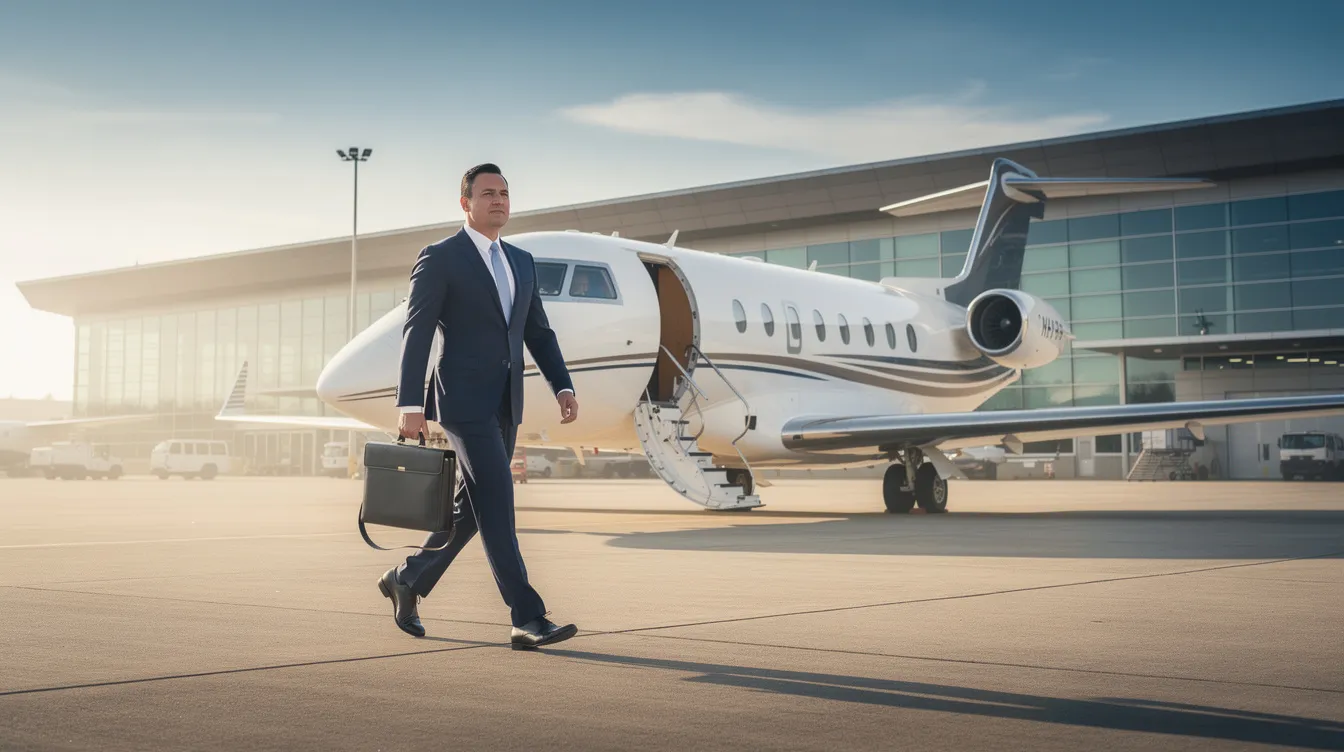
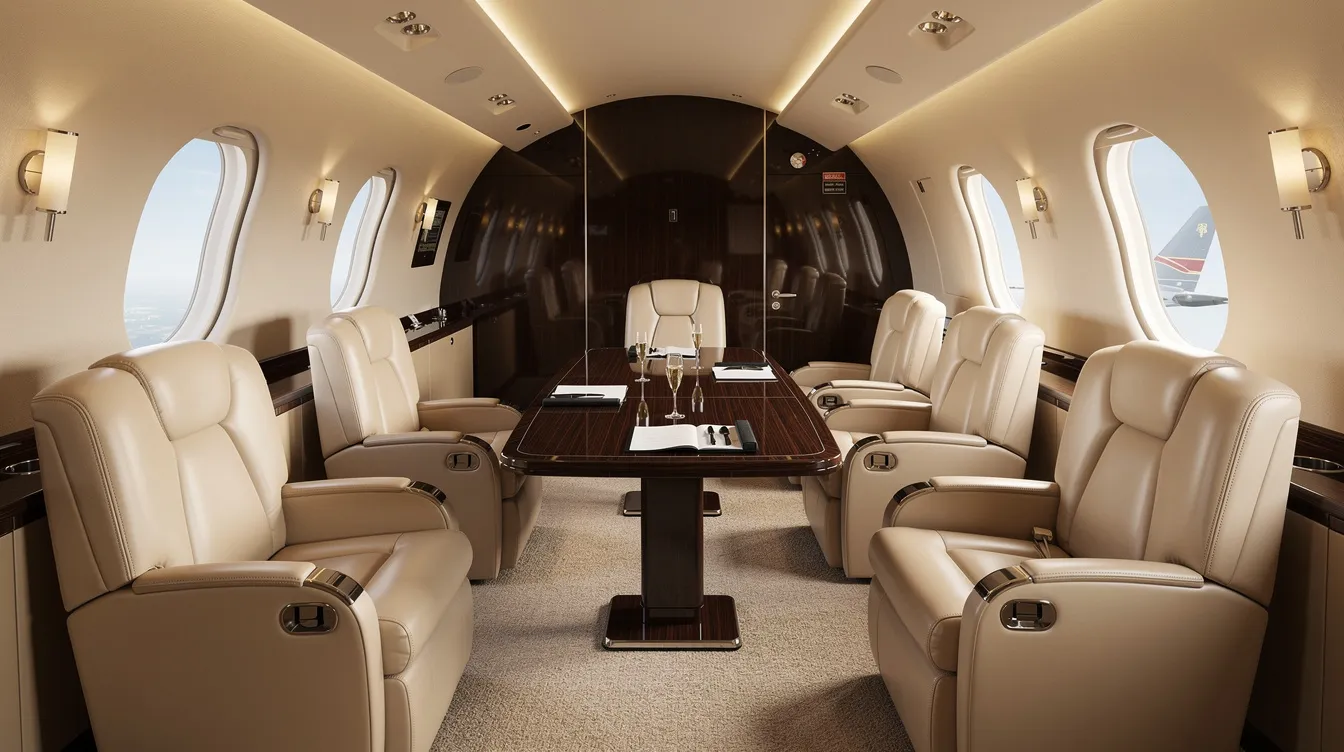
Compare that to the private jet cabins BlackJet members are accustomed to: four to sixteen seats arranged in lounge-style club configurations, no middle seats, full aisle access regardless of where you sit, and a service level calibrated to your preferences rather than a standardized script. The gap between these two experiences is where strategic travel decisions are made.
BlackJet's role is not to dismiss the Boeing 737-it remains one of the most capable Boeing aircraft in commercial service. Rather, we help discerning travelers identify when a well-appointed 737-800 premium cabin meets their needs and when a private jet is the clear upgrade, including understanding how private jet cruising altitudes compare to commercial flights in terms of comfort and efficiency. Many of our members first experienced modern commercial cabins on United Airlines or similar carriers before discovering that certain legs of their travel deserve something more.
Overview of the Boeing 737-800 Cabin Layout
The Boeing 737 800 is a single-aisle airplane in the next generation series of the Boeing 737 family, while the later Boeing 737 MAX family is a separate, re-engined successor. Its extended fuselage compared to the shorter 737-700 makes it the stretched version best suited for high-demand routes, and its cabin layout reflects the priorities of whichever airline operates it. Here is how the cabin space is typically organized from nose to tail:
Forward Section: Premium Cabin
The premium cabin (domestic first or business class) sits just behind the cockpit.
Usually features a compact galley and one lavatory.
Seats are arranged in a two-class configuration of 2-2 across the aisle.
Main Economy Cabin
The remainder of the fuselage holds the economy seats in 3-3 rows.
This zone stretches from roughly row 7 or 8 through the mid-twenties or low thirties, depending on the carrier's layout.
Overwing Exit Rows
Generally located around rows 14 through 20.
These rows are subject to constraints on recline.
Sometimes feature modified armrests and limited under-seat stowage.
Aft Section
Two lavatories and a rear galley occupy the tail.
Seats in the last few rows often have limited recline.
Heightened noise from both galley activity and engine proximity.
Mid-Cabin Galleys
The seating capacity of a two-class layout generally falls between 162 and 170 seats. Airlines that opt for a single-class high-density arrangement-primarily ultra-low-cost carriers-can push that number to 189 seats. While the airframe dimensions are consistent across operators (cabin width of approximately 11 feet 7 inches, cabin length around 98.5 feet, and a wingspan of about 117 feet 5 inches, with winglets helping improve aerodynamic efficiency and range), the details of seat pitch, upholstery quality, and in-flight entertainment vary significantly by carrier—factors that also play into the calculus for organizations exploring the purchase of a Boeing 737 for private or operational use.
Notably, the front of the cabin tends to feel slightly more spacious due to fuselage curvature, and it is measurably quieter because the CFM56-7B engines sit farther aft under the wing.
Seat Maps and Seating Capacity on the 737-800
A 737-800 seat map is a practical reference that reveals far more than just row numbers. Here is what to look for:
Row numbering and exits: Rows typically start at 1 (premium cabin) and extend to the high twenties or low thirties. Overwing exit rows, usually in the high teens, offer extra legroom but may lack under-seat storage and have limited recline.
Galley and lavatory placement: Forward galleys sit between the cockpit and premium cabin; rear galleys and lavatories cluster at the tail. Seats adjacent to these areas experience more foot traffic and noise.
Movable armrests: Many airlines equip economy seats with movable armrests to ease boarding, accommodate larger passengers, and facilitate wheelchair transfers. Some carriers note these positions explicitly on their seat map.
Bulkhead and limited-recline seats: Bulkhead rows (the first row of economy, directly behind the premium cabin divider) offer extra legroom but typically lack under-seat storage during takeoff and landing. The last row before a lavatory wall often has limited or no recline.
Special seat designations: Preferred or extra-legroom economy seats (sometimes marketed as "Comfort+" or similar) may appear in exit rows or forward economy with 3 to 4 extra inches of legroom compared to standard economy.
Common seating capacity configurations break down as follows, and understanding how many passengers each layout can truly accommodate is a useful starting point before you compare private jet sizes and categories for more tailored missions:
Configuration | Typical Seat Count | Seat Pitch (Economy) | Seat Pitch (Premium) |
|---|
Two class (first + economy) | 160–170 | 30–32 inches | 36–39 inches |
All-economy high-density | 180–189 | 28–30 inches | N/A |
Seat pitch ranges from 30 inches on ultra-low-cost carriers to 36 inches in premium cabins. Seat width on the 737-800 ranges from 17 to 18 inches in economy, while first class seats offer approximately 20 to 21 inches. Economy seat pitch typically falls between 30 and 32 inches on full-service airlines like Delta and American Airlines.
Cabin Classes and Comfort: From Economy to Premium
The Boeing 737 800 interior typically offers two or three distinct comfort tiers, depending on the airline and route.
Domestic First or Business Class
Occupies the forward rows in a 2-2 layout.
First class seating is typically configured in pairs.
Offers wider dimensions: approximately 20 to 21 inches of seat width, 37 to 39 inches of pitch, and 6 to 8 inches of recline.
Passengers receive larger tray tables, priority boarding, and dedicated cabin service.
Provides a workable environment for calls and laptop use on flights under three hours.
Premium Economy or Extra-Legroom Economy
Sits just behind first class or in designated exit-row zones.
Provides 3 to 4 extra inches of legroom compared to standard economy.
Sometimes includes priority boarding or complimentary snacks.
Not every carrier offers this tier on the 737-800.
Standard Economy
Fills the remainder of the plane with seats about 17 to 18 inches wide and pitched at 30 to 32 inches.
Adjustable headrests (often winged for side support) and movable armrests on most rows are standard comfort features.
Some airlines have invested in upgrades: Alaska Airlines' 737-800 features 159 to 161 leather Recaro seats, with in-seat power and seatback tablet holders for a more modern feel.
Even so, these cabins serve 160-plus passengers simultaneously. Compare that to a BlackJet private aircraft, where every seat functions as a lie-back club chair with 40-plus inches of effective pitch, full aisle access, and privacy that no commercial divider curtain can replicate—core elements of BlackJet’s premium private jet card and membership offering.
Boeing Sky Interior and Passenger Experience
The Boeing Sky Interior is the signature modern cabin redesign that Boeing introduced for the 737 Next Generation series around 2010. Rather than a simple refresh, it represents a deliberate effort to address the narrow-body cabin's most persistent complaints: limited headroom, dim lighting, and utilitarian aesthetics. Here is what distinguishes it:
Sculpted sidewalls and window reveals: The cabin features contoured panels that create a sense of width. The Boeing 737 800 has larger windows that make the cabin feel brighter and more open, with redesigned window reveals that frame the view more naturally.
Contoured overhead bins: The cabin incorporates contoured overhead bins that pivot downward to offer more headroom when closed, while providing approximately 50 percent more carry-on volume than older generation bins. These larger overhead storage bins reduce gate-check frustrations on full flights.
LED mood lighting: The cabin features customizable LED lighting that mimics natural sky colors, transitioning through boarding, cruise, sunrise, and sunset modes. Comfort features of the Boeing 737 800 include customizable LED mood lighting and sculpted sidewalls, which help reduce the perception of claustrophobia on a narrow-body plane.
Noise reduction: The interior of the Boeing 737 800 is generally quieter than previous generation 737s, thanks to improved sidewall insulation, acoustic panels, and the relatively efficient CFM56-7B engines. Cabin noise is estimated at 2 to 4 decibels lower than that of pre-Sky Interior aircraft.
The Boeing Sky Interior is designed to enhance passenger comfort with modern features, but it operates within the physical constraints of a single-aisle fuselage. For travelers accustomed to wide-body flights or private aviation, the improvements are noticeable but bounded by the aircraft's 11-foot-7-inch cabin width, especially when compared with the cabins of the world’s top luxury private jets.
Onboard Amenities: Power, Wi‑Fi, and Entertainment
What the Boeing 737 800 interior offers beyond the seat itself has evolved significantly over the past decade. Here is where most North American fleets stand today:
Power and Connectivity
Many Boeing 737 800s feature in-seat AC power outlets and USB ports, particularly in first class and increasingly across economy cabins.
Many airlines provide wi fi access on the Boeing 737 800, typically via satellite or air-to-ground systems, depending on route and carrier.
Entertainment
In-flight entertainment increasingly features personal device streaming or seatback screens.
Some carriers retain seatback displays in premium cabins while directing economy passengers to stream content to their own personal device through onboard servers and apps.
Overhead video monitors are becoming rare.
Air and Climate
Lavatory and Galley Impact on Seat Desirability
Seats within two rows of aft lavatories and galleys experience meaningfully more noise, foot traffic, and light disruption, especially on red-eye flights.
The left side aft lavatory door, in particular, can be a recurring disturbance for passengers in the last few rows.
For context, carriers like United Airlines have retrofitted many of their 737-800 fleets with updated interiors that include wi fi, streaming entertainment, and power at every seat. These improvements bring the commercial experience closer to being acceptable for business use, but they remain standardized offerings delivered to over 160 passengers simultaneously, and they cannot match the smoother, less congested ride that comes from private jets cruising at higher altitudes than commercial flights.
On a BlackJet private flight, the contrast is stark: high-bandwidth connectivity tailored to your needs, bespoke catering selected in advance, cabin temperature set to your preference, and a crew focused exclusively on your party—benefits that become even clearer once you understand the broader private jet price landscape and access options.
Fuel Efficiency, Range, and What It Means for Cabin Design
The Boeing 737 800's aerodynamic improvements, including blended winglets at the wing tips and efficient CFM56-7Bengines, deliver strong fuel efficiency for a narrow-body airliner. The 737-800 burns approximately 4.88 US gallons per seat per hour, making it slightly more fuel-efficient than the Airbus A320 on comparable routes. Airlines deploy it heavily on one-to-five-hour routes where fuel capacity and per-seat economics drive profitability.
These economics directly shape what you experience inside the cabin:
Denser Seating on High-Demand Routes
More Spacious Layouts on Competitive Routes
Range Capabilities
The Boeing 737 800 has a range of 3,115 nautical miles and a cruise speed of Mach 0.79, making it well-suited for domestic US routes, intra-Europe flights, and short transcontinental segments.
Its extended range capability means some operators use it on routes that once required larger aircraft, bringing narrow-body cabin design to longer missions.
BlackJet takes a different approach entirely. Rather than optimizing for 160-plus passengers, we match aircraft type to mission-light jets for short hops, super-midsize or large-cabin jets for longer flights, ensuring that fuel efficiency serves the passengers on board, not a revenue-per-seat calculation, and drawing on a deep understanding of private jet size categories and their ideal use cases. Every BlackJet flight operates carbon-neutral through integrated offset programs, a point we will return to shortly.
Comparing the 737-800 Interior to a Private Jet Cabin
Consider a scenario: a corporate executive based in Chicago needs to reach a meeting in Aspen. The commercial option is a 737-800 operated by a major carrier from O'Hare to Denver, followed by a regional connection or ground transfer to Aspen, a journey that, door to door, consumes five to six hours. The BlackJet alternative: a light jet departing from a private FBO at Chicago Executive Airport, flying direct to Aspen-Pitkin County in under two hours, with the executive stepping off the aircraft fifteen minutes before the meeting shuttle departs.
Here is how the two experiences compare:
Factor | Boeing 737-800 (Commercial) | BlackJet Private Jet |
|---|
Passengers sharing a cabin | 160–189 | 4–8 (your party only) |
Seat width | 17–21 inches | 22–26+ inches |
Effective seat pitch | 30–39 inches | 40–60+ inches |
Boarding process | 60–90 minutes pre-departure | 10–15 minutes pre-departure |
Privacy | Shared cabin, curtain divider | Complete cabin privacy |
Airport access | Major hub terminals only | 5,000+ airports, including regional fields |
Service | Standardized for all passengers | Fully personalized for your party |
The Boeing 737 800 interior offers respectable comfort for the volume of passengers it serves, and its fuel efficiency across 160-plus seats is difficult to match on a per-passenger basis. But private jets prioritize what cannot be measured in seat pitch alone: uninterrupted focus, elimination of connection risk, and the ability to arrive at airports that commercial flights simply cannot reach.
Boarding times alone tell a compelling story. Where commercial flying demands arrival 60 to 90 minutes before departure, security lines, gate changes, and boarding zones, private aviation through an FBO requires 10 to 15 minutes. On a two-hour flight, that difference can represent a 40 percent reduction in total travel time.
Safety, Certification, and BlackJet Standards
The Boeing 737-800 has a strong commercial safety record. The 737-800's hull loss rate is lower than the classic series, standing at 0.17 per million departures. As of January 2020, the 737 series had 22 hull-loss accidents across all variants-a figure that, given the enormous number of flights operated worldwide, reflects rigorous design and oversight. The FAA issued an Airworthiness Directive in 2019 for fatigue cracks related to a specific structural inspection area, and no accidents resulted from the 2019 structural inspection issue. Commercial airlines are subject to continuous FAA and EASA oversight, crew training mandates, and maintenance programs that keep the aircraft among the safest in service.
BlackJet layers additional safety protocols on top of regulatory requirements for every private flight:
BlackJet Certified® operators: Only approximately 30 percent of U.S. charter jet operators pass BlackJet's proprietary certification process, which evaluates maintenance records, pilot experience, insurance coverage, and operational history.
Independent audits: Operators must hold certifications such as ARGUS Platinum or Wyvern Wingman, and comply with FAA Part 135 standards as a baseline, not a ceiling.
Per-flight validation: Every mission is verified by the operator, and aircraft and pilots are confirmed before each departure, providing a level of transparency that commercial passengers rarely receive.
Both commercial and private aviation maintain high safety benchmarks. The distinction is that BlackJet makes the verification process visible and continuous for every flight you take.
Sustainability and Cabin Experience
The 737-800's fuel efficiency per seat is relatively favorable compared with older narrow-body jets, particularly when flown at high load factors on trunk routes. When 170 passengers share a single flight's fuel burn, per-capita emissions are competitive with or better than driving for many domestic distances.
Many airlines are now experimenting with sustainable aviation fuel blends on 737-800 routes, up to 50 percent SAF blends at select hubs. While SAF does not change the interior experience, it supports lower lifecycle carbon emissions and signals a shift in how carriers approach environmental responsibility.
BlackJet's approach is more direct: every private flight is made carbon-neutral through verified offsets at no additional cost to the member. Emissions are calculated per flight based on aircraft type, distance, and fuel burn, then offset through Gold Standard or Verra-verified projects. Members do not need to opt in or pay a surcharge-it is built into every journey.
For travelers who care about aligning their cabin experience with environmental commitments, hybrid strategies offer an effective path. Flying commercial on high-load-factor 737-800 trunk routes and reserving private jets for last-mile or time-critical legs can reduce total emissions compared with an all-private travel profile. BlackJet members who adopt this approach improve fuel efficiency across their overall travel portfolio while maintaining access to premium experiences on every segment.
When to Choose a 737-800 vs. a BlackJet Private Jet
The decision is not binary-it is situational. Here is a practical framework:
The 737-800 Makes Sense When:
You are traveling between major hubs with frequent, well-timed service
Premium cabin availability (first or business) aligns with your schedule
Cost efficiency matters more than time savings in that particular segment
The route is primarily operated by carriers with modern, updated interiors
A BlackJet Private Jet is the Strategic Choice When:
Your destination is a secondary or regional airport, and the 737-800 cannot serve
Schedule flexibility or a last-minute departure is essential
Privacy, productivity, or rest during transit is a priority
A multi-stop commercial itinerary would add two or more hours of total travel time
Consider a first-time BlackJet client scenario: a managing partner flying from New York to a client meeting near Jackson Hole. She books domestic first on a 737-800 from JFK to Salt Lake City, a well-served trunk route where the commercial cabin delivers adequate comfort. From Salt Lake City, rather than enduring a connection and ground transfer, she boards a BlackJet super-midsize jet for the 55-minute hop to Jackson Hole Airport, arriving two hours ahead of the commercial alternative.
This is the strategic calculation that Jet Card programs are designed for. A 25-hour or 50-hour block of prepaid private jet time secures availability at fixed hourly rates, allowing members to deploy private flights precisely where they deliver the greatest return, without the overhead of aircraft ownership, especially when you understand how jet card costs and pricing structures work.
BlackJet Jet Cards: Elevating Your Travel Beyond the 737-800
For travelers who have explored every improvement the Boeing 737 800 interior has to offer and still find gaps in their journey, BlackJet's Jet Card model provides a membership-based solution. It grants prepaid access to multiple aircraft categories-light, midsize, super-midsize, and large cabin-with predictable fixed hourly rates and no ownership burden, structured around transparent jet card pricing and membership models.
Here is what the Jet Card experience includes, aligning with many of the advantages highlighted in guides to the best jet cards for frequent flyers:
Digital booking: Reserve flights through BlackJet's platform or with real-time support from the concierge team, often with as little as 24 hours' notice
Carbon-neutral travel: Every flight includes verified carbon offsets at no extra cost
Safety-first operations: Every operator, aircraft, and crew member meets BlackJet Certified® standards before your flight is confirmed
Flexible deployment: Use your hours for high-value legs, late-night returns, access to 5,000-plus airports, or any mission where commercial service falls short; the BlackJet 25+ Hour Jet Card is structured specifically for this kind of long-term, flexible usage
Many BlackJet members continue to fly the Boeing 737 800 interior in premium cabins for certain routes. The Jet Card does not replace commercial aviation-it completes it. When the launch of a product rollout demands you reach three cities in one day, when a weekend retreat sits beyond commercial reach, or when a red-eye return on a packed 737-800 simply is not worth the cost in lost productivity, the Jet Card fills the gap, particularly when you evaluate jet card cost per hour across different providers and aircraft types.
The Boeing 737-800 interior represents one of commercial aviation's most refined narrow-body experiences, entering service decades ago and continuously improved through modern development and retrofit programs, with strong airline and leasing company customers' demand helping make the 737-800 one of the most widely adopted variants in the series. But for travelers whose schedules, privacy needs, and standards demand more, it represents a starting point. Explore BlackJet Jet Card options and discover how integrating private travel with commercial flights can reshape every journey you take.
Frequently Asked Questions About the Boeing 737-800 Interior and Private Jet Travel
What is the typical seat pitch and width in the Boeing 737-800 economy cabin?
The seat pitch in economy typically ranges from 30 to 32 inches, with seat widths between 17 and 18 inches, depending on the airline’s configuration. Premium cabins offer wider seats, approximately 20 to 21 inches wide, with greater pitch.
How does the Boeing Sky Interior improve passenger comfort?
The Boeing Sky Interior features larger windows, contoured sidewalls, customizable LED mood lighting, and larger overhead bins that pivot downward for more headroom. These design elements create a brighter, more spacious feel and reduce cabin noise compared to earlier 737 models.
Are power outlets and Wi-Fi standard on the 737-800?
Many 737-800 aircraft are equipped with in-seat AC power outlets and USB ports, especially in premium cabins. Wi-Fi access is commonly available via satellite or air-to-ground systems, though availability can vary by airline and route.
How does flying on a private jet with BlackJet compare to a commercial 737-800 flight?
Private jets offer fewer passengers (4–16), wider seats with more legroom, complete privacy, access to thousands of airports, including regional fields, and significantly reduced boarding times. BlackJet’s Jet Card program provides flexible, prepaid access to private jets with carbon-neutral flights and enhanced safety standards.
Is the Boeing 737-800 a safe aircraft to fly?
Yes. The 737-800 maintains a strong safety record with a hull loss rate of 0.17 per million departures, supported by rigorous FAA oversight and continuous maintenance. BlackJet adds additional safety certifications and per-flight validations for private operations.
Can sustainable aviation fuel (SAF) be used on the 737-800?
Many airlines operating the 737-800 now blend sustainable aviation fuel into their flights, sometimes up to 50% SAF blends, to reduce lifecycle carbon emissions. BlackJet complements this by offering carbon-neutral private flights through verified offsets at no extra cost to members.
When should I choose a BlackJet private jet over a 737-800 commercial flight?
Choose private jets when schedule flexibility, privacy, direct airport access, or multi-stop itineraries are priorities. Commercial 737-800 flights are ideal for well-served major hubs with frequent premium service and cost efficiency on trunk routes.
How do BlackJet Jet Cards work?
BlackJet Jet Cards offer prepaid access to a variety of private jets with fixed hourly rates, digital booking, real-time support, and guaranteed availability. They enable travelers to deploy private flights strategically, complementing commercial travel for maximum efficiency and comfort.
Conclusion: Elevate Your Travel Experience Beyond the Boeing 737-800 Interior
The Boeing 737-800 interior offers a dependable, efficient, and increasingly comfortable commercial flying experience that serves millions of passengers worldwide. Its thoughtful design improvements, such as the Boeing Sky Interior and enhanced amenities, provide solid value on high-demand routes. However, for discerning travelers who prioritize time savings, personalized service, privacy, and access to more airports, private aviation through BlackJet represents a transformative upgrade.
BlackJet’s Jet Card programs deliver flexible, prepaid access to a diverse fleet of private jets, each tailored to specific mission profiles and cabin preferences. With rigorous safety certifications, carbon-neutral flights at no additional cost, and seamless digital booking, BlackJet elevates every journey beyond what a commercial 737-800 can offer. Whether integrating commercial segments with private legs or flying exclusively private, travelers gain unmatched control, comfort, and efficiency.
Explore how blending the reliability of the Boeing 737-800 with the exclusivity and convenience of BlackJet private jets can redefine your travel strategy. Discover the possibilities of effortless, premier private jet access designed to meet the demands of your dynamic lifestyle. Your next journey awaits—elevated, personalized, and sustainable with BlackJet.


 Sign up with google
 Sign up with Apple