A BlackJet jet card is a prepaid private aviation program that lets you book BlackJet Certified aircraft at fixed hourly rates for a defined term, with hours that never expire. This page answers what buyers ask most about jet card pricing, minimum deposits, booking, availability, safety vetting, and refunds, gathered in one place so you can compare terms before you fund anything. Every figure below reflects published BlackJet program numbers.
Written by the BlackJet private aviation content team. Reviewed by BlackJet aviation operations, with safety oversight informed by Chief Safety Officer Jake Miller and the BlackJet Safety Advisory Board. Last reviewed November 3, 2026. Pricing examples reflect published program figures; trip totals depend on your itinerary and the Jet Card Agreement.
Quick Answers About BlackJet Jet Cards
A BlackJet jet card is a prepaid private aviation program that lets you book BlackJet Certified aircraft at fixed hourly rates for a defined term, with hours that never expire. You fund an account, request trips through the app, by text, or in the Card Owner portal, and your balance draws down based on the hours you actually fly.
How you fund it. Choose a 25-hour or 50-hour program, then pick a Pay-As-You-Fly or Fully-Funded structure.
How booking works. Request a quote in the BlackJet app, by text, or in the web portal, then approve the trip.
How hours and funds are deducted. You pay for hours flown at your contract rate, and your purchased hours never expire.
Jet card, defined. A jet card is a prepaid private aviation program where you fund a set amount or block of flight time, then book flights at contract rates while paying only for hours flown. Read more on what a jet card is before you compare providers.
Two programs anchor the lineup. The 25-Hour Jet Card gives access to all cabin classes, and the 50-Hour Jet Card gives access to BlackJet Certified Light, Mid, Super-Mid, and Large Cabin jets. The 50-Hour Jet Card hourly rates are guaranteed fixed for 12 months, and hours never expire across both programs. You book through the mobile app, by text, or the web portal, backed by 24/7 support. Flights are offset to carbon- andemissions-neutrall at no added cost, part of a sustainability commitment BlackJet states began at the beginning of 2021.
BlackJet combines fixed-rate budgeting with app-based booking and a documented pre-flight safety workflow, which is why many travelers use a jet card instead of booking private jet charter trip by trip. The jet card pricing starts with two published entry points, and the jet card minimum deposit question has a clear answer below.
BlackJet Jet Card Programs at a Glance
Program | Funding option | Published starting funding | Rate lock | Do hours expire? | Cabin access |
|---|
25-Hour | Pay-As-You-Fly | $50,000 | Confirm in agreement | No | All cabin classes |
25-Hour | Fully-Funded | $225,000 | Confirm in agreement | No | All cabin classes |
50-Hour | Pay-As-You-Fly | $95,000 | Fixed 12 months | No | Light, Mid, Super-Mid, Large Cabin |
50-Hour | Fully-Funded | $450,000 | Fixed 12 months | No | Light, Mid, Super-Mid, Large Cabin |
How Your Jet Card Gets Used
Action | What you provide | What BlackJet provides | Where you see it |
|---|
Quote | Route, dates, passengers, cabin preference | Price and aircraft options | App/text/portal |
Booking | Approval of the quote | Itinerary and confirmation | App/portal |
Day-of flight | Arrival at the FBO | Aircraft plus pre-flight Safety Report | App |
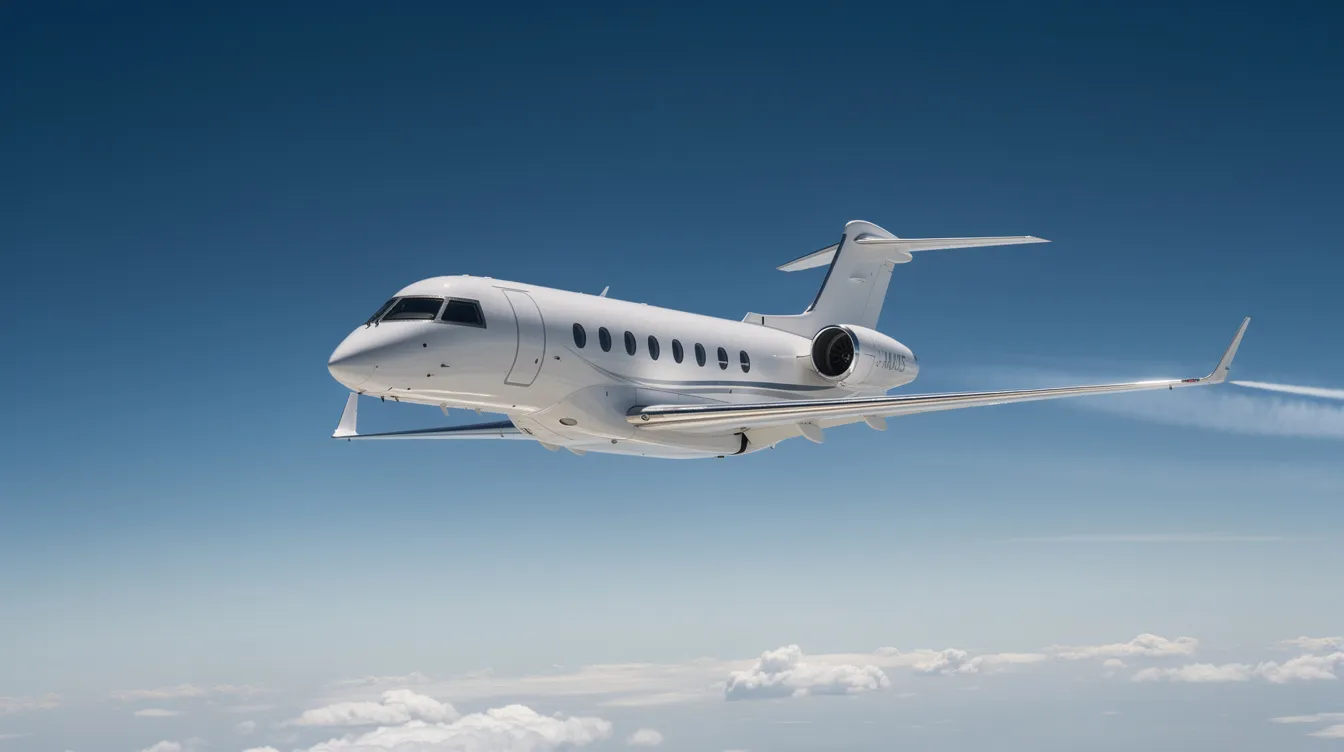
How BlackJet Jet Cards Work for 25-Hour and 50-Hour Programs
If you have never used a jet card, here is the simplest way to think about it. You prepay for flight time, then spend it like a balance.
Choose a 25-hour or 50-hour program based on how much you expect to fly.
Fund your account using Pay-As-You-Fly or Fully-Funded.
Request a quote by app, text, or the Card Owner portal.
Fly on a BlackJet Certified aircraft matched to your trip.
Watch your account draw down by the hours flown at your fixed rate.
Aircraft category access and rate schedules depend on the program you select. The 25-Hour Jet Card reaches all cabin classes, and the 50-Hour Jet Card spans Light through Large Cabin. Pay-As-You-Fly means you fund an initial amount and draw down at contract rates as you fly. Fully-Funded means you pay the full program amount up front for maximum price stability. Neither is automatically cheaper; the choice is really about cash flow versus locked predictability.
BlackJet coordinates flights using vetted FAA Part 135 operators in the U.S. and EASA operators in Europe, rather than claiming to own a fleet. That procurement model is how one account can match many aircraft types to many trips. Our deeper jet card programs explained guide walks through the structure in more detail.
Fixed hourly rate, defined. A fixed hourly rate is a contract rate per billable flight hour that stays the same for a defined period, which helps you budget private jet travel more predictably than dynamic charter quotes.
Fixed for 12 months refers to the rate schedule lock on the 50 Jet Card. Your per-hour rate holds, though specific trips can still carry pass-through items like deicing, special catering, and certain airport fees. BlackJet states it has collected data from thousands of flights for more than 5,000 Card Owners across over a decade, which is the operating history behind how jet cards work today.
With BlackJet, you choose a 25-hour or 50-hour program, fund your account, then book flights through the app, text, or the Card Owner portal while paying only for the hours flown. That is the entire cycle for a private jet card.
Mechanics | Jet card | On-demand charter |
|---|
Pricing method | Fixed contract hourly rates by cabin | Dynamic quote per trip |
When you pay | Prepaid, drawn down per flight | Per trip, each time |
Rate predictability | High (50 Card locked 12 months) | Varies with market |
Availability handling | Program access, confirm notice | Subject to market supply |
What you see in-app | Quotes, bookings, Safety Report, hours balance | Varies by provider |
BlackJet Jet Card Pricing and What's Included
BlackJet publishes two Pay-As-You-Fly entry points, $50,000 for the 25-hour program and $95,000 for the 50-hour program, plus Fully-Funded options at $225,000 (25-hour) and $450,000 (50-hour). Your actual cost per trip depends on aircraft category, routing, and the billable hour rules in your agreement. That scope note matters, so read figures as published starting points, not final trip totals.
Base hourly rate examples give you a feel for each cabin. The 25 Light Jet Card carries a base hourly rate of $5,484, inclusive of fuel surcharges and Federal Excise Tax. On the 50 Jet Card, the Mid base hourly rate is $8,038, the Super-Mid is $10,384, and the Large Cabin is $13,131, each including fuel surcharge and Federal Excise Tax. These are fixed hourly rates, and the 50 Jet Card schedule is guaranteed fixed for 12 months.
Federal Excise Tax, defined. Federal Excise Tax is a U.S. tax applied to certain air transportation. BlackJet publishes base hourly rate examples that include Federal Excise Tax for specific Jet Card options.
BlackJet publishes Pay-As-You-Fly entry points starting at $50,000 (25-hour) and $95,000 (50-hour), plus base hourly rate examples that can include fuel surcharges and Federal Excise Tax, so you can budget with fewer surprises than trip-by-trip charter. Eligible round-trip flights can earn up to 15% efficiency discounts, though eligibility can vary by itinerary. Cardholders can also switch jet sizes, larger or smaller, at stable fixed rates, which lets you match the aircraft to each trip without renegotiating your pricing structure.
Published Pricing and Rate Examples
Program | Funding option | Published amount | Cabin category | Base hourly rate example | Notes |
|---|
25-Hour | Pay-As-You-Fly | $50,000 | Light | $5,484 | Includes fuel surcharge + FET |
25-Hour | Fully-Funded | $225,000 | All cabin classes | Varies by cabin | Price stability |
50-Hour | Pay-As-You-Fly | $95,000 | Mid | $8,038 | Includes fuel surcharge + FET |
50-Hour | Pay-As-You-Fly | $95,000 | Super-Mid | $10,384 | Includes fuel surcharge + FET |
50-Hour | Pay-As-You-Fly | $95,000 | Large Cabin | $13,131 | Includes fuel surcharge + FET |
50-Hour | Fully-Funded | $450,000 | Light to Large Cabin | Varies by cabin | Maximum price stability |
Always confirm current terms and billable hour rules in your Jet Card Agreement. |
Included Versus May-Be-Additional Costs
Typically included in published base rate examples | May be billed separately depending on trip |
|---|
Base hourly flight time at your contract rate | Winter deicing |
Fuel surcharge (per published rate examples) | Special or premium catering |
Federal Excise Tax (per published rate examples) | Certain airport and FBO fees |
Complimentary Wi-Fi on elite aircraft | International handling and customs costs |
Standard crew costs | Repositioning on certain non-standard itineraries |
Access to the app, portal, and 24/7 support | Pet fees or special cabin configuration requests |
Two quick examples show how this plays out. A January departure from a snowy airport may add deicing, and a request for premium catering adds a line item. For more depth, see our jet card pricing guide or the detailed breakdown of 50-hour jet card costs. The jet card pricing minimum buy-in starts at $50,000, and the jet card cost per hour depends on the cabin you choose.
How to Book a Flight With BlackJet
Booking is built to feel quick and controllable. Here is the process from request to departure.
Open the BlackJet app or send a text with your trip details.
Enter departure and destination airports, date and time window, and passenger count.
Pick a cabin category or ask for options across categories.
Review your quote and aircraft details, then approve the trip.
Receive your itinerary confirmation in the app or Card Owner portal.
Check the pre-flight BlackJet Certified Safety Report for real-time status on safety checks.
Arrive at the FBO at the time your trip confirmation specifies and board.
You can book a private jet through the BlackJet mobile app on iOS and Android, request quotes and confirm by text message, or manage everything in the Card Owner web platform at app.blackjet.com. A client management team provides 24/7 support, with live chat available in the app. Complimentary Wi-Fi is offered at all times on elite aircraft, so you stay connected in flight.
BlackJet Certified Safety Report, defined. A BlackJet Certified Safety Report is a pre-flight report in the BlackJet app that shows when the aircraft has completed key safety checks and documents certification status for the specific trip.
BlackJet Jet Card Owners can request a quote and book through the BlackJet app, by text message, or inside the Card Owner portal, and they can view a pre-flight Safety Report before departure. Private jet travel through a private jet card usually means faster arrival timing than commercial flights, though your confirmation will state the recommended arrival window for your airport. Our full flight booking guide covers edge cases like multi-leg trips.
What You Need to Book
Information | Required or optional | Why it matters |
|---|
Departure and destination airports | Required | Sets routing and aircraft range |
Date and time window | Required | Confirms availability and crew |
Passenger count | Required | Sizes the cabin |
Cabin category preference | Optional | Matches comfort and budget |
Pets, catering, ground transport | Optional | Prepares trip details in advance |
Baggage needs | Optional | Confirms aircraft fit |
Availability, Lead Times, Peak Days, and Guaranteed Access
Availability depends on notice, aircraft category, and peak periods, but a jet card can improve predictability compared to on-demand charter. The honest answer to "will a plane be there when I need it" starts with the notice window you give.
Several factors drive jet card availability. Holidays and major events compress supply, short-notice requests are harder to fill, and some airports have runway limits or slot restrictions. International trips add permit and slot lead times. Jet card programs typically manage peak days through required notice windows, category substitutions, and specific booking rules, so confirm peak-day rules in your agreement rather than assuming any fixed outcome.
Peak days, defined. Peak days are high-demand travel dates, often around holidays and major events, when private aviation availability tightens and many providers apply special booking rules.
BlackJet materials describe guaranteed availability during peak demand, and the practical meaning rests on the required notice window and any exception clauses. Program terms apply, so confirm the notice you must give. The Large Cabin Jet Card provides guaranteed, extended access to key EU destinations including Rome, Paris, Milan, and Frankfurt, with fixed guaranteed rates for domestic U.S. travel and flights to Europe, where itinerary and operational constraints still apply. London also serves as a hub for onward European travel.
An NBAA market outlook describes the business jet market as poised for sustained recovery, which helps explain why peak dates fill fast and why aircraft availability tightens on popular weekends. When a jet card advertises guaranteed availability, the real question is the required notice window. Confirm peak-day lead times, substitution rules, and any exception clauses in the Jet Card Agreement. If you need a flight urgently, contact support, stay flexible on airports, accept a category upgrade or downgrade, and ask about one-way options and empty-leg repositioning that can open last-minute capacity. See how pricing shifts on returns in our guide to jet card round trips.
Availability Rules to Confirm
Rule | What it means | What to ask BlackJet to confirm in writing |
|---|
Standard days lead time | Typical notice for normal dates | Minimum notice window for standard bookings |
Peak days lead time | Longer notice around holidays and events | Required notice and the peak-date calendar |
Blackout dates | Dates with limited or no standard access | Whether any blackout dates apply to your program |
Category substitution | When a different cabin may be offered | How substitutions and pricing are handled |
International permit lead time | Extra time for overseas permits and slots | Lead times for Europe and other international trips |
Recovery aircraft policy | What happens if your aircraft changes | How recovery aircraft and timing are managed |
Aircraft Categories and How to Choose the Right Cabin
Pick the smallest cabin that comfortably fits passengers, baggage, and range, then upgrade for nonstop range or comfort. That heuristic saves money without sacrificing the trip.
BlackJet groups aircraft into four categories. Light jets seat up to 7 passengers, average 516 mph, and average 1,149 statute miles, enough for New York to Atlanta. Midsize jets seat up to 8, average 463 mph, and reach about 1,790 statute miles, enough for Austin to New York. Super-Midsize jets seat up to 8, average 555 mph, and stretch to roughly 3,950 statute miles, enough for Los Angeles to Boston. Large Cabin jets seat up to 12, average 535 mph, and average 5,100 statute miles, enough for New York to London.
Cabin category, defined. A cabin category groups aircraft with similar passenger capacity, range, and cabin comfort so pricing and availability can be managed consistently in a jet card program.
BlackJet groups aircraft into Light, Midsize, Super-Midsize, and Large Cabin categories, with published averages ranging from up to 7 seats and about 1,149 miles (Light) to up to 12 seats and about 5,100 miles (Large Cabin). Cardholders can switch sizes at stable fixed rates, so match aircraft to each trip rather than buying too big by default. Our rundown of private jet options compares cabins side by side for private jet travel.
Aircraft Category Chooser
Category | Seats | Avg range | Best for | Example aircraft | Example route |
|---|
Light | Up to 7 | ~1,149 mi | Short hops, small groups | Phenom 300, Citation CJ3+, HondaJet | New York to Atlanta |
Midsize | Up to 8 | ~1,790 mi | Longer domestic, more baggage | Citation XLS+, Hawker 800XP, Learjet 75 | Austin to New York |
Super-Midsize | Up to 8 | ~3,950 mi | Coast-to-coast nonstop | Challenger 350, Citation Longitude, Gulfstream G280 | Los Angeles to Boston |
Large Cabin | Up to 12 | ~5,100 mi | Transatlantic, large groups | Gulfstream G650, Global 7500, Falcon 8X | New York to London |
Safety Standards and BlackJet Certified Vetting
Safety in private aviation sits on three layers. The first is regulatory compliance, where the FAA sets the floor under FAA Part 135 in the U.S., and EASA governs European operators. The second is operator quality signals from independent auditors such as ARGUS, Wyvern, and IS-BAO, which review operators beyond the regulatory minimum.
The third layer is BlackJet's own screening. Many providers treat FAA compliance as proof of superior safety, but compliance is the baseline, not the ceiling. BlackJet adds a proprietary process on top of it and documents the result where you can see it.
BlackJet Certified, defined. BlackJet Certified is BlackJet's proprietary vetting process that individually certifies the operator, aircraft, pilot, and the specific flight before it is approved for a Card Owner.
BlackJet Certified is a four-part process. BlackJet states that pilots must meet standards that exceed FAR Part 135 requirements across multiple categories, and each aircraft passes an evaluation of operational history and maintenance reliability plus a detailed inspection before earning certified status. The safety program draws on more than 10 years of proprietary data and over 300 million data points covering aircraft, pilots, airports, and operational details. BlackJet states that fewer than 30% of the more than 575 charter jet operators in the U.S. have passed the certification required to serve its clients.
Operational safeguards run day to day. A dedicated safety operations task force, real-time alerts for pre-flight safety checks, and certified ground transportation support each trip. Governance comes from a Safety Advisory Board that includes former FAA and NTSB leaders working alongside Chief Safety Officer Jake Miller. BlackJet's vetting may review ARGUS, Wyvern, or IS-BAO standards where applicable, rather than claiming every flight carries a single named rating. For broader context on travel-mode data, the Transportation Statistics Annual Report from the U.S. Bureau of Transportation Statistics is the official federal compendium.
BlackJet's safety program adds a proprietary, four-part certification layer (operator, aircraft, pilot, and flight) on top of FAA oversight, and Card Owners can view a pre-flight Safety Report in the app.
Safety Verification Checklist
What to verify | Why it matters | Where BlackJet addresses it |
|---|
Operator certification (FAA Part 135 / EASA) | Legal authority to operate | BlackJet Certified operator vetting |
Aircraft maintenance history | Mechanical reliability | BlackJet Certified aircraft evaluation |
Pilot experience and training | Flight-deck competence | Standards stated to exceed FAR Part 135 |
Third-party audits (ARGUS, Wyvern, IS-BAO) | Independent review | Vetting reviews these where applicable |
Pre-flight safety checks complete | Day-of readiness | In-app Safety Report |
Specific flight review | Route and airport suitability | BlackJet Certified flight certification |
Ground transportation safety | Door-to-door protection | Certified ground transportation |
Real-time status alerts | Transparency before you fly | App alerts and support team |
These safety standards and this approach to operator vetting are what the Safety Report makes visible for each trip.
Payment, Deposits, Billing, and Refund Rules
Deposits and refunds are contract-driven, so here is what to ask and how BlackJet structures common options. The published entry points are $50,000 (25-hour) and $95,000 (50-hour) for Pay-As-You-Fly, with Fully-Funded at $225,000 and $450,000, detailed in the pricing section above.
Pay-As-You-Fly, defined. Pay-As-You-Fly is a jet card structure where you fund an initial amount and flights draw down at contract rates as you fly, rather than paying the full program funding amount up front.
Hours never expire, which eases a common worry for buyers who fear losing unused time. That benefit addresses expiration, not refundability; the two are separate questions. Additional charges can come from late cancellations, peak-day rules, and special services, so confirm those triggers before you book. You can watch your balance through the portal, and our guide shows how to track jet card hours as you fly.
On data security, BlackJet uses industry-standard encryption and firewall technologies to protect personal information and applies secure encryption to data transmitted over the internet. That protects your information; it is not a financial guarantee. Confirm accepted payment options and any deposit protection terms directly with the team, since those sit in your agreement. Jet card refundability is not one-size-fits-all. The Jet Card Agreement controls how unused funds or hours, cancellations, and fees are handled, so you should confirm those terms in writing before you fund a program. For a jet card minimum deposit, a jet card program refund policy, payment options, or deposit protection questions, call 1-866-321-JETS (5387) or email info@blackjet.com.
Refund and Cancellation Questions to Ask
Do unused hours expire? (BlackJet states hours never expire.)
Are unused funds refundable, transferable, or applied to future flights?
Can the card or account be transferred?
Who may use the account, including family, colleagues, and guests?
What are the cancellation windows before fees apply?
How are weather and ATC disruptions handled?
Do peak-day cancellations follow different rules?
How do upgrades and downgrades affect cost?
What costs apply to international changes, permits, and customs?
How are disputes resolved under the agreement?
What happens if a recovery aircraft replaces your assigned aircraft?
Sustainability and Emissions Neutral Flights
Since the beginning of 2021, every flight flown by BlackJet Jet Card Owners is offset to be both carbon and emissions neutral at zero cost to clients. That is the company's stated commitment, applied to private jet travel without a surcharge.
Emissions neutral, as BlackJet uses the term. BlackJet uses "emissions neutral" to describe offsetting that goes beyond carbon dioxide to cover additional aviation warming impacts, stated as 300% of each flight's impact.
BlackJet states that every Jet Card flight is offset at no added cost and that its program targets emissions neutrality by offsetting 300% of a flight's impact, not CO2 alone. The claim covers CO2, which is about one-third of aviation emissions, plus water vapor, aerosols, and nitrous oxide. BlackJet has referenced slightly different sustainability start dates across its materials, so confirm the current wording when you review your agreement. Sustainability and cost predictability tend to sit together as decision factors, which is why many buyers also read our breakdown of the cost to fly private.
Carbon neutral | Emissions neutral (BlackJet's term) |
|---|
Offsets CO2 only, roughly one-third of aviation's warming impact | Offsets 300% of each flight's impact, covering CO2 plus water vapor, aerosols, and nitrous oxide |
Jet Card vs On-Demand Charter vs Fractional vs Ownership
If you fly privately a handful of times per year, a jet card may be ideal. If you fly rarely, on-demand charter can be simpler because you only pay when you go.
The four models differ on payment timing, predictability, commitment, availability handling, and operational control. A jet card gives private jet charter access with fixed rates (the 50 Card locks rates for 12 months), hours that never expire, app and text booking, and the BlackJet Certified safety process, which reduces friction compared with shopping each trip on the open market. Published base hourly rate examples run from $5,484 to $13,131 depending on cabin, a spread that shows why cabin selection drives your real jet card cost. For comparison, NetJets and Sentient Jet operate in the same category, and our guide to fractional ownership covers the share-purchase route.
Fractional ownership, defined. Fractional ownership is purchasing a share of an aircraft program with ongoing management fees, typically trading flexibility for a higher long-term commitment than a jet card.
Three quick scenarios help you self-select. A predictable-route frequent traveler gains most from rate stability and fast rebooking. An occasional traveler who flies once or twice a year may prefer on-demand charter over a prepaid commitment. A multi-user business account with varying aircraft needs benefits from category switching and centralized tracking across travelers.
A jet card is usually best for people who want private jet access with predictable contract rates, while on-demand charter is best when you want flexibility without pre-funding travel.
Decision Matrix
Factor | Jet card | On-demand charter | Fractional | Ownership |
|---|
Upfront capital | Moderate prepaid (from $50,000) | None, pay per trip | High (buy a share) | Highest (buy aircraft) |
Hourly predictability | Fixed contract rates | Varies per quote | Set rates plus fees | Variable operating costs |
Availability approach | Program access, confirm notice | Subject to market | Guaranteed with notice | Your own aircraft |
Ideal usage frequency | ~25 to 100+ hours/year | A few trips/year | 50 to 400 hours/year | 200+ hours/year |
Administrative effort | Low | Low per trip, more shopping | Medium | High |
Hours expiration policy | Hours never expire | Not applicable | Varies by contract | Not applicable |
Is a BlackJet Jet Card Right for You
You will likely benefit if several of these describe you:
You fly recurring routes and want rate stability.
You manage a multi-traveler or business account.
You want fixed hourly rates and simpler peak-day planning.
You value app and text booking with 24/7 support.
You travel to Europe and want Large Cabin access to cities like Rome and Paris.
You want purchased hours that never expire.
Consider alternatives if:
You fly privately only once or twice a year.
You prefer paying per trip with no prepaid commitment.
You fly enough to justify fractional or whole-aircraft ownership.
Minimum buy-in, defined. Minimum buy-in is the smallest initial funding amount required to start a jet card program.
If you are comparing the best private jet card for 25 hours of prepaid flight time, the 25-Hour program is the natural starting point, with published starting funding of $50,000 (Pay-As-You-Fly), while the 50-hour program starts at $95,000. If you want predictable private jet travel costs and simpler peak-day planning, a BlackJet jet card can be a strong fit, especially if you expect to fly enough hours annually to benefit from fixed rates. Compare the full picture in our guide to 25-hour card costs, then download the app, request a quote, or call 1-866-321-JETS (5387).
Frequently Asked Questions
What is a BlackJet jet card?
A BlackJet jet card is a prepaid private aviation program that lets you book BlackJet Certified aircraft at fixed hourly rates, with hours that never expire.
Funding: choose a 25-hour or 50-hour program, then Pay-As-You-Fly or Fully-Funded.
Booking: request and confirm trips by app, text, or the Card Owner portal.
Fixed for 12 months: the 50 Jet Card hourly rate schedule stays locked for a year.
What is the minimum deposit for a BlackJet jet card?
BlackJet publishes Pay-As-You-Fly entry points starting at $50,000 for its 25-hour program and $95,000 for its 50-hour program. Fully-Funded options are available at $225,000 (25-hour) and $450,000 (50-hour) for travelers who want maximum price stability. Your total trip cost still depends on cabin category, routing, and the billable hour rules in your Jet Card Agreement.
Do BlackJet Jet Card hours expire?
No, BlackJet Jet Card hours never expire. That means you can use your purchased time on your schedule rather than racing a calendar deadline, which removes the end-of-term pressure found in some programs. You can monitor your balance anytime through the Card Owner portal and the app so you always know how many hours remain.
Does BlackJet offer fixed hourly rates?
Yes, BlackJet publishes fixed base hourly rate examples by cabin category, and its 50 Jet Card rates are guaranteed fixed for 12 months. Published examples include the 25 Light at $5,484, the 50 Mid at $8,038, the 50 Super-Mid at $10,384, and the 50 Large Cabin at $13,131, each including fuel surcharge and Federal Excise Tax. Trip-specific items like deicing or special catering may still apply.
What is included in BlackJet jet card pricing?
BlackJet publishes base hourly rate examples that can include fuel surcharges and Federal Excise Tax, but some trip-specific items may still be billed separately depending on your itinerary. Winter deicing is one example that can add a line item, and premium catering is another. Review the included-versus-additional table above and confirm the specifics in your agreement before you book.
How do I book a flight with BlackJet?
You can book through the BlackJet mobile app, request quotes and book by text message, or manage bookings in the Card Owner portal. Provide your departure and destination airports, date and time window, passenger count, and any cabin, pet, catering, or ground transport needs. A 24/7 team supports you, and you can view a pre-flight Safety Report before departure.
Are jet card programs refundable?
Refundability depends on the Jet Card Agreement, so the only reliable answer is what your specific contract states about unused funds, hours, and cancellations. Before you fund any program, confirm in writing how unused funds and hours, cancellation windows, and fees are handled. Use the refund and cancellation checklist above as your script, and get the answers documented rather than verbal.
How does BlackJet vet operators and aircraft for safety?
BlackJet uses BlackJet Certified, a four-part vetting process that individually certifies the operator, aircraft, pilot, and each flight, supported by real-time pre-flight reporting in the app. Governance comes from a Safety Advisory Board that includes former FAA and NTSB leaders, and the safety program draws on more than 300 million data points gathered over a decade of operations.
The Bottom Line on BlackJet Jet Cards
A BlackJet jet card turns private jet travel into a predictable, prepaid program, with fixed hourly rates, hours that never expire, app and text booking, and a documented BlackJet Certified safety workflow. Pricing starts at published entry points of $50,000 (25-hour) and $95,000 (50-hour), and the 50 Jet Card locks rates for 12 months. Refundability always sits in the Jet Card Agreement, so confirm those terms in writing first.
Compare 25-hour versus 50-hour options and get a BlackJet quote in minutes. Call 1-866-321-JETS (5387) or email info@blackjet.com. If you are ready to book, use the BlackJet mobile app for instant trip requests and real-time safety status, or get an accurate quote to start. Not sure which cabin fits? Ask for a side-by-side quote for Light versus Midsize.
References
Transportation Statistics Annual Report 2025 - U.S. Bureau of Transportation Statistics, cited for macro U.S. transportation and aviation data context.
NBAA: Business Jet Market Poised for Sustained Recovery - cited for business aviation demand context behind peak-day availability.


 Sign up with google
 Sign up with Apple