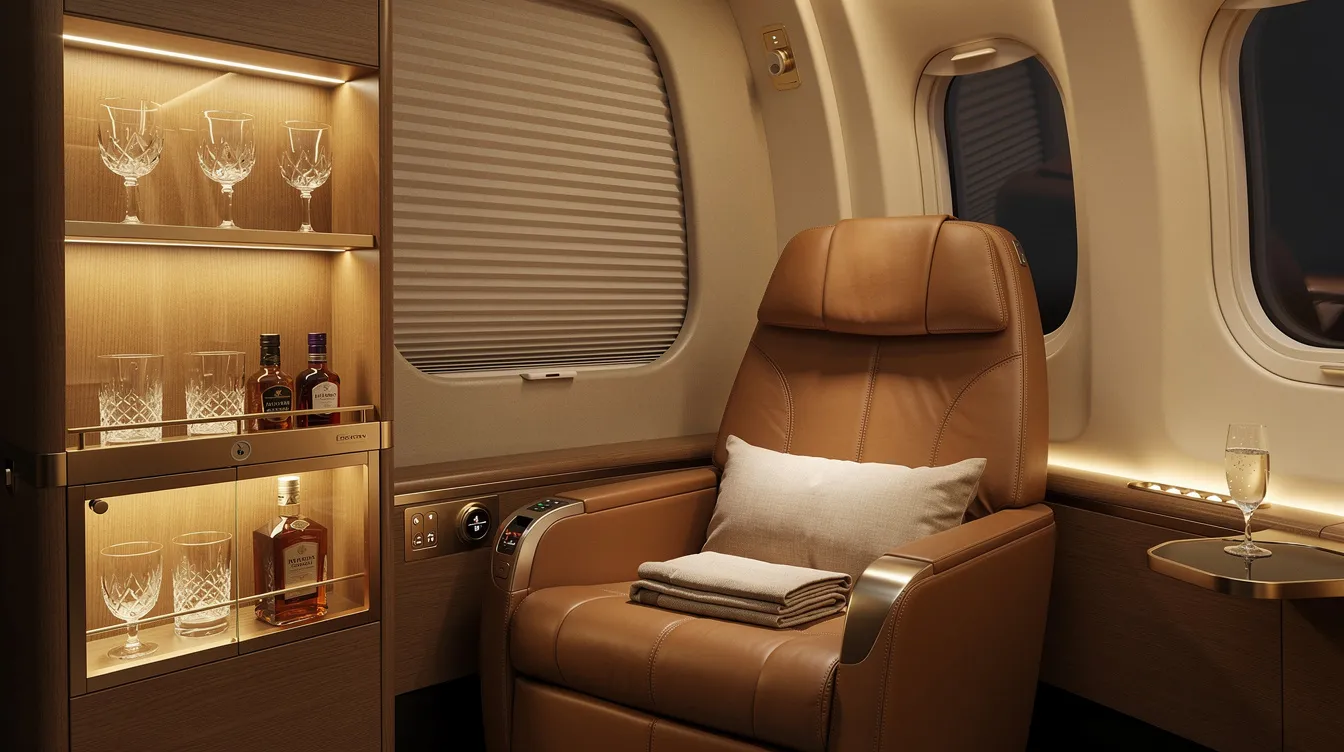
Only about 10 to 12 airlines worldwide still operate a true international first-class cabin, and that number shrinks each year. For travelers who demand the absolute top tier, the best first-class seats in 2026 are a short list led by Emirates’ 777-300ER “Game Changer,” Singapore Airlines’ A380 Suites, Air France La Première, Japan Airlines’ A350-1000 first class, and ANA’s “The Suite” on the 777-300ER. This guide is built for frequent business travelers and high-net-worth leisure flyers comparing luxury, privacy, safety, flexibility, and whether commercial first class still beats the convenience of private aviation. It breaks down the leading suites worldwide, how first class has evolved, where they outperform business class, how they compare with private jets, and what you actually get on the ground in service, transfers, and airport access. Those differences matter because first class is now rare, expensive, and inconsistent: the gap between products can be huge in privacy, bed comfort, screen size, dining, and 1:1 service, and for some travelers the better answer may be a BlackJet Jet Card program that removes the limits of commercial schedules altogether.
Quick Answer: What Is the Best First Class Seat in 2026?
The standout first-class seats in 2026 are the Emirates 777-300ER "Game Changer" first-class suite, Singapore Airlines A380 Suites, Air France La Première on the Boeing 777-300ER, Japan Airlines A350-1000 first class, and ANA "The Suite" on the 777-300ER. Each product occupies its own niche, and each one turns a first-class ticket into a materially different experience from business class, but all share a core set of traits that separate them from business class and older first-class products.
What makes a first-class seat qualify as "best" in 2026, and what class means at this level of travel, comes down to these traits:
A fully enclosed suite with doors that create a private cabin within the aircraft
A lie-flat bed, wide and long enough to sleep comfortably (40+ inches wide, 80+ inches long)
A screen measuring 30 inches or larger with 4K resolution
Onboard service with staff-to-passenger ratios of 1:1 or better, curated by Michelin-starred or equivalent chefs
A ground experience that includes chauffeur transfers, private check-in, and a dedicated first-class lounge
For travelers who want total privacy, schedule control, and zero dependence on airline seat maps, BlackJet private aviation sits above all of these; no suite doors needed when the entire aircraft is yours.
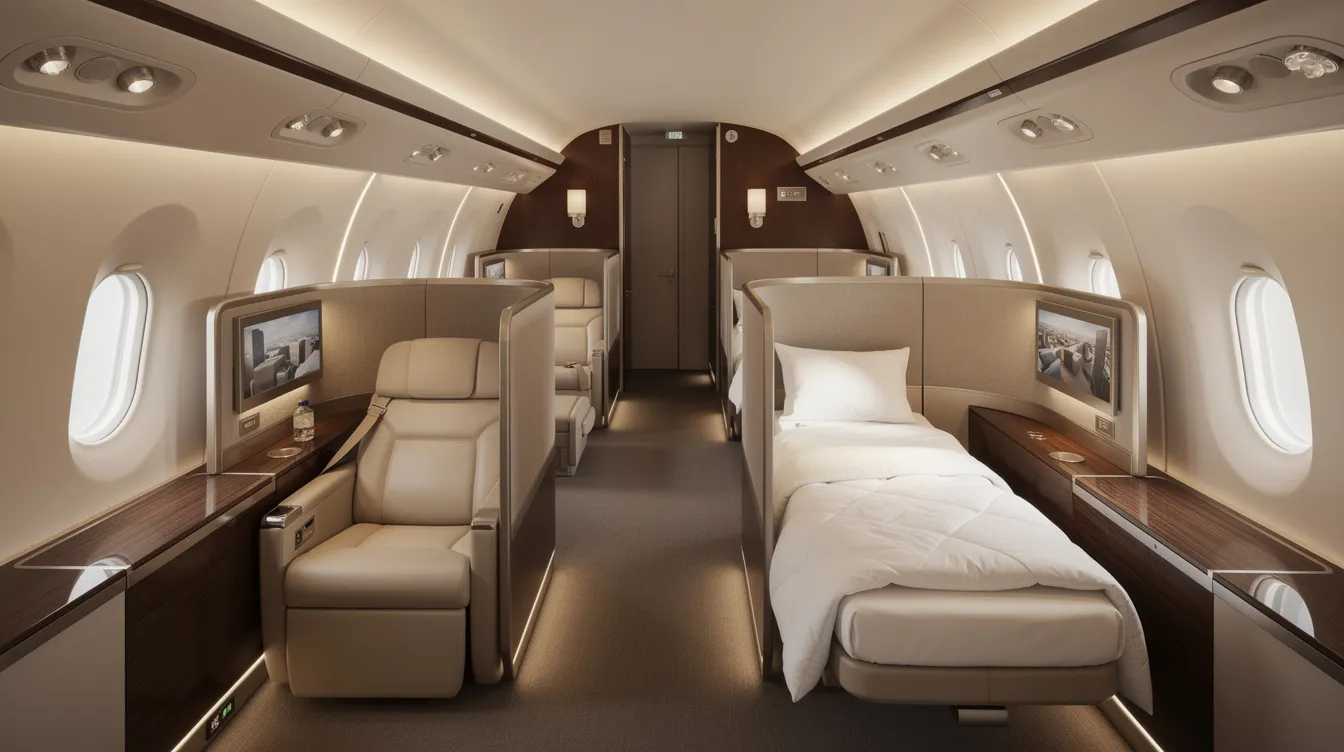
How First Class Seats Evolved: From Bigger Chairs to Private Suites
In the 1990s, first class meant a wider recliner with more leg room and better food. By the early 2000s, lie-flat seats arrived, and the gap between first and business class widened. The real inflection came after 2010, when airlines like Emirates, Singapore Airlines, and Etihad began installing fully enclosed suites with doors, turning the first-class section into something that resembles a row of private boutique hotel rooms.
That evolution had a side effect. Business class absorbed many traditional first-class perks: lie-flat beds, direct aisle access, and multi-course meal service. Several airlines, especially U.S. and European carriers, responded by removing international first class entirely. Delta Air Lines, for example, markets its top long-haul product as Delta One, a business class suite. American Airlines retains a Flagship First product on select routes, but it lacks the enclosed suites found on leading Asian and Middle Eastern carriers.
The concept of class suites now defines the frontier. Products like Qatar Airways Qsuite brought suite-style seating to business class cabins, while first-class products on Emirates, ANA, and JAL pushed further with floor-to-ceiling walls, separate beds, and private minibars. International first-class airline options in 2026 provide private suites that resemble five-star hotel rooms. The result: fewer airlines offer first class, but the ones that remain have raised the bar far beyond what existed a decade ago.
What Makes a First Class Seat Truly "Best" Today?
Evaluating a first-class product requires separating two categories: hard product and soft product.
Hard product covers every fixed physical element of the seat and cabin:
Suite dimensions (width, length, wall height, door presence)
Bed size and mattress quality
Screen size and resolution (the JAL A350-1000 carries a 43-inch 4K display; Emirates offers a 32-inch HD screen)
Cabin layout (1-1-1 vs 1-2-1) and total seat count (fewer seats mean more space and exclusivity)
Onboard amenities like showers (Emirates and Etihad on Airbus A380 flights) or personal minibars
Soft product covers everything that can vary flight to flight:
Food and wine (global carriers use dine-on-demand frameworks with high-end caviar and vintage champagne)
Amenity kits, pajamas, and bedding
Crew attentiveness and service consistency
Ground experience: lounge access, chauffeur service, priority boarding
First class offers higher staff-to-passenger ratios than business class, often reaching 1:1 on carriers like Singapore Airlines and ANA. First-class passengers enjoy gourmet meals designed by renowned chefs, and the best products fly on flagship widebody aircraft: the Boeing 777-300ER, Airbus A380, and select A350-900 and A350-1000 jets. These criteria will guide every airline-specific section below.
Emirates 777-300ER "Game Changer" First Class Suite
Emirates first class on the "Game Changer" Boeing 777-300ER features fully enclosed suites with doors that run floor to ceiling. Six suites occupy the first-class cabin in a 1-1-1 layout, each offering roughly 40 square feet of personal space.
Standout hard product features include a zero-gravity seat mode, individual climate and lighting controls, a 32-inch HD screen, and a personal minibar. Interior suites get virtual windows that project a real-time camera feed of the view outside. Emirates offers unlimited caviar in its first-class dining experience, paired with Dom Pérignon and other premium labels. The dine-on-demand menu lets first-class passengers eat when they choose rather than on a fixed schedule.
The catch: only nine Boeing 777-300ER aircraft carry this product as of 2026, operating on select Dubai routes to cities like Paris, Geneva, Brussels, London, and Chicago. Aircraft swaps are common, so checking the seat map before booking is essential. Emirates first class also includes an onboard Shower Spa and a private lounge for passengers on the A380, though that is a different (older) first class product.
Cash fares for Emirates first class on long-haul flights typically fall between $8,000 and $25,000 round-trip. Award availability via Emirates Skywards is restricted, and transferring credit card points often yields limited results.
Singapore Airlines A380 Suites: The "Hotel Room in the Sky"
Singapore Airlines Suites on the Airbus A380 are designed as private rooms with separate bed and seat configurations. Each suite provides approximately 50 square feet of personal space, enclosed by sliding French doors and curved walls. Center suites can be joined to create a double-bedded suite spanning roughly 100 square feet, making this the strongest first-class product for couples.
Routes in 2026 connect Singapore to London, Sydney, Tokyo, and selected European and Asian destinations. Singapore Airlines no longer serves the U.S. directly with A380 Suites; travelers from North America connect through Singapore or partner hubs. About 12 A380s remain in service, each carrying six Suites on the upper deck.
Singapore Airlines allows pre-ordering meals through its "Book the Cook" service, which lets first-class passengers select dishes like lobster Thermidor before departure. Premium champagne (often Krug or Dom Pérignon), luxury bedding with a separate bed configuration, and access to The Private Room at Changi Airport round out the experience. Air France and Singapore Airlines ranked highest for first-class onboard catering in 2025.
Cash fares on peak routes like Singapore to London can exceed $15,000 to $20,000 round-trip. Award access is restricted to KrisFlyer miles, with Saver and Advantage pricing tiers and frequent waitlists that make redemptions unpredictable.
Air France La Première on the Boeing 777-300ER
Air France introduced its new first class product in 2025, with a refreshed La Première cabin rolling out across its Boeing 777-300ER fleet. By summer 2026, all JFK and LAX flights from Paris CDG will carry the updated suites, with full network coverage expected by year-end.
The La Première cabin holds only four first-class suites in a single row, arranged 1-2-1. Air France La Première features thick floor-to-ceiling privacy curtains (rather than hard doors) and a personal wardrobe for each passenger. The seat converts into an extra-wide lie-flat bed, and Air France's first class includes two entertainment screens per suite. The understated French styling contrasts with the more technology-forward approach of Emirates or JAL.
Soft product is where Air France La Première excels. Air France collaborates with Michelin-starred chefs for its first-class menu, offering curated French wines and champagne, high-thread-count bedding, and a full meal service that matches the airline's reputation for gastronomy. The ground experience includes private check-in, chauffeur service at CDG, and the La Première lounge.
First-class fares on Air France often range from $8,000 to $25,000 round-trip, depending on route and season. Award access is limited to Flying Blue Platinum elites; one-way redemptions on key routes can require 200,000+ miles.
Japan Airlines A350-1000 First Class
Japan Airlines launched its A350-1000 first class on the Tokyo Haneda to New York JFK route, with expansion to London, Paris, and Dallas/Fort Worth. JAL plans 13 A350-1000 aircraft in total, each configured with six massive first-class suites in a 1-1-1 layout.
Japan Airlines' first class has a 43-inch TV screen, the largest in the sky. Seat width reaches 48 inches; the lie-flat bed extends to 80 inches; and suite walls rise to 62 inches with a closing door for full privacy. Headrest-integrated speakers allow immersive audio without headphones, and wireless charging stations are built into the suite. Japan Airlines offers a 43-inch TV screen in first class alongside Bluetooth connectivity and 4K resolution, setting a new benchmark for in-flight entertainment technology.
Japan Airlines features a dine-on-demand menu with Wagyu beef filet, omakase-style Japanese courses, seasonal kaiseki preparations, and premium sake alongside high-end champagne labels. The service reflects Japan Airlines' tradition of precise, personalized hospitality. For similarly high-touch experiences in private aviation, groups can charter the best private jets for around 15 passengers on long-haul routes.
Booking options include JAL Mileage Bank and oneworld partner programs like American AAdvantage and British Airways Executive Club. Sample one-way fares on the A350-1000, such as Haneda to Dallas/Fort Worth, have been observed around $14,000 in early 2025. First-class tickets can exceed $10,000 for long-haul flights on this route and others.
ANA "The Suite" First Class on the 777-300ER
All Nippon Airways' "The Suite" is an enclosed first-class suite with full-height doors on refurbished Boeing 777-300ER aircraft. ANA The Suite features a fully flat bed and high-end entertainment technology, including a 42-inch 4K screen, a large dining table, and a separate seat and bed space.
Routes where The Suite appears most consistently include Tokyo Haneda to New York JFK, London Heathrow, and select Frankfurt and West Coast U.S. routes. Checking the seat map before purchase is necessary; not all ANA 777-300ERs carry the updated product.
The soft product centers on a choice of Japanese or Western tasting menus, Krug champagne, tailored amenity kits, and complimentary Wi-Fi on many international flights. Nippon Airways first class service is consistently polished, with the same staff-to-passenger attention that defines JAL's offering.
ANA Mileage Club requires round-trip bookings for many award redemptions, which can complicate planning. Star Alliance programs offer one-way alternatives: Air Canada Aeroplan, United MileagePlus, and Virgin Atlantic Flying Club are popular options. Round-trip transpacific awards through ANA's own program often price between 120,000 and 150,000 miles.
Cathay Pacific First Class on the Boeing 777-300ER
Cathay Pacific first class occupies a spacious open suite (no door) in a 1-1-1 layout on its legacy four-class Boeing 777-300ER aircraft. Seat width is 36 inches, and the bed extends to 81 inches. The class product is generous on surface space and storage, with high-thread-count bedding and a window seat configuration that provides solid privacy despite the absence of a door.
The ground experience sets Cathay Pacific apart. Large groups comparing premium cabins with charter can also look at the best private jet options for 20 passengers when a single aircraft replaces multiple first-class tickets. The Pier First Class lounge in Hong Kong offers à la carte dining, spa-like in-flight showers (ground-based at the lounge), private day suites for rest, and quiet workspaces. Cathay Pacific offers a full meal service even on overnight flights, a detail that distinguishes it from some competitors who scale back late-night offerings.
Cathay Pacific's first class historically served key long-haul routes like Hong Kong to London and New York. The footprint is shrinking: Cathay's newer A350s lack a first-class cabin entirely, and the product is in managed decline as the airline pivots toward upgraded business-class suites. Cathay Pacific Asia Miles remains the primary redemption currency. A new Cathay Pacific first-class product with doors is rumored but unconfirmed as of mid-2026; the current product remains a benchmark for comfort and soft product quality even without an enclosed suite.
Emirates vs Singapore Airlines vs Air France vs ANA vs JAL: Which First Class Seat Is "Best" for You?
Choosing among these products depends on what you prioritize. Leading carriers like Emirates and Japan Airlines lead the industry with enclosed private spaces and cutting-edge technology. Air France and Singapore Airlines ranked highest for first-class onboard catering in 2025.
By traveler priority:
Privacy and technology: Emirates 777-300ER Game Changer; floor-to-ceiling doors, zero-gravity mode, virtual windows. Sample route: Dubai to Chicago.
Couples travel: Singapore Airlines Suites; double-bedded suite with ~100 sq ft of combined space. Sample route: Singapore to London on the A380.
Food and ground service: Air France La Première; Michelin-level menus, chauffeur at CDG, the La Première lounge. Sample route: Paris CDG to New York JFK.
Japanese hospitality and newest hard product: JAL A350-1000; 43-inch screen, 48-inch-wide seat, omakase menus. Sample route: Tokyo Haneda to New York JFK.
Japanese hospitality with proven consistency: ANA The Suite; Krug champagne, enclosed suite, strong award redemption options. Sample route: Tokyo Haneda to New York JFK on the 777-300ER.
No single first-class experience is created equal. First class varies considerably by aircraft and route, affecting experience and amenities. A traveler who values over-the-top culinary artistry will choose Air France; one who wants the newest screens and widest seat will choose JAL.
Domestic First Class vs Long-Haul International First Class
Terminology causes confusion. In the U.S., "first class" on a narrow-body domestic flight is a recliner seat with roughly 38 inches of pitch, free drinks, and a modest meal. Domestic first class on American Airlines, Delta Air Lines, or United is closer to premium economy on international carriers. The aisle seat in domestic first class provides no more privacy than an exit row in economy.
Long-haul international first class is a different class product entirely. First-class cabins on widebodies feature lie-flat seats, suites with doors, multi-course dining, and personal space measured in square feet rather than inches. The gap between domestic first class and international first class is comparable to the gap between a business hotel and a five-star resort.
For frequent U.S. travelers seeking consistent privacy, schedule control, and productivity on domestic flights, private aviation through a Jet Card solves the core problem that domestic first class cannot: guaranteed private cabin access, FBO terminals instead of crowded airports, and departure times set by the traveler rather than the airline. Travelers comparing options should understand jet card cost and membership pricing to evaluate whether a program aligns with their flight hours and budget.
Inside a First Class Cabin: Seat Types, Layouts, and Amenities
First-class seats in 2026 span several categories:
Recliner: Standard domestic first class; reclines 5-8 inches, no flat position
Angled lie flat: Older international business class; the seat surface angles downward when reclined, creating a slope
Fully flat bed: The baseline for modern long haul first and business class; the seat converts to a level sleeping surface
Open suite: A lie-flat bed with privacy walls but no door (e.g., Cathay Pacific first class)
Enclosed suite with door: First-class suites often feature fully enclosed privacy doors (Emirates Game Changer, ANA The Suite, JAL A350-1000)
Room-style suite: A private cabin with a separate seat and separate bed, sometimes including a private bathroom (Singapore Airlines A380 Suites, Etihad First Class Apartment)
Common cabin layouts on widebodies use 1-1-1 or 1-2-1 configurations. A window seat in a 1-1-1 layout provides more space and natural light; center suites in a 1-2-1 layout can often be joined for couples. First-class cabins feature lie-flat seats for maximum comfort, and the best products include 30- to 43-inch screens, designer pajamas, customizable dining, and dedicated first-class lavatories. On the A380, Emirates and Etihad add onboard shower facilities. Travelers comparing commercial first class with private aviation can choose among different types of private jets for every traveler, matching cabin size and range to their typical mission profile.
Best First Class Seats on Specific Aircraft (777-300ER, A380, A350, and More)
Boeing 777-300ER
The 777-300ER hosts the widest variety of first-class products. Emirates Game Changer (six fully enclosed suites), Air France La Première (four suites in a single row), Cathay Pacific First Class (six open suites), and ANA The Suite (eight enclosed suites) all operate on this airframe. Not all 777-300ERs carry first class; many airlines configure them with business class as the top cabin. Always verify the seat map and class section before purchasing.
Airbus A380
Singapore Airlines Suites occupy the upper deck with six room-style first-class suites. Emirates A380 first class offers 14 suites on the front upper deck, plus in-flight showers and an onboard lounge. Etihad's first class on the A380 includes onboard showers and, at the top end, The Residence: a three-room class apartment with a living room, bedroom, and en-suite private bathroom priced around $24,000 one-way from New York to Abu Dhabi.
A350-900 and A350-1000
JAL's A350-1000 carries its six-suite first class with the 43-inch screen. Swiss Senses first class on the A350-900 offers just three enclosed suites per aircraft with 32-inch 4K QLED screens. Lufthansa Allegris first class on the A350-900 features a center double suite that reviewers have called one of the strongest hard products globally. Many A350s in service carry only business class cabins as the top tier. When traveler counts rise further, private jets configured for up to 50 passengers become a logical alternative to trying to book an entire first-class cabin.
First Class vs Business Class vs Private Jet: What Actually Changes?
Modern business class suites have closed the gap with older first class products. Qatar Airways Qsuite, ANA The Room, and Delta One Suites all offer enclosed seating, lie-flat beds, and direct aisle access. Flying business class on these products delivers 80% of a traditional first-class experience at roughly 40-60% of the fare.
Where first and business class still differ: first class offers even more space (often 40-50 sq ft vs 20-25 sq ft per seat), smaller class cabins with fewer class passengers (six vs thirty or more), better champagne and caviar, and higher staff-to-passenger ratios. Business class often features lie-flat seats at a lower cost, but first-class meals are often designed by renowned chefs and served on porcelain with proper stemware.
Private aviation sits in a different category entirely. A private jet eliminates the seat hierarchy altogether. Travelers use FBO private terminals, arrive 15-30 minutes before departure, and save 1.5 to 2.5 hours per leg compared to commercial first class, while services like BlackJet premium private jet cards and programs give structured access to that experience without full aircraft ownership. There are no boarding processes to navigate, no layovers, and no dependency on aircraft swaps. The whole cabin is a private cabin, configured for the trip rather than the class.
Ground Experience: Lounges, Transfers, and Time Saved
The best first-class seat extends beyond the aircraft. First-class passengers enjoy priority check-in and boarding processes, exclusive lounge access with complimentary meals, and chauffeur transfers on select airlines.
Concrete examples:
Air France La Première: Private check-in at CDG, chauffeur service to and from the aircraft, and a dedicated La Première first-class lounge with champagne and fine dining
Lufthansa First Class: Extraordinary ground services via the Frankfurt First Class Terminal, a standalone building with private security, dining, and direct car transfer to the aircraft. Lufthansa's Frankfurt First Class Lounge was ranked #1 by Skytrax in 2025
Emirates and Qatar Airways: First class lounges with spa treatments, a la carte dining, business centers, and cigar bars
Singapore Airlines: The Private Room at Changi for first-class and Suites passengers, with à la carte dining separate from the main lounge
Ground services for premium international flyers include private airport terminals at select hubs. BlackJet's FBO model compresses this further: direct vehicle-to-aircraft boarding, no security lines, and 60-90 minutes saved on each end of the trip. For travelers who measure a journey from front door to final destination, the ground experience often matters as much as the seat itself.
Safety and Sustainability: First Class Cabin vs Private Aviation
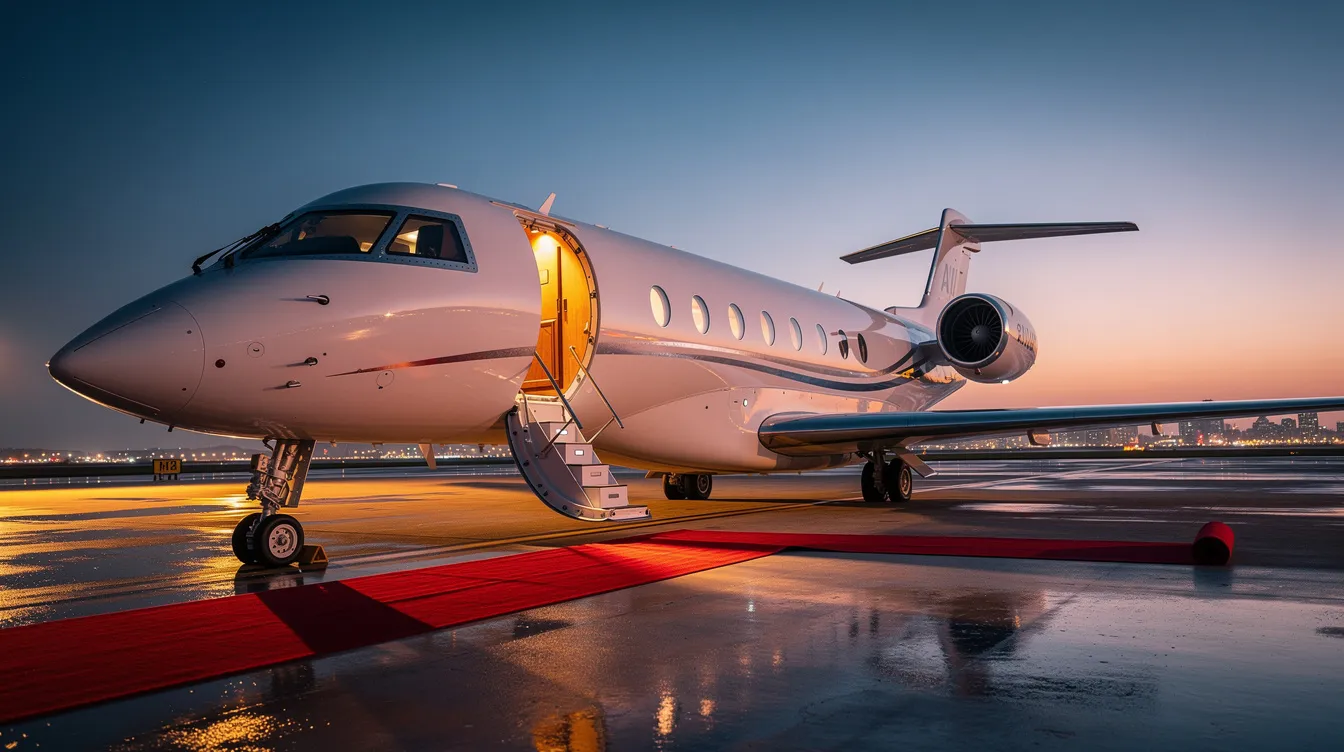
International first class on major airlines meets strict ICAO, FAA, and EASA safety requirements. These standards cover airframe maintenance, pilot training, and operational oversight.
BlackJet's safety approach mirrors these standards through a different structure. BlackJet partners only with vetted FAA Part 135 operators who meet or exceed top third-party certifications such as ARG/US and Wyvern, reflecting the broader reality that private jets are highly safe when properly operated. Ongoing audits of pilot hours, maintenance records, and operational compliance ensure that BlackJet Certified flights match commercial-grade safety expectations.
On environmental impact: per-passenger emissions in first class run roughly two to three times higher than in economy due to the space each seat occupies. Private jets produce more emissions per passenger-mile on average, though load factor and aircraft type create wide variation. Modern private jets with optimized routing and Sustainable Aviation Fuel (SAF) narrow the gap. BlackJet provides carbon-neutral flights by default at no extra cost, using verified carbon offsets and supporting SAF adoption to help travelers balance premium experiences with environmental responsibility, even when they opt for the most affordable private jet options or entry-level aircraft.
Cost Considerations: When First Class Is Worth It, and When to Go Private
Long-haul international first-class fares typically range from $8,000 to $25,000+ round-trip on routes like New York to Dubai, London to Singapore, or Paris to Los Angeles. First-class tickets can exceed $10,000 for long-haul flights even on discounted fares, and holiday or business peaks push prices higher. Etihad first-class apartment fares on the A380 have been observed near $24,000 one-way, a price point where some corporate and VIP groups instead evaluate charter plane options and costs for 100 passengers on dedicated aircraft.
First class makes financial sense in specific cases:
Solo luxury travel on iconic routes where the experience itself is the goal
Leveraging airline miles and credit card points for outsized redemption value (e.g., 120,000-150,000 ANA miles for a transpacific round-trip)
Special occasions where the ground experience and onboard service justify the premium
For groups of 4-8 travelers, chartering or using a Jet Card on a midsize or large-cabin private jet often reaches cost parity with commercial first class on a per-person basis, especially when you analyze jet card cost per flight hour across different aircraft categories. A 25-hour Jet Card offers fixed hourly rates with no peak-day surcharges, no hidden fees, and no expiration on hours, and programs like the BlackJet 25+ Hour Jet Card extend this model to multiple cabin sizes with inclusive amenities. For frequent business travelers or families with multiple homes, the predictability and time savings compound across every trip.
How BlackJet Jet Cards Turn Every Trip into a "Best Seat on the Plane"
BlackJet's Jet Card programs, available in configurations like 25-hour and 50-hour cards, give prepaid access to private jets across multiple cabin categories. Understanding jet card pricing structures and benefits helps frequent flyers decide whether this model offers better value than pay-as-you-go charter. Instead of studying award availability or worrying about aircraft swaps, cardholders choose the aircraft size that fits each trip and book through BlackJet's digital platform with 24/7 real-time support.
Scenario 1: A New York-based executive flies to London four times per year. For similar transatlantic missions or shorter hops, many travelers start by exploring the cost to charter a small private plane before committing to a longer-term program. On commercial first class, each trip involves 90 minutes of ground time at JFK, potential delays at Heathrow immigration, and dependence on airline schedules. With a BlackJet Jet Card, they depart from a private FBO terminal, set their own departure time, and arrive at a London-area FBO with car service waiting on the tarmac.
Scenario 2: A family of five plans a multi-stop U.S. holiday: New York to Aspen, then Aspen to Miami. Similar multi-leg itineraries also drive demand for regional charter solutions, such as private jet charters in markets like Karachi, where tailored routing and airport access can be just as important as the onboard cabin itself. Commercial first class would require two separate bookings, layovers, and five first-class fares on each leg. A single midsize jet handles both legs on the family's schedule, with luggage loaded once.
With BlackJet, travelers always have a first-class suite. No upgrades to clear, no seat maps to study, no back row assignments. The whole cabin is theirs.
Comparing Seat Categories Across Aviation: Economy, Business Class, First Class, and Private
A quick reference across commercial tiers and private aviation:
Category | Seat Type | Privacy Level | Typical Service |
|---|
Economy | Fixed recline, 31-32" pitch | Minimal; shared armrests | Buy-on-board or basic meal |
Premium Economy | Wider recline, 38" pitch, more space | Low; open cabin | Upgraded meal, amenity kit |
Business Class | Lie-flat bed, suite or pod, direct aisle access | Moderate to high | Multi-course meals, lounge access |
First Class | Enclosed suite, separate bed, 40-50 sq ft | High | Chef-designed dining, chauffeur, dedicated lounge |
Private Aviation | Full aircraft cabin | Complete | Custom catering, FBO terminals, flexible scheduling |
Private aviation does not use a "seat" class hierarchy. Instead, aircraft categories (light, midsize, super-midsize, large cabin) are tailored to distance and group size. A traveler choosing between a business class seat and a private jet is comparing two fundamentally different models of travel, not two tiers of the same one, and tools like a comprehensive private jet price list and access model comparison can clarify how charter, ownership, and jet cards stack up against commercial cabins.
FAQ: Best First Class Seats and Private Jet Alternatives
What is currently considered the single best first-class seat in the world? JAL's A350-1000 first class leads on hard product specs (43-inch 4K screen, 48-inch seat width, enclosed suites). Emirates Game Changer and Singapore Airlines A380 Suites are the closest competitors, each excelling in different areas (technology vs couples' space).
Is it better to book business class or first class with points? First-classs redemptions offer more value per point when award availability exists, but that availability is scarce. Business class awards arfirst-class find. The choice depends on the route, the airline, and how far in advance you book.
How does Cathay Pacific First Class compare to ANA or JAL? Cathay Pacific first class uses an open suite without a door, while ANA and JAL both offer enclosed first class suites with full-height curtains. Cathay's soft product (food, bedding, The Pier lounge) remains competitive, but the hard product lags behind 2024-2026 competitors.
Is domestic first class the same as international first class? No. Domestic first class on Delta Air Lines, American Airlines, or United is a recliner seat comparable to premium economy. International first class provides fully enclosed suites, lie-flat beds, and multi-course full meal service.
When does a Jet Card make more sense than airline first class? When you travel more than six to eight times per year in premium cabins, travel with a group, need schedule flexibility, or want consistent privacy on domestic flights where airline first class is a recliner.
Are private jets as safe as flying first class on major airlines? When operated by vetted FAA Part 135 carriers with certifications like ARG/US and Wyvern, private jets meet or exceed commercial safety standards. BlackJet audits every operator for pilot hours, maintenance records, and operational compliance.
Is flying private worse for the environment? Per-passenger emissions are typically higher on private jets than on a full commercial flight. BlackJet addresses this with carbon-neutral flights by default, using verified offsets and supporting SAF adoption at no additional cost to travelers.
Bottom Line: Redefining the Best First Class Seat in the Era of Private Aviation
Emirates, Singapore Airlines, Air France, ANA, Japan Airlines, and Cathay Pacific offer the best first class seats in commercial aviation in 2026. Each delivers an international first-class experience that justifies the fare for the right trip: a honeymoon in Singapore Airlines Suites, a solo culinary journey in Air France La Première, a tech-forward crossing in JAL's A350-1000. These products represent the peak of what commercial aviation can build within the constraints of a shared aircraft.
For travelers who fly premium cabins multiple times per year, the best seat is increasingly not in first class. It is an entire aircraft, departing on your schedule, from a privatefirst-classwith no upgrades to clear and no class cabins to compare. Evaluating the best jet cards for frequent flyers is often the next step once you’ve outgrown even the strongest commercial first-class products. The strategic advantages of private aviation (time saved, complete privacy, flexibility across domestic and international routes) compound with every trip in ways that even the finest first-class cabin cannot match.
Explore how BlackJet Jet Cards can reshape your travel. Whether your next trip is a transatlantic crossing or a two-hour domestic hop, you can compare 100-hour jet card costs for very frequent flyers or even explore how to buy a single seat on a private jet if you're transitioning gradually from commercial first class, and discover what it means to have the best seat on every flight you take.


 Sign up with google
 Sign up with Apple