If you are considering a career as a flight attendant at American Airlines-or simply want to understand the labor economics behind the cabin crew serving your next flight-this guide breaks down exactly what these professionals earn, how their pay is structured, and where the role fits in the broader aviation landscape. This guide is intended for aspiring flight attendants, current airline professionals, and anyone interested in understanding American Airlines' compensation structure.
Overview: How Much Do American Airlines Flight Attendants Really Make?
American Airlines flight attendants are not paid a flat annual salary in the traditional sense. Instead, their pay is tied primarily to flight hours-specifically, the time measured from when an aircraft pushes back from the gate at departure to when it arrives and the brakes are set at the destination. Time spent reporting for duty, boarding passengers before scheduled boarding, handling deplaning, or sitting through ground delays does not count toward those paid flight hours (though new boarding pay provisions are beginning to narrow that gap).
Here are the headline figures from the 2024–2025 contract agreement:
Starting pay for American Airlines flight attendants is $35.82 per flight hour
Flight attendants can earn up to $82.24 per hour after 13 years
New boarding pay at 50% of base rate began April 1, 2025
Retroactive pay covering 2020–2024 was distributed to eligible crew
Annual earnings for senior flight attendants can exceed $100,000
Full-time flight attendants at American Airlines typically work a minimum of 71 to 75 flight hours per month. At the starting rate, new hires typically earn around $30,500 annually at minimum hours-before per diem, premiums, or other add-ons. At the top of the scale, experienced crew members flying international routes with premium assignments can push well past six figures.
Final annual income varies widely based on factors like hours flown, seniority, trip preferences (domestic versus international), and premium add-ons such as holiday pay, language skills, and lead or purser roles. For high-net-worth travelers and professionals evaluating career paths, it is also worth comparing these structured commercial wages with the earning dynamics of private jet cabin crew-where the service model, schedule flexibility, and compensation structure differ significantly.
American Airlines Flight Attendant Pay Scale and 2024–2025 Contract Changes
American Airlines flight attendant pay is governed by a collective bargaining agreement negotiated between the airline and the Association of Professional Flight Attendants (APFA). Union negotiations play a key role in determining flight attendant pay and benefits at American Airlines, and the contract ratified on September 12, 2024, brought the most significant compensation overhaul in years.
The published hourly rates step up with each year of service. Here is a condensed view of the base pay scale:
Years of Service | Oct 2024 Rate | Oct 2025 Rate | Oct 2028 Rate |
|---|
1 (new hire) | $35.82/hr | $36.81/hr | $40.42/hr |
3 | $40.40/hr | $41.51/hr | $45.58/hr |
5 | $47.39/hr | $48.69/hr | $53.46/hr |
8 | $61.11/hr | $62.79/hr | $68.94/hr |
10 | $65.15/hr | $66.94/hr | $73.51/hr |
13+ (top scale) | $82.24/hr | $84.50/hr | $92.79/hr |
Pay increases with seniority and hours flown at American Airlines. Upon ratification, flight attendants received immediate wage increases of 18%–20.5% depending on years of service, with annual step increases of 2.75% to 3.5% scheduled through 2028
Pay scales increase significantly with years of service for flight attendants. A new American Airlines flight attendant earning $35.82 per flight hour who flies 80 hours a month would bring in roughly $2,866 in base flight pay per month-about $34,400 annualized from flight hours alone. A mid-seniority crew member at Step 5 ($47.39/hr) flying 85 hours a month earns approximately $4,028 in monthly base pay, translating to roughly $48,000–$50,000 per year before any extras.
Boarding pay is a landmark addition. Starting April 1, 2025, flight attendants at American Airlines typically receive boarding pay based on scheduled boarding time, compensated at 50% of their base hourly rate. This especially benefits junior crew flying short domestic legs where boarding time makes up a proportionally larger share of total duty. It marks the first time a major U.S. airline has included boarding pay in a flight attendant union contract.
The retroactive pay component covers the period from January 1, 2020, to August 31, 2024. Eligible crew members received a one-time catch-up payment tied to their hours flown during that window-amounts varied, but some senior crew received substantial sums.
Key distinction to keep in mind: "paid flight hours" still do not cover all on-duty time. Reporting early, pre-flight checks, deplaning supervision, and ground delays remain largely outside flight hour compensation. Boarding pay narrows but does not eliminate that gap.
Seniority at American Airlines does more than increase the hourly rate. It also influences schedule bidding, giving senior crew access to desirable international routes, premium cabin assignments, and holiday trips-all of which carry higher earning potential.
By Location: Example American Airlines Flight Attendant Pay in Texas
Recent job posting data suggests an estimated daily pay of about $347 for an American Airlines flight attendant in Texas-roughly 22% above the national average for flight attendants. This figure reflects a combination of hourly rates, schedule patterns out of Dallas–Fort Worth (DFW), and the route mix available from that major hub.
These daily averages are approximations derived from limited historical data and should not be treated as guaranteed income benchmarks. There is no separate location-based variation in base compensation under the APFA contract; a flight attendant earns the same hourly rate regardless of whether they are based in Texas, New York, or Miami.
What does change by base location is the flying. A Texas-based flight attendant might work a day of short DFW–Houston and DFW–San Antonio turns, or pick up a longer transcon or international segment like DFW–London. The mix of flights affects total monthly flight hours, boarding pay events, overnight per diems, and therefore take-home pay.
To illustrate: a mid-seniority flight attendant at Step 5 ($47.39/hr) flying four segments in a day totaling roughly 7.3 flight hours would earn approximately $346 in base pay alone-closely matching that $347 estimate. Add boarding pay and per diem, and the daily total climbs higher. For current, precise scales, consult American Airlines or the APFA union directly.
Total Compensation for American Airlines: Premiums, Benefits, and How Pay Grows Over a Career
Hourly base pay is only one part of an American Airlines flight attendant's total compensation. Various compensation factors for flight attendants include flight hours, seniority, and premium pay opportunities-and the non-cash benefits package adds meaningful value on top.
Here is how pay typically progresses by experience:
Entry-level (less than 1 year): Entry-level flight attendants earn about $24 per hour under historical scales, but the 2024 contract effectively replaced that with the higher starting rate near $35.82. New hires flying minimum guarantee lines can expect roughly $30,500–$40,000 in their first year depending on hours.
Early career (1–4 years): Flight attendants with 1–4 years earn approximately $30.52 per hour under older data, now closer to $38–$43 under the new scale. International and premium trip access begins to grow.
Mid-career (5–9 years): Mid-career flight attendants typically earn $40–$50 per hour, with more control over schedule bidding, vacation selection, and route preferences.
Senior (10–13+ years): Senior flight attendants can earn up to $82 per hour at top scale, often combined with lead or purser positions that carry additional premiums.
Flight attendants can earn premiums for international flights and special assignments. Common pay enhancements include:
International override pay for long-haul routes
Language pay for designated language speakers (Spanish, Italian, etc.)
Holiday pay for working designated holidays
Overtime rates for flying above monthly hour thresholds
Lead and purser position premiums on narrow-body and wide-body aircraft
Typical annual earnings range from around $40,000–$50,000 for newer crew flying relatively few hours, to $70,000 and higher for senior flight attendants combining top-of-scale rates with premium schedules and international flying. Annual earnings for senior flight attendants can exceed $100,000 when all premiums, per diem, and overtime are factored in.
Flight attendants are provided with a per diem allowance for every hour spent away from their home base (A per diem is a daily allowance paid to cover expenses while traveling for work): $ 2.85per hour for domestic trips and $3.40 per hour internationally as of October 2024, with scheduled increases through 2028.
Non-cash compensation adds substantial value as an employer benefit:
American Airlines offers healthcare and dental benefits, plus vision coverage
Flight attendants receive retirement savings support from American Airlines through 401(k) plans and profit-sharing in profitable years.
Paid vacation is included in American Airlines' benefits package
Flight attendants enjoy standby travel on American and partner airlines-a perk many crew members love and consider one of the most valuable aspects of the job
Discounted or free travel extends to eligible family members
Lifestyle factors are real: irregular hours, overnights away from home, and variable monthly schedules come with the territory, just as they do for crew serving on the world’s best private jets where ultra-long-range missions and luxury-heavy service can create very different duty days. But as seniority grows, so does schedule bidding flexibility and the ability to trade trips-giving experienced crew far more control over their work-life balance.
For many, the long-term job stability, union protection, and predictable, published pay scale at American Airlines remain a major attraction compared with more variable private or charter roles, including those operating private jets configured for up to 50 passengers on bespoke missions.
Year 1 vs. Year 10 comparison: A first-year flight attendant flying 75 hours per month at $35.82 earns about $32,200 in annual base flight pay. A tenth-year flight attendant flying 85 hours per month at $65.15 earns roughly $66,450 in base flight pay-before boarding pay, per diem, premiums, or overtime. The gap widens further when international routes and lead positions enter the picture.
What Flight Attendant Duties Involve: Responsibilities That Justify the Pay
The flight attendant role is a federally regulated safety profession first and a hospitality role second. This distinction matters when evaluating why compensation scales and training standards are structured the way they are.
Core responsibilities include:
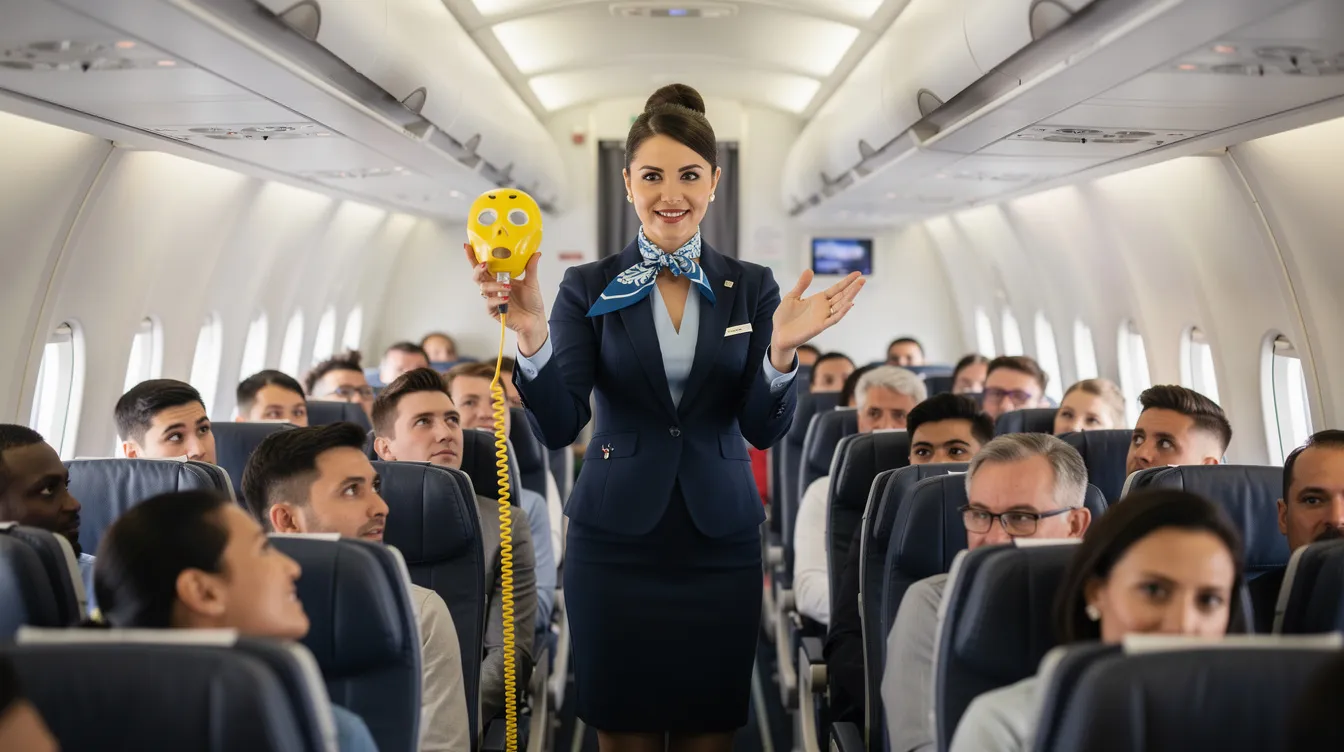
Safety enforcement: Conducting pre-flight safety demonstrations, securing the cabin before takeoff and landing, managing emergency evacuations, and coordinating with the cockpit during irregular operations
Emergency response: Handling in-flight medical incidents with limited resources at altitude, operating emergency exits, deploying slides, and administering first aid or CPR
Passenger service: Greeting passengers, assisting with seating and carry-on luggage, providing food and beverage service, managing premium-cabin amenities, and handling onboard sales
Conflict management: Resolving seating disputes, managing disrupted travel situations, de-escalating tense passenger interactions, and enforcing federal aviation regulations
American Airlines provides paid training for new flight attendants-typically a multi-week, full-time program covering FAA-mandated safety coursework, aircraft-specific emergency drills, and service procedures. Recurrent training continues throughout a flight attendant's career to maintain certifications.
Consider this scenario: a certified flight attendant working a full domestic flight encounters a passenger experiencing a cardiac event at 35,000 feet. The crew member must assess the situation, coordinate with ground-based medical professionals via radio, locate and deploy the onboard AED, manage surrounding passengers, and potentially assist with a flight diversion-all while maintaining calm in a packed cabin. This is the experience and responsibility that justifies structured, step-based compensation across the industry.
American Airlines Flight Attendant Pay vs Private Aviation (and How BlackJet Fits In)
The structured, union-negotiated American Airlines pay scale stands in contrast to the compensation models used in private aviation, where cabin crew serve a smaller number of clients at a dramatically higher service level.
Commercial American Airlines flight attendants operate on fixed routes and large-cabin aircraft, serving hundreds of passengers across multiple cabin classes per flight. Private jet cabin crew often serve just a handful of travelers who expect personalized, discreet, and ultra-responsive service-from custom catering preferences to real-time itinerary adjustments.
Total earning potential for cabin crew in private aviation is more variable. Compensation may include a base salary plus trip fees, enhanced per diem, and sometimes gratuities-tied to client expectations and bespoke itineraries rather than a standardized flight-hour chart, which is why many travelers evaluate structured jet card membership pricing when comparing private options. Some private roles pay handsomely for specialized work; others offer less predictable income without union-backed guarantees, especially when the operator’s economics depend on managing jet card cost per hour across different aircraft types and routes.
At BlackJet, we offer Jet Card programs that give travelers prepaid access to private jets across multiple cabin classes through our premium private jet card services. Our model is built around three pillars that matter to discerning travelers, similar to what sophisticated buyers evaluate when comparing Flexjet jet card cost and options:
Safety: Every operator in the BlackJet network undergoes rigorous vetting and proprietary certification that exceeds minimum regulatory standards, including third-party audits aligned with ARGUS and WYVERN benchmarks
Sustainability: All BlackJet flights are carbon neutral by default through high-quality offsets and sustainable aviation fuel partnerships-at no extra cost to you
Technology: Seamless app-based booking, real-time flight management, and 24/7 on-trip support ensure every journey is effortless
For high-net-worth travelers accustomed to American Airlines first class, the differences become tangible in specific scenarios, especially for frequent flyers who benefit from the best jet cards for private travel. Imagine a business leader who regularly flies American between New York and Dallas, or an entrepreneur commuting between regional hubs such as those served by private jet charters in Karachi. On most trips, the commercial experience is adequate, especially on well-served routes like those complemented by private jet charters in Lahore, re where travelers can choose between scheduled airlines and bespoke flights depending on the occasion. But for a critical board meeting requiring exact departure times, a private cabin for confidential strategy discussions, and crew-level service calibrated to one passenger's preferences-a 25-hour Jet Card, similar in structure to a 50-hour jet card cost program, fills a gap that no commercial ticket can.
The key differences for travelers comparing commercial and private often start with understanding a broad private jet price list and cost structure:
Factor | American Airlines | BlackJet Private | |
|---|
Departure schedule | Fixed airline timetable | Your schedule | |
For travelers pre-purchasing large blocks of flight time, understanding a detailed 100-hour jet card cost breakdown helps clarify how that flexibility is priced compared with commercial fares. | | | |
Airport experience | Crowded commercial terminals | Private FBOs and terminals | |
Cabin service ratio | 1 FA per 50+ passengers | Dedicated crew for 1–8 travelers | |
Booking flexibility | Days/weeks in advance | As little as hours in advance | |
Carbon footprint | Varies by aircraft | Carbon neutral by default | |
Cost-conscious travelers exploring private options also look at the cheapest private aircraft and access models to balance budget with comfort and sustainability.
While American Airlines flight attendant salaries and the stability of that role suit many aviation professionals, travelers who value maximum privacy, flexibility, and personalized service can explore providers like BlackJet alongside or instead of commercial airline travel.
FAQ: Common Questions About American Airlines Flight Attendant Pay
What is the highest pay for a flight attendant at American Airlines?
The top-of-scale base rate is $82.24 per flight hour for flight attendants with 13 or more years of seniority, as of October 2024. This rises to approximately $92.79 per hour by October 2028 under the current contract. When combined with international premiums, lead or purser pay, boarding pay, per diem, and overtime, total annual compensation for senior crew can comfortably exceed $100,000.
What is the lowest pay?
New hire flight attendants start at $35.82 per flight hour. At minimum guaranteed hours (71 per month), that translates to roughly $30,500 per year in base flight pay alone. Actual first-year earnings vary with schedule, reserve assignments, and whether the flight attendant picks up additional trips. The average U.S. flight attendant salary is around $86,370 annually across all carriers and seniority levels-a figure that includes the full spectrum from regional carriers to senior legacy airline crew.
How can flight attendants increase their salary? At the same time, high-income travelers comparing commercial fares with private options often research comprehensive jet card pricing guides to understand how their spending power translates into access and flexibility.
The most reliable path is simply gaining seniority-each year of service unlocks a higher hourly rate. Beyond that, flight attendants can:
Bid for international and premium routes that carry higher pay and more per diem
Take on lead or purser responsibilities for additional hourly premiums
Acquire language qualifications for designated language pay
Fly above monthly hour thresholds to trigger overtime rates
In some cases, transition to private aviation roles where bespoke service commands different wages, particularly on large-cabin jets for around 20 passengers where personalized service expectations are highest
How does American Airlines pay compare with the overall U.S. flight attendant average?
Major legacy carriers like American tend to pay above regional or low-cost carriers, especially at higher seniority levels. The 2024 contract's immediate 18–20.5% raise and cumulative increases of roughly 36% over five years have positioned American among the top-paying U.S. airlines for cabin crew, comparable on the commercial side to how the top private jet companies for luxury travel compete on compensation and service quality in private aviation.
Does choosing private jets vs commercial airlines affect what cabin crew are paid? Travelers exploring this question from the passenger side often start by learning how to buy a seat on a private jet and what that implies for operator costs and crew compensation.
Yes, but differently than you might expect. Commercial airline salaries are contract-driven, transparent, and step-based. Private aviation compensation is more bespoke-often tied to specific operators, Jet Card providers, or charter firms. A private cabin crew member might earn more per trip in certain scenarios, but without the guaranteed minimums, union protections, and published scales that commercial roles provide. For travelers curious about what that private service experience looks like from the passenger side, explore the BlackJet experience to understand how dedicated crew attention, custom amenities, and schedule flexibility create a different kind of journey, even on more economical options highlighted in guides to the cheapest private jet options available.
Elevate your travel-effortlessly. With BlackJet, private flight is accessible on your terms through our Jet Card programs, complete with rigorous safety certification, carbon-neutral performance, and unmatched flexibility. Explore our Jet Card offerings and discover how refined, meaningful travel becomes your new standard.


 Sign up with google
 Sign up with Apple