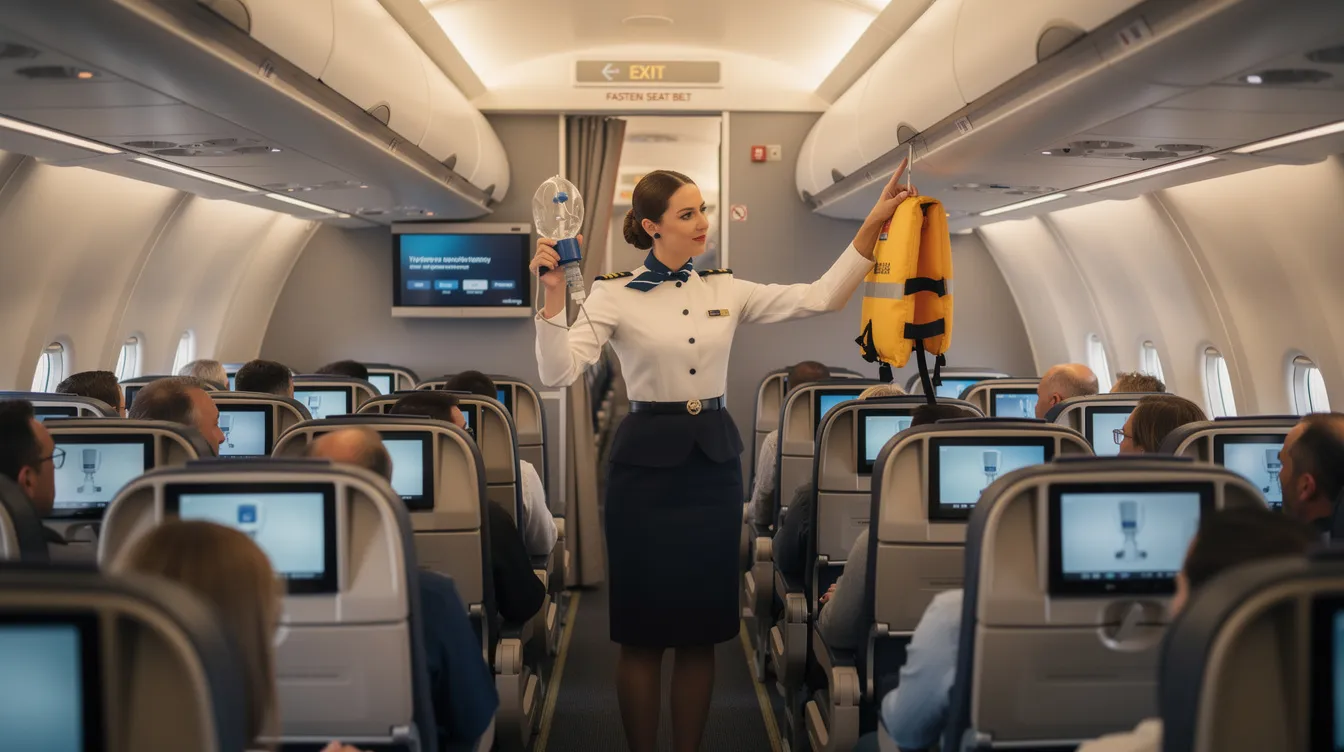
Certified Flight Attendant Overview
The aviation industry will need over 1,023,000 new cabin crew members globally in the next 20 years, according to Boeing's 2026 Pilot and Technician Outlook. For aspiring aviation professionals and discerning travelers alike, understanding what separates a certified flight attendant from an untrained service provider is a matter of safety, career trajectory, and passenger confidence.
A certified flight attendant holds either the FAA Certificate of Demonstrated Proficiency (required for U.S. Part 121 airline operations) or equivalent specialized training recognized in corporate and private aviation. FAA certification is mandatory for flight attendants in the U.S. who serve on aircraft operated by air carriers, and the credential is earned through an airline's FAA-approved training program, not purchased from an independent school.
In corporate and private aviation, the certification landscape looks different. Flight attendants on smaller business jets often complete safety courses through providers like Aircare FACTS, combined with food safety, first aid, and VIP service credentials. Flight attendant certification enhances professional credibility and trustworthiness across both sectors.

Key distinctions between commercial and corporate cabin crew:
Commercial airline flight attendants operate in teams of 2 to 20+, following standardized airline procedures across hundreds of passengers
Corporate flight attendants often work solo on private aircraft, managing safety procedures, medical emergencies, gourmet catering, and VIP discretion for groups as small as 2 to 6 passengers
Flight attendants are primarily responsible for passenger safety and regulatory compliance during flights, regardless of sector
At BlackJet, we require operators in our private jet network to staff cabin crew whose training and certification meet or exceed aviation industry standards
Why Certification Matters in Today's Flight Attendant Career
Certification gives flight attendants a competitive edge in both commercial and private flight attendant jobs, especially as more travelers evaluate whether chartering a private jet is worth it for their specific missions and schedules. Many airlines prefer hiring candidates with flight attendant certifications, and in business aviation, FACTS certification increases job opportunities with charter companies and corporate flight departments. Certified flight attendants can earn higher day rates on contract assignments compared to uncertified hospitality staff.
Passenger Perspective
Consider this scenario: a high-net-worth family books a New York-to-London private jet flight. The certified cabin crew member onboard holds current CPR and first aid credentials, IATA Dangerous Goods Regulations training, and food safety certification. Mid-flight, a passenger shows signs of cardiac distress. The certified flight attendant initiates AED protocols, communicates with the flight deck, and stabilizes the passenger using the onboard medical kit. An uncertified hospitality professional, however skilled at serving food and arranging amenities, may lack the training to operate emergency equipment or coordinate with pilots during high-pressure situations.
Employer Perspective
From the employer and operator perspective:
Jet card providers like BlackJet prefer certified cabin crew because it reduces insurance risk, strengthens regulatory compliance, and delivers consistent passenger safety
Flight attendant certification aligns with international standards for global opportunities; crew members with recognized credentials can transition between domestic, international, and private roles
Certification provides comprehensive safety and service knowledge that protects both passengers and the operator's brand
Certified crew members build passenger comfort and confidence on every flight
Basic Requirements to Become a Flight Attendant
Before pursuing specialized training, candidates must meet baseline criteria that most airlines require. These vary slightly between commercial and corporate roles, but the core requirements are consistent.
Be at least 18 to 21 years old, depending on the airline or operator
Hold a high school diploma or GED (minimum education requirement)
Possess a valid passport and legal authorization to work in the U.S.; international airlines typically require at least 12 months of passport validity and multiple blank pages
Demonstrate English proficiency for safety and effective communication; additional languages provide professional growth opportunities, especially on international flights
Have customer service experience (fine dining, hospitality, or luxury retail backgrounds are common among new hires entering private aviation)
Pass a comprehensive background check and drug test prior to employment
Pass physical assessments, including vision and hearing evaluations; demonstrate ability to operate emergency equipment and reach overhead compartments
Comply with strict appearance and grooming standards set by the airline, which often include policies on visible tattoos, hair, and uniforms
Corporate cabin crew candidates face higher expectations around discretion, premium client handling, and the service skills needed for bespoke in-flight experiences, which is reflected in private jet stewardess salary expectations across the industry
Understanding the FAA Flight Attendant Certificate of Demonstrated Proficiency
The FAA Flight Attendant Certificate of Demonstrated Proficiency, codified under 49 U.S.C. § 44728, is required for crew members serving on U.S. aircraft operated under Part 121. Private flight attendant schools are not required; airlines provide necessary training instead, and the certificate is issued only after successful completion of an airline's FAA-approved training program.
Certification Process
Flight attendant training typically lasts 4 to 8 weeks, covering classroom instruction, emergency drills, aircraft evacuation, door operations, and supervised revenue flights.
Under 14 CFR § 121.421, initial ground training requires a minimum of 8 programmed hours for turboprop aircraft (Group I) and 16 hours for turbojet aircraft (Group II).
Operating experience requires at least 5 hours of performing flight attendant duties under supervision on revenue flights.
Trainees must pass written and practical exams for certification; training includes emergency procedures and customer service skills.
The role of flight attendants includes conducting pre-flight safety checks and security inspections of the cabin, responding to security threats, and managing aircraft evacuation.
Flight attendants must manage emergency situations such as medical crises or turbulence during flights.
Flight attendants must complete recurrent safety training annually or biennially to maintain certification; CPR and AED drills are required at least every 24 months under 14 CFR § 121.805.
After successful completion of all requirements, the airline's Director of Operations submits the application; the certificate is effective immediately, with a hard copy mailed in 10 to 14 days.
This certificate applies to Part 121 operations; corporate flight attendant roles on smaller jets under Part 91 or Part 135 follow different, often less prescriptive, regulatory paths.
Key Supplemental Certifications for a Professional Flight Attendant
Beyond the FAA certificate, top-tier cabin crew build a stack of specialized credentials that broaden career options in both commercial and private aviation. These voluntary certifications strengthen the application process, create a clear competitive edge for premium roles, and signal to employers that a candidate takes professional growth seriously.
CPR and First Aid Certification
Covers cardiac arrest response, choking, bleeding control, shock management, AED operation, and basics of in-flight medical kit contents
Common providers: American Red Cross, American Heart Association; typical duration is 4 to 8 hours
CPR and first aid certification lasts 2 years before renewal
BlackJet and other premium operators value up-to-date first aid credentials for solo cabin crew on private flights, where medical emergencies must be handled without backup crew members
Dangerous Goods and Safety (IATA DGR or Equivalent)
IATA Dangerous Goods Regulations training covers classification, identification, and emergency response for hazardous materials in the cabin
Particularly useful for international flights and operators carrying technical equipment or specialized luggage
IATA DGR certification costs $500 to $800, with a renewal cycle of every 2 years
Completing DGR training positions candidates for roles with regional carriers and international airlines that handle diverse cargo
Food Safety and Premium Service Credentials
ServSafe Food Safety certification covers proper storage, handling, allergen awareness, and service of food in confined aircraft environments; renewal is required every 5 years
Corporate and private jet cabin crew prepare and plate bespoke meals, manage wine service, and execute multi-course dining at altitude, often tailoring service to the capabilities of small private aircraft used in business aviation, where pressure changes affect taste and food safety protocols differ from ground-based kitchens
Some aviation-focused academies offer customer service excellence certificates tailored to first-class and private jet clientele, helping crew support passengers who may access aircraft by buying a seat on a private jet, and covering plating standards and upscale service etiquette
Corporate and Private Jet Flight Attendant Certification Path
The path to a flight attendant career in business aviation diverges from the commercial airline route. Corporate roles emphasize specialized training in single-attendant operations, VIP security, and luxury service rather than mass-cabin procedures, and they often parallel the career progression and earning potential outlined in private jet pilot salary guides.
FACTS (Flight Attendant Certification Training for Safety) training lasts between 3 and 5 days and covers live-fire drills, underwater egress, cabin device simulation, and emergency medical scenarios; FACTS certification is valid for 24 months after completion
FACTS certification is respected by private jet operators and charter companies, and it increases access to private aviation job opportunities
ISSA Cabin Crew Safety Training takes 2 to 4 weeks to complete, providing additional training in crew resource management, fatigue risk, and international operations, skills that become critical on private jets configured for around 30 passengers
Many contract and full-time corporate cabin crew refresh key courses every 12 to 24 months to stay current in the private aviation market, especially those serving on large private jets for up to 50 passengers
Corporate training modules cover emergency equipment specific to smaller jets, single-attendant evacuation, in-depth medical scenarios, and security protocols for high-profile passengers, including those traveling on some of the best private jets in the world

How Certifications Show Up in Flight Attendant Job Listings
Airlines and private operators structure certification requirements in job postings using three tiers: "required," "preferred," and "obtainable after hire." Understanding these distinctions helps candidates prioritize which certifications to secure before the interview process.
Most airlines list the FAA Certificate of Demonstrated Proficiency as required for Part 121 roles, while private operators may focus more on how certified crew support BlackJet premium private jet card programs
Corporate postings often state "FACTS or equivalent safety training preferred" and "CPR/First Aid current certification required," mirroring the emphasis on safety and client trust seen in airplane broker career guides
Having multiple current certifications moves a candidate from the general pool into the shortlist, particularly for smaller teams and private jet roles where many flight attendants operate solo, including flights on 16-seat private jets designed for group travel
A typical corporate cabin crew listing might read: "Seeking experienced flight attendant for midsize jet operations based in Teterboro, NJ. FAA certificate or FACTS certification required. Current CPR/AED and food safety credentials preferred. Minimum 3 years serving food, beverage, and premium cabin service. Must hold a valid passport with global travel flexibility."
Step-by-Step: From Aspiring Cabin Crew to Certified Flight Attendant
This career path typically spans 6 to 18 months from initial research to first revenue flight, similar to the thoughtful planning travelers apply when evaluating jet card cost and membership structures.
Research and Preparation
Research airline operations and private jet employment opportunities; identify whether your target is Part 121, Part 135, or corporate aviation, just as frequent flyers research the best jet cards for their travel profile
Confirm you meet basic requirements: age, high school diploma, valid passport, background eligibility
Build relevant experience in customer service, hospitality, or fine dining; improve language skills
Obtain CPR/first aid certification and, if targeting corporate roles, complete a food safety credential
Application Process
Apply to airlines or private operators; the application process typically involves online submission, video or in-person interviews, group assessments, and medical checks, and may include learning about top private jet companies and their service models.
Training and Certification
New flight attendants enter several weeks of initial training provided by the hiring airline or operator, lasting 3 to 8 weeks; the probationary period often extends 6 to 12 months.
Upon demonstration of proficiency and successful completion of exams, the FAA flight attendant certificate is issued.
Flight attendants enjoy travel opportunities, including free or discounted flights for themselves and family members; they also typically work irregular schedules with long periods on their feet and layovers away from home.
Flight attendants can pursue leadership roles after gaining experience, moving into training, management, or specialized corporate positions; this is a rewarding career with a clear trajectory for professional growth, comparable to advanced roles highlighted in private jet sales salary overviews.
Certified Flight Attendants in Private Aviation: The BlackJet Perspective
A BlackJet member books a Los Angeles to Aspen flight on a light jet for a family ski trip. The single certified flight attendant onboard has current FACTS certification, CPR/AED credentials, and food safety training. She conducts a pre-flight safety briefing tailored to the family (including instructions for children), manages a curated catering spread with allergen notes pulled from BlackJet's passenger preference system, and monitors cabin pressure and passenger comfort throughout the 2.5-hour flight. This is what the transformative experience of flying private looks like when certification meets service.
Certified cabin crew contribute to BlackJet's jet card safety standards by delivering consistent safety briefings, calm medical response, and elevated service on every journey, which complements a clear understanding of jet card pricing, costs, and benefits
BlackJet works only with operators whose cabin crew training meets or exceeds airline industry benchmarks
BlackJet's technology platform provides certified flight attendants with real-time passenger preferences, catering notes, and schedule changes, so the crew arrives prepared
For members exploring what a jet card offers, certified cabin crew are a core part of the safety and luxury equation, especially within programs like the BlackJet 25+ Hour Jet Card
Frequently Asked Questions About Flight Attendant Certification
Common questions from those looking to enter the world of aviation or understand what certified cabin crew bring to private travel.
Do I need certification before applying for flight attendant jobs?
No. Most airlines provide the necessary training after hiring. However, holding CPR/first aid and food safety credentials before applying strengthens your profile and gives you confidence during the interview process.
How long does it take from application to first flight?
Typically 2 to 4 months, including ground school, supervised flights, and line checks. The FAA Flight Attendant Certificate requires 4 to 8 weeks to complete within that timeline.
Do airlines pay for training?
Most airlines cover the cost of initial training for new hires. Additional training like IATA DGR or FACTS may be self-funded, though some corporate operators reimburse these expenses.
Are certifications recognized internationally?
FAA certification is specific to U.S. Part 121 carriers, but IATA credentials are recognized globally. Flight attendant certification can unlock global career opportunities, and many international airlines accept equivalent safety training from FAA-aligned programs.
How often must certifications be renewed?
Conclusion: Elevate Your Career with Flight Attendant Certification
Becoming a certified flight attendant is more than a credential; it is a strategic investment in your aviation career and passenger safety. Whether serving on a commercial airliner or a private jet, certification demonstrates your mastery of essential safety protocols, emergency response skills, and exceptional service standards. It sets you apart in a competitive industry, opening doors to global opportunities and higher earning potential.
At BlackJet, we prioritize certified cabin crew to ensure every journey is safe, seamless, and tailored to discerning travelers. By obtaining and maintaining recognized certifications such as the FAA Flight Attendant Certificate, FACTS, CPR, and food safety credentials, you position yourself as a trusted professional ready to meet the demands of modern aviation.
Explore how certification can elevate your career and enhance passenger confidence. Discover premium jet access with BlackJet and join a network that values expertise, safety, and unparalleled service by learning more about our private jet network and jet card safety standards.
Ready to take flight? Join our Jet Card program and experience the difference that certified flight attendants bring to every journey.


 Sign up with google
 Sign up with Apple