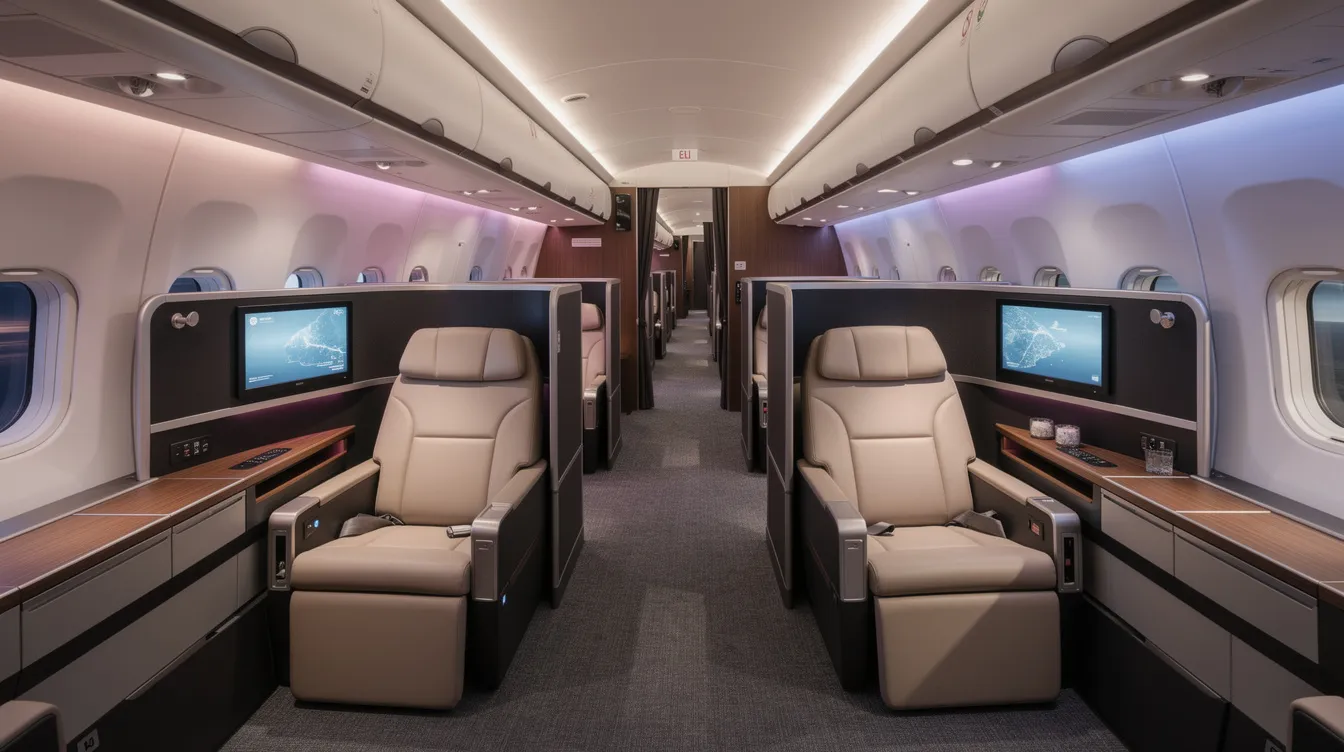
American Airlines Flagship First has long been the pinnacle of the airline's international premium offering. But in 2026, this cabin is living on borrowed time. Here's a thorough look at what you actually get when you book American Airlines first class on an international route—and when savvy travelers should consider stepping up to private jet access instead.
Immediate Answer: Is American Airlines First Class International Worth It in 2026?
Flagship First is an international first class service offered by American Airlines on select Boeing 777-300ER routes. In 2026, it remains spacious, exclusive, and genuinely comfortable—but it is a legacy product being phased out. American Airlines is retiring Flagship First on international flights for travel beginning November 19, 2026, and on premium transcontinental routes by March 28, 2027. After those dates, the airline's top cabin becomes the new Flagship Business Class with suite-style seating.
If you can book it on one of the remaining routes—think U.S. to Europe, Asia, Australia, or South America—and the price premium over business class is modest, Flagship First can still be a compelling class experience. You get a quieter cabin, enhanced ground services, and more personal space. But it is no longer a clear "best in market" product. American Airlines is phasing out first class in favor of business class Flagship Suites, and the hard product in the current first class cabin is showing its age compared to newer offerings from leading airlines like Cathay Pacific and British Airways.
For travelers accustomed to private jet standards, American Airlines first class is a compromise on privacy, flexibility, and control. It's a meaningful step up from basic economy or premium economy—but still far from the fully bespoke experience of a jet card flight, where you set the schedule, choose the airport, and own the cabin—similar in spirit to flexible Flexjet-style jet card options and pricing that many private fliers compare against commercial first.
This article covers how international first class fits into American's cabin structure, what the first class seats are really like, ground services including lounge access and five-star service options, onboard dining and meal service, inflight entertainment and wi fi, how it compares with business class, and when a private jet or jet card program delivers better value for frequent high-end travelers.
How International First Class Fits Into American Airlines' Cabin Structure
American Airlines flights in 2026 use a cabin ladder that runs from basic economy at the bottom through Main Cabin, Main Cabin Extra, premium economy, Flagship Business Class, and—on a shrinking number of aircraft—Flagship First Class at the top. On most long-haul flights, the true premium cabins are now Flagship Business and premium economy. Flagship First exists only where the Boeing 777-300ER hasn't yet been retrofitted.
The distinction between Flagship First and Flagship Business boils down to more space, fewer neighbors, and enhanced ground perks. Both offer lie-flat seats and similar dining. But the first class cabin holds just eight seats in a 1-2-1 layout, compared to as many as 70 Flagship Suite business class seats on a retrofitted 777-300ER. First class passengers also unlock Flagship First Dining at select hubs—a restaurant-style experience not available to business class passengers.
Here's the quick hierarchy:
Flagship First - 8 seats, enhanced ground services, First Dining access
Flagship Business - Lie-flat suites (some with doors), broader availability
Premium Economy - Extra legroom, improved meal service, priority boarding
Main Cabin / Main Cabin Extra - Standard coach with optional upgrades
Basic Economy - No frills, last to board, no changes
Even the best commercial first class, however, cannot match the privacy, schedule control, and direct routing possible with a premium private jet card program. That gap is what makes the comparison worth exploring for anyone already spending at the top of American's cabin ladder.
Where You'll Actually Find American Airlines Flagship First in 2026
As of September 2026, international Flagship First is primarily found on Boeing 777-300ER aircraft operating trunk routes. American operates 20 of these widebodies, and first class is available only on those not yet retrofitted.
Key routes where you may still find Flagship First:
New York JFK – London Heathrow (LHR)
Miami (MIA) – London Heathrow
Dallas–Fort Worth (DFW) – London Heathrow
Los Angeles (LAX) – Sydney (SYD)
Select seasonal services to South America and Asia
Some premium transcontinental routes—New York to Los Angeles, New York to San Francisco—also carry a first-class cabin on the Airbus A321T, but these are domestic first-class products branded as Flagship First on transcon routes, not the same as international first class on the 777—a distinction that matters for ultra-high-net-worth travelers who may instead be weighing aircraft ownership or even purchasing a private jet with cryptocurrency.
American is gradually removing dedicated first class cabins as aircraft are refurbished. New Flagship Suites on the 787-9P and retrofitted 777s are flagship business class products, not first. Before booking a first ticket, check the aircraft type—look for "777-300ER" or "77W" — and confirm that first class seats are actually available. Schedule changes can swap aircraft and eliminate the cabin entirely.
Ground Experience: Flagship First Check‑In and Priority Privileges
The ground experience for American Airlines first class begins with dedicated Flagship First check-in areas at major hubs like JFK, LAX, MIA, and DFW. These are semi-private counters staffed by concierge-level agents, designed to handle your booking process, luggage, and any special requests in a quieter setting. First class passengers can check in at dedicated desks in Terminal 3 at London Heathrow as well.
Key ground privileges for first class passengers include:
Priority check-in counters and expedited security screening where available
Group 1 priority boarding—first to walk past the boarding door and settle in
Two free checked bags weighing up to 70 lbs each, with priority handling on arrival
Dedicated baggage tags for faster carousel delivery
Concierge assistance for tight connections
Business class and top-tier AAdvantage status passengers also receive many of these benefits—priority boarding, free checked bags, and lounge access—which has narrowed Flagship First's incremental advantage on the ground.
For private jet travelers, the contrast is stark. Private jet charter clients bypass the entire commercial check-in and security model. You arrive at a private terminal (FBO), often minutes before departure, and board directly from your vehicle. It's the ultimate version of "priority privileges" — no lines, no shared terminals, no walking past hundreds of other passengers, and the practical cost comparison of chartering a private jet often shifts once you factor in time saved and flexibility.
Lounge Access for American Airlines First Class International
On eligible international itineraries, Flagship First passengers receive exclusive lounge access beyond a standard Admirals Club. At hubs such as JFK, LAX, MIA, DFW, and Chicago O'Hare, they can use dedicated Flagship Lounges with quieter spaces, upgraded buffets, and premium beverages.
In some locations—particularly JFK, Miami, and Dallas—Flagship First also unlocks access to Flagship First Dining, a more exclusive, restaurant-style area with à la carte menus and premium drinks. This dedicated flagship dining experience is limited to first class passengers on long haul international routes or select premium transcontinental routes. First class offers access to exclusive Flagship Lounges with premium dining, and the flagship lounges provide premium food and beverage services that go well beyond standard class lounge offerings.
At Heathrow Terminal 3, first class passengers have access to multiple lounges. Options include the American Airlines Admirals Club and oneworld partner lounges such as the Cathay Pacific First Class Lounge, the Chelsea Lounge, or the Qantas Lounge, depending on time of day and capacity.
Business travelers with AAdvantage elite status or oneworld Emerald can often reach similar lounges, narrowing the practical distinction in lounge access between flagship business class and Flagship First.
Private jet clients don't rely on shared airline lounges at all. Instead, they typically enjoy quiet FBO lounges or proceed straight from car to aircraft—a different form of "lounge access" built entirely around privacy and speed.
Five Star Service™ and Airport Escort Options
American's optional Five Star Service™ is a paid concierge add-on sometimes bundled or discounted for flagship first passengers at key airports like JFK, LAX, MIA, and DFW. It's designed to smooth out every friction point in the airport journey.
Five Star Service covers:
Personal escorts through check-in and security
Assistance navigating tight connections between terminals
Support for families, elderly travelers, or high-profile individuals
Coordination of baggage handling and class lounge transitions
While marketed as star service, it remains constrained by commercial airport infrastructure. Fixed departure times, shared security checkpoints, and crowded terminals still shape the experience. A high-profile traveler using Five Star Service for a tight JFK connection will still wait in select markets if TSA lines are backed up.
By contrast, jet card members receive 24/7 human support, real-time flight adjustments, and direct vehicle-to-aircraft transitions at private terminals. This functions as an always-on concierge layer around every trip—not a paid add-on, but the baseline experience.
Flagship First Seats and Cabin Layout on the 777‑300ER
The first class cabin on the Boeing 777-300ER has eight seats in a 1-2-1 configuration, spread across two rows in the nose of the aircraft. The cabin is separated from business class by a galley and doorway, providing additional insulation and more space for first class passengers.
Key seat features include:
Fully lie-flat seats with swivel function, rotating toward a work surface or the aisle
Adjustable privacy dividers between the center pair of class seats
Large ottoman that doubles as a guest seat for dining companions
Multiple storage compartments, overhead bins, and side consoles
Direct aisle access from every seat—no climbing over neighbors
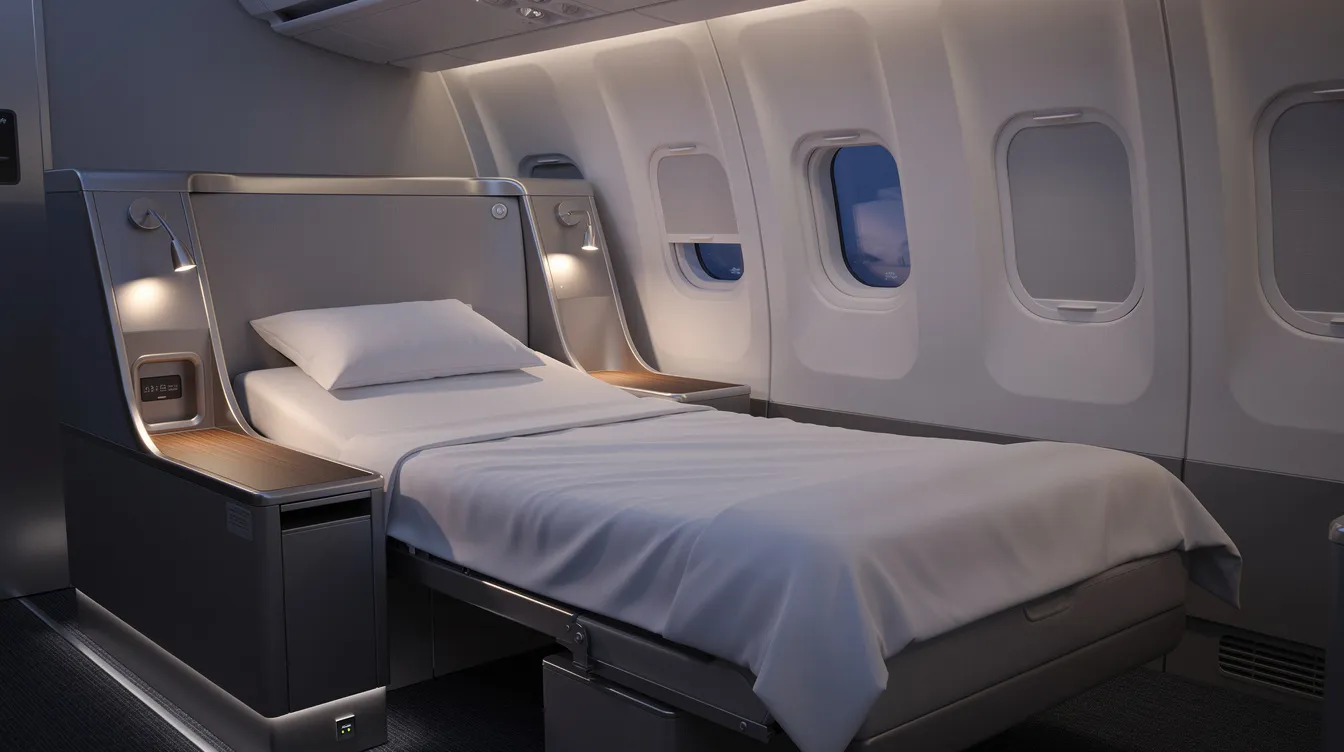
American Airlines first class features lie-flat seats on select international flights, with comfort details such as a mattress pad, large pillows, and duvets for overnight segments. Premium bedding elevates the sleep experience above what you'd find in business class, though the gap has narrowed.
The known drawbacks are well-documented in every class review of this product. These are open suites without closing doors, and some cabins are showing wear—loose fixtures, dated side consoles, and hardware that feels older compared to newer flagship business class suites on other airlines or even American's own retrofitted fleet. The American Airlines first class cabin has a smaller cabin with eight seats, which keeps it intimate, but the hardware is no longer cutting-edge.
Onboard Comfort, Amenities, and First Class "Soft Product"
Passengers in first class receive amenity kits with designer skincare products—recent partners have included brands like Joanna Vargas and Shinola—along with socks, an eye mask, earplugs, a dental kit, and grooming items. Sustainably sourced amenity kits are part of the premium offering, reflecting broader industry trends. Each amenity kit is packaged in a designer-branded bag suitable for reuse.
Sleep amenities go further on longer overnight international routes. Pajamas and slippers are typically offered on flights like LAX–SYD or DFW–HKG, though some class passengers report limited sizing or stock variations depending on the route. Additional touches include bottled water at the seat, turndown service on request, and access to Bang & Olufsen noise-canceling headphones.
Connectivity features such as power outlets and USB ports are standard in the first class product, keeping devices charged across long-haul flights. Personalized services enhance the travel experience in premium cabins, though the level of service from the cabin crew is often described as friendly and informal—the American style—rather than the highly choreographed experience you'd find on Asian carriers. Some crews deliver flight attendant service closer to business class level, which means the class product is inconsistent flight to flight.
Private jet passengers typically have bedding, amenities, and catering curated to personal preference before departure. The crew-to-passenger ratio on a private aircraft is far higher than any commercial first class cabin can provide, and every element can be tailored, especially aboard some of the top private jets in the world for luxury and performance.
Dining and Beverage: How "First" Is the Food Really?
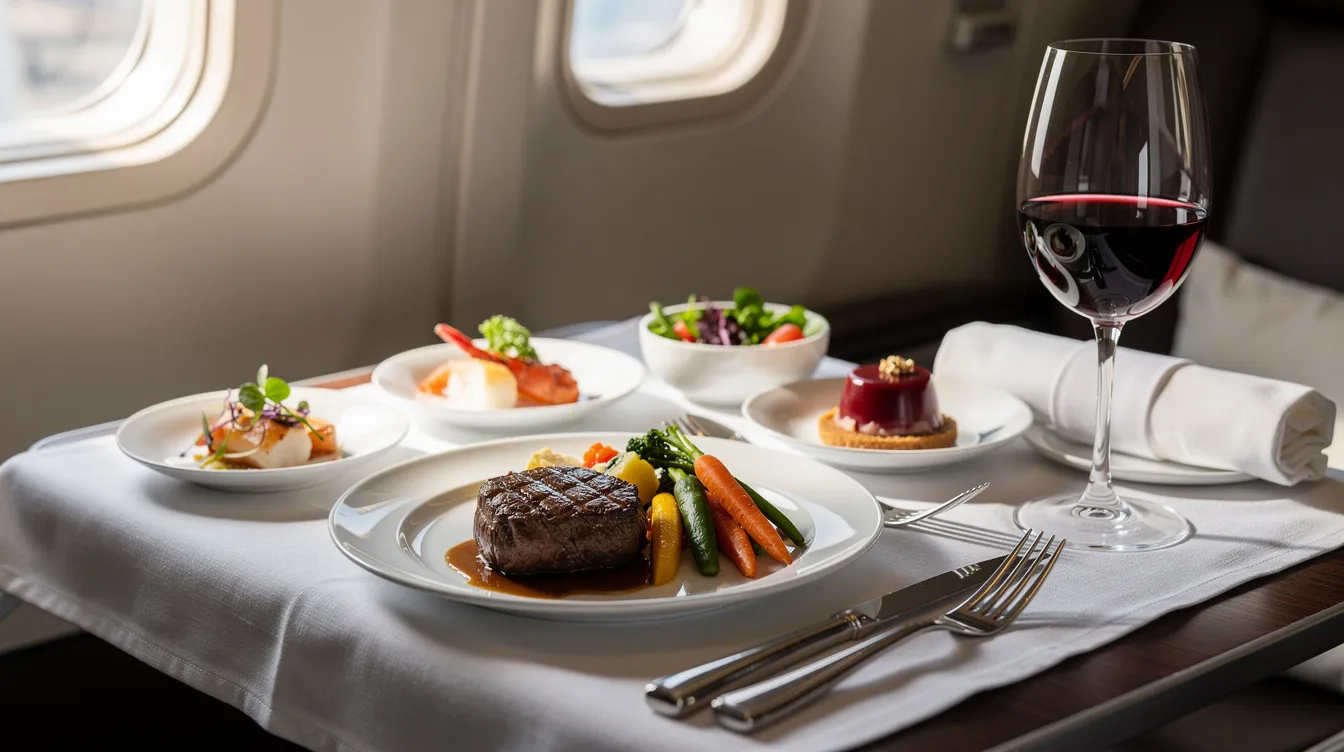
American Airlines first class offers multi-course dining options inspired by renowned chefs, with menus that typically include a plated appetizer (burrata, seafood starters), a soup course, a choice of mains (steak, fish, vegetarian), a cheese course, and a signature dessert like the American Airlines ice cream sundae. First class meals include appetizers, entrees, and desserts as standard on international segments. Flagship First provides multi-course meals curated by top chefs, and first class passengers receive multi-course meals designed by renowned chefs with curated wine pairings.
The beverage program includes champagne, a curated wine list, premium spirits, and complimentary alcoholic beverages throughout the flight. Some 777-300ER aircraft have espresso machines onboard for freshly made coffee-based drinks.
However, food is served on trays rather than individually plated in first class, which reduces the sense of exclusivity that defines true restaurant-style dining. Breakfast options in first class can be limited and basic—a common critique in detailed class review coverage. Service quality varies: some crews present meals with care and pacing, while others rush through courses.
Flagship First Dining in lounges lets passengers eat a full meal before boarding to maximize rest, meaning some travelers deliberately choose lighter food served onboard.
For those evaluating private alternatives, bespoke private jet catering is made-to-order. You specify dietary needs, favorite brands, and timing in advance. There are no rigid service waves—your meal is served when you want it—especially on the largest private jets built for true long-range luxury.
Inflight Entertainment and Wi‑Fi in American Airlines First Class
The inflight entertainment setup in Flagship First includes a large personal screen with touchscreen and handheld controller options. The catalog covers movies, TV shows, music, and games, with some aircraft offering live TV channels. American Airlines domestic flights now provide free high-speed wi fi for many AAdvantage members, but this benefit does not always extend to long-haul international segments.
Some first class cabins have aging IFE hardware: lower screen resolution, slower interfaces, and unreliable controllers. Multiple class review reports from LAX–SYD and other routes note broken screens and complete inability to connect to wi fi on certain flights.
Wi fi options on long haul flights typically include per-flight or time-based passes (roughly $29 for 2 hours or $35–$40 for a full-class flight), with quality varying by route, satellite coverage, and weather conditions.
Private jet operators increasingly offer tailored connectivity, including guaranteed bandwidth tiers on certain aircraft. BlackJet's technology platform focuses on real-time flight support and trip management—before, during, and after the flight—rather than entertainment libraries, whether you're chartering a whole aircraft or simply buying a seat on a private jet through shared or semi-private options.
Comparing American Airlines First Class vs Business Class
Both Flagship First and Flagship Business Class offer lie-flat seats, premium meals, in-flight entertainment, priority privileges, and some form of lounge access. The meaningful differences are:
Space: First offers more space per seat, with eight seats versus 50+ in business
Ground perks: First unlocks Flagship First Dining in select hubs
Cabin intimacy: Fewer class passengers mean a quieter environment
Hard product: Business class is getting newer suites with doors; First has open suites
The "hard product" gap has inverted on several metrics. Business class meals are similar to first class meals on American Airlines, and the new Flagship Suite seats offer 19% more bed space and 42% more living space than earlier business suites—with privacy doors that the first class cabin lacks.
On most long-haul international routes, the price premium of Flagship First over international business class may not be justified unless you specifically value the small cabin and enhanced ground amenities. From a comfort perspective, AA's latest flagship business can be as good as or better than legacy first class seats on unrenovated aircraft.
For the traveler already considering top-tier international first fares, a jet card or ad-hoc private charter may deliver better ROI in time saved, privacy, and the ability to reach non-hub destinations directly, especially once you understand jet card membership pricing and cost structures.
American Airlines First Class vs Private Jet and Jet Card Travel
If you regularly buy—or get upgraded into—American Airlines first class on international routes, you're already close to the spend profile where private jet access becomes strategically compelling, and may even be in range of evaluating 10 million dollar private jet ownership options alongside jet cards and on-demand charter. Flexibility and privacy are key values for private and premium travelers, and the gap between commercial first and private aviation is widest on exactly those dimensions; this is where understanding 50-hour jet card pricing and value becomes directly relevant.
Here's a point-by-point comparison of the class experience, which becomes even more striking when you consider scenarios like chartering the best private jets for groups of up to 50 passengers:
Factor | Flagship First | Private Jet / Jet Card |
|---|
Schedule | Fixed airline timetable | Depart when you choose |
Airport | Major hubs only | 5,000+ airports including secondary fields |
Cabin | 8 seats, shared with strangers | Entire cabin is yours |
Privacy | Open suite, no doors | Complete |
Ground process | Check-in, security, boarding | Car to aircraft in minutes |
Customization | Fixed menu, set amenities | Bespoke catering, bedding, routing |
Consider real scenarios: a New York–London executive flying internationally for a BA flight connection versus using a BlackJet 25-hour Jet Card with a super-midsize cabin, fully informed by a clear view of jet card cost per hour. Or a family coordinating a complex LAX–Sydney itinerary where commercial connections add 6+ hours versus chartering a long-range private jet.
BlackJet's model is built on pillars that commercial first cannot replicate: third-party safety audits and proprietary certification, carbon-neutral flights as standard, and a mobile booking platform with real-time flight support. Prepaid access to private jets through a 25+ hour jet card program transforms irregular luxury into predictable, strategic travel infrastructure.
Pricing, Upgrades, and When to Book First vs Business
Long-haul Flagship First roundtrips commonly run from $4,000 to $8,000+ depending on route and season. Business class on the same city pairs can range from $2,500 to $5,000 when discounted. The gap fluctuates, but first class is typically 40–80% more expensive for a class flight that offers incrementally better comfort.
Common upgrade paths into first class include:
Using AAdvantage miles plus copay to upgrade from business
Applying systemwide upgrades (available to top-tier AAdvantage elites)
Occasional cash upgrade offers close to departure when seats remain unsold
Credit card benefits from co-branded cards that unlock upgrade priority
American Airlines first class is class worth the premium when priced only marginally above business, when you highly value Flagship First Dining and the quieter cabin, or when your schedule guarantees a 777-300ER with working suites. If none of those conditions are met, flagship business class is the smarter buy—and in some cases, even the cheapest viable private jet options may start to look competitive once you factor in time and productivity.
Decision checklist:
Is the price gap to business less than 30%? → Consider First
Is this a long overnight flight where sleep matters most? → First's bedding edge helps
Are you flying internationally more than 4x per year at first class fares? → Benchmark your annual spend against a BlackJet Jet Card to see if private aviation could replace or complement commercial first, using a complete guide to jet card pricing and benefits to frame the comparison properly
Safety, Reliability, and Service Consistency
American Airlines operates under stringent FAA safety regulations with robust maintenance and training programs. Safety is not the concern with flying internationally on AA. The issue is cabin reliability and service quality consistency.
Documented problems from multiple class review sources include:
Broken inflight entertainment systems requiring last-minute seat changes
Seat malfunctions (stuck recline mechanisms, non-functioning massage features)
Varying service quality between crews—some delivering a true premium class experience, others providing business-class-level attention
Aircraft swaps that eliminate first class entirely from a booked route
BlackJet's safety and reliability model operates differently. Operators are vetted against ARGUS, IS-BAO, and equivalent standards, with proactive trip management designed to minimize last-minute surprises. For high-stakes trips-deal closings, investor roadshows, time-critical family events—the predictability of a private jet schedule and service profile can outweigh even the comforts of a Flagship First cabin, much like the assurances that drive interest in NetJets-style jet card programs and their costs.
Sustainability and Carbon Footprint: Commercial First vs Private Jet
Per-passenger emissions in a lightly filled international first class cabin are higher than in basic economy or Main Cabin, simply because each passenger occupies far more space and weight. A first class seat on a 777-300ER uses roughly three to four times the floor space of an economy seat, with proportional carbon implications—though innovative models like private plane rideshare options are beginning to reshape how some travelers balance luxury, cost, and sustainability.
American Airlines has its own sustainability program—fleet renewal, sustainable aviation fuel trials, operational efficiencies-but commercial passengers in first class rarely see direct, flight-specific carbon accounting tied to their ticket.
Carbon-neutral flights are becoming a preferred option in the aviation industry. BlackJet makes every jet card and charter flight carbon neutral through verified offsets and, where available, sustainable aviation fuel partnerships. This turns a necessary environmental trade-off into a more responsible, transparent choice—with flight-by-flight reporting that high-end travelers increasingly demand and a clear view into the broader private jet price landscape and access models.
Carbon offsets work by funding projects that reduce or remove greenhouse gases elsewhere—reforestation, methane capture, renewable energy—equivalent to the emissions generated by a specific flight. For travelers who factor sustainability into their premium cabin decisions, this transparency matters.
Technology, Booking Experience, and Real‑Time Support
American Airlines' digital experience covers booking through AA.com, managing seats and upgrades via the AA app, and using online check-in with mobile boarding passes. It's functional for standard trips. But when disruptions hit—delays, misconnects, aircraft swaps—first-class passengers often manage the chaos themselves through the app or customer service queues. Codeshare bookings through partners like British Airways can further complicate the booking process for seat selection and trip changes.
Real-time flight support is increasingly important for premium travelers, and this is where the gap between commercial and private becomes most visible.
BlackJet's approach includes:
A dedicated mobile platform for booking private jet charters or drawing down jet card hours
Integrated trip notifications with weather and slot monitoring
24/7 human support that proactively resolves issues without the client needing to queue or rebook
Schedule adjustments made in real time—rerouting, timing shifts, alternate airports—managed by the team, not by you
For executives crossing time zones on tight schedules, the difference is not just comfort. It's the ability to keep control of your entire itinerary with minimal friction—and to choose among leading private jet companies and access models that best align with your travel profile.
When to Choose American Airlines First Class, Business Class, or a Private Jet
Here's a practical decision framework:
Choose Flagship First when:
You're on a confirmed 777-300ER route before the November 19, 2026 cutoff
The price premium over business class is under 30%
You value Flagship First Dining and the intimacy of an eight-seat cabin
It's a long overnight transatlantic or transpacific class flight where sleep quality matters
Choose Flagship Business Class when:
The aircraft has been retrofitted with new Flagship Suites (with privacy doors)
You want a modern hard product at a lower price point
Your route is on select international flights served by 787-9P or A321XLR
You're an AAdvantage elite who already receives lounge access and priority boarding
Choose Private Jet / Jet Card when:
Your itinerary involves multiple stops, tight turns, or non-hub airports
Privacy and schedule control are non-negotiable
You're flying internationally on short-haul international flights where connections add hours
Annual premium travel spend already approaches or exceeds jet card entry points
Time is genuinely your scarcest resource
American Airlines first class is becoming a niche, transitional product—excellent in specific circumstances but not the future center of the airline's premium cabin strategy. The replacement, Flagship Suites in business class, closes most of the gap. And for travelers whose needs extend beyond what any commercial cabin can deliver, private aviation fills the space that airlines simply can't.
How BlackJet Can Complement (or Replace) Your American Airlines First Class Habits
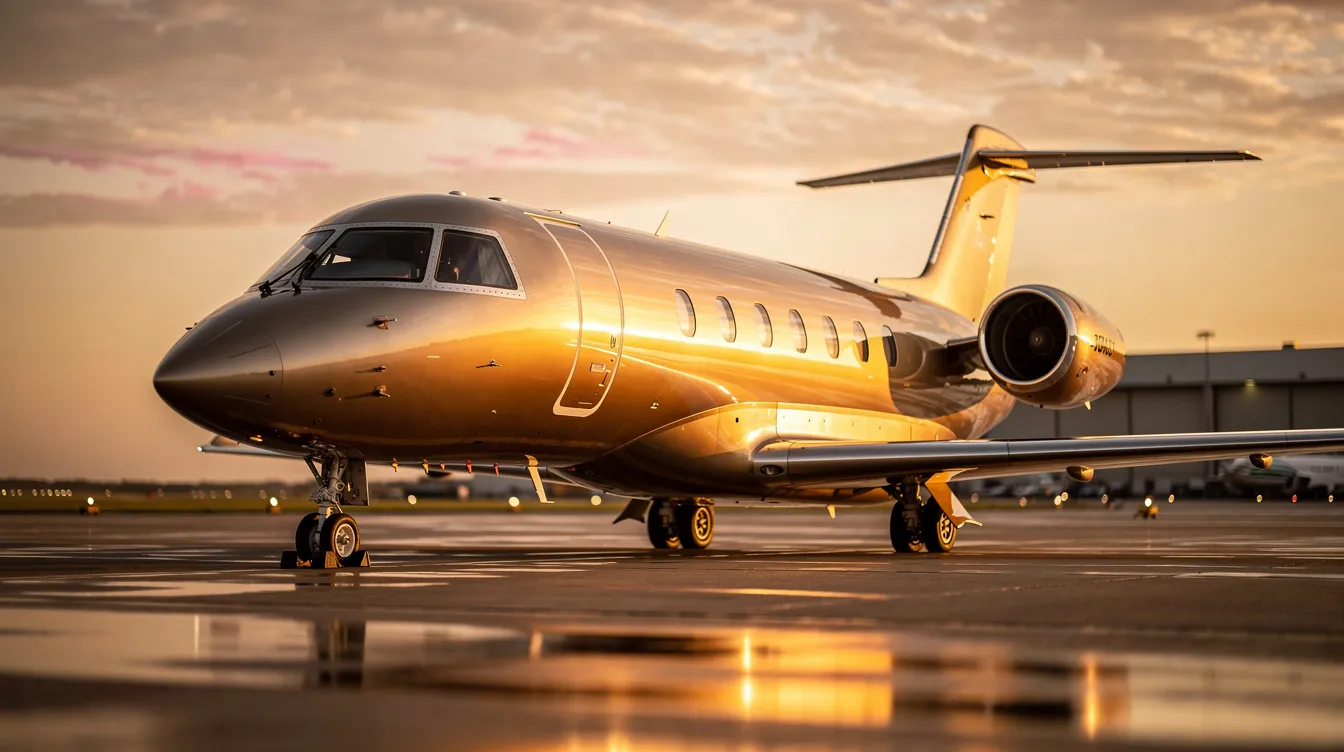
BlackJet isn't positioned as an either/or against American Airlines. It's an additional tool for high-value travelers who already understand the benefits of first and business class—offering a way to go beyond even Flagship First when the stakes or schedules demand it.
Core offerings include:
Jet Card programs (25-hour, 50-hour, and custom allocations) across multiple aircraft categories
On-demand private jet charter for one-off trips or complex itineraries
Guaranteed availability during peak travel periods
Carbon-neutral flights as standard on every booking
Consider the trips where members switch from a commercial first class ticket to BlackJet: a last-minute board meeting requiring a same-day round-trip that no airline schedule can accommodate, a multi-city European roadshow with 90-minute turns between cities, or flying into secondary airports in select markets not served by nonstop American routes—exactly the kind of patterns where a 100-hour jet card cost analysis helps determine whether deeper private access beats ad-hoc first class buying.
For the traveler who has experienced the best that airlines' first class can offer—and found it falling short on flexibility, privacy, or reliability—BlackJet represents the next level. Not a replacement for every flight, but the solution for the flights that matter most.
Explore how BlackJet can sit alongside your American Airlines first and business class travel, giving you private jet flexibility whenever commercial schedules stop working. Discover your jet card options and see what happens when premium travel truly revolves around you.


 Sign up with google
 Sign up with Apple