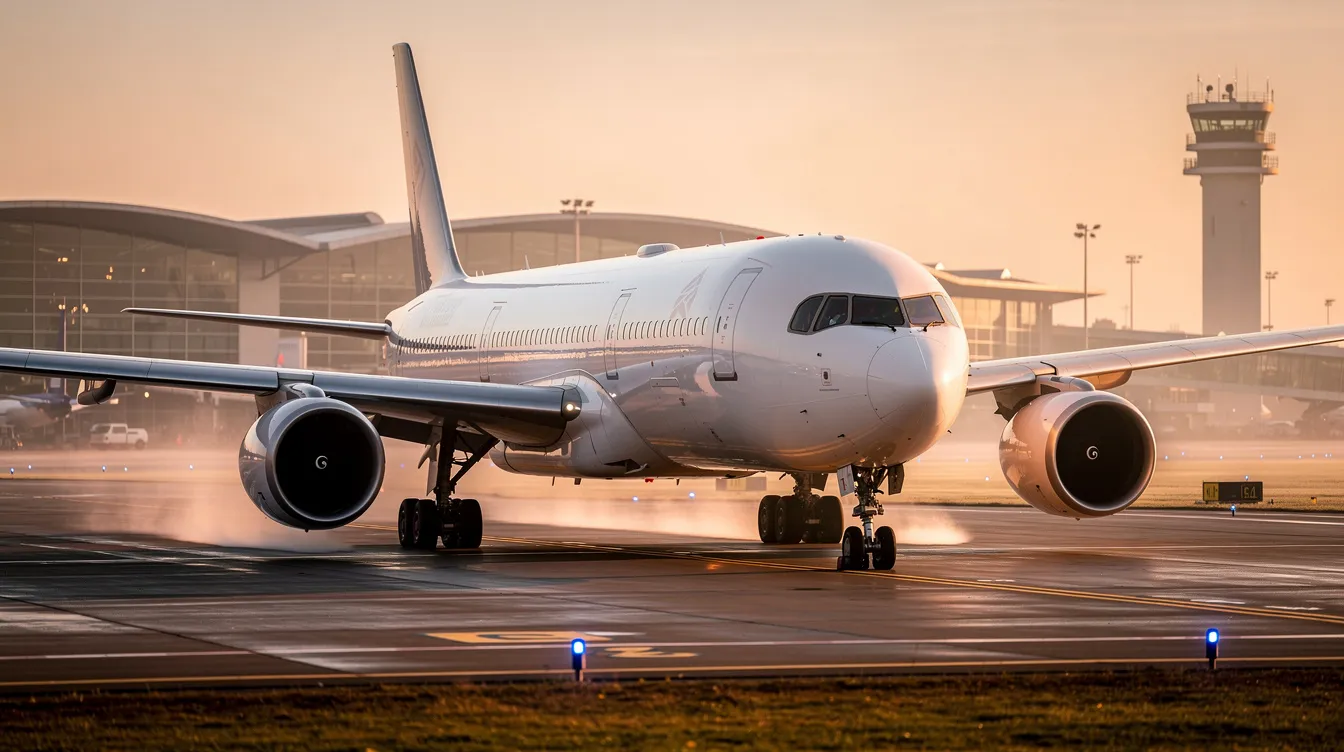
Commercial airlines do weigh passengers in some cases, but primarily for flight safety: accurate weight and balance calculations affect fuel burn, takeoff performance, and emergency planning, and most airlines rely on average passenger weights from periodic surveys rather than weighing every traveler individually. The practice can sound invasive, yet the reason is straightforward: every aircraft has a maximum takeoff weight set by its manufacturer, and exceeding that limit puts everyone on board at risk.
For frequent business travelers, high-net-worth leisure flyers, and anyone comparing commercial and private aviation, understanding how passenger weight is handled helps explain real differences in safety procedures, privacy, and flexibility. Passenger weight, combined with fuel, cargo, baggage, and the aircraft itself, determines whether a plane can safely leave the ground, and it also shapes the onboard experience through operating limits and performance margins. This article looks at why airlines weigh passengers, how weight affects aircraft performance, when carriers use averages instead of individual measurements, the privacy concerns involved, and how private aviation, including Jet Card membership pricing, approaches the issue differently.
Answering the big question: why do airlines weigh passengers?
For scheduled airlines, accurate weight data feeds directly into performance calculations for fuel burn, climb rate, runway distance, and emergency landing options. Every kilogram matters when pilots compute whether a flight can clear obstacles after takeoff or reach an alternate airport if something goes wrong. Carry-on luggage adds to that total; a cabin full of overstuffed bags shifts numbers that ground crews assumed were fixed.
Most large commercial airlines do not weigh every traveler at check-in. Instead, they rely on standard weights approved by regulators like the FAA, the European Aviation Safety Authority (EASA), or a country's civil aviation authority. These averages, updated through periodic surveys, let airlines estimate many passengers at once without individual scales. Finnair ran a voluntary weight survey at Helsinki Airport in 2024, collecting data from about 1,500 first volunteers. Air New Zealand's weight survey in 2023 aimed for 10,000 passenger readings from Auckland departures. Korean Air conducted a passenger weighing program in 2023 as well.
Private aviation handles the same physics differently. BlackJet's Jet Card programs collect declared passenger weight and baggage estimates during the booking process, not at a public gate. Only the member and the operations team see that data. The result: the same safety rigor, none of the social friction.
Passenger weight, safety, aircraft performance, and maximum takeoff weight
Every aircraft has a maximum takeoff mass specified by the manufacturer. Maximum Take-Off Mass includes the aircraft itself, passengers, crew, baggage, cargo, and fuel. A Boeing 737-800, for example, has an MTOW of roughly 79,000 kg. An aircraft's center of gravity must remain within specified limits to maintain control; weight distribution affects aircraft stability and control response in every phase of flight.
Total weight drives takeoff distance: a 10% increase in gross weight can increase ground roll by 20 to 25%, according to FAA performance data. Overloading can affect climb rate and cruising altitude, reducing the margin to clear terrain or obstacles. Weight impacts fuel calculations and emergency landing sites, because heavier aircraft burn more fuel just reaching cruise. Landing performance suffers too; higher approach speeds demand longer runways and stress brakes.
Airlines must account for weight and balance limits for operational safety during flights. Before each departure, airlines combine actual checked baggage and cargo weights with passenger weight estimates from standard tables. If 10 adults on a narrow-body aircraft each weigh 90 kg instead of the assumed 80 kg, that is a 100 kg underestimation, enough to change fuel reserves or runway requirements on a hot day. The FAA states maximum weight limits must be adhered to for safety. For private jets, where aircraft empty weight leaves less margin, operators ask for accurate passenger counts and approximate weights during booking because even a single passenger's carry-on baggage can shift the aircraft balance.
Why airlines use average passenger weight instead of weighing everyone
Weighing every passenger before each flight would create queues and slow boarding processes, require scales at every gate, and raise privacy objections. Aviation regulators require airlines to conduct random sample surveys every few years to comply with operating licenses, but they permit standard average passenger weight values between surveys.
Under EASA's current rules, the average weight of adult passengers plus carry-ons is 84 kg. The FAA average passenger weight is 190 pounds for men in summer; women average about 155 pounds. Airlines use average weights for passengers and luggage calculations rather than collecting data on every individual. These figures are updated periodically: Finnair updates its passenger weight data every five years and submits the weight data to the Finnish Transport and Communications Agency for verification. Finnair began weighing passengers in 2018 for data collection, then repeated the process in 2024 for the 2025 to 2030 cycle.
Even with averages, pilots receive a loading calculations report before every takeoff listing adults, children, infants, checked baggage, and cargo. Accurate weight data helps calculate fuel needs and balance, ensuring each flight stays within its certified envelope.
Why airlines don't weigh everyone, every flight:
Weighing passengers can create queues and slow ground processes.
Privacy and dignity concerns make routine individual measurement sensitive.
Regulators permit standard weights backed by periodic surveys.
Averages work statistically when sample sizes and confidence intervals meet regulatory thresholds.
When and where airlines actually weigh passengers
Finnair's 2024 weight survey at Helsinki Airport invited Finnair customers to step on a measuring point voluntarily across winter and spring. Finnair's weight data collection is anonymous and voluntary. The airline records total weight without it being linked to a passenger's personal details, name, or booking number. Background information from earlier surveys (2018) serves as a baseline. Results feed into standard weights valid through 2030, submitted to the Finnish Transport and Communications Agency.
Air New Zealand weighed 10,000 passengers in a 2022 survey at Auckland, covering domestic and selected international flights. New Zealand's civil aviation authority mandates these updates. Volunteers could weigh in on scales before the gate; readings were not displayed publicly. The airline expected real-world information to confirm or adjust post-pandemic averages.
Korean Air conducted a passenger weighing program in 2023, joining a growing list that includes Uzbekistan Airways in 2015 and smaller turboprop or helicopter operators that routinely weigh passengers before flying abroad or on scenic routes. For aircraft like the Cessna 208 or Beechcraft King Air, crew and ground staff use actual weights to determine seat assignments and ensure safe balance front to back. On helicopters and at remote airfields, weighing passengers is standard; booking conditions state it clearly.
BlackJet's approach differs. Passenger weight details are collected discreetly during booking using the BlackJet 25+ Hour Jet Card framework. A customer service agent working the reservation confirms counts and estimates. Actual weighing at the airport is rare, limited to unusual payload scenarios or very small aircraft.
Public concerns: privacy, dignity, and discrimination
Airlines weighing passengers creates headlines because it touches on body image, anxiety for people with eating disorders, and fears that weight data could be used for discriminatory pricing. Social media channels amplify these concerns.
Airlines conducting surveys protect confidentiality and avoid displaying individual readings. Weight surveys can be voluntary and should comply with privacy guidelines. Airlines typically make weigh-ins voluntary and anonymous to avoid passenger anxiety. Finnair and Air New Zealand both communicated clearly that the purpose is safe operation and regulatory compliance, not pricing by weight. In Europe, GDPR restricts how personal data is collected and stored; airlines must keep weight data aggregated and unlinked to identifiable information.
Some airlines maintain "passenger of size" policies requiring an extra seat when comfort or safety is affected, but that is separate from routine passenger weight surveys. In private jet travel, passenger weight is confidential operational data shared by the booker. Cabin privacy and low passenger counts eliminate the social pressure of being weighed in public; other aspects of the experience, from boarding at a private terminal to flexible luggage policies, reinforce that distinction.
How private aviation and Jet Cards handle passenger weight and luggage
In private aviation, weight estimates and hand luggage details are planned at the booking stage. When a BlackJet Jet Card member books a flight, the process captures the number of passengers and approximate weights, expected checked bags and carry-on luggage, and any unusual cargo or equipment, all of which roll into the overall Jet Card cost per hour.
This information helps match travelers to an appropriate aircraft category and the right spot on the private jet price list. Consider a member flying from New York to Aspen in winter with four passengers and heavy ski gear. Aspen sits at roughly 7,500 feet elevation, which degrades engine performance. The operator gathers declared weights, factors in baggage, then runs performance calculations against runway length, temperature, and fuel requirements. If margins are tight, the team may recommend an earlier departure for cooler air or a larger aircraft.
Unlike commercial flying, private jet travelers rarely encounter weight surveys at the terminal. Jet Card systems factor in typical passenger weight and luggage at quoting time. Adjustments happen proactively: reducing baggage, shifting schedules, or upgrading aircraft size. Safety comes from working only with audited operators that follow strict weight and balance procedures. Real-time digital booking tools check runway data, weather, and aircraft performance before confirming each flight. Careful weight planning also reduces unnecessary fuel burn, supporting BlackJet's carbon-neutral commitment and dovetailing with strategies to maximize Jet Card tax deductions for business travelers.
Commercial vs private: passenger weight rules compared
Factor | Commercial Airlines | Private Jets (BlackJet) |
|---|
Weight method | Standard average weight tables from regulators | Aircraft-specific loading calculations per trip |
Passenger weighing | Rare; only periodic surveys | Declared weights at booking; no public scales |
Baggage limits | Fixed dimensions and weight per fare class | Based on total weight and cargo hold capacity |
Seat assignment for balance | Occasional reseating on small regional planes | Pilots allocate seats discreetly with fewer passengers |
Communication | Airline-wide policies; limited individual contact | Direct conversation between traveler and operations team |
Flexibility | Rigid; overweight bags incur fees | Advisory; larger aircraft recommended if luggage is extensive |
The underlying physics are identical: every plane must stay within its certified weight and center of gravity range. The experience, however, feels entirely different. On a private aircraft, weight and balance is a solved problem before the traveler arrives at the airport, handled by the crew and operations team behind the scenes, whether you book a whole jet or simply buy a seat on a private jet through shared options.
FAQs about airlines weighing passengers and how BlackJet approaches weight
Are airlines allowed to weigh passengers before a flight? Yes. Regulators, including the FAA and the European Aviation Safety Agency, permit and sometimes require collecting data through passenger weight surveys. These are typically voluntary and anonymous.
Can a commercial airline refuse me because of my weight? No reputable carrier refuses boarding based on body weight alone. "Passenger of size" policies may require an additional seat for comfort and safety, but that is separate from weight surveys.
Will airlines start charging fares based on passenger weight? No regulatory framework supports weight-based pricing in scheduled commercial aviation. Weight data collected through surveys is used for safety and performance calculations, not ticket pricing.
Why did Finnair and Air New Zealand weigh passengers? Both airlines conducted surveys to update their standard weights as required by their respective civil aviation authority. Finnair surveyed roughly 1,500 volunteers at Helsinki Airport in 2024. Air New Zealand's survey aimed to verify whether average weight assumptions remained accurate after the pandemic.
Do private jets weigh passengers before boarding? Rarely. Private operators use declared weights provided during booking. Physical weighing occurs only in edge cases involving very small aircraft, critical runway conditions, or unusual cargo.
How much baggage can I bring on a private jet compared with commercial? Commercial flights enforce fixed limits per bag. On a private jet, baggage capacity depends on the aircraft's total weight margin and cargo hold size. If luggage is extensive, your advisor may recommend a larger cabin category.
Does passenger weight affect the cost of a BlackJet Jet Card flight? Declared weights and luggage influence aircraft selection and fuel burn, which affect operating costs. BlackJet does not charge based on individual body weight, but accurate weight data at booking helps avoid last-minute aircraft changes or fuel surcharges.
Conclusion: The Strategic Advantage of Weight Management in Private Jet Travel
Understanding passenger weight is more than a technical necessity—it's a cornerstone of aviation safety and operational excellence. Commercial airlines must rely on averages and periodic surveys to meet regulatory requirements, balancing efficiency with privacy concerns. However, this approach can introduce variability and occasional discomfort for travelers.
Private aviation, exemplified by BlackJet's Jet Card programs, transforms this challenge into a seamless advantage. By integrating precise weight and baggage data during booking and using transparent Jet Card pricing structures, private jet travel ensures optimal aircraft performance without compromising passenger dignity or convenience. This meticulous planning supports not only safety and regulatory compliance but also enhances sustainability by minimizing unnecessary fuel consumption.
For discerning travelers who prioritize safety, flexibility, and privacy, private jet access offers a refined experience where weight management is handled discreetly and expertly, especially when paired with the best Jet Cards for frequent flyers. This strategic approach elevates travel from a routine necessity to an effortless, premier journey tailored to your unique needs.
Elevate your travel — effortlessly. With BlackJet, private flight isn’t reserved for a few—it’s accessible on your terms through our Jet Card programs, whether you’re evaluating a 100-hour Jet Card cost or exploring a more modest 50-hour Jet Card option, complete with rigorous safety, carbon-neutral performance, and unmatched flexibility. Explore our offerings and discover how refined, meaningful travel becomes your new standard.
Join BlackJet’s Jet Card program for seamless, premium private travel — safety, sustainability, and flexibility built in, whether you’re comparing budget-friendly private aircraft options or planning the best private jet for 20 passengers on a group itinerary.


 Sign up with google
 Sign up with Apple