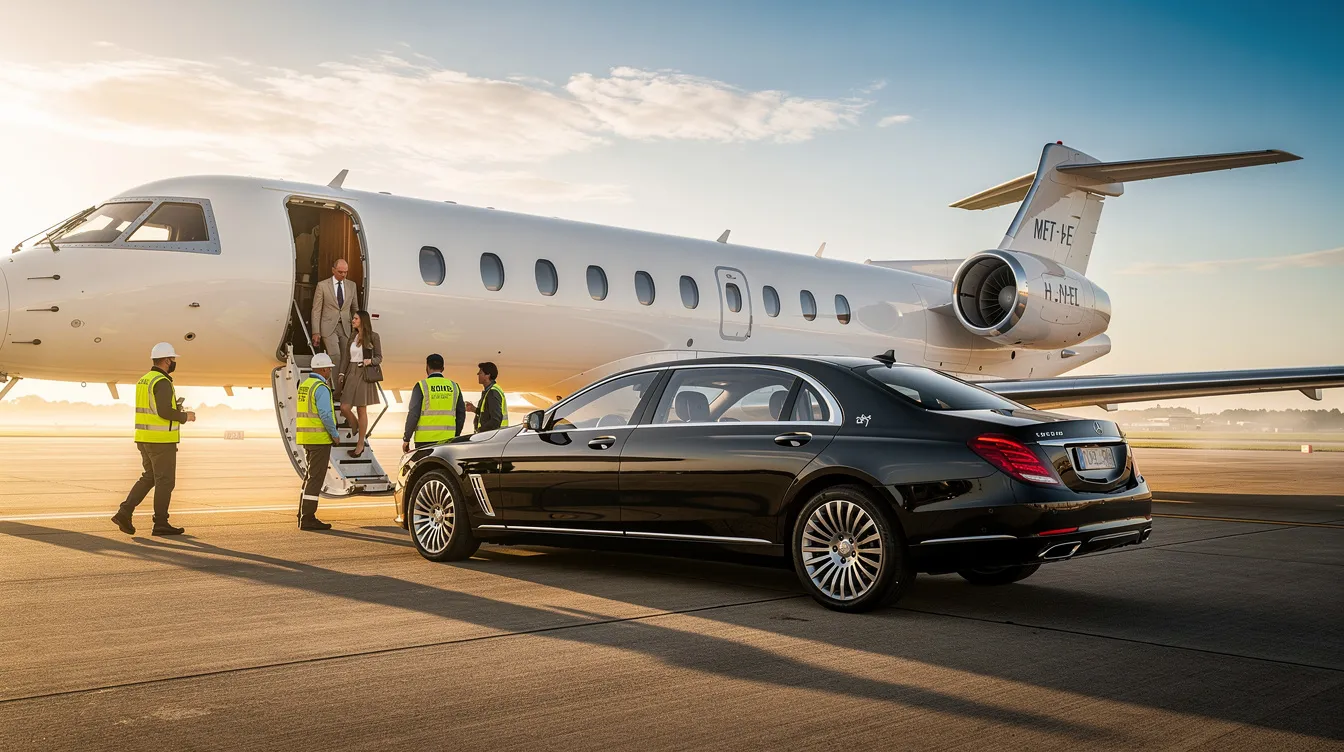
For executives, founders, and discerning travelers, a private jet terminal—often called an FBO, or fixed base operator—is a dedicated airport facility for private aviation that handles passenger reception, aircraft servicing, and fast, separate security away from the commercial terminal. It exists to remove the usual airport friction, turning ground time into a strategic asset rather than a logistical burden.
For frequent business flyers and high-net-worth leisure travelers who value flexibility, privacy, safety, luxury, and time efficiency, understanding how these terminals work can change how you plan every trip. This guide explains what services and amenities private jet terminals offer, where they fit into the travel experience, how they improve operations and security, what they can mean for cost and sustainability, and how BlackJet uses them to support a seamless Jet Card journey. This guide is designed for executives, founders, and high-net-worth travelers seeking to optimize their private aviation experience.
Why Private Jet Terminals Are a Strategic Advantage, Not Just a Luxury
At a commercial airport terminal, the clock works against you. Between check-in queues, security lines, gate changes, and boarding groups, most travelers surrender 90 to 120 minutes before every flight — time that compounds across a year of frequent travel. A private jet terminal compresses that window to just 15–30 minutes before departure, returning hours of productivity each month.
That reclaimed time is not abstract. Consider a BlackJet Jet Card member closing a funding round en route from New York to London: confidential documents reviewed in a private meeting room at the terminal, a brief walk to the aircraft, and wheels up — all without a single moment of public exposure. Or a founder running a same-day roadshow across three cities, using each terminal as a mobile office between legs. According to an EBAA economic study covering roughly 800,000 flights, business aviation produces aggregate time savings of 539 years compared to commercial alternatives, driven primarily by faster airport processes.
BlackJet Jet Card members access a vetted network of premium FBOs worldwide, where privacy, safety oversight, and carbon-neutral operations come standard. The terminal is not a waiting room — it is where the travel experience begins.
What Is a Private Jet Terminal (FBO)?
A private jet terminal is formally known as a fixed base operator, or FBO. It is a dedicated facility at an airport — distinct from commercial airport terminals — that provides all ground services for private aviation. FBOs operate as private facilities at airports, distinct from commercial terminals. FBOs operate as private facilities at airports, handling everything from passenger reception to aircraft servicing, without the high-volume foot traffic of a commercial concourse.
The term dates to the 1920s, when permanent service providers were distinguished from itinerant operators. Today, well-known FBO brands like Signature Aviation, Signature Flight Support, Atlantic Aviation, Jetex, and Jet Aviation manage terminals at airports ranging from Teterboro Airport in New Jersey to London Biggin Hill, Dubai Al Maktoum, and Westchester County Airport in New York.
An FBO's core roles include:
Passenger services - concierge, lounge access, expedited processing, and ground transportation coordination
Aircraft services - fueling, cleaning, de-icing, lavatory servicing, and hangarage
Crew support - rest facilities, flight planning resources, and crew transportation
Ground coordination - ramp operations, security compliance, and customs or immigration services for international arrivals
BlackJet's operations team selects FBO partners based on safety standards, service quality, and sustainability initiatives such as access to sustainable aviation fuel.
From Curb to Cabin: How the Private Terminal Experience Actually Works
The private jet terminal experience is built around a single principle: eliminate unnecessary steps. Here is how a typical BlackJet trip day unfolds:
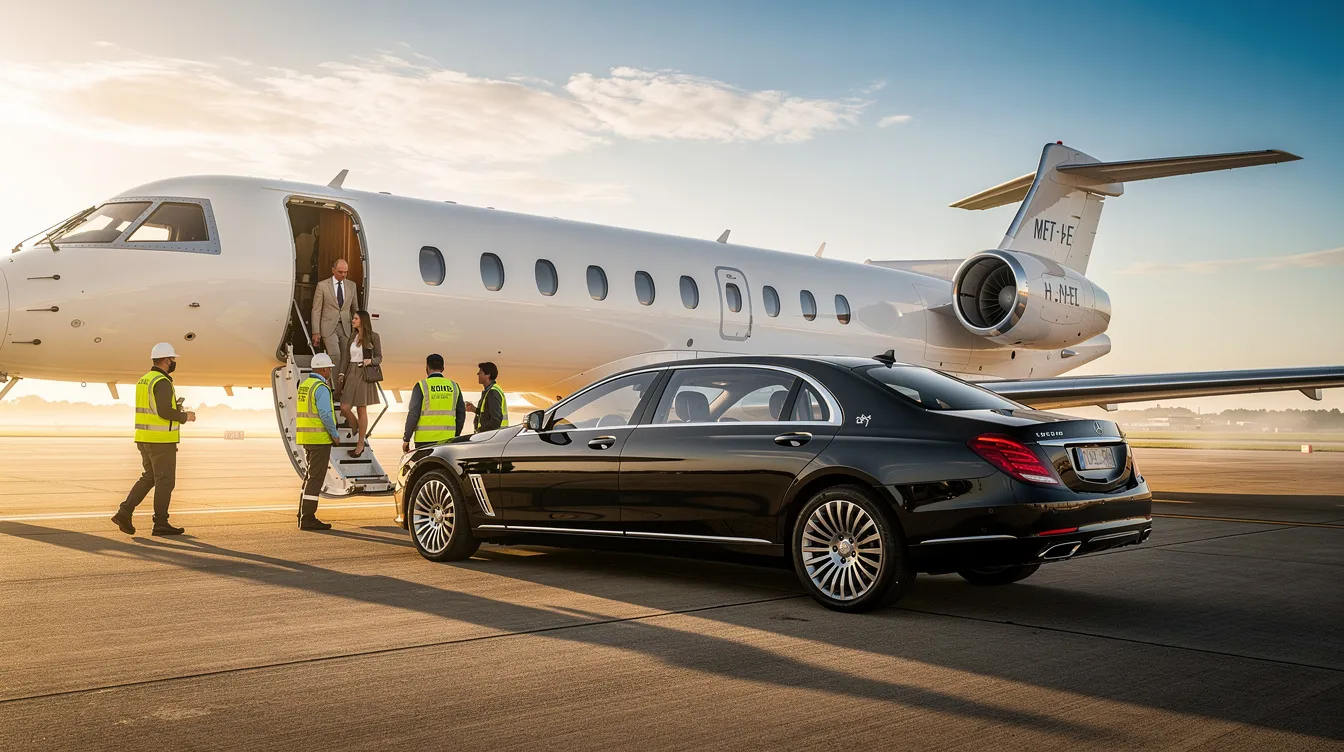
Arrival - your car pulls up curbside at the FBO. At many private terminals, vehicles have direct ramp access, meaning you can drive close to the aircraft itself. The transition from curbside to cabin is streamlined compared to anything at commercial airports.
Greeting and luggage - FBO staff greet you by name. Baggage is handled directly from your vehicle to the aircraft, with minimal waiting times and no carousel delays.
ID verification - a brief manifest and identity check replaces the public TSA line. Security screening at FBOs is typically private and expedited, yet fully compliant with FAA and TSA regulations.
Lounge - for domestic private jet flights, you may spend five to ten minutes in a quiet lounge. For international flights requiring dedicated customs, plan for 30–45 minutes before departure to complete customs and immigration processing.
Boarding - a short walk, sometimes just steps, from lounge to aircraft. No jet bridges, no gate announcements, no queues.
Scenario: A BlackJet Jet Card member arrives at Teterboro Airport during a busy New York morning. At 8:05 AM, she steps through the FBO entrance. By 8:15, she is seated on a light jet, wheels up for Boston. Total car-to-cabin time: under ten minutes. That is a stark contrast to the experience at any of the region's busy airports.
Key Services Offered at Private Jet Terminals
Private jet terminals offer far more than a place to wait. They function as full-service travel hubs where every detail — from catering to customs — is managed before you arrive.
Passenger services:
Expedited check-in with personalized service and no queues
Concierge services that assist with travel planning, in-flight catering, hotel reservations, and special requests
Bespoke services including ground transportation coordination with executive sedans, SUVs, or helicopter transfers
Baggage handling that ensures luggage is delivered almost instantly between lounge and aircraft
Business amenities:
Conference rooms and private meeting rooms for pre-flight meetings or post-arrival briefings
High-speed wi fi, printing, scanning, and quiet space for focused work
Video-conferencing setups at flagship locations
Operational support services:
FBOs can support aircraft with fueling, cleaning, and maintenance services
De-icing, hangarage, and crew rest facilities
FBO staff manage ramp space and coordinate air traffic control clearances
Customs and immigration:
On-site U.S. Customs is available at 35+ FBOs, providing expedited customs processing for international travelers
Customs procedures at private terminals are more discreet than at commercial terminals
Where on-site facilities are unavailable, passengers may be escorted to nearby customs areas
Immigration assistance and immigration services are coordinated seamlessly by the FBO
BlackJet's 24/7 flight support team ensures every element — FBO services, crew readiness, catering preferences, and concierge arrangements — is aligned before you arrive.
Exclusive Facilities and Amenities: Inside a Modern Private Jet Terminal
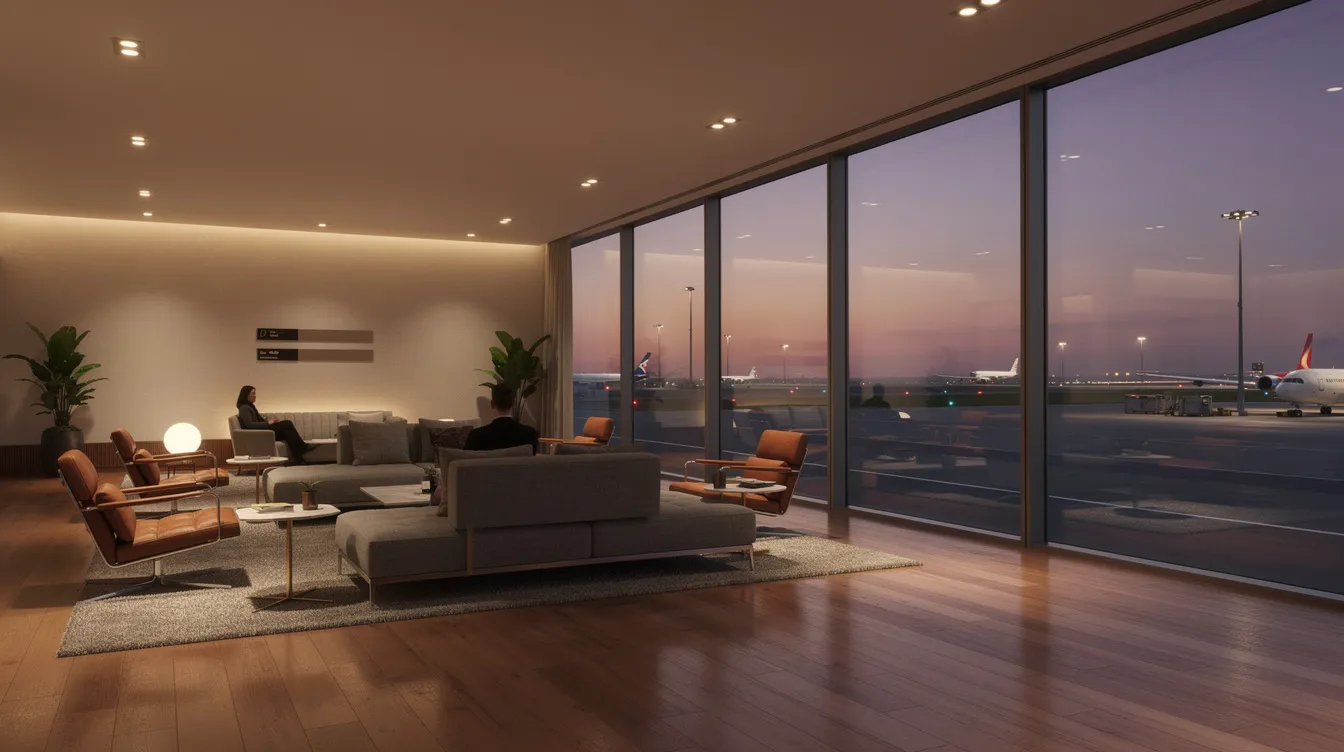
Step inside a top-tier FBO and the difference from commercial terminals is immediate. Private jet terminals handle under 20 passengers at peak times, creating a quieter environment with low foot traffic and minimal public exposure. Passengers at FBOs enjoy additional privacy with low passenger volumes and dedicated lounges.
Many private jet terminals feature:
Designer interiors with curated art, floor-to-ceiling windows overlooking the ramp, and refined furnishings that rival boutique hotels
Fully stocked bars, café stations, gourmet refreshments, and luxury lounges with refreshments
Showers, spa or wellness rooms at flagship locations, nap suites, kids' areas, and pet-friendly zones
Boardroom-style conference rooms seating 6 to 14 people, private call booths, and dedicated quiet work pods with wi fi, refreshments, and private meeting spaces
FBOs provide a quieter environment than commercial terminals, suitable for business meetings or simply unwinding before a flight. The privacy offered at these exclusive terminals is one of the primary differences between private and commercial travel.
Smaller regional terminals may offer a cozy lounge with simple refreshments and essential business tools — still worlds apart from a commercial gate. BlackJet prioritizes terminals that deliver both privacy and consistency, so Jet Card members know what to expect whether departing from New York or Nice.
Where Private Jet Terminals Are Located: New York and Global Business Hubs
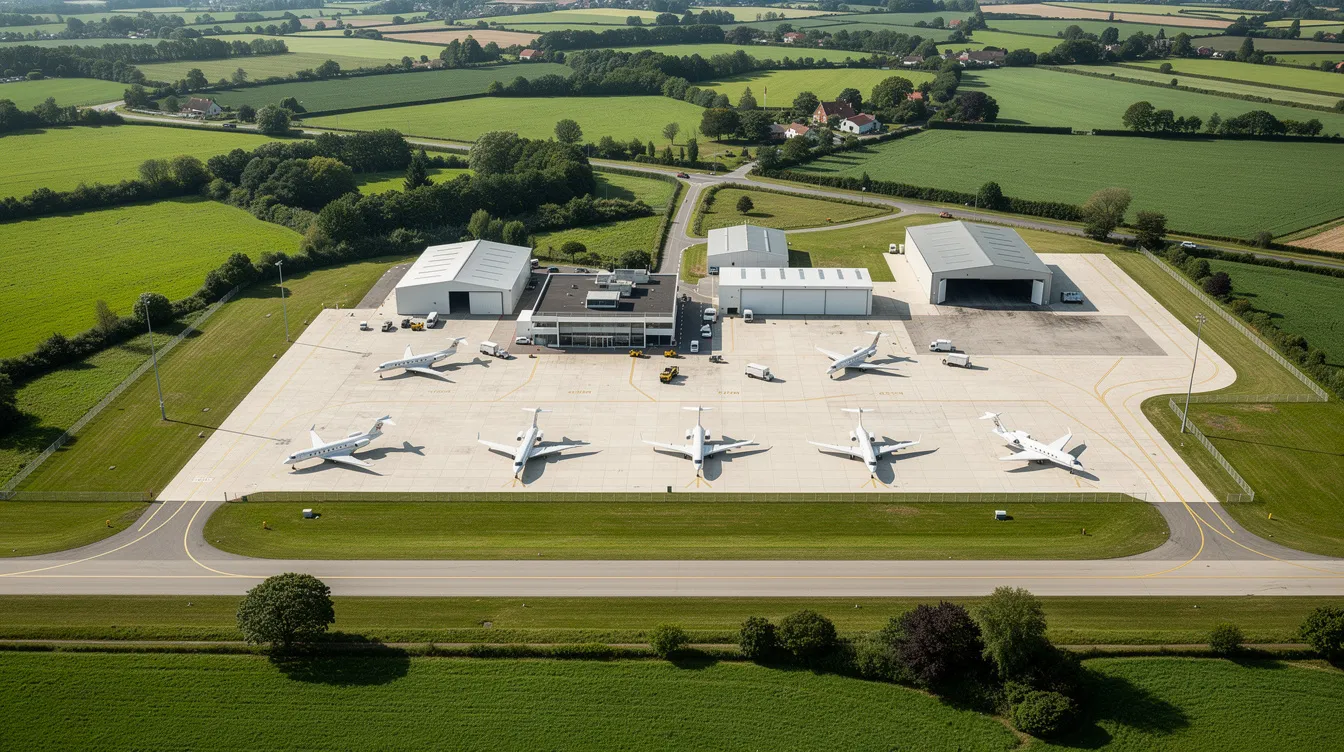
Private jet travel through FBOs can allow access to smaller airports than commercial airlines - and there are far more of them. There are over 5,000 private jet terminals in the U.S. alone, and globally, approximately 4,776 FBOs operate across 3,556 airports. Compare that to roughly 500 major airports served by commercial flights.
New York metro area:
Teterboro Airport has 8 private jet terminals, located roughly 12 miles from Midtown Manhattan — often faster to reach than JFK or Newark
Westchester County Airport (White Plains) offers premium FBOs with less congestion; a strong alternative for Manhattan-bound executives
Morristown Municipal provides another option with competitive fees and quality facilities
Other key markets:
Van Nuys Airport offers 6 private jet terminals serving the Los Angeles basin
Los Angeles International Airport hosts 5 private jet terminals for travelers who need proximity to the city's west side
London Biggin Hill, Paris-Le Bourget, Geneva, and Dubai Al Maktoum serve as major hubs for international business aviation
BlackJet's network strategy is deliberate: selecting FBOs that minimize ground time and traffic exposure. For a Manhattan executive, that might mean choosing Teterboro or White Plains over JFK. For a New York–Miami routing, premium FBOs at both Teterboro and Opa-Locka simplify everything from departure to arrival. A New York–Toronto trip leverages on-field customs processing at both ends, eliminating the need to connect through a congested commercial facility at the same airport.
Business Aviation Use Cases: How Different Travelers Use Private Jet Terminals
Business executives represent approximately 68% of private jet terminal users, but the value extends well beyond the boardroom. Here is how different travelers use these facilities:
Corporate executives and boards - same-day multi-city itineraries with confidential meetings held in FBO conference rooms between legs. A CEO might fly Teterboro to London to Geneva and back, working from each terminal. Many travelers in this category value the hassle free experience and significant time savings that private terminals deliver.
Family and leisure travelers - avoiding busy airports entirely. Children, pets, and oversized luggage (skis, golf bags, instruments) are loaded directly onto the aircraft. No crowds, no stress, no long security lines.
Sports and entertainment clients - large entourages, specialized gear, tight schedules between events, and a need for discretion. FBOs accommodate odd-hour operations and provide the additional privacy these clients require.
High net worth individuals - often prioritize sustainability, safety certifications, and ultra-personalized service alongside luxury. The Jet Card model offers predictable pricing and exclusive access to vetted operators.
BlackJet's technology allows travelers or their assistants to coordinate preferences in advance through a digital portal — selecting catering, ground transportation, meeting room reservations, and special requests before wheels up.
Key Considerations When Choosing a Private Jet Terminal for Your Trip
Selecting the right private jet terminal involves more than picking the closest airport. Here are the key considerations BlackJet's flight advisors evaluate for every itinerary:
Operational factors:
Runway length and aircraft size compatibility (many business jets require 5,000+ feet)
Opening hours and night operations - Teterboro, for example, has a voluntary noise curfew from 11 PM to 6 PM
Availability of de-icing, hangar space, and exact timing for turnaround
Passenger-centric factors:
Privacy level and lounge quality at the right FBO
Availability of on-site customs for international flights and expedited processing
Typical congestion - choosing a less crowded field can mean a more comfortable journey
Cost factors:
Landing and handling fees, ramp and parking charges, and how FBO fees relate to charter price
Busy airports charge roughly 30% more than regional alternatives for comparable services
Airport selection can meaningfully shift ground costs without sacrificing the travel experience
Ground transportation:
BlackJet presents clients with options — not a single default. The goal is always the right balance of speed, privacy, cost, and service at each end of every leg.
Safety, Security, and Sustainability at Private Jet Terminals
Private aviation safety begins on the ground. At FBOs, trained line crews manage fueling, marshaling, and ramp operations under strict protocols. Access control includes secure gates, CCTV, credential verification, and controlled entry — all creating security processes that are rigorous yet invisible to passengers.
Safety:
BlackJet partners only with operators and FBOs that meet or exceed industry audit standards (ARGUS, Wyvern, IS-BAO)
Compliance with FAA Part 135 requirements for crew qualifications, maintenance, and duty times
Security:
Controlled access doors, ID verification at entry, private screening where required
Close coordination with local airport authorities and TSA
Sustainability:
Sustainable aviation fuel is now available at major FBOs such as Jet Aviation Teterboro, where SAF is offered at approximately $11.34 per gallon
BlackJet ensures every flight is carbon neutral — at no extra cost to members
Choosing less congested airports reduces taxiing and idling, further lowering environmental impact
Environmentally responsible choices do not compromise the luxury experience. They enhance it.
Costs, FBO Fees, and How They Relate to Your Private Jet Charter
FBO fees are a real but manageable component of private jet charter costs. Understanding what you are paying for removes surprises.
Fee Component | Typical Range |
|---|
Handling fees | $300 – $1,500 per stop |
Ramp usage fees | $50 – $300 per hour |
Overnight hangar fees | $500 – $5,000 |
Landing fees (weight-based) | $200 – $800 |
Special event surcharges | $2,600 – $11,300+ |
FBO fees typically account for 10–15% of total trip costs. During peak periods — New York during the UN General Assembly, or popular destinations during major sporting events — surcharges at premium fields can spike substantially. Flexible scheduling, choice of alternate airports, and intelligent routing can reduce these costs without sacrificing service quality.
For Jet Card members, BlackJet aims for transparent pricing: fees are either bundled into an all-in quote or clearly itemized, so there are no ambiguities about what a given charter provider is charging.
How BlackJet Uses Private Terminals to Elevate the Jet Card Experience
BlackJet's Jet Card membership model is designed to integrate seamlessly with private jet terminals. Members receive guaranteed access to vetted operators, predictable pricing, and priority handling at partner FBOs across the world's largest network of private aviation services.
The digital experience lets members request flights, review proposed airports and FBOs, and add requests for catering, lounge use, or ground transportation—all from a single platform.BlackJet's 24/7 operations team then coordinates every detail with FBO staff.
Example 1: A member's meeting in New York runs late. BlackJet's team adjusts the FBO briefing, notifies crew, and shifts catering timing - the member arrives at the terminal and everything is ready, no calls necessary.
Example 2: A member flying regionally - New York to Boston to New York - uses different FBOs at each end but expects the same standard of lounge quality, privacy, and personalized service. BlackJet ensures partner FBOs at both locations meet those expectations.
Example 3: A family traveling with two dogs and ski equipment to Aspen. BlackJet pre-coordinates pet handling, oversized baggage loading, and a child-friendly lounge at both departure and arrival terminals.
Practical FAQs About Private Jet Terminals
How early should I arrive at a private jet terminal?
Private jet terminals allow arrivals just 15–30 minutes before departure for domestic flights. For international flights requiring customs, arrive 30–45 minutes early. Your BlackJet advisor will confirm exact timing for each leg.
What identification is required?
A valid government-issued photo ID for domestic flights. For international travel, a passport and any required visas. The FBO handles manifest verification and identity checks privately.
Can my car drive up to the aircraft?
At many FBOs, yes - vehicles with ramp access credentials can pull up near the aircraft for planeside boarding. At others, a short walk from the FBO entrance is all that separates you from your jet.
How are pets handled?
Pets are welcomed at most private terminals. FBO staff assist with loading, and there is far less stress than navigating a crowded commercial facility. Advance notice helps, especially for international flights with animal health requirements.
How do customs and immigration work at private terminals?
Private jet terminals offer expedited customs processing at over 35 locations in the U.S. Where on-site facilities are unavailable, passengers may be escorted to nearby customs areas. For a deeper look, see our guide on how private jets clear customs.
Can I request a specific FBO?
Yes. Preferences for specific FBOs are accommodated when possible. BlackJet presents options based on your itinerary, cost, amenities, and availability.
Is ground transportation included or separate?
Ground transportation is typically arranged separately. BlackJet coordinates executive sedan, SUV, or planeside pickup services in major markets like New York, Los Angeles, and London, with costs clearly communicated in advance.
Do Jet Card members experience differences from on-demand charter clients?
Yes. Jet Card members benefit from pre-negotiated FBO networks, more consistent amenity standards, and often more favorable fee treatment. On-demand private jet charter clients may encounter greater variability in FBO selection and pricing.
Conclusion
Private jet terminals combine privacy, speed, and tailored service to reshape the travel day for both business and leisure flyers. The facilities and amenities are visible. What most travelers never see—and never need to—is the seamless coordination of aircraft, crew, safety, ground transportation, and terminal logistics happening behind every departure.
That invisible orchestration is what separates a flight from an experience. BlackJet's pillars—safety and certification, sustainability through carbon-neutral flights and SAF access, and technology-driven real-time support—are embedded in every leg, at every terminal, on every journey.
If you are ready to experience what private travel should feel like, explore BlackJet Jet Card membership or speak with a flight advisor about optimizing your next journey through the right mix of aircraft, airport selection, and terminal choices.


 Sign up with google
 Sign up with Apple