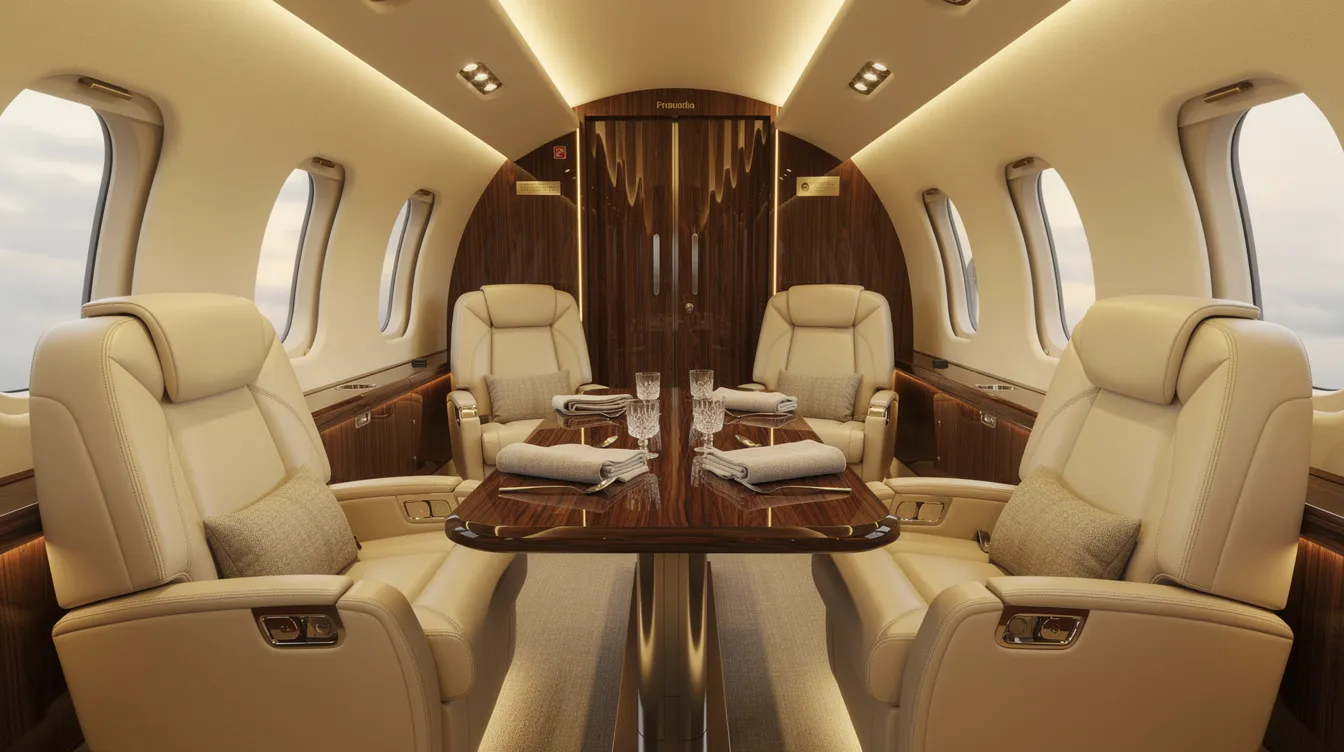
Why Aircraft Co-Ownership Keeps Coming Up in 2026
Private aviation demand has remained stubbornly above pre-COVID benchmarks. Business jet utilization in 2024–2025 stayed elevated over 2019 levels, driven by unreliable commercial schedules, privacy demands, and the need for schedule flexibility. That sustained demand has pushed high-net-worth travelers and corporate buyers to rethink how they access private aircraft - and aircraft co-ownership has resurfaced as a serious contender.
This guide is for private flyers, business travelers, and corporate buyers considering alternatives to full aircraft ownership.
The concept is straightforward: two or more parties share title, which also spreads the ongoing expense of ownership, plus costs and responsibilities on a specific private aircraft, gaining access at roughly half the cost of sole ownership. At BlackJet, we don't sell aircraft or manage co-owned planes. We provide Jet Card and on-demand charter as an alternative for travelers who want private flying without any ownership agreement at all.
By the end of this article, you'll know when co-ownership makes financial sense, where it creates conflict, and when a jet card or charter through BlackJet is a cleaner path, especially for some companies that want to avoid ownership obligations.
What Is Aircraft Co-Ownership, Really?
Aircraft co-ownership means two or more individuals or entities hold legal title to a single aircraft - typically through an LLC or tenancy-in-common arrangement - sharing fixed costs, variable costs, and operational responsibilities in proportion to their interest.
You'll encounter related terminology in broker and legal materials: "aircraft co," "joint ownership," "co-ownership arrangements," and "tenants in common." These differ in legal nuance (survivorship rights, transferability), but day-to-day they function similarly: multiple owners, one airplane.
Co-ownership is not the same as fractional ownership, which involves purchasing shares of a managed fleet rather than holding title to one specific tail number.
Co-ownership is not the same as fractional ownership, which involves purchasing shares of a managed fleet rather than holding title to one specific tail number.

Concrete examples clarify the model. Two business partners in Austin might share a 2015 Citation CJ3+ for regional U.S. trips. A family in London and a family in Geneva could co-own a 2020 Pilatus PC-12 NGX for Europe-wide travel. In both cases, the aircraft carries a single registration that points back to an entity with multiple members, making it critical to match the mission with the best small private aircraft for your needs or even explore the cheapest private aircraft options and entry-level private jets for budget-conscious travelers.
Most co-ownership is private Part 91 use - no charter. Flying the aircraft for hire under Part 135 requires additional structure and certification. Co-ownership is usually designed around 50–200 hours of flying per co-owner per year, a range where full ownership can be a significant investment for an asset that would otherwise sit idle much of the time.
Co-ownership is not the same as fractional ownership, which involves purchasing shares of a managed fleet rather than holding title to one specific tail number.
How Aircraft Co-Ownership Differs From Fractional Programs and Jet Cards
Three models dominate private aviation access: co-ownership of a specific aircraft, fractional programs (buying a 1/16 or 1/8 share in a fleet), and access products like a jet card with no ownership at all.
With co-ownership, you and one or more co-owners own one aircraft. Together, the owners must operate the aircraft through shared decisions on crew, maintenance, and scheduling, and directly approve any charter use to offset costs. You have more control - and more responsibility.
Fractional ownership involves purchasing shares of a managed fleet. A 1/8 share in a midsize jet might deliver roughly 100 hours per year, but the operator controls aircraft assignment, crews, and scheduling priority across dozens of aircraft.
A jet card - like BlackJet's premium Jet Card programs including 25-hour jet card options, 50-hour jet card programs, or even 100-hour jet card solutions - works differently. You prepay for hours, compare jet card cost per hour across providers, tap into the best jet cards for frequent flyers, fly across multiple aircraft categories (light, midsize, super midsize, large cabin), and carry no equity or long-term ownership obligations.
Here's who handles what in each model:
Aircraft selection: Co-owners choose their aircraft; fractional programs assign fleet aircraft; jet card providers match category to mission.
Crew hiring: Co owners hire and manage; fractional operators employ crews; jet card providers vet operators.
Maintenance risk: Co-owners bear it fully; fractional operators absorb it within fees; jet card holders carry zero maintenance exposure.
Scheduling: Co owners negotiate among partners; fractional programs use fleet-wide algorithms; jet cards offer guaranteed availability.
Co-ownership trades lower capital outlay for higher complexity, while BlackJet's Jet Card trades zero ownership for maximum flexibility.
How Aircraft Co-Ownership Arrangements Are Structured
The right structure is what separates a smooth partnership from a conflict-ridden one. Co-ownership agreements should be finalized before acquiring the aircraft - never after.
Most co ownership arrangements are structured through a limited liability company, often paired with strategic aircraft financing options. Common setups include a single LLC owning a 2018 Embraer Phenom 300E with two members at 50% each, or two separate LLCs holding tenants-in-common interests in a Gulfstream G450 to separate depreciation and tax strategies.
A co-ownership agreement typically covers:
Capital contributions and acquisition cost allocation
Fixed and variable costs clearly defined and split (hangar, insurance, fuel, maintenance reserves)
Scheduling rights and priority rules
Crew selection and training standards
Maintenance responsibilities and collaboration on maintenance decisions
Exit terms, buyout rights, and valuation formulas
A formal agreement is essential for defining costs, usage, and responsibilities. It should be drafted by an aviation attorney - not a generic partnership template. Co-ownership agreements help prevent misunderstandings between owners and protect all parties involved.
FAA compliance requires all co owners to be listed on the registration certificate. Lenders require minimum equity per partner and guarantors. Insurers want named pilots, recurrent training records, and minimum flight hours by seat.
Co-owners should also agree on avionics upgrade standards (ADS-B, WAAS, FANS for oceanic operations) and safety management policies to maintain dispatch reliability and long-term asset value.
Benefits of Aircraft Co-Ownership (and Where It Truly Saves Money)
Co-ownership can halve or quarter the cost of ownership for each partner while delivering the feel of "my own aircraft" for moderate-use flyers, and it should be evaluated alongside a broader private jet price list and ownership cost framework.
The financial math is compelling. Two owners each invest $3M instead of one owner investing $6M in a 2019 Challenger 350. Annual operating costs can exceed $300,000 to $500,000 for a midsize jet - but sharing fixed operating costs like insurance, hangar fees, crew salaries, training, and calendar-based inspections immediately cuts each partner's burden. Co owners can reduce financial strain while maintaining aircraft access.
Shared ownership facilitates purchasing newer or better-equipped aircraft that individual owners might not justify alone. Co-ownership also offers potential for financial equity build-up upon sale, unlike pure charter or jet card arrangements where every dollar spent is a cost, not an investment.
Revenue offsets are possible too. An aircraft placed on a Part 135 certificate when not in owner use can generate $400–$800K per year in charter revenue, offsetting a portion of fixed and variable costs, while understanding whether chartering a private jet is worth it financially and the broader meaning of charter flights and how they work helps set realistic expectations. For larger groups, some owners may compare this to chartering aircraft for around 100 passengers, while long-term private jet leasing structures can further tailor capital commitments and cash flow.
Qualitatively, co ownership allows better access and scheduling control than renting, familiarity with a consistent cabin and crew, and the ability to base the aircraft at a convenient home airport.
Some BlackJet clients begin with jet card flying, often via the BlackJet 25+ Hour Jet Card, to understand their true annual usage profile before deciding whether co-ownership could be justified - a strategy Brown Advisory calls "buy the mission, not the jet."
Risks, Conflicts, and Deal-Breakers in Co-Ownership Agreements
Most aircraft co ownership disputes arise not from flying, but from misaligned expectations around money, time, and standards.
Partners in a co-ownership may face scheduling conflicts on holidays or weekends. Picture two owners both wanting Christmas week from Teterboro to Vail, or early September for Mediterranean holidays. Scheduling conflicts often arise during peak travel periods, and poorly drafted priority rules breed resentment fast.
Disagreements on maintenance can lead to partnership-ending disputes. One co owner may prefer extending cosmetic refurbishments and using lower-cost shops. Another insists on OEM service centers and proactive component overhauls. These differences directly impact long-term asset value and dispatch reliability.
Exit complications can occur if one owner wants to sell their share after three years while the other plans to hold for a decade. Without pre-agreed valuation formulas and buyout rights, the process stalls. A co-ownership agreement should define exit terms clearly, and it should be drafted with aviation legal counsel experienced in Part 91 and Part 135 issues.
Liability exposure is real. Misuse of the aircraft - illegal charter, "grey charter," or cost sharing beyond legal limits - by one co owner can expose all owners to regulatory action and insurance claim denials.
With BlackJet's Jet Card, you assume no residual value risk, no maintenance or crew disputes, and no partner exit complications. Only usage commitments defined in the card terms.
Is Aircraft Co-Ownership Right for You - or Is a Jet Card Smarter?
The decision isn't "private vs. commercial" - it's which private model matches your flight profile, risk tolerance, and desire for control, and how each aligns with your overall private jet pricing and access options.
Usage guidelines: For many travelers, understanding overall jet card cost structures is a key part of comparing these models.
Co-ownership: fits 50–200 hours per year when you want a specific right aircraft type based near you
Fractional programs: 50–300 hours with multi-city missions, often with distinct fractional jet ownership depreciation dynamics
Full ownership: typically justified beyond 250–300+ hours of predictable annual use
Jet card or charter: any volume, especially variable destinations and lower net cost priorities, making it important to grasp jet card pricing structures and benefits
Co ownership works for prospective co-owners like two families sharing a Vail-based light jet for ski seasons, or two regional CEOs splitting a turboprop for weekly factory visits. These patterns sit within a broader fleet of private jets worldwide and global ownership trends, and many buyers will compare providers across top private jet companies and access models. Tax implications vary for co-ownership, including potential sales or use taxes that demand advisor guidance, just as fractional jet ownership tax benefits require careful planning.
Jet cards serve global executives alternating between New York–London and Miami–São Paulo, or leisure clients whose destinations shift seasonally, including those weighing the cost of a 12-seater private jet across ownership and charter or evaluating the best private jets for 20 passengers against their needs. BlackJet delivers guaranteed access across multiple cabin classes, and many flyers also benchmark these options against the top luxury private jets in the world, with carbon-neutral flights as standard, 24/7 digital booking, strict third-party safety auditing, and zero need to manage crew, hangar, or maintenance - an elegant solution for those who value flexibility above all.
Frequently Asked Questions About Aircraft Co-Ownership
What is a joint ownership agreement in aircraft co-ownership?
A joint ownership agreement is a formal contract that outlines each co-owner's rights, responsibilities, cost shares, scheduling priorities, maintenance duties, and exit terms. It is essential to have this agreement drafted by an aviation attorney to address the unique legal and operational aspects of aircraft co-ownership.
Who manages the flight crew in a co-ownership arrangement?
In aircraft co-ownership, the co-owners typically collaborate to hire and manage the flight crew. Decisions about crew selection, training standards, and ongoing qualifications are usually specified in the co-ownership agreement to ensure safety and consistency.
Can additional short term funding be arranged if one co-owner needs extra capital?
Yes, co-ownership agreements can include provisions for additional short-term funding to cover unexpected expenses or upgrades. This ensures that all owners remain responsible for their share of costs and that the aircraft remains well maintained, whether the underlying asset is a light jet, turboprop, or a large platform described in guides to buying a Boeing 737 for private use. For travelers not ready for any ownership stake, there are also flexible access models such as buying a single seat on a private jet through shared and semi-private services.
Why is it important to work with an aviation attorney when forming a co-ownership?
An aviation attorney specializes in the complex regulatory, tax, and operational issues involved in aircraft ownership. They help draft a joint ownership agreement that protects all parties, ensures FAA compliance, and addresses exit strategies and liability concerns.
How can co-owners be responsible for safety and regulatory compliance?
Co-owners share responsibility for maintaining the aircraft in accordance with FAA regulations and safety standards. This includes ensuring the flight crew is properly certified, the aircraft is maintained on schedule, and that all operational protocols are followed to preserve safety and asset value.
Discover how BlackJet can reshape your travel. Speak with our team to analyze your actual flying pattern before committing capital to any aircraft ownership or co-ownership structure.
Conclusion: Is Aircraft Co-Ownership Right for You?
Aircraft co-ownership offers a compelling balance of cost savings, control, and access for travelers flying 50 to 200 hours annually who are comfortable sharing responsibilities and navigating partnership dynamics. It can unlock access to newer, better-equipped aircraft at a fraction of sole ownership costs, while providing potential financial equity build-up and scheduling priority over charter.
However, co-ownership requires clear agreements, aligned expectations, and active collaboration to avoid common pitfalls such as scheduling conflicts, maintenance disagreements, and exit complications. For those seeking maximum flexibility without ownership obligations, BlackJet’s Jet Card programs deliver seamless, carbon-neutral private jet access with no long-term commitments or operational burdens.
Ultimately, the choice depends on your travel profile, risk tolerance, and desire for control. Whether you pursue co-ownership or a premium jet card, BlackJet stands ready to elevate your private aviation experience with safety, sustainability, and sophistication.
Explore premium jet access with BlackJet and discover a smarter way to fly.


 Sign up with google
 Sign up with Apple