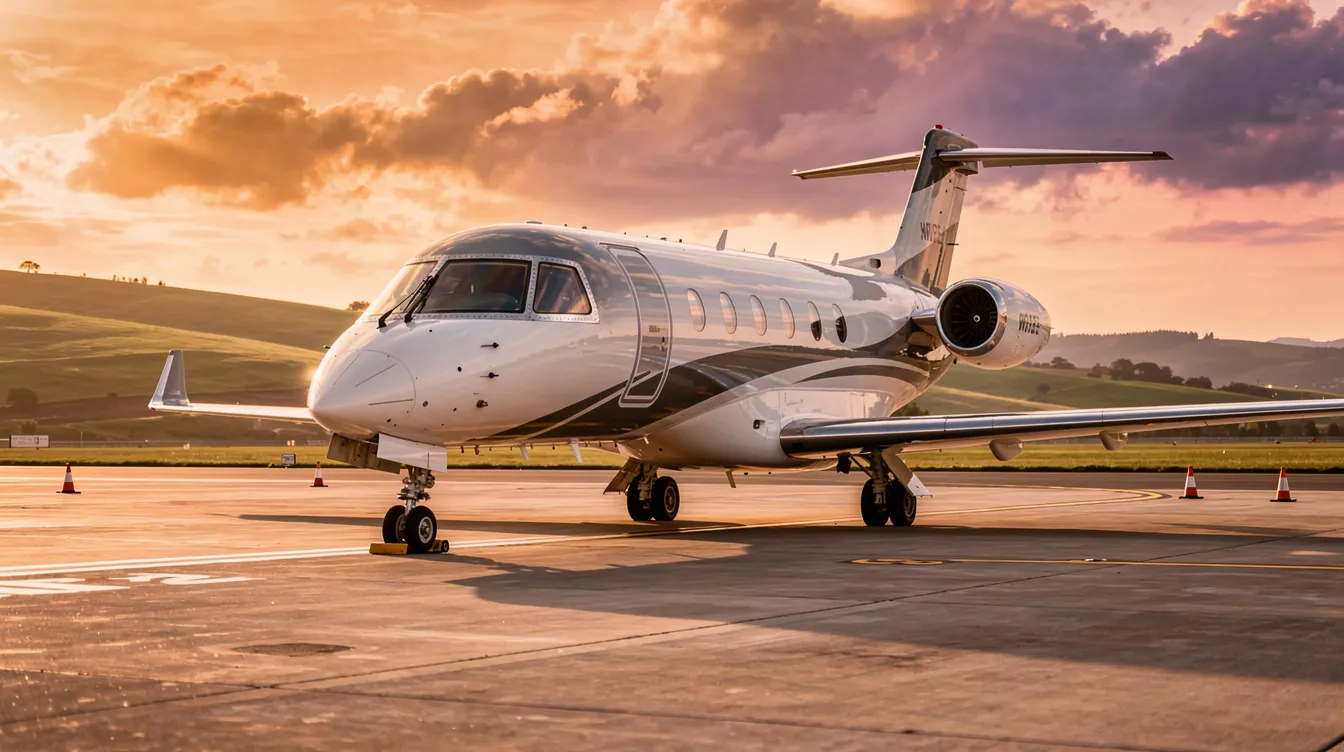
Spending 15 million dollars on a private jet is not a casual purchase. It is a capital allocation decision that shapes how you travel, how you spend your time, and how much risk you carry on your balance sheet. This guide breaks down exactly what that budget buys in 2025–2026, what it costs to operate, and why many sophisticated travelers are choosing Jet Card programs over aircraft ownership. A Jet Card is a prepaid program that allows members to access private jets for a set number of flight hours, offering flexibility without the responsibilities of ownership.
Key Takeaways: 15 Million vs. Jet Card Access
A 15 million budget typically buys a brand-new private jet in the light jet category—models like the Embraer Phenom 300E (~$12.2M), Cessna Citation CJ4 Gen2 (~$12–13M), or Pilatus PC-24 (~$13.5M) — or a young pre-owned mid-size jet such as an Embraer Legacy 450 or Bombardier Challenger 350.
Buyers can choose between new light jets and used super-midsize jets around the $15 million price point, each with distinct trade-offs in range, cabin size, and ongoing costs.
Annual operating costs can reach $800,000 to $1.5 million on top of the acquisition price, meaning the sticker is only part of the financial commitment.
For travelers logging fewer than roughly 250 flight hours per year, jet card programs and on-demand charter consistently deliver lower total cost and greater flexibility than full ownership.
BlackJet Jet Card members enjoy carbon-neutral flights, rigorous safety vetting, and 24/7 digital booking tools—without tying up 15 million dollars in a depreciating asset.
Why 15 Million Dollar Private Jets Are a Strategic Asset, Not Just a Luxury
Consider a New York–to–Los Angeles trip. A commercial flight takes roughly six to eight hours door-to-door once you factor in ground transportation to JFK or LAX, security lines, boarding delays, and the taxi ride on the other end. On a private aircraft departing from a nearby FBO, that same trip shrinks to about four hours of total travel. Multiply that across fifty or a hundred trips per year, and the time recaptured is no longer a convenience—it is a strategic resource.
At the 15 million level, you are not buying an ostentatious toy. You are acquiring efficient light jets or capable mid-size business jet platforms designed for corporate travelers, investors, and families who prioritize reliability, privacy, and control over their calendars, which is why this tier often defines the practical end of luxury private jets. Light jets can access smaller airports that commercial airlines simply cannot serve, putting you closer to final destinations and cutting the last-mile commute that commercial aircraft force upon passengers.
To orient the rest of this guide, here is how private jets are typically categorized:
Light jets and super light jets: 6–10 passengers, roughly 1,800–2,200 nautical miles range, cruise speed around 430–500 mph.
Mid-size and super-mid jets: 8–12 passengers, 2,800–3,500 nautical miles, stand-up cabins, coast-to-coast or short transatlantic capability.
Large jets and ultra long range aircraft: 10–19 passengers, 4,000+ nautical miles, true intercontinental reach, substantially higher operating costs.
A 15 million dollar private jet sits squarely in the light-to-mid-size range, where modern efficiency and airport access matter more than sheer cabin volume.
What Does 15 Million Actually Buy You in a Private Jet (2025–2026)?
Broadly, $15 million budgets generally cover brand-new light jets or pre-owned midsize jets, while a lower price point opens up a different set of 10 million private jet options. Here is how that breaks down by aircraft class and age:
Brand-new light or super light jets (0–3 years old): Modern avionics, feature next-generation engines, low maintenance burden, strong residual values, but they still demand higher capital than many 5 million jet options in the pre-owned market.
High-spec pre-owned mid-size jets (3–7 years old): More spacious cabin, greater range, but higher fuel burn and closer proximity to major inspection events, which is why some buyers instead consider 2 million dollar private jet options like turboprops or very light jets with lower acquisition costs.
Older large cabin aircraft (10–20+ years old): Generous interiors and intercontinental range, but significantly higher operating costs and potential upcoming heavy maintenance events.
Factors like avionics, interior layout, and year can significantly influence pricing for private jets, and understanding the broader private jet price list of costs and options helps put a 15 million dollar budget into context. A 2018 airframe with low flight hours and enrollment in an engine program commands a premium over a 2015 example with high cycles and an aging interior. Depreciation of 10–15% annually in early years means a specific aircraft purchased new for $13 million today could be worth $9–10 million in three to five years.
At the top of the market, the most expensive private jet options for luxury travel—Gulfstream G700, Bombardier Global 7500-list above $60–75 million dollars. That context makes clear where 15 million sits: it buys excellent capability but not the pinnacle of cabin size or range, and sits above many private jets for sale under 10 million that appeal to buyers seeking more affordable entry points.
Brand-New Light and Super Light Jets in the 8–14 Million Range
A budget close to 15 million secures a brand-new private jet in the light or super light category, equipped with modern avionics, efficient engines, and current safety features. Popular new jets include the Embraer Phenom 300E and Cessna Citation CJ4, along with the versatile Pilatus PC-24.
Here are three leading options with key specifications:
Embraer Phenom 300E (~$11–13 million): Cruise speed approximately 464 knots (534 mph), range around 2,010 nautical miles with NBAA IFR reserves, seating for 6–8 passengers. Powered by Pratt & Whitney PW535E1 engines with superior fuel efficiency. Takeoff distance under 3,300 feet opens access to smaller regional airports.
Cessna Citation CJ4 Gen2 (~$12–13 million): Maximum range of approximately 2,165 nautical miles, cruise speed around 451 knots, service ceiling of 45,000 feet, seating up to 9–10 passengers. Gen2 upgrades include CoolView skylights, refreshed cabin, and advanced avionics upgrades.
Pilatus PC-24 (~$13–14 million): Range around 2,000 nautical miles, cruise speed approximately 440 mph, seating for 8–10 passengers. The Pilatus PC-24 can access unpaved runways, enhancing versatility for destinations that would ground most competitors.
Light jets typically seat up to 10 passengers comfortably. Cabin features at this level include quiet interiors, club seating, enclosed lavatories, basic galleys, high-speed Wi-Fi, and modern cabin management systems. Cruise speeds for private jets in the $15 million range are approximately 430 to 500 mph, and range for jets in this category typically extends from 2,000 to 3,300 nautical miles.
These same efficient light jets are core to BlackJet's fleet access, available to Jet Card members without ownership, crew, or maintenance burdens and illustrate how different types of private jets can be matched precisely to specific mission profiles.
Pre-Owned Mid-Size and Super-Mid Jets Around 10–15 Million
Buyers who need more range and cabin volume often look at 3–7-year-old mid-size and super-mid private aircraft in the 10–15 million bracket. Pre-owned super-midsize jets typically provide more cabin space and comfort than their light jet counterparts, making them attractive for transcontinental flights and longer missions.
Key models in this segment:
Bombardier Challenger 350 (~$12–16 million pre-owned depending on hours and condition): Range around 3,200 nautical miles, 8–10 seats, stand-up cabin height near 6 feet. Hourly operating costs run higher-approximately $4,400 in variable costs per flight hour—but the aircraft's range and spacious cabin justify the premium for frequent long-haul flights.
Embraer Legacy 450/500 (~$11–15 million pre-owned): Range of 2,900–3,100 nautical miles, 8–9 seats, generous baggage holds, flat-floor cabin configurations.
Cessna Citation Sovereign+ (~$10–14 million): 3,000+ nautical miles range, 9–12 seats, full stand-up cabin, capable of coast-to-coast missions nonstop.
Midsize jets often feature stand-up cabin height around 6 feet, more generous galleys, larger baggage capacity, and better comfort for 5–7 hour legs like New York–Los Angeles or London–Dubai with one fuel stop, with some layouts offering multiple living zones for work, dining, and relaxation on longer missions.
The trade-offs versus new light jets are real: higher fuel burn, higher hourly cost, and the proximity of larger inspection events compared with small private jets used for luxury travel. But for corporate travelers who regularly fly nonstop coast-to-coast, the comfort and mission flexibility of a pre-owned jet's super-mid can be compelling.
BlackJet gives members on-demand access to these premium equivalent aircraft types, enabling clients to access jets of this caliber on long-range trips without locking in capital.
Larger and Ultra-Long-Range Jets: What 15 Million Does and Does Not Buy
At the 15 million mark, you rarely buy a brand-new large cabin jet or ultra-long-range aircraft. Instead, that budget typically reaches older large jets with substantial flight histories; stepping up to 20 million-dollar private jet features is usually required for newer, long-range flagships:
Gulfstream IV-SP (early-to-mid 2000s): Pre-owned examples with higher total hours may trade between $8–14 million depending on condition. True large-cabin comfort, but dated avionics unless retrofitted.
Dassault Falcon 900EX (late 1990s–2000s): Tri-engine reliability, intercontinental range, but increasing maintenance complexity with age.
Embraer Legacy 600 series: Spacious cabin derived from the ERJ-135 commercial airframe, available below $10 million for older examples.
What you get: Spacious cabins with multiple distinct living zones, sometimes including dedicated dining rooms, true intercontinental range that lets you fly nonstop on long-haul flights, full galleys, and the presence of a heavy jet with genuine room to move—an image more associated with top-tier executive transport than air force-style missions.
What you do not get: Modern ultra-efficient engines, the latest safety systems without expensive retrofits, low maintenance burden, or strong residual value. Higher operating costs per flight hour and upcoming heavy maintenance events are nearly guaranteed on pre owned aircraft of this age.
For occasional missions—global roadshows, family relocations, or select European airports that require long legs-BlackJet provides access to large jets and even some of the fastest private jets without the long-term commitment to an aging asset. This approach gives members the flexibility to scale up for a single trip rather than owning a less efficient jet outright year-round.
Luxury and Comfort Features at the 15 Million Level
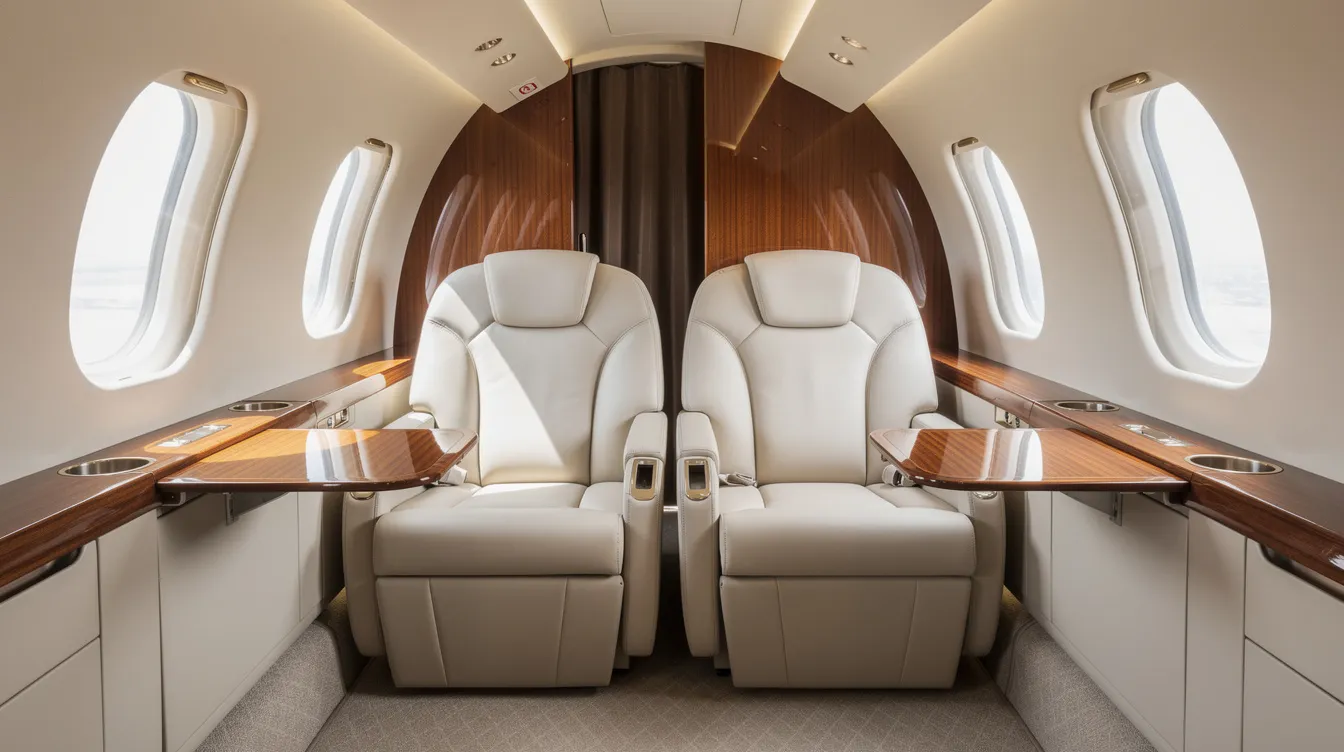
A private jet's interior at this price point reflects refined, purposeful design rather than excess, especially when compared with the best small private aircraft for different needs that prioritize efficient use of cabin space. Many jets in this price range include features like premium leather seating and enclosed lavatories, along with thoughtful layouts optimized for both productivity and rest.
Expect these cabin configurations and amenities:
Seating: Club-four arrangements with swivel and recline, conference tables for in-flight work, divans that convert to lie-flat beds suitable for overnight flights.
Galleys: Well-equipped refreshment centers capable of hot meals, espresso, and chilled beverages. Luxury jets often include fully equipped galleys and private lavatories.
Materials: Interiors can be customized with high-end materials and finishes-real wood veneers, premium stitched leather, brushed metal accents, and advanced lighting and temperature controls.
Entertainment: Full HD displays, personal device integration, and advanced cabin management systems that let passengers adjust lighting, climate, and media from touchscreens or smartphones.
Pre-owned aircraft in this bracket frequently feature refreshed interiors completed within the last 5–10 years: updated LED lighting, modern soundproofing packages, and current-generation connectivity hardware. A $15 million jet delivers a spacious cabin with plush seating that rivals what you would find on newer, more expensive private jets.
BlackJet curates aircraft with these modern cabin standards, ensuring Jet Card members consistently experience 15-million-class comfort or better on every eligible flight itinerary.
Operating Costs of a 15 Million Dollar Private Jet
Here is the reality that acquisition brochures tend to omit: the purchase price is 40–60% of total ownership costs over a 10-year period, a dynamic that becomes clearer once you review a comprehensive private jet price list and cost breakdowns. The remaining 40–60% is fuel costs, crew, insurance, hangar, maintenance, and management.
Typical annual cost ranges by category:
Cost Category | Light Jet (e.g., Phenom 300E) | Mid-Size (e.g., Challenger 350) |
|---|
Annual fixed costs | ~$450,000–$700,000 | ~$650,000–$900,000 |
Variable cost per flight hour | ~$1,650–$2,600 | ~$3,500–$5,000+ |
Total annual cost (200 hrs) | ~$800,000–$1,200,000 | ~$1,400,000–$1,900,000 |
Total annual cost (300 hrs) | ~$1,000,000–$1,500,000 | ~$1,700,000–$2,400,000 |
Owning a private jet typically incurs high ongoing costs including crew and maintenance that accumulate regardless of how often the aircraft flies.
Example scenario: A Challenger 350 flying 250 flight hours per year accumulates roughly $800,000 in annual fixed costs plus approximately $1,100,000 in variable costs, totaling around $1.9 million annually—before accounting for depreciation. Add residual value loss and the total ownership cost approaches $2.2–2.5 million per year.
These figures help prospective owners benchmark against Jet Card and charter pricing and better understand typical Jet Card cost per hour, where all-in hourly rates already bundle most of these line items. For many BlackJet clients, prepaid jet card programs deliver a predictable, lower-risk financial profile.
Fixed Annual Costs: Crew, Hangar, Insurance, and Management
Fixed costs for owning a jet range from $450,000 to $900,000 annually, regardless of utilization. These include:
Crew salaries and benefits: Two-pilot packages for light jets typically run $250,000–$350,000 per year, including recurrent training. Larger aircraft command higher salaries and may require cabin attendants.
Hangar or parking fees: Range from approximately $40,000 at regional airports to over $120,000 annually at premium locations in New York, Los Angeles, or London.
Insurance (hull and liability): Light jets often cost $40,000–$80,000 annually; large jets can reach six figures for hull insurance alone.
Management fees: Third-party management companies handling regulatory compliance, maintenance scheduling, crew oversight, and record-keeping typically charge in the low hundreds of thousands per year.
The critical point: a private plane that flies 50 hours per year carries identical fixed costs to one that flies 350 hours. Under-utilization is where ownership economics break down most severely.
Jet Card users avoid crew management and maintenance responsibilities entirely. With BlackJet, these fixed commitments are absorbed into transparent fixed hourly rates and leading jet card programs for frequent flyers, eliminating the overhead of running a flight department.
Variable Costs Per Flight Hour
Variable costs are the expenses tied directly to each flight hour: jet fuel, engine and airframe maintenance reserves, landing and handling fees, catering, and navigation charges, all of which are influenced by how high a private jet typically flies compared with airlines.
Key benchmarks:
Fuel: Typically 30–40% of per-flight-hour cost. Light jets burn roughly $800–$1,200 per hour in fuel; older large cabin aircraft can run $2,000–$3,000 per hour or more, depending on drag and fuel consumption profiles.
Maintenance reserves: Engine programs like JSSI or Rolls-Royce CorporateCare convert large periodic inspections into predictable per-hour reserves, adding to apparent hourly cost but smoothing financial exposure.
Landing, handling, and navigation: Variable by airport and territory; major hub handling fees can run thousands per landing.
Variable costs for light jets are approximately $1,650 to $2,600 per hour all-in. Super-mid and older heavy jet categories run substantially higher.
Newer jets can burn 10–20% less fuel per nautical mile compared to models built a decade earlier, thanks to advanced wing designs, lighter materials, and improved engine technology. This superior fuel efficiency is one reason efficient aircraft like the Phenom 300E dominate the light jet category for business travel under 2,200 nautical miles.
BlackJet's Jet Card hourly rates already factor in these variables, freeing members from managing invoices from fuel producers, maintenance providers, and handling agents on every trip while still retaining the flexibility associated with renting a private jet when it best fits a given mission.
Safety, Certification, and Technology at the 15 Million Level
For discerning buyers and BlackJet members alike, safety and avionics sophistication matter more than glossy interiors or marginal speed differences among the fastest private jets.
Standard safety technologies on 2015+ jets in this price range include:
Synthetic Vision provides terrain awareness on primary flight displays, giving pilots a clear picture of surrounding topography in any weather.
Modern jets often include Enhanced Vision Systems for low visibility approaches, using infrared to reveal runway environments obscured by fog or darkness.
Terrain Awareness and Warning Systems (TAWS), Traffic Collision Avoidance (TCAS II), ADS-B In/Out.
Advanced autopilot with envelope protection and auto-throttle on select platforms.
Garmin auto radar and integrated weather displays on modern avionics suites like the Garmin G3000 or Honeywell Pro Line Fusion.
Operator-level standards are equally critical, and many prospective flyers also evaluate whether private jets are safe compared with other air travel when deciding between ownership and Jet Card access. ARGUS Platinum or Wyvern Wingman ratings ensure operator safety through independent audits of maintenance, training, and operational procedures. IS-BAO Stage II/III certification indicates high operational safety standards across the operator's entire program.
BlackJet partners only with audited, top-tier operators, ensuring two experienced pilots are required on every flight and that maintenance tracking systems like CAMP provide full transparency into aircraft condition—standards that carry through even on the largest private jets for sale and charter.
Connectivity and In-Flight Technology
High-speed Wi-Fi is standard in $15 million private jets, mirroring connectivity expectations on the top private jets in the world that combine luxury and performance. Expect satellite connectivity (Ka- or Ku-band) capable of video conferencing, secure VPN connections, and streaming for multiple devices simultaneously.
Cabins typically feature advanced cabin management systems for comfort-passengers control lighting zones, cabin temperature, window shades, and entertainment through integrated touchscreens or personal smartphones. The aircraft functions as an airborne office, not merely a comfortable cabin.
Cockpit technology in 2025–2026 aircraft includes digital charts, datalink weather, and integrated flight planning systems that enhance both safety and fuel efficiency across all phases of flight. The Citation CJ4 Gen2, for example, features wireless cabin management, upgraded display systems, and modern refreshment centers as standard equipment.
BlackJet prioritizes aircraft with current-generation connectivity, ensuring that corporate travelers and groups using private jets for 20 passengers can maintain full productivity from takeoff to touchdown.

Sustainability and the Carbon Footprint of 15 Million Dollar Private Jets
Sustainable aviation practices, including carbon-offset options, are increasingly relevant in private aviation, especially as more travelers seek the cheapest private aircraft and budget-friendly options while still reducing their environmental impact. Private jets, including those in the 15 million range, carry a higher per-passenger carbon footprint than commercial flights—but technology and practices are evolving rapidly.
Efficiency gains in newer aircraft: Newer light jets achieve 10–20% lower fuel burn per nautical mile than 15-year-old equivalents, driven by engines like the Pratt & Whitney PW535E1 on the Phenom 300E and lighter airframe materials. Every gallon of fuel produced and consumed more efficiently translates directly to reduced flight emissions.
Sustainable Aviation Fuel (SAF): Sustainable aviation fuel can reduce lifecycle CO₂ emissions by 50–80% compared to conventional jet fuel. Currently, 30–50% blends of sustainable aviation fuel are available at major hubs like Van Nuys, Teterboro, and London Farnborough, with availability expanding. SAF represents the most impactful near-term solution for reducing fuel consumption-related emissions in private aviation.
Carbon offset programs: Carbon offset programs can make flights effectively carbon-neutral when properly verified. Carbon offsets should be verified by Gold Standard or Verra VCS to ensure genuine, measurable climate impact.
BlackJet commits to carbon-neutral flights by default for Jet Card members. The program is designed to integrate carbon neutrality directly into every eligible flight through a combination of efficient aircraft selection, SAF procurement where available, verified offsets, and an emphasis on the cheapest private jet options that balance cost with sustainability-at no additional cost to the member.
Ownership vs Jet Card vs On-Demand Charter at the 15 Million Mark
Three access models dominate at the 15 million mark, including the option of chartering a private jet instead of committing to ownership or a Jet Card, or comparing leading providers such as NetJets jet card cost and understanding Flexjet jet card cost and program structure. Here is how they compare:
Factor | Full Ownership | Jet Card (BlackJet) | On-Demand Charter |
|---|
Best for (annual hours) | 250–400+ | 50–250 | Under 50–100 |
Upfront capital | $15 million+ | Prepaid block (hours) | Pay per trip |
Aircraft consistency | Your single aircraft | Curated fleet, multiple types | Variable quality |
Fixed costs | $450K–$900K/year | Included in hourly rate | None |
Scheduling control | Maximum | High (guaranteed availability) | Subject to market |
Depreciation risk | Full exposure | None | None |
Sustainability | Owner arranges | Carbon-neutral included | Varies by operator |
Jet Card programs typically require 50–200 flight hours annually—the sweet spot where most high-net-worth individuals and corporate flight departments operate. Fixed hourly rates are standard in Jet Card programs, giving members predictable budgets without the financial tail risk of aircraft ownership.
BlackJet focuses on the segment that values reliability, safety, and luxurious amenities but prefers to keep capital liquid and avoid owning depreciating metal. Users can access light, mid-size, and large cabin jets depending on the mission, similar to travelers who evaluate whether chartering a private jet is worth it for specific trips.
When Full Ownership of a 15 Million Dollar Private Jet Makes Sense
The ideal owner profile is narrow but real: individuals or companies flying 300+ hours annually on predictable routes, often with fixed schedules or security needs that justify a dedicated aircraft.
Advantages of ownership:
Bespoke interior and livery reflecting personal or corporate brand
Personally selected crew with deep familiarity with your preferences
Guaranteed last-minute availability with no booking window
Potential tax benefits depending on jurisdiction and business usage
Drawbacks:
15 million dollars tied up in a depreciating asset
Total ownership cost significantly exceeds acquisition price
Exposure to resale market cycles and residual value risk
Operational complexity requiring either an in-house flight department or third-party management
Example scenario: A CEO commuting weekly between Dallas and São Paulo, with regular trips to select European airports, logging over 350 flight hours per year, who might also evaluate the best long-range private jets for sale as alternatives to a 15 million dollar platform. At that utilization, ownership of a super-mid or large jet becomes rational—the per-hour effective cost drops below Jet Card rates, and the scheduling certainty justifies the capital commitment.
Even for owners, BlackJet serves as a complement: providing additional lift or different cabin classes when the owned private plane is unavailable, in maintenance, or mismatched to a particular mission.
How BlackJet Jet Card Programs Compete with a 15 Million Dollar Jet
BlackJet's premium private jet cards and Jet Card programs model provides prepaid 25-hour and 50-hour blocks across aircraft categories, with guaranteed availability, fixed hourly rates, and 24/7 digital booking tools, distinct from unlimited private jet flight membership models that charge flat annual fees. Members choose between light jets, mid-size jets, and large cabin jets trip-by-trip without being locked into a single aircraft type.
Embedded in every membership:
Rigorous safety vetting through ARGUS Platinum, Wyvern Wingman, and IS-BAO operator standards
Premium Jet Card programs often include carbon-neutral flights, and BlackJet delivers this on every eligible flight
Real-time support from a dedicated team for itinerary changes, disruptions, or special requests
Access to luxurious amenities across multiple aircraft types, from efficient light jets to spacious large cabin options
Sample use case: A London-based investor flying approximately 120 flight hours per year across routes like London–Geneva (light jets, "+90 minutes) and London–New York (super-mid, "+7.5 hours). Some months involve fewer flight hours; others require back-to-back transatlantic legs. A BlackJet Jet Card lets this traveler match the right aircraft to each mission—deploying a light jet for the Alpine hop and a super-mid for the Atlantic crossing—rather than owning a single aircraft optimized for only one type of trip, mirroring the flexible access models increasingly favored in billionaire private jet price trend analyses.
That agility, combined with capital efficiency, is why many sophisticated travelers choose Jet Card access over a 15 million dollar purchase.
Range, Airport Access, and Matching the Right Aircraft to Your Mission
Matching aircraft capabilities to real travel patterns matters more than buying the largest or most expensive private jet you can afford, even when evaluating the largest private jets for sale for marquee long-haul missions, which is why understanding private jet sizes and how to choose the right fit is essential.
Benchmark ranges by category:
Light jets: ~1,800–2,200 nautical miles—covers most U.S. domestic, Caribbean, and intra-European routes
Mid-size jets: ~2,800–3,500 nautical miles—coast-to-coast U.S. nonstop, many transatlantic pairs
Ultra long range: 4,000+ nautical miles—true nonstop intercontinental, but with significantly higher operating costs
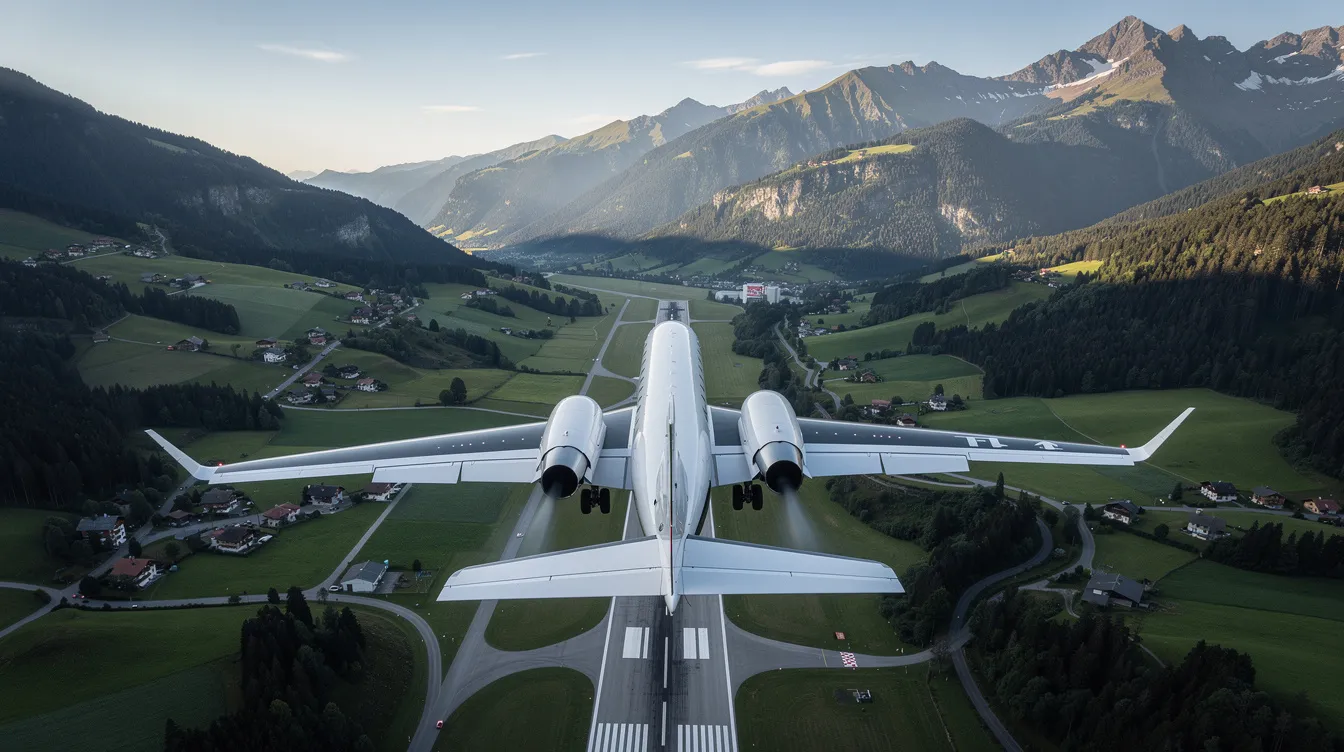
Airport access is the hidden advantage. Aircraft like the PC-24 and many light jets can use shorter runways at airports closer to final destinations. Flying into Aspen (7,000 ft runway, mountainous approach) versus connecting through Denver saves two to three hours of ground transportation. Landing at a small coastal airport in the Mediterranean versus routing through a congested commercial hub transforms a half-day journey into a 90-minute door-to-door experience.
BlackJet advisors help Jet Card members choose the optimal aircraft per route. For short hops where airport access matters most, an efficient light jet often delivers faster door-to-door times than a heavy jet forced to use a larger, more distant field. For missions that require the aircraft's range to fly nonstop across an ocean, the team recommends stepping up to a mid-size or large cabin option.
The result: clients accessing jets that are precisely matched to each mission, never paying for more aircraft than needed.
Financial Framework: Flight Hours, Break-Even Points, and Risk
A simple decision framework helps cut through the complexity, whether you are evaluating ownership, Jet Cards, leasing a private jet through flexible programs, or simply how much to rent a private jet:
Estimate annual utilization. Tally business roadshows, recurring family holidays, regular weekly or monthly routes, and ad-hoc travel. Be honest—most prospective owners overestimate by 20–40%.
Map per-hour effective costs at different utilization levels. At 100 flight hours per year, ownership of a light jet might cost $10,000–$14,000 per effective hour (fixed costs spread thin). At 300 hours, that drops to $5,000–$6,500. Jet Card rates remain constant regardless of volume.
Factor in capital risk. Financing a 15 million dollar jet (typical terms: 10–15-year loans, variable rates, 10–20% down) adds interest costs and ties your return to residual value—which is subject to market cycles, regulatory shifts, and fleet oversupply.
Consider the discovery period. Travel patterns shift. A new role, a market expansion, or a family change can alter utilization dramatically. BlackJet membership offers a low-risk way to discover true usage patterns over 12–24 months before committing to hardware that might be over- or under-utilized.
For most travelers flying under 250 hours annually, the math favors Jet Card access over committing to larger blocks like a 100-hour Jet Card, particularly for those weighing 15 million dollar ownership against top affordable private planes and access models. For those consistently above 300 hours with predictable patterns, ownership begins to pencil out—but the operational complexity and depreciation exposure remain.
Frequently Asked Questions About 15 Million Dollar Private Jets
Is 15 million enough for a brand new private jet in 2026? Yes—a $15 million budget buys a new light jet such as the Embraer Phenom 300E, Cessna Citation CJ4 Gen2, or Pilatus PC-24, and is comparable to budgets discussed when evaluating how much a 12-seater private jet costs. It will not buy a new mid-size, large, or ultra-long-range jet; those start at $20–25 million and go well above $60 million for the best private jets in the ultra-long-range segment.
How many flight hours per year justify buying instead of using a Jet Card? Generally, ownership becomes economically competitive above approximately 250–300 flight hours per year on stable, predictable routes. Below that threshold, Jet Card programs such as the BlackJet 25+ Hour Jet Card and on-demand charter typically cost less when you account for total ownership cost, including fixed costs, depreciation, and management overhead, especially for travelers who may only buy a seat on a private jet occasionally rather than charter entire aircraft.
What is the typical lifespan and total flight hours of a modern light jet? Modern light jets are certified for 25,000+ flight hours. Engines may require overhaul earlier based on cycles. Practical economic life depends on maintenance costs, avionics currency, and interior condition—many airframes remain safe and viable beyond 20,000 hours but require increasing investment.
How long does it take to close a purchase and start flying? Pre-owned jet deals typically take 45–90 days from Letter of Intent to closing and delivery, assuming clean title, current inspections, and enrollment in maintenance programs. New-build deliveries depend on manufacturer backlog.
Can I access expensive private jets and large jets without owning them? Absolutely, including options sized for 15-passenger private jet missions and their costs. BlackJet Jet Card members can book light, mid-size, and large cabin jets trip-by-trip. There is no requirement to own a single aircraft—you select the right passenger capacity, range, and cabin class for each mission.
How does a Jet Card handle peak days and guaranteed availability? BlackJet provides guaranteed availability windows and dedicated support, even for travelers focused on the cheapest private aircraft and budget options who still expect consistent service levels. Members booking within program guidelines receive confirmed aircraft even during high-demand periods.
Can my flights be carbon neutral even if I do not own the aircraft? Yes. BlackJet is set up to integrate carbon neutrality directly into every Jet Card member's eligible flights, aligning environmental priorities with the robust safety profile discussed in analyses of how safe private jets really are. The program combines efficient aircraft selection, sustainable aviation fuel where available, and verified carbon offsets—ensuring every flight is effectively carbon neutral at no additional cost.
Conclusion: Should You Buy a 15 Million Dollar Private Jet or Join BlackJet?
Full ownership of a 15 million dollar private jet makes strategic sense for a narrow profile: high, stable utilization above 300 flight hours per year, a need for full control over crew and cabin, and a willingness to carry the financial risk of a depreciating, operationally complex asset. For everyone else—and that includes most high-net-worth individuals and corporations flying under 250 hours annually—a Jet Card delivers the same time savings, privacy, and cabin quality without the capital commitment.
The strategic value of private aviation lies in time recaptured, not metal owned, whether you fund access conventionally or even explore buying a private jet with cryptocurrency for faster transactions. Safety, technology, and sustainability are no longer optional considerations; they are baseline expectations that programs like BlackJet embed into every flight.
Jet Card and charter access let you experience multiple aircraft types—from efficient light jets to spacious mid-size and large cabin options—before ever committing capital to a single model, which is particularly attractive if you are also considering cheap light aircraft for budget-friendly flying as a separate, personal flying solution. That flexibility, paired with predictable pricing and carbon-neutral operations, is the modern approach to private aviation.
Explore BlackJet membership options to discover how Jet Card access can reshape your travel strategy—or schedule a consultation to review sample itineraries and hourly rates tailored to your world.


 Sign up with google
 Sign up with Apple