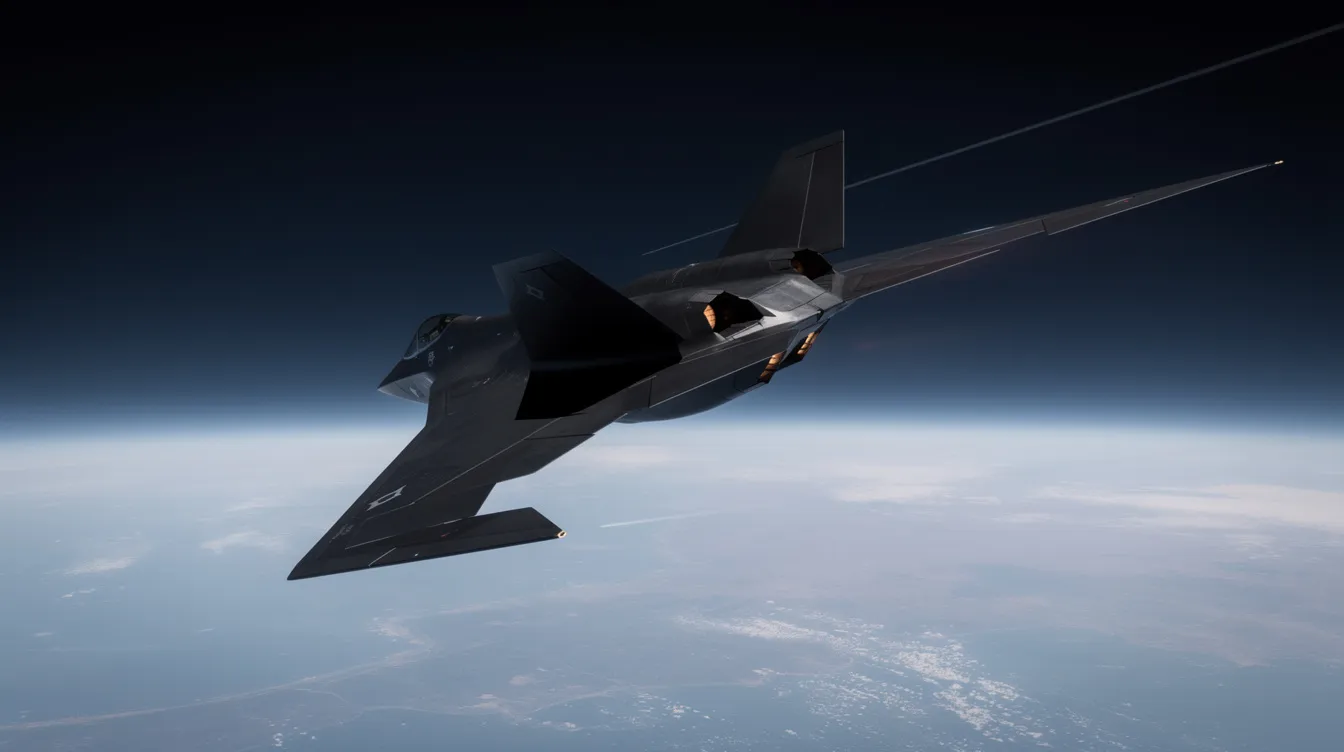
Two aircraft from the Cold War era still define the answer to x 15 vs sr 71: the North American X-15 was faster and higher-flying, reaching Mach 6.7 and 354,200 feet as a hypersonic rocket-powered research aircraft, while the Lockheed SR-71 Blackbird was the slower but operationally sustained machine, cruising above Mach 3 and around 85,000 feet as a strategic reconnaissance jet. Both were produced under intense secrecy, both demanded pressure suits for their pilots, and both reshaped what engineers believed was possible at extreme speed and altitude.
For aviation enthusiasts, aerospace professionals, historians, and private aviation readers who want to understand how record-setting military aircraft still influence today’s business jets, this comparison breaks down the X-15 vs. SR-71 across design, propulsion, speed and altitude records, operational history, safety, and legacy. It also shows why the distinction still matters: the breakthroughs these aircraft forced in materials, flight operations, pilot protection, and high-performance engineering continue to shape the standards behind modern, safe, and more efficient private aviation—including the expectations BlackJet customers bring to private jet travel.
Overview: X-15 vs SR-71 Blackbird in One Glance
The North American X-15 was a hypersonic (greater than Mach 5; hypersonic refers to speeds exceeding five times the speed of sound) research aircraft, while the SR-71 Blackbird was a strategic reconnaissance (intelligence-gathering; reconnaissance means the act of gathering information about enemy forces or positions) jet. The X-15 operated as an experimental testbed for future crewed spaceflight technologies between 1959 and 1968. The SR-71 Blackbird served as an air-breathing reconnaissance jet from 1966 through its initial retirement in 1989, with brief reactivations and NASA research flights extending into 1999.
Parameter | X-15 | SR-71 Blackbird |
|---|
Role | Hypersonic research | Strategic reconnaissance |
Years active | 1959–1968 | 1966–1998 |
Top speed | Mach 6.72 (~4,520 mph) | Mach 3.2+ (~2,193 mph); Mach 3.4–3.5 during testing |
Max altitude | 354,200 ft (~67 miles) | 85,069 ft (sustained) |
Crew | 1 (pilot) | 2 (pilot + RSO) |
Units built | 3 | 32 |
Propulsion | XLR99 liquid-fuel rocket | 2x Pratt & Whitney J58 turbo-ramjets |
Launch method | Air-launched from B-52 | Conventional takeoff |
Total flights | 199 | ~17,300 sorties (~3,551 operational) |
The X-15 investigated flight in the hypersonic regime above Mach 5, gathering data that fed directly into the Space Shuttle program. The SR-71 supported long-range intelligence missions with high-speed cruising capability over hostile territory. Both aircraft led to advancements in aerospace engineering that still influence how planes are designed, tested, and flown, even as those advances now support localized services such as private jet charters in Karachi for business and leisure travelers.
What follows is the full story of how these two machines were conceived, built, and operated, and why their legacy matters to anyone who cares about the future of flight.
Cold War Context: Why the X-15 and SR-71 Were Built
Both aircraft were developed during the height of the Cold War, when the United States and Soviet Union competed for superiority in altitude, speed, and intelligence gathering. The nuclear standoff demanded faster reconnaissance; the space race demanded knowledge of how humans and airframes performed at the edge of the atmosphere.
The X-15 program began in the late 1950s as a joint USAF, NASA, and Navy effort to research hypersonic flight, reentry physics, and pilot physiology. X-15's design focused on testing the limits of human endurance at hypersonic speeds, and the data it generated was meant to inform Mercury, Gemini, Apollo, and eventually the Space Shuttle. The program operated almost entirely over U.S. test ranges near Edwards Air Force Base and across Nevada, under controlled conditions with ground radar tracking every second.
The SR-71 emerged after a different crisis. When Francis Gary Powers' U-2 spy plane was shot down over the Soviet Union in 1960, the Air Force needed an aircraft that could outrun and out-climb any threat. Lockheed's Skunk Works, led by Clarence "Kelly" Johnson, developed the A-12 and then the SR-71 Blackbird as platforms capable of sustained Mach 3+ cruise at altitudes where fighters and surface-to-air missiles could not follow. The SR-71's operational role was reconnaissance under hostile conditions, flying routes over Vietnam, North Korea, the Middle East, and along the Soviet periphery.
Design Philosophy: Research Rocket vs Operational Reconnaissance Jet
The X-15 was a small, stubby-winged rocket plane built to answer a single question: what happens to an airframe and its pilot at speeds and altitudes no airplane had reached? Its fuselage was constructed from Inconel X, a nickel-chrome alloy chosen because it retained structural integrity at temperatures exceeding 1,200 °F. The wedge-shaped tail provided stability at hypersonic speeds. Beyond research instrumentation (hundreds of sensors measuring heat flux, structural loads, and aerodynamic pressures), the aircraft carried almost nothing.
The SR-71 took the opposite approach. Every design choice served a long-duration, operationally survivable mission. The airframe's chines blended into the wings, adding lift while reducing radar cross-section to around 110 square feet. The long fuselage held massive fuel tanks, sensor bays, and two enormous engine nacelles. Both aircraft required pilots to wear pressure suits due to operational altitudes, and both used advanced metallurgy to survive aerodynamic heating at high speeds, but the SR-71's material solution was different: 85% of the SR-71's structure was made of titanium, sourced covertly from the Soviet Union through front companies.
One interesting consequence of the Blackbird's thermal design: the SR-71's fuselage panels fit loosely on the ground. At room temperature, the aircraft leaked fuel from panel gaps. Only after accelerating to cruise speed did thermal expansion seal those joints tight. The cockpit windscreen could reach 600 °F during missions. The SR-71's tires cost $2,300 each and lasted only 20 missions before replacement.
Powerplants and Propulsion: Rocket Engine vs Turbo-Ramjet Hybrids
The X-15 was primarily a rocket-powered aircraft. Its Reaction Motors XLR99 engine burned anhydrous ammonia and liquid oxygen, producing approximately 57,000 lbf of thrust. Pilots could throttle it between 50% and 100% power, but burn time was limited to roughly 80–120 seconds per flight. After engine cutoff, the aircraft coasted or glided back unpowered.
The SR-71 relied on two Pratt & Whitney J58 afterburning turbojet engines. At lower speeds, these operate much like conventional turbojets. Above approximately Mach 2, bypass ducts routed air around the engine core, allowing the inlets, ducts, and afterburner/nozzle system to operate more like a ramjet. Each J58 produced 32,500–34,000 lbf of thrust with afterburner. The SR-71 burned JP-7, a special low-volatility fuel that also served as a heat sink for the airframe and hydraulic systems. Ignition required triethylborane (TEB), a pyrophoric chemical that burst into flame on contact with air.
Key propulsion differences at a glance:
Thrust: XLR99 at ~57,000 lbf total vs. two J58s at ~65,000–68,000 lbf combined
Fuel: Cryogenic liquid oxygen + toxic ammonia (X-15) vs. JP-7 kerosene (SR-71)
Burn duration: 80–120 seconds (X-15) vs. hours of sustained cruise (SR-71)
Range: X-15 flights covered a few hundred miles within test corridors; the SR-71's ferry range exceeded 2,800 nautical miles, with aerial refueling extending that further
Refueling: The X-15 was air-launched from a B-52 bomber with no in-flight refueling; the SR-71 required KC-135Q tankers for mid-mission refueling
The operational implications were stark. The X-15 needed a modified B-52 mothership, a countdown sequence, cryogenic fuel handling, and a dry lakebed for landing. The SR-71 took off and landed conventionally from standard runways, but demanded a global logistics chain of special fuel depots, dedicated tanker aircraft, and overseas detachments.
Speed and Altitude Records: How Fast and How High?
This is the question most readers want answered first: which aircraft was faster, and which flew higher?
The X-15 achieved a maximum speed of Mach 6.7 (4,520 mph / 7,274 km/h) on October 3, 1967, flown by USAF Major William J. "Pete" Knight. The X-15 had a maximum altitude of 354,200 feet, reached by Joseph A. Walker on August 22, 1963. That altitude, roughly 67 miles, exceeded the conventional 50-mile boundary for astronaut wings, qualifying several X-15 pilots for that distinction.
The SR-71 had a maximum speed of Mach 3.2+ and a maximum altitude of 85,000 feet in sustained horizontal flight, both recorded as FAI records on July 28, 1976. During testing, the SR-71 reached speeds over Mach 3.5. On its final flight before retirement in 1990, SR-71 #61-7972 flew from Los Angeles to Washington, D.C. in 1 hour, 7 minutes, 53.69 seconds, averaging approximately 2,124 mph.
The comparison requires context. The X-15 used rocket propulsion and partially ballistic flight profiles, briefly entering the lower reaches of space above 50 miles. The SR-71 always remained within the atmosphere under air-breathing power. The SR-71 holds the record for the fastest air-breathing manned aircraft; the X-15 holds the record for the fastest crewed, powered, winged aircraft of any propulsion type.
Flight Profiles and Handling: How They Flew
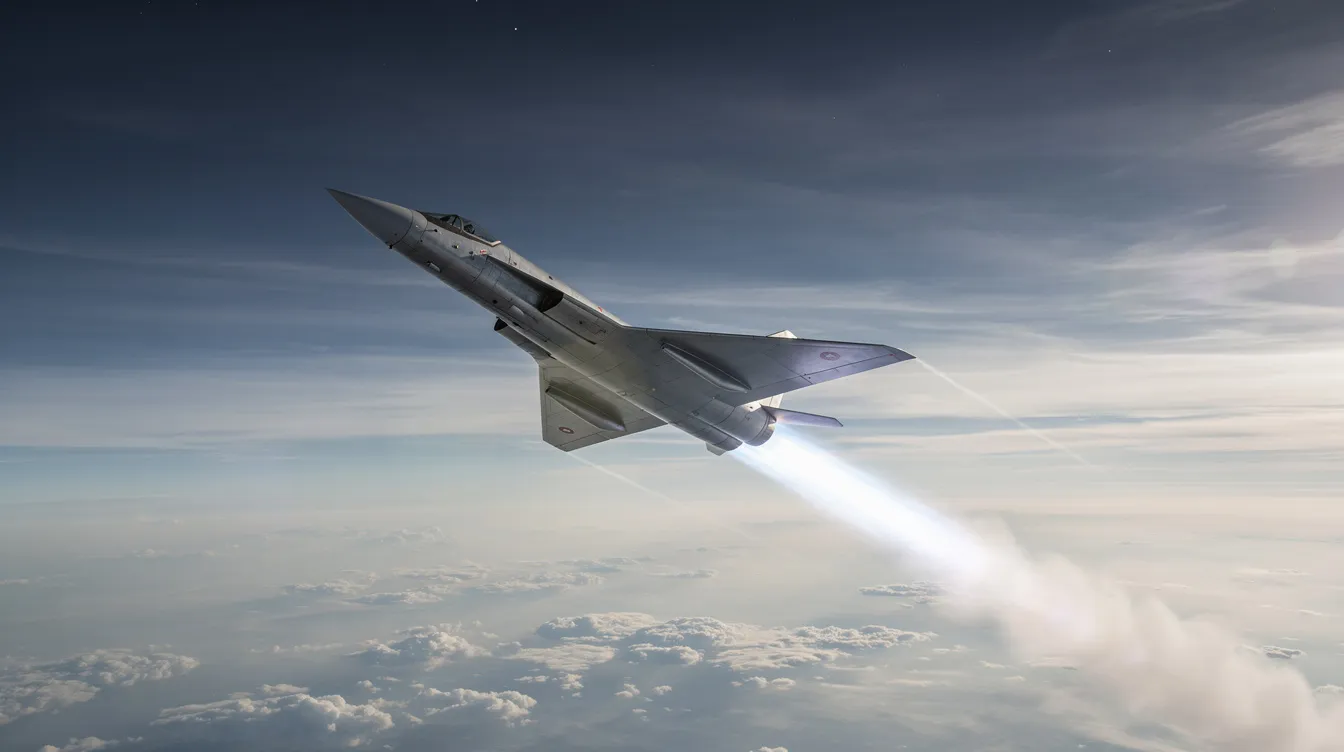
A typical X-15 mission began beneath the wing of a B-52 Stratofortress at approximately 45,000 feet. After release, the pilot ignited the XLR99 and either climbed steeply toward the edge of space or accelerated to hypersonic speed in level flight. The powered phase lasted less than two minutes. After engine cutoff, the plane coasted along a ballistic arc or began its glide back to Rogers Dry Lake at Edwards AFB. At altitudes where the atmosphere was too thin for aerodynamic control surfaces to function, the pilot used reaction control thrusters; the X-15 was, in those moments, more spacecraft than airplane. Landing speed was approximately 200 mph on skids across the lakebed.
The SR-71 flew under its own power from takeoff to landing. A typical reconnaissance mission involved climbing from the runway, meeting a KC-135Q tanker for refueling (the Blackbird burned enormous quantities of fuel during low-altitude acceleration), then climbing and accelerating to cruise at Mach 3+ and 80,000 feet or above. The reconnaissance run could cover thousands of miles along a predetermined route before the aircraft descended for recovery at bases like Beale AFB in California or Kadena AB in Okinawa—very different from today’s flexibility, where travelers can simply buy a seat on a private jet via shared or semi-private options.
Handling challenges differed by type. X-15 pilots faced thermal stress, control reversals at hypersonic speeds, and the transition from aerodynamic flight to reaction-control flight in a short time. SR-71 crews dealt with inlet unstarts, where misalignment of the engine inlet's movable spike allowed the supersonic shock wave to escape, causing violent yaw. Automatic control systems corrected unstarts in milliseconds, but pilots described the sensation as being punched sideways. High approach speeds and heavy landing weights added further complexity.
Crew, Cockpit, and Life Support
The X-15 carried a single pilot. Over the course of 199 flights, twelve pilots flew the aircraft, drawn from the Air Force, Navy, NASA, and North American Aviation. Among them was Neil Armstrong, who later became the first man to walk on the moon. Others included Joe Walker, Robert White, and Scott Crossfield, the plane's original test pilot.
The SR-71 carried two crew members in tandem: a pilot in front and a Reconnaissance Systems Officer in the rear, managing sensors, navigation, and defensive systems. Notable SR-71 crews included Col. Richard H. Graham and Maj. Brian Shul, whose accounts of missions near hostile airspace remain among the most compelling pilot stories in aviation literature.
Both programs required full pressure suits. X-15 pilots wore partial-pressure suits in early flights, later transitioning to full-pressure garments as altitude profiles pushed above 200,000 feet. SR-71 crews wore David Clark S1030-type suits similar to early Space Shuttle flight gear, necessary because a cockpit depressurization above 80,000 feet would be fatal within seconds. SR-71 missions lasted 2.5 to 4.5 hours, so crews had access to food tubes and hydration systems built into their helmets. X-15 flights rarely exceeded one hour total, so provisions were unnecessary—very different from planning multi-hour private trips with tools like a 50-hour jet card cost and benefits guide.
Avionics, Navigation, and Sensors
The X-15 was a flying laboratory. Its avionics consisted of onboard instrumentation, telemetry transmitters, and data recorders capturing aerodynamic heating, structural loads, acceleration, and control responses. Navigation was straightforward in geographic terms: the aircraft flew predetermined corridors over the High Range test route stretching from Wendover, Utah, past Las Vegas, Nevada, to Edwards AFB. Ground radar tracked the plane continuously; the pilot used visual cues for landing on the lakebed.
The SR-71 required a different order of sophistication. Its Nortronics astro-inertial navigation system tracked stars through a quartz window on the aircraft's spine, maintaining positional accuracy at Mach 3 where conventional ground-based references blurred past too quickly to be useful. Inertial measurement units supplemented star-tracker data, just as detailed comparisons of NetJets jet card costs and structures help travelers navigate a complex private aviation market.
Sensor payloads on the SR-71 included:
High-resolution optical cameras
Infrared imaging systems
Side-looking airborne radar (SLAR), later upgraded to the Advanced Synthetic Aperture Radar System (ASARS-1)
Electronic intelligence (ELINT) receivers
Defensive electronic countermeasure systems
The SR-71 could survey 100,000 square miles per hour from 80,000 feet. While the X-15 gathered engineering data for researchers and academics, the Blackbird gathered strategic intelligence for national security decision-makers. That distinction shaped everything about how each aircraft was equipped, much as tax and accounting considerations shape how modern businesses use jet cards, including strategies to maximize jet card tax deductions.
Operational History: Missions, Bases, and Timelines
X-15 program milestones:
First unpowered glide flight: June 8, 1959
First powered flight: September 17, 1959
First Mach 4, 5, and 6 flights achieved between 1960 and 1966
Speed record (Mach 6.7): October 3, 1967
Final flight: October 24, 1968
Total: 199 flights, 3 aircraft, 12 pilots
Primary base: Edwards Air Force Base, California
SR-71 Blackbird operational history:
The first SR-71 flight occurred on 22 December 1964
Entered USAF service: January 1966 with the 4200th Strategic Reconnaissance Wing (later 9th SRW)
The first operational sortie was flown on 21 March 1968 over Vietnam
SR-71s averaged one sortie per week during the Vietnam War
Key deployments: "Black Shield" operations from Kadena AB, Okinawa; European reconnaissance from RAF Mildenhall, England
Total operational missions: approximately 3,551 out of ~17,300 total sorties
The SR-71 was retired in 1989 after 24 years of service; briefly reactivated 1995–1998; NASA flew the last research flights until October 1999
No SR-71 was ever shot down during its operational history.y
The SR-71 evaded all 4,000 missiles fired at it over more than two decades of operational flying. Countermeasures for the SR-71 included speed and altitude to avoid interception; when a radar lock was attempted, the crew simply accelerated, outrunning the threat. No enemy fighters ever achieved a successful intercept, a level of assured performance that frequent private flyers today seek in predictable 100-hour jet card cost and access structures.
Safety Records, Accidents, and Risk
The X-15 program accepted risk as a fundamental cost of expanding human knowledge. Of three aircraft built, one was lost in a fatal accident on November 15, 1967, when X-15-3 entered a hypersonic spin during descent and broke apart, killing pilot Major Michael J. Adams. Other incidents included canopy cracks, hard landings, and control anomalies, but none resulted in additional fatalities.
The SR-71's safety record reflected both the dangers of sustained Mach 3+ operations and the effectiveness of its engineering. Of 32 aircraft built (29 SR-71A, two SR-71B trainers, one SR-71C hybrid), 12 were lost in accidents. Only one crew member died across all those losses. No SR-71 was ever shot down during its service. The accidents stemmed from inlet unstarts, fuel system failures, and the cumulative thermal stress of repeated high-Mach sorties.
Both programs expanded knowledge of high-speed, high-altitude safety. Ejection seat designs, crew survival procedures, pressure suit technology, and flight test protocols developed for the X-15 and SR-71 influenced every subsequent military and civilian aviation program. Modern private aviation, including Jet Card programs built around rigorous safety standards, traces part of its certification discipline back to the hard lessons of these Cold War programs.
Influence on the Space Shuttle and Future Spacecraft
X-15 data on hypersonic aerodynamic heating, reentry behavior, and pilot workload fed directly into NASA's design of the Space Shuttle orbiter during the late 1960s and 1970s. The X-15's reaction control thrusters, used for attitude control where the atmosphere was too thin for wings to generate lift, became a direct precursor to the Shuttle's Reaction Control System. Thermal protection experiments conducted on the X-15A-2, which flew with an ablative coating at Mach 6.7, informed how engineers approached the Shuttle's ceramic tile heat shield.
The SR-71, while not a space vehicle, contributed systems-level knowledge about sustained high-Mach flight, materials performance under thermal cycling, and avionics reliability in extreme environments. Its titanium fabrication techniques and JP-7 fuel-as-coolant architecture influenced later high-speed aircraft studies and reusable spacecraft concepts. Before modern satellites reached sufficient coverage and resolution, commanders often had to wait for the Blackbird to return and for its imagery or radar data to be processed before that intelligence could be used. The development of astro-inertial navigation for the Blackbird also advanced precision positioning technology that found applications in spacecraft guidance.
Both aircraft helped define how high-altitude air traffic control coordination worked, establishing precedents later used to manage the Space Shuttle's approach and landing profiles at Edwards AFB and Kennedy Space Center.
Tactical and Strategic Value: Intelligence vs Research
The X-15's output was scientific: research papers, engineering models, validated aerodynamic theories. The program generated data on boundary-layer transition, structural heating rates, and human performance under extreme G-loads that no wind tunnel or computer simulation of the era could replicate.
The SR-71's output was strategic intelligence. The Blackbird carried cameras and radar capable of mapping over 100,000 square miles in a single hour at extreme altitude, delivering photographic, infrared, radar, and electronic order-of-battle data to the intelligence community. Before modern satellites reached sufficient coverage and resolution, the SR-71 was the leading platform for near-real-time reconnaissance, operating where no spy satellite could be redirected quickly enough to capture emerging events.
Both vehicles demonstrated that the combination of speed and altitude can substitute for stealth or armor, a concept that foreshadowed later high-speed strike and reconnaissance development. Today, satellites, stealth UAVs, and digital networks deliver much of the capability the SR-71 once provided, while hypersonic research continues to build on the foundation the X-15 laid in a generation of flight testing that lasted less than a decade, just as modern travelers can compare the cheapest private jet options for accessible flying instead of relying on exotic, purpose-built platforms.
Cost, Logistics, and Why They Were Retired
The X-15 required a B-52 carrier aircraft, cryogenic and toxic propellant handling crews, extensive range instrumentation, and lakebed recovery operations for every single flight. By 1968, with Apollo consuming NASA's budget and unmanned test vehicles offering a cheaper path for some research goals, the program ended. For modern travelers, this stands in contrast to today’s focus on the cheapest private aircraft and budget-friendly access models. The beginning of Space Shuttle studies also redirected engineering talent and funding away from the X-15.
The SR-71's operating costs were staggering by any measure. Each aircraft burned approximately 8,000 gallons of JP-7 per hour at cruise. The specialized fuel required its own production and logistics pipeline. Maintenance crews worked hundreds of hours between sorties to inspect and repair thermal damage. The USAF retired the Blackbird in 1989 under budget pressure, and the growing opinion within the Pentagon that satellites and emerging UAV technology could handle reconnaissance at lower cost. A brief Congressional reactivation in the mid-1990s ended when funding was again cut; NASA flew the final SR-71 research flights until October 1999.
Modern solutions, including flexible private jet charter and Jet Card programs, are built around the opposite principle: cost-efficiency, scalable infrastructure, and eliminating the need for bespoke, single-purpose aircraft ecosystems, with a focus on understanding the broader private jet price list, costs, and access models. The contrast is instructive. Where the SR-71 demanded an entire support architecture of tankers, overseas bases, and specialty fuel, today's private aviation model gives travelers access to a fleet of aircraft categories without owning, maintaining, or operating any of them.
Legacy and Records Today
Several records set by these aircraft remain unbroken:
X-15: Fastest speed by a crewed, powered, winged aircraft (Mach 6.7); highest altitude by a winged aircraft (354,200 ft)
SR-71: Fastest air-breathing manned aircraft (2,193 mph); altitude record in sustained horizontal flight (85,069 ft)
Surviving airframes sit in museums around the world. X-15s are on display at the National Air and Space Museum in Washington, D.C., and the National Museum of the U.S. Air Force in Dayton, Ohio. SR-71s can be found at the Smithsonian's Udvar-Hazy Center, the USAF Museum, and several other aviation collections.
Public fascination remains strong. Speculation about successors (the rumored "Aurora" program, Lockheed Martin's proposed SR-72 Mach 6 unmanned concept) keeps both aircraft in the conversation. Hypersonic weapons research and civilian high-speed transport studies continue to reference X-15 flight data, because it remains among the only flight-tested, human-piloted performance data above Mach 5.
From Extreme Research to Everyday Luxury: Lessons for Modern Private Aviation
BlackJet clients are not flying at Mach 3. But every modern private jet they board carries DNA from programs like the X-15 and SR-71. For travelers comparing options, guides to the best small private aircraft for different missions show how that engineering progress translates into real-world choices. Titanium alloys, redundant avionics architectures, fly-by-wire control laws, and data-driven maintenance schedules all trace lineage to the extreme testing these aircraft performed.
The difference is in priorities. Cold War programs accepted extraordinary risk in pursuit of performance. Modern private aviation applies that accumulated knowledge to deliver reliability, comfort, and safety. A business executive using a BlackJet Jet Card to fly point-to-point between secondary airports in the U.S. or Europe saves several hours per trip compared to commercial alternatives, without waiting in terminal queues or navigating restricted airline schedules. The time savings come not from raw speed but from operational efficiency: fewer restrictions, direct routing, and 24/7 scheduling flexibility.
BlackJet Perspective: Safety, Technology, and Sustainability in Business Aviation
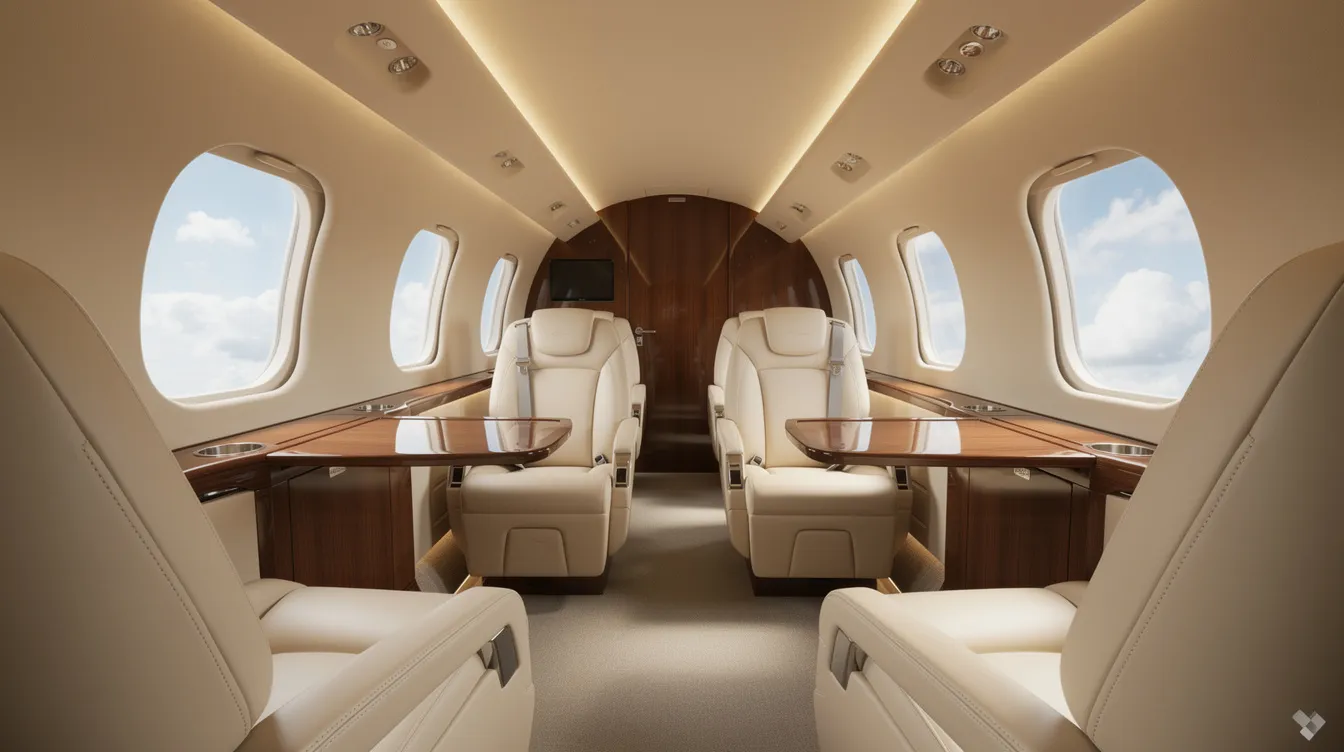
BlackJet applies aerospace-grade discipline to private aviation. The company's certified safety standards include operator vetting, crew experience minimums, and aircraft maintenance verification, a disciplined environment that contrasts with the more experimental risk culture of X-15-era research flights and aligns with what discerning flyers look for when comparing the top private jet companies for safety and service.
BlackJet's commitment to carbon-neutral flight means emissions are calculated and offset for every trip, so members can fly without adding to their environmental footprint. The Jet Card model provides prepaid flight hours across multiple aircraft categories, and options like the BlackJet 25+ Hour Jet Card give frequent travelers fixed-rate access with digital booking tools and real-time support replacing the ground crews and countdown sequences of the rocket age.
Where the SR-71 needed a global tanker fleet, and the X-15 needed a B-52 mothership, BlackJet members need only a phone or app to book their next flight.
Choosing the Right Aircraft Today: Speed vs Comfort vs Mission
Mission profiles look different in 2026. Instead of high-risk reconnaissance or research sorties, today's private travelers balance cruise speed with cabin size, range, runway performance, and operating cost, often starting with a clear view of how jet card pricing structures work to align budget with expected flying hours.
Consider two scenarios:
New York to Los Angeles: A super-midsize jet covers the route in approximately 5 hours at near-Mach 0.85, with a full stand-up cabin, Wi-Fi, and the ability to land at smaller airports like Van Nuys or Teterboro, bypassing LAX and JFK congestion. For larger teams or delegations, you may instead compare the best private jet options for 20 passengers to keep the group on a single aircraft.
London to Dubai: A large-cabin jet handles this 3,400-mile route nonstop, arriving in roughly 7 hours with seating for up to 12 passengers and full connectivity throughout, while truly large groups might consider private jet solutions for up to 50 passengers when mission requirements demand it.
No business jet matches Mach 3, but near-Mach 0.90 cruise combined with direct routing and ground-time elimination makes private aviation the most time-efficient option for the routes that matter. Comprehensive overviews of Jet Card cost and membership value explain how pricing aligns with that efficiency. BlackJet's Jet Card structure helps members match the right aircraft to each trip without the complexity of ownership or the limitations of a single-aircraft fleet.
FAQs: X-15 vs SR-71 and Modern Private Jet Travel
Which was faster, the X-15 or SR-71?
The X-15 achieved Mach 6.7 using rocket propulsion. The SR-71 reached Mach 3.2+ (and up to Mach 3.5 during testing) on air-breathing engines. The X-15 was faster in absolute terms; the SR-71 holds the speed record for air-breathing manned aircraft.
Did either aircraft go into space?
The X-15 crossed the 50-mile altitude boundary on multiple flights, qualifying several pilots for astronaut wings. The SR-71 always remained within the atmosphere, cruising at approximately 85,000 feet.
Why can't private jets fly as fast as the Blackbird?
Modern business jets are optimized for cabin comfort, fuel efficiency, range, and regulatory compliance. Mach 3+ flight requires exotic materials, specialized fuel, and engine technology that is incompatible with current certification and sustainability standards, even on the world’s top luxury private jets.
How did the SR-71 compare to the Space Shuttle?
The SR-71 operated within the atmosphere at Mach 3+. The Space Shuttle reentered at approximately Mach 25. Both programs benefited from X-15 research on thermal protection and high-speed aerodynamics, but they served entirely different missions.
How does BlackJet prioritize safety compared to military or NASA programs?
Military test programs accepted high risk to advance knowledge. BlackJet applies the resulting safety lessons (redundant systems, crew training standards, rigorous maintenance protocols) to ensure that every private flight meets or exceeds FAA and industry certification standards, similar to the safety focus found in many of the best jet card programs for frequent flyers.
Conclusion: What Extreme Aircraft Teach Us About the Future of Flight
The X-15 and SR-71 Blackbird define the outer boundary of what crewed aircraft have achieved. One was an experimental, space-edge research platform that flew 199 times in nine years. The other was an operational reconnaissance jet that flew thousands of missions over hostile territory across three decades. Both reshaped aerospace engineering, materials science, and flight safety in ways that still ripple through every aircraft flying today.
Their legacy lives on in the Space Shuttle's thermal protection, in hypersonic research programs, and in the safety and performance standards that modern business jets meet as a baseline. The priorities have shifted from raw speed and Cold War intelligence to efficiency, reliability, sustainability, and passenger experience, but the engineering foundation is the same.
Elevate your travel on your terms. With BlackJet's Jet Card programs, private flight comes with rigorous safety, carbon-neutral performance, and the flexibility to match the right aircraft to every mission, once you understand the key drivers behind jet card cost per hour across aircraft types. Explore how refined, practical aviation becomes your new standard.


 Sign up with google
 Sign up with Apple