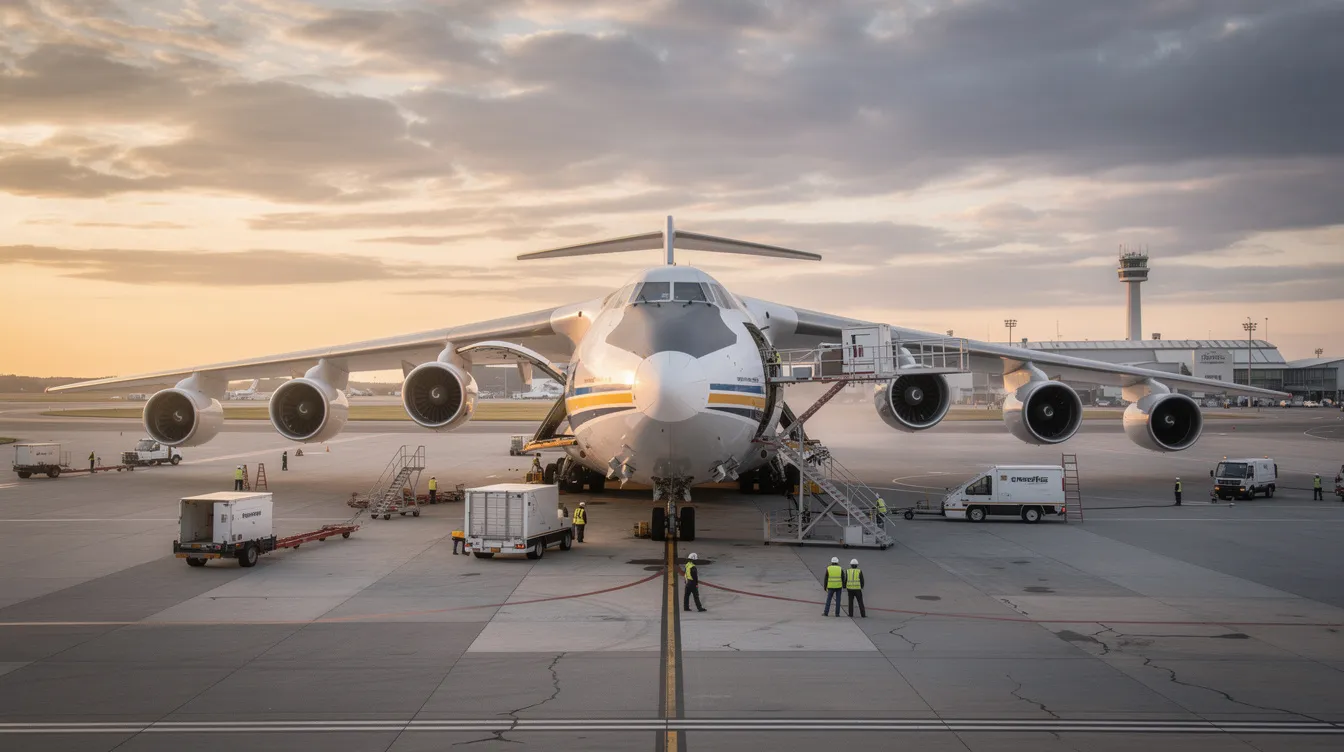
The world's largest aircraft represent the outer limits of aeronautical engineering. They carry hundreds of passengers across oceans, haul 250-tonne industrial turbines to remote sites, and even launch hypersonic test vehicles from 35,000 feet. For aviation enthusiasts and business travelers alike, these machines—including the top private jets that push luxury and performance—define what's physically possible when steel, fuel, and ambition converge at scale.
Yet scale alone does not solve every travel problem. While a 575-tonne Airbus A380 can move 853 people at once, it cannot depart on your schedule from a regional airport 15 minutes from your office. That gap between massive commercial aviation infrastructure and individual mobility is where private aviation fills a precise role. At BlackJet, we see both sides of this equation daily: our Jet Card members appreciate the engineering behind the biggest aircraft in the world, and they also appreciate landing at Teterboro instead of JFK, skipping two-hour boarding queues, and reaching London in time for a morning meeting.
This article profiles every category of aviation giant, from the heaviest aircraft ever built to the widest wingspan ever flown, and then shows where private jet access fits into the picture.
Defining "Biggest Aircraft": MTOW, Wingspan, Length & Capacity
The world's largest airplanes can be measured by weight, capacity, length, or wingspan, and depending on which metric you choose, you get a different winner—whether it's a purpose-built cargo giant or even a hypothetical private Airbus A380 configured for VIPs.
Maximum takeoff weight (MTOW) is the most common ranking metric. It captures the total mass an aircraft is certified to carry at takeoff, including structure, fuel, crew, and payload. The Antonov An-225 Mriya tops this list at 640,000 kg. The Airbus A380-800 follows at 575,000 kg.
Wingspan tells you how wide the aircraft stretches wingtip to wingtip. Stratolaunch Roc holds the record at 117 meters, wider than a football field.
Length measures nose to tail. The An-225 stretches 84 meters; the Boeing 747-8 reaches about 76.3 meters.
Passenger capacity matters for commercial aircraft: the A380 can seat up to 853 in an all-economy configuration. Cargo volume matters for freight haulers: the BelugaXL holds roughly 2,200 cubic meters of aircraft parts.
Most rankings in the aviation industry lead with maximum takeoff weight because it accounts for the total engineering challenge of getting an aircraft airborne. The sections below follow that convention while noting where other aircraft take the crown in wingspan, length, or capacity.
Antonov An-225 Mriya: Heaviest Aircraft Ever Built
The Antonov An-225 Mriya remains the heaviest aircraft ever constructed. Built in the late 1980s in the Soviet Union, it was designed for a single purpose: to carry the Buran space shuttle orbiter and oversized rocket boosters on its back.
Core specifications:
Length: 84 meters
Wingspan: 88.4 meters
Maximum takeoff weight: 640,000 kg (640 tonnes)
Powerplant: six Ivchenko Progress D-18T turbofans
Record payload: 189,980 kg, the largest payload ever transported by air
After the Soviet space program wound down, the An-225 pivoted to commercial cargo transport. It hauled industrial generators, wind turbine components, and humanitarian aid to disaster zones where no other aircraft could deliver in a single lift. Its nose cargo door and reinforced cargo floor allowed drive-on loading of military vehicles and heavy machinery, making it the ultimate tool for global cargo logistics.
The An-225 was destroyed in early 2022 during the Russian invasion of Ukraine at Hostomel Airport near Kyiv. Reconstruction proposals circulated in the years since, but no confirmed rebuild has been completed. The loss removed approximately 250 tonnes of single-aircraft payload capacity from the world's logistics network, forcing shippers to split loads across multiple An-124 flights or resort to slower sea freight.
For high-net-worth travelers, the An-225's story illustrates a parallel truth: when you need to move something critical on a specific timeline, the right aircraft matters. BlackJet members solve urgent passenger mobility the same way: not with cargo giants, but with on-demand private jet charters that depart when they need to, using everything from ultra-long-range jets to more affordable private aircraft categories matched to the mission.
Airbus A380-800: The Biggest Commercial Airliner in Service
The Airbus A380 is the world's largest passenger airliner and the world's largest passenger aircraft by cabin area. It revolutionized international travel by introducing double-deck passenger capacity on a scale no other commercial airliner had attempted.
Key figures:
Length: approximately 73 meters
Wingspan: 79.8 meters
MTOW: 575,000 kg
Full length passenger decks: two complete decks spanning the fuselage
Maximum passenger capacity: 853 in an all-economy layout
Typical multi-class configuration: 500 to 600 passengers
Flight range: 14,800 kilometers, covering most long-haul routes nonstop
First flight: April 27, 2005
Singapore Airlines operated the first commercial A380 flight in October 2007. Airbus introduced the type to 14 operators and delivered a total of 251 A380s before production ended in 2021. Emirates became the largest operator, building premium cabins with onboard showers, lounges, and enclosed first-class suites.
Production stopped because airline fleets shifted toward fuel-efficient twin-engine aircraft like the Boeing 777-300ER and Airbus A350-1000. The A380's four engines produced higher fuel burn per seat on routes that didn't fill all 500+ seats. Still, remaining A380s continue to fly long-haul flights for Emirates, Lufthansa, and others, with airframe lives extending into the 2030s.
For travelers who have flown the A380's upper deck, the experience is impressive, and some may even dream of configuring a private A380 for VIP use. But a BlackJet Jet Card client flying the same route, say London to Dubai, departs from a private terminal with no security line, boards in minutes, and arrives without waiting at baggage claim. The A380 offers scale; private aviation offers control.
Stratolaunch Roc: Record Wingspan and Flying Launchpad
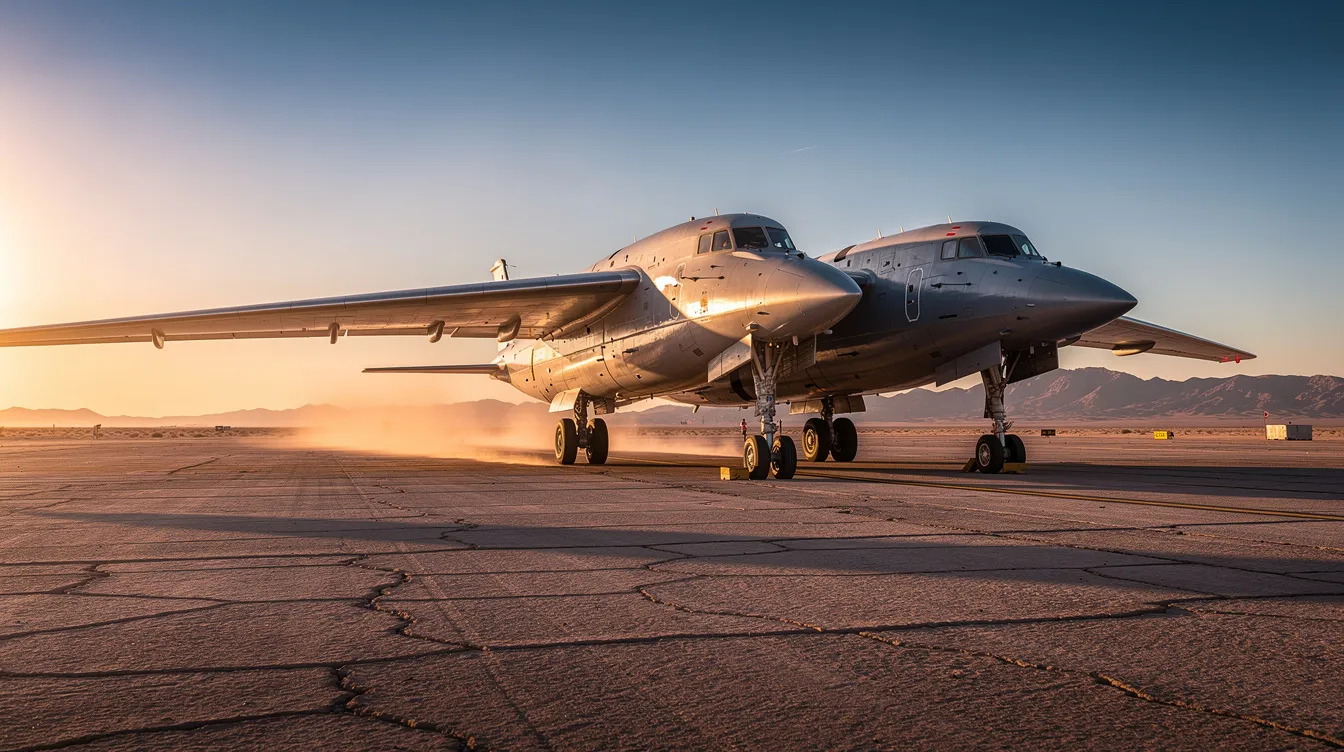
Stratolaunch Roc holds the largest wingspan in aviation history at 117 meters (385 feet). It is not a passenger aircraft or a cargo aircraft in the traditional sense. It is a flying launchpad.
The twin-fuselage design uses six Boeing 747 engines and can carry a payload of 550,000 pounds beneath its center wing section. Stratolaunch first flew on April 13, 2019, from the Mojave Air and Space Port in California. The aircraft was originally designed for air-launch-to-orbit missions, carrying rockets to altitude before releasing them to reach low Earth orbit.
The mission has since pivoted toward hypersonic research. Stratolaunch now serves as a testbed for the Talon-A hypersonic vehicle, carrying it aloft and releasing it for powered flight tests. The crew cabin sits in the right fuselage and holds three people; the left fuselage is unpiloted.
While Roc redefines "biggest" by wingspan, it carries no commercial passengers and no freight in the conventional sense. It exists at the intersection of aviation and space vehicles, a purpose-built platform that other aircraft in the world cannot replicate.
Antonov An-124 Ruslan: Global Heavy-Lift Cargo Workhorse
With the An-225 gone, the Antonov An-124 Ruslan stands as the largest cargo aircraft in active service for commercial charter. It is 68.96 meters long, has a wingspan of 73.3 meters, and carries a maximum takeoff weight of 405,000 kg. Its payload capacity reaches up to 150 tons on upgraded variants.
The An-124 features a unique nose that can be raised for loading, combined with a rear cargo door, enabling drive-on access for oversized items like helicopters, rail locomotives, military vehicles, and industrial turbines. Onboard cranes handle loads up to 30 tonnes within the cargo bay, which measures roughly 36.5 meters long, 6.4 meters wide, and 4.4 meters high.
The aircraft is still in active service for cargo transport, operated by Antonov Airlines and Volga-Dnepr (when available) for both military and civilian applications. It fills a critical gap in global military operations and industrial logistics, connecting remote production sites where sea freight takes weeks instead of hours.
For BlackJet members, the An-124 represents the cargo side of aviation's capability spectrum. When executives need to move themselves rather than machinery, the same urgency applies; a private plane charter departing within hours solves the passenger equivalent of the An-124's outsized cargo mission.
Lockheed C-5 Galaxy & C-5M Super Galaxy: Military Heavy-Lift Giants
The Lockheed C-5 Galaxy entered service with the U.S. Air Force in 1970 and remains one of the largest military aircraft flying. At about 75.5 meters long with a 67.9-meter wingspan, the C-5 is built to carry heavy payloads across intercontinental distances without stopping.
The Lockheed C-5 Galaxy has a maximum takeoff weight of 381 tonnes and is designed for military transport. Its cargo bay accepts two M1 Abrams tanks, six Apache helicopters, or a combination of vehicles and palletized supplies. Both nose and tail doors open for simultaneous loading and unloading, and the "kneeling" landing gear lowers the cargo floor to truck-bed height for rapid drive-on operations.
The C-5M Super Galaxy upgrade, completed across 52 airframes, replaced the original TF39 engines with GE CF6-80C2 turbofans. This change improved takeoff performance, cut maintenance requirements by more than half, and extended the fleet's service life through the 2040s. The C-5M supports troop transport, humanitarian missions, and presidential aircraft logistics (carrying support equipment for presidential travel).
These military giants highlight how military aviation solves a different problem from commercial or private aviation: moving armored vehicles and relief supplies across continents on short notice.
Boeing 747 Family: From Jumbo Jet to 747-8
The Boeing 747 is the original jumbo jet. Its first flight in 1969 and commercial debut in 1970 transformed long-haul travel by making mass air transport across the Atlantic and Pacific economically viable for the first time. Boeing produced a total of 1,574 747 aircraft across all variants before Boeing delivered the final 747 in January 2023.
The family evolved through four major generations. The 747-100 and 747-200 established the type. The 747-400 added winglets, a glass cockpit, and extended range. The Boeing 747-8 is Boeing's largest aircraft variant, stretching 76.3 meters long with a 68.4-meter wingspan and a maximum takeoff weight of 442,000 kg. In passenger and cargo versions, it serves both airline fleets and dedicated freight operators. A typical Boeing 747 seats over 366 passengers in a multi-class configuration; the 747-8 Intercontinental fits about 410 in three classes.
The 747-8F freighter carries roughly 134 tonnes of cargo and remains in active service with carriers like Atlas Air, UPS, and Korean Air. The partial upper-deck "hump" became one of the most recognizable shapes in commercial aircraft design.
For business travelers who remember flying first class on a 747, the comparison to today's best private jets in the world is instructive. A first-class 747 ticket from New York to London runs eight to ten hours door-to-door once you factor in ground transport to JFK, check-in, and customs. A BlackJet-arranged heavy jet on the same route departs from a private terminal at Teterboro, flies direct, and gets the traveler to central London in roughly seven hours total, with predictable Jet Card cost per hour if they fly frequently.
Other Record-Setting Giants: Ekranoplans, Seaplanes & Airships
Several unique aircraft in aviation history don't fit standard airliner or cargo categories but still rank among the biggest ever built.
Caspian Sea Monster and Lun Ekranoplan. The Soviet KM ekranoplan, nicknamed the "Caspian Sea Monster," measured 92 meters in length and skimmed above the water's surface using ground-effect lift. The Lun-class ekranoplan that followed carried anti-ship missiles for maritime military operations. Neither was mass-produced or entered broad service; both remain artifacts of Cold War experimentation.
Hughes H-4 Hercules. The Hughes H-4 Hercules is recognized as the largest wooden aircraft with a wingspan of approximately 97.5 meters. Known informally as the Spruce Goose, it was built to transport troops and materials across the Atlantic during World War II. Howard Hughes flew it once, on November 2, 1947, for about one mile at an altitude of 70 feet. It never flew again.
LZ-129 Hindenburg. At 245 meters in length, the Hindenburg airship dwarfed every airplane of its era. Its 1937 disaster at Lakehurst, New Jersey killed 36 people and ended the era of rigid airship passenger travel.
These machines are impressive in scale but niche in application, standing as historical milestones rather than practical transport platforms.
Airbus Beluga & BelugaXL: Oversized Cargo Specialists
The Airbus Beluga and BelugaXL are among the most distinctive cargo aircraft ever built. They exist for one reason: to transport Airbus aircraft components between European factories.
The BelugaXL, formally designated the A330-743L, was designed to transport Airbus aircraft components, including complete A350 wings. It is 56.2 meters long and 17.2 meters high, with a bulbous upper fuselage that opens via a forward-hinged nose door measuring roughly 10 by 8 meters. The Airbus Beluga XL has a maximum takeoff weight of 155,000 kg and can carry cargo up to 51 tons with a cargo hold volume of about 2,209 cubic meters.
Six BelugaXL aircraft entered the Airbus internal logistics fleet, replacing the older Beluga ST. The BelugaXL will cease operations in 2025 as Airbus transitions its production line logistics. Beyond aircraft parts, the Beluga fleet has occasionally transported helicopters, satellites, and large artworks between museums.
These are not commercial aircraft for passengers. They are purpose-built global cargo specialists, proving that aircraft design can be tailored to haul objects no standard freighter could accommodate.
Largest Passenger Aircraft in the World: Rankings & Key Models
The Airbus A380-800 remains the world's largest passenger aircraft by both seat count and cabin area. No other commercial aircraft in the world matches its double-deck, full-length configuration.
Below it, several other large passenger aircraft compete for second place depending on the metric:
Boeing 747-8 Intercontinental: ~410 passengers in three classes
Boeing 777-300ER: ~396 passengers in high-density layouts; longest nonstop flights exceeding 13,000 km
Airbus A350-1000: ~360 passengers with improved cabin pressurization, higher humidity, and low fuel consumption per seat
Airbus A340-600: historically one of the longest commercial aircraft, though many are now retired from airline fleets
Advanced features on newer models like the A350 and Boeing 787 include composite fuselages that allow lower cabin altitude (6,000 feet equivalent), wider windows, and quieter cabins. These twin-engine designs deliver better fuel efficiency per seat than four-engine predecessors, which is why airlines have retired or reduced their A380 and 747 fleets, even as some ultra-high-net-worth travelers explore the idea of a private jet Airbus A380 as a flying palace.
The result: while the biggest commercial airliner still flies, the global aviation trend favors right-sized aircraft. Premium travelers have followed the same logic, choosing private jets that match their party size and route—using guides to understand private jet sizes—rather than booking seats on the largest plane available.
Largest Cargo Planes & the Future of Global Heavy-Lift
The records for the largest aircraft include the Antonov An-225 for weight and Stratolaunch Roc for wingspan. In terms of the active cargo fleet, the hierarchy looks like this:
An-124 Ruslan: up to 150 tonnes payload; the largest cargo plane in regular commercial charter service
Boeing 747-8F: ~134 tonnes payload; the most widely available large freighter
C-5M Super Galaxy: ~127 tonnes; restricted to U.S. military operations
BelugaXL: ~51 tonnes; specialized for volume rather than weight
Emerging projects aim to push these limits further. The Windrunner, proposed by energy company Radia, targets a purpose-built aircraft to transport cargo like wind turbine blades exceeding 100 meters in length. If built, it would become one of the world's largest aircraft by dimensions. The Airbus A350F, which completed its first flight in September 2026, carries about 111 tonnes of payload with roughly 40% lower fuel burn and CO₂ emissions than older freighters.
Heavy cargo aircraft remain essential for humanitarian aid delivery, global supply chains, and military logistics. BlackJet operates in a parallel lane: rather than transporting industrial equipment, we move people, including executives, families, and teams, with the same emphasis on reliability and schedule control that cargo operators apply to freight—similar to how the top private jet companies position their services.
How Private Jets Compare to the World's Biggest Aircraft
"Biggest" does not mean "best" for individual travelers. A 73-meter Airbus A380 is engineered to move hundreds of people efficiently on high-density routes. A 20-meter large-cabin private jet sits toward the upper end of private jet sizes and is engineered to move 8 to 14 people on whatever route they choose, whenever they choose.
Door-to-door comparison, New York to London:
Factor | A380 (Business Class) | BlackJet Private Jet |
|---|
Departure airport | JFK (90-min early arrival) | Teterboro (15 min before) |
Security/boarding | 45-60 min | 5 min |
Flight time | ~7 hours | ~7 hours |
Customs/baggage | 30-60 min | Pre-cleared, 10 min |
Total door-to-door | ~11-12 hours | ~8-9 hours |
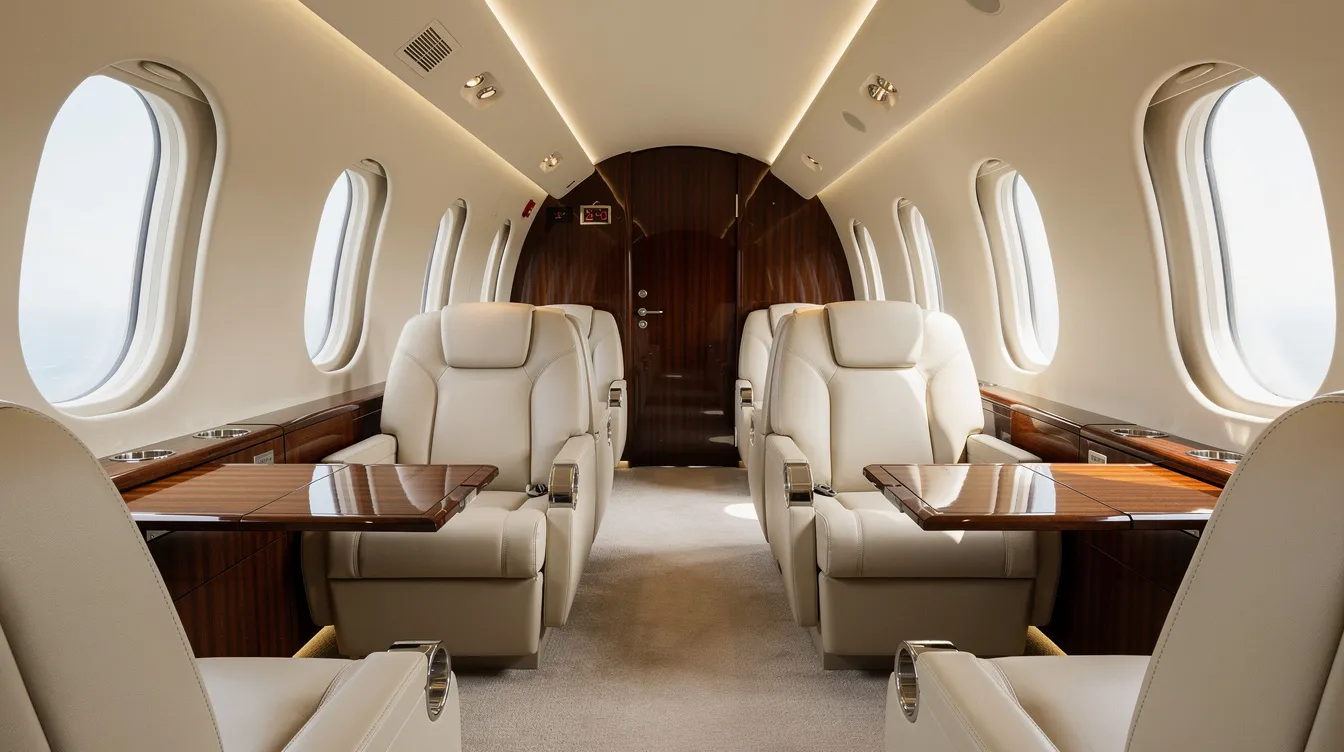
Beyond that time, the cabin experience differs entirely. On a private jet, every seat is yours. You work, sleep, or hold a meeting without interruption. Catering is customized. Departure times flex to your schedule, not the airline's.
A Jet Card from BlackJet provides guaranteed access to private jets across multiple cabin categories, from light jets for short regional hops to large-cabin jets for transatlantic long-range flights. Pre-purchased hours at fixed rates through premium private jet card programs eliminate the complexity of aircraft ownership while preserving flexibility.
Safety, Technology & Sustainability in Large and Private Aviation
Both the biggest aircraft and the smallest private jets operate under strict FAA and EASA certification standards. Redundant flight systems, mandatory crew training hours, and airworthiness directives apply across the board.
BlackJet adds layers beyond regulatory minimums. Every operator in our network undergoes third-party safety audits through organizations like ARGUS and Wyvern. Pilot experience requirements, maintenance records, and operational histories are reviewed before any aircraft enters our program.
On the sustainability front, large aircraft and global aviation are addressing emissions through engine technology and aerodynamics. The A350's Rolls-Royce Trent XWB engines cut fuel burn per seat compared to older widebodies. The 787 Dreamliner's composite airframe reduces weight and drag.
Private aviation faces a higher per-passenger emissions footprint because of smaller passenger loads. BlackJet addresses this directly: every flight through our Jet Card program is carbon neutral, with offsets and sustainable aviation fuel (where available) integrated at no additional cost to the member. Premium travel and environmental responsibility are not mutually exclusive.
Choosing the Right Aircraft Experience with BlackJet
The world's biggest aircraft showcase what commercial and cargo engineering can achieve at maximum scale. The An-225's 640-tonne MTOW. The A380's 853-seat single-class configuration. The Stratolaunch's 117-meter wingspan. These are milestones in aviation history and benchmarks for global aviation capability.
For individual travelers, the right aircraft is rarely the biggest. It is the one that matches your mission, whether that's a full charter or simply buying a seat on a private jet.
Choosing an Aircraft for Your Trip
Scenario 1: A four-person executive team flying from Chicago to a board meeting in San Francisco. A super midsize jet departs from a private terminal, flies direct in 3.5 hours, and returns the same evening. For some missions, executives may even choose more economical private aircraft options. Commercial alternatives require connecting flights or early-morning departures with two-hour airport lead times.
Scenario 2: A family of six traveling from New York to the South of France. A large-cabin jet flies nonstop, with custom catering and luggage handled privately. For even bigger groups, BlackJet can recommend the best private jet for 20 passengers. No layovers, no lost bags, no crowds.
Jet Card Program Overview
How BlackJet's Jet Card works—and how Jet Card pricing is structured across the industry—provides a predictable way to budget for private flights.
Choose a plan and compare pricing. Pre-purchase 25 or 50 hours of flight time at fixed rates. Review Jet Card cost per hour, the transparent Jet Card cost framework, and different Jet Card pricing models. Compare providers, including Flexjet jet cards and NetJets jet card programs, and explore 25-hour jet card options, 50-hour jet card plans, or 100-hour jet card options based on how often you fly. These options include 25-hour jet card structures, 50-hour jet card programs, and 100-hour jet card cost structures, helping frequent flyers benchmark their current travel spend and find the right fit among the best jet cards for frequent flyers.
Match aircraft to the mission. Access multiple aircraft categories matched to your trip, from budget-friendly private aircraft and the cheapest private jet choices for shorter or cost-sensitive routes to larger aircraft for group travel. Plan for large groups using the best private jets for 50 passengers, or arrange private jet charters in Karachi. You can also buy a seat on a private jet when you need one-off flexibility, similar to many of the best jet cards for frequent flyers.
Book with flexible support. Book through a 24/7 digital platform or dedicated support team, using a program built around transparent Jet Card costs and benefits. The program's structure resembles how the top private jet companies organize membership programs while preserving flexibility across trip types.
Fly with safety and sustainability built in. Every flight includes safety-audited operators, real-time flight support, and carbon-neutral performance, aligning with what the best jet cards for frequent flyers are designed to deliver.
Booking and Flexibility
A Jet Card offers predictable access without the complexity of aircraft ownership. Members can choose among cabin categories, schedule flights around their needs, and use the dedicated support team or digital platform to arrange travel.
Safety and Sustainability
Every flight through the program includes safety-audited operators, real-time flight support, and carbon-neutral performance. These features help ensure flexibility is matched by operational standards and environmental responsibility.
The biggest aircraft in the world push engineering boundaries. BlackJet pushes the boundaries of what your travel schedule allows.
Frequently Asked Questions About the World's Biggest Aircraft
What is the biggest plane in the world?
It depends on how “biggest” is measured. The Antonov An-225 had the greatest maximum takeoff weight at 640 tonnes and was the heaviest aircraft ever built, but it was destroyed in 2022. Stratolaunch Roc holds the wingspan record at 117 meters, while the Airbus A380-800 is the largest passenger airliner, with capacity for up to 853 passengers in a high-density layout.
What is the world's biggest plane by wingspan?
Stratolaunch Roc is the world's largest plane by wingspan, measuring 117 meters from wingtip to wingtip. Its twin-fuselage design was originally developed to carry rockets for air-launch-to-orbit missions and is now used for hypersonic flight testing.
Is the Antonov An-225 still flying?
No. The only completed Antonov An-225 was destroyed in 2022 during the war in Ukraine. Its records include a maximum takeoff weight of 640,000 kg and the largest payload ever transported by air: 189,980 kg.
What is the largest passenger aircraft still in service?
The Airbus A380-800 remains the world's largest passenger aircraft. It has two full-length passenger decks, a maximum capacity of 853 passengers, and a range of about 14,800 kilometers. Although production ended in 2021, A380s continue to operate with several airlines.
How is a private jet different from the world's biggest aircraft?
The biggest commercial aircraft are designed to carry hundreds of passengers on scheduled routes. A private jet serves smaller groups with greater control over departure times, airports, and cabin arrangements. For frequent travelers, a Jet Card can provide access to multiple aircraft categories without the cost and responsibilities of owning an aircraft.
What should travelers consider when choosing private jet access?
Compare aircraft range and cabin capacity with your routes and group size, then review operator safety audits, pilot and maintenance standards, scheduling flexibility, and total program costs. Sustainability also matters: BlackJet’s Jet Card flights are carbon neutral, with offsets and sustainable aviation fuel where available included at no additional cost.
Conclusion: Scale Is Only One Measure of Aviation
The world’s biggest aircraft reveal how engineering adapts to radically different missions: the Antonov An-225 set records for weight and payload, Stratolaunch Roc leads in wingspan, and the Airbus A380 remains the largest passenger airliner. From oversized cargo transport to high-capacity international routes, each aircraft shows that the right design depends on what—and whom—it needs to move. Explore more about the largest passenger plane, or compare these aviation giants with the best private jets in the world.
For travelers, however, the most useful aircraft is not necessarily the largest. A commercial giant moves hundreds of passengers on a fixed schedule; private aviation gives smaller groups greater control over departure times, airports, and cabin experience. BlackJet Jet Cards provide prepaid access across aircraft categories, supported by 24/7 booking and real-time assistance, without the responsibilities of ownership. Safety-audited operators and carbon-neutral flights, with offsets and sustainable aviation fuel where available, add substance to that flexibility. Learn more about private aviation safety standards and Jet Card options for frequent flyers.
Explore premium private jet access with BlackJet and discover a more seamless way to travel on your schedule.


 Sign up with google
 Sign up with Apple