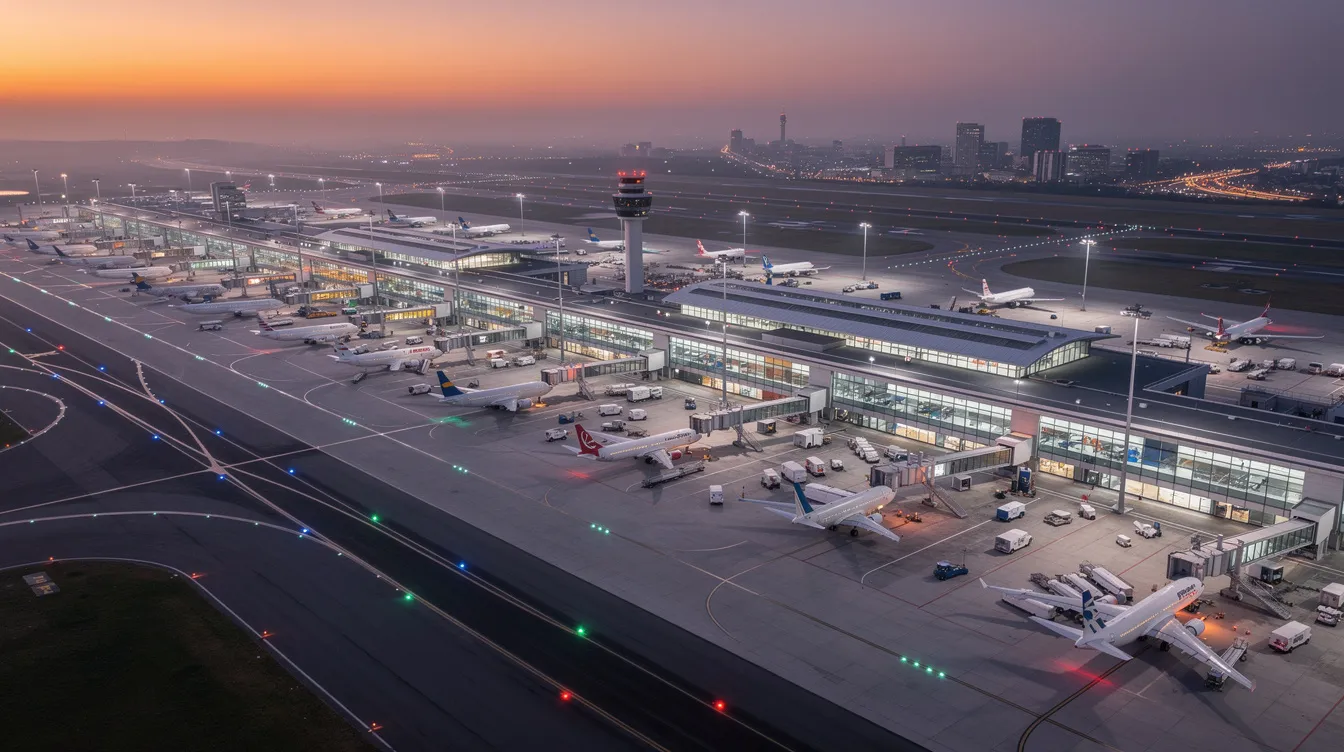
If you've searched for a Delta flight recently and felt a wave of sticker shock, you're not wrong—and you're not alone. Delta is so expensive because it dominates key hub markets with limited competition, targets high-demand corporate and premium leisure travelers, and prices itself as a best-in-class airline with stronger reliability, service, and amenities, then uses dynamic pricing to push fares as high as demand will support.
For frequent business travelers and high-net-worth leisure flyers who care about commercial airfare but also want to understand when a premium is actually worth paying, this article breaks down Delta's hub strategy, premium positioning, AI-driven fare management, loyalty-based personalization, and the route-by-route realities behind its pricing. You'll also see how to avoid overpaying, when a competitor makes more sense, and when alternatives such as BlackJet private aviation or Jet Card programs can deliver better value, time savings, reliability, and a more personalized travel experience.
Quick Answer: Why Delta Airlines Feels So Expensive
Delta Airlines charges higher flight prices because of three reinforcing factors: hub dominance that limits your alternatives, strong demand from corporate and premium leisure travelers, and a deliberate positioning as the best-in-class U.S. carrier. Delta controls over 70% of the market at key hubs like Atlanta, Minneapolis, and Detroit, giving it near-monopoly pricing power on hundreds of routes.
What you get for that price is measurable. Delta's on-time performance was 84% last year, ahead of most domestic competitors. Complimentary Wi-Fi now covers the majority of domestic mainline flights. Seatback screens, newer cabins, and fewer cancellations round out a travel experience that genuinely outperforms budget carriers-and often outperforms other legacy airlines too.
Then there's dynamic pricing. Fares change constantly based on demand, remaining seats, travel dates, and competitive pressure. Two passengers booking the exact same flight on the same route can see wildly different prices depending on when they search. In contrast, private aviation through a model like BlackJet's Jet Card offers transparent, fixed hourly rates rather than opaque per-seat pricing that shifts by the minute. The rest of this article explains how Delta's pricing machine works, how to beat it, and when it makes sense to leave commercial behind entirely.
Delta's Market Power: Hubs, Monopolies & Limited Alternatives
Where you live heavily influences what you pay to fly Delta. If your home airport is one of Delta's big hubs-Atlanta (ATL), Detroit (DTW), Minneapolis–St. Paul (MSP), or Salt Lake City (SLC)-you're likely paying a premium simply because fewer carriers compete for your business. Delta also holds strong positions at New York's JFK and LaGuardia, and at Seattle (SEA).
Delta controls over 70% of its hub markets, which creates captive demand:
Business travelers in these cities often have no realistic nonstop alternative on other airlines.
Families and leisure flyers face the same constraint-connecting through a competitor's hub adds hours and risk.
Corporate contracts and loyalty to Delta SkyMiles tiers (Silver, Gold, Platinum, Diamond Medallion) further lock customers in, reducing willingness to switch even when fares rise.
Consider the difference: a flight from ATL to MSP-both Delta hubs-might price at $350 one-way weeks in advance, while ATL to Orlando, where Southwest, JetBlue, and other carriers compete aggressively, drops to $180. Delta's prices are higher due to limited competition at hubs, and that revenue premium is documented-Delta earns roughly 15% more revenue per available seat mile than peer airlines. Delta's overall revenue grew by $9 billion from 2011 to 2018, and its revenue increased by 23% compared to 2019, reflecting just how effectively its market dynamics and hub strategy extract value.
Premium Positioning: You're Paying for Delta's "Better Economy"
Delta Airlines deliberately brands itself as a premium carrier, not a low-cost option. Its pricing strategy targets wealthier vacationers and corporate travelers who value operational reliability over rock-bottom fares. And for the most part, the airline delivers on that promise.
The service elements that justify higher prices include:
Leading on-time performance among major U.S. carriers
Fewer cancellations-completion rates near 99%
Complimentary Wi-Fi on most domestic mainline flights
Individual seatback entertainment screens across much of the fleet
Better irregular operations (IRROPS) handling when things go wrong
Compare this with ultra-low-cost carriers like Spirit or Frontier, which strip out nearly everything and charge for carry-ons, seat selection, and basic messaging. Even some American and United routes lack screens or free connectivity. Delta's basic economy fares can be $200–$300 more than competitors on the same route, but many travelers find the premium worth paying.
Here's why: a business traveler choosing a $650 Delta ticket over a $480 competitor fare from NYC to Denver isn't wrong if a missed meeting from a cancellation costs $5,000. The $170 difference is insurance against lost productivity.
That said, frequent commercial flyers who move to private aviation-through a Jet Card membership or a dedicated BlackJet 25+ Hour Jet Card-do so for an even higher tier of reliability, privacy, and time savings that no commercial premium cabin can match.
Dynamic Pricing & AI: How Delta Decides What to Charge You
Modern airline dynamic pricing means flight prices can change many times per day. Delta's sophisticated revenue management systems divide each flight into dozens of fare buckets-different codes within basic economy, Main Cabin, Comfort+, and premium cabins-each with its own price and rules. As seats sell, cheap buckets close and higher fares dominate.
For historical context: before U.S. deregulation in the late 1970s, fares were regulated at roughly six cents per mile. Airfare prices have dropped by half since the 1970s in inflation-adjusted terms. Yet it still feels expensive because dynamic pricing leads to different fares for the same flight depending on when you look.
A concrete example: a New York–Denver roundtrip in February might show $220 for an early planner booking months ahead. That exact same flight could show $550+ when only last seats remain days before departure. This is algorithmic inventory management, not personal targeting.
Delta's biggest profit pools today extend beyond economy tickets. Premium cabins, ancillary add-ons, credit card partnerships, and miles sales through its loyalty program generate enormous revenue. But dynamic pricing still extracts maximum value from every seat on every route.
In private aviation, pricing also responds to demand but translates into simpler structures. A BlackJet 25-hour Jet Card, for instance, offers fixed hourly rates by cabin class-far more predictable than refreshing an airline fare page and watching the price climb with each search.
Personalization & Loyalty: When Delta Knows You Too Well
When you frequently fly Delta, the airline's systems can infer your willingness to pay based on past behavior, elite status, and route patterns. This isn't conspiracy-it's revenue optimization.
Frequent flyers and Platinum or Diamond Medallion members have reported noticing that cheaper fare classes sometimes seem to disappear when logged in, compared with prices shown anonymously. Delta publicly denies offering individualized pricing based on personal data, clarifying that its AI tools work with aggregated demand signals. But the practical effect is the same: your loyalty means you're less likely to defect to other carriers, and the system knows it.
Technically, cached searches, cookies, and repeated queries may signal higher purchase intent, prompting the system to display fewer discounted options. Actionable strategies include:
Search logged out in incognito mode
Compare with Google Flights before committing
Check prices on partner sites or OTAs to see alternative inventory
Contrast this with BlackJet's Jet Card model, where members see consistent hourly rates and clear fees regardless of how many times they search. There's no personalized seat-level pricing that shifts based on your browsing history.
Route-by-Route Reality: When Delta Is Overpriced vs When It's a Deal
Delta can be simultaneously expensive on some routes and surprisingly cheap on others. Competition is the biggest driver of cheap flights in the U.S., and it shows—just as competition and aircraft choice shape every line of a comprehensive private jet price list.
Where Delta deals are common:
New York (JFK/LGA) to Denver, Phoenix, Miami, Fort Lauderdale-sample roundtrip fares drop under $150–$200 during sale periods because JetBlue, United, Southwest, and others compete fiercely
International routes like New York or Boston to Dublin, or U.S. hubs to Reykjavik, where Delta matches or undercuts foreign carriers
West Coast hubs (LAX, SEA) to Hawaii with sub-$200 roundtrip deals in shoulder seasons
Where Delta stays stubbornly high:
Smaller regional spokes feeding Delta hubs with no nonstop alternatives
Business-heavy flights: Monday morning ATL–DTW or similar corridors
Last-minute bookings on any captive route
At the top end of Delta's fare spectrum-last-minute first class or transcontinental lie-flat seats on long-haul flights- pricing begins to overlap with entry-level private jet charter on short routes, making private aviation a serious alternative for some travelers.

How to Avoid Overpaying When You Fly Delta
You can often fly Delta for less if you understand their systems and stay flexible.
Use Delta's Price Calendar. The "My dates are flexible" tool reveals cheaper travel dates. Shifting by one to three days can cut hundreds off flight prices on the same destinations.
Cross-check with Google Flights Explore. Filter for SkyTeam carriers when you specifically want to fly Delta but need a broad price overview across plans and schedules.
Pay for Main Cabin over basic economy. The slightly higher ticket often includes free changes and the ability to rebook if prices drop, generating eCredits that represent real savings.
Vote with your wallet. When fares are irrationally high, check other airlines, consider connecting flights instead of nonstop, and be willing to skip loyalty if the price gap is large enough that brand reputation alone doesn't justify the spend.
Consider the bigger picture. Ultra-frequent or high-value travelers may find that shifting certain trips to private aviation saves more money in total-factoring in time, productivity, and hotels for overnight layovers-than saving $100 on a commercial ticket ever could, especially when using predictable-cost Jet Card membership pricing.
Dynamic Pricing vs Private Aviation: A Different Way to Think About Cost
Instead of only asking "why is Delta so expensive?", ask a better question: what am I actually buying-a price per hour saved, privacy, operational reliability, or just a seat- and whether budget-friendly private aircraft options might deliver better overall value on certain trips?
Commercial dynamic pricing is per-seat, opaque, and emotionally frustrating. Private aviation operates with a membership or Jet Card model that's per-hour or fixed-trip, more transparent even when higher in absolute dollars.
Consider a scenario: a New York–Chicago day trip where Delta first-class can reach $1,500+ last-minute for one passenger. A small executive team of three or four people flying the same route on a light jet through a provider like BlackJet may spend more money in total-but split across the team, factoring in TSA time deleted from the schedule, boarding delays avoided, and no overnight hotels, the math shifts. Private aviation companies offer Jet Card programs for prepaid access to private jets across cabin classes.
BlackJet's structure illustrates the contrast and shows how Jet Card pricing structures can simplify budgeting:
Feature | Delta Airlines (Commercial) | BlackJet Private Jet Card (Private Aviation) |
|---|
Pricing Model | Dynamic per-seat pricing, fluctuates by demand and timing | Fixed hourly rates by cabin class, prepaid hours |
Price Transparency | Opaque, changes frequently | Transparent, consistent rates |
Booking Flexibility | Limited, subject to availability and fare buckets | Guaranteed availability with prepaid hours |
Service Level | Economy to premium cabins with varying amenities | Luxury, privacy, personalized service |
Schedule Control | Fixed commercial flight schedules | Flexible, on-demand scheduling |
Cancellation & Changes | Fees and restrictions vary by fare class | Simplified, often more flexible |
Loyalty & Personalization | AI-driven pricing influenced by loyalty and search behavior | No personalized pricing, consistent rates |
Sustainability | Investment in sustainable aviation fuel and carbon reduction | Carbon-neutral flights included at no extra cost |
Safety, Sustainability & Technology: Why Some Travelers Pay More Than Basic Economy
Not all price differences come down to brand or hub dominance. Some passengers and companies willingly pay higher fares for stronger safety standards, better technology, and greener practices.
Delta invests heavily in maintenance, crew training, and operational technology-higher operating costs that support its industry-leading completion rates and reliability. Many corporate travel managers prioritize these factors over rock-bottom airfare. Delta has also made public commitments to carbon reduction and sustainable aviation fuel, and some customers factor environmental posture into choosing their airline, just as aircraft buyers weigh sustainability and support when reviewing premium private jets for sale.
Carbon-neutral flights are an increasing focus in the private jet industry as well. Providers like BlackJet offer carbon-neutral private flights by default, using verified offsets at no additional cost. Real-time flight support is a key feature of private aviation services, and private jet services utilize mobile booking platforms that let travelers control itineraries more precisely than any commercial airline's fixed schedule allows, while some travelers even look to top-tier private jets that maximize luxury and performance when sustainability and technology are priorities.
For high-net-worth individuals and executives, these pillars-safety, sustainability, and control-justify paying more than even a high Delta fare when the trip is critical, especially on itineraries that call for large-cabin private jets for groups of around 20 passengers.
When to Stick With Delta, Switch to Other Airlines, or Go Private
The decision comes down to four axes: time sensitivity, route competition, party size, and privacy expectations.
Stick with Delta when:
You're on competitive routes with multiple carriers and reasonable flight prices
You've booked well in advance for leisure destinations
SkyMiles Medallion status delivers tangible value (airport lounges, upgrades, priority service)
Switch to other airlines when:
You're flying from a non-Delta hub where competitors offer better schedules
The fare gap exceeds $200 roundtrip for the same route, and you'd rather not pay higher fares for brand alone
Delta's schedule forces long layovers that erode productivity-for the same reason, a direct flight on another carrier wins
Go private when:
You need multi-city business roadshows or tight same-day turnarounds
A group of executives is traveling and time is the most expensive variable
Destinations aren't well served by Delta or other commercial carriers
The customer profile for private jet services includes high-net-worth travelers, and frequent business travelers prefer private jet services for flexibility and convenience. Private aviation emphasizes luxury, privacy, and safety for its clients, while newer entrants explore the cheapest private jet options and access models to make on-demand flying more attainable.
Example: a team needing to visit three Midwestern cities in 24 hours-Detroit, Chicago, Minneapolis-faces impossible commercial connections. With a BlackJet corporate Jet Card drawn from one of the best Jet Card programs for frequent flyers and guaranteed aircraft access, they depart on their own schedule and return the same night.
FAQ: Delta Prices, Dynamic Pricing & Jet Card Alternatives
Why are Delta flight prices so high from my city?
If your home airport is a Delta hub, the company likely controls over 70% of the market there. Fewer competing carriers means less pressure to lower fares, especially on nonstop routes.
Does Delta's dynamic pricing mean I'm being overcharged?
Not exactly. Dynamic pricing fills seats at the highest price the market will bear. It's algorithmic, not personal-but it does mean early planners almost always pay less than last-minute passengers on the same flight.
Can logging out or using incognito lower Delta fares?
It's worth trying. Cookies and search history may influence which fare buckets appear. Searching anonymously and comparing on third-party tools can surface cheaper options.
How do Delta's costs compare with other airlines on the same route?
On competitive routes, carriers like Southwest, JetBlue, and United often undercut Delta significantly. On captive hub routes, Delta's fares can be $200–$300 higher with no comparable alternative.
When does a private jet actually make financial sense compared with Delta first class?
When time saved, privacy, schedule control, and avoided disruption costs exceed the fare premium. For small groups or executives with tight itineraries, the total cost of commercial travel-including delays, hotels, and lost productivity-can rival or exceed private jet rates.
What is a Jet Card and how does it differ from ad-hoc charter?
A Jet Card is a prepaid block of flight hours at fixed hourly rates across aircraft categories. Unlike ad-hoc charter, rates are locked, availability is guaranteed, and there's no trip-by-trip negotiation. BlackJet's Jet Card programs range from 100-hour Jet Card options to smaller blocks, and include carbon-neutral flights, 24/7 real-time support, and hours that never expire.
Conclusion: Understanding Delta's Pricing and Exploring Smarter Travel Options
Delta Airlines commands higher prices due to its dominant hub market share, premium service positioning, and advanced dynamic pricing strategies. While this often means paying more for reliability, amenities, and operational excellence, it also reflects a broader strategy to serve corporate and affluent leisure travelers who value time, convenience, and comfort.
For those seeking alternatives, understanding when to fly Delta, switch to competitors, or embrace private aviation can unlock better value and experiences. Private jet access through Jet Card programs like BlackJet offers a transparent, fixed-cost model with unmatched flexibility, safety, and sustainability—providing a strategic advantage beyond what commercial airlines can offer.
Ultimately, the question isn’t just "why is Delta so expensive?" but rather "what does your travel time and experience truly cost?" By aligning your travel choices with your priorities—whether that's premium commercial service or the bespoke efficiency of private aviation—you elevate your journey from a commodity to a strategic asset.
Elevate your travel—effortlessly. Discover how BlackJet’s Jet Card programs redefine private flight access with rigorous safety standards, carbon-neutral performance, and seamless flexibility. Explore our offerings and experience how refined, meaningful travel becomes your new standard. Learn more about private jet charter options and the benefits of mobile booking platforms that empower your travel control.


 Sign up with google
 Sign up with Apple