For travelers who demand the very best from every journey, understanding what separates a first-class flight from every other cabin is essential. Whether you are evaluating a transatlantic upgrade or weighing commercial first class against private jet access, this guide breaks down the cabin hierarchy, pricing realities, and experiential differences that matter most.
What Is a First-Class Flight? (Answer the Core Question Fast)
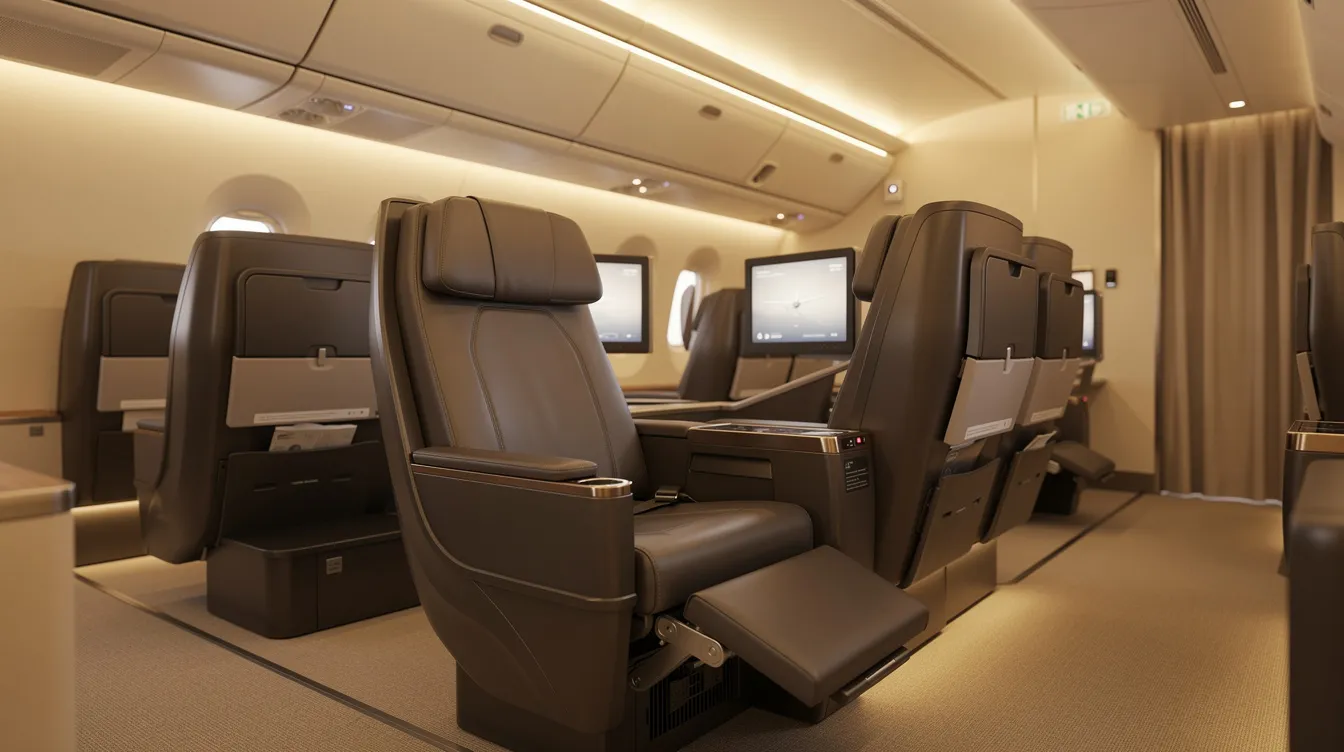
First class represents the highest tier of service available on a commercial airline. It is the top-class cabin sitting above business class and economy class in the airline hierarchy, delivering maximum space, privacy, high-end dining, and exclusive services that no other commercial cabin can match. On long haul flights, first class often includes private suites with enhanced privacy, lie flat beds, dedicated ground services, and a level of personalized attention that justifies its premium price tag.
The definition of first class varies greatly depending on the airline and route. Here is how it fits into the broader cabin system:
Basic economy fares offer the lowest price with minimal perks and no seat selection.
Economy class provides standard seating, meals on most flights, and basic beverage service.
Premium economy bridges the gap with extra legroom, wider economy seats, and improved meal service.
Business class introduces lie-flat seats on long haul flights, lounge access, and elevated dining.
First class delivers the ultimate premium cabin experience: expansive suites or semi-enclosed rooms with ample personal space, fine dining by world-class chefs, and a lower ratio of attendants to passengers for truly individualized attention.
On many airlines, especially on long-haul international flight routes, first class has been replaced by enhanced business class products. Yet on flagship routes like New York–London, Dubai–Sydney, and Paris–Tokyo, a distinct first-class section remains the gold standard. For travelers seeking something beyond even that standard, BlackJet's premium private jet cards and charter access offer a level of privacy, flexibility, and control that commercial first class flights simply cannot replicate.
How Airline Class Systems Work: From Economy to First Class
The modern airline cabin hierarchy evolved over decades. Airlines initially operated single-class aircraft before introducing first- and business-class sections to capture premium revenue. Business class emerged as a distinct product in the 1970s (Qantas was among the early adopters), while premium economy growth accelerated through the mid-2000s as carriers sought a middle ground between economy class and business class tickets.
The key differences scale predictably with price:
Economy class: standard pitch (31–32 inches), fixed meals on international routes, no lounge access, basic check in.
Premium economy: more space (typically 36–38 inches of pitch), early boarding, better meal service, and sometimes a dedicated class section.
Business class seats: lie flat on most long-haul flights; business class services include lounge access and priority boarding; upgraded dining and amenity kits.
First class seats: the highest class of service, often featuring a 1-2-1 configuration (or even 1-1-1 on some carriers), fully enclosed class suites, dedicated check-in counter areas, chauffeur transfers, and the most exclusive lounges in the airport.
Note that some airlines sell only one premium cabin, labeling it either first or business class depending on branding. United Airlines, for instance, discontinued its traditional first-class cabin on international routes by early 2018, making its Polaris business class the top product. Labels like first and business can reflect marketing as much as a strict standard.
Key Features of International First Class Flights
International first class is where the experience becomes truly first class, especially when you contrast typical cruising altitudes with how high a private jet can fly compared to commercial flights, which affects route options, turbulence avoidance, and overall ride quality. The gap between business class and first class on flagship international routes is defined by privacy, bespoke service, and ground-to-ground luxury.
What sets it apart:
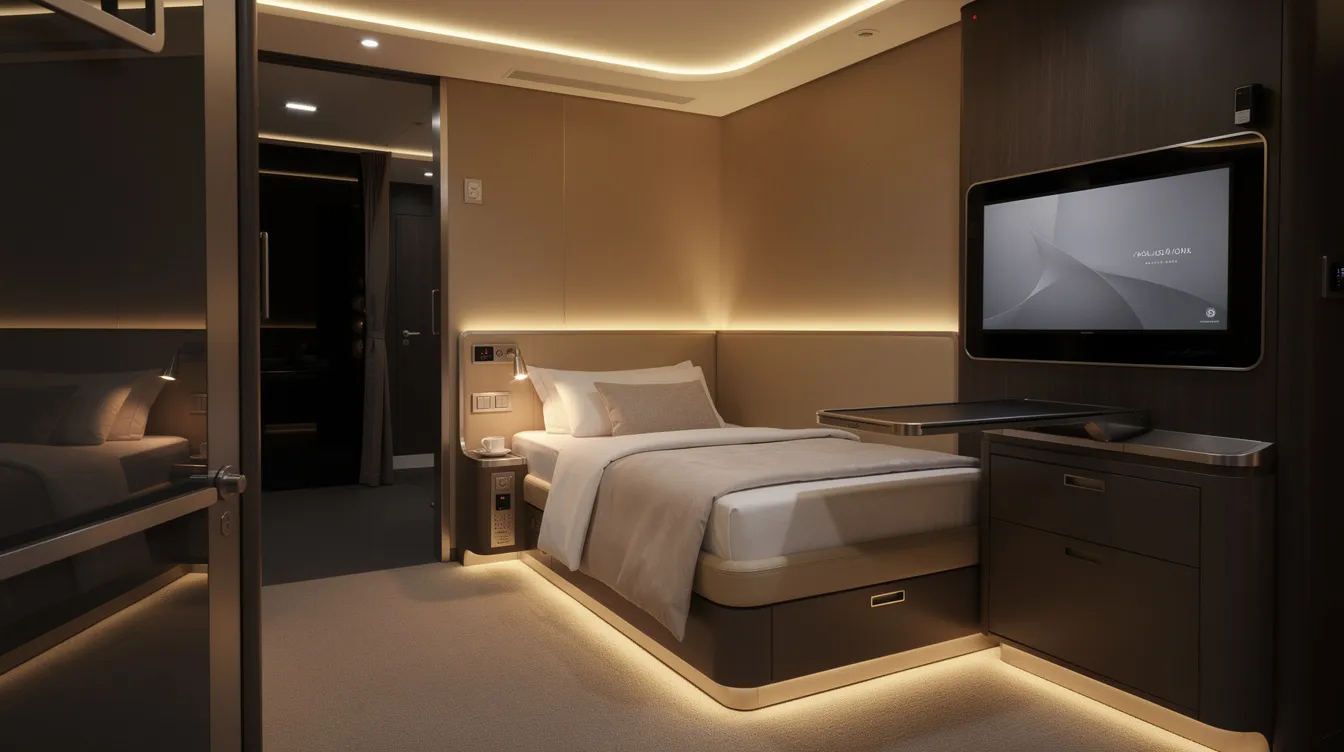
Private suites with closing doors, separate from the main class cabins. Emirates on the A380 offers an onboard shower spa and a full service bar. Singapore Airlines introduced the Suites product with a double-bed concept for couples. Etihad's First Apartments provide a separate living space. Air France La Première limits the first-class cabin to just four seats.
First class meals are typically designed by Michelin-starred chefs. First class provides fine dining with multi-course gourmet meals served on fine china, complemented by vintage champagnes, caviar service, and dine-on-demand menus. First-class passengers enjoy complimentary alcoholic beverages and gourmet meals throughout the journey, with continuous access to premium drinks and snacks during the entire flight.
First class frequently has luxury designers for pajamas and amenity kits. First class offers luxury amenity kits with high-end skincare products and other essentials from brands such as La Prairie, Bvlgari, or Acqua di Parma.
First class seating often converts into fully flat beds on long-haul international flights, with premium bedding, turndown service, and noise-cancelling headphones.
First class may include premium onboard amenities such as shower spas and private bars, features unavailable in any other class cabin.
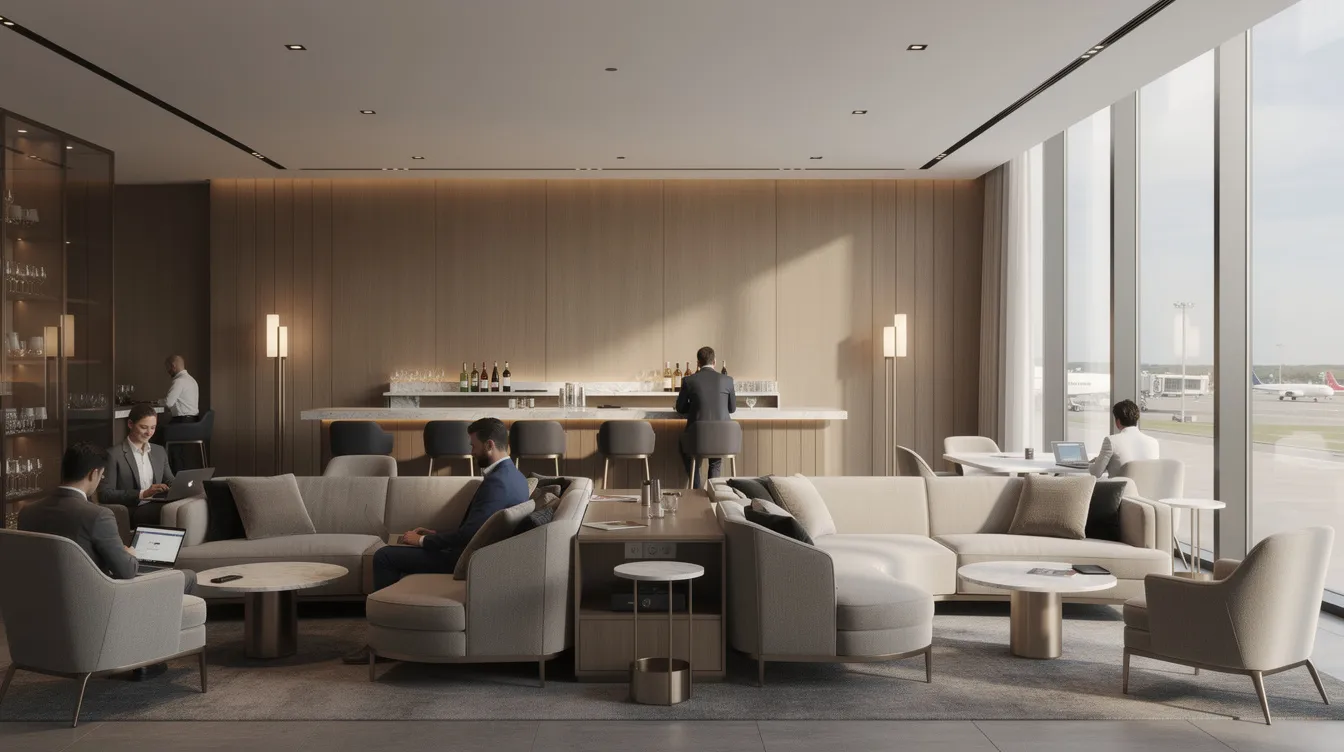
First class gives access to ultra-exclusive airport lounges with fine dining and spa treatments. The Lufthansa First Class Terminal in Frankfurt is legendary: first class passengers are driven directly to their aircraft by car across the tarmac, bypassing the main terminal entirely. These first class lounges are entirely separate from business-class lounge zones.
Domestic First Class: What It Really Includes
Domestic first class on US airlines and Canadian carriers is a fundamentally different product from international first class. On most domestic flights, first class is the premium cabin on a two-class aircraft, positioned closer to a regional business class experience than the suites found on long haul flights.
Typical domestic first class features include:
Wider recliner-style class seats with first-class seats typically feature more legroom and recline further than economy, but do not offering lie flat beds on most flights.
Free drinks, a better meal service on longer flights (light snacks on short-haul flights), and priority check in and priority boarding.
First class offers more individualized attention due to fewer seats in the cabin, meaning flight attendants can deliver more personalized beverage service and care.
On transcontinental flight routes like JFK–LAX or BOS–SFO, airlines such as American and Delta deploy lie-flat products (American's Flagship First, Delta One), which more closely mirror international business class.
Many airlines operating as low-cost carriers-Southwest, Spirit, and European airlines like Ryanair-run single-cabin economy class flights with only extra-legroom economy seats and no first-class cabin at all.
The practical takeaway: domestic first class is often more like enhanced economy class than the experience many travelers imagine when they hear "first class." If you have flown international business class with lie flat seats and lounge access, domestic first class may feel modest by comparison.
First Class vs Business Class vs Economy: Side‑by‑Side
The gap between first and business class has narrowed considerably over the past decade. Business class on many carriers now offers lie flat beds, premium dining, and airport lounges-features once reserved exclusively for first class passengers. This evolution has led many airlines to eliminate their first class cabins entirely, making business class their top class offering.
Here is how the three main class options compare on a typical long-haul international flight:
First class: fully enclosed class suites with doors, the most space per passenger, dine-on-demand menus crafted by Michelin-starred chefs, the highest staff-to-guest ratio, exclusive first-class lounges, and chauffeur transfers—an experience that begins to resemble the cabins of the top private jets in the world. First class fares are often two to three times more than business-class fares on the same route.
Business class: lie flat seats (typically in a 1-2-1 layout), quality dining and wine selections, business class lounge access, and priority services. Business class typically has more seats than first class cabins, making availability easier, and for some travelers competes directly with more affordable private jet options. The business class experience on leading carriers can rival first class on other carriers.
Economy class: standard seating, fixed meal service on international flights, limited legroom, basic in-flight entertainment. An economy ticket on the same route may cost one-fifth to one-eighth of a first class ticket.
Premium economy sits between economy and business class, offering a meaningful upgrade in legroom, meal quality, and priority check over standard economy without the full business class price, just as choosing from the best small private aircraft can offer a right-sized alternative to large-cabin jets for shorter missions. For business travelers watching corporate budgets, premium economy and business class tickets often represent the sweet spot between comfort and cost.
What a First Class Ticket Typically Costs
First class tickets can cost upwards of $8,000 internationally on major routes, and first class tickets can exceed $10,000 for long-haul flights on premium carriers. On ultra-luxury products like Emirates Suites or Air France La Première, round-trip class fares can reach $20,000–$30,000 during peak seasons.
Key pricing benchmarks:
New York–London round-trip in first class: roughly $5,800–$6,000 on average, with peak-season and last-minute fares climbing significantly higher.
Domestic first-class tickets: generally 2–4× the price of an economy ticket on the same route. A cross-country first class ticket might add $300–$800 over economy.
First class tickets can cost two to three times more than business class on the same international route, making the incremental benefit a genuine question for many travelers who might instead consider the broader private jet price list and access models.
A good deal for international first class is $3,000–$5,000 round-trip, but these windows are rare and brief.
Prices spike around major events-the World Economic Forum in Davos, Art Basel, Cannes Film Festival-and corporate travel policies frequently cap class tickets at business class, further constraining first class demand. Advance purchase, seasonality, and airline competition on a given route all influence what you will pay.
How to Fly First Class Without Paying Full Fare
Accessing first or business class without paying the published class fares requires strategy, not luck.
Frequent flyer miles remain the most reliable path. Redeeming miles for award space in first class can deliver extraordinary value, especially through programs like American AAdvantage, Delta SkyMiles, or an airline credit card that accelerates point earning.
Elite status on major US airlines (e.g., American Executive Platinum, Delta Diamond Medallion, United 1K) unlocks complimentary domestic first class upgrades, prioritized by tier. First-class passengers enjoy priority check-in and boarding as a baseline benefit of status.
Award ticket tactics: book a business class ticket and monitor for first class upgrade availability before departure. Mixed-cabin itineraries-business class on one leg, first on another-can stretch your miles further.
Mistake fares and limited-time sales occasionally surface genuine first class deals ($3,000–$5,000 round-trip to Europe or Asia), but they rarely last more than a few hours.
For travelers who fly frequently, BlackJet's Jet Card model sidesteps fare volatility entirely. Instead of chasing variable class ticket prices, a Jet Card with predictable membership pricing locks in fixed hourly private jet rates with all taxes and fuel included-no surprise surcharges, no revenue management games.
Inside the First Class Experience: Airport to Arrival
Flying first class emphasizes absolute privacy and hyper-personalized service from the moment you arrive at the airport. First class ensures a high level of luxury service during the entire travel experience. Here is what that looks like in practice:
First-class passengers enjoy dedicated check-in areas and private security lanes, bypassing the queues that define economy class travel. At major hubs, this means separate counters, expedited screening, and sometimes an escort directly to the lounge.
First class often includes access to private lounges with luxury amenities: à la carte dining, spa treatments, shower suites, nap rooms, and private offices. At airports like London Heathrow, Doha Hamad, and Dubai, the first class lounges are entirely separate from business-class zones.
Onboard, the class service is unmistakable. First class offers a lower ratio of attendants to passengers, meaning personalized greetings by name, tailored meal timing, and a full meal service available on your schedule. First class can include amenities like private transfers and onboard showers on some airlines. First class offers pre-boarding and baggage tagged for first delivery after landing, ensuring a seamless arrival.
Consider Air France's La Première experience: a luxury car collects you within 80 km of Paris CDG, a porter handles your luggage, and a private chauffeur escorts you to the gate before you settle into one of just four suites with dining by Alain Ducasse.
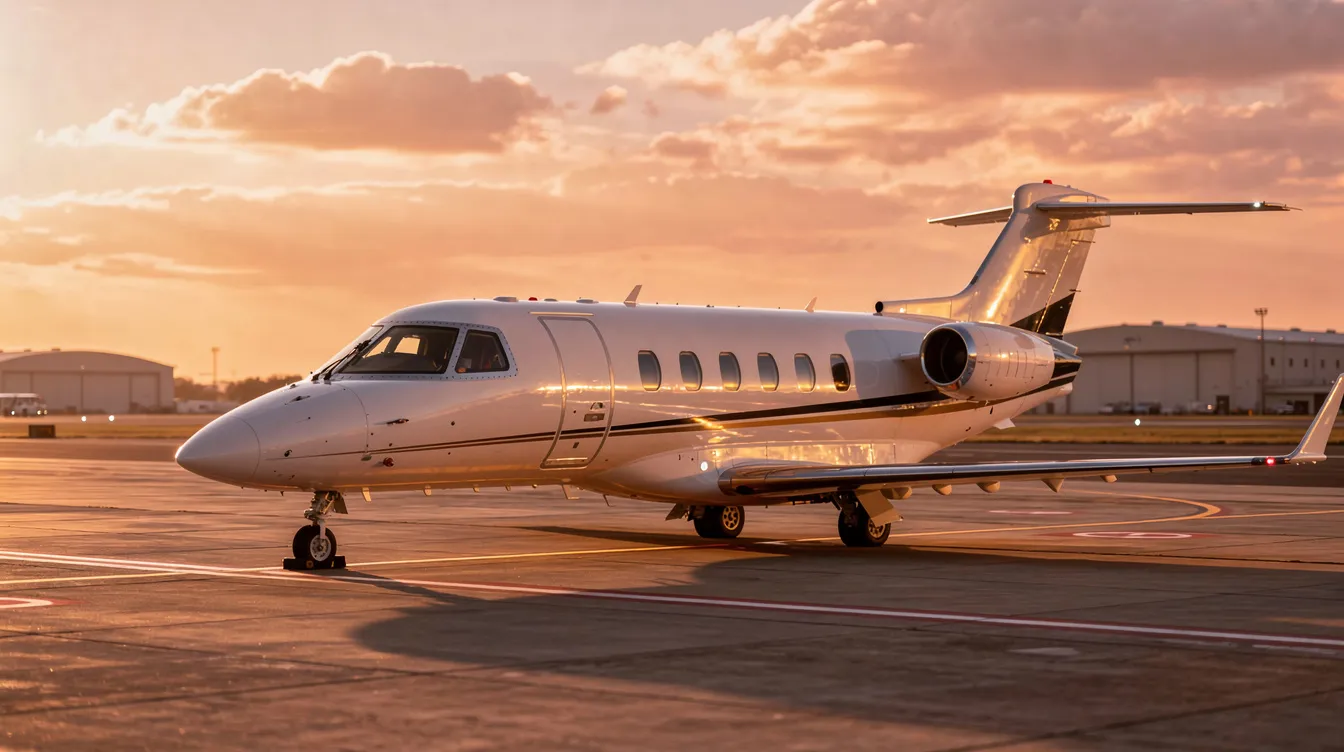
Now contrast this with a BlackJet private jet departure: you arrive at a private FBO terminal minutes before takeoff, walk directly to the aircraft on the ramp, and board without lines, crowds, or waiting. The BlackJet experience compresses the entire ground process into a fraction of the time.
Is First Class Worth It Compared to Private Jet Travel?
For high-net-worth individuals and executives, the question is not whether first class is luxurious-it is-but whether it delivers the best strategic value for your time and objectives, especially when compared with the most expensive private jet options that redefine what ultimate luxury in the air can look like.
Door-to-door time: a commercial first-class journey from Chicago to Nice likely routes through a European hub (Frankfurt, Paris, London), adding connection time and ground transfers, whereas an ultra-long-range aircraft—like the best long range private jets for sale—can often operate nonstop point-to-point. A BlackJet private flight can operate Chicago to Nice or Cannes directly, potentially saving four to six hours of total travel.
Privacy and control: first class offers a quiet class section, but you still share the cabin with other class passengers. A key question many travelers ask is whether private jets are safe enough to justify the added privacy and flexibility; rigorous standards mean they generally are. Private jet travel provides full cabin exclusivity-ideal for confidential board discussions, sensitive client meetings, or uninterrupted family time.
Cost dynamics shift with group size. A single first-class ticket may be more economical than chartering a jet for one passenger. But spread a private jet's hourly rate across four to eight travelers on frequently flown routes, and the cost per person—especially when you understand the underlying private jet charter pricing and jet card cost per hour—can approach or undercut multiple first class fares.
BlackJet's Jet Card programs-available in 25-hour and 50-hour tiers, offer prepaid access across aircraft categories (light, midsize, super midsize, large cabin) at fixed hourly rates, with the 50 hour jet card cost and value structured to reward frequent flyers. This predictability eliminates the fare volatility inherent in commercial class travel.
Safety, Sustainability, and Technology in Premium & Private Class Travel
Commercial first class flights operate under rigorous regulatory oversight from the FAA, EASA, and equivalent bodies worldwide. Safety standards are uniformly high across all class sections of a commercial aircraft.
Private aviation's safety landscape is more fragmented. This is precisely why BlackJet developed its BlackJet Certified program, a proprietary vetting process that audits operators, aircraft, and pilots against standards that fewer than 30% of U.S. Part 135 charter operators can meet, and why understanding the top private jet companies for luxury travel and safety matters if you're evaluating whether private jets are safe enough to replace commercial first class on critical routes. Third-party certifications from ARG/US and Wyvern-rated operators provide additional assurance.
On sustainability, flying first and business class produces higher emissions per passenger than economy due to larger seat footprints. Airlines sometimes offer optional carbon offsets at an extra cost. BlackJet takes a different approach: every flight is carbon neutral at no additional cost, with 300% emissions offsets covering CO₂ and other greenhouse gases built directly into hourly rates, which are structured through transparent jet card pricing and fee models.
Technology differentiators include first class IFE systems with screens up to 32 inches and high-speed Wi-Fi, while BlackJet provides a digital booking platform, 24/7 real-time flight support, and mobile access to Jet Card balances and upcoming trips, making it one of the best jet card solutions for frequent flyers and a natural complement to the innovations found on the newest private jets.
When to Choose First Class, Business Class, or Private Jet: Practical Scenarios
A CEO flying New York–London overnight for a board meeting: international first class delivers a lie-flat suite, exceptional rest, and arrival lounge access. For UK-based executives, exploring premium UK private jets for sale can frame whether ownership offers superior strategic value over recurring first class spend. For a solo traveler, this is often more cost-effective than a private jet on this route, though some may instead weigh 10 million dollar private jet ownership options or the top features of a $15 million private jet against continued commercial premium travel. Business class is a strong alternative if the schedule works.
A family of four flying Los Angeles–Tokyo for a two-week holiday: four first-class tickets would exceed $40,000 round-trip, prompting some cost-conscious private fliers to explore the cheapest private aircraft options or entry-level charter models before committing to repeated first class fares. Business class tickets offer lie flat comfort at roughly half the cost. For those considering ownership or a major charter commitment instead, exploring the largest private jets for sale can clarify what a true flying residence offers compared to commercial cabins. A large-cabin private jet—similar to the best private jet for 20 passengers or the top 16-seat private jet options—is viable for ultra-high-net-worth families but represents a significant premium over commercial class options.
A startup team doing a five-city U.S. roadshow in five days: domestic first class on each leg provides priority boarding and more space but remains bound to airline schedules, whereas chartering an aircraft for 100 passengers or a smaller group can consolidate complex multi-city itineraries into efficient nonstop segments. A BlackJet Jet Card—whether at the 50-hour level or a larger 100-hour jet card commitment—enables direct flights between secondary airports, eliminating connections and saving a full day of class travel time across the week, and can be evaluated alongside programs like Flexjet jet card cost and options when comparing private access models.
A high-profile executive transporting sensitive materials: first class offers comfort but no cabin exclusivity, especially on high-security routes where private jet charters in Karachi or similar hubs can provide tailored protection and discretion. A private jet provides complete privacy, control over the passenger manifest, and access to airports closer to the final destination, especially when you know how to buy a seat on a private jet or leverage private plane rideshare options through shared or semi-private platforms.
FAQs About First Class Flights and BlackJet Access
What does a first-class ticket include on most airlines? A first-class ticket typically includes lie flat seats (on haul flights of sufficient length), multi-course gourmet meals designed by Michelin-starred chefs, complimentary alcoholic beverages, lounge access, priority check-in and boarding, enhanced baggage allowances, and luxury amenity kits.
Is domestic first class the same as international first class? No. Domestic first class on US airlines generally offers wider recliner seats, free drinks, and light meals-closer to an enhanced premium economy experience. International first class features fully enclosed suites, lie-flat beds, chauffeur transfers, and exclusive class lounges.
How is first class different from business class on modern aircraft? First class provides more space per passenger, greater privacy (often with suite doors), a higher staff-to-guest ratio, and superior dining. First class fares are often two to three times more than business class. On many airlines, business class has absorbed features once unique to first class, narrowing the gap.
Are first class flights safer than other class cabins? All passengers on a commercial aircraft fly under the same safety regulations regardless of cabin. The aircraft, crew, and operational standards are identical across class sections.
How does BlackJet compare to flying first class? BlackJet offers full cabin privacy, flexible scheduling, access to thousands of airports, and carbon-neutral flights on every journey. While first class delivers exceptional commercial service, a Jet Card provides control over timing, routing, and the entire travel environment.
How many travelers does it take before a private jet becomes competitive with multiple first-class fares? On many routes, three to four passengers sharing a midsize jet can match or undercut the per-person cost of individual first class tickets, especially on premium international routes.
When is first class not worth it? On short-haul flights where domestic first class offers only a slightly wider seat and a snack, the premium over economy may not justify the cost. Similarly, when business class on that route offers lie-flat seats and lounge access, the jump to first class delivers diminishing returns.
Conclusion: Elevate Your Travel Experience with First Class or Private Jet Access
First-class air travel remains the pinnacle of commercial aviation luxury, offering unparalleled privacy, personalized service, and exquisite comfort that redefine the journey itself. For discerning travelers, understanding the nuanced differences between first class, business class, and private jet options is essential to making strategic travel choices that align with both lifestyle and business objectives.
While first class provides an extraordinary experience with exclusive lounges, gourmet dining, and spacious suites, private jet access through programs like BlackJet’s Jet Cards offers a transformative level of control, privacy, and efficiency that commercial flights cannot match. Whether you prioritize the prestige and amenities of first class or the bespoke flexibility and carbon-neutral assurance of private aviation, the key is selecting the option that maximizes your time, comfort, and peace of mind.
Explore how BlackJet can elevate your travel with seamless private jet access, safety-certified operators through the BlackJet Certified program, and sustainable practices with carbon-neutral flights—all tailored to the needs of today’s premium traveler. Discover a new standard of travel that goes beyond first class, redefining what it means to fly in style and confidence with our Jet Card programs.


 Sign up with google
 Sign up with Apple