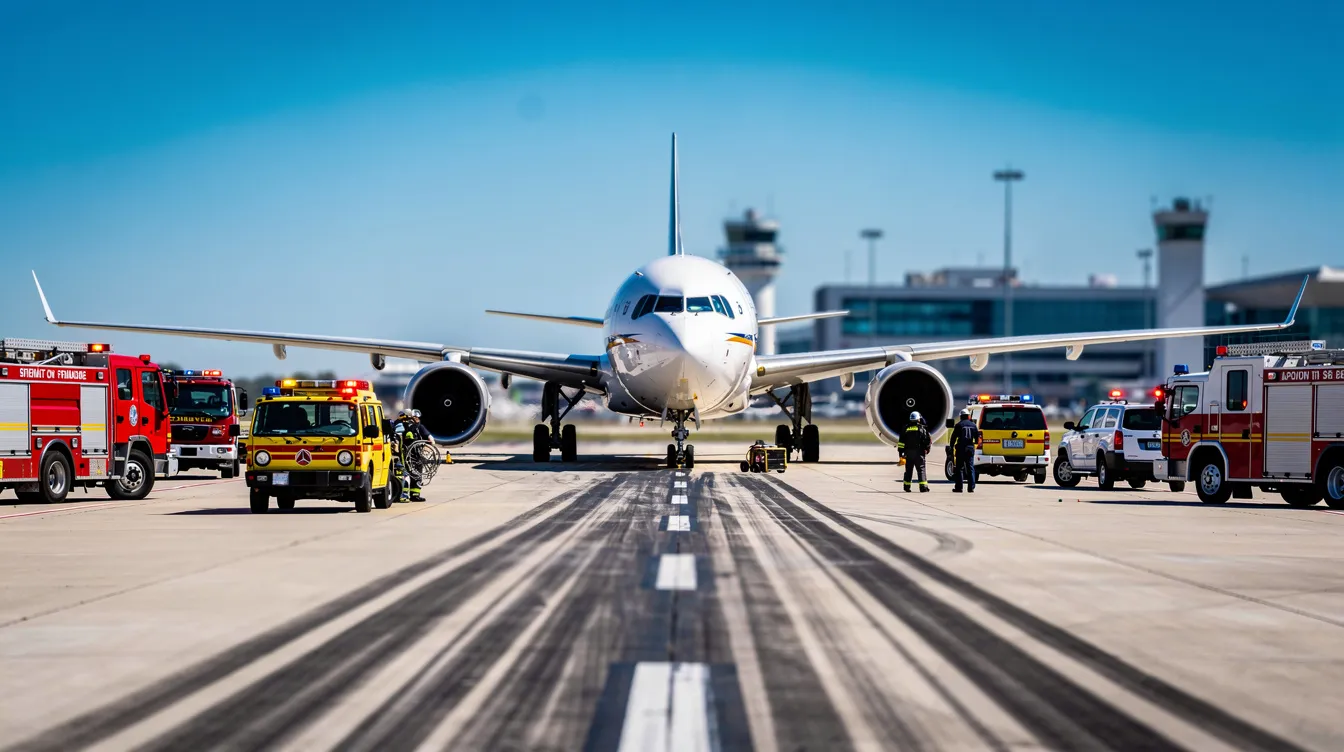
On 15 August 2026, a Vietnam Airlines Boeing 787-9 Dreamliner was involved in a serious takeoff incident on flight VN34 from Munich Airport, suffering a tail strike and runway overrun before returning and landing safely with all passengers and crew unharmed. For readers searching for Vietnam Airlines 787, this is the key event: what happened during departure, why the aircraft rotated late, how the crew handled fuel jettison and the return, and what investigators will examine next. This incident highlights the importance of safety protocols and operational procedures in modern aviation, offering valuable lessons for both commercial and private air travel.
For frequent business travelers, aviation-minded premium passengers, and high-net-worth leisure flyers weighing commercial flying against private alternatives like BlackJet's premium private jet card programs, the incident is a useful case study in real-world air travel risk. It shows how tail strikes and runway overruns develop on modern long-haul aircraft, how emergency procedures and landing protocols protect passengers, and why these safety margins matter when comparing airline operations with the flexibility and control offered by services such as BlackJet.
Overview of the Vietnam Airlines 787-9 Incident at Munich Airport
Flight VN34, operated by Boeing 787-9 registration VN-A867, was bound for Hanoi when it suffered a tail strike and runway overrun during its takeoff roll from runway 26L at approximately 11:57 UTC. The plane climbed out with multiple warnings, entered a holding pattern, dumped fuel, and executed an emergency landing on runway 26R at about 13:57 UTC — roughly two hours after departure.
All 271 passengers and 16 crew on board escaped without injury. The aircraft, however, sustained significant damage to its rear fuselage, and runway infrastructure including runway lights and approach lights beyond the paved surface, was destroyed or damaged.
Germany's Federal Bureau of Aircraft Accident Investigation - the German BFU - opened an aircraft accident investigation the same day. Under ICAO Annex 13, the bureau of aircraft accident investigation in the state where an incident occurs leads the inquiry. The Civil Aviation Authority of Vietnam is participating as the operator state, with Boeing and the US NTSB also involved as parties to the investigation. Similar regulatory frameworks shape private jet charter markets worldwide, from Europe to city-specific hubs like Karachi.
Vietnam Airlines operates Boeing 787-9 and Boeing 787-10 Dreamliners on its intercontinental network. The Boeing 787-9 has a range of up to about 15,750 km, making it well suited for routes like Munich–Hanoi. The 787-10 variant is optimized for high-capacity routes within Asia, while large VIP-configured airliners such as private jets for up to 50 passengers serve similar long-haul missions in the private sector.
Technical Sequence: Tail Strike and Runway Overrun
During the takeoff roll on Munich's runway 26L, VN-A867's acceleration profile showed an anomaly: speed appeared to stop increasing for about two seconds mid-roll before resuming. The pilots pushed the thrust levers forward, and the engines brought the aircraft back toward its target speeds—but the delay consumed critical runway distance.
By the time the crew reached decision speed (V1), there was no longer enough runway to safely reject the takeoff. According to the crew's account published by Tuoi Tre News, rotation was initiated approximately 91 meters from the end of the runway. The nose wheel began to lift, but because the aircraft rotated late, the tail contacted the paved runway surface. A tail strike occurs when the rear underside of the aircraft contacts the runway during takeoff or landing.
Aircraft tail strikes can cause structural damage — and on a wide-body like the Boeing 787, the strike point is the underside of the aft fuselage, where skin panels scrape and tear against the ground. Tail strikes can cause structural damage to the aircraft's fuselage that may compromise pressurization integrity, making post-strike inspection mandatory. Aircraft are typically grounded after suspected tail strikes for inspection before returning to service.
The Vietnam Airlines 787-9 overran Munich's runway by approximately 120 meters, traveling beyond the paved runway into the unpaved safety area. Tire marks at the departure end and dust kicked up across the grass confirmed the overrun path. Runway lights were damaged during the overrun incident, including runway end identifier lighting and threshold fixtures.
Landing Gear, Fuel Jettison, and Emergency Return to Munich
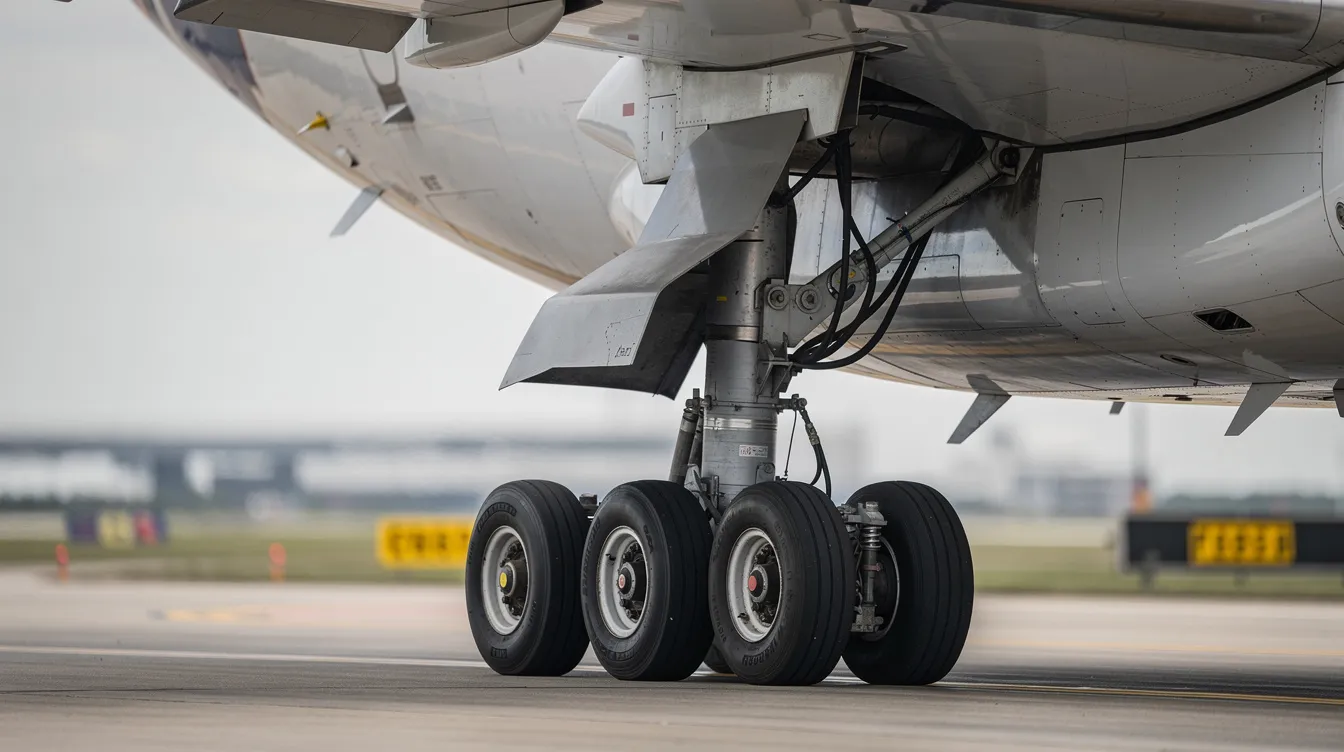
Once airborne, the crew received immediate warnings: a tail strike alert and tire pressure abnormalities across the main landing gear. Four of the eight main gear tires — primarily on the left main gear — showed pressure loss. Vibration through the airframe confirmed something was wrong.
The pilots climbed to approximately 9,000 feet and entered a holding pattern near Munich Airport to assess the situation and coordinate with air traffic control. Key decisions unfolded in sequence:
Fuel jettison: The aircraft still carried jet fuel for a 10-hour flight to Hanoi, putting it well above maximum safe landing weight. Fuel jettisoning is a safety measure during emergencies, and the crew spent hours dumping fuel over designated areas to bring the weight down and protect the landing gear during touchdown.
Visual inspection: The aircraft made two low approaches - low passes over the airport — so tower controllers could visually inspect the main landing gear and underside. No anomalies preventing a landing attempt were observed from the ground.
Emergency landing: On final approach to runway 26R, the plane touched down with visible smoke from the left main landing gear. Multiple tires burst during rollout. The aircraft stopped disabled near a taxiway, triggering temporary runway closure and airport disruptions.
The crew's disciplined handling - climbing, coordinating, and methodically reducing weight before attempting to land — reflects the layered safety protocols built into modern commercial aviation.
Damage Assessment and BFU Investigation
Post-landing inspection confirmed extensive damage:
Component | Damage observed |
|---|
Aft fuselage | Scraped and torn skin panels consistent with tail strike |
Main landing gear | Multiple tire failures, stressed wheels and rims |
Left main gear | Most severely impacted; main gear braking performance compromised |
Runway infrastructure | Destroyed runway end lights and approach lighting at Munich Airport |
Both digital flight data recorders - the flight data recorder (FDR) and cockpit voice recorder (CVR) - were recovered and transferred to the BFU's facility in Braunschweig for analysis. Germany's federal bureau leads under ICAO Annex 13, with Vietnam and the US NTSB as parties to the investigation.
The BFU will publish a preliminary report in approximately one month - around mid-September 2026. The final investigation report will take around one year and will cover causes, contributing factors, and safety recommendations. For high-net-worth travelers, understanding how performance, weight, and operating costs intersect in commercial events like this can contextualize the private jet price landscape and access options.
Potential Contributing Factors: Performance, Weight, and Runway Length
The flight crew reported a takeoff weight of approximately 240 metric tons — below the 787-9's maximum takeoff weight of roughly 247.2 metric tons. While within limits, operating near maximum weight reduces every margin: the aircraft needs more runway to accelerate, rotation speed is higher, and any miscalculation compounds quickly.
Incorrect weight data can significantly affect runway performance. If wrong weight figures were entered into the flight management computer - even by a small margin — the calculated V1, VR, and V2 speeds could be off, causing the crew to delay rotation or misjudge available distance. Runway 26L at Munich measures approximately 4,000 meters long, normally more than adequate for a Boeing 787 departure. The issue almost certainly lies in performance inputs or execution, not runway length alone.
Other areas under investigation include performance margins and how close the aircraft was to limiting weights that would impact takeoff speeds, a concept that frequent flyers also confront when evaluating the economics of a 100-hour private jet card program:
For private flyers, similar performance considerations influence whether a 25-hour jet card structure or another access model best balances flexibility with cost.
In private aviation, understanding these performance limits goes hand in hand with choosing the right 50-hour jet card option to match typical trip profiles and payloads.
Travelers comparing commercial risk to private alternatives increasingly weigh provider strength as well, from established names like Flexjet’s jet card programs to large-scale offerings such as NetJets’ jet card solutions.
At the top end of the market, some travelers opt for ownership of a $15 million private jet or even a $20 million-class aircraft, while others prefer to retain flexibility with jet card pricing models that avoid long-term capital commitments.
These remain areas of investigation, not conclusions. The flight data and CVR analysis will provide definitive answers.
Regulators, Civil Aviation Authority Roles, and Safety Culture
Following a major incident like this, national regulators coordinate rapidly. Germany's Luftfahrt-Bundesamt and Vietnam's civil aviation authority each have distinct roles: the BFU investigates independently for safety findings, while regulators enforce changes — updated crew training, revised standard operating procedures, and potential manufacturer service bulletins from Boeing.
Common safety actions after a tail strike and runway overrun include fleet-wide inspections, recalibration of takeoff performance calculation tools, and reinforced simulator training scenarios for late-rotation awareness. One event at Munich Airport feeds back into global improvements, from revised checklists to enhanced data monitoring across every operator flying the Boeing 787.
What This Means for Travelers and the Wider Aviation Ecosystem
Incidents like the VN-A867 tail strike are exceptionally rare. The fact that no one was injured despite a runway overrun, tail strike, and emergency landing with tire failures demonstrates that modern safety systems work as designed - redundant layers of crew training, air traffic control cooperation, and structural engineering all performing under pressure.
For passengers aboard VN34, the experience meant extended flying time during fuel dumping, cockpit communication about technical warnings, and a precautionary emergency response on landing. Some travelers who repeatedly experience such disruptions ultimately explore buying a single seat on a private jet for greater control. Vietnam Airlines provides traditional Vietnamese hospitality alongside its service offerings, and cabin crew managed passenger anxiety throughout.
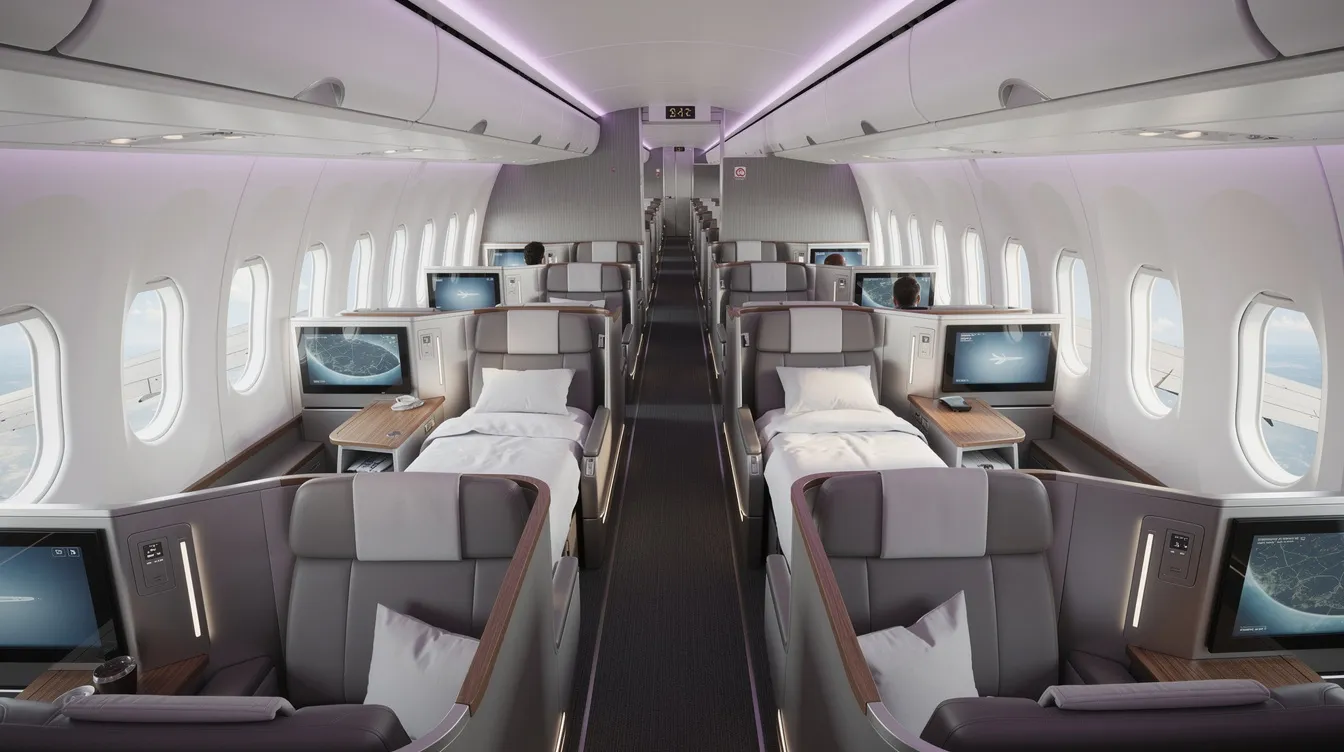
The Boeing 787 series is designed to reduce travel fatigue and jet lag through a lower cabin altitude, improved air filtration and circulation, and larger electronically dimmable windows compared to older aircraft. The cabin environment of the Boeing 787 contributes to a quieter and more spacious feel. For travelers used to lie-flat business cabins, 16-seat large-cabin private jets can deliver similar comfort with far more privacy, and private jets configured for around 20 passengers offer a true VIP airliner alternative for groups. Business Class on the Boeing 787 is arranged in a 1-2-1 configuration, while Vietnam Airlines' Economy Class is typically arranged in a 3-3-3 configuration.
Compared with earlier tail strike events — such as the 2013 Lufthansa A330 incident in Chicago — lessons learned have steadily improved procedures, simulator scenarios, and structural protections. At the same time, innovations in aircraft design and access models have opened up more affordable private jet options that still adhere to rigorous safety standards. This incident will add another layer to that body of knowledge.
From Commercial Incidents to Private Jet Strategy: Lessons for High-End Travelers
The VN-A867 incident underscores a reality of commercial aviation: tightly scheduled operations at congested hubs leave limited room for flexibility. For high-net-worth travelers and executives who fly frequently, these constraints represent an unnecessary exposure to delay, disruption, and operational rigidity, driving many to evaluate the best jet card programs for frequent flyers.
Private jet operations offer a fundamentally different risk profile. With a Jet Card program like BlackJet's, travelers gain flexibility in departure times, routing, and airport selection — avoiding the congestion of major hubs like Munich. For those comparing programs, a clear view of jet card cost per flight hour helps quantify the value of that flexibility. Operators maintain conservative weight-and-balance margins, conduct double-checks on performance calculations, and select runways with ample distance for every departure.
Safety oversight in premium private aviation includes proprietary vetting, third-party audits, and strict safety standards across aircraft categories — from light jets to long-range, large-cabin aircraft. Many of the world’s top-performing private jets integrate advanced safety systems and sustainability features that mirror or exceed commercial benchmarks. Real-time flight support and carbon-neutral operations come standard, not as afterthoughts.
For travelers who want the comfort and range of a Boeing 787 business cabin but with added privacy, control, and highly curated risk management, a BlackJet Jet Card delivers on every point. Understanding overall jet card membership pricing makes it easier to benchmark that experience against premium commercial fares. No fuel dumps over open countryside. No two-hour holds waiting for clearance to land. Just seamless, predictable, and safe travel — every time.
Discover how BlackJet's Jet Card programs can elevate your travel.


 Sign up with google
 Sign up with Apple