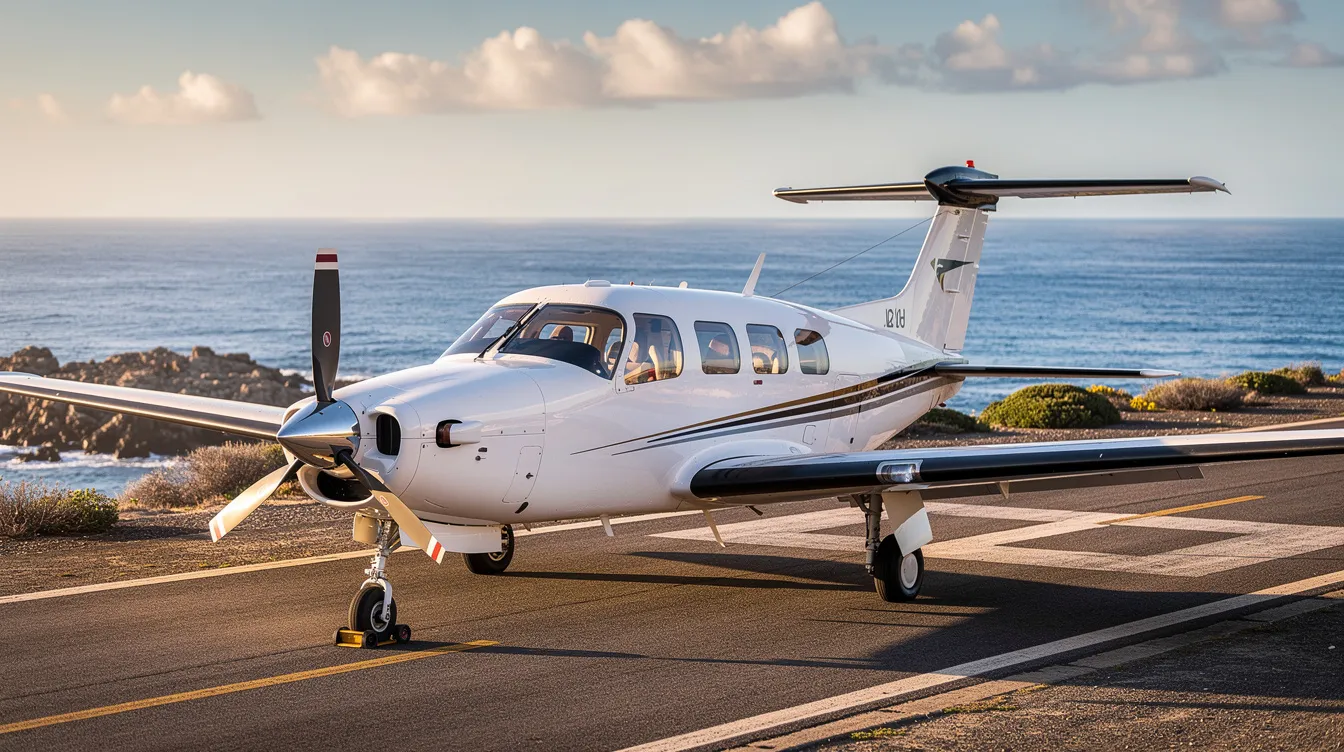
Private aviation is not a one-size-fits-all decision. Turboprop charter means booking a private flight on a turbine-powered propeller aircraft built for regional missions, and for executives, founders, UHNW travelers, small executive teams, families, and other serious travelers flying shorter routes, it can deliver a strategic edge that light jets and commercial business class simply cannot match-access to smaller regional airports, significantly lower operating costs, shorter door-to-door travel times, and a lower-impact option for trips of roughly 600 nautical miles or less.
This guide examines where turboprops outperform light jets, how they compare on cabin comfort, safety standards, performance, and price, which aircraft models are most commonly chartered, and what to weigh before booking.
Key Takeaways: Why Choose Turboprop Charter for Regional Travel
Cost Efficiency: Turboprops offer the most economical private aviation option for trips under 600 nautical miles, with hourly rates typically 30–50% lower than light jets due to superior fuel efficiency and lower operating costs.
Airport Accessibility: Their ability to operate from runways as short as 3,000 feet opens up access to smaller, regional, and remote airports, reducing ground travel time and expanding destination options beyond commercial hubs.
Comfort and Amenities: Modern turboprops feature spacious cabins with executive seating, climate control, and luxury finishes comparable to light jets, accommodating 5 to 9 passengers comfortably.
Safety and Certification: Rigorous maintenance programs, two-pilot crews, and compliance with ARGUS and Wyvern audits ensure turboprop charters meet the highest safety standards.
Strategic Use Cases: Ideal for corporate day trips, leisure getaways, specialist travel with bulky gear, and routes where speed is secondary to convenience and access.
Sustainability Advantage: Lower fuel burn translates to reduced carbon emissions, supporting environmentally conscious travel goals without sacrificing luxury.
Choosing turboprop charter means embracing a strategic, efficient, and sophisticated approach to regional private aviation—perfectly tailored to the needs of discerning travelers.
Why Turboprop Charter Matters for Serious Travelers
Turboprop aircraft offer significant advantages for charter services on trips of 600 nautical miles or less. Rather than defaulting to a private jet charter, serious travelers are choosing turboprop planes for their ideal balance of cost, comfort, and airport access.
Factor | Turboprop Charter | Light Jets |
|---|
Hourly charter rates | $1,200–$3,000 per hour | $2,500–$4,000 per hour |
Best range | 200–600 nm | 600–1,200 nm |
Runway required | As short as 3,000 feet | 3,500–4,500+ feet |
Fuel efficiency | 30–50% less fuel burn | Higher fuel consumption |
Ideal use | Regional flights, short hops | Longer flights, speed priority |
Compared to commercial business class, turboprop charter flights eliminate security lines, hub connections, and the tens of thousands of minutes lost annually to ground logistics, and a broader analysis of whether chartering a private jet is worth it underscores how these time savings often justify the investment. You fly from your departure airport directly to remote airports or small airports that commercial carriers never serve.
The workhorses of regional private flights include the King Air 200/350, Pilatus PC 12, and Cessna Grand Caravan, each built for missions where access to destinations matters more than cruise speed. Every flight should involve safety-vetted operators meeting ARGUS and Wyvern audit criteria, with certified pilots and structured maintenance programs.
What Is a Turboprop Charter Flight?
A turboprop engine uses a turbine to drive a propeller rather than relying on pure jet propulsion. This distinction from jet engines gives turboprops better fuel efficiency at lower speeds and lower altitudes, making them the most economical option in private aviation for shorter flights.
Within private charter, turboprop charter is a specific class, distinct from chartering a light or midsize jet, and understanding the broader meaning and types of charter flights helps clarify where turboprops fit. Typical missions cover 200–800 miles, roughly 45 minutes to 2.5 hours of flight time, connecting secondary and regional routes. Think New York to Nantucket, Dallas to Santa Fe, Los Angeles to Napa, or Miami to Nassau.
Booking works on-demand: you request dates, routes, and passengers, and receive pricing based on an hourly rate plus operational costs, including fuel, landing, handling, and any positioning charges.
Cabin Comfort and Onboard Experience
Modern turboprops deliver spacious cabins with executive seating, climate control, and finishes that rival many light jets. The notion that turboprops are "basic" is outdated. Modern-sized turboprops now feature leather upholstery, optional Wi-Fi, power outlets, and tailored catering.
Typical layouts seat 6–8 in a club configuration. The King Air 350 offers enclosed lavatories, a cabin roughly 19.5 feet long and 4.8 feet tall, and generous wing compartments for luggage. The Pilatus PC 12 provides a large cargo door that can offer added baggage space for bulky gear, golf clubs, ski equipment, or expedition supplies. Both aircraft provide added baggage space that surprises travelers accustomed to the tighter storage of smaller jets.
Full-sized turboprops often match or exceed the headroom of many models of light jets. A four-person deal team flying Boston to Toronto for same-day business meetings, or a family weekend to Martha's Vineyard, finds the cabin more than comfortable for the mission.
Safety, Certification, and Operational Standards
Turboprop flights are as safe as jet flights when operated by audited, top-tier providers. Turboprop aircraft undergo rigorous maintenance and safety checks, and turboprop charters require two-pilot crews for safety on complex operations.
Key safety pillars include:
Recurrent crew training with simulator time covering engine-out procedures and weather avoidance
Strict maintenance cycles following manufacturer directives and regulatory requirements
Third-party audits via ARGUS, Wyvern, and IS-BAO frameworks covering safety management systems, crew qualifications, and operational culture
Single-engine models like the Pilatus PC 12 carry an exceptional safety record, with redundant electrical systems, de-icing certification, and the highly reliable Pratt & Whitney PT6 engine. Expert charter advisors match aircraft to weather systems, runway length, and payload to preserve safety margins on every flight.
Efficiency, Fuel Consumption, and Cost Advantage
Turboprops have better fuel efficiency than similarly sized jets, consuming 30–50% less fuel than comparable light jets on short legs. This makes them the most fuel-efficient aircraft class for sectors under roughly 600 nautical miles and positions them among the most affordable private aircraft options for travelers focused on value as well as comfort.
A practical example: a 300-mile hop takes about 1.3–1.5 hours in a turboprop at approximately $2,100 per hour, totaling around $2,730 before fees. A light jet covers the same route in about 1 hour at $3,200 per hour but carries higher costs in fuel consumption, landing fees, and potentially longer ground transport from larger jets' required airports. For travelers comparing budgets across aircraft classes, a broader guide to how much it costs to charter a small plane can help contextualize these numbers. Turboprops offer lower operating and maintenance costs than light jets across every line item.
Sustainability matters, too-lower fuel burn means lower CO₂ per flight hour, aligning with corporate ESG reporting. And empty legs on turboprops can offer discounts of 30–70% when timing and route align with repositioning flights.
Performance: When a Turboprop Beats a Jet
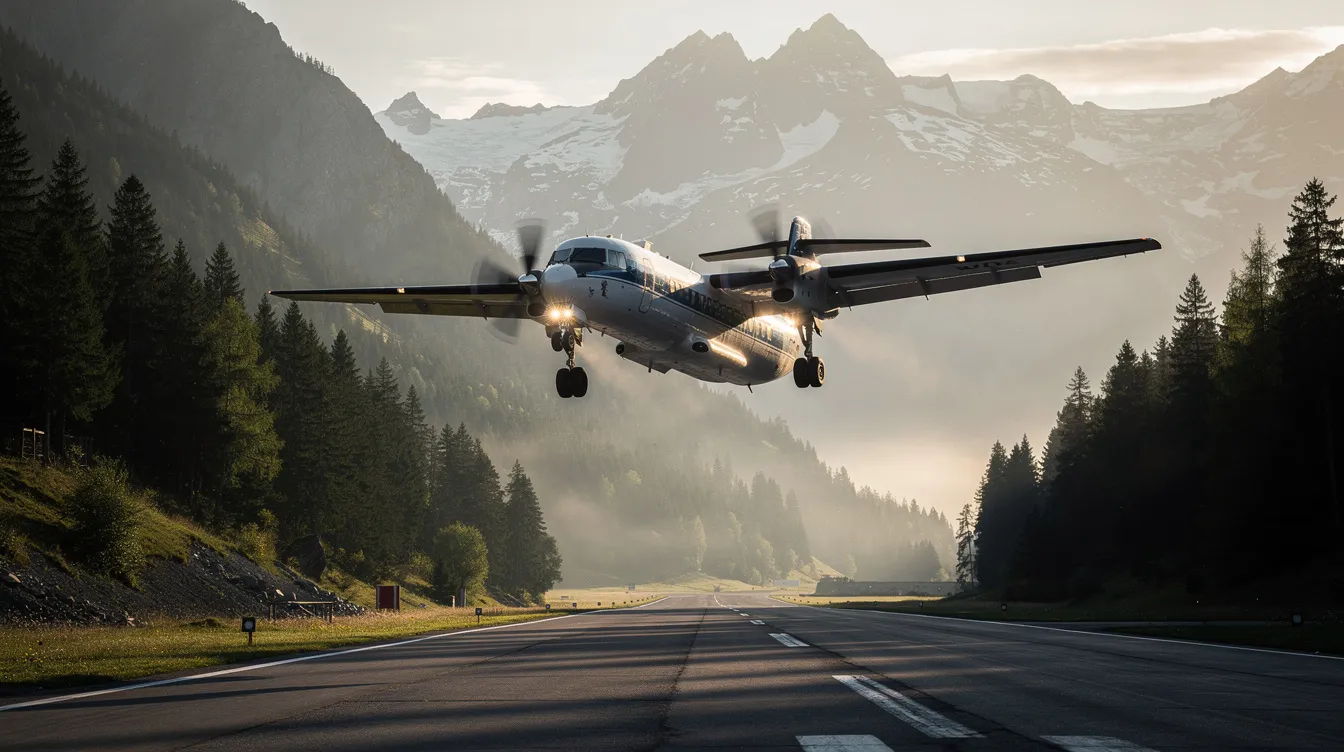
Turboprops excel where runway length, airport access, and regional routing matter more than cruise speed. They can operate from runways as short as 3,000 feet, opening access to remote locations and destinations that most jets cannot reach, such as Truckee, East Hampton, Aspen, and smaller Caribbean strips.
Most turboprops fly at a service ceiling of 25,000 to 35,000 feet. While this means flying through more weather systems than larger jets cruising above 40,000, professional dispatching and modern radar ensure safe routing through most weather systems.
Consider this scenario: a turboprop landing directly at Truckee's short field saves the 90-minute mountain drive required when a light jet must divert to Reno. Even at lower speeds, door-to-door time favors the turboprop on shorter runways and regional travel.
Turboprop vs Light Jet: Choosing the Right Aircraft
The choice between turboprops and a midsize jet or light jet is about matching aircraft class to mission, not ranking one above the other, and understanding how much it costs to rent a private jet across categories makes those trade-offs clearer.
Choose a turboprop when: you fly multiple short legs in a day, need access to remote airports, prioritize cost control, or travel with small groups and bulky gear.
Choose a light jet when you need nonstop sectors over 700 nautical miles, higher altitude routing above weather, or maximum cruise speed from medium-haul light jets or longer flights.
Even a $1,000 difference in hourly charter rates compounds significantly over 50–100 flight hours per year. Consult a charter advisor with your specific route to receive a tailored comparison. The smart choice depends entirely on the mission.
Popular Turboprop Models in Private Charter
A handful of proven airframes dominate the turboprop charter market. Many models serve distinct traveler profiles:
Beechcraft King Air 200/250/350: Twin-engine workhorses seating 7–9 passengers with enclosed lavatories, cruise speeds around 300–320 knots, and an extensive range of approximately 1,200–1,500 nm. Ideal for executive teams wanting twin-engine redundancy and well-suited to membership models like BlackJet’s premium private aviation services and Jet Card programs.
Pilatus PC 12: Single-engine, 6–9 seats, large cargo door for bulky equipment. Range up to 1,800 nm, cruise ~285 knots. Perfect for reaching remote locations, mountain strips, and shorter runways, and frequently cited among the most cost-effective private aircraft choices for regional operations.
Cessna Grand Caravan: Slower cruise (~185–200 knots) but excellent payload for small groups with sports equipment or expedition gear. A cost-effective option for island hopping and safari-style travel, especially when contrasted with the largest private jets available that are designed for global, large-group missions.
Turboprops typically cruise at speeds of 201 to 461 mph and have a range of 800 to 3,000 miles, depending on model and configuration, sitting at the efficient end of the spectrum when compared with the top private jets in the world that prioritize ultra-long-range performance and maximum speed.
Understanding Turboprop Charter Pricing
Most turboprop charter quotes are built around an hourly rate multiplied by planned flight time, plus taxes and fees. Typical turboprop charter rates range from $1,200 to $3,000 per hour, with premium turboprop models reaching rates up to $4,500–$5,000 per hour for large-cabin, fully equipped aircraft. For a broader framework on understanding private jet charter pricing, it helps to compare these figures with light, midsize, and large-cabin jet categories. Charter rates start around $2,000 per hour for popular models like the King Air and PC-12.
Additional cost drivers include aircraft positioning (deadhead flights), minimum daily flight time requirements, overnight crew expenses, and peak-demand surcharges of 20–40% around holidays. Lower operating costs compared to larger jets make turboprops the value leader in private aviation, and traveling mid-week, booking in advance, or securing empty legs can reduce costs further while retaining premium service and private charter convenience.
Use Cases: Where Turboprop Charter Excels
Turboprops are ideal for small executive teams or families needing efficient regional travel. Turboprop charter flights are the most economical option in private aviation for these missions, especially when compared with the broader spectrum of small private plane charter costs:
Corporate day trips: A CEO visits Albany and Hartford from New York in one day, using small airports minutes from each office, no hotel nights, no commercial connections, and often leveraging BlackJet’s premium private jet and Jet Card programs to secure consistent pricing and aircraft quality.
Leisure getaways: A family flies to Nantucket for the weekend with surfboards and gear. Turboprops are ideal for regional trips and weekend getaways where commercial service is limited, and understanding the cost to charter a small plane helps families budget these escapes confidently.
Specialist travel: Golf trips, fishing expeditions, or tournament team travel where aircraft must offer added baggage space and fly into remote airports with shorter runways.
City-to-countryside routes: Dallas to a mountain ranch, or Miami to a private Bahamian island-turboprops connect destinations where no commercial flights exist, while larger group movements may call for chartering a plane for around 100 passengers on heavy jets or VIP airliners.
Turboprops are perfect for accessing smaller airports and reaching remote locations without large commercial airports.
Frequently Asked Questions About Turboprop Charter
Are turboprops as safe as jets?
Yes. Turboprop flights meet ARGUS and Wyvern audit criteria, and turboprop aircraft undergo rigorous maintenance and safety checks. Engines like the Pratt & Whitney PT6 are among the most reliable turbines ever built.
How many passengers can fly?
Typical turboprop planes seat 5 to 9 passengers comfortably. Modern turboprops offer spacious cabins and luxuriant amenities, including leather seating, climate control, and catering, while larger parties might consider private jets configured for about 15 passengers when missions extend beyond turboprop capabilities.
Can turboprops fly internationally?
Absolutely, U.S. to Caribbean, intra-Europe, and U.S. to Mexico routes work well. Turboprops are suitable for short-haul flights under 600 nautical miles; beyond that, a light or midsize jet may be more efficient, and ultra-long itineraries may require the best long-range private jets designed for nonstop intercontinental travel.
What about the weather?
Turboprops cruise at lower altitudes, but professional dispatching ensures safe operations in most conditions. Pilots use modern radar and route planning to navigate around weather, just as crews do on the world’s top-performing private jets that operate at higher flight levels.
Charter vs. owning?
Charter eliminates fixed costs, such as depreciation, insurance, hangar, and crew standby. Most travelers find on-demand private charter far more economical unless flying over 150 hours annually, especially once you factor in the full cost of hiring private jet pilots and operating a jet.
Planning Your Next Turboprop Charter
Treat aircraft selection as a strategic decision. Before requesting an instant quote, gather your dates, passenger count, luggage requirements, routes, timing flexibility, and any pet or equipment needs. For frequent flyers, a structured solution like the BlackJet 25+ Hour Jet Card can lock in fixed rates on larger jets while you still use turboprops tactically for regional hops. Plan early for peak periods-summer island seasons, holiday weeks, and major events-when the best turboprop options book quickly.
The advantages are clear: cost-efficient hourly charter rates, access to more airports, lower fuel consumption, and tailored cabin comfort for private flights. Broader analyses of whether chartering a private jet is worth it consistently show that, for regional missions, turboprops deliver outsized value. Turboprop charter is not a compromise-it is a smart choice for travelers who value precision over prestige alone.
Explore curated turboprop and light jet options with expert advisors who can match your mission to the right aircraft. The best flight is the one designed around your schedule, your route, and your standards.
Conclusion: Elevate Your Regional Travel with Turboprop Charter
For discerning travelers seeking a strategic advantage on regional routes, turboprop charter offers an unmatched combination of efficiency, access, and comfort. With significantly lower operating costs, the ability to reach smaller airports, and modern cabin amenities rivaling light jets, turboprops redefine what private aviation can deliver on trips under 600 nautical miles. Safety and certification standards ensure peace of mind, while fuel efficiency supports sustainability goals without compromising luxury.
Whether flying a small executive team to a remote business hub, escaping for a weekend getaway with family, or transporting specialized equipment to a secluded destination, turboprops provide a tailored, seamless experience. By choosing turboprop charter, travelers unlock new possibilities in private aviation—balancing precision, performance, and prestige for every mission. Learn more about private jet safety standards and explore how turboprops compare to light jets to make the most informed choice for your next flight.
Discover how BlackJet’s expert advisors can connect you with the ideal turboprop for your next journey. Explore premium turboprop charter options today and elevate your regional travel to a new standard of excellence.


 Sign up with google
 Sign up with Apple