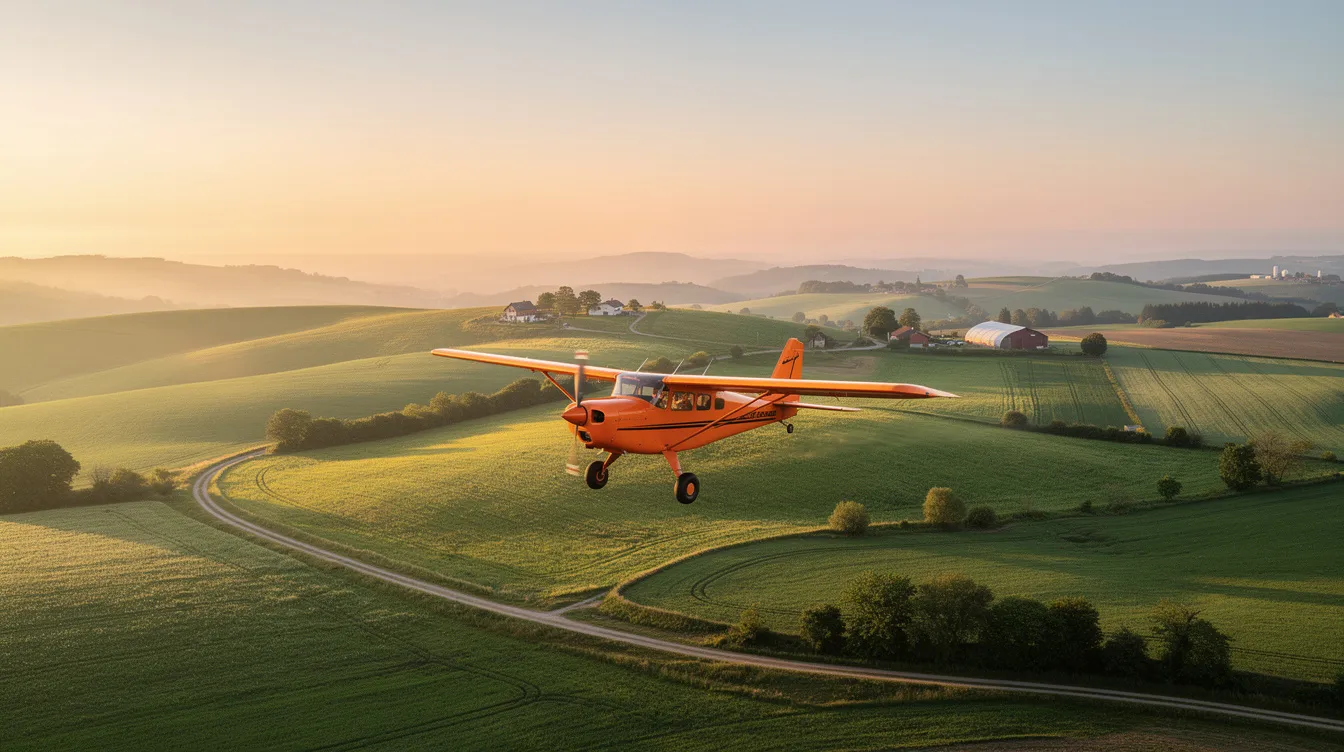
For executives who measure travel in hours saved rather than miles covered, a small Cessna plane is often the most practical aircraft for the first or last segment of a complex itinerary. Typically a high-wing, single-engine piston aircraft seating 2 to 10 passengers, it handles short regional flights and connects remote or short airfields to the broader private aviation network in ways larger jets cannot. For frequent business travelers, high-net-worth leisure travelers, and families who want flexible access to regional destinations, that makes it a valuable tool for cutting ground time and building more efficient door-to-door itineraries.
This guide looks at the small Cessna models used in private aviation, what they do well, the cabin and safety standards travelers can expect, how they pair with jet card programs, what they cost, and how BlackJet helps book them as part of a seamless trip.
Why Small Cessna Aircraft Still Matter for Serious Travelers
Consider a same-day site visit from New York to a rural property in central Pennsylvania, roughly 200 nautical miles. A commercial itinerary involves a hub connection, a regional turboprop, a rental car, and at least five to six hours of transit. A BlackJet Jet Card member flying a midsize jet to a regional airport and then boarding a small Cessna feeder leg into a 2,800-foot private strip can be on-site in under three hours.
That difference is not marginal. It is the difference between a day trip and an overnight stay. For many executives and families, Cessna aircraft function as aviation's connector and classroom: pilot training, terrain scouting, property inspections, and short-range utility missions that jets cannot economically serve.
BlackJet's Jet Card members regularly use small Cessna aircraft for first-mile and last-mile regional hops into smaller airfields, then connect to midsize or large-cabin jets for longer sectors. The combination delivers coverage that no single aircraft category can achieve alone.
Key advantages of pairing small Cessnas with a jet card program:
Time savings: Direct routing to secondary airfields avoids commercial hub layovers and ground transit, often cutting 2 to 4 hours per trip.
Airport access: Reaches strips under 3,000 feet, unpaved runways, and airfields with no commercial service.
Cost efficiency: Piston aircraft burn 8 to 13 gallons per hour; operating costs for regional hops are a fraction of jet rates.
What Counts as a "Small Cessna" Single-Engine Aircraft?
A "small Cessna" refers to a high-wing, single-engine piston aircraft typically seating 2 to 10 passengers (including pilot), produced under the Cessna brand. The lineage traces back to Clyde Cessna, who founded the Cessna Aircraft Company in 1927 in Wichita, Kansas. After decades of mergers, including a period under General Dynamics ownership and later leadership by figures like Dwight Wallace, the brand now operates under Textron Aviation alongside Beechcraft. Some Cessna aircraft were also built under license in France for the European market.
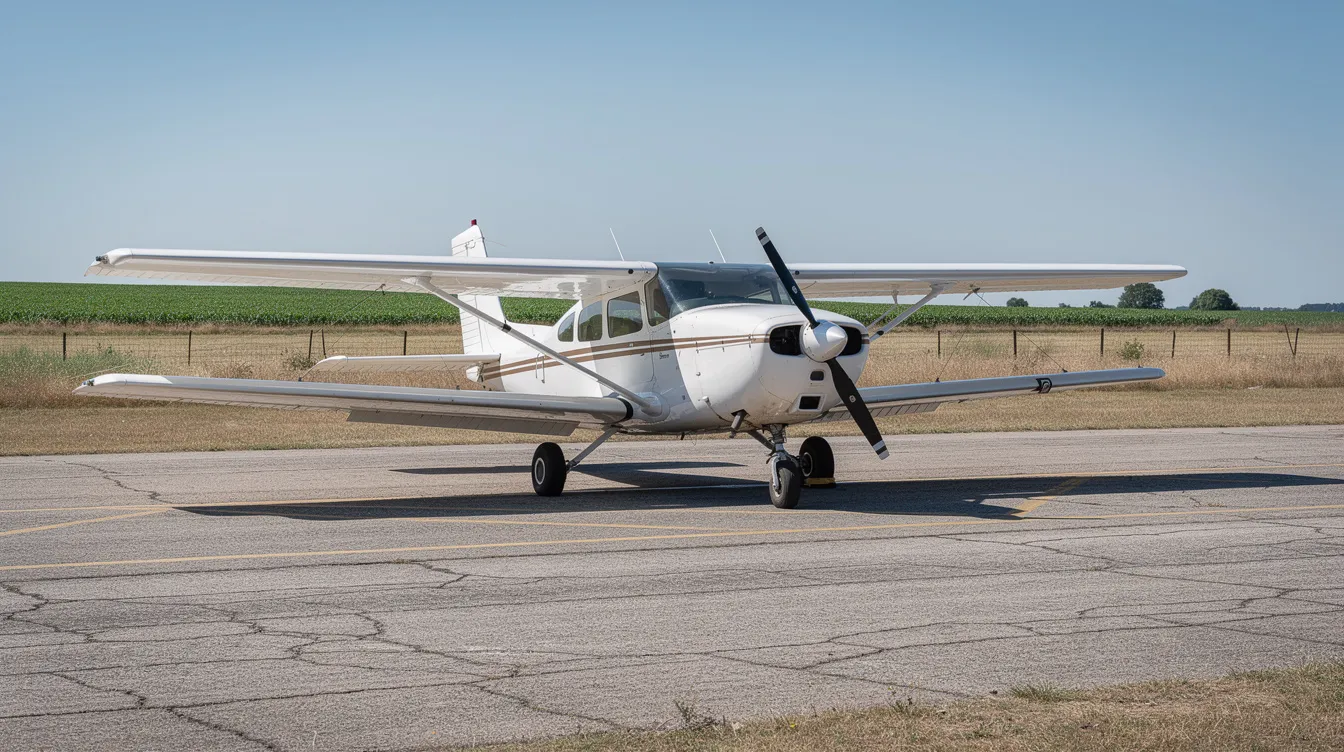
These light aircraft share a common configuration: fixed landing gear, a high-wing design for superior visibility and stability, and reliable piston engines from Lycoming or Continental. Cessna models commonly feature high-wing configurations providing exceptional stability, which is why Cessna aircraft are characterized by stability and forgiving flight characteristics. Cruise speeds typically range from 110 to 160 knots, and small Cessnas can fly ranges of 400 to 900 nautical miles depending on model and loading.
The Cessna 172 is the world's most-produced aircraft with over 44,000 units built, a benchmark for training fleets worldwide. These single engine piston aircraft differ from larger utility turboprops like the Cessna Caravan (turbine-powered, 9 to 14 passengers) and Citation business jet models (pressurized cabins, 350 to 450 knots cruise). For owners and pilots seeking the cheapest planes, the 150/152 and 172 families often anchor the shortlist. While BlackJet's core fleet focuses on jet categories, our charter network taps vetted operators who fly these specific piston aircraft for ultra-regional missions.
Key Small Cessna Models and Their Typical Missions
Think of this section as a field guide to the cessna models a BlackJet client is most likely to encounter when booking regional flights.
Cessna 150/152 aircraft are two-seat trainers produced from 1958 to 1986, with over 30,000 built during that production run. Their cruise speed sits around 90 to 100 knots. Cessna 150/152 models are ideal for student pilot training, and every flight instructor in the country has likely logged hours in one. They rarely appear in premium charter, but they matter: they are the entry point of the pilot pipeline that feeds commercial and private aviation.
Cessna 172 Skyhawk made its first flight in 1955. Cessna introduced this four-seat workhorse with a 180-hp Lycoming engine, and it became the backbone of flight schools globally. The Cessna 172 typically has a cruise speed of 120 to 130 knots and can reach maximum speeds of approximately 163 knots. The Cessna 172 Skyhawk is recognized for its straightforward handling and excellent visibility, with a takeoff distance over a 50-foot obstacle of roughly 1,630 feet and a landing distance of about 1,335 feet. Cessna aircraft are known for their reliability and suitability for training use, and the 172 remains the standard. Some operators fit tip tanks for extended range on ferry flights. Cessna's aircraft lineup serves as a backbone for flight training worldwide.
Cessna 182 Skylane steps up with a 230-hp class engine. The Cessna 182 Skylane has a useful load around 1,200 pounds, a cruise speed of roughly 145 knots, and range up to 915 nautical miles with reserves. Modern production versions equipped with Garmin G1000 NXi avionics make the 182 a capable IFR platform for owner-pilots and charter operators handling regional trips of 500 to 700 nautical miles.
Cessna 206 Stationair is often called the "SUV of the air." The Cessna 206 Stationair can carry six passengers and has large cargo doors, making it the go-to for bush operations, skydiving, air taxi, and remote resort access in Alaska, Western Canada, and Central America. It is often evaluated alongside other affordable small planes for owners who need true utility capability. Its Continental IO-520 engine produces roughly 285 hp. Specialized variants include amphibious 206s on floats and turbocharged versions for high-elevation strips, opening access to lakeside lodges that jets cannot reach.

In BlackJet's network, these models serve distinct missions: 172s and 182s handle light charter legs, while the 206 handles cargo, passenger, and terrain combinations that demand rugged capability, complementing budget-friendly private aircraft options on other parts of a travel portfolio.
Small Cessna Models Comparison Table
Model | Passenger Capacity | Cruise Speed (knots) | Useful Load (lbs) | Typical Range (nm) | Typical Use Case |
|---|
Cessna 150/152 | 2 | 90–100 | ~400 | ~400 | Flight training |
Cessna 172 | 4 | 120–130 | ~900 | 640–700 | Flight training, personal travel |
Cessna 182 | 4 | 140–145 | ~1,200 | 900+ | Regional business, personal use |
Cessna 206 | 6 | 130–140 | ~1,400 | 700–800 | Utility, bush flying, cargo |
Inside the Cabin: Comfort, Avionics, and Modern Upgrades
Older piston aircraft from the 1970s came with cloth bench seats, analog gauges, and minimal insulation. The flying experience was functional. Modern upgrades have changed the equation. Refurbished cabins now include leather or high-grade fabric upholstery, improved soundproofing panels, USB and 12V power ports, and clean LED lighting throughout.
The typical cabin layout in a 172 or 182 places two front seats for pilot and front passenger, with a rear bench seating two to three adults depending on baggage and weight. Visibility through wraparound windows is generous; the high wing design means unobstructed downward sightlines. Legroom is modest but adequate for flights under two hours.
Many modern small Cessna aircraft now carry Garmin G1000 NXi integrated cockpits with GI 275 electronic standby instruments and ads b transponders. These glass panels improve situational awareness for the pilot and support IFR operations. Autopilot systems, available in the 182 and some 172 variants, reduce workload on longer segments.
The trade-off against a light jet is real: less headroom, more ambient noise, no pressurization. But the sense of flying close to terrain at 3,000 to 8,000 feet is part of the appeal. A sunrise departure from a gravel strip in a mountain valley, coffee still warm, arriving at a remote lodge before breakfast: that experience does not exist in a pressurized cabin at FL350.
How Small Cessna Planes Are Used in Real-World Private Travel
Small Cessna aircraft form the capillary network of private aviation, linking remote communities, secondary cities, and private properties to the global jet network.
A ranch inspection in Montana illustrates the model. A BlackJet member departs Teterboro on a midsize jet, lands at Bozeman (KBZN), and boards a Cessna 206 for a 45-minute hop to a 2,800-foot private dirt strip on the property. The 206 handles the tools, luggage, and terrain. A tech founder based near Palo Alto (KPAO) uses a Cessna 182 for day meetings in Northern California towns underserved by commercial flights, eliminating rental cars and three-hour drives each way. For longer sectors, the same traveler might buy a seat on a private jet rather than charter the whole aircraft, while Cessna 182s remain popular for quick regional business trips of this kind.
Flight schools use the Skyhawk fleet as aviation's core training platform. Student pilots and every instructor logging hours in 172s feed directly into the pilot pool for the Citation jets and larger aircraft that BlackJet card holders fly. The Cessna 172 is also utilized for personal travel and recreational flying, and the Cessna 172 is often used in search and rescue missions by Civil Air Patrol units.
Leisure uses include weekend lake trips, ski town access where runways are short, and island hops in the Florida Keys or France's coastal airfields where a single-engine aircraft is the most efficient choice. For bigger family groups or corporate retreats, private jets for 50 passengers can move everyone to the gateway airport before a short Cessna hop. BlackJet clients often pair a small Cessna leg with a larger jet segment: a Citation or Challenger into a hub, then a piston transfer into a lodge-only airstrip.
Ownership vs. On-Demand Access: Economics of Small Cessna Aircraft
Ownership costs range from $30,000 to $800,000 upfront, depending on age and equipment. Used Cessna 150/152 models start in the tens of thousands. A late-model, well-equipped 182 Skylane with glass avionics and low airframe hours can reach $700,000 or more.
Annual fixed costs for ownership are $20,000 to $40,000 for an actively flown 172 or 182, covering hangar or tie-down fees, insurance, annual inspections, and engine overhaul reserves. Maintenance is the owner's responsibility in aircraft ownership; every 100-hour inspection, oil change, and airworthiness directive compliance falls on the owner's budget and schedule.
The alternative: chartering costs $300 to $600 per hour for small Cessnas, depending on model, market, and whether fuel is included. For a client who flies fewer than 100 to 150 piston hours per year, charter delivers low operating costs without capital commitment, while a clear view of overall jet card cost helps determine how much jet flying belongs in a membership versus ad hoc bookings. For someone who would own aircraft primarily for occasional regional legs, the math rarely favors ownership, and exploring cheapest private aircraft options can clarify when access models beat full ownership.
BlackJet's Jet Card model works as the counterpart on the jet side: pre-purchased jet time for core business and leisure routes, supplemented by ad hoc small Cessna charters through vetted operators when ultra-short field capability is required. For many travelers, understanding jet card cost per hour is the key to deciding how much flying should sit in a membership versus on-demand charter. Capital stays liquid. Loading, balance, and scheduling flexibility stay in the hands of professional operators. The opportunity cost of tying up $500,000 in a piston single that flies 80 hours a year is difficult to justify when charter options exist at transparent hourly rates.
Booking a Small Cessna Through the BlackJet Ecosystem
While BlackJet's primary inventory focuses on light, midsize, and large-cabin jets, our flight support team regularly coordinates small Cessna and utility turboprop connections through approved partner operators. The process is straightforward.
A member submits a regional itinerary request within the app or via our 24/7 concierge service. The BlackJet team evaluates the full route: if the final destination requires a runway under 3,500 feet or an unpaved strip, we propose a jet leg paired with a small Cessna or utility turboprop segment. For heavy users, pairing these feeder legs with a 100-hour jet card on the core routes can lock in predictable jet pricing. Pricing and timing for both legs appear in a single itinerary with a transparent cost breakdown.
Our operations team handles airport selection, runway performance checks, fuel planning, and coordination with local carriers operating Cessna 172s, 182s, 206s, or Caravans. For example, a member might fly from Teterboro to Denver on a midsize jet using Jet Card hours, then connect to a Cessna 206 for a short hop into a backcountry strip in Colorado's San Juan Mountains. Understanding jet card pricing structures in advance lets members map these feeder legs onto the most cost-effective jet categories.
The result: a single point of contact, a unified itinerary accessible through our website and digital platform, and live support throughout the journey. No piecing together separate bookings. No guesswork about operator quality. The system is flexible enough that customers can request adjustments in real time, and our team can often arrange same-day solutions when conditions allow.
Safety and Regulation: Operating Small Cessna Aircraft the Right Way
Chartered flights operate under strict FAA regulations. When small Cessna aircraft are flown under FAA Part 135 commercial charter rules, they are subject to standards far more rigorous than private Part 91 flying: recurrent pilot training, drug and alcohol testing programs, structured maintenance intervals, and formal dispatch procedures.
Pilots in charter services typically have 1,500+ flight hours, and Part 135 operators must maintain detailed maintenance logbooks, comply with airworthiness directives, and follow manufacturer service bulletins. The system provides protection for passengers that informal arrangements cannot match.
BlackJet only partners with operators that meet stringent safety benchmarks. We require independent third-party audits through organizations such as ARG/US or Wyvern, robust maintenance programs, and pilots experienced in piston and utility turboprop operations, similar to the standards applied across the private jet price spectrum from light jets to large-cabin aircraft. The aviation industry has learned hard lessons from past failures: Cessna faced a $2.4 million FAA fine for quality assurance failures, and Cessna 400s were affected by an emergency Airworthiness Directive. These cases underscore why certification oversight and independent auditing matter.
Incidents involving small Cessnas typically correlate with weather decision-making, pilot experience gaps, and operations outside formal regulatory structures. Professional operators with conservative dispatch criteria materially reduce those risk factors. Small Cessna planes can operate under IFR conditions; many modern 172s and 182s are IFR-certified and equipped for night flying with contemporary avionics. But go/no-go calls always prioritize safety over schedule, particularly in winter, mountain, or low-visibility conditions.
Sustainability, Efficiency, and the Role of Piston Aircraft
A Cessna 172 burns roughly 8 to 10 gallons of avgas per hour at cruise. Compare that with a light jet consuming 150 to 200 gallons per hour, or a commercial turboprop burning 60 to 80 gallons per hour on a regional hop. For missions under 200 nautical miles, the piston aircraft's fuel footprint is the smallest option that still flies.
Consider a client traveling from the Northeast to a lodge in Vermont's Northeast Kingdom. A commercial itinerary requires two flights through a hub plus a 90-minute ground transfer: three separate vehicle and aircraft segments, each with its own climb, descent, and taxiing emissions. A BlackJet midsize jet to Burlington plus a 40-minute Cessna 182 leg into a 2,500-foot grass strip eliminates two of those segments, cutting total journey emissions and shaving three hours off the transit.
BlackJet's carbon-neutral commitment covers all jet flights booked through our Jet Card programs. Travelers comparing sustainable options often weigh Cessna hops against the cheapest private jet choices for longer legs to balance cost and footprint. We can also facilitate offsets for associated small Cessna or turboprop segments through our sustainability partners, typically at $15 to $30 per tonne of CO2. Smaller airports also contribute to efficiency: shorter taxi times, fewer ground delays, and minimal ground handling equipment running on the ramp.
When to Choose a Small Cessna vs. Jet or Utility Turboprop
Choosing the right aircraft depends on four factors: distance, passenger count, runway constraints, and mission profile. Here is how the categories compare.
Small Cessna piston aircraft hit their sweet spot on distances under 300 to 400 nautical miles, carrying 2 to 4 passengers with light to moderate baggage, and operating from runways under 3,000 to 3,500 feet or unpaved strips. They are the lowest-cost option per hour for these short missions, while small private jets take over when you need more speed and cabin comfort on longer sectors.
A utility turboprop like the Cessna Caravan or Beechcraft King Air carries 8 to 12 passengers or heavy cargo, tolerates rougher weather, and still uses short or unimproved strips. When passenger count or payload exceeds what a single engine piston can handle, the turboprop fills the gap, and for very large groups, chartering a plane for 100 passengers can be more efficient than stitching together multiple small-aircraft segments.
A Citation or similar business jet cruises at 350 to 400+ knots with pressurized cabins at FL350 to FL450, optimized for 500 to 1,500 nautical mile trips between paved runways of 4,000+ feet. For speed and comfort over distance, nothing in the piston or propeller-driven category competes, and when groups scale toward 20 travelers, choosing the best private jet for 20 passengers becomes the strategic move.
A practical scenario: a client requests a jet for a 120-nautical-mile hop into a mountain strip with a 2,400-foot gravel runway. The BlackJet team recommends a Cessna 206 instead. The jet cannot safely operate from that strip; the 206 can, at a third of the hourly cost, with better performance margins on a short-field approach and departure. The client gets the right aircraft for the mission, and the jet card hours stay available for the next long-range sector.
Frequently Asked Questions About Small Cessna Planes
How far can a typical small Cessna fly without refueling?
A Cessna 172 with full fuel (roughly 53 usable gallons) and a light load can cover about 640 nautical miles including reserves. A Cessna 182 with 87 usable gallons can reach approximately 915 nautical miles in optimal conditions. Operational planning usually targets below these absolute maximums to account for wind, loading, and weather routing.
How many passengers can a Cessna 172 or 182 realistically carry on a charter?
A 172 seats the pilot plus up to three adults with bags, though heavier loading or full fuel may reduce that to two passengers. A 182's higher useful load allows the pilot plus three to four adults and moderate luggage. The 206 carries up to five passengers plus the pilot with cargo. Weight and balance checks determine the final answer on every flight.
Can small Cessnas fly at night, in winter, or in instrument conditions?
Yes. Many are IFR-certified and equipped with modern avionics, autopilot, and appropriate lighting for night operations. Winter and mountain flying add risk factors including ice, snow, and reduced visibility. Professional operators apply conservative go/no-go criteria; schedule flexibility is the best insurance against weather-related delays.
Are pets allowed on small Cessna flights coordinated through BlackJet partners?
Policies vary by operator. Most charter small Cessnas permit pets in approved carriers when weight and balance limits allow. BlackJet's vetted partners typically have clear pet policies; confirm with your concierge when booking.
How much luggage can I bring on a small Cessna compared with a private jet?
A 172's baggage compartment holds 30 to 120 pounds depending on aircraft model and loading. A 182 accommodates up to roughly 200 pounds. Jets offer several hundred pounds of luggage capacity in dedicated holds plus cabin space. Plan ahead and check weight limits with the operations team.
How much lead time do I need to book a small Cessna segment?
We recommend 24 to 72 hours for chartering small piston aircraft. Same-day solutions are sometimes possible in well-served regions. Flexibility in airport choice improves availability.
How Small Cessnas Fit Into a BlackJet-Level Travel Strategy
Small Cessna airplanes exist at the foundation of a tiered air travel system. They connect gravel strips to regional airports, regional airports to jet hubs, and jet hubs to anywhere in the world. For BlackJet Jet Card members, they fill a gap that no jet can fill on its own: the last 50 miles into a mountain lodge, the first leg out of a lakeside property, the training flight that produces the next generation of commercial and private pilots.
The value is in the complete journey. Time saved versus commercial travel, access to properties and projects off paved runways, and the confidence of working with a team that manages safety, sustainability, and logistics from door to door. From piston singles to utility turboprops to intercontinental jets, every segment is coordinated by a single operations team with digital tools and real-time support.
Explore how BlackJet's Jet Card programs and curated network of operators can integrate small Cessna segments into your broader travel strategy, including options like the BlackJet 25+ Hour Jet Card for predictable jet access. Discover what a complete private aviation plan looks like, and let our team build an itinerary that reaches wherever you need to go.


 Sign up with google
 Sign up with Apple